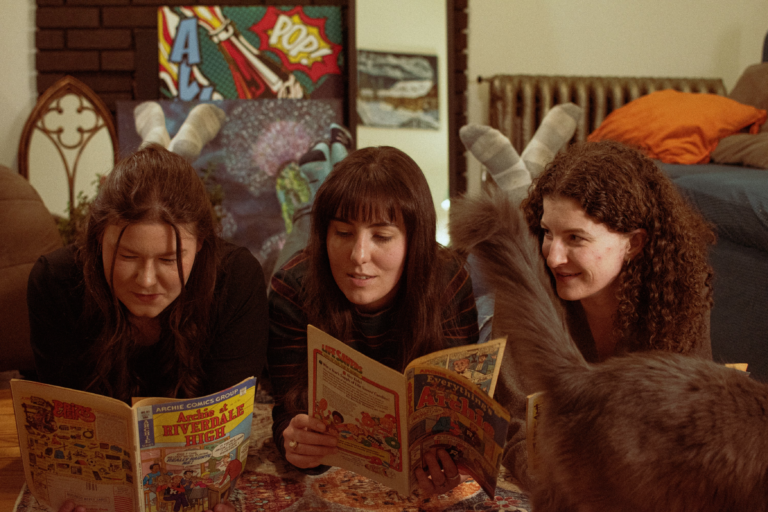

A meaningful reading life starts with intention: choose what nourishes you, follow the sparks, and let your books speak to each other.
Ever feel totally lost in the sea of books out there? You’re not alone! With so many choices, it can be hard to decide exactly what we should be reading, and to align that with what we actually want to read.
Sometimes that just leaves us stuck. Paralyzed. Reading nothing at all.
But worry not, for help is here! Whether you’re flipping through Booker Prize winners or endlessly scrolling Goodreads recommendations, this guide is your friendly nudge towards reading that actually matters to you.
Why Curate A List?
Reading is one of those activities that feels productive even when it’s chaotic. You can devour 20 random books a year and proudly announce it on social media, but did any of it stick? Did any of it shape your thinking, or bring you joy, or lead you to ideas you want to carry around for years?

Curating your reading is all about shifting from “I read whatever floats by” to “I pick what nourishes me.” It’s like being your own librarian, but with fewer card catalogs and more snacks.
Curating your reading list gives you:
- A sense of direction (goodbye, endless scrolling)
- A deeper understanding of topics you care about
- A calmer TBR pile
- More satisfying reading overall
And honestly, it also feels fancy. “I’m curating my reading list” gives off big “I have my life together” energy.
Where to Start
Before you pick a single book, pause and ask:
“Why am I reading right now?”
Your answer might be one of these:
- “Because I love stories and want to escape.”
- “Because I want to understand a topic more deeply.”
- “Because I never read growing up, and I’m catching up.”
- “Because I want to feel smart but also have fun.”
- “Because I’m bored and TikTok is rotting my brain.”
There is no wrong answer.

Your why becomes your compass. If you want comfort and fun, your curated list will look totally different from someone reading for career development or philosophical enlightenment.
You can also have multiple whys. We’re complex creatures. You’re allowed to want romance novels and obscure essays on medieval architecture.
The T-Shape Method
Don’t worry, this isn’t a geometry lesson. The T-shaped approach is simple:
The vertical line = depth
One main topic or theme you want to explore seriously.
Examples: climate fiction, existential philosophy, contemporary poetry, the history of food, coming-of-age novels, or feminist literature.
This is where you pick 5–10 books that build on each other and help you understand a topic from different angles. Think of it like digging one really interesting hole straight into the earth.
The horizontal line = breadth
Books that support your main topic, but aren’t necessarily part of the “serious” deep dive.
If your deep-dive theme is climate fiction, your breadth might include: a pop-science book about oceans, a memoir by a naturalist, a documentary script, or maybe a novel about environmental justice.
These are the books that help you see the bigger picture, connect dots, and explore related ideas without getting stuck in one lane.
See? The T-shape keeps things structured but not suffocating.
Sequence Matters
While you can read your list in any order, what will help you to stick to it is to put the books in the right order. Now this doesn’t just mean The Hunger Games before Catching Fire (although that is recommended), but more foundational texts and then deeper theories.

By building your knowledge up like a wall, you’ll prevent yourself from ping-ponging from book to book, as the texts will sit better. You’ll understand them more. You’ll be able to pick out the patterns, influences, and contradictions. If you’re lucky, you’ll be able to see the conversation between the texts and how one influenced the other.
Flexibility is King
One of the most important things to remember is that your reading list is not a binding contract. It’s more like a mood board. Curating the perfect list is great, but if you don’t actually want to read it, it’s kind of pointless.

Make sure you’re nice to yourself. That means having permission to swap out books, to DNF a book (with absolutely 0 guilt), to read something “light” if you need it, and to pause and return to a theme months later.
Multimedia Madness
It can be hard to stick to a reading list when you’re just reading it in the traditional sense. Not only that, but if you’re looking to expand your knowledge, then looking past the world of print fiction and non-fiction is an absolute must!

Pick up essays, newspapers, and magazines. Click on an audiobook. Browse graphic novels, pick out some YouTube essays. There is a whole world of information out there just waiting for you to explore it.
Do More Than Just Consume
If you’re sticking to themes, one thing that can really help you to curate your reading list as you go is to annotate and think critically. While you’re reading or absorbing the media, ask yourself:
- What’s sticking with me?
- What’s the author’s source?
- Can I trust this?
- Do I want to explore any of this deeper?
- Am I enjoying the style, or just the substance?

Millie Ramm
Millie has been writing since she was a child, and has spent more time with her nose in books than anywhere else. She has been ghostwriting novels and editing for the past few years, and when not working she is curled up with her cats, looking for her next read.