

What We See When We Read

What We See When We Read

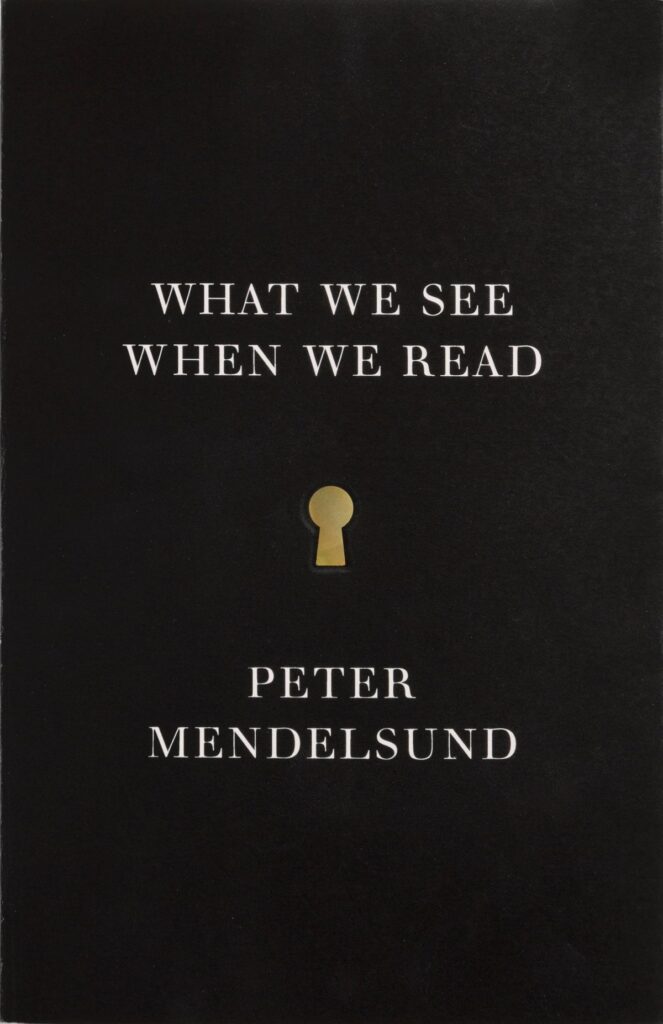
A gorgeously unique, fully illustrated exploration into the phenomenology of reading—how we visualize images from reading works of literature, from one of our very best book jacket designers, himself a passionate reader.

What do we see when we read? Did Tolstoy really describe Anna Karenina? Did Melville ever really tell us what, exactly, Ishmael looked like? The collection of fragmented images on a page—a graceful ear there, a stray curl, a hat positioned just so—and other clues and signifiers helps us to create an image of a character. But in fact our sense that we know a character intimately has little to do with our ability to concretely picture our beloved—or reviled—literary figures. In this remarkable work of nonfiction, Knopf’s Associate Art Director Peter Mendelsund combines his profession, as an award-winning designer; his first career, as a classically trained pianist; and his first love, literature—he considers himself first and foremost as a reader—into what is sure to be one of the most provocative and unusual investigations into how we understand the act of reading.
Kaleidoscopic, immersive experience.”

Kirkus Reviews

Review by 1000 Libraries

In What We See When We Read, Peter Mendelsund—a celebrated book cover designer—turns his clinical eye away from the jacket of the book and toward the internal theater of the reader’s mind. The result is a “visual essay” inviting readers to stop the passive act of reading to observe the mechanics of how we imagine.

“Authors are the curators of experience. They filter the world’s noise, and out of that noise they make the purest signal they can. Out of disorder, they create narrative.”

The genius of the book lies in its performance as Mendelsund uses his background in design to ensure the book’s layout mimics the fragmented way we process information. Through sketches, overlapping photos, and experimental typography, he forces the reader into a “slow-motion” state of awareness. By deconstructing how we translate ink symbols into sensory experiences, he reveals that reading is an act of co-creation. The author provides the map, but the reader builds the landscape using the recycled materials of their own past experiences. Ultimately, Mendelsund argues that the “blurred” nature of our mental imagery is not a failure of the imagination, but its greatest strength. It is the very lack of definition that allows a story to feel deeply personal, as we project ourselves into the empty spaces between the words.

What We See When We Read is an essential autopsy of the reading experience that proves the “picture” in our heads is far less important than the “feeling” of the world we build. Mendelsund successfully argues that a book is not a video playing in the mind, but a collaborative performance where the reader is just as vital as the author. By the final page, you will never look at a sentence—or a character’s face—the same way again.

“Offhandedly brilliant, witty, and fluent in the works of Tolstoy, Melville, Joyce, and Woolf, Mendelsund guides us through an intricate and enlivening analysis of why literature and reading are essential to our understanding of ourselves, each other, and the spinning world.”

“[Mendelsund] produces a kaleidoscopic, immersive experience that successfully combines text, graphics, illustrations, cover images and more into a cohesive whole. It’s a book to be read, reread, shown to perspective graphic designers and shared.”

“Mendelsund, throughout this thought-provoking book, helps the lay reader contemplate text in ways you hadn’t thought about previously.”

Want book recommendations weekly?
Join the COMMUNITY

Get the best of 1000 Libraries delivered to your inbox weekly