

THE BOOKISH COLORING BOOK (SUMMER EDITION) – OUT NOW

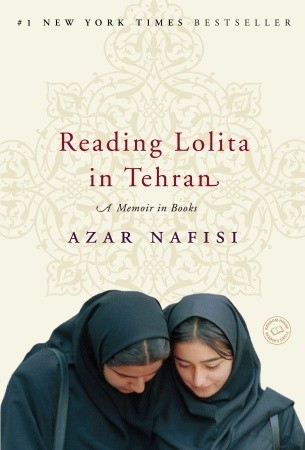
Reading Lolita in Tehran: A Memoir in Books

Reading Lolita in Tehran: A Memoir in Books

For two years before she left Iran in 1997, Nafisi gathered seven young women at her house every Thursday morning to read and discuss forbidden works of Western literature. They were all former students whom she had taught at the university. Some came from conservative and religious families, others were progressive and secular; several had spent time in jail. They were shy and uncomfortable at first, unaccustomed to being asked to speak their minds, but soon they began to open up and to speak more freely, not only about the novels they were reading but also about themselves, their dreams and disappointments. Their stories intertwined with those they were reading—Pride and Prejudice, Washington Square, Daisy Miller and Lolita—their Lolita, as they imagined her in Tehran.

Nafisi’s account flashes back to the early days of the revolution, when she first started teaching at the University of Tehran amid the swirl of protests and demonstrations. In those frenetic days, the students took control of the university, expelled faculty members and purged the curriculum. When a radical Islamist in Nafisi’s class questioned her decision to teach The Great Gatsby, which he saw as an immoral work that preached falsehoods of “the Great Satan,” she decided to let him put Gatsby on trial and stood as the sole witness for the defense.

Azar Nafisi’s luminous tale offers a fascinating portrait of the Iran-Iraq war viewed from Tehran and gives us a rare glimpse, from the inside, of women’s lives in revolutionary Iran. It is a work of great passion and poetic beauty, written with a startlingly original voice.
Remarkable…

The New York Times

Review by 1000 Libraries

There is a quiet, dangerous power in a room full of books, particularly when the world outside is actively trying to rewrite your reality. In her luminous memoir, Reading Lolita in Tehran, Azar Nafisi crafts a deeply moving testament to the necessity of the imagination—and a fierce defense of the literary spaces we build within ourselves when the physical world becomes unyielding.

The premise carries the intimacy of a secret: after resigning from her university post due to tightening ideological censorship, Nafisi gathers seven of her most committed female students in her living room every Thursday morning. Removed from the watchful eyes of the morality police, they remove their mandatory veils and open forbidden Western classics—Nabokov, Fitzgerald, James, and Austen.

But to look at this book as a simple exercise in literary analysis is to miss its beating heart. Nafisi explicitly warns us against a literal, surface-level reading of art, writing:

“Do not, under any circumstances, belittle a work of fiction by trying to turn it into a carbon copy of real life; what we search for in fiction is not so much reality but the epiphany of truth.”

This distinction is precisely why the memoir feels so urgent. Nafisi and her students do not read Lolita or Gatsby to find a direct reflection of their daily struggles; they read them to understand the mechanics of tyranny, obsession, and the fragile nature of human desire. Through these texts, Nafisi’s living room transforms into a laboratory of the soul, where the act of critique becomes an act of survival.

Ultimately, Nafisi’s prose is a love letter to the democratic space of the novel. It reminds us that books are not a passive escape from the world, but a vital confrontation with it. To enter a great story is to practice empathy, to engage with complexity, and to claim an interior freedom that no external authority can strip away. If you have ever doubted the actual, real-world consequences of literature, open this book. It will make you deeply grateful for the very freedom to turn the page.

“An inspiring account of an insatiable desire for intellectual freedom.”

“Stunning... a literary life raft on Iran's fundamentalist sea... all readers should read it.”

"Remarkable... an eloquent brief on the transformative power of fiction.”

Want book recommendations weekly?
Join the COMMUNITY

Get the best of 1000 Libraries delivered to your inbox weekly