
Eko built a library beside a graveyard and turned it into a lifeline for thousands. All he asked in return was this: read.
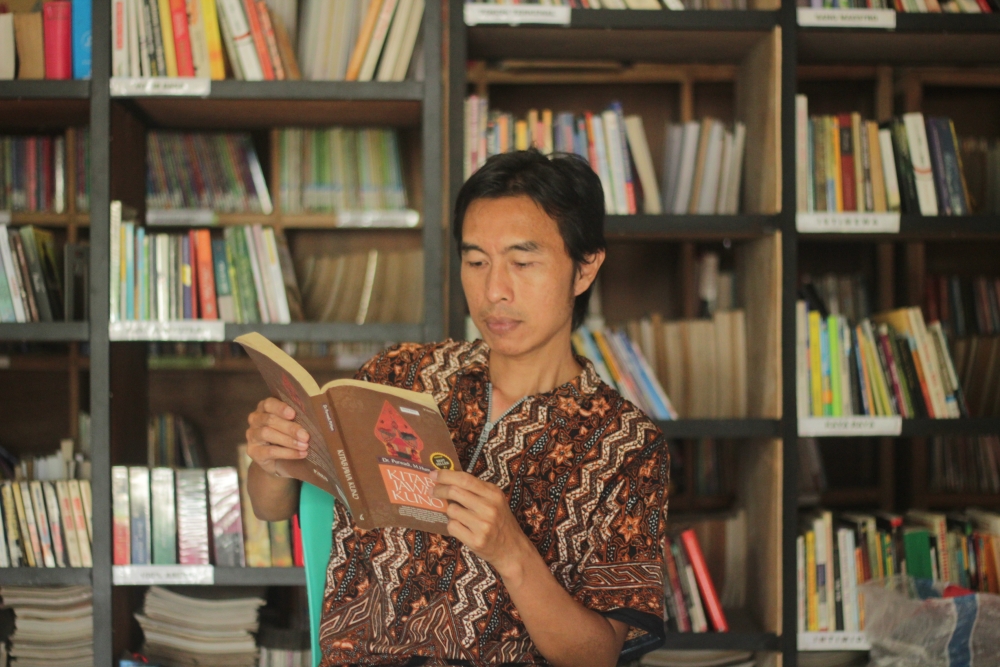
In a quiet village in Indonesia, a man named Eko Cahyono believed something radical: that books could change lives. Not in the abstract, motivational-poster sense, but in real, tangible ways. So, over two decades, this former factory worker turned librarian built a place where stories travel freely, where anyone can read, and where a single book has the power to save a future, a family, even a marriage.
A Factory Worker Turned Librarian
Eko didn’t grow up dreaming of libraries.
In fact, in 1998, he was a factory worker. But when Indonesia’s financial crisis hit, the factory closed. Jobs vanished. Days stretched endlessly.
To survive the monotony, he read everything he could find.
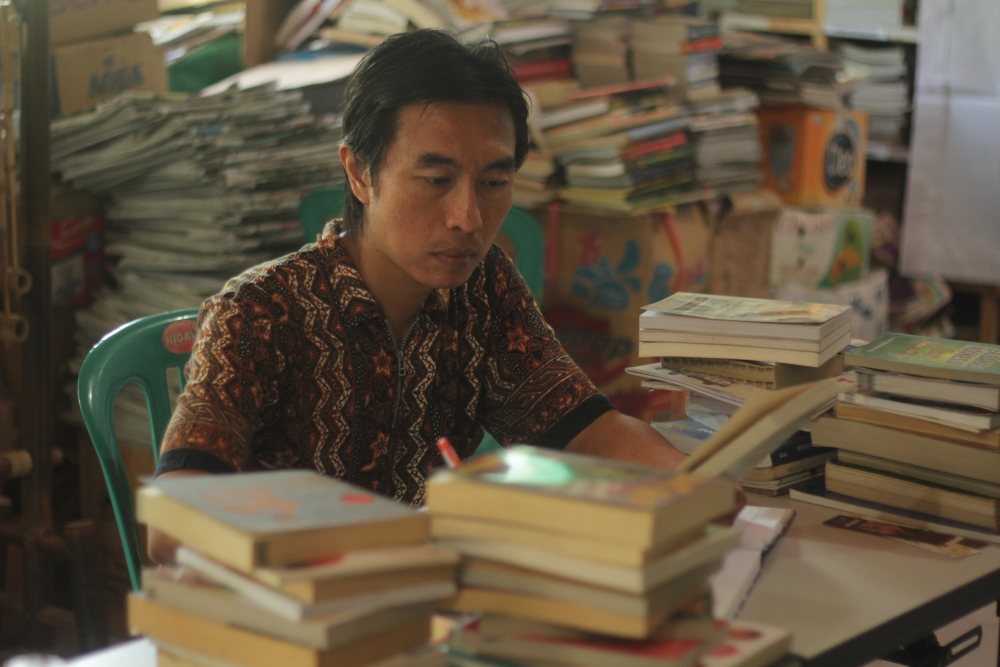
One day, he saw an old man in the village holding a newspaper upside down, pretending to read. Something ignited in him. Access, he realized, was the real problem.
Inspired, he turned his family’s terrace into a public reading space. Magazines hung on clotheslines. Neighbours gathered. People read. At night, they sang. Sometimes, they debated public issues.
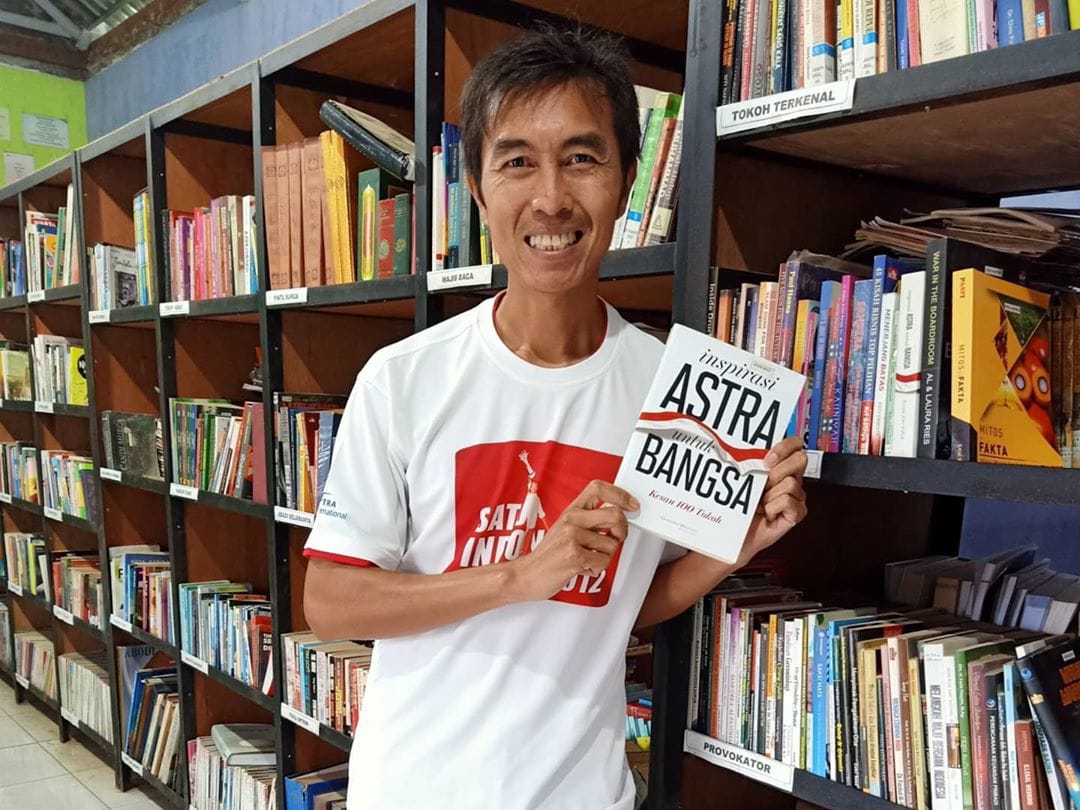
A library was born.
When he wished to grow his stock, he knocked on doors. When people answered, he’d ask: “Would you like to donate books?” Sure enough, slowly, the shelves filled, and Eko got closer and closer to fulfilling his mission of promoting reading in his community.
A Woman in Tears, a Librarian With a Question
Early in his years of librarianship, Eko met a woman named Mina. Sitting in his library beyond the rivers of Sukopuro, in a quiet Indonesian village, she cried to herself. As any good man would, Eko asked her why.
She explained that her husband of 12 years was leaving her because she couldn’t have children. Divorce loomed on her horizon, and she had no idea what came next.
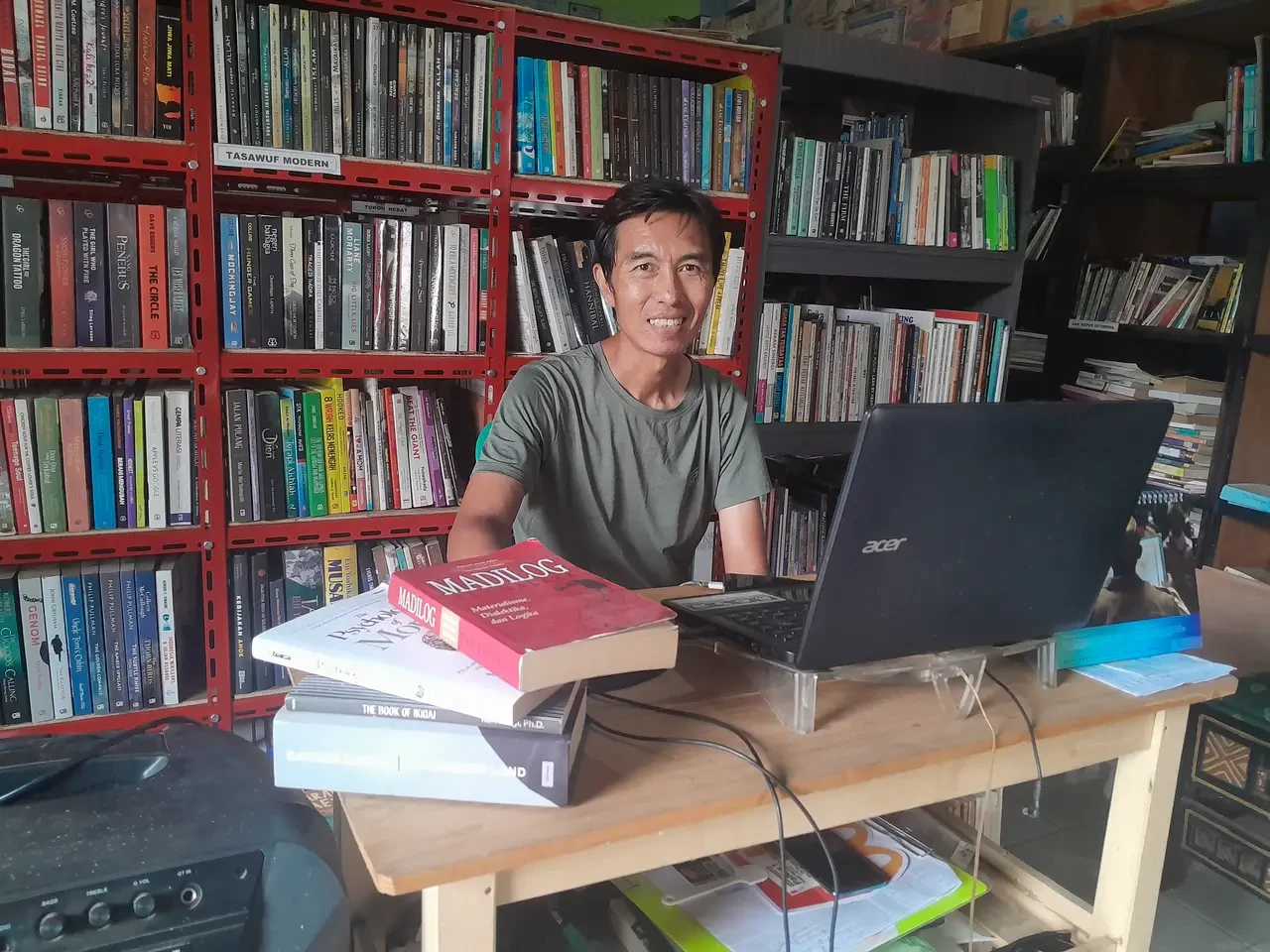
Eko Cahyono, a former factory worker turned librarian, was left speechless. How could he help this woman? He could not give her the medical help she needed, and he’d never been a woman faced with divorce, so he couldn’t imagine how she felt.
He felt lost. Asking himself, how can a librarian help a woman whose marriage is ending?
That very same day that Eko met Mina, he received a phone call. A woman in Malang City had 400 issues of Femina, a woman’s magazine, to donate. So he hopped on his bike, travelled to get them, and gave one to Mina in the hopes it’d help her. She took four copies, leaving him a note in exchange.
Four years later, in 2007, Mina returned to see Eko. She told him she had later read every Femina magazine, and she’d taught herself about fertility. Eventually, she and her husband managed to conceive. She had twins, and her marriage never dissolved.
A Young Man and His Father
Later in Eko’s time as a librarian, he met a young man who, despite being close to graduation, felt he had to drop out of school to be the head of his family. His father was sick, and they needed the money.
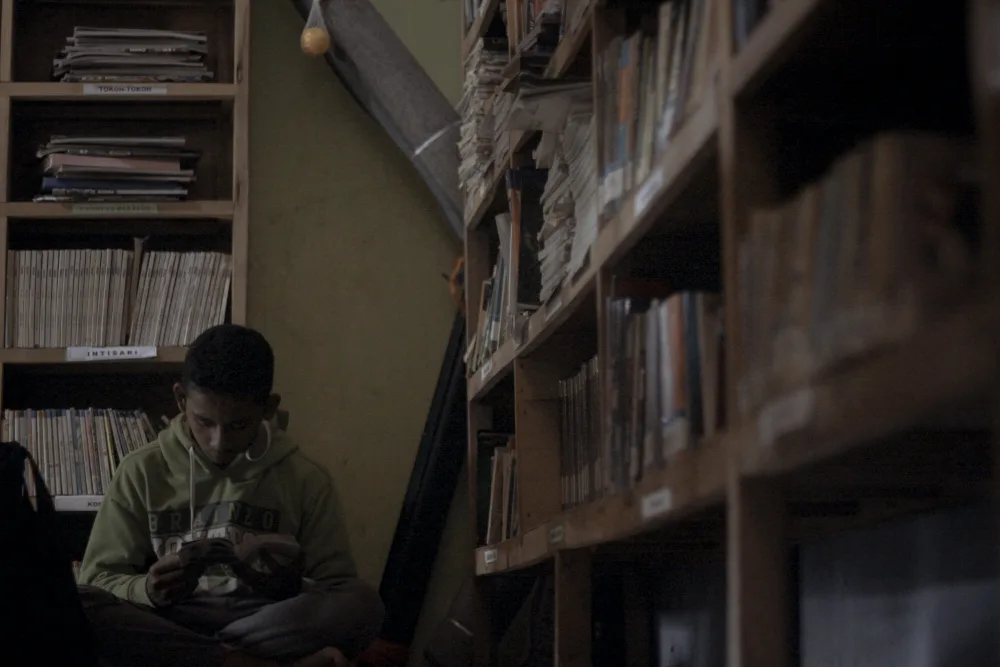
He asked Eko for advice one day, during a visit. Once again, Eko felt powerless. But he gave Tema, the boy, some books on reflexology, medicine, and ancestral heritage. Sure enough, 7 months later, the boy returned… still in his school uniform. He’d taught himself enough from the books to care for his father and continue his education.
From Location to Location
Eko’s library couldn’t stay in his home. The books soon outgrew the humble building, and his parents asked him to move. It took Eko moving more than ten times before his library found its home.
Eventually, a neighbour offered Eko land beside a graveyard, and, in 2008, he built a library from bamboo and asbestos, naming it Perpustakaan Anak Bangsa, or The Library of the Nation’s Children.
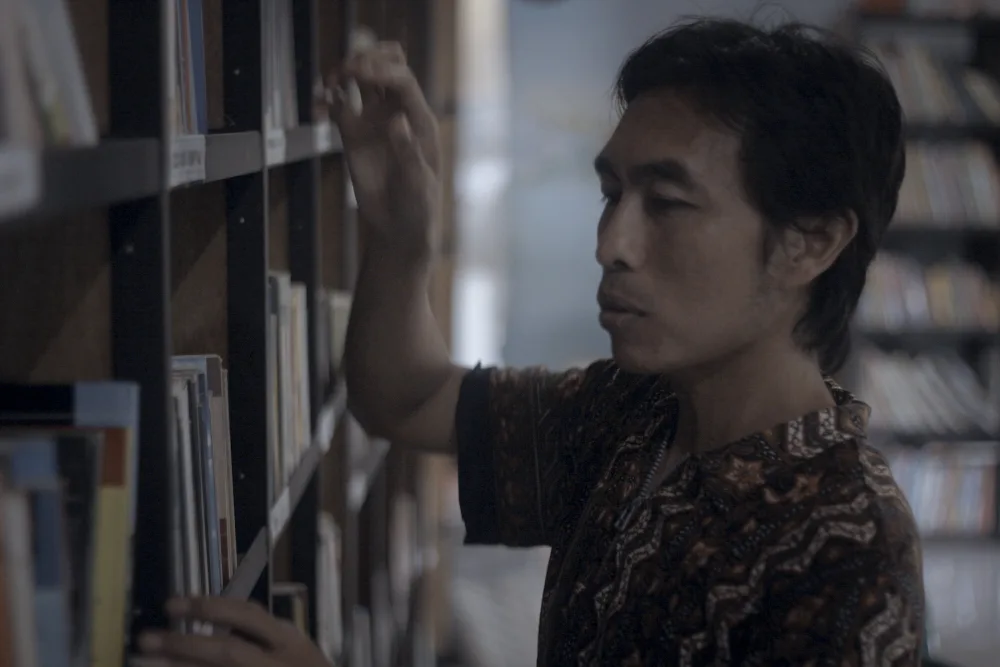
He and his sisters sold coffee, cigarettes, and fried snacks to pay for the electricity. He sold stories to newspapers, worked book fairs, and took little jobs here and there. When the money ran out, he even sold his TV and his motorcycle to keep the library going. He was determined to keep Indonesia reading, even if it was the last thing he did.
When things were dire, like after a storm, when a tree crashed into the roof, Eko even considered selling his kidney.
Donations and Stability
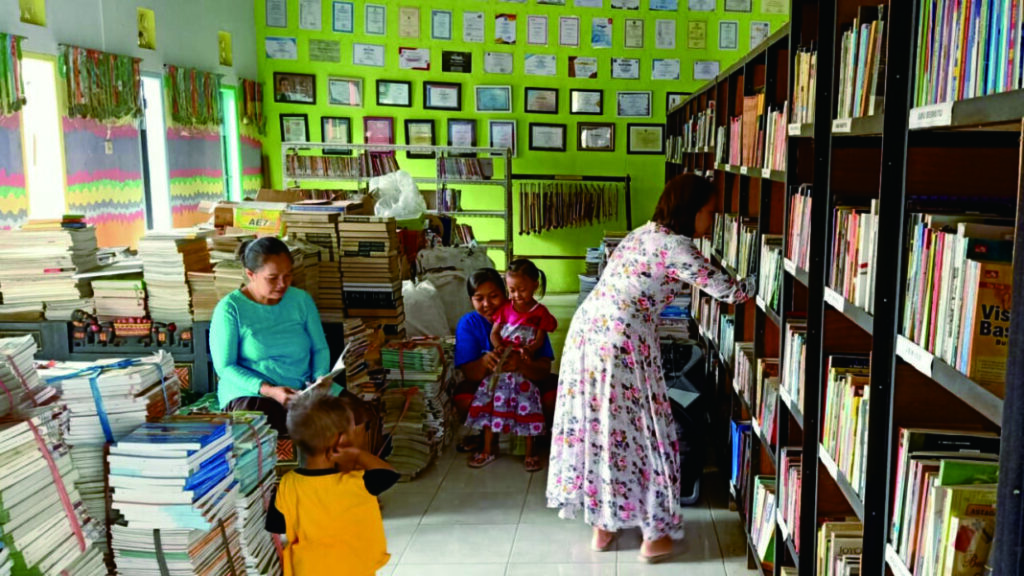
In 2011, Eko was saved when donors helped to rebuild the library into a proper concrete hall. They adorned the walls with medals, photos, and trophies, and soon, more than 8,000 members passed through the 72-square-meter space. According to Eko, an average of 50 people came in each day to read. Statistics suggest that in other parts of Indonesia, only one in 1,000 Indonesians reads a single book per year.
So 50 is pretty incredible.
Protector Of The Written Word
Eko spotted an issue in his home. He saw the lack of access to reading, to the written word, and he fought tirelessly to fix it.
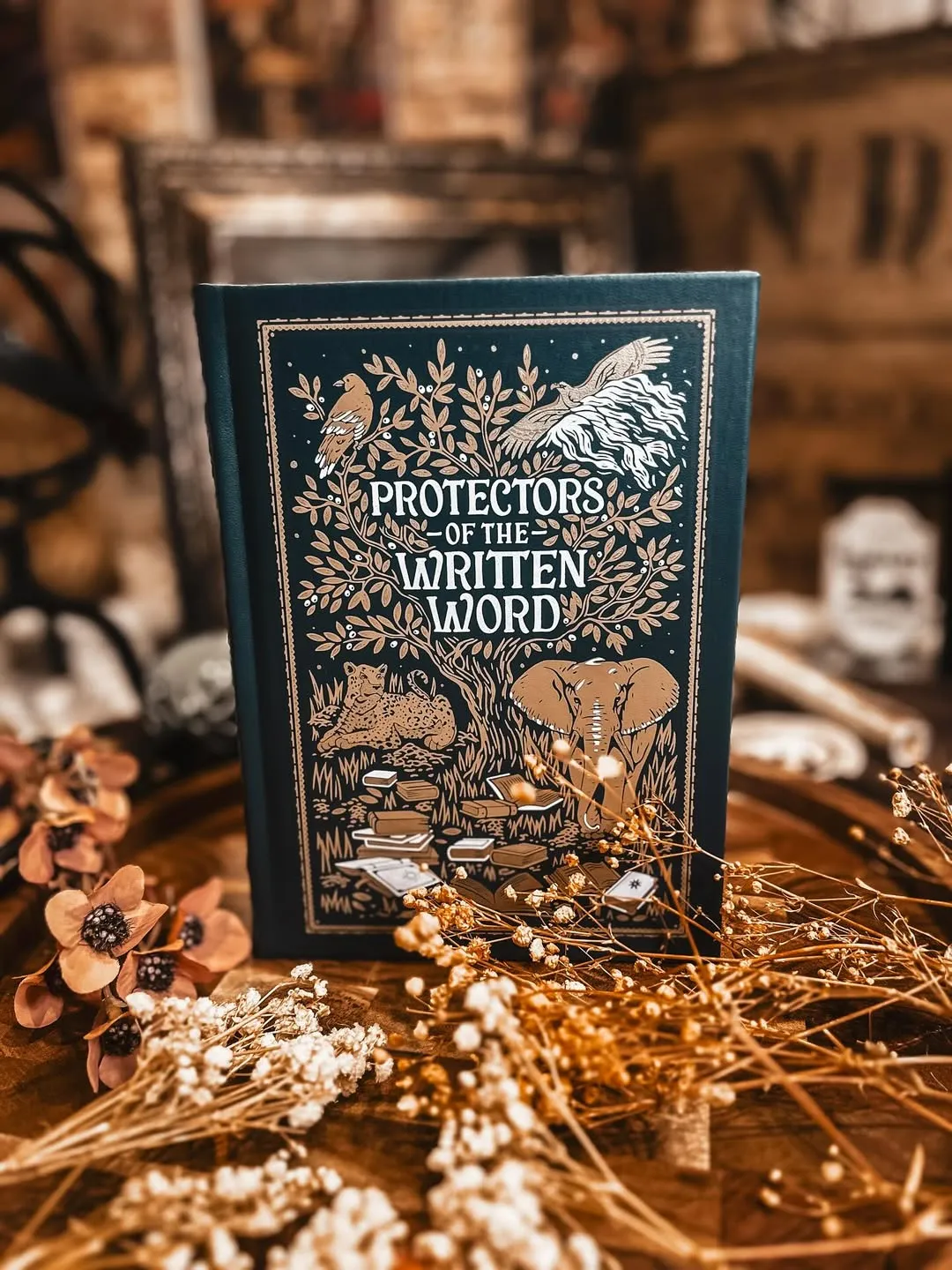
His story is featured in Protectors of the Written Word alongside 24 others who have devoted their lives to sharing the joy of reading.
The book brings together inspiring journeys from around the world, written as a heartfelt love letter to everyone who believes in the power of books. You can order your copy here.

Millie Ramm
Millie has been writing since she was a child, and has spent more time with her nose in books than anywhere else. She has been ghostwriting novels and editing for the past few years, and when not working she is curled up with her cats, looking for her next read.