
From Anne Hutchinson’s banishment to the Blue Stockings Society, explore how book clubs evolved from dangerous gatherings into a global literary movement.
Book clubs really did become a thing, but not many people stop to think about their origin. Friends gather in a living room or a cozy cafe, discussing their current reads or favorite books. The conversation starts with the plot, and before participants know it, they are diving into personal philosophies and finding out shared experiences.
Everyone enjoys the moment, laughing, and wishing the evening could continue for longer, because books and the discussions around them are a good break away from the busy modern world.
Now, while book clubs are ways in which modern people socialize and take breaks from work, it’s important to remember what led to the rise of book clubs. This isn’t to say there’s been a major shift in the spirit of book clubs.
No, humanity’s search for community and context remains the same, and this is the bedrock of book clubs. However, it’s time to look closer at the circumstances that birthed the idea of book clubs as we know them today.
The Radical Roots of Rebellion
Modern day is great because any gender can actually be intellectual, publicly, and privately. However, things were different in the early days. For instance, in the early 17th century, Anne Hutchinson in 1634 had to create book clubs where women gathered weekly in the Massachusetts Bay Colony to discuss the week’s sermons and theological texts.

Unlike modern day, these gatherings came with immense danger for the participants, because this meant that women could begin interpreting scriptures on their own. This ran against every traditional notion of those days that scripture interpretation was a role for men.
Expectedly, Anne Hutchinson was tried and banished for this. Her creation of a book club was a rebellion in the eyes of the authorities at the time. So, it’s safe to say that gathering to discuss books and bodies of texts wasn’t just a hobby.
The Blue Stockings Society
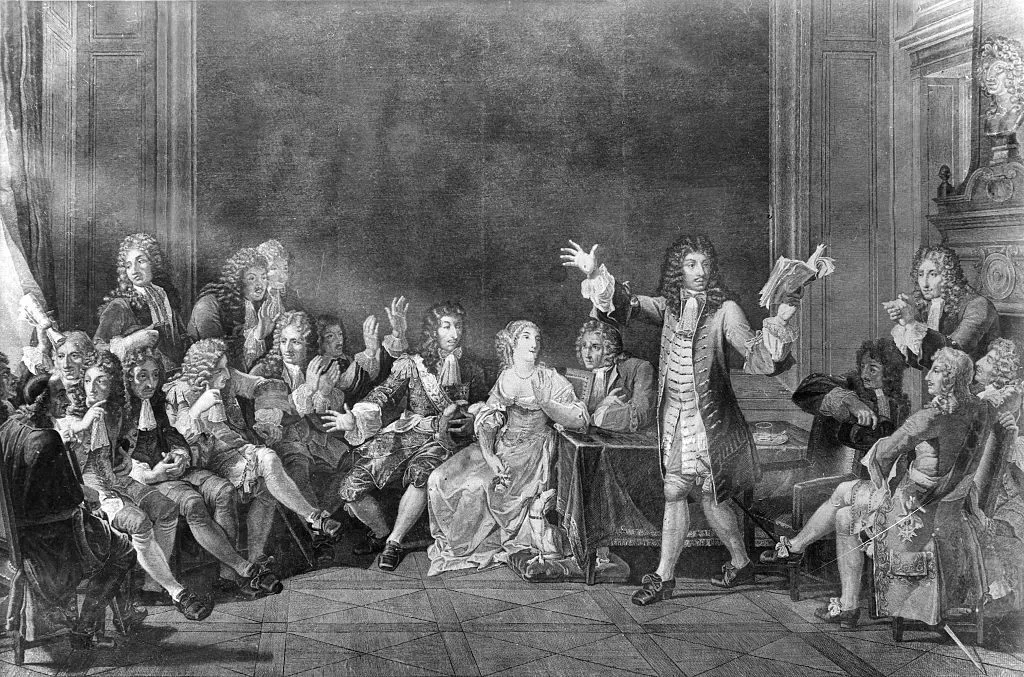
By the 18th century, book clubs began to gain rounds again, taking on a more polite, yet transformative form. The Blue Stockings Society was a social and educational movement where women and a few men gathered to discuss books and art. This was a substitution for gossiping, playing cards, or doing other fun activities considered normal in that era.

Thanks to this community of people, it was established that conversations are the most important part of the arts. A great work of art is one that drives discussion amongst those that consumed it. The name “Blue Stockings” was because one of the members wore a casual blue worsted stocking, which symbolized the fact that the quality of mind was more important than the formality of the dress. This was the foundation of modern book clubs.
A Path to Self-Improvement
Up until the 19th century, the early forms of book clubs were largely for the religious and secular elites who had access to books and all. However, thanks to the Industrial Revolution of the 19th century, it became important for people to become literate. Owing to these, groups that referred to themselves as ‘mutual improvement societies’ began to pop up amongst the working-class people. Suddenly, everyone wanted to know more. So, groups of laborers, for instance, began to pool money to purchase expensive books and divided them amongst themselves to read.

At the time, books were very costly. So, it only made sense for the clubs to have a collective library where people gathered for read-aloud sessions and had subsequent discussions. Thanks to these clubs, it became a common place for anyone seeking knowledge and context to gain it.
The Modern Spin of Book Clubs
It’s 2025, and it’s now easier than ever to find a book club or a reading tribe. Towards the end of the 20th century, Oprah Winfrey blessed the world with her Oprah Book Club, which led to books enjoying what we call the Oprah Effect. Simply, Oprah’s endorsement of a book always led to commercial success, as she leveraged her followership and community of fans to help great writers promote their books. And since the books were discussed briefly on her show, her recommendations sparked conversations around the world on the particular book she endorsed.
Following in the footsteps of Oprah, a lot of people with a large following and an interest in books have also gone ahead to create book clubs. These include Read with Jenna by Jenna Bush, the Service95 Book Club by Dua Lipa, and even a book club on Goodreads.

Beyond these book clubs, new systems of book recommendations and discussions have risen thanks to the popularity of “BookToks.” These digital forums make it easy to find great books just by scrolling on mobile devices, which is incredible considering the idea of book discussions was once a means to freedom.
Fortunately, it didn’t matter how many evolutions book clubs had to go through; the core tenets remained: to meet, connect, and learn. Now, no one has to worry about finding the next great book to read, because freedom of speech has birthed many awesome writers, and global information access makes these books easily accessible and recommended. Whip out a Kindle, or visit a bookshop, and the next great read is somewhere there on the shelf.

Erica Sarah
Erica is a creative writer and editor with a love for books and the smell of libraries. When she’s not reading or writing, she’s doting on her cat, Felix, and daydreaming about ending global hunger.