
Happy National Bookmobile Day! Across the world, creative bookmobiles, from tanks to tricycles, bring books and the joy of reading to new readers.
Every April, book lovers celebrate National Bookmobile Day, a special occasion that recognizes the people and vehicles that bring books directly to communities. The day takes place during National Library Week and highlights the importance of mobile libraries in reaching readers who might not have easy access to a traditional library.
Bookmobiles are exactly what they sound like: libraries that travel. Instead of readers going to the library, the library comes to them, often stopping at schools, parks, rural villages, or neighborhood centers.
The idea dates back more than a century. In the early 1900s, librarian Mary Lemist Titcomb launched one of the first bookmobiles in the United States, using a horse-drawn wagon to deliver books to people living in rural areas. Over time, these wagons evolved into vans, buses, and other creative vehicles designed to spread the joy of reading. Now, there are all sorts of unique bookmobiles out there, closing the gaps in access to books.
The Biblioburro: Colombia
Perhaps one of the most famous bookmobiles in the world is the Biblioburro, a mobile library carried by two donkeys in rural Colombia.
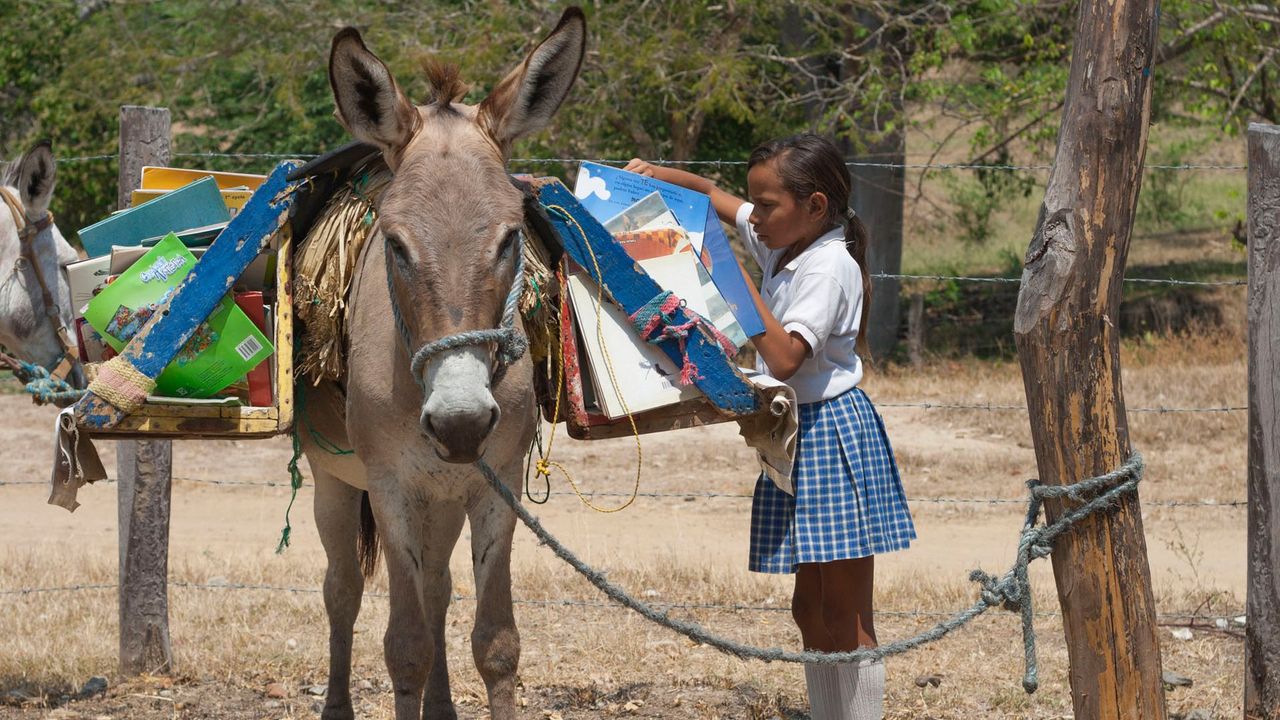
Created by teacher Luis Soriano, the Biblioburro delivers books to children living in remote villages that have no schools or libraries nearby. Soriano loads books onto the backs of his donkeys, Alfa and Beto, and travels long distances across rough countryside to bring reading materials to young students.
The idea began in the 1990s when Soriano realized many children simply had no access to books. Rather than waiting for resources to arrive, he decided to take books to them.
Camel Libraries: Kenya
In the desert regions of Kenya, traditional vehicles can’t always reach remote communities. Instead, librarians rely on a surprising mode of transport: camels. The Camel Mobile Library Service was launched to serve nomadic populations living far from towns and cities.
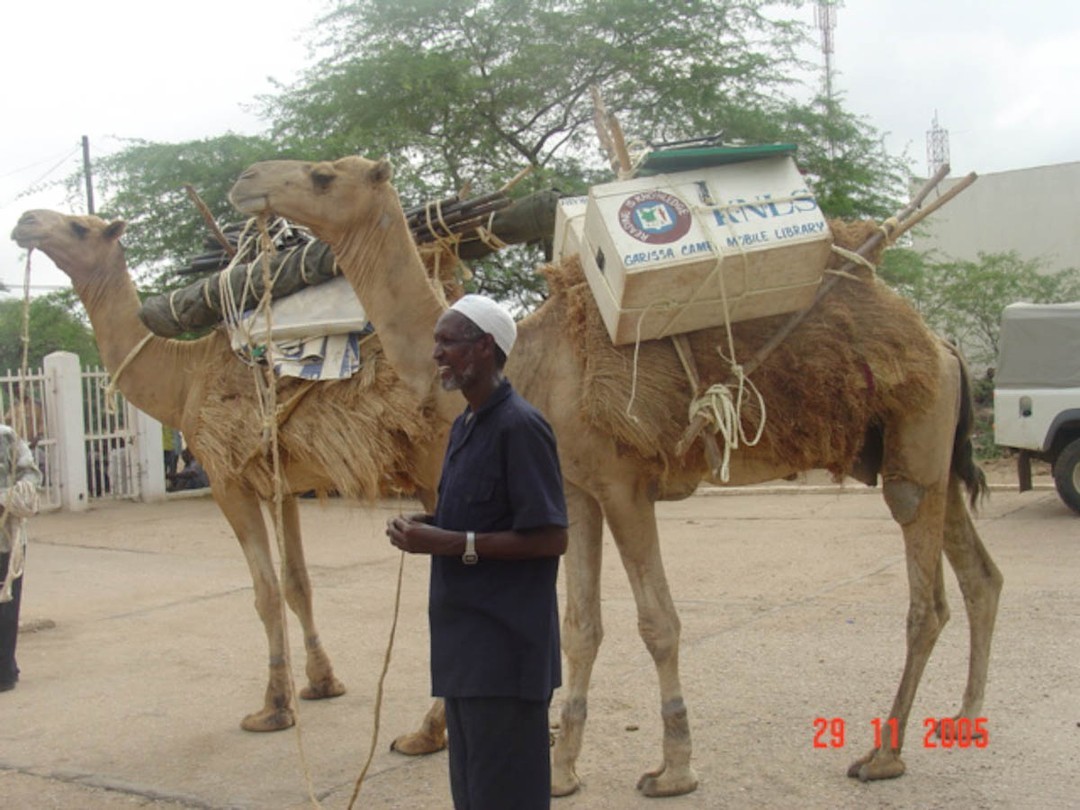
Camels carry boxes of books across the desert, stopping at settlements where children and families can borrow reading materials. Because camels are well-suited to the harsh terrain, they can travel through sandy landscapes where cars or trucks might struggle.
The Library Ship: Norway
Not all bookmobiles travel on land. In Norway, a floating library once sailed along the country’s famous fjords to deliver books to isolated island communities.
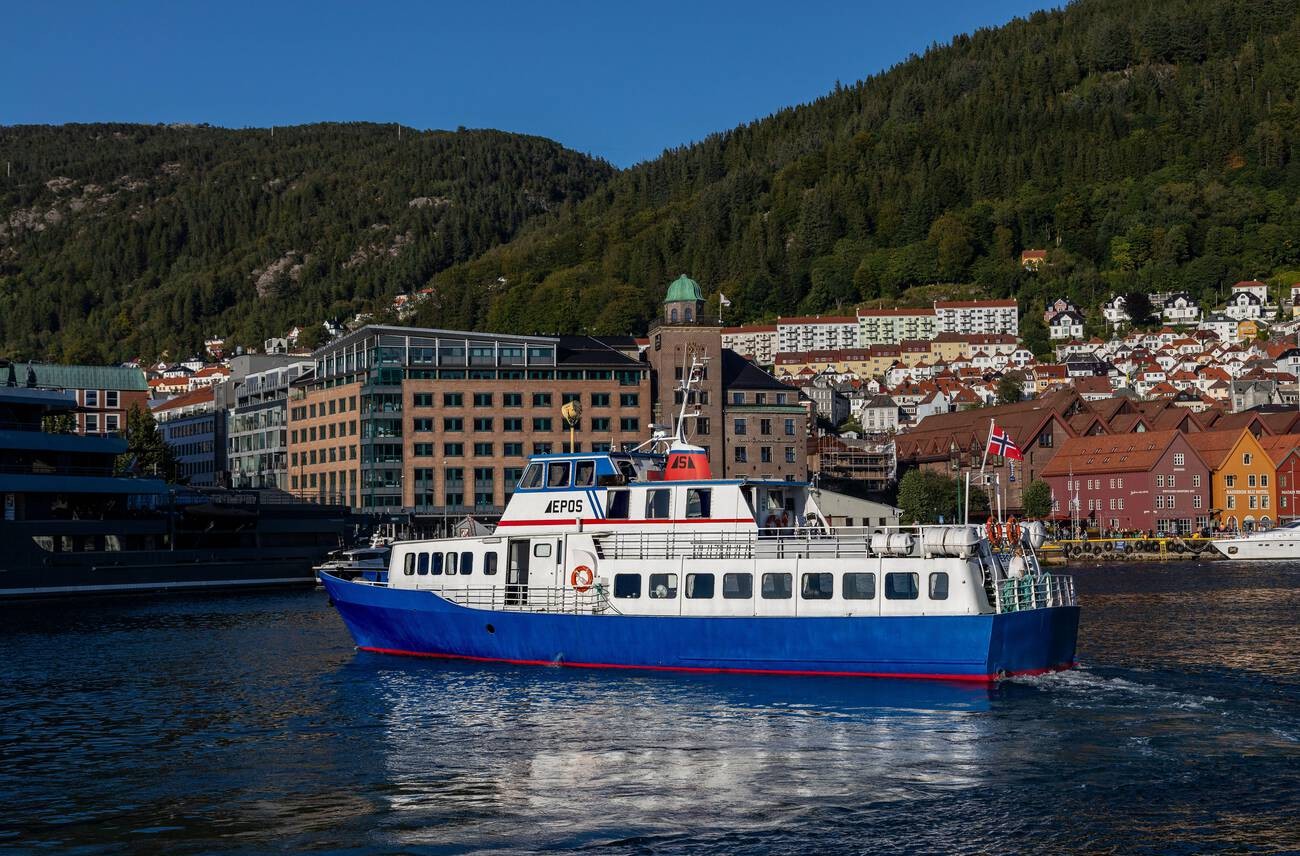
The ship, known as Epos, was specially built as a library boat and carried around 6,000 books at a time. It visited small coastal communities throughout western Norway several times each year, bringing books and cultural activities to places without local libraries.
On board were librarians, crew members, and sometimes entertainers who performed for children visiting the ship.
The Street Books Bicycle Library: United States
In Portland, Oregon, one bookmobile uses pedal power instead of fuel. Street Books is a mobile library built on specially designed tricycles. The project was created to serve people experiencing homelessness and others who might not have access to traditional libraries.
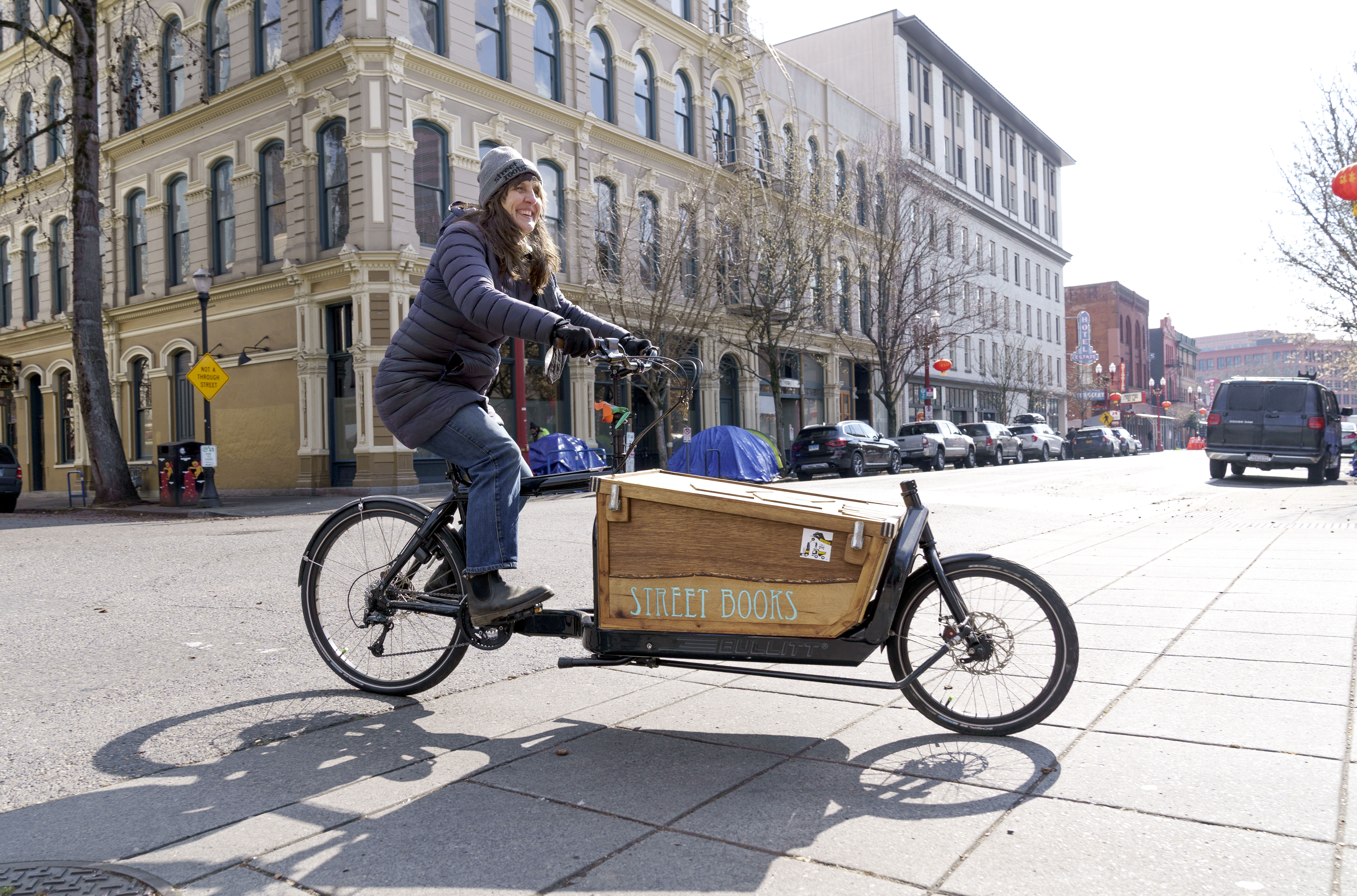
Founded by artist and teacher Laura Moulton, the library travels through parks and neighborhoods, offering books free of charge. Readers can borrow titles, talk with the librarian, and even join writing workshops.
The bicycle-powered library proves that bookmobiles don’t need large vehicles to make a difference.
Tiny Three-Wheeled Library: Italy
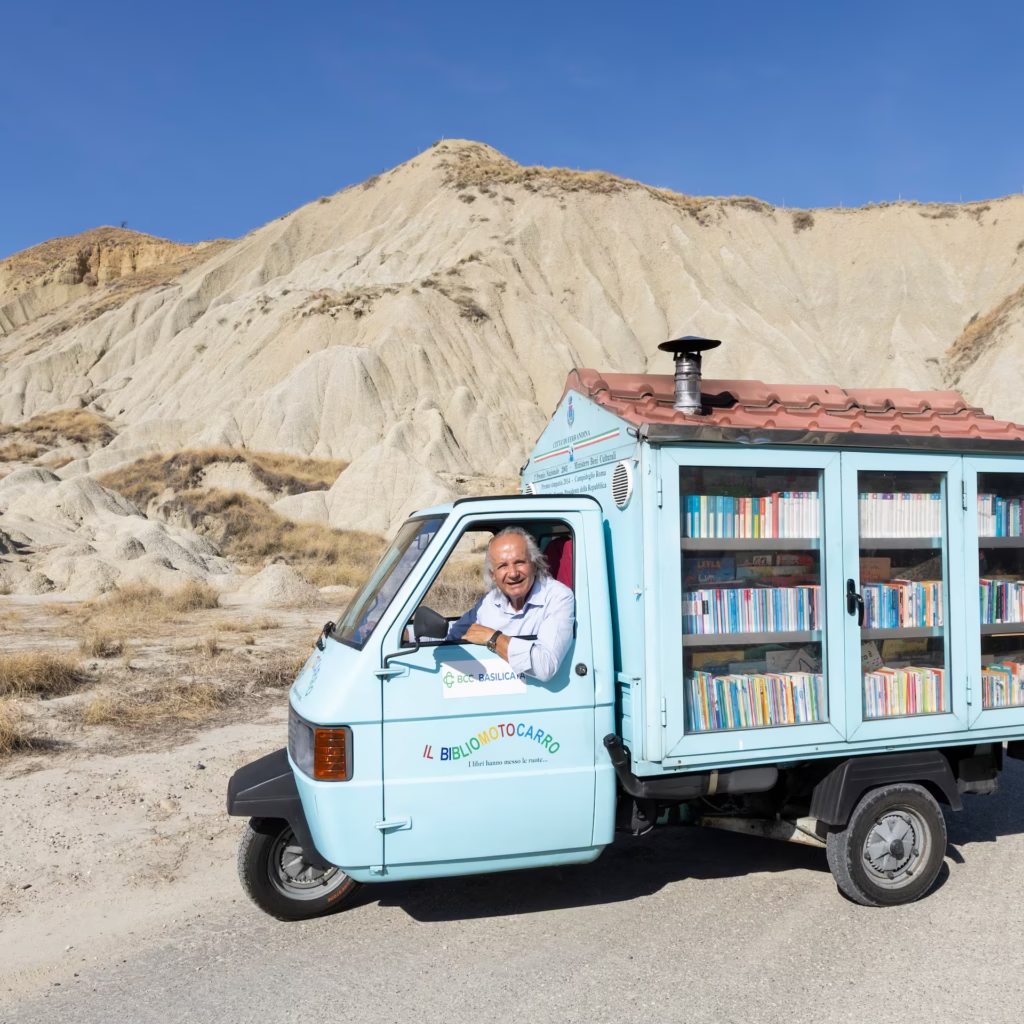
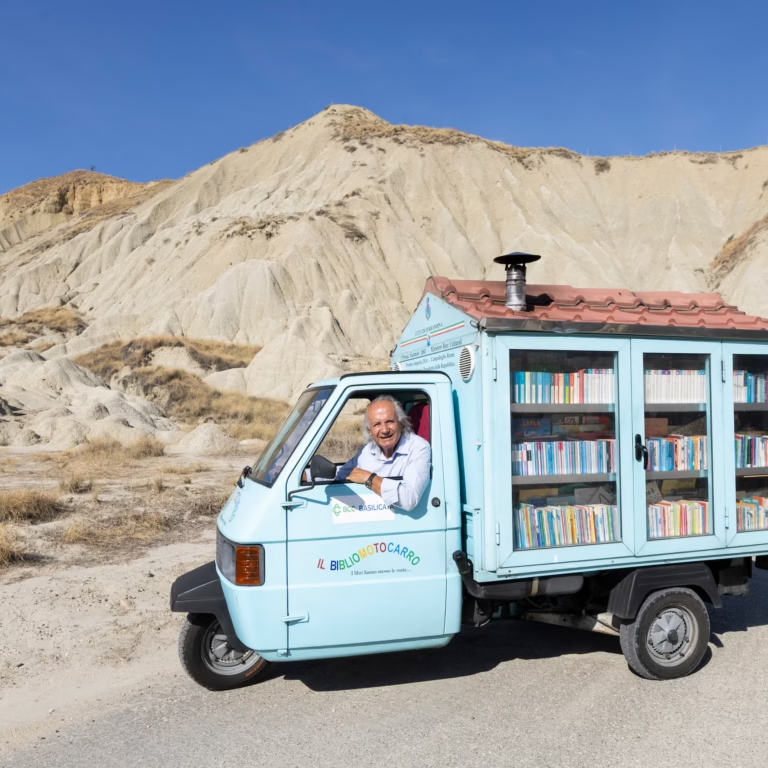
In the hills of southern Italy, retired teacher Antonio La Cava created one of the smallest bookmobiles in the world.
His mobile library, known as the Bibliomotocarro, is built from a small three-wheeled vehicle filled with colorful shelves and more than 700 books. La Cava drives it from village to village, encouraging children to read and even write their own stories.
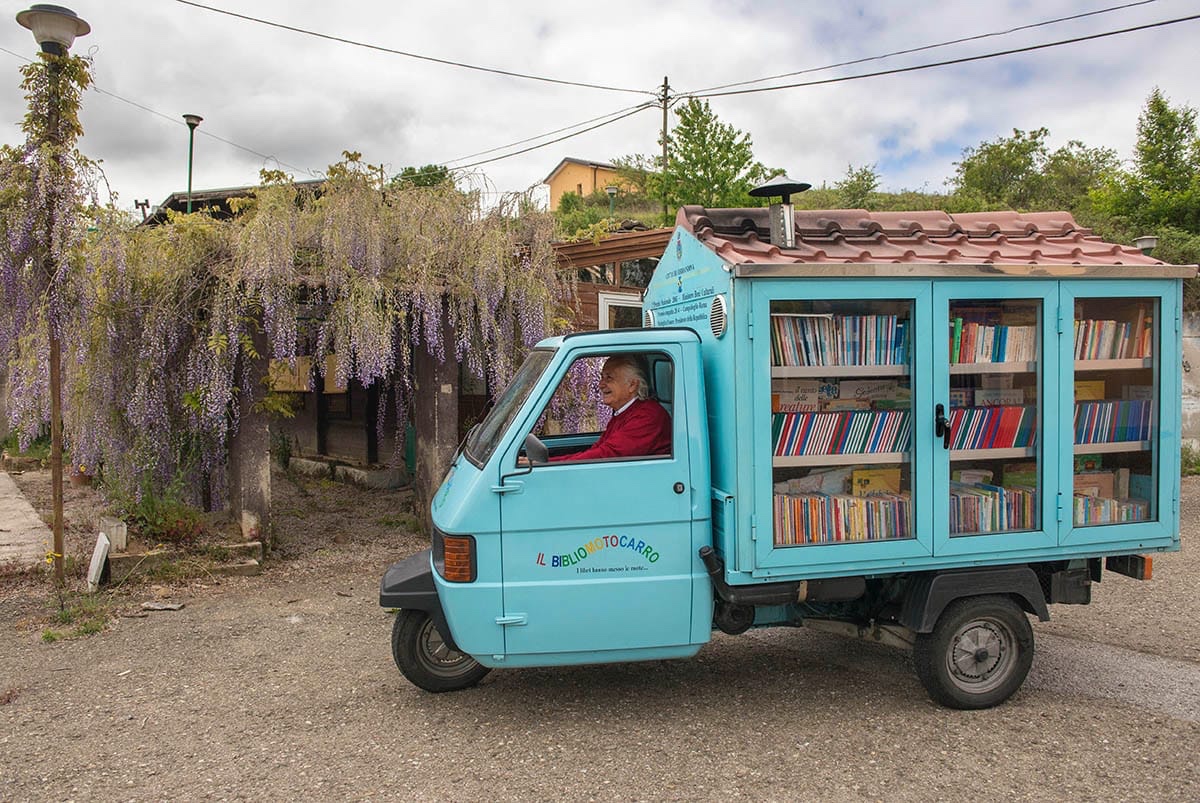
Many of the villages he visits are extremely small, sometimes with only a handful of young students. Without his traveling library, those children might not have access to books at all.
Elephant Libraries: Thailand
In some parts of Thailand, elephants have even been used to help deliver books. These “elephant libraries” travel to remote communities where roads are difficult to access.
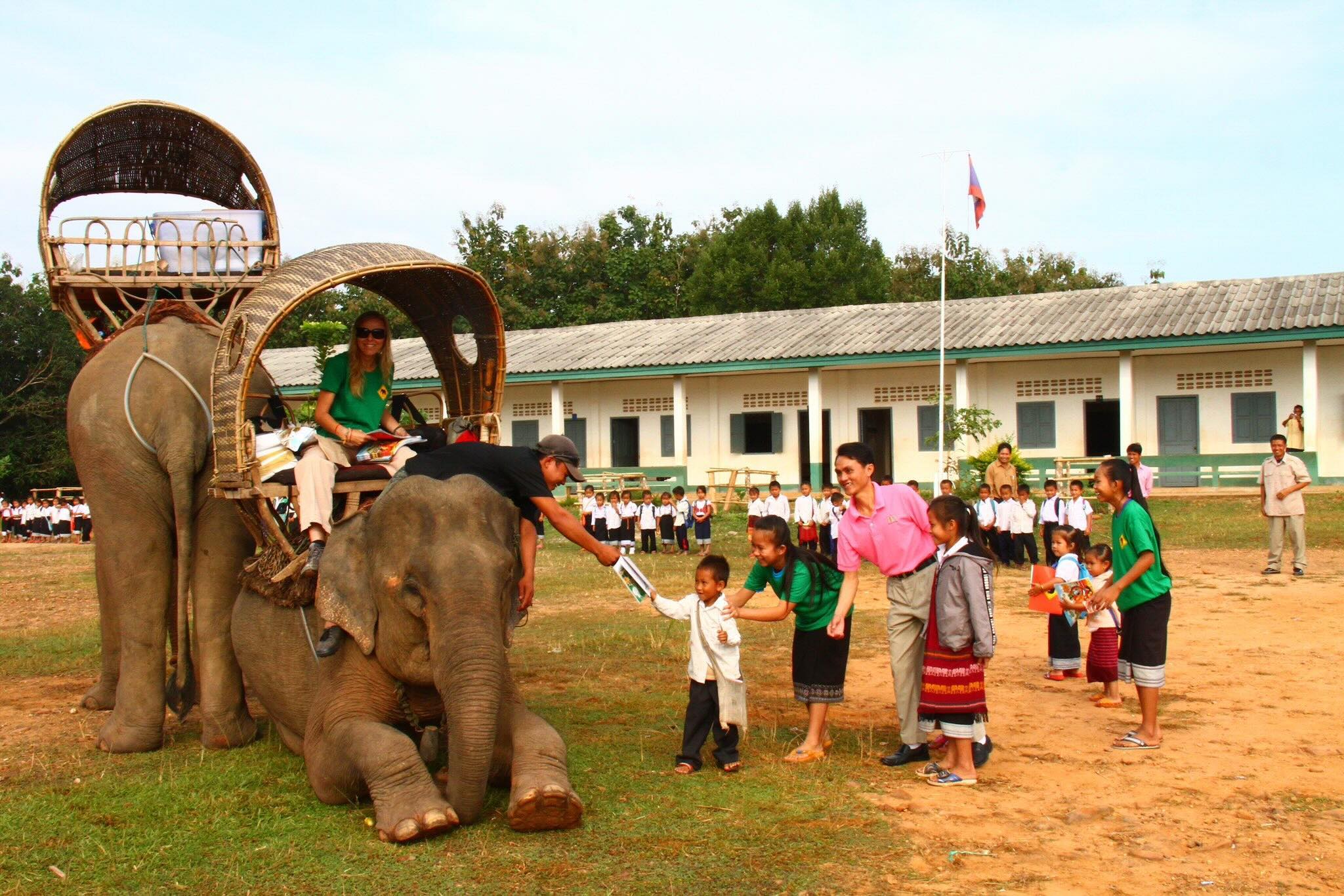
Books are loaded onto elephants, which then walk through villages where children gather to read and borrow them. The unusual method combines traditional transport with education, creating a memorable experience for young readers.
The Book Tank: Argentina

One of the most unusual mobile libraries in the world might also be the most dramatic.
Artist Raul Lemesoff transformed an old Ford Falcon into a tank-shaped vehicle called the “Weapon of Mass Instruction.” The moving library carries around 900 books and travels through Argentina, encouraging people to read.
Instead of weapons, the tank is filled with literature, a playful reminder that knowledge is far more powerful than violence.
Why Do Bookmobiles Matter?
Even in the digital age, bookmobiles continue to play an important role in communities around the world.
Many rural areas still lack easy access to libraries. Mobile libraries help close that gap by bringing books directly to people who need them. They also reach groups such as children, seniors, and people experiencing homelessness who may face barriers to visiting traditional libraries.
Beyond providing books, bookmobiles often create a sense of excitement around reading. For many children, the arrival of a traveling library is an event to look forward to, rather than just a book.

Millie Ramm
Millie has been writing since she was a child, and has spent more time with her nose in books than anywhere else. She has been ghostwriting novels and editing for the past few years, and when not working she is curled up with her cats, looking for her next read.