

Feeling overwhelmed? Discover how adult coloring books help people slow down, refocus, and relax, inspired by the early roots of art therapy.
In 1942, British artist Adrian Hill was living his nightmare. Recovering from tuberculosis in a lonely sanatorium in Midhurst, Hill had hours of long, lonely recovery ahead of him. In desperation for a cure to the chaos inside his head, he picked up a pencil and began to draw. He started simply, with a few sketches, just lines on paper.
Soon, he found that every stroke of his pencil allowed his mind to stretch; he had found an escape that worked far better than any of the medication he had been given. Hill couldn’t believe the effects of his new ‘Art Therapy’ and began recommending it to all of his fellow patients, impassioned to spread this new form of recovery.
Adrian Hill found that creative expression was not only beneficial for his own career but for his mental health. In putting pencil to paper, he became proof that creativity was not a talent limited to a few, but a joy that humans need to survive.
Why Creativity Calms the Mind
Hill’s hypothesis was not left unproven. Scientists, artists, and therapists all found the same conclusions – art therapy provided treatment that affected the mind in ways that simple verbal therapy couldn’t. Humans are complicated beings. Even though we use our voices to work through memories, trauma, and recovery, much of the change happens behind the scenes.
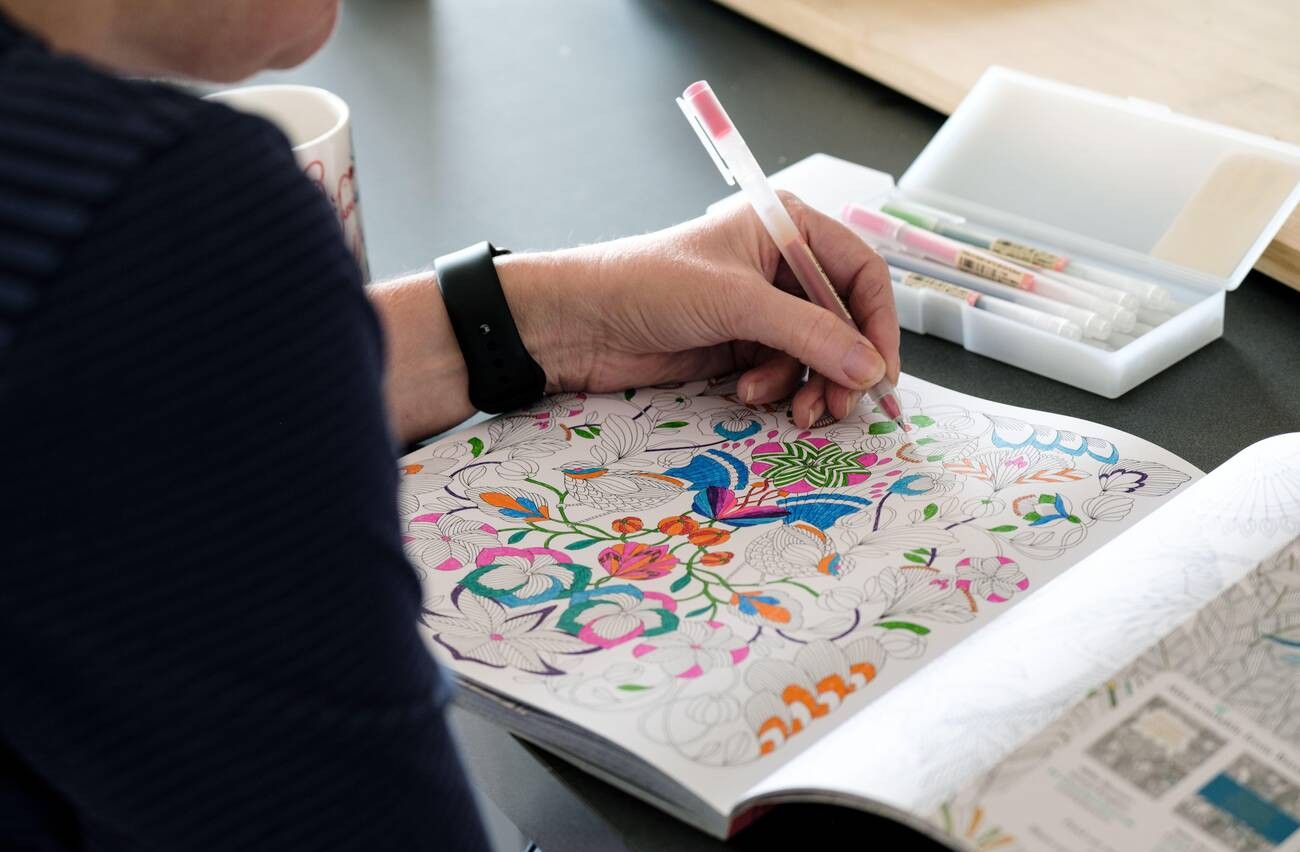
Using art as a means of expression engages your body, mind, and even soul all at once, and provides a moment of solace where all you need to focus on is the present moment. Our breaths become longer, our heartbeats slower, and our minds allow themselves to focus on being rather than doing. While we colour, we are removed from the kaleidoscope of problems, the millions of things we need to do, and instead we just…color.
The Japanese Philosophy of Slowing Down
My wife is Japanese. Since having met her, I have become fascinated with the way the Japanese approach life. The intricacies of Japanese culture, language, and philosophy often reveal secrets that the Western world does not understand. I remember her telling me about a world that is almost impossible to translate into English – yukkuri.
Yukkuri, by the closest definition, means slowly, leisurely, or without hurry. But for those of us who speak multiple languages, we know that words often extend beyond their translations. When someone tells you, ‘yukkuri shite ne,’ they are not just telling you to slow down. They are allowing you to take your time. To savour. To be present in the moment rather than forcing rapidity. In this way, ‘yukkuri’ extends beyond a mere word and instead transforms into a philosophy of life.

Similarly, the Japanese word ma encapsulates the philosophy of taking a meaningful pause. Modern life is busy; almost every moment of our days and our minds is occupied. Ma provides a moment of solace. A break where our mind can wander without needing a destination.
The Hidden Cost of Decision Fatigue
I often underestimate the burden of decision fatigue. It is, of course, a part of the human condition to make decisions. However, in our modern world, the decisions we have to make have amplified considerably. One study estimated that now, we make around 35,000 decisions each day.

The majority are unconscious, banal even – which way to walk, how long to stay in the shower, which email to reply to first – but they all take a toll. Even choosing what to make for dinner, every single evening, can feel overwhelming. It is why even traditional colouring books can feel daunting, for one has to choose the colour scheme and where to start. Forty colored pencils and thus infinite choices, and when you’ve already made over 30,000, infinity can be too much to bear.
Why Monochrome Coloring Works
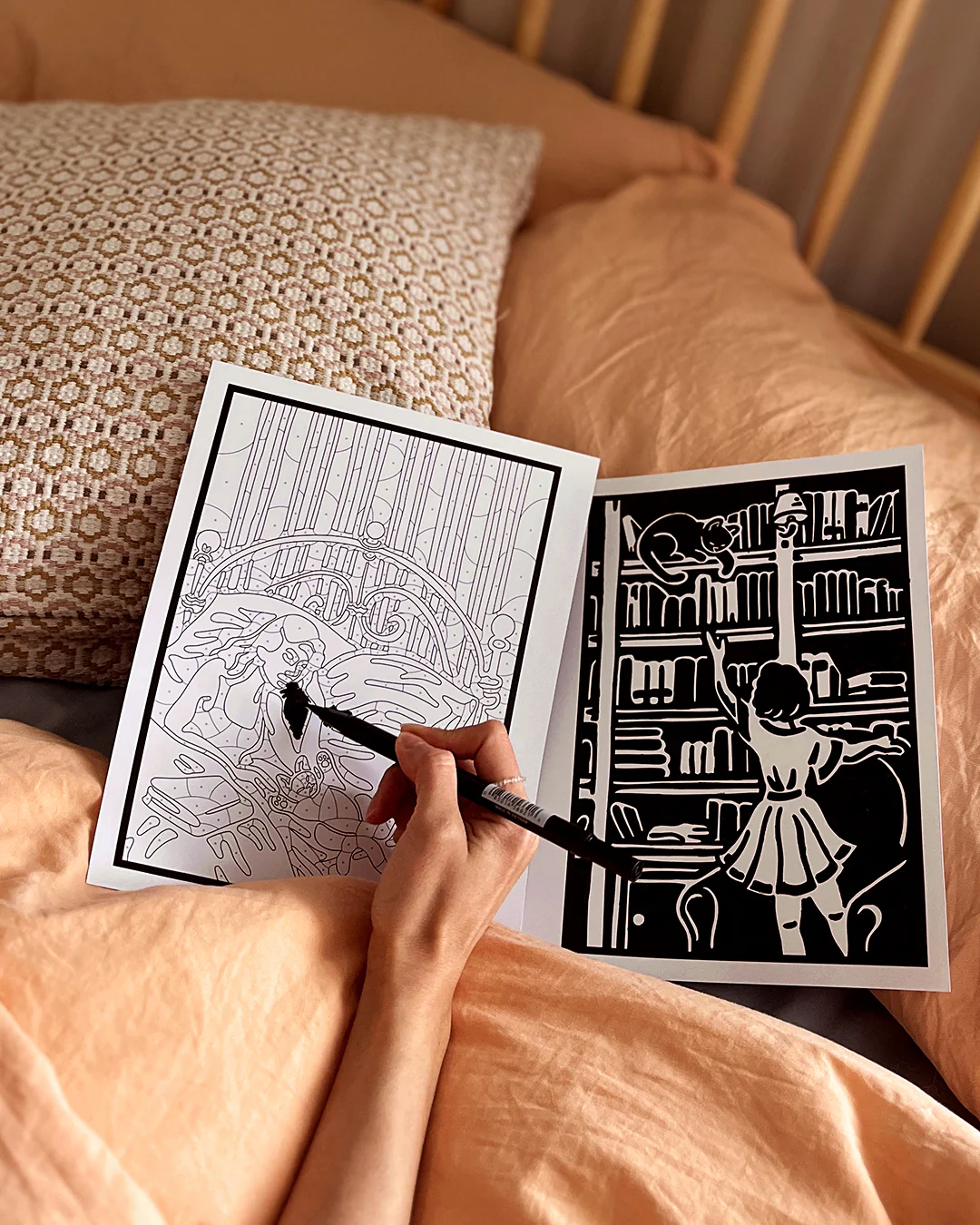
Monochrome colouring releases you from that burden. One pen, one colour; black and white. It allows you only one choice – where to start. No ‘good’ or ‘bad’ outcomes, just the present moment, accompanied by the gentle glide of pen on paper as your mind allows itself to rest.
Introducing The Bookish Coloring Book
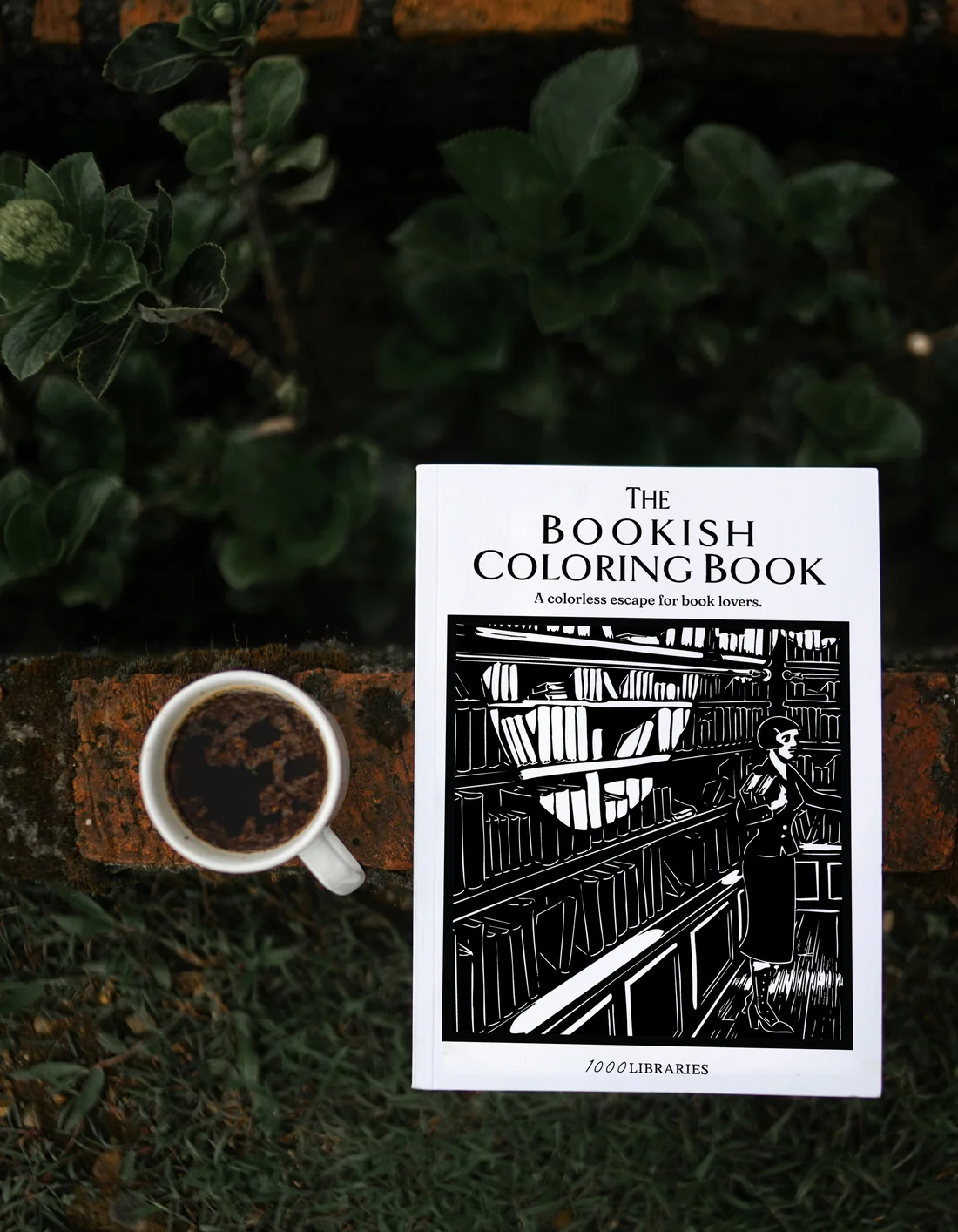
Earlier this year, we created The Bookish Coloring Book, based entirely on this philosophy of simplicity. This monochrome colouring book is full of ‘bookish’ illustrations hand-created by real artists, human artists. We have always fought for the value of true art, not AI, not algorithms, but things borne of true creativity.
The Bookish Coloring Book includes 50 scenes, ranging from cosy reading nooks, teetering book stacks, library corners, and armchairs you want to climb into with a really good book. Each scene is one designed solely for book lovers looking for a reason to put down their phone and grant themselves a little bit of ma and yukkuri.
The Science Behind Coloring
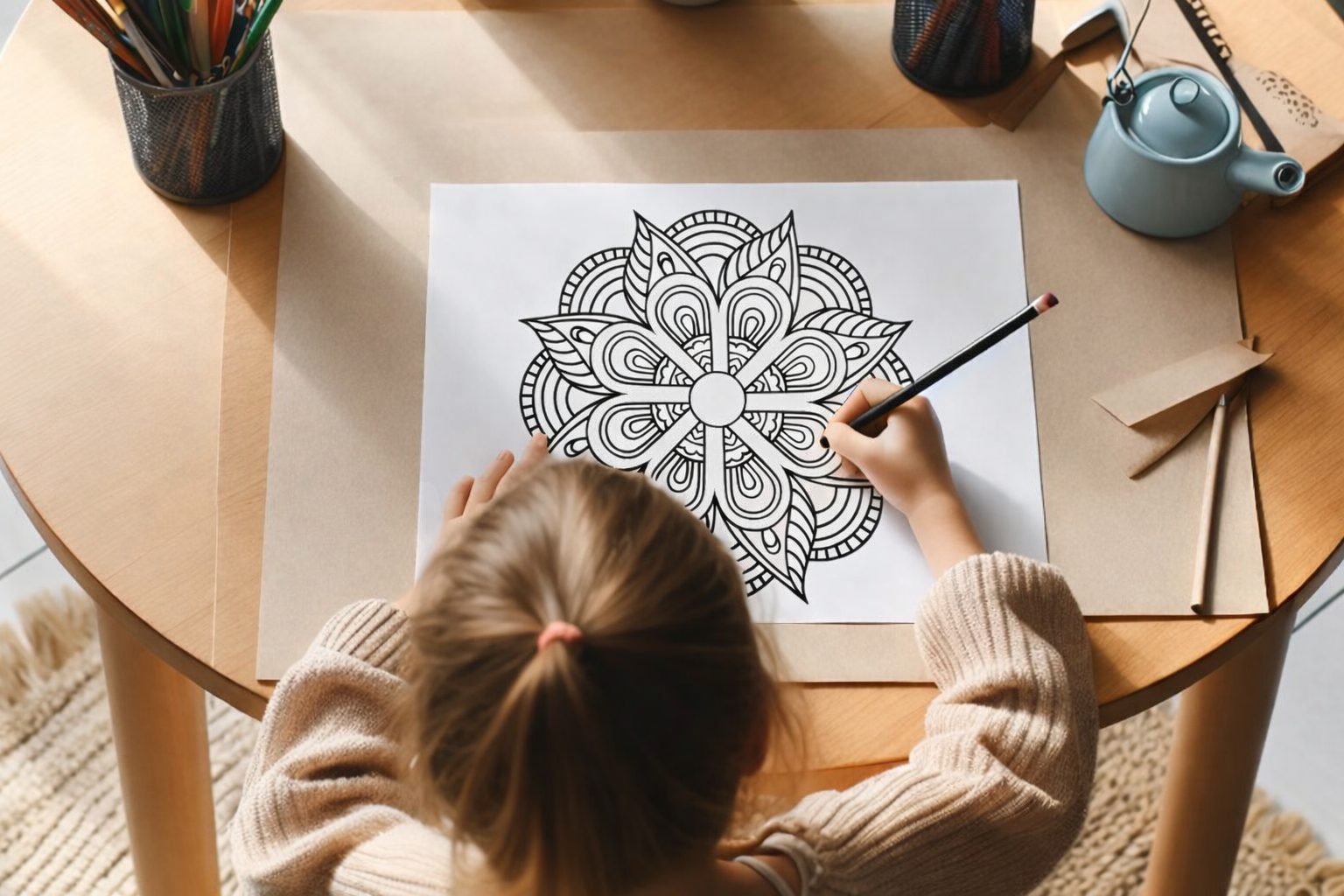
If you don’t want to take my word for it, just look at the science. A study in 2005 suggested that colouring mandalas reduced anxiety significantly – even more so than free-form drawing. No one doubts that humans are intelligent creatures, but we crave physicality. We yearn for a moment free from screens and technology, to feel paper beneath our fingertips.
Our lives may feel dictated by tapping little glass screens, but we can have our own quiet rebellion. Picking up a pen, feeling its weight, and seeing the page come to life before your very eyes. An accomplishment not comparable with those of the digital world.
An activity is stubbornly analogue. More time can slip away; there is no reminder of the life that is passing, because you are living it. In moments like this, where I partake in my own kind of art therapy, I think of yukkuri, of ma. Of living the pause. Of living.
A Bedtime Ritual for a Busy Mind
I like to colour in-between that gentle gap between dinner and dreams. That liminal time, when the workday has ended, but the mind is still flickering like a flame. I have made it my ritual: setting a gentle playlist, making a warm cup of cocoa, and opening the book to where I left off.
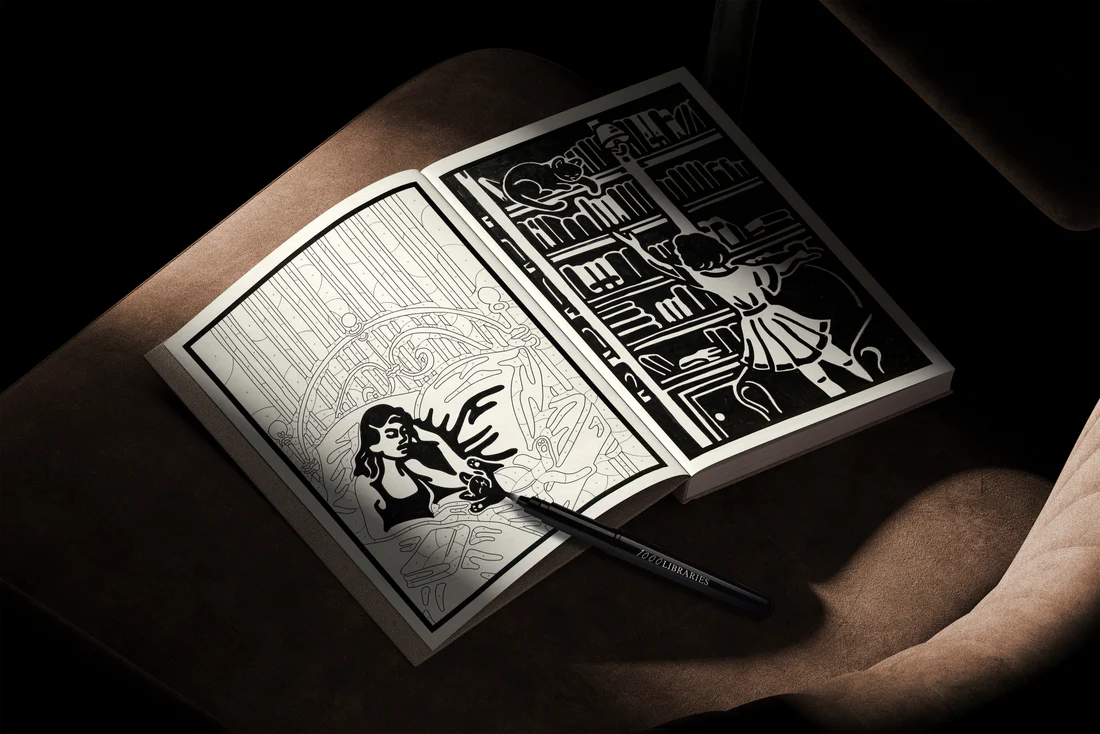
It sounds strange, but the thing I love the most about monochrome coloring is the liberation it grants me. I am freed from decision-fatigue, color theory, and the anxiety of things going wrong.
Just black ink on cream paper, settling my mind in a way a screen never can. Even ten minutes of coloring soothes the thoughts that used to race in my mind before sleep. The phone stays in the other room; for once, it is my hands that are busy and my mind that can rest.
Why the Pause Matters
We seem to have forgotten that the pause is not the absence of activity, but just the presence of another kind. The type of activity that is gentle, absorbing, and delightfully pointless.

Sometimes the most productive thing you can do is pick up a pen and colour inside the lines. I invite you to try adult coloring books and see if it helps you slow down. It doesn’t have to be our own, but if you’re a book-lover, you may want to try it.
Here is a link to The Bookish Coloring Book, if you’re looking for a reason to use your time, to yukkuri shite ne. I’ve taken $5 off just for you.
Some feedback for The Bookish Coloring Book
Joy Benton: 5 stars

‘It’s so fun and makes some amazing pictures!!!‘
Gaudalupe Sarracino:

‘Love the one color coloring book. No stress, and it actually relaxes you. You can choose the color back or another color for different pages !! Hoping they come out with more.’
Helena Cabiroy:

‘This is just so relaxing. I find that it calms me down and is now part of my bedtime routine. I also think that it helps with fine motor control. It’s really just mindless but turns out looking great as well!’
Claude Filimenti:

‘Wonderful. I use it for rehabilitation of my hands prior to learn to write anew.’
Kathryn Yommer:

‘I am obsessed with this book! It is so fun and so relaxing. Definitely recommend to anyone looking to reduce stress and screen time.’
Karen Griffin:

‘It is an absolute pleasure to get this beautifully presented colouring book out to spend time out on. So relaxing, takes you to a happy house.’

Vincent Phan
Vincent is the founder and Editor-in-Chief of 1000 Libraries Magazine. He is a Paris-born ex-corporate turned bookseller and philosopher, on a global mission to spread the joy of physical books in our age of digital technology.