Five UNESCO Cities of Literature in Asia Pacific: Hobart, Melbourne, Jakarta, Nanjing and Okayama, from Fullers Bookshop to State Library Victoria.
Hobart sits about as far south as a city can go before Antarctica. This harbor town of 250,000 people rests in Tasmania, the island off Australia’s southern coast, and the main stopping point of the research ships bound for the icy pole. On June 21, 2026, its newest building, a library, opened. MONA, the Museum of Old and New Art, unveiled the Phrontisterion: a $100 million library dug into sandstone beneath a concrete amphitheatre. It holds the 30,000 books that came almost entirely from the personal collection of David Walsh, the professional gambler who built MONA.
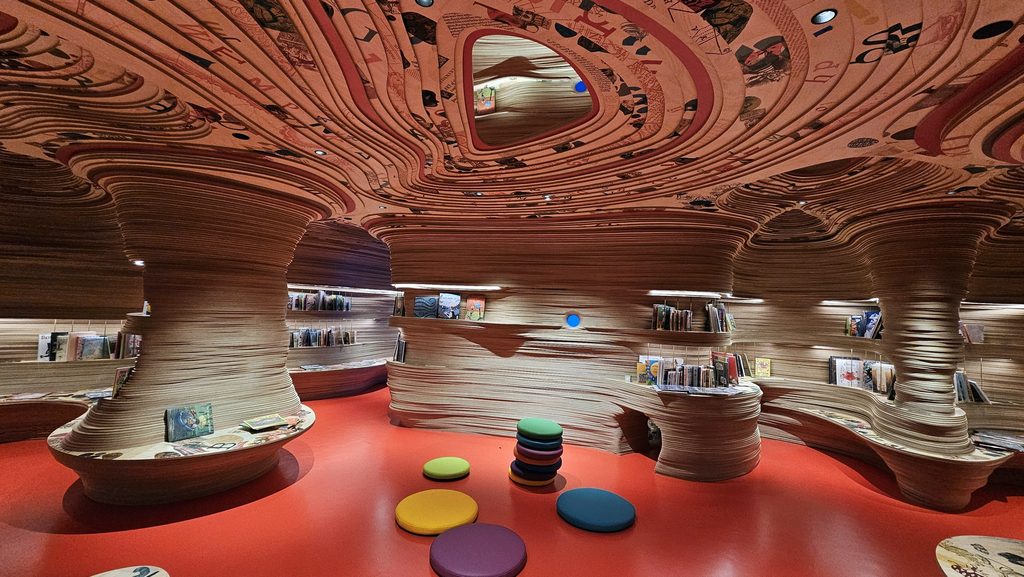
There is a Shakespeare First Folio, a cave-like children’s library, and shelves with no fixed order, instead using a system that tracks each individual book no matter where you set it down. Walsh did it this way because, in his own words, he wanted to be able to put a book anywhere and still find it. Entry comes with the museum ticket.
UNESCO named Hobart a City of Literature in 2023, a title created in Edinburgh in 2004 and held by more than sixty cities that can prove they have the machinery of reading. Eleven lie between Dunedin and Lahore. This guide takes five throughout Asia Pacific: Hobart; Melbourne, which turned the title into a building; Jakarta, which built the tallest library in the world; Nanjing, whose most famous bookshop sits in an old bomb shelter; and Okayama, Japan, where a cauldron answers prayers.
Hobart, Australia
The newest literary capital in the region, on an island that reinvented itself through art.
Hobart is Australia’s second-oldest capital, founded in 1804 on the estuary of the Derwent beneath kunanyi/Mount Wellington. MONA, the Museum of Old and New Art, opened upriver in January 2011, three floors cut into the rock and half an hour by ferry from the waterfront; the Phrontisterion is its new wing, and a day there now begins or ends among books.
Back in town, the Saturday market under the 1830s warehouses of Salamanca Place has run since 1972 and is now the most visited attraction in Tasmania, outdrawing the museum; Battery Point’s cottages climb the hill behind it; and the Antarctic research ships tie up at the docks, because Hobart is the gateway to the South Pole.
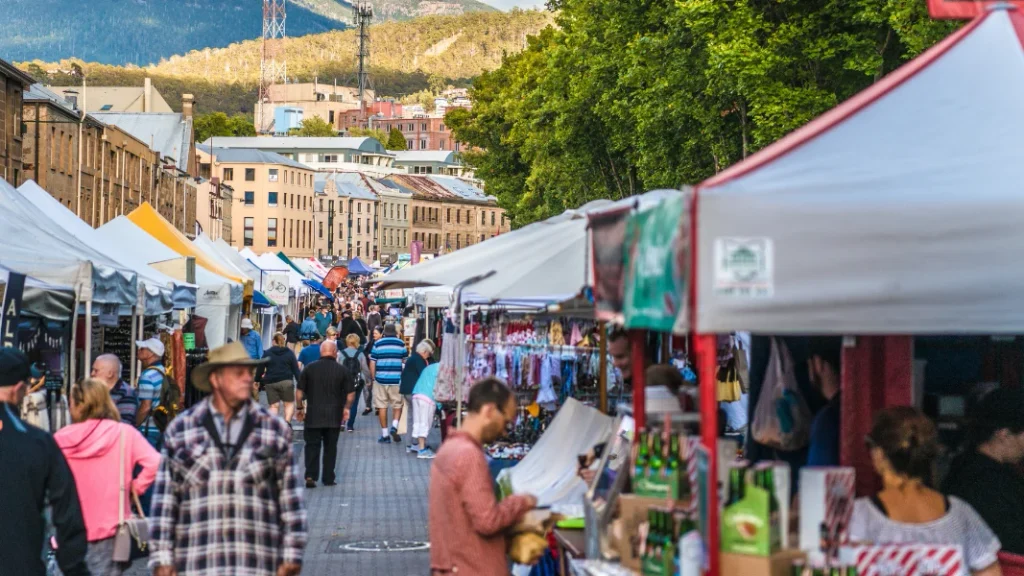
This is a city that nurtured its literary culture. The UNESCO bid, put together in ten months by a working group of booksellers, librarians and academics, called nipaluna/Hobart “a city of stories, positioned on an island of stories,” and built its case. Its most striking points include the oral traditions of Tasmania’s First People and the revival of palawa kani, the reconstructed Aboriginal language of the island, and Richard Flanagan, the Hobart novelist who won the Booker Prize in 2014 for The Narrow Road to the Deep North. The designation arrived on October 31, 2023.
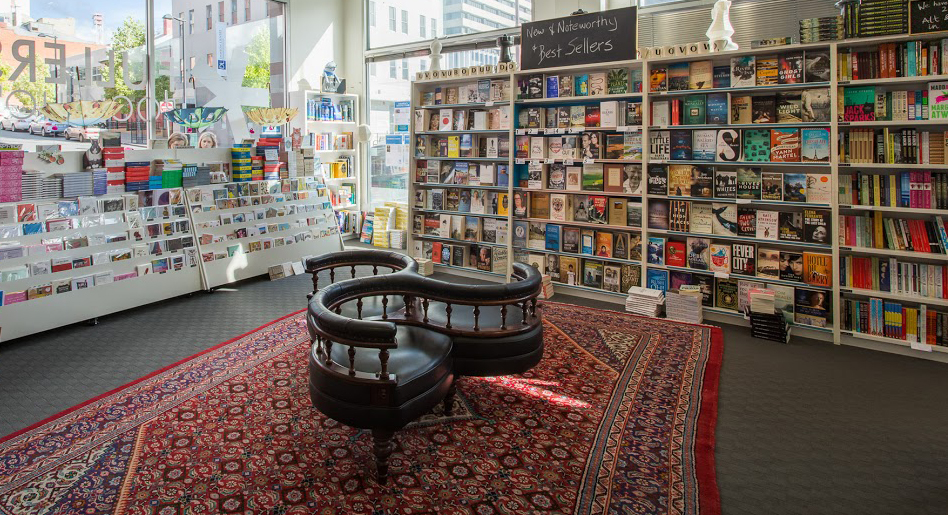
Its living heart is Fullers Bookshop, trading since 1920 and part of the bid, whose shop floor on Collins Street looks straight up at the mountain. A second important landmark is the Hobart Bookshop, tucked into Salamanca Square a few minutes’ walk away. After an hour among the Tasmanian shelves at Fullers, the mountain in the window starts to look like part of the stock, which, in this city, it is.
Melbourne, Australia
The world’s second City of Literature, and the one that shows what the title can build.
Melbourne was named a City of Literature in 2008, four years after Edinburgh, and it used the designation as a blueprint. Within two years, it had opened the Wheeler Centre, a home for books, writing, and ideas in a wing of the state library. It was named for its patrons Tony and Maureen Wheeler, who founded Lonely Planet (the travel guidebook publisher) in the 1970s.
Most of its events cost little or nothing, and it houses the literary organizations that make Melbourne run. Among those organizations is the Melbourne Writers Festival, which turned 40 in 2026 and fills the city each May.
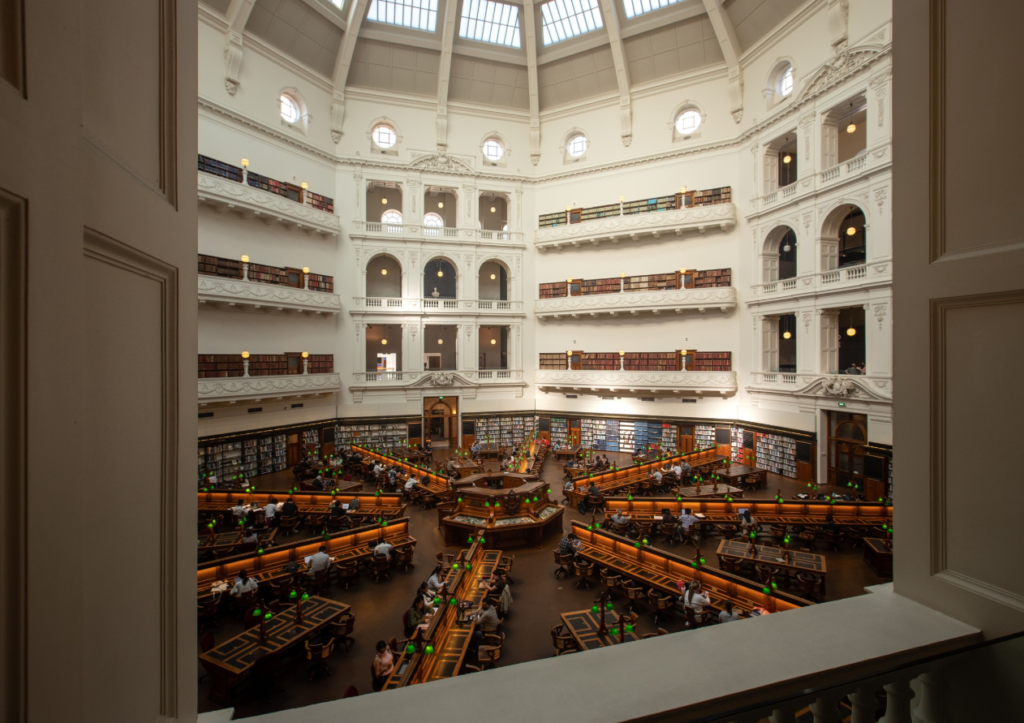
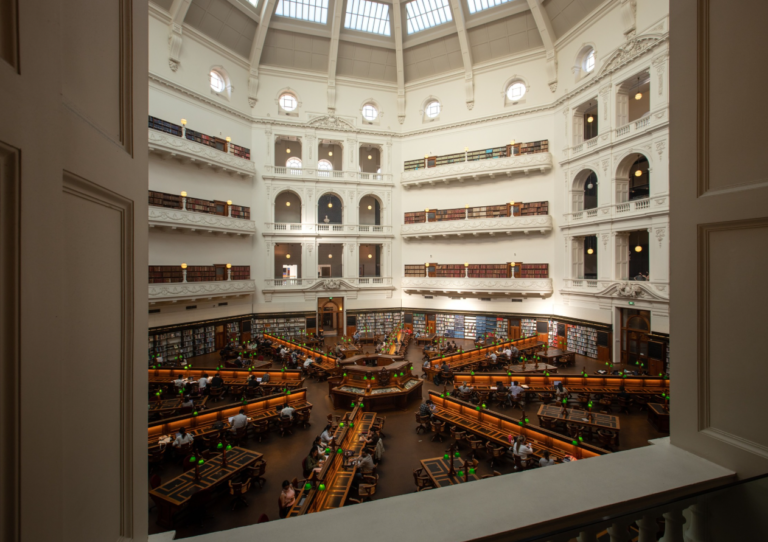
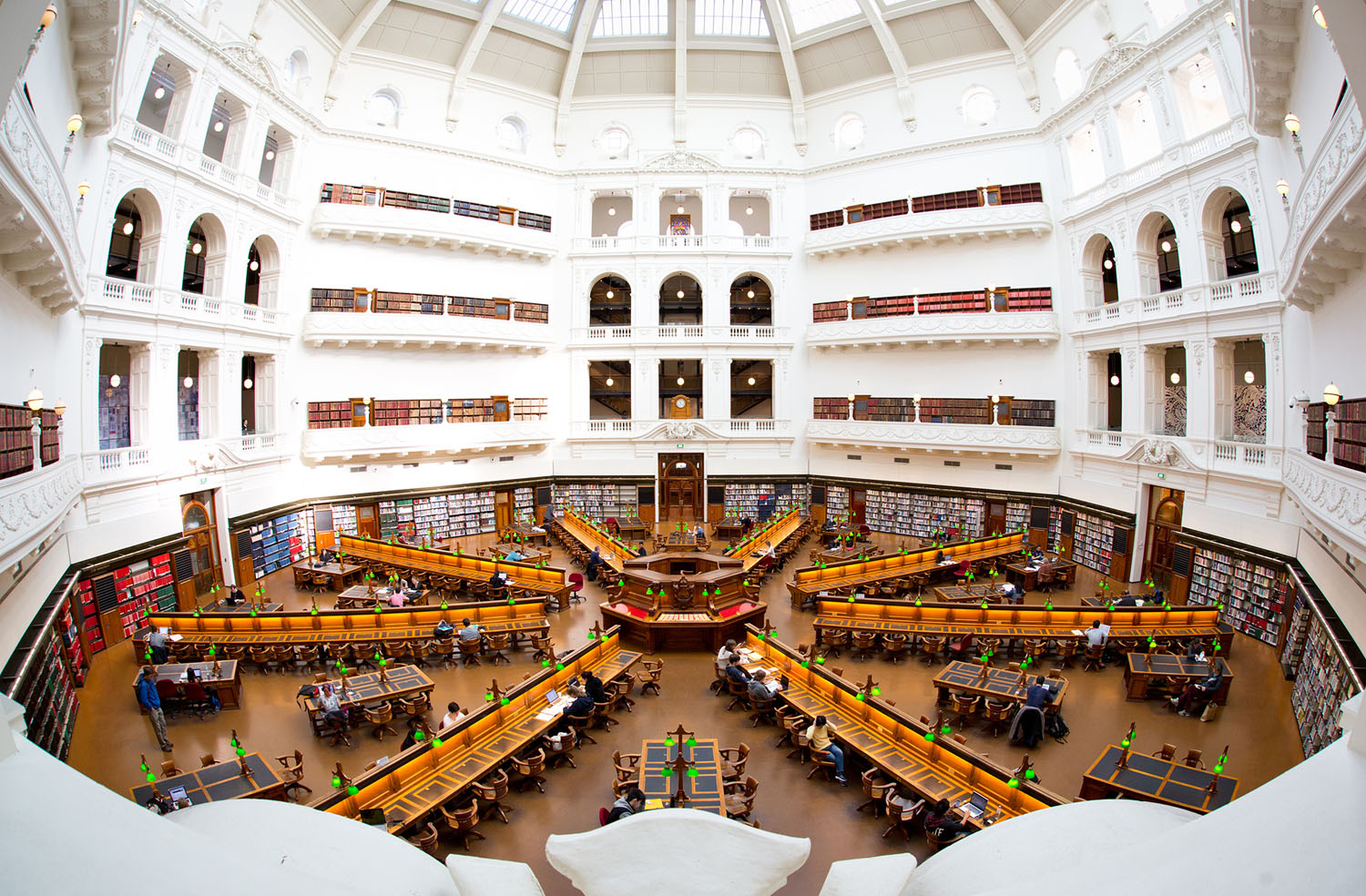
Meanwhile, State Library Victoria is the true reason to come. It opened in 1856 as one of the first free public libraries in the world, and its La Trobe Reading Room, completed in 1913, was the largest reinforced-concrete dome anywhere when it was built: 34.75 meters across and exactly as high. Desks radiate from the center under green glass lamps, and the original silky oak chairs are still in use.
Ned Kelly’s armor sits in the galleries upstairs. Around the corner on Bourke Street, the Paperback Bookshop has traded since the 1960s and once sold titles the censors had banned. On top of that, Melbourne’s literary life is famous for its cafés and laneways.
Jakarta, Indonesia
A capital that answered the question “how do you make a megacity read?” by building upwards.
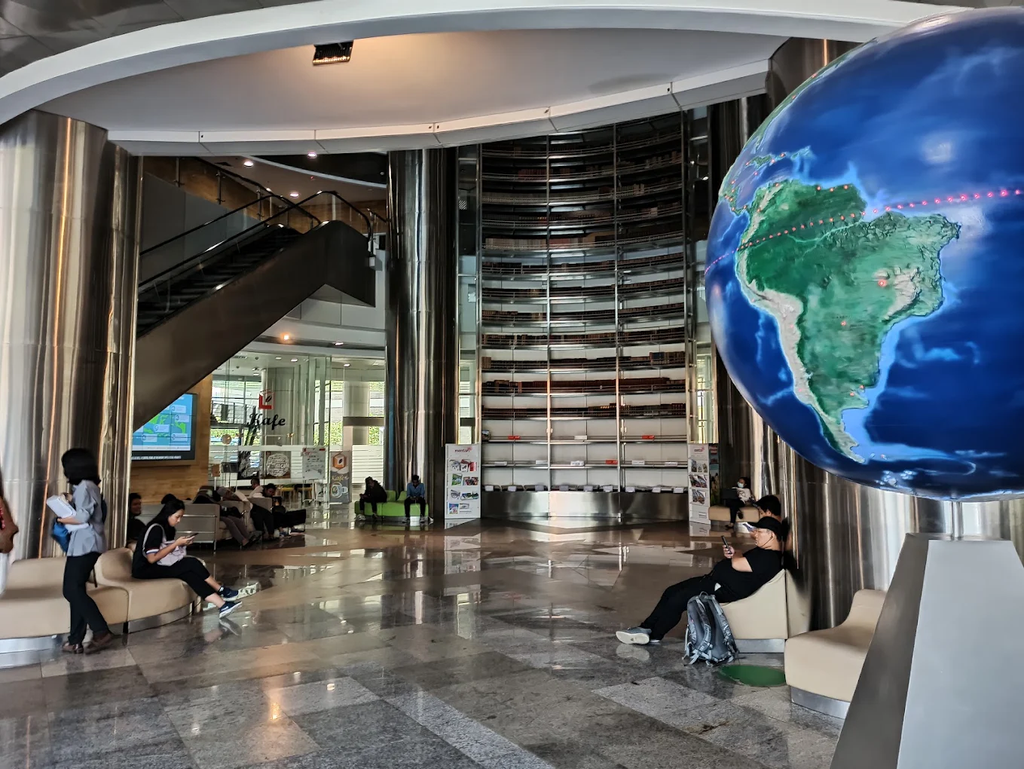
Stand at the National Monument in central Jakarta and look south. The white tower facing you across the traffic is a library, the National Library of Indonesia. Opened by President Joko Widodo on September 14, 2017, it rises 24 floors and 126.3 meters and is claimed as the tallest library building in the world. Its origins go back to 1778 and the Batavian Society of Arts and Sciences, the first learned society in Asia. The idea of a grand national library dates to Sukarno, the country’s first president, although it took 70 years and a skyscraper to deliver it.
Jakarta became a City of Literature in 2021, and its second landmark is quieter. At the Taman Ismail Marzuki arts complex in Cikini, built on land that was a zoo until the 1960s, the Jakarta Library reopened in 2022 in a timber and concrete building. Lead architect Andra Matin designed its long form after the traditional longhouses of Sumatra and Kalimantan.
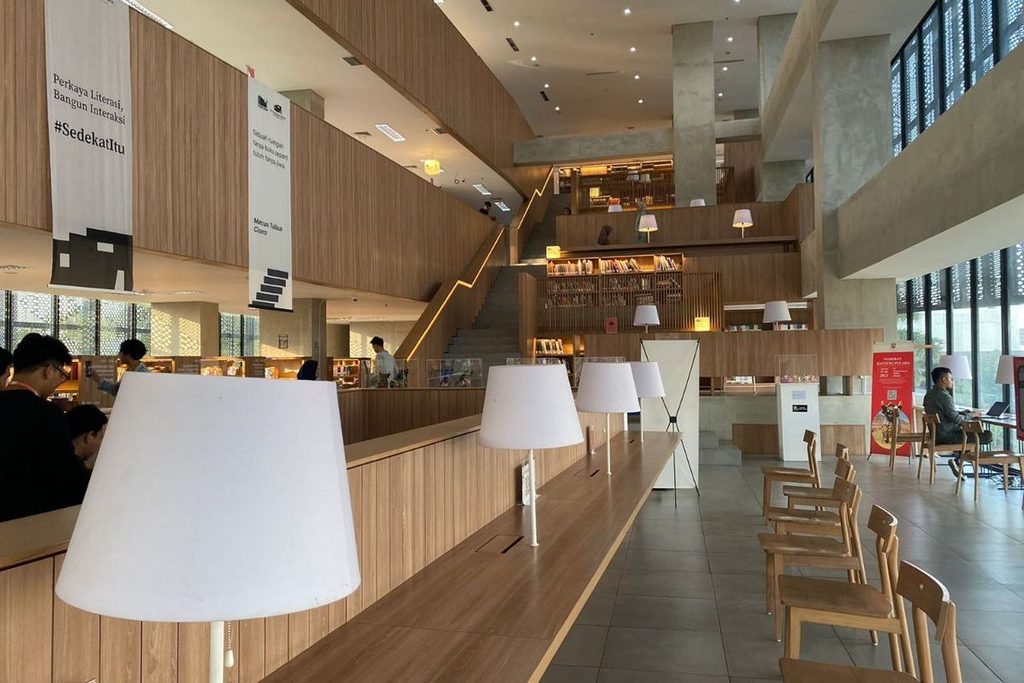
It stays open until 10 PM and shares the building with the H.B. Jassin Literary Documentation Centre, founded in 1976 by the critic who spent his life saving Indonesian manuscripts, among them the handwriting of the poet Chairil Anwar. On a weekday evening, the reading floors are full of people in their 20s, and the sound is the good kind of quiet. In a city of 10 million, that quiet is a policy decision.
Nanjing, China
China’s first City of Literature has been at it for 1,600 years.
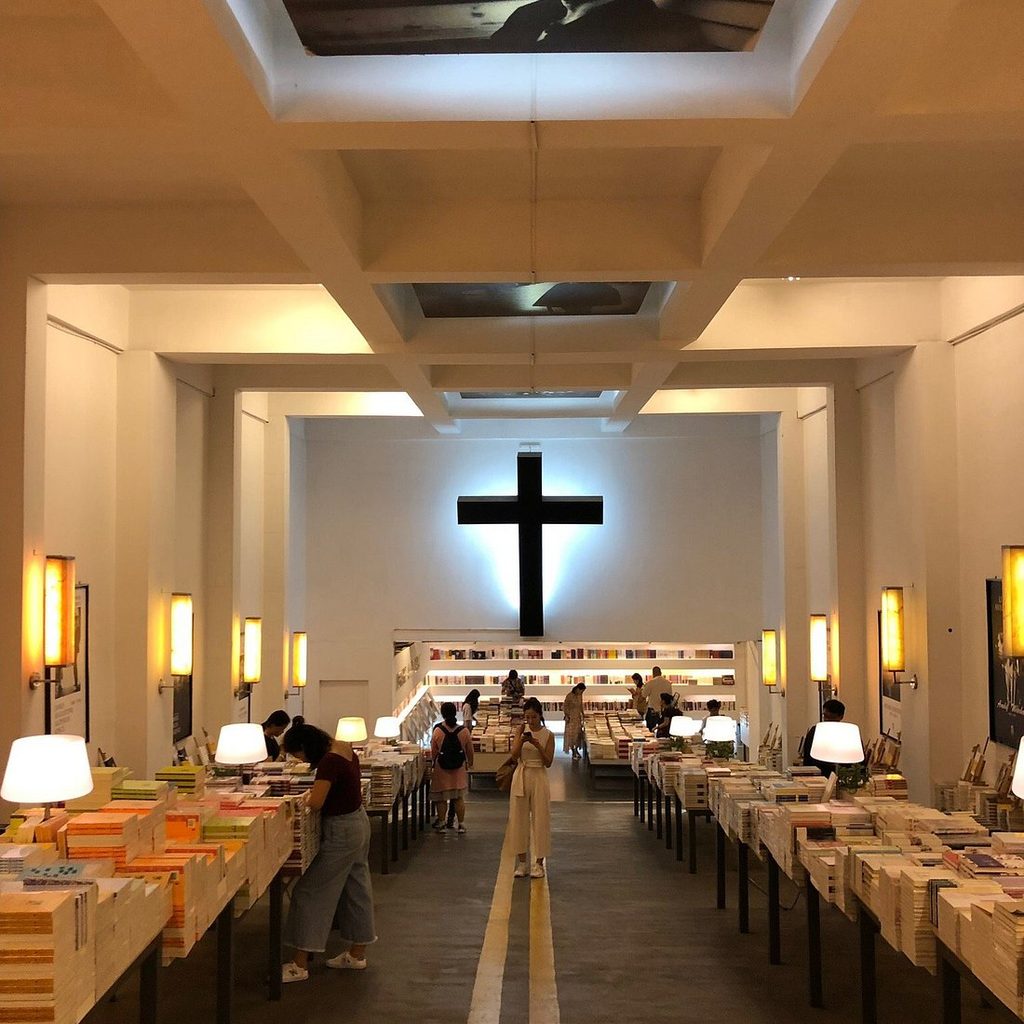
Nanjing became China’s first City of Literature in October 2019, and the case was not hard to make. The country’s first school of literature was founded here in AD 439. Cao Xueqin grew up in the Jiangning Weaving Bureau’s mansion, where his family produced cloud brocade for the emperors, and the family’s slow fall became Dream of the Red Chamber, one of the country’s Four Great Classical Novels. The bureau’s site is now a museum of the brocade, and stations on Metro Line 3 are decorated with scenes from the book, which tells you how seriously the city takes it.
Then there’s the car park. Librairie Avant-Garde was founded by Qian Xiaohua in 1996 and moved its flagship into the garage under Wutaishan Stadium in 2004, after the business had already gone bankrupt, persisting even in the face of hardships. You walk down the ramp past the painted lane markings, and the books start where the parking bays end: roughly 4,000 square meters of humanities texts only; no textbooks, no self-help, and no manuals.
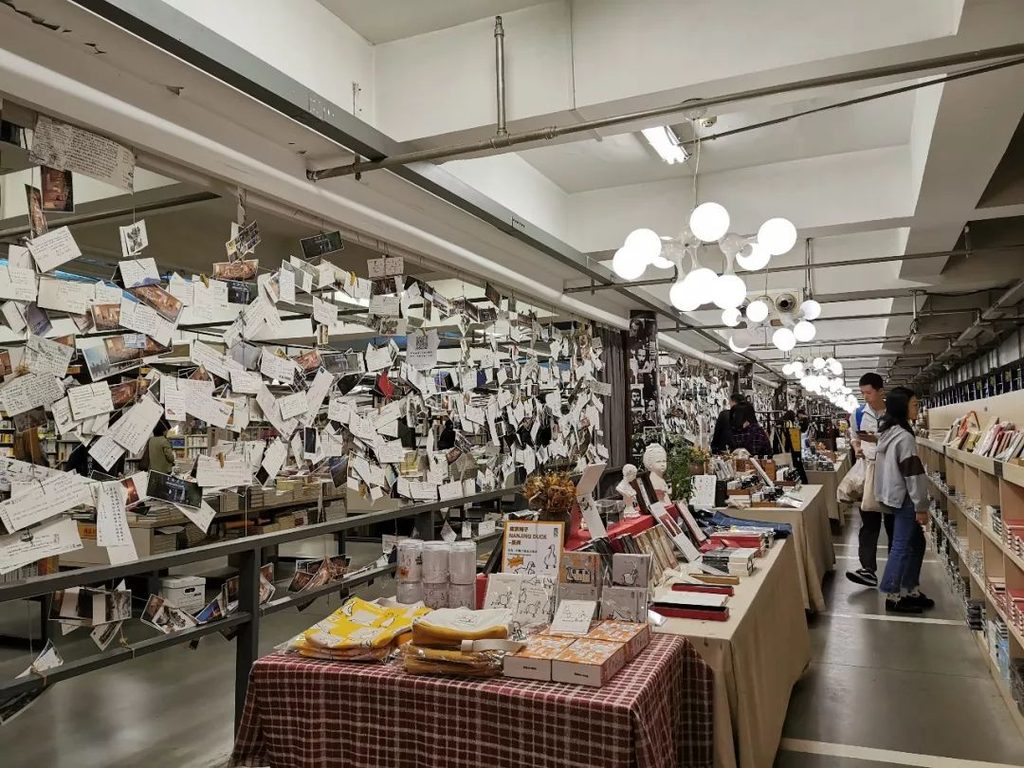
Where the bestseller table would be stands a replica of Rodin’s Thinker. A postcard wall near the exit holds thousands of messages left by visitors for the city and for strangers.
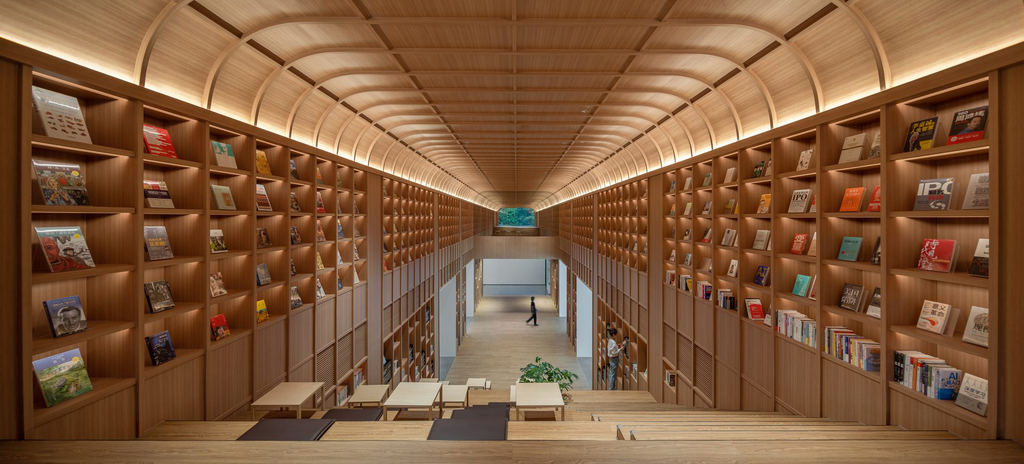
Across town, beneath Purple Mountain and beside Xuanwu Lake, a university library has begun a second life. Nanjing Normal University’s Zijin Campus, at 78 Bancang Street, closed as a campus in July 2019, and that same year DUTS Design was brought in to renovate it. The architects kept the old library’s scholarly atmosphere and filled it with open cafés, shared workspaces and places to eat. At its heart is the Singularity Bookstore, which they describe as the most emotional space in the building.
That’s not all. UNESCO’s own citation notes the “book bars” tucked into the ancient city wall and a women’s reading group, the Half-city Book Club, that ranks among China’s most popular. Nanjing treats 16 centuries of literary history as unfinished.
Okayama, Japan
The fairy tale every Japanese child knows begins here, and so does a ghost story.
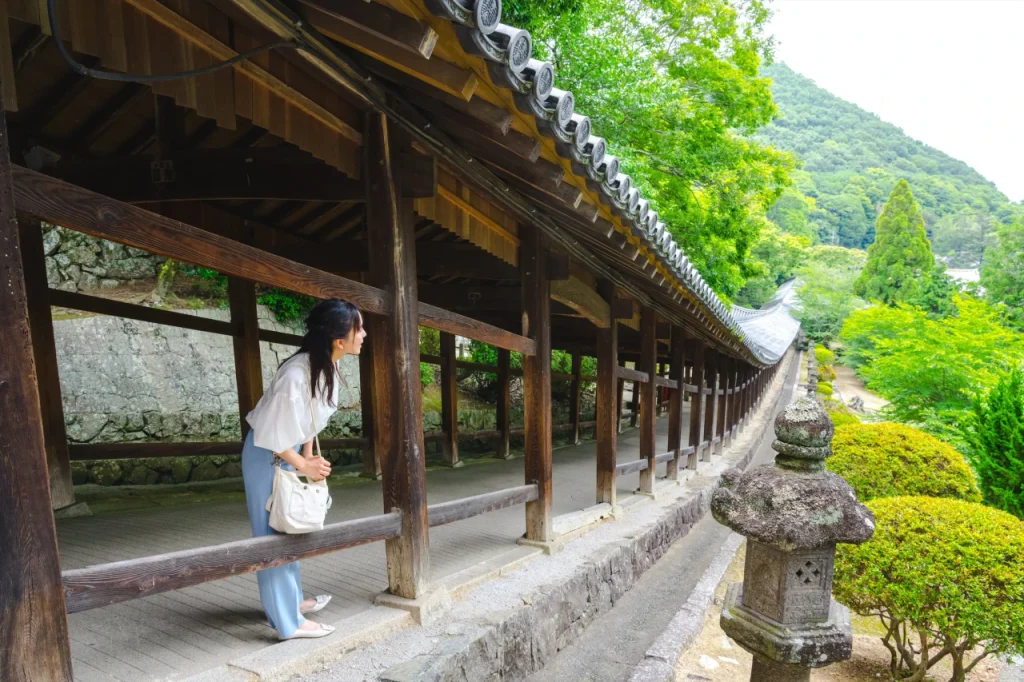
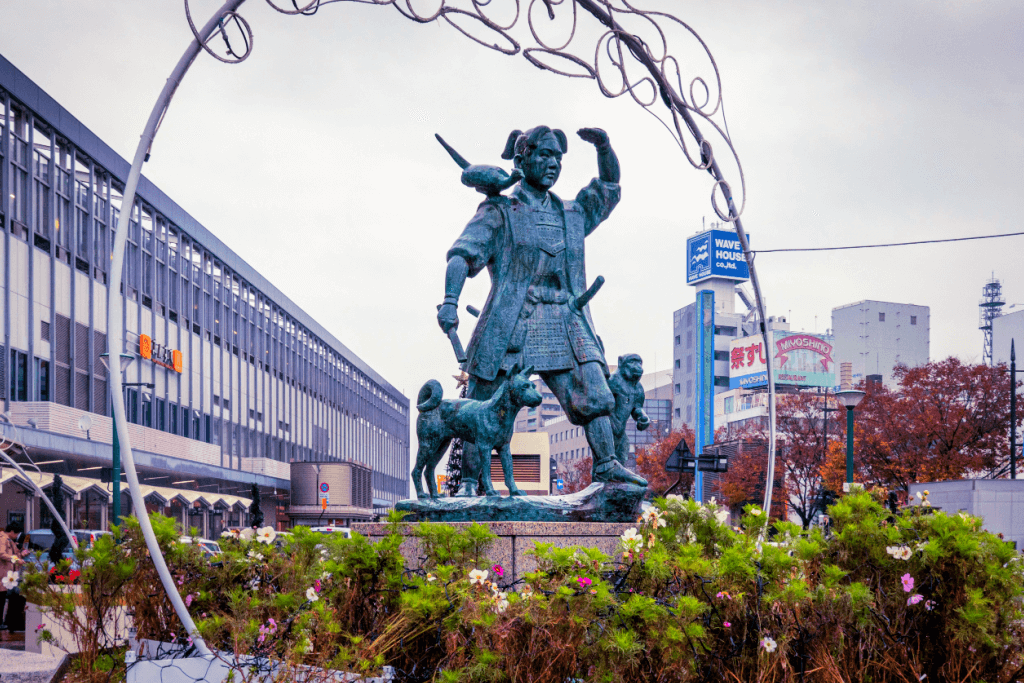
Japan’s first City of Literature, designated on the same day as Hobart, October 31, 2023, is the home of Momotaro, the Peach Boy who sails off to fight demons. The legend has a real address. Kibitsu Shrine, on the western edge of the city, enshrines Okibitsuhiko, the prince regarded as Momotaro’s model, and a 360-meter roofed corridor runs down the hillside to the Okamaden hall, where the defeated demon’s head is said to be buried under the hearth.
Here the shrine performs the Narukama ritual: a fire is lit under an iron cauldron, steam fills a room black with centuries of soot, and the sound the cauldron makes, or fails to make, tells you whether your prayer will be answered. Ueda Akinari turned that oracle into “The Cauldron of Kibitsu,” one of the ghost stories in his 1776 collection Tales of Moonlight and Rain, and the ritual’s oldest written record dates to 1568.
Back in town, the Okayama Prefectural Library lends more books than any other prefectural library in Japan, a record it has held for years. It feels all the more like a grand triumph considering that its predecessor lost all of its 160,000 volumes to wartime bombing.
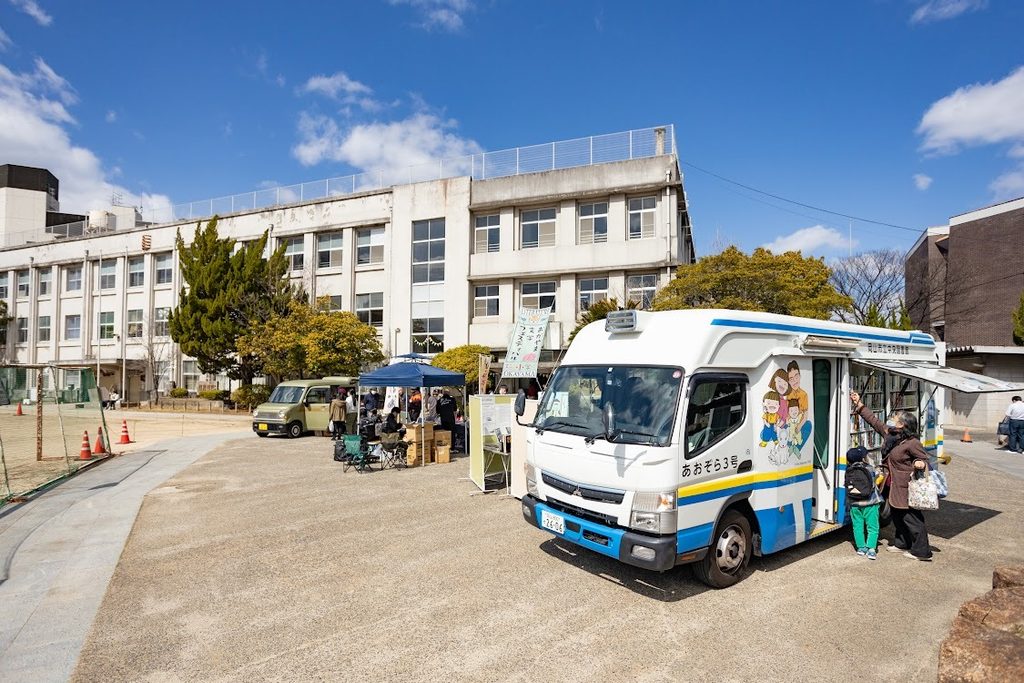
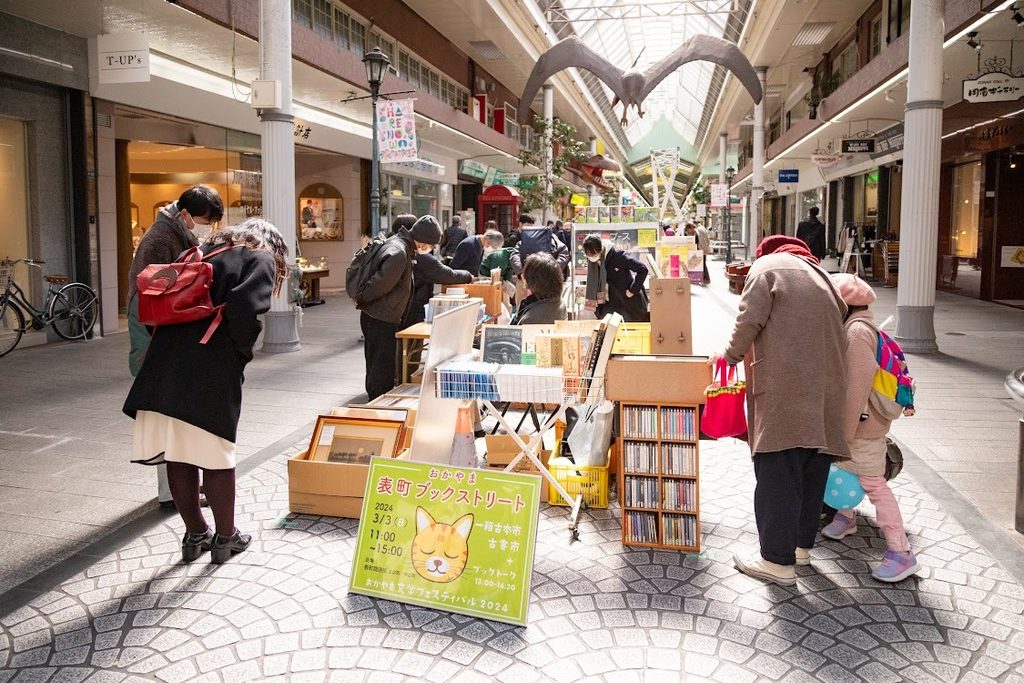
The city runs a children’s book award named for Joji Tsubota, the Okayama-born writer of fairy tales, and the Okayama Literature Festival. In 2024, the festival turned the former Uchisange Elementary School into a weekend book fair, with bookshops in every classroom and some 1,700 visitors queuing past the school gate. When you put it all together (a cauldron that speaks, a library that outreads Tokyo’s, and a schoolhouse full of books again), it’s easy to conclude that Okayama earned its title with folklore and footfall in roughly equal measure.
Where Reading Is Simply What People Do
What makes these five cities special is how much of their literary life happens on an ordinary weekday. In Hobart, a city of a quarter-million people supports two independent bookshops within five minutes’ walk of each other, and the richest man on the island spent $100 million on a library and put it on the museum ticket. In Melbourne, the reading room is free, the events at the Wheeler Centre mostly cost nothing, and the state library is open seven days a week.
In Jakarta, the library at Taman Ismail Marzuki keeps its doors open until 10 at night because people in their 20s keep coming. In Nanjing, students walk down a car-park ramp for their second library and leave postcards for strangers on the way out. In Okayama, the prefectural library lends more books per year than any of its peers, in a city that a fairy tale put on the map.
That is what UNESCO’s title recognises: cities where literature belongs to the commuter, the student, and the pensioner as much as to the writer, and where the rooms built for reading are kept open and mostly free. The buildings are extraordinary: a concrete dome, a skyscraper, a bunker, a shrine. The deeper pleasure for a traveling reader is quieter than any of them. It is arriving somewhere and finding that what you love is ordinary there, done by everyone, and that a seat has been kept for you.


K Lou
K. Lou is a writer born in the U.S. who found her way to Japan through a spiritual calling—or, more precisely, better access to tea. She writes about travel, culture, and the occasional creative piece, inspired by her enduring love of books. This love began in high school when K. Lou carried books around to avoid seeming odd while lost in thought. Once she started reading, she never stopped. With zero regrets, she continues to explore the written word and invites others to join her in celebrating its varied forms.