Eight literary cafés where books were written, from Café de Flore and Les Deux Magots in Paris to Caffè San Marco in Trieste and Café Tortoni in Buenos Aires.
Some of the most important desks in literary history were rented for the price of a coffee. They had marble tops and no drawers, a waiter instead of a lock, and a roomful of strangers who kept the writer company while their pen flew across the page. Simone de Beauvoir spent the German Occupation at one because her hotel room was freezing. Fernando Pessoa kept the same corner of a Lisbon café for years. A Viennese poet had his letters sent to the Café Central, since that was where anyone who wanted him would find him.
Most of these rooms are still open, and they have changed less than the cities around them. The mirrors are the same, the tables are where they were, and nobody hurries you out. Somewhere in each of them a book you may have read was begun, argued over, or finished, in the same murmur of cups and conversation that will be going on around you when you sit down.
1. Café de Flore, Paris: The Warmest Room of the Occupation
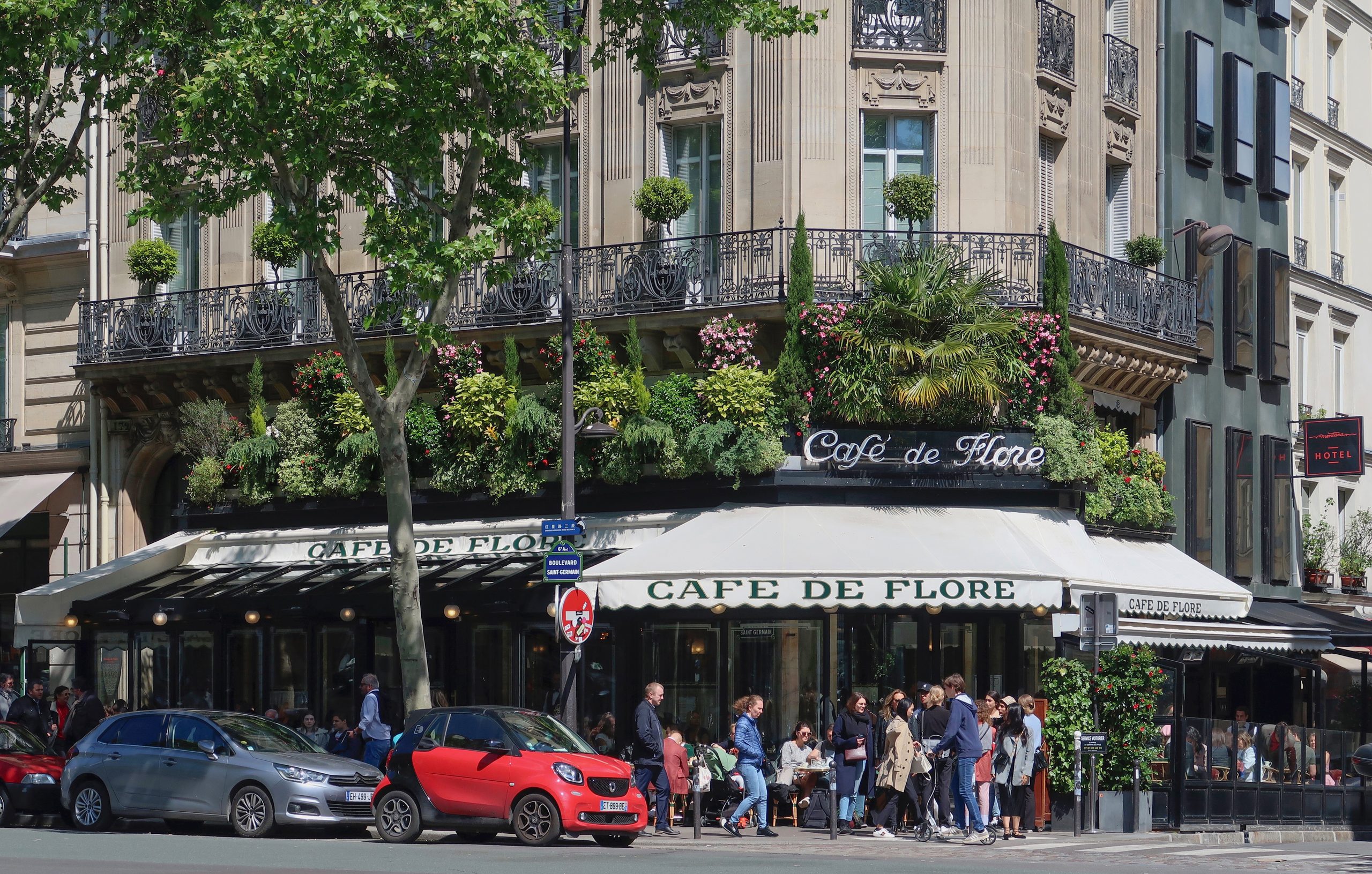
In the winter of 1940, with fuel rationed and flats unheated, Simone de Beauvoir and Jean-Paul Sartre moved their working lives into Café de Flore on Boulevard Saint-Germain because its new owner, Paul Boubal, kept the stove lit. They arrived when it opened, wrote until lunch, came back in the afternoon, and stayed into the evening.
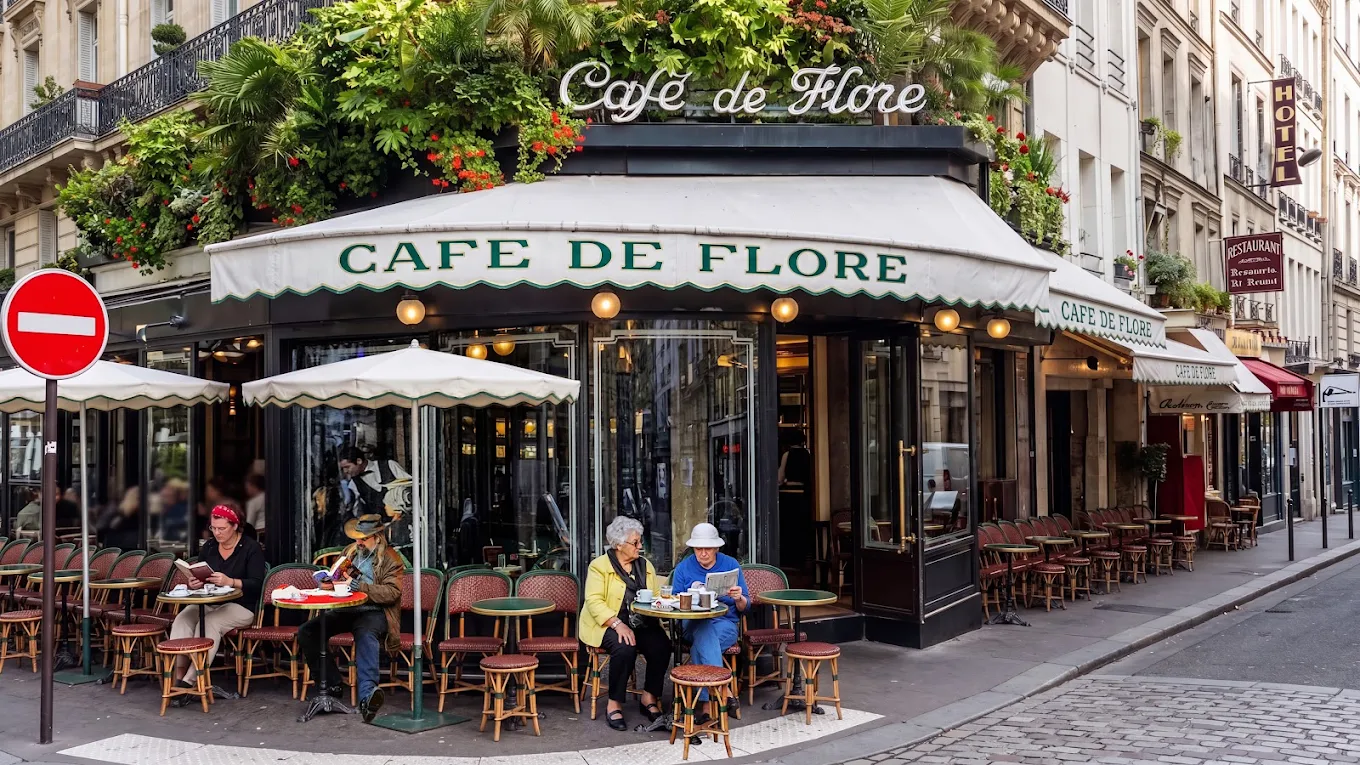
Much of Sartre’s Being and Nothingness and Beauvoir’s early novels are said to have been drafted at those very tables. The café has long been proud of recognizing creative talent, and has been awarding its own literary prize, the Prix de Flore, since 1994 to young writers.
Address: 172 Bd Saint-Germain, 75006 Paris, France
Opening hours:
– Monday to Sunday: 7:30AM – 1:30AM
2. La Closerie des Lilas, Paris: Brass Names on the Bar
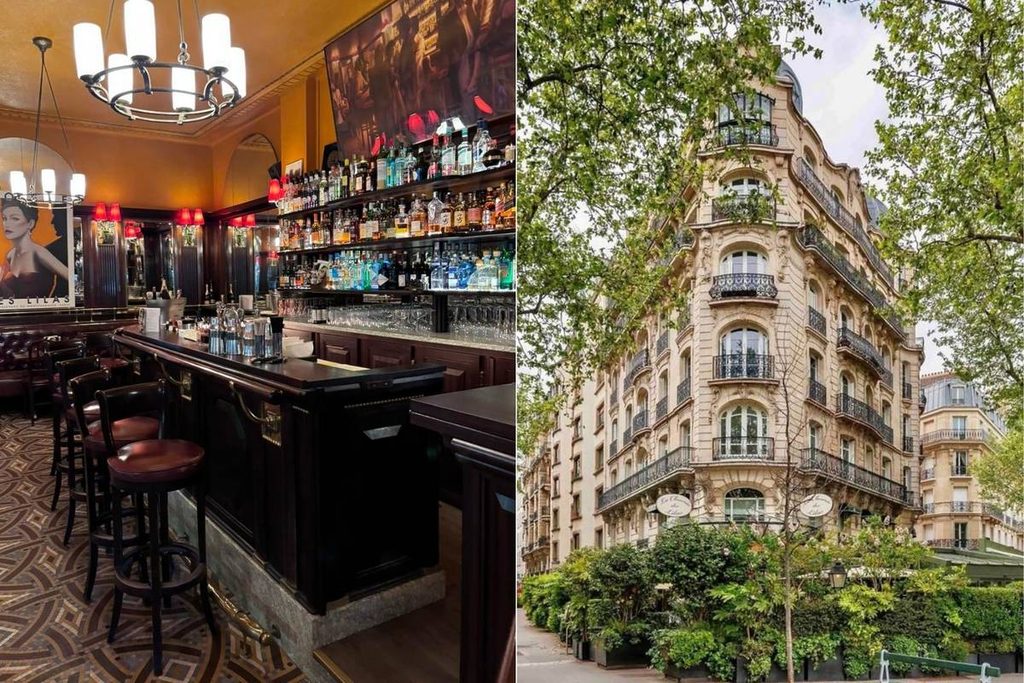
La Closerie des Lilas, at the end of Boulevard du Montparnasse, was Ernest Hemingway’s working café in the 1920s. In his own words, he chose it because it was the closest good café to his flat and almost nobody he knew went there. In A Moveable Feast, his memoir of those years, he describes fighting to protect a good morning’s writing from an acquaintance who sat down and would not stop talking. Small brass plaques on the tables and the bar carry the names of the regulars, Hemingway’s among them, and the room is still dim enough to make a quiet escape plausible.
Address: 171 Bd du Montparnasse, 75006 Paris, France
Opening hours:
– Monday to Sunday: 12AM – 12PM
3. Antico Caffè San Marco, Trieste: The Café the Army Destroyed
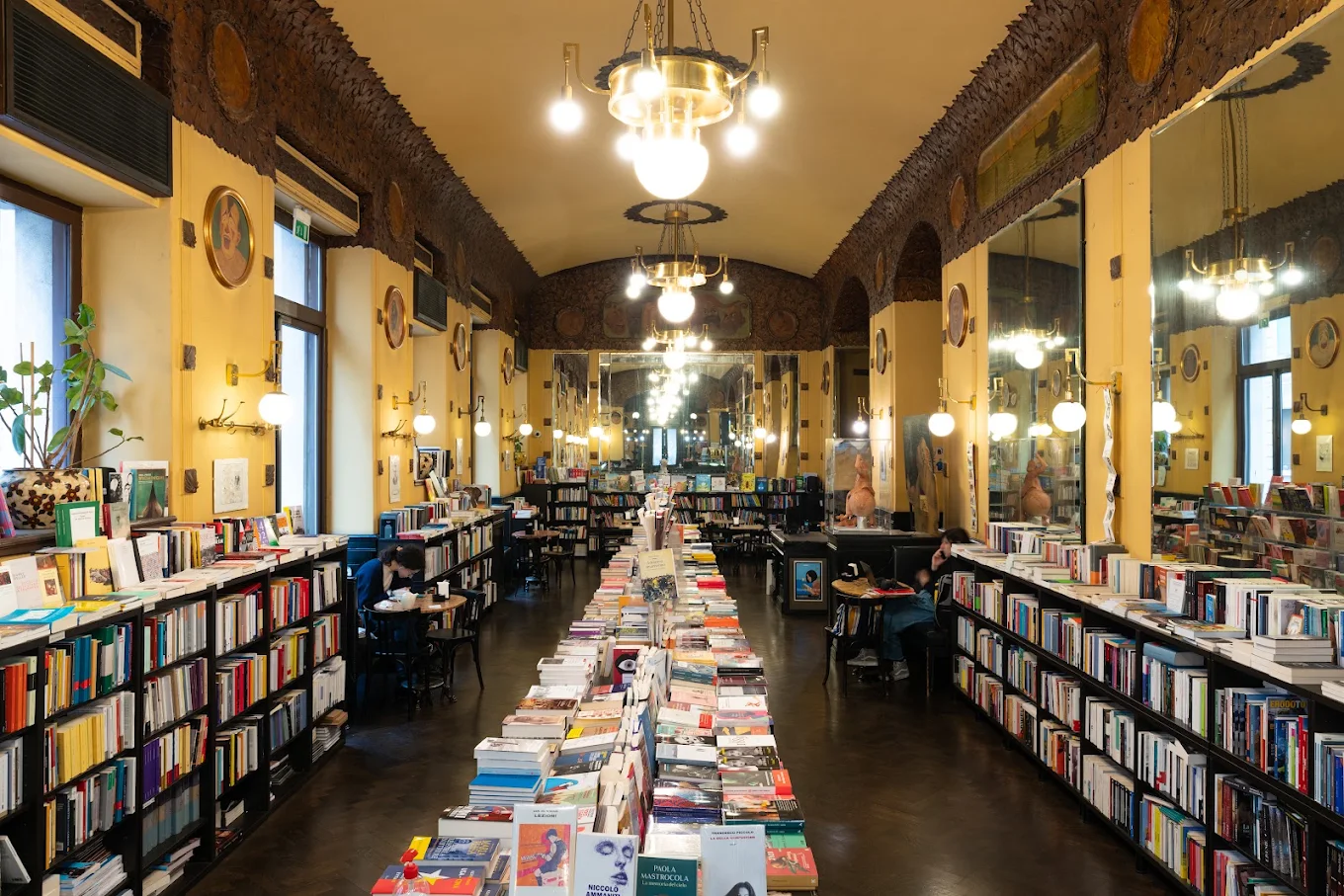
Caffè San Marco opened in 1914 in Trieste, then the Austro-Hungarian Empire’s port on the Adriatic, with marble tables, mirrors and a ceiling painted with gilded coffee leaves. Its Italian-speaking regulars wanted the city to belong to Italy, and the café became a place where false passports were made for young men slipping across the border to fight on the Italian side.
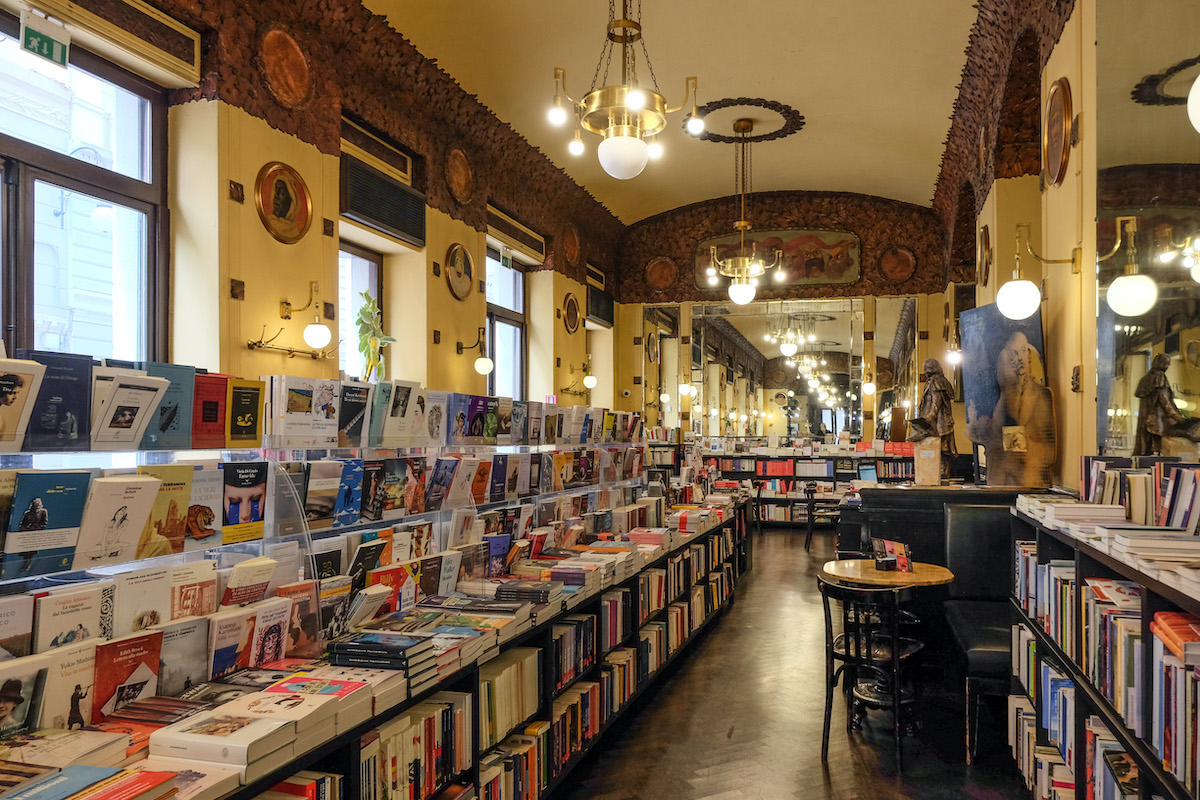
On May 23, 1915, the day Italy entered the war, Austro-Hungarian troops smashed it up and closed it. It reopened in 1919; the writer Claudio Magris has worked at its tables for decades and written about it in his book Microcosms. Nowadays, it even has a bookshop at the back.
Address: Via Cesare Battisti, 18, 34125 Trieste TS, Italy
Opening hours:
– Monday to Thursday, and Saturday: 8:30AM – 10:30PM
– Friday: 8:30AM – 11PM
– Sunday: 9AM – 9PM
4. A Brasileira and Martinho da Arcada, Lisbon: Two Tables for Fernando Pessoa
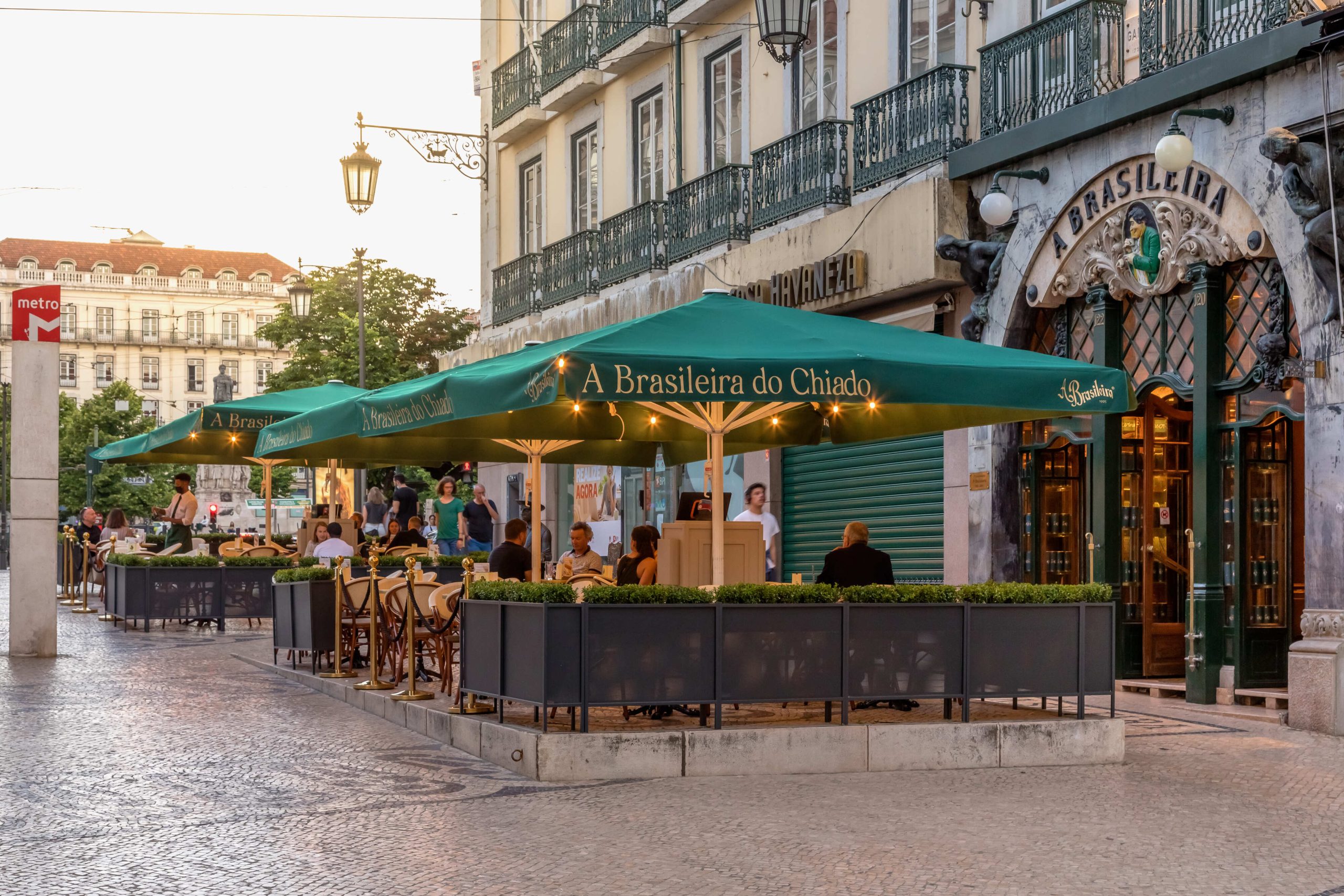
Fernando Pessoa, Portugal’s great modernist poet, wrote under more than 70 invented names yet published only one book of poems in Portuguese in his lifetime. He drank his coffee in two cafés: A Brasileira and Martinho da Arcada. A Brasileira in the Chiado district opened in 1905 to sell Brazilian coffee; a bronze Pessoa has been sitting at a table on the pavement since 1988, and visitors queue to sit beside him.
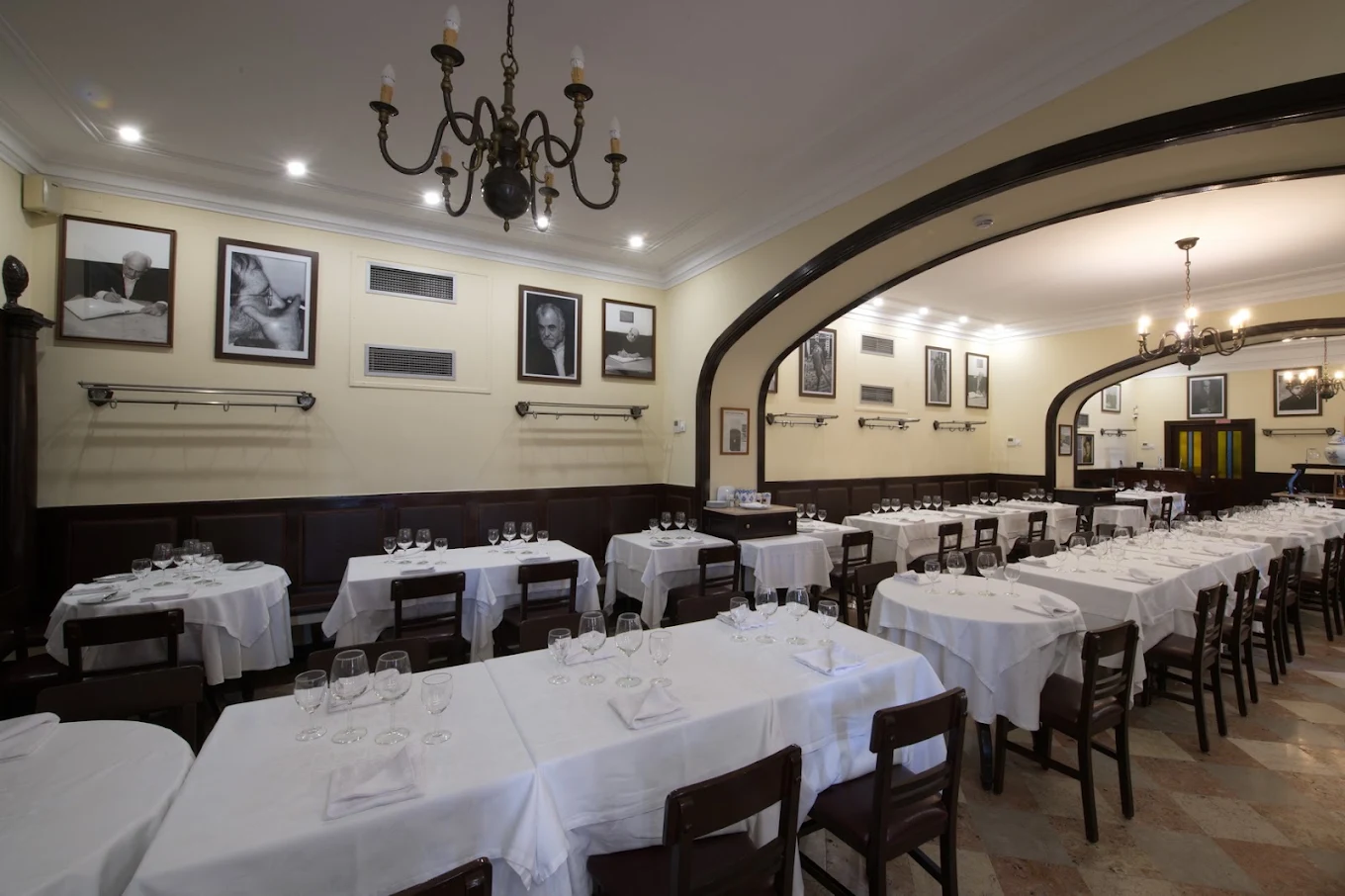
Down by the river, under the arcades of Praça do Comércio, Martinho da Arcada has been open since 1782. It’s the oldest café in Lisbon, and it preserved Pessoa’s corner table, where he met the poets of the magazine Orpheu.
A Brasileira
Address: R. Garrett 120 122, 1200-205 Lisboa, Portugal
Opening hours:
– Monday to Sunday: 8AM – 12AM
Martinho da Arcada
Address: Praça do Comércio 3, 1100-148 Lisboa, Portugal
Opening hours:
– Monday to Saturday: 7AM – 10:30PM
– Sunday: Closed
5. Café Central, Vienna: A Poet Who Had His Post Delivered
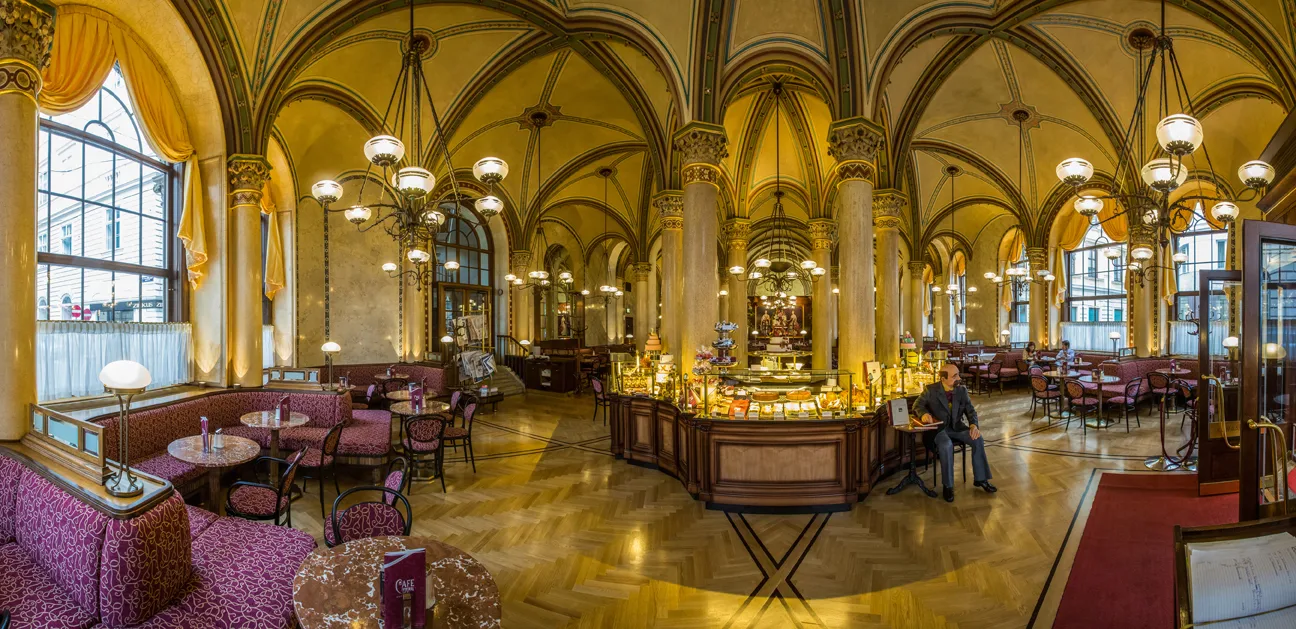
Before the First World War, Café Central was the living room of Viennese thought, where Leon Trotsky played chess and the critic Alfred Polgar wrote an essay explaining that its regulars were people who wanted to be alone but needed company to do it. The most devoted of these regulars was the poet Peter Altenberg, who wrote his short prose sketches at its tables and had his mail delivered there. A life-size figure of him sits by the entrance. Though the café closed on March 16, 2026 for a full renovation, it is due to reopen in winter 2026; in the meantime, it runs a pop-up nearby on Freyung.
Address: Herrengasse 14, 1010 Wien, Austria
Opening hours:
– Temporarily closed
6. Café Gijón, Madrid: A Novel Prize Founded by an Actor
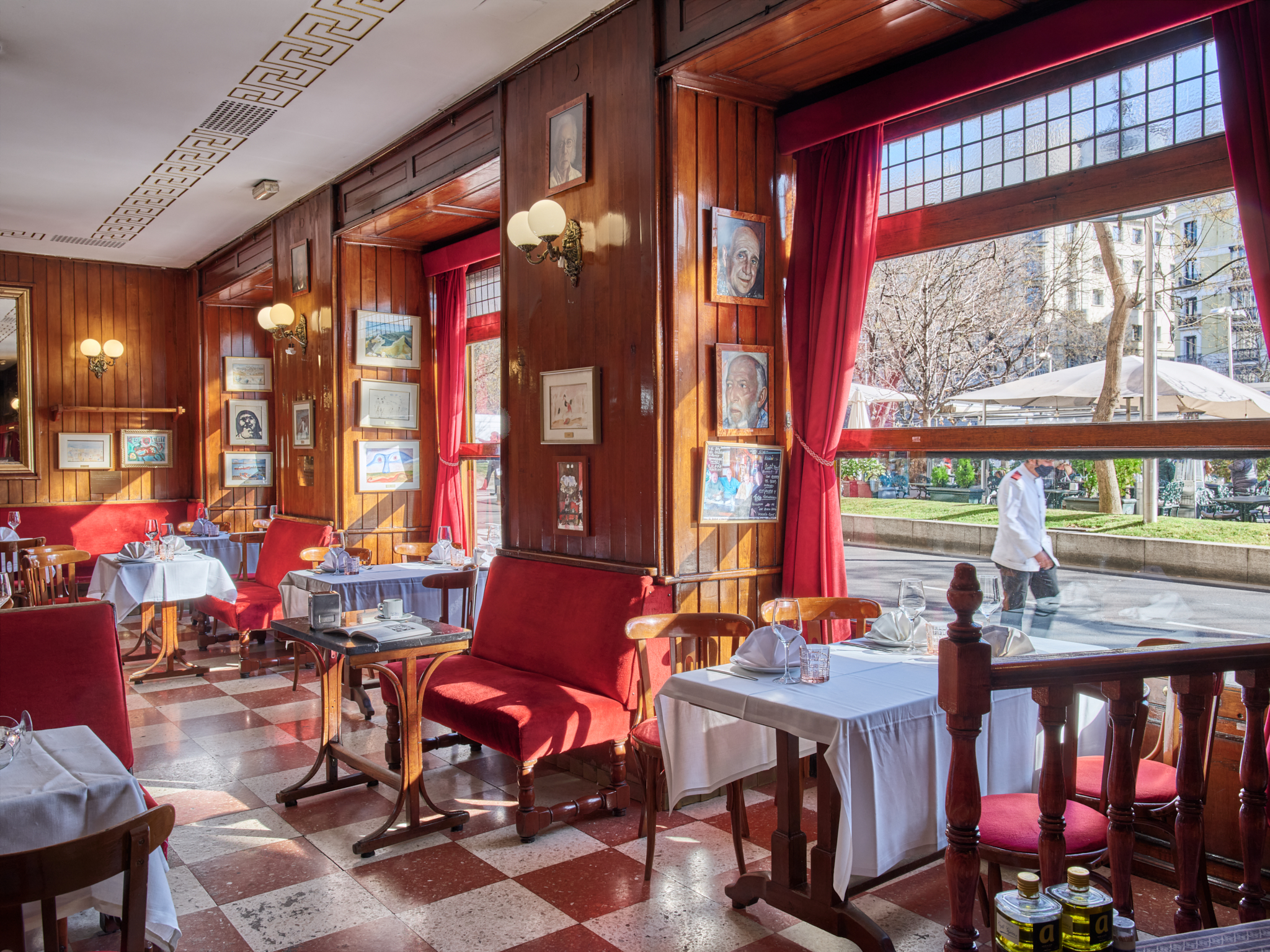
Café Gijón opened on the Paseo de Recoletos in 1888 and became the home of Madrid’s tertulias, the standing gatherings of writers and artists who met at the same tables on the same evenings for years. Camilo José Cela, later a Nobel laureate, was a regular after the Civil War, and the novelist Francisco Umbral wrote a whole book, La noche que llegué al Café Gijón, about the night he first walked in.
In 1949, the actor Fernando Fernán Gómez founded a novel prize in the café’s name. After a period of closure, the Gijón reopened in March 2026 under new owners, the Cappuccino group, which restored its historic fittings and started a cultural program for art, literature, film, and music.
Address: P.º de Recoletos, 21, Centro, 28004 Madrid, Spain
Opening hours:
– Sunday to Wednesday: 9AM – 1AM
– Thursday to Saturday: 9AM – 2AM
7. Les Deux Magots, Paris: A Prize for the Books the Others Ignored
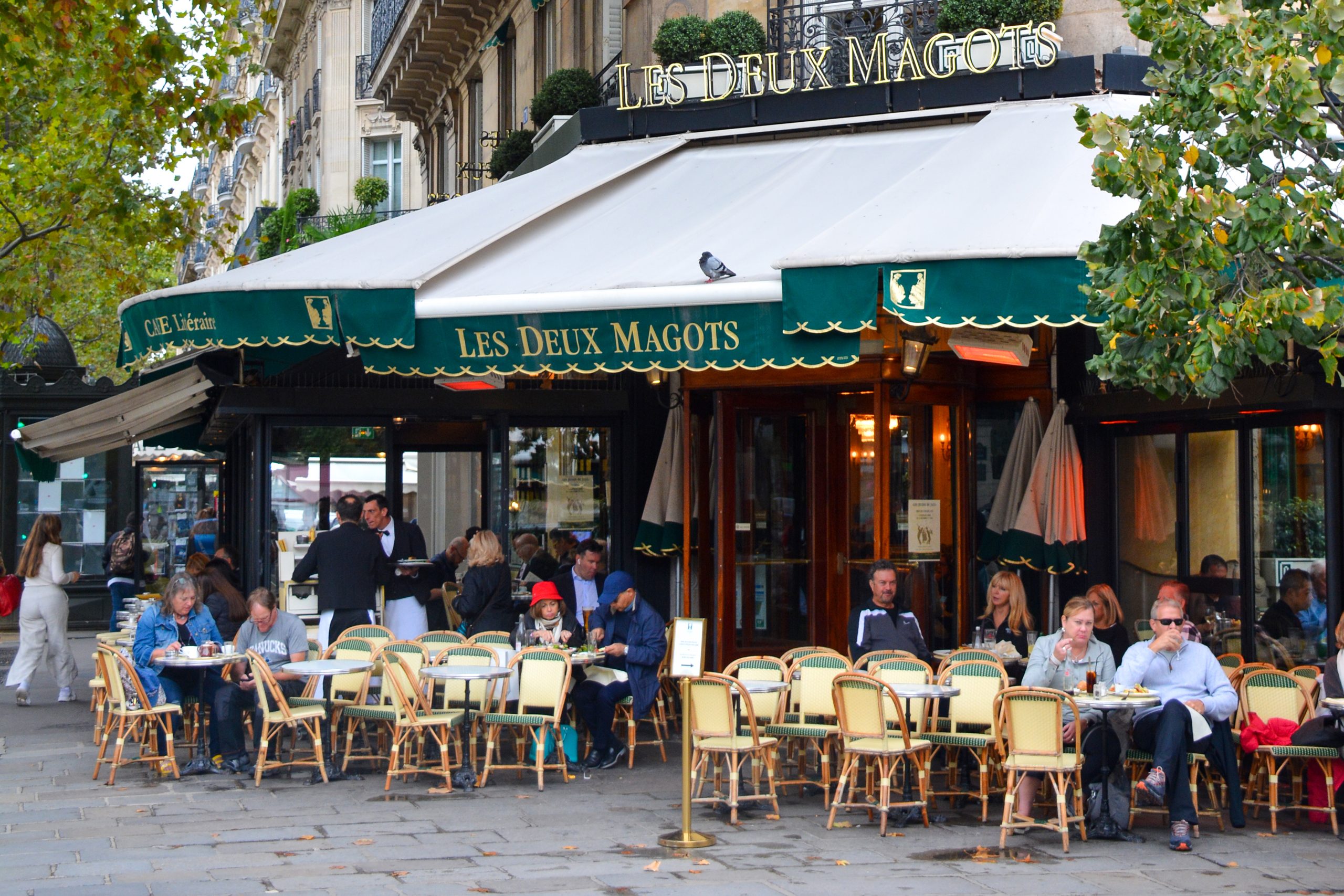
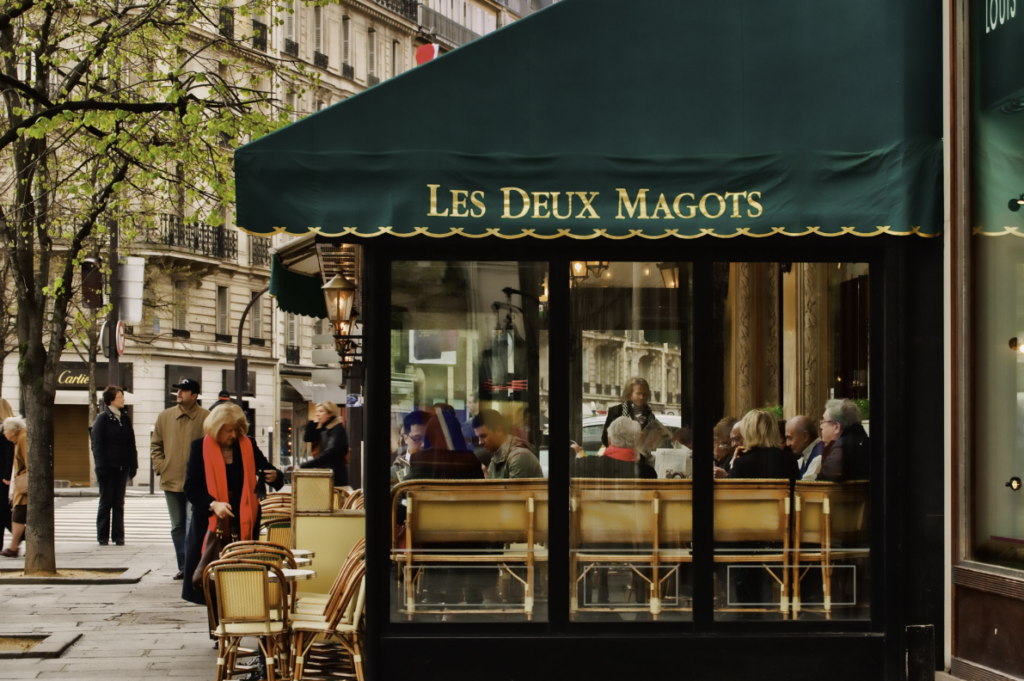
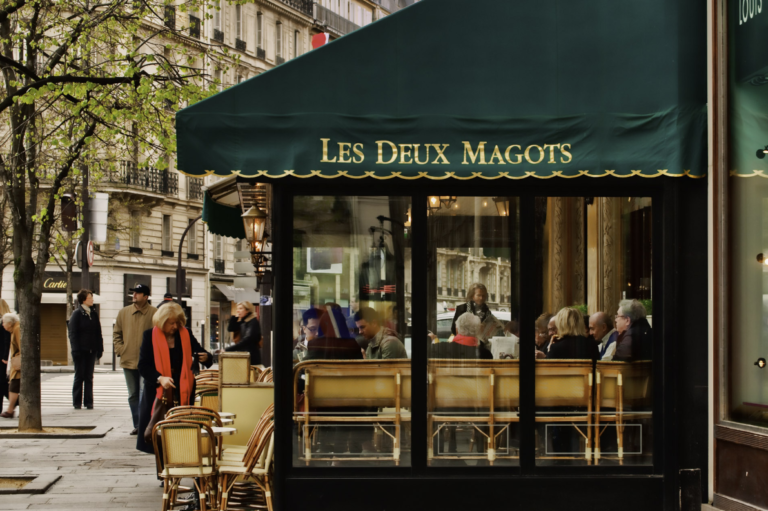
Settled right by Café de Flore, Les Deux Magots takes its name from the two carved Chinese merchants, magots, that look down from a pillar inside. It was the café of the surrealists and, after the war, of Beauvoir. The café says Simone de Beauvoir wrote parts of The Mandarins here, the novel that won the Prix Goncourt in 1954. But before that, back in 1933, a group of writers founded the Prix des Deux Magots at the café to reward books the established prizes ignored. The first went to Raymond Queneau for his novel, Le Chiendent, and its most recent winner was Jean-Noël Orengo for La Rédemption, awarded October 5, 2026.
Address: 6 Pl. Saint-Germain des Prés, 75006 Paris, France
Opening hours:
– Monday to Sunday: 7:30AM – 1AM
8. Café Tortoni, Buenos Aires: The Teller the Artists Dug Out Themselves
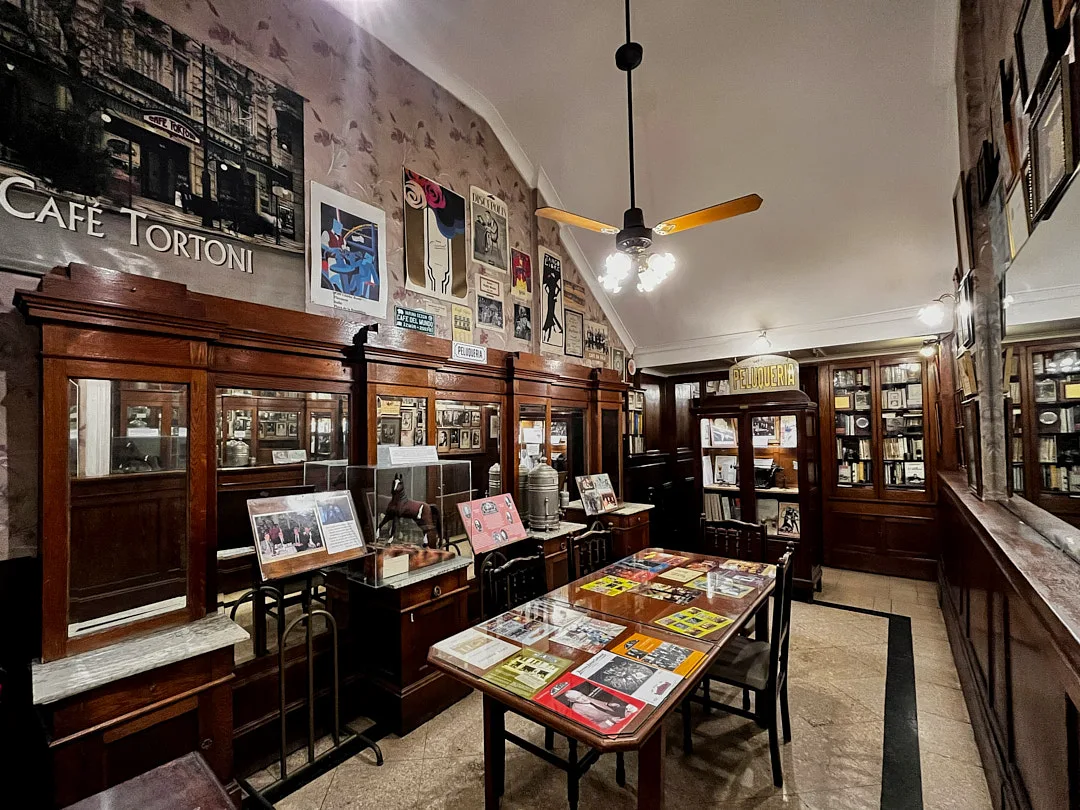
Café Tortoni, on the Avenida de Mayo, opened in 1858 and calls itself the oldest café in Buenos Aires. By the 1920s, artists had taken over so many of its tables that the owner offered them the basement, a wine cellar, if they could clear it. They did, and in 1926, the painter Benito Quinquela Martín and his friends opened their peña there, a club for readings, music, and talk that met until 1943. The poet Alfonsina Storni read there; Jorge Luis Borges came to argue; Federico García Lorca visited in 1933. Life-size figures of Borges, Storni, and the tango singer Carlos Gardel now share a table in the main room.
Address: Av. de Mayo 825, C1084 Cdad. Autónoma de Buenos Aires, Argentina
Opening hours:
– Monday to Sunday: 8AM – 9PM
Where the Work Got Done

What these cafés have in common is the regular: someone who came back to the same table often enough that the room began to organize itself around them, keeping their seat and their order. The books came out of that repetition. A visitor can borrow it for an afternoon, with a book open and a coffee going cold, in a room that has been doing this for more than a century.

K Lou
K. Lou is a writer born in the U.S. who found her way to Japan through a spiritual calling—or, more precisely, better access to tea. She writes about travel, culture, and the occasional creative piece, inspired by her enduring love of books. This love began in high school when K. Lou carried books around to avoid seeming odd while lost in thought. Once she started reading, she never stopped. With zero regrets, she continues to explore the written word and invites others to join her in celebrating its varied forms.