
From Call Me By Your Name to Pulp Fiction, discover films where books steal the spotlight and reveal hidden depths in every scene.
There are several films out there where one or more of the characters are reading a book. For casual viewers, there’s a high chance of missing these strategically placed props, especially when watching for the first time. However, for book lovers, it’s always an interesting discovery when the title of the book in a movie can be clearly seen.
We live in a time where books feel rare on screen, which makes it special when a film character holds one. Now, in an era where every second in films has to count for something important, frames featuring books are almost always there for an important reason.
Beyond the Props
It’s widely said that a person’s character can be clearly seen from the books they read. The same holds for characters in movies and films – after all, characters are meant to play out real-life scenarios.
Of course, this statement can be debunked in some rare scenarios, but there’s some sense in it. A lot of people’s reading habits can reveal their interests, temperament, and even intelligence.
Hence, it’s no surprise that films that pay close attention to the art of filmmaking use books to further depict a character’s personality, foreshadow specific events in the film, emphasize character backgrounds, or simply serve as a companion.
Whatever the case, it’s always pretty interesting to see characters holding or reading a book one is familiar with.
Familiar Books in Memorable Frames
There’s an impressive line-up of films that have featured great books in them, causing bookish people to squeal at the sight of them. Here are some of them:
Dragon Seed by Pearl S. Back – Call Me By Your Name
The 2017 film Call Me By Your Name featured several great books, some connected to the movie’s plot. However, one that continues to stand out to viewers is the 1973 Libri Mondadori edition of Dragon Seed by Pearl S. Buck. In the movie, we see Elio holding the book while sitting at a roadside café.
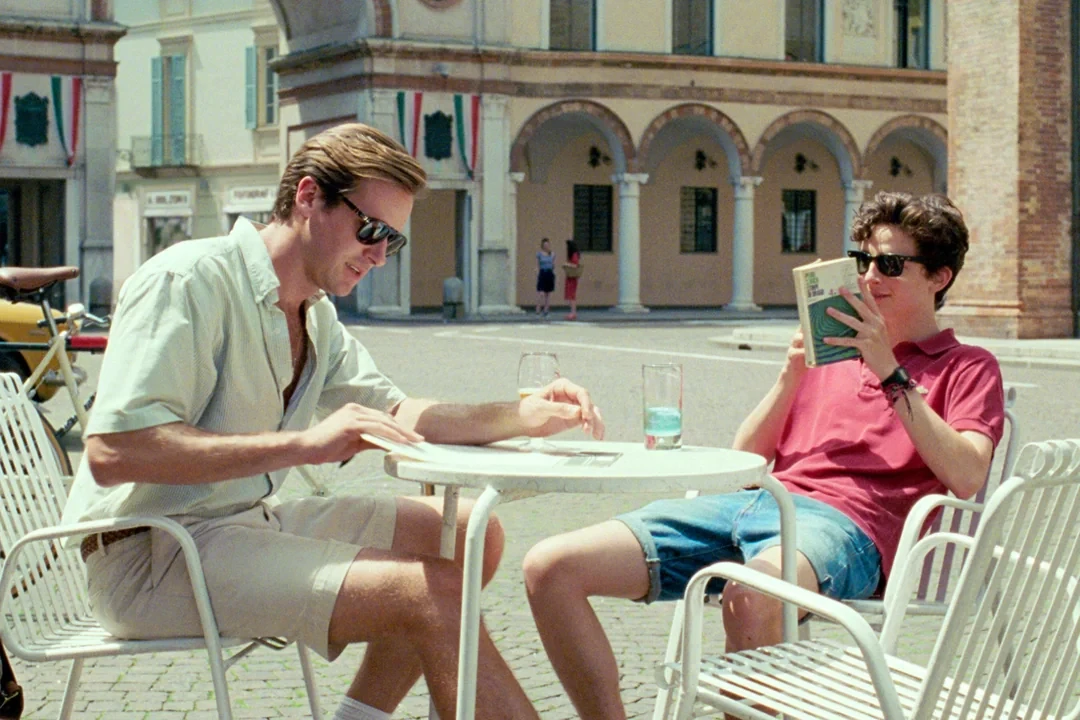
Dragon Seed is a historical book that dives into the experiences of Chinese peasants in a village during the Japanese invasion in 1937. The book, in its grandiose form, focuses on how brutal the Japanese soldiers can be, and Elio, a character played by Timothee Chalamet, reading such a book was telling of his scholarly interest and psyche.
The Saint in New York by Leslie Charteris – Inglourious Basterds
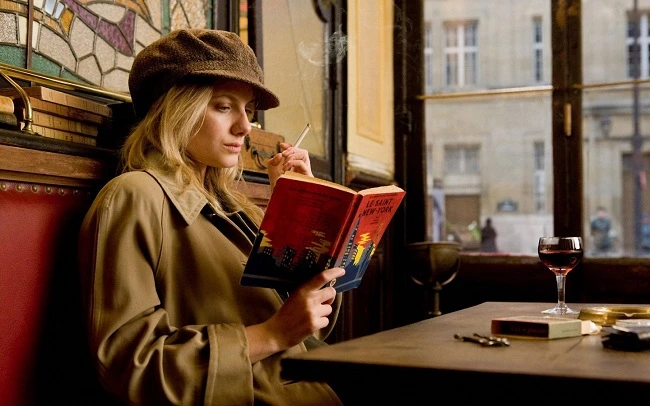
In the scene where Shoshanna was waiting to meet Zoller, she was seen reading a raw and violent book about corruption, murder, and criminal injustice. The Saint in New York, as a prop, reflects Shoshanna as a character, one ready to enact grim revenge against the Nazis who took everything away from her, a feeling well shrouded in secrecy. Talk about the book being the shadows of things to come.
The Bell Jar by Sylvia Plath and The Feminine Mystique by Betty Friedan – 10 Things I Hate About You
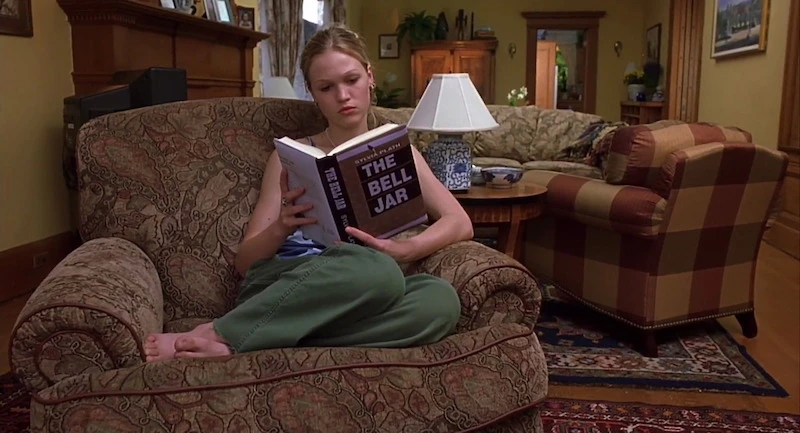
Featuring these books in the film 10 Things I Hate About You was a genius stroke by Gil Junger, as they both helped strengthen the character of Kat Stratford. In the same vein, they communicate the feminist undertones of the comedic film, where Kat’s intellectual independence was emphasized, alongside her refusal to succumb to the traditional gender roles society dictated.
Basic Writing by Friedrich Nietzsche – Clueless
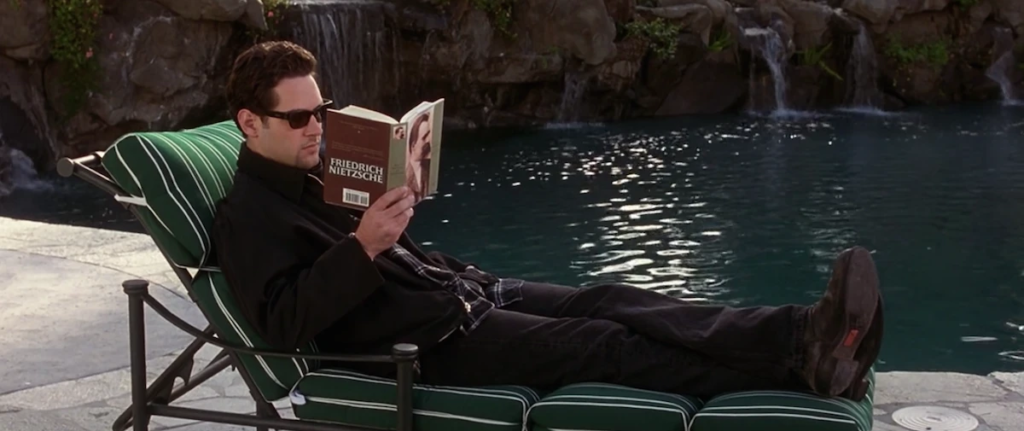
The 1995 film Clueless features Josh, a character played by Paul Rudd, who has a deep interest in philosophy. Having him read Basic Writings by Friedrich Nietzsche is a nod to that fact and a foundation for the thematic identity and transformations of the movie. Used as an expressive object, the book’s cameo was used to draw a connection between Friedrich Nietzsche’s concepts and what the characters embody, including the celebration of fictions and the performance of identity.
Modesty Blaise by Peter O’Donnell – Pulp Fiction
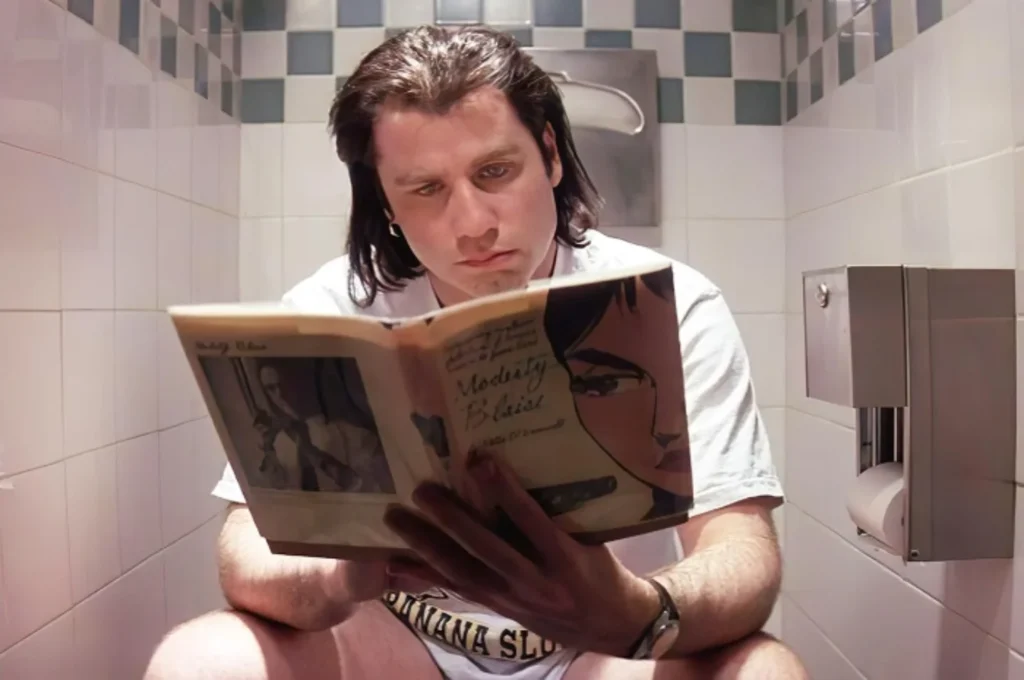
The iconic bathroom scene from Pulp Fiction featured Vince reading a copy of Modesty Blaise by Peter O’Donnell, a book of action-packed adventure. While there’s no direct parallel to be drawn between the book’s plot and the movie’s characters, it’s a classic case of the film director’s admiration for the story and its characters.
Other Notable Mentions
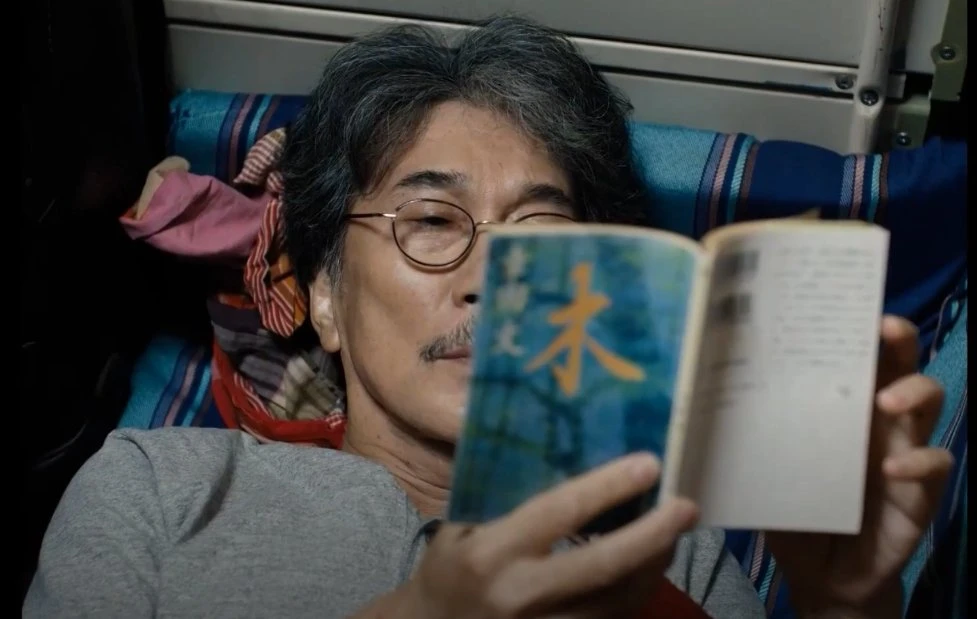
Of course, no single list could ever capture all the films that have slipped beloved books into their frames. Over the years, certain moments have quietly stood out—those subtle, blink-and-you-miss-it shots that speak volumes to the attentive eye.
In Home Alone, Thomas McGuane’s Nobody’s Angel hints at mischief and mayhem; in Mermaids, Peyton Place mirrors the drama simmering beneath family life. Salinger’s The Catcher in the Rye flickers through The Shining, a fitting echo of isolation, while Captain Corelli’s Mandolin softens the heart of Notting Hill.
Elsewhere, Between the Sheets slips into Suicide Squad, Still Life with Woodpecker adds color to 50 First Dates, and Faulkner’s The Wild Palms deepens Perfect Days. Even What Jung Really Said in When Harry Met Sally feels like a quiet wink to the curious and introspective.
Books in films may only appear for a moment, yet they leave a mark that lingers long after the credits roll. They reveal what words alone sometimes can’t: the secret worlds of characters, their unspoken desires, their quiet rebellions. And for those who notice, these glimpses remind us of something timeless, that between every scene and every line, stories continue to speak to one another, carrying the soul of one art form into another.
Erica Sarah
Erica is a creative writer and editor with a love for books and the smell of libraries. When she’s not reading or writing, she’s doting on her cat, Felix, and daydreaming about ending global hunger.