
A forest spirit who naps, two sisters waiting for a bus in the rain: why My Neighbor Totoro feels so restful, and what science and philosophy say about doing nothing.
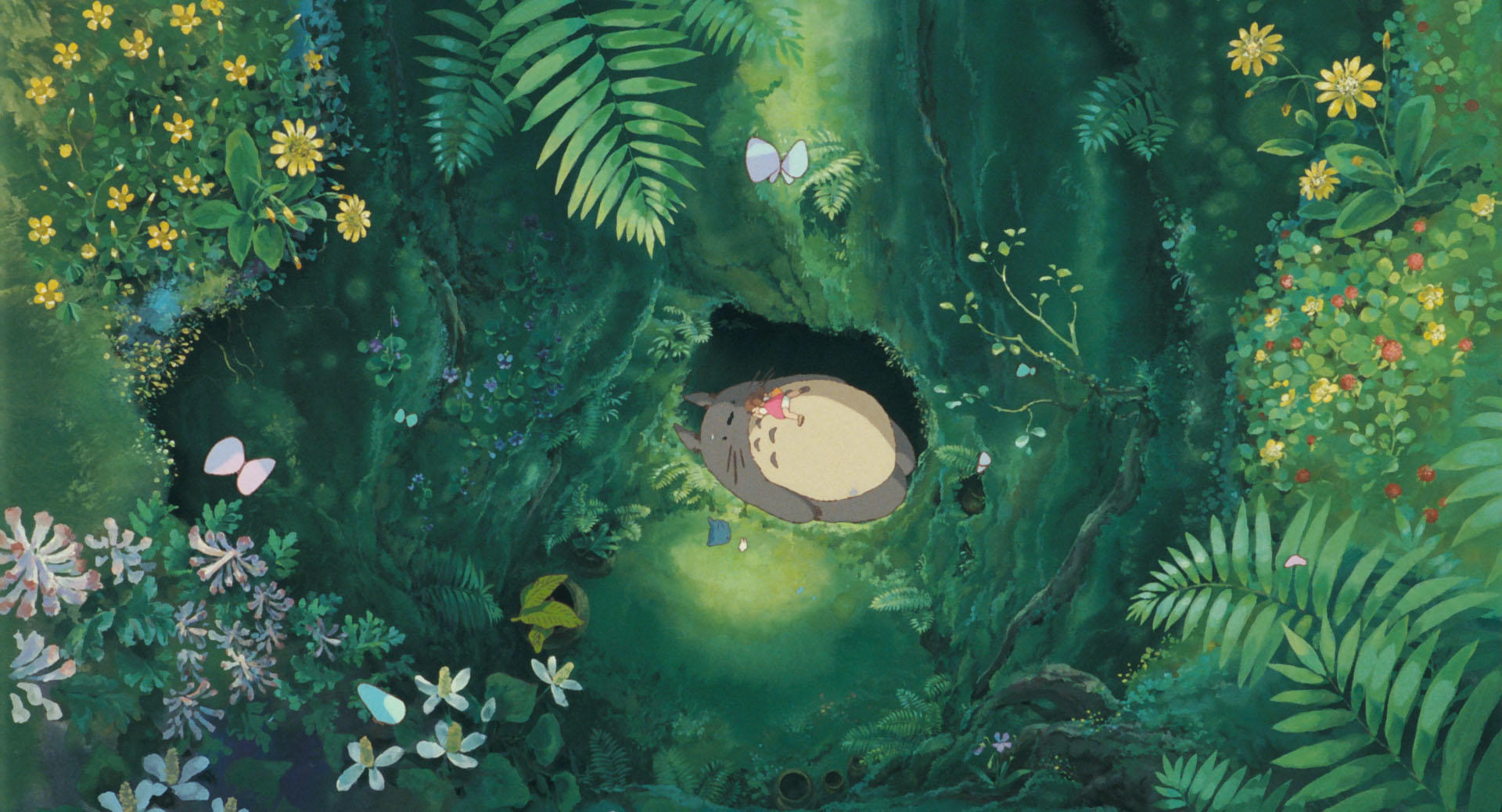
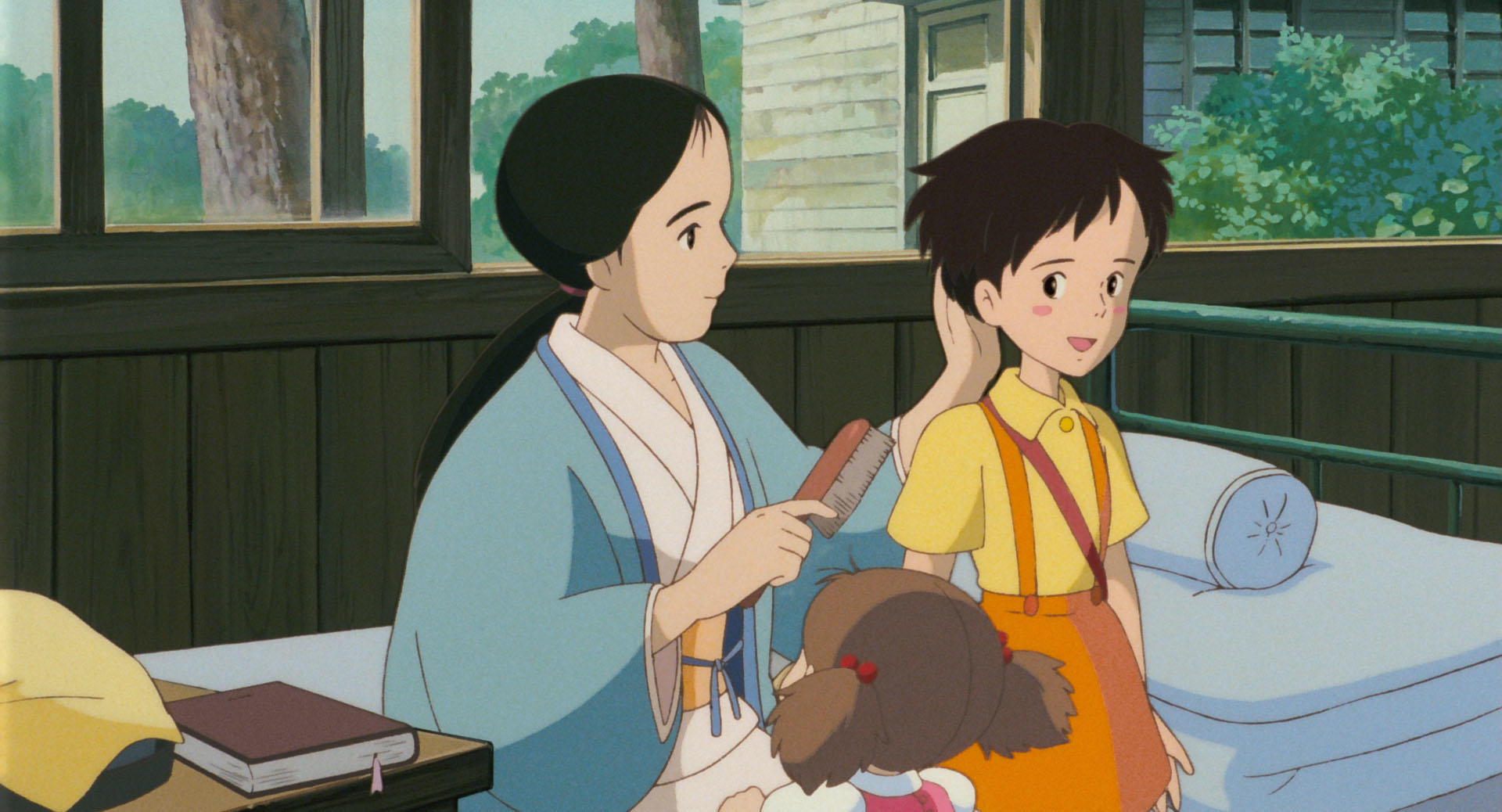
In 1950s Japan, a university professor moves his two daughters into an old house in the countryside, close to the hospital where their mother is recovering from a long illness. Satsuki is about ten and Mei about four. They explore the house, which is full of dust and soot sprites. They find a path into a giant camphor tree, and at its roots a large, round, sleepy creature Mei names Totoro.
One rainy evening they wait at a country bus stop for their father, and Totoro comes to wait beside them. That, more or less, is My Neighbor Totoro, released by Hayao Miyazaki in 1988. Totoro went on to become the logo of Studio Ghibli, and in 2012 the critics polled by Sight & Sound ranked it the highest-placed animated film of all time.
What strikes almost every adult who watches it is how little happens. There is no villain, no quest, and no lesson, and children who have been raised on louder films sit through it completely absorbed. Afterwards, most viewers feel something closer to rest than excitement, the feeling of a long afternoon with nowhere to be. This essay asks where that feeling comes from, and why a film about two girls waiting, wandering and napping might describe something our own lives are short of.
“A Story Set in a Time Before Television”
Roger Ebert, the American critic, put his finger on the film’s strangeness when he added it to his list of Great Movies in 2001. Totoro, he wrote, is “based on experience, situation and exploration, not on conflict and threat.” It has “no villains. No fight scenes. No evil adults.” It “depends on a situation instead of a plot.” The critic Nick Pinkerton noticed the same absence from the other side: “Not a single lesson is learned.”
The film is built this way on purpose. Writers on Ghibli have pointed out that its stories often follow kishōtenketsu, a four-part structure from Chinese and Japanese poetry that introduces a situation, develops it, turns it with a sudden twist, and resolves it, with no need for a conflict to drive things forward.
In Totoro, the twist comes very late, when Mei, upset that their mother’s visit has been postponed, sets off alone to take her an ear of corn and gets lost. Until then, the film is mostly the sisters living their days, which led some American critics, as the Animation Obsessive newsletter notes, to complain that “nothing happens” in it.
Miyazaki set the film in the hills around Tokorozawa, outside Tokyo, where he lives. His producer Toshio Suzuki remembers him saying that if he hadn’t lived in Tokorozawa, “Totoro would never have been born.” He was later one of the first contributors to a trust that buys up land to protect those same hills. He was clear that he was not making a postcard of the 1950s. In a later collection of his writings, he says that the period setting is a kind of lie, and that “the truth is that it is a story set in a time before television.”
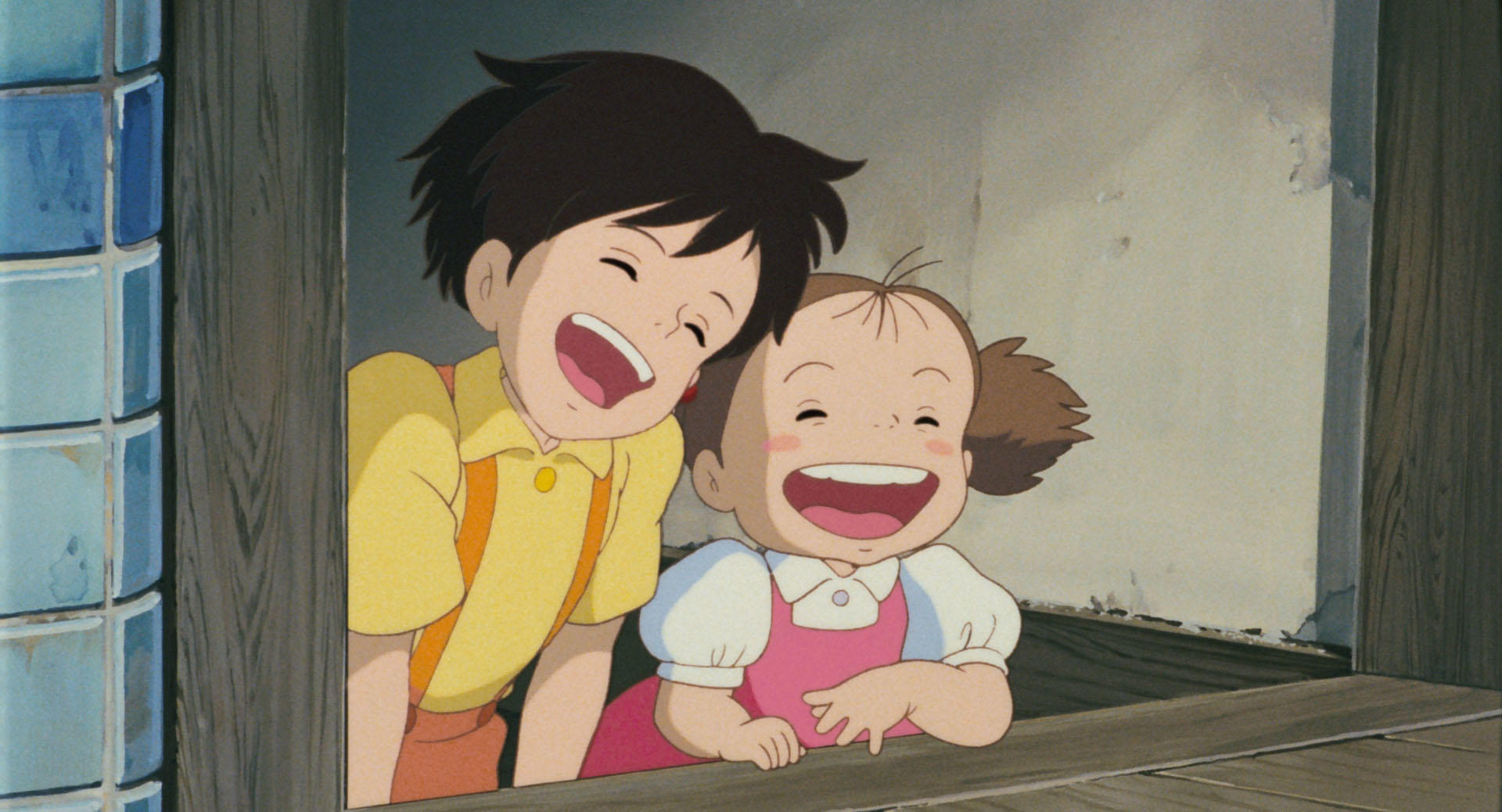
That sentence is the key to the film’s pull on us now. What it shows is childhood with time left in it. The critic Lauren Wilford, in the best essay written on the film, observes that “lots of being a kid is watching and waiting, and Totoro understands this,” and that “in the absence of a larger drama,” Satsuki and Mei “create their own… They play.” She suspects that “a horror of boredom” is what has pushed most children’s entertainment towards the frantic.
That horror has a measurable cost. In 2018 the American Academy of Pediatrics reported that children aged 3 to 11 have lost 12 hours of free time a week in recent decades, and advised doctors to write “a prescription for play” at every check-up. The psychologist Peter Gray, who has spent his career on children’s play, found that 70 per cent of American mothers played outdoors every day as children, against 31 per cent of their own children. Teresa Belton of the University of East Anglia, who studies boredom in childhood, argues that it is “more constructive to see boredom as an opportunity rather than a deficit,” because the empty hour is where imagination gets its exercise.
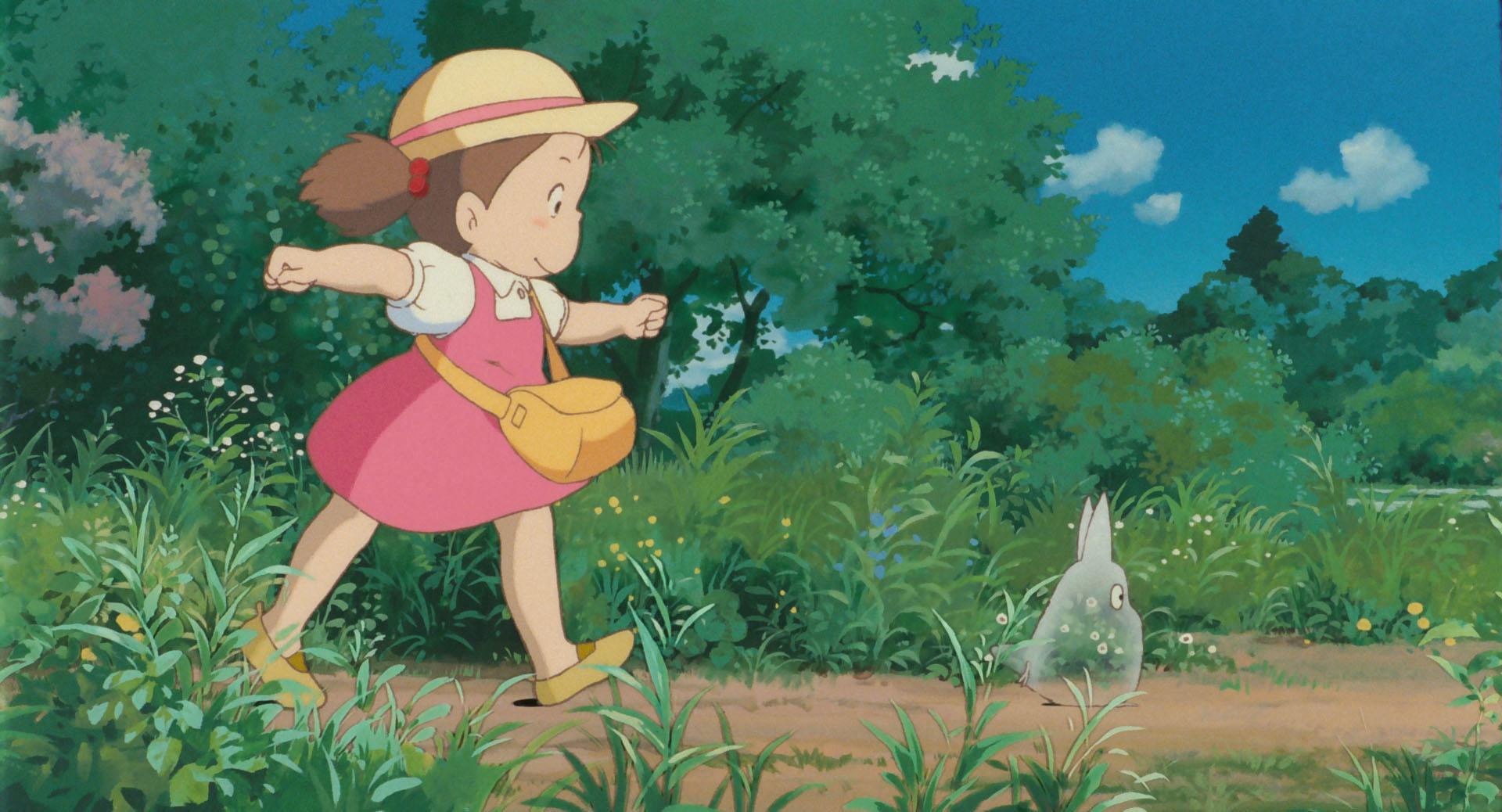
Miyazaki seems to have felt the irony of making such a film for a screen. In a published conversation with the anatomist Takeshi Yoro, he reportedly joked that he would like to print on the video box “please watch this only once a year.” Watch it once, he said, and children want to go out and pick up acorns. Watch it over and over, and they never go.
Miyazaki Clapped His Hands and Called the Silence Ma
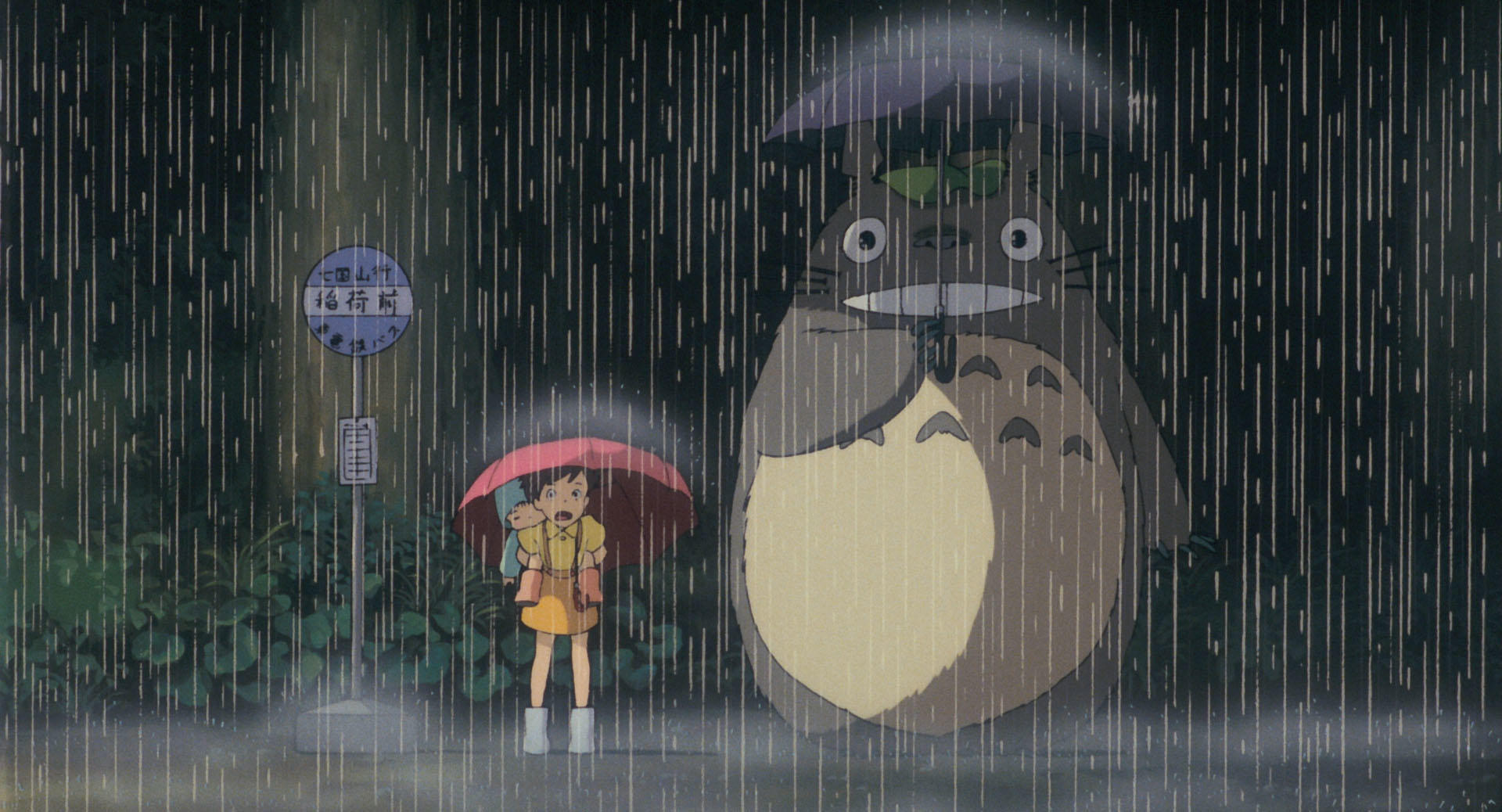
The scene everyone remembers is the bus stop. It is night and pouring with rain. Satsuki stands with Mei asleep on her back, holding an umbrella for their father, whose bus is late. A huge grey shape steps up beside her with only a leaf on its head for shelter, standing to one side, in Ebert’s words, “like an imaginary friend.”
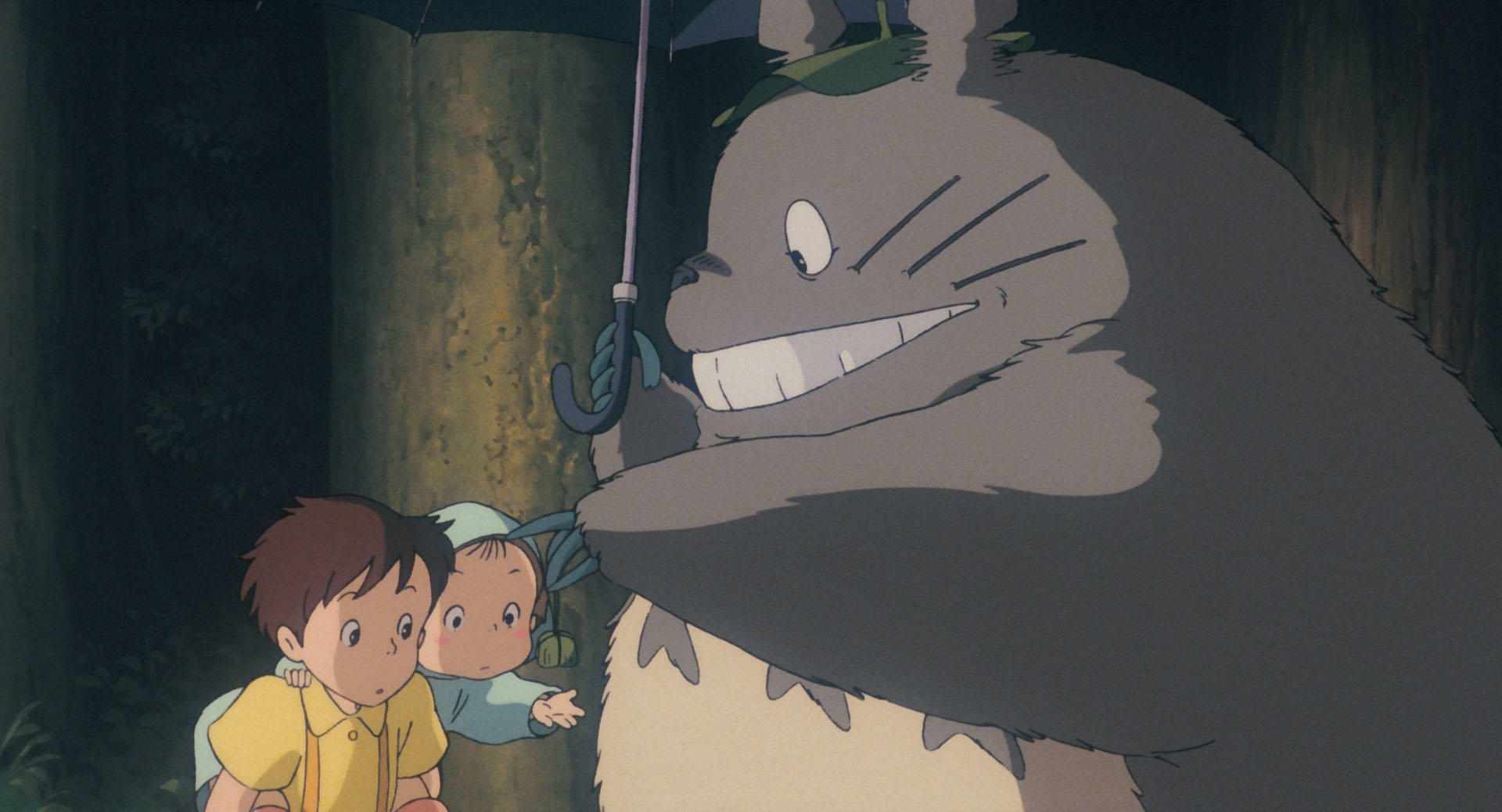
She offers it their father’s spare umbrella, and Totoro is “delighted by the raindrops on the umbrella.” Then a giant cat shaped as a bus arrives, and he climbs aboard and is gone. In return for the umbrella, he has left the girls a small bundle of nuts and seeds.
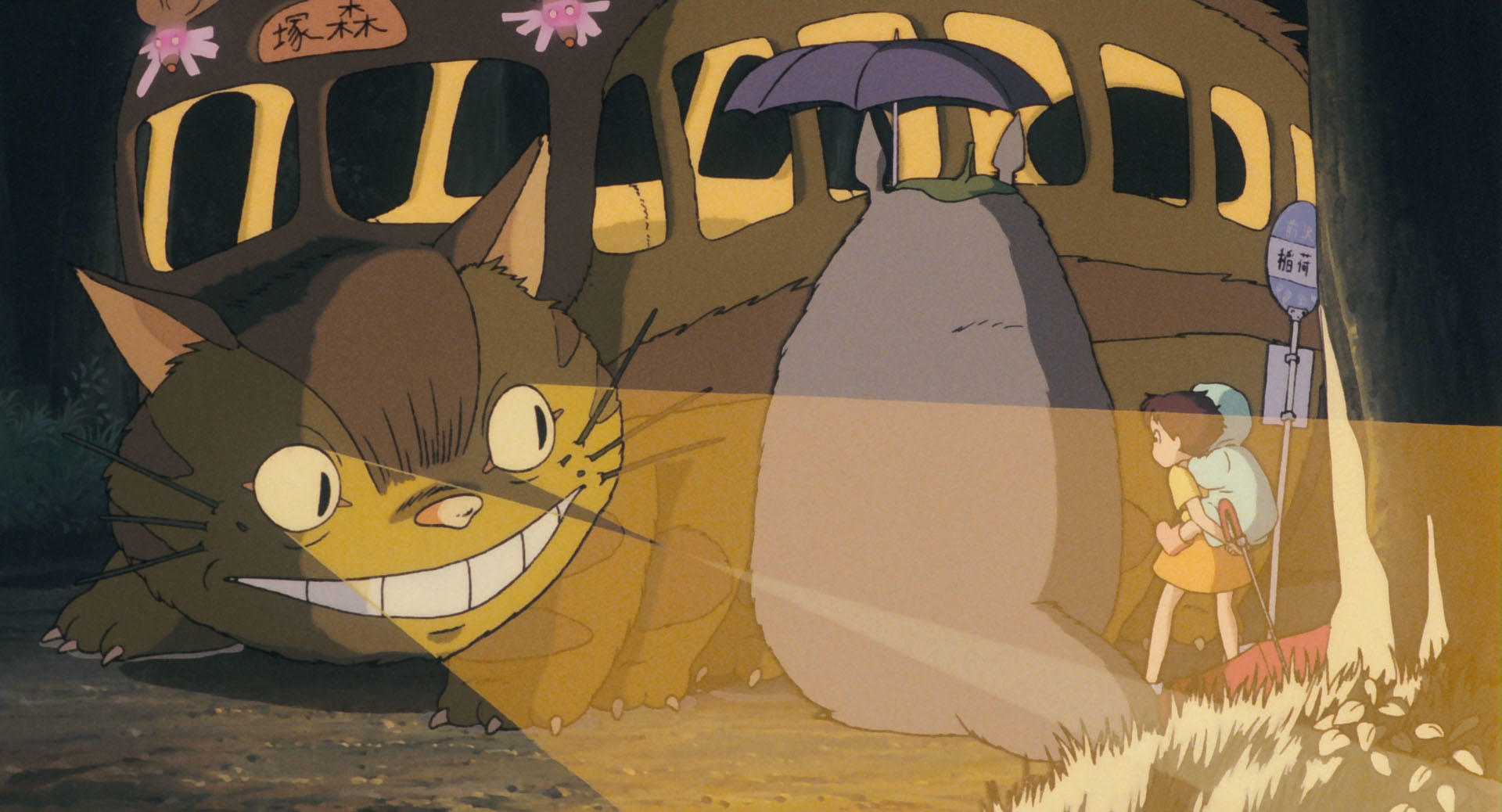
In 2002, Ebert told Miyazaki how much he loved the moments in his films when characters simply sit for a moment, or sigh, or look at a stream. Miyazaki replied, “We have a word for that in Japanese. It’s called ma. Emptiness. It’s there intentionally.” Then he clapped his hands three or four times. “The time in between my clapping is ma. If you just have non-stop action with no breathing space at all, it’s just busyness.” Viewers have long read the bus stop as ma at its purest: the rain, the leaves, the girls’ breathing, and an enormous patience.
Psychology has a name for what that scene does to the person watching it. In 1995, the environmental psychologist Stephen Kaplan argued that “any prolonged mental effort leads to directed attention fatigue,” and that natural scenes restore us through what he called soft fascination: rain, clouds, leaves moving in a breeze, things that hold the attention without asking anything of it. The bus stop is soft fascination on a cinema screen. Watching it, we rest in the same way the girls do.
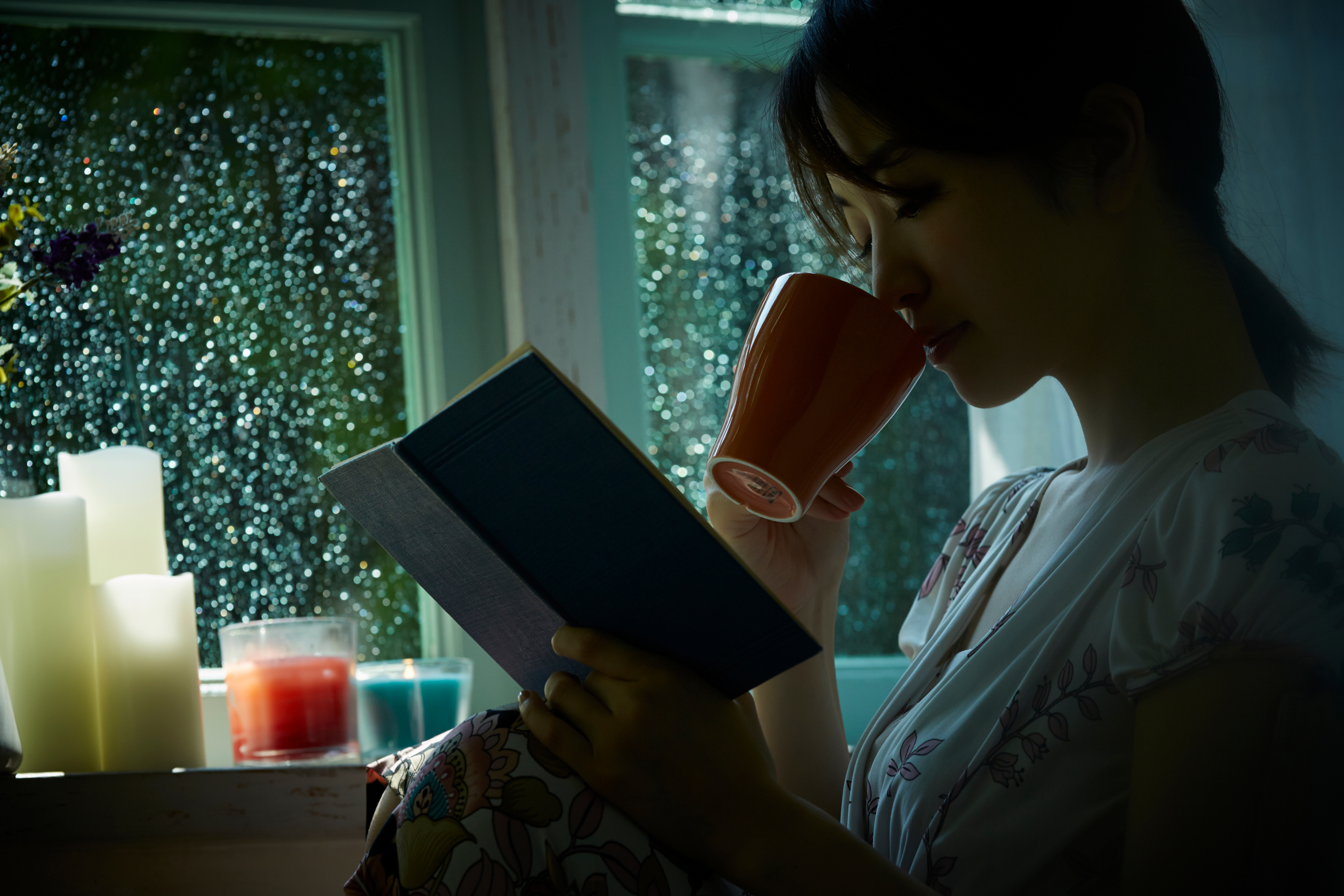
Something else is happening underneath. In the 1990s, the neurologist Marcus Raichle, comparing brain scans of people performing tasks with scans of people at rest, noticed that a set of brain regions went quiet whenever a task began. “I looked at the difference between doing nothing and looking at a word,” he later recalled, and found that when the subtraction was flipped, “something went down.” He named those regions the default mode network in 2001. In 2012, the neuroscientist Mary Helen Immordino-Yang and her colleagues published a review with a title that could serve as Totoro’s motto, “Rest Is Not Idleness.”
The same networks that switch on when the mind wanders, they showed, are the ones we use for recalling our own memories, imagining the future, and feeling the moral emotions that bind us to other people. “What are we doing in schools,” Immordino-Yang asked, “to support kids turning inward?”
We are not naturally good at this. In a much-discussed 2014 study at the University of Virginia, researchers left people alone in a room with nothing to do for 15 minutes, apart from the option of giving themselves a mild electric shock. Two-thirds of the men and a quarter of the women pressed the button. The groups were small, and a later critique pointed out that on average the participants still found sitting with their thoughts “somewhat enjoyable.” The finding that stays with people is how quickly we reach for a distraction, even a painful one, when the room goes quiet. Satsuki at the bus stop has no button to press. She waits, and the forest comes to her.
The Forest God Who Sleeps Inside a Tree
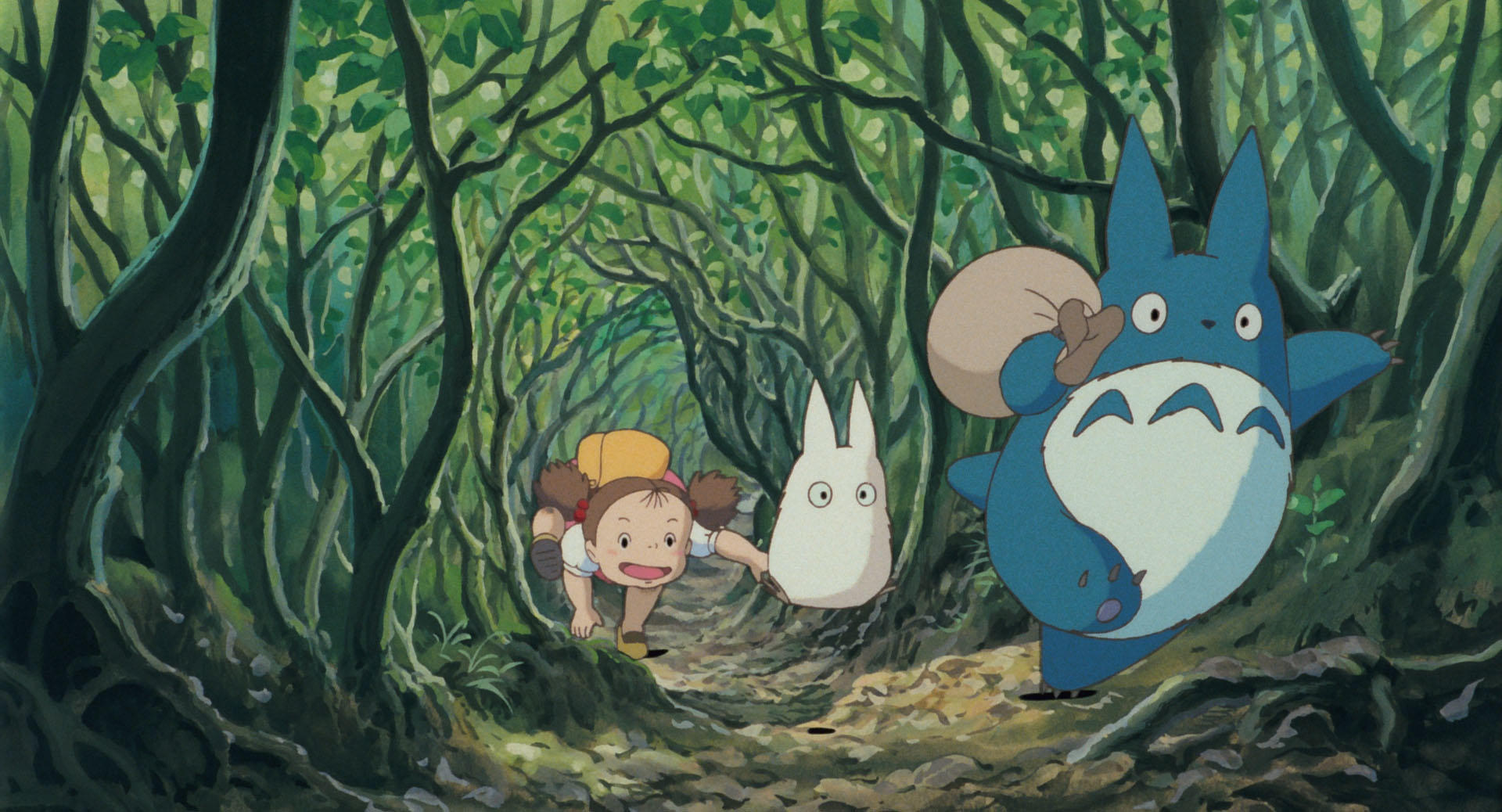
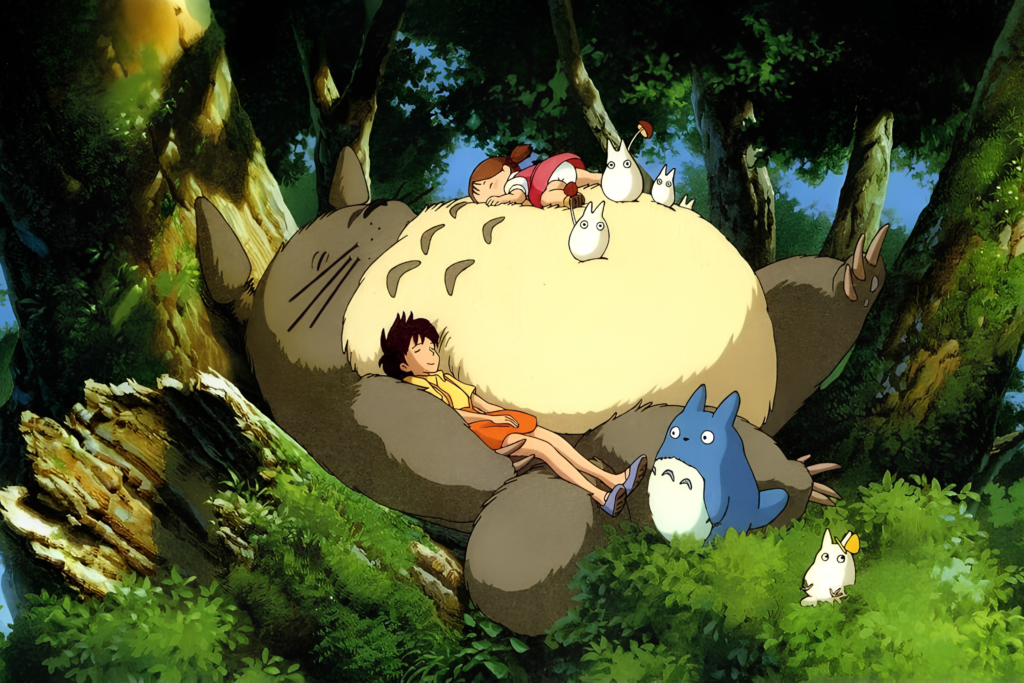
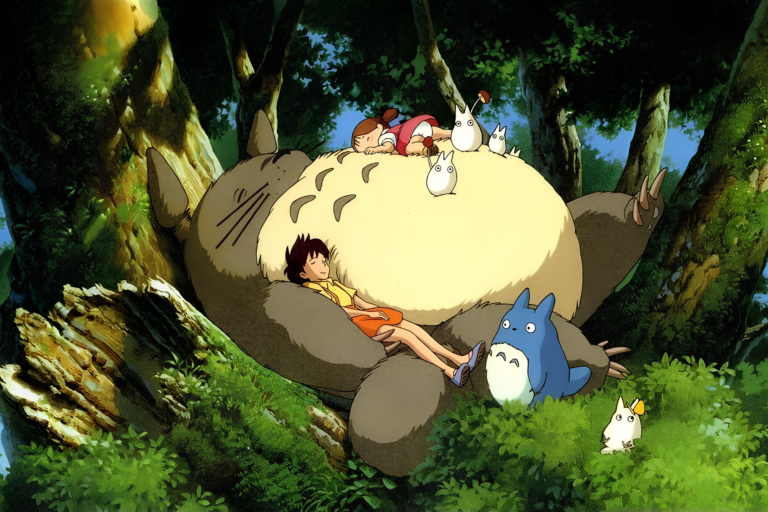
What does Totoro himself do? Mostly he sleeps. Mei follows two small spirits into a hollow beneath the camphor tree and lands “on the stomach of a vast slumbering creature”, where she falls asleep herself; Ebert’s summary is that you “curl up on its tummy and have a nap.” The critic Adam Nayman notes that his “trademark refrain is a yawn.”
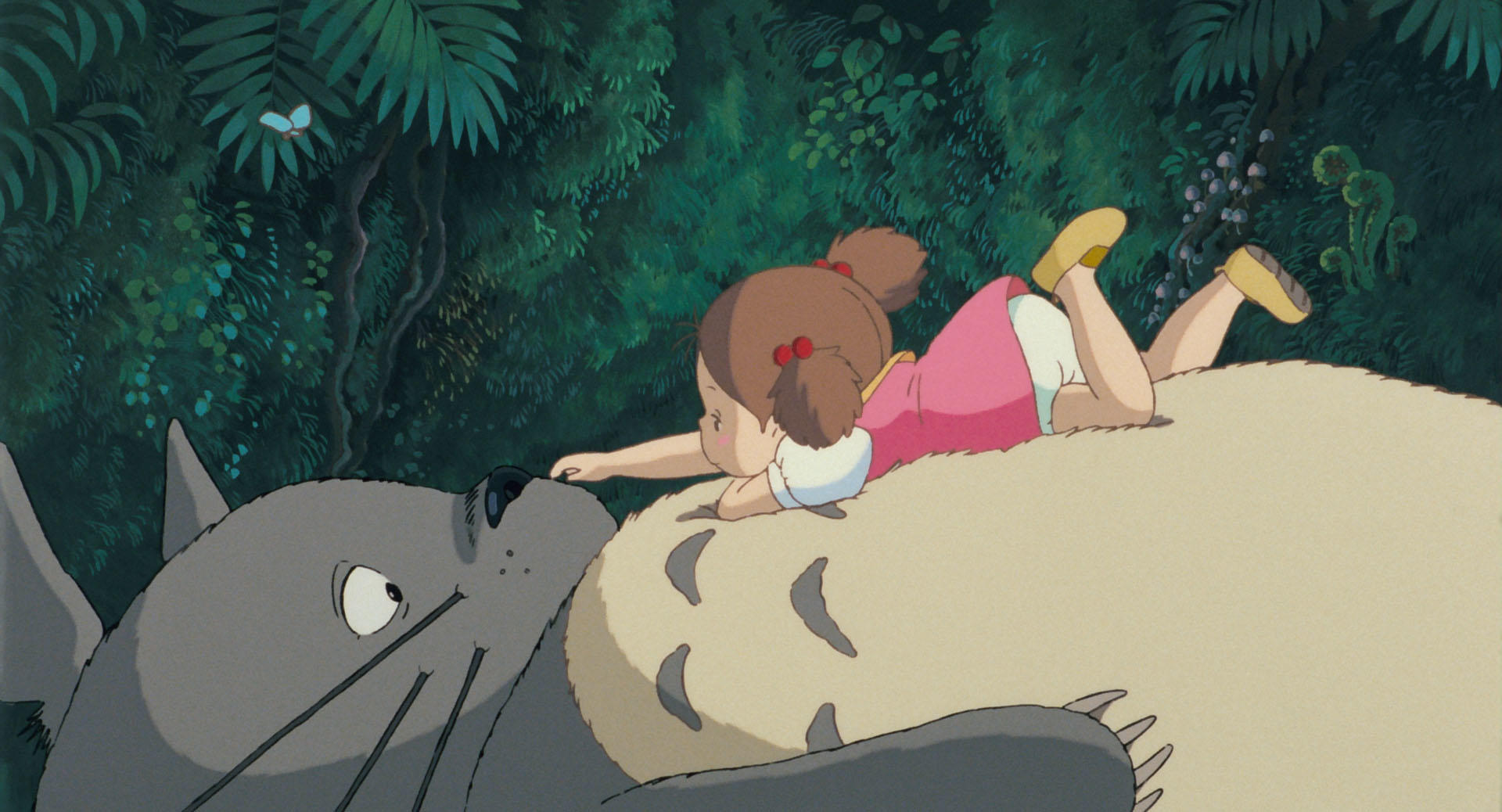
Writers have read him as a kami, one of the nature spirits of Japan’s Shintō tradition, and the scholar Arran Stibbe found ideas from Zen and Shintō “subtly woven into the film.” Miyazaki himself insisted the film was tied to no religion. Whatever Totoro is, the most powerful being in the film spends most of it asleep.
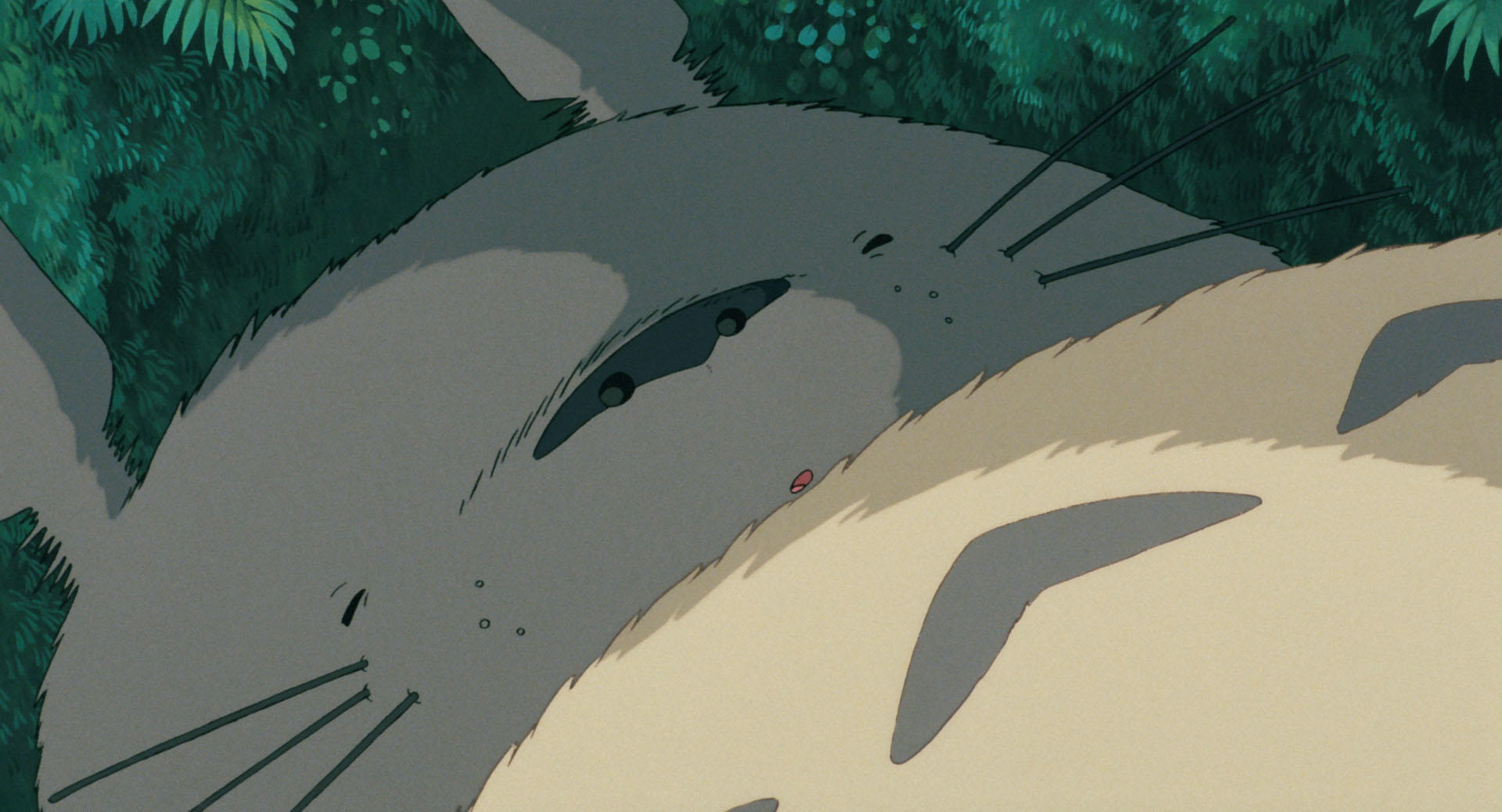
The old philosophers would have understood him. The Chinese sage Zhuangzi, writing in the fourth century BCE, tells of a friend who complains about a huge tree on his land whose trunk is too gnarled and bumpy to be cut into timber. Zhuangzi tells him to stop worrying: because no carpenter can use it, nobody cuts it down, and it lives to a great age, giving shade to anyone who lies beneath it.
“If there’s no use for it, how can it come to grief or pain?” The phrase that comes out of the story, the usefulness of the useless, became one of the founding ideas of Taoism. It is hard to watch Totoro asleep in the roots of the oldest tree in the forest without thinking of it. The Tao Te Ching, the short book at the centre of that tradition, takes the thought further: in the pursuit of the Way, “one does less and less until one does nothing at all, and when one does nothing at all there is nothing that is undone.”

The West arrived at the same suspicion of busyness much later. In 1932 Bertrand Russell, the British philosopher, opened an essay called “In Praise of Idleness” by confessing that he had been raised on the proverb “Satan finds some mischief still for idle hands to do,” and then announcing: “I think that there is far too much work done in the world.” Sixteen years later the German philosopher Josef Pieper argued that a civilisation of “total work” had forgotten what leisure was for.
Leisure, he wrote, “is a form of that stillness that is necessary preparation for accepting reality,” the attitude of someone who opens himself to the world. The Italians have a phrase for the pleasure that follows, dolce far niente, the sweetness of doing nothing.
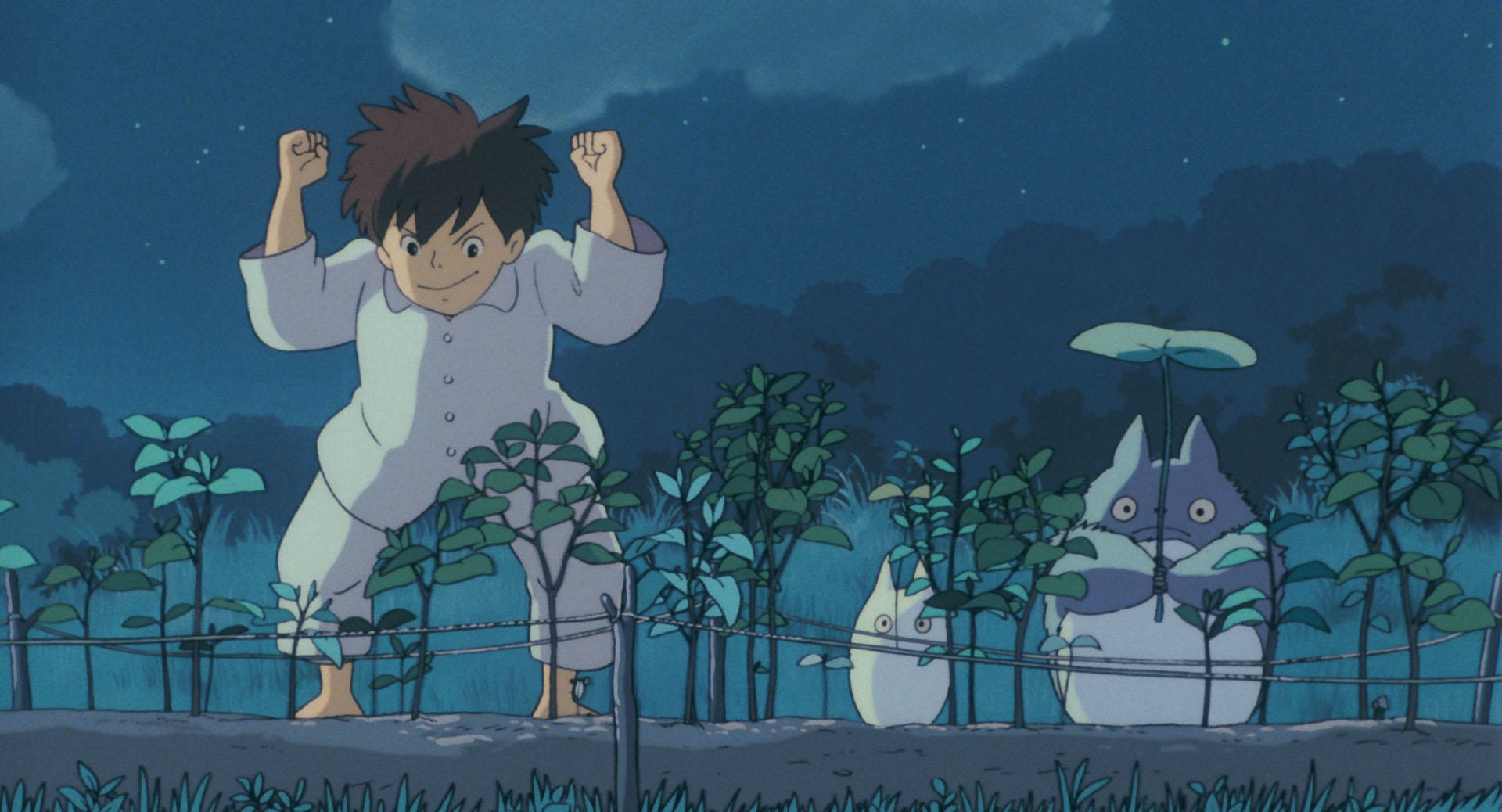
Totoro makes that argument with a seed. The girls plant the nuts and seeds he gave them at the bus stop and wait for them to come up, and nothing happens for days. Then one night they wake to find Totoro and the small spirits dancing around the planted patch, and they join in, and in their dance the seeds burst into an enormous tree. In the morning the tree is gone, but the seeds have sprouted.
The scene is the whole film in miniature. Something is growing during the days when nothing seems to happen, and the girls’ part in it is to wait, to watch and, when the moment comes, to dance. It may also be the best answer to the question in the title. Doing nothing feels good because the mind knows, better than the calendar does, that the empty hours were never really empty, and that a good deal of what we become is quietly put down in them, like seeds in a garden at night.


Vincent Minatozaki
Vincent is the founder and Editor-in-Chief of 1000 Libraries Magazine. He is a Paris-born ex-corporate turned bookseller and philosopher, on a global mission to spread the joy of physical books in our age of digital technology.