
From the Devil’s Bible in Stockholm to the bats of Coimbra and a book bound in human skin, ten of the world’s strangest library legends, myths and true stories.
Libraries are meant to be the quietest buildings in any city, which may be why so many strange stories gather in them. A room of old books is a room of things that have outlived their owners, and people have always suspected that something travels with them. In Stockholm, the suspicion has a name. The Devil’s Bible is a manuscript so heavy it takes two people to lift, and for eight hundred years the story has been that a monk wrote it in a single night with help from below.
That one is a legend. Several of the stories here are stranger for being true: a binding tested in a laboratory and found to be human skin, a green dye still being quarantined because it is arsenic, a king turned away at a library door. Here are ten of the strangest things said, and known, about the world’s libraries.
1. The Devil’s Bible, Stockholm, Sweden
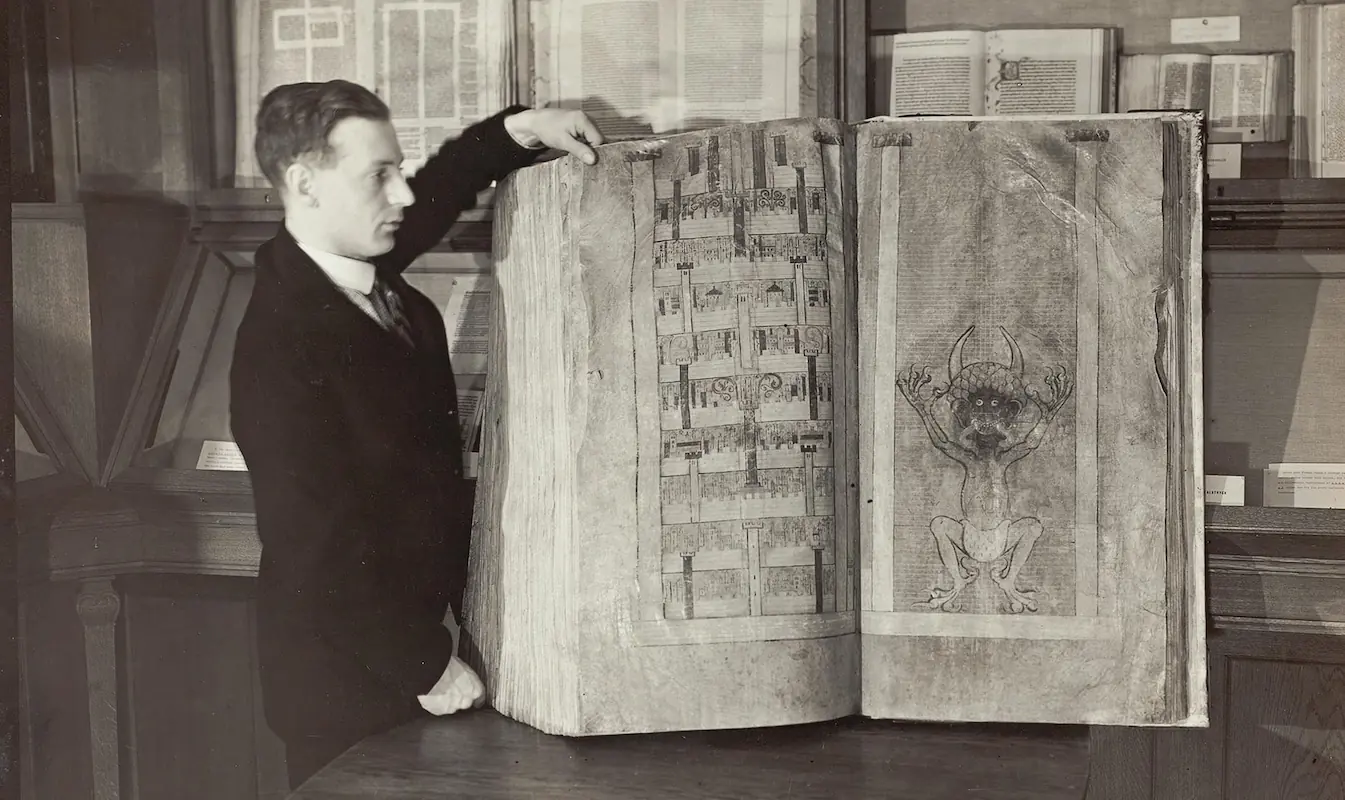
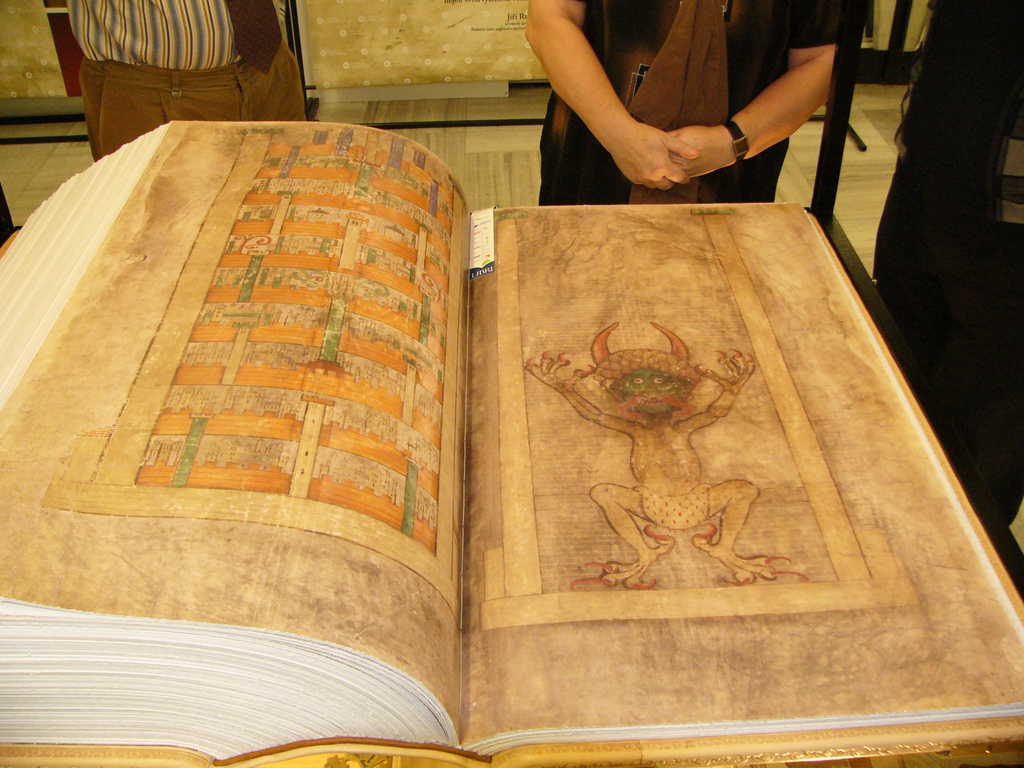
The Codex Gigas, “the giant book,” is 92 centimetres tall, weighs about 75 kilograms and was made in a Benedictine monastery in Bohemia around 1220. Its 620 pages, from the skins of some 160 animals, hold the whole Latin Bible, a history of the world, medical texts and spells for catching thieves. The story that has followed it since the Middle Ages is that a monk who had broken his vows was to be walled up alive, and bargained for his life by promising to write, in a single night, a book that would hold all human knowledge.
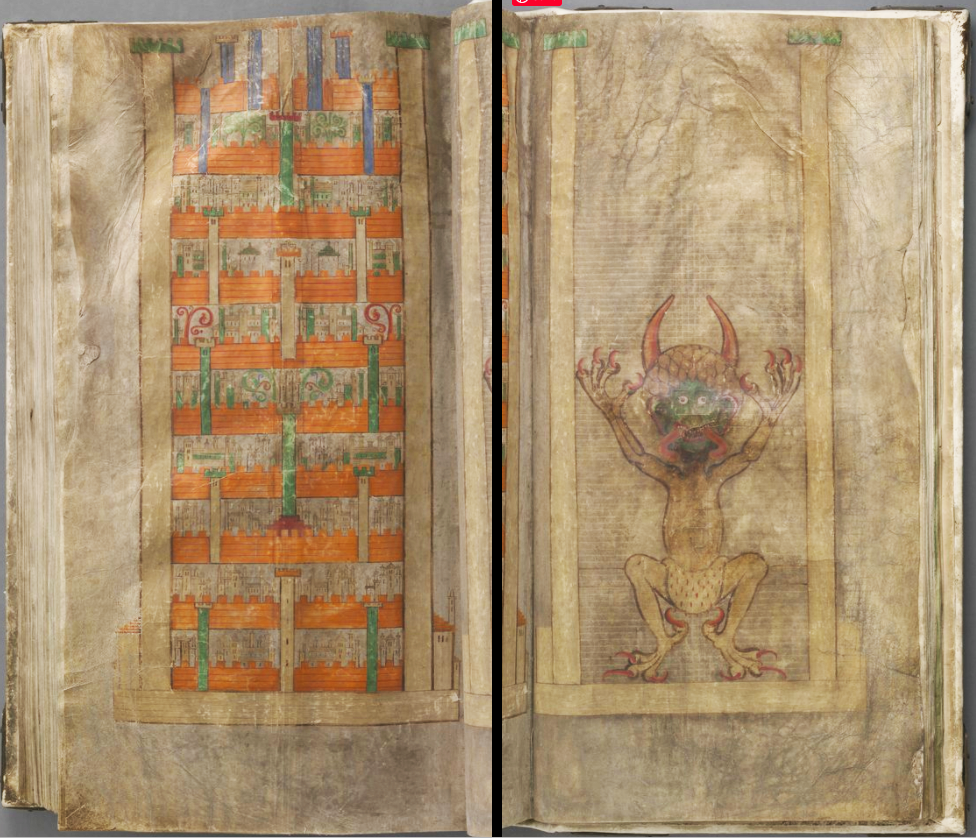
At midnight, with the work unfinished, he prayed to the Devil, and in gratitude painted the Devil’s portrait on the page. There is no record of any such monk, and the handwriting tells a slower story, but the portrait is really there, half a metre tall, green-faced, with a forked red tongue, and the pages around it are darker than the rest, worn by centuries of hands.
The National Library of Sweden, where it has lived since Swedish troops carried it off from Prague in 1648, has examined that handwriting and concluded that one scribe wrote it all, over twenty to thirty years, the only part of the tale anyone can prove. In 1697 it was thrown from a window to save it from a fire in the royal castle. Whoever the scribe was, he gave the better part of his life to it, which is a kind of bargain too.
2. The Curses That Promised a Thief Would Be Fried in a Pan
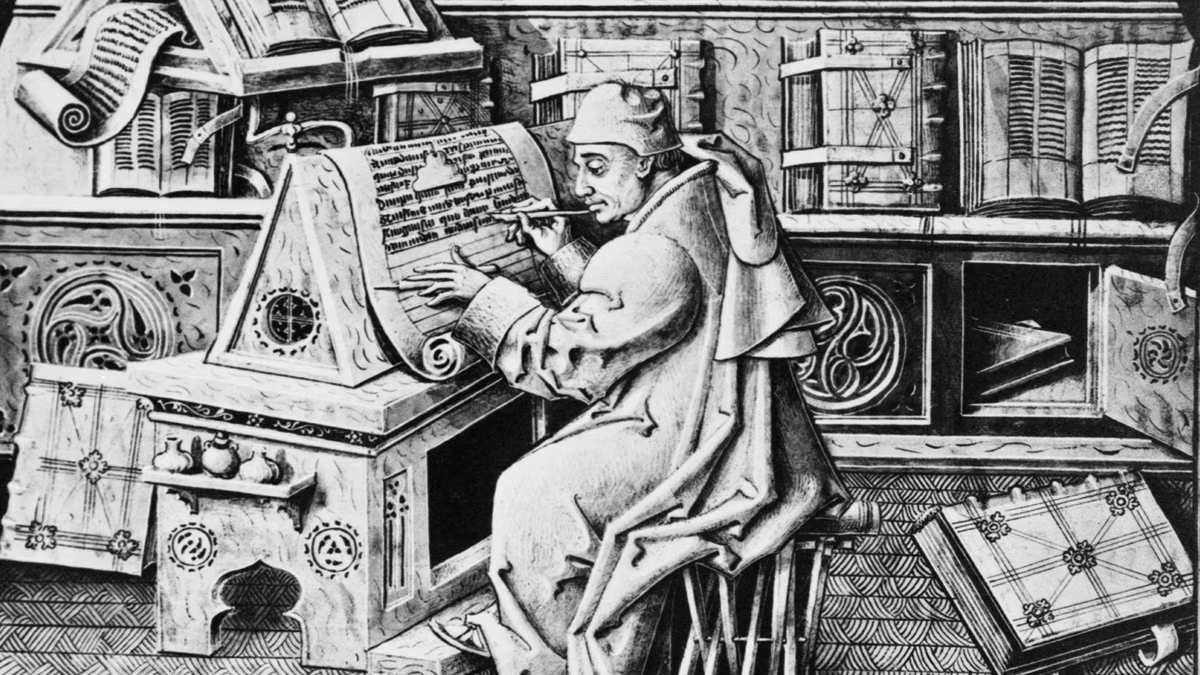
Before there were library fines, there were library curses, and these need no legend: they are still written in the books. A manuscript took a scribe months or years, so monasteries put threats on the front pages for anyone who might carry one off. Marc Drogin’s 1983 study, Anathema! collected hundreds; one, from a monastery in Barcelona, runs: “If anyone take away this book, let him die the death; let him be fried in a pan; let the falling sickness and fever seize him; let him be broken on the wheel, and hanged.” Others wished bookworms on the thief’s entrails.
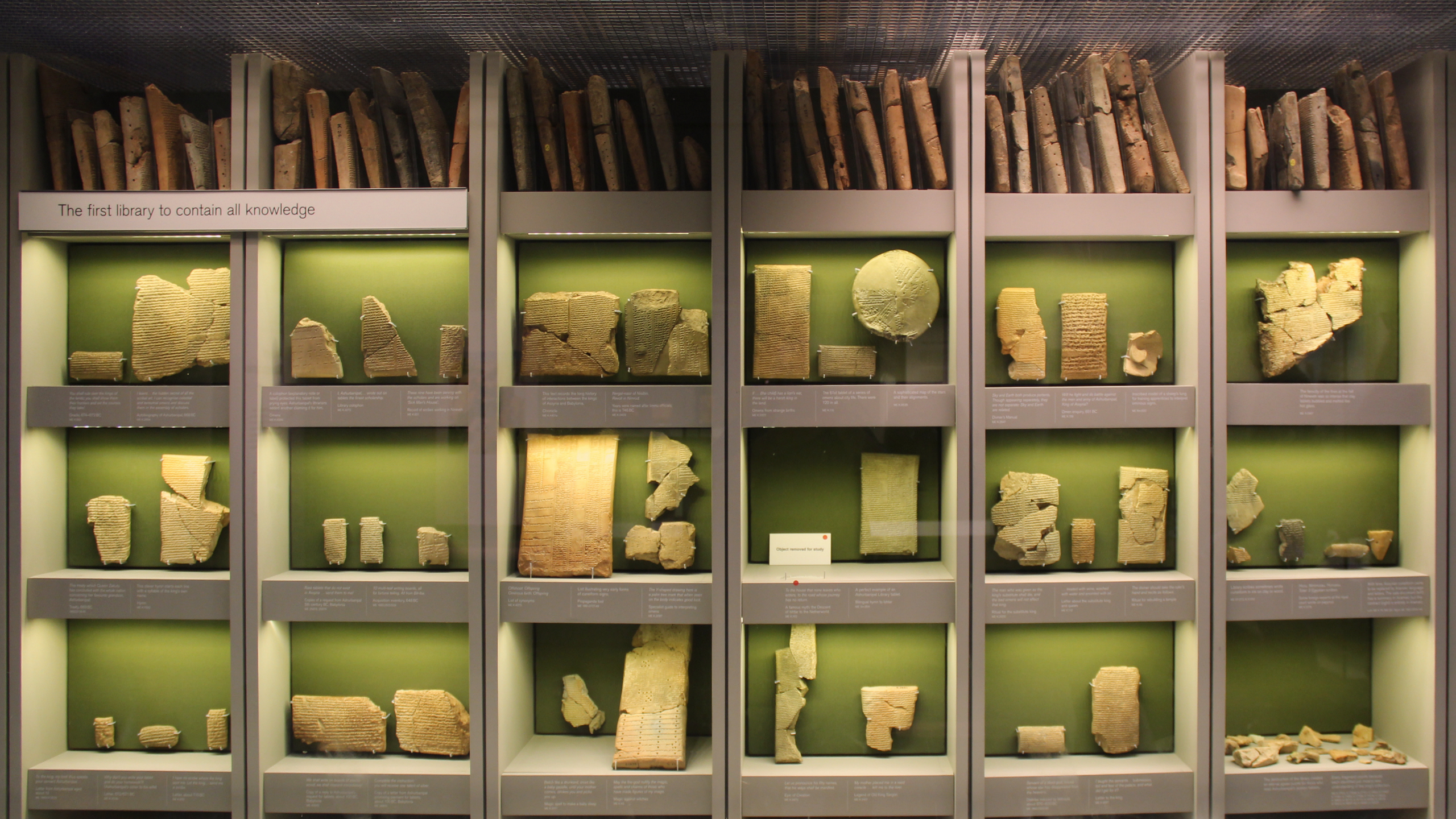
The custom is far older than the monks. Clay tablets in the library of the Assyrian king Ashurbanipal at Nineveh, from the seventh century BC, end with warnings to anyone who would remove or erase them. The curses did not stop the thieves. The books that survive are often the ones that were stolen, sold, and stolen again, and the curses survive with them.
3. The Green Books That Can Poison You
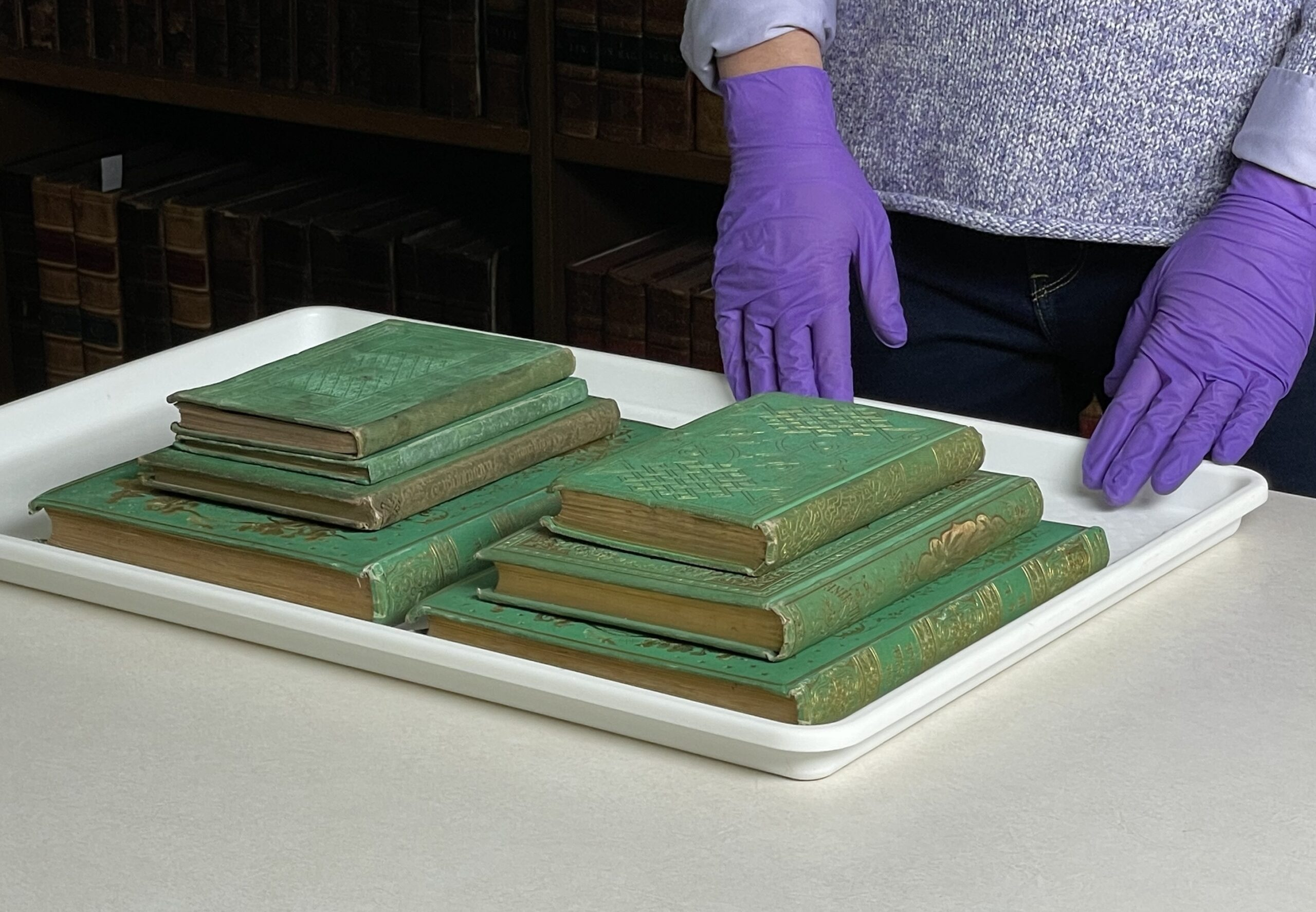
This one is happening now. In 2019, a conservator at the Winterthur Museum in Delaware, Melissa Tedone, was repairing an 1857 book on home decoration with a bright emerald cover when the green pigment began flaking off in her hands. She had it tested. The cloth was coloured with Paris green, a compound of copper and arsenic that Victorian publishers used by the ton in the 1840s and 1850s because it was cheap and did not fade. The Poison Book Project she founded has since listed more than 300 poison books, and libraries around the world have gone looking through their shelves.
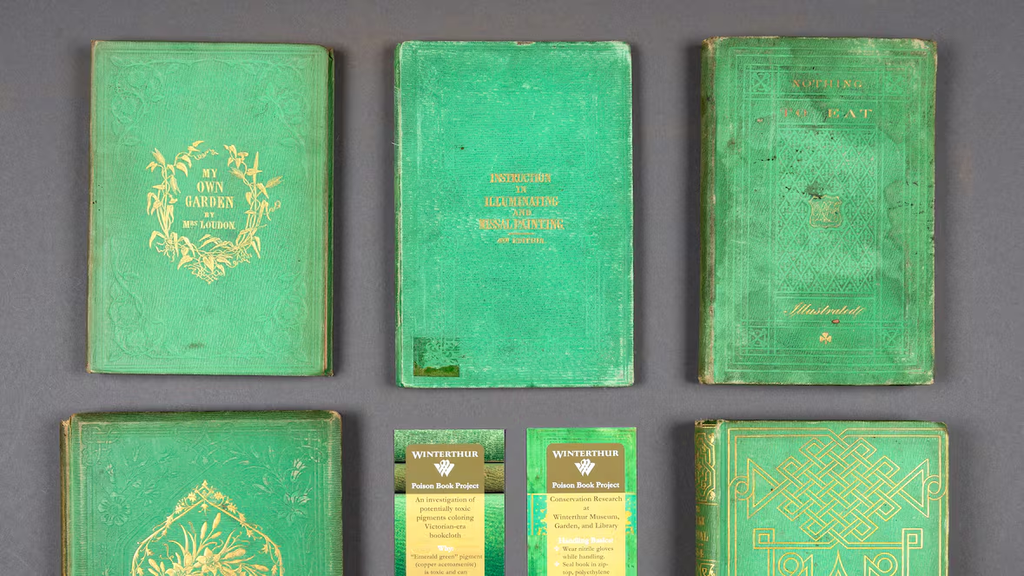
In April 2024, the Bibliothèque nationale de France quarantined four of them, including two copies of The Ballads of Ireland from 1855, until a laboratory could say how much poison each one held. Bielefeld University in Germany locked away some 60,000 volumes while it checked them. The dust is invisible, comes off on the fingers, and a reader who licks a thumb to turn a page takes a small dose. The books are kept rather than destroyed, in sealed bags with a warning label, and may be the only thing in a library that can hurt you back.
4. The Bats on the Night Shift, Coimbra, Portugal

The Biblioteca Joanina at the University of Coimbra, finished in 1728 and named for King João V, is one of the most ornate rooms in Europe, with three halls of gilded wood and painted ceilings holding 60,000 books. It also holds two colonies of bats, and this is no tale told to tourists. Each night, after the doors close, pipistrelles and free-tailed bats emerge from behind the shelves to eat the moths and beetles whose larvae would otherwise eat the paper and the binding glue.
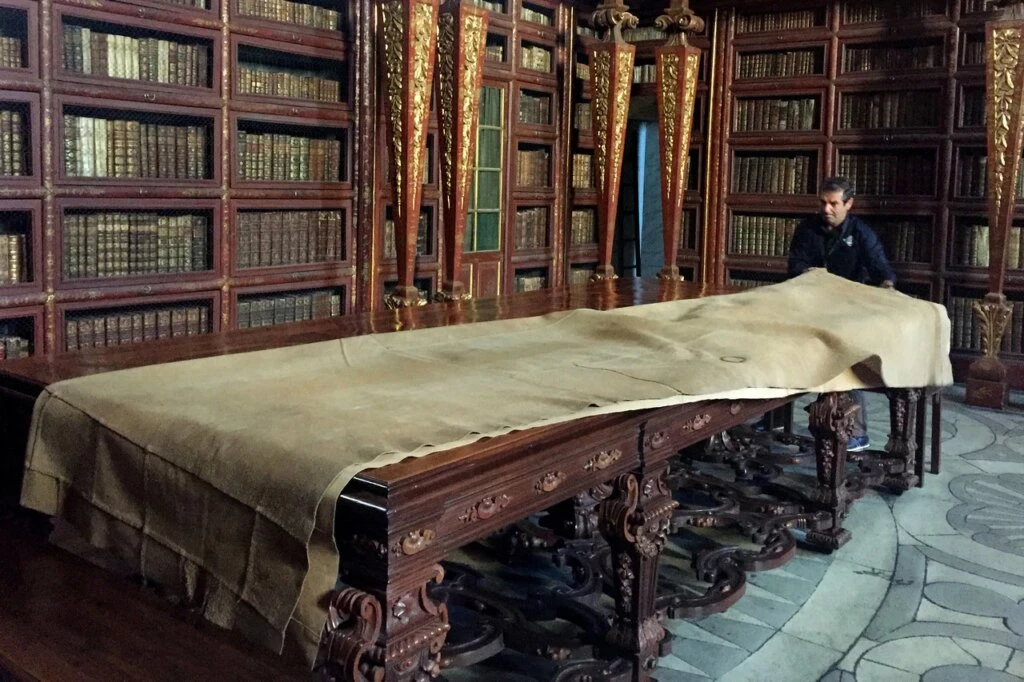
Before leaving, the staff spread sheets of leather over the eighteenth-century tables; in the morning they take them away and start dusting. The library’s accounts show leather sheets bought from Russia in the late 1700s, so the arrangement is at least two centuries old. Coimbra’s deputy director calls them honorary librarians. They are unpaid, nocturnal and have never damaged a book.
5. The Oath, and the King Who Was Refused, Oxford, England

Every new reader at the Bodleian Library at Oxford still makes a formal declaration, once recited aloud in Latin, which includes a promise “not to bring into the Library, or kindle therein, any fire or flame.” Thomas Bodley, who refounded the library in 1602, ruled that no book should ever leave the building, and in 1645 the rule met its hardest test. Charles I, at war with Parliament and holding court in Oxford, sent a note asking to borrow a French history by d’Aubigné.
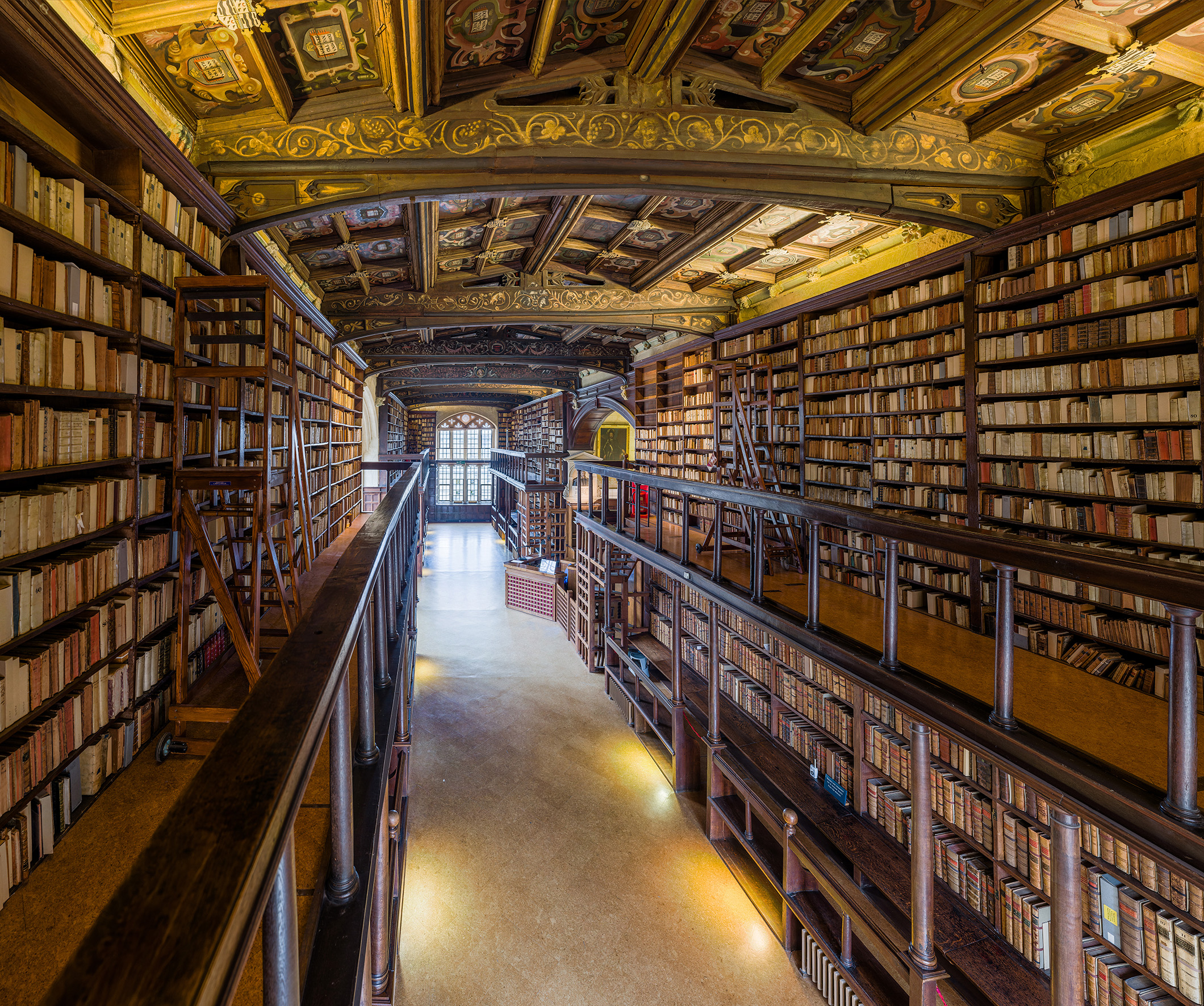
Bodley’s Librarian, John Rouse, explained that the statutes did not permit it, and the king went without. The note, sent on the king’s behalf, is still in the library’s keeping, so there is no doubt about this one. The rule survives too: the Bodleian lends nothing to anyone.
6. The Confession Bound in Its Author’s Skin, Boston, USA
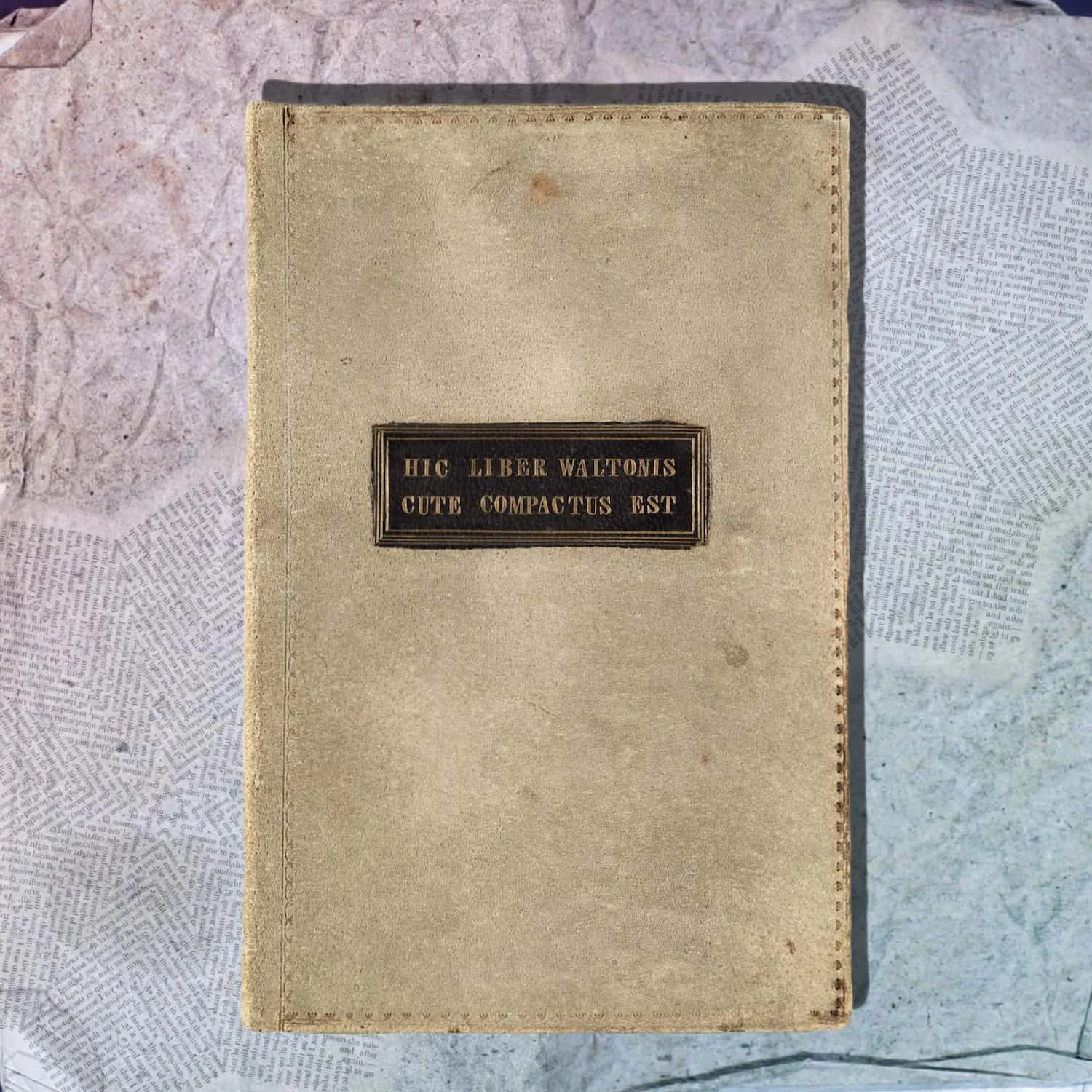
James Allen robbed travellers on the roads outside Boston under half a dozen names, and was caught in 1833 after a man named John Fenno fought him off. Dying of tuberculosis in the Massachusetts State Prison in 1837, he dictated his life story to the warden and asked that a copy be bound in his own skin and given to Fenno, the only man who had ever stood up to him. The book, Narrative of the Life of James Allen, sits today in the Boston Athenaeum, a private library founded in 1807, with a label on the cover in Latin: “This book is bound in the skin of Walton,” one of Allen’s aliases.
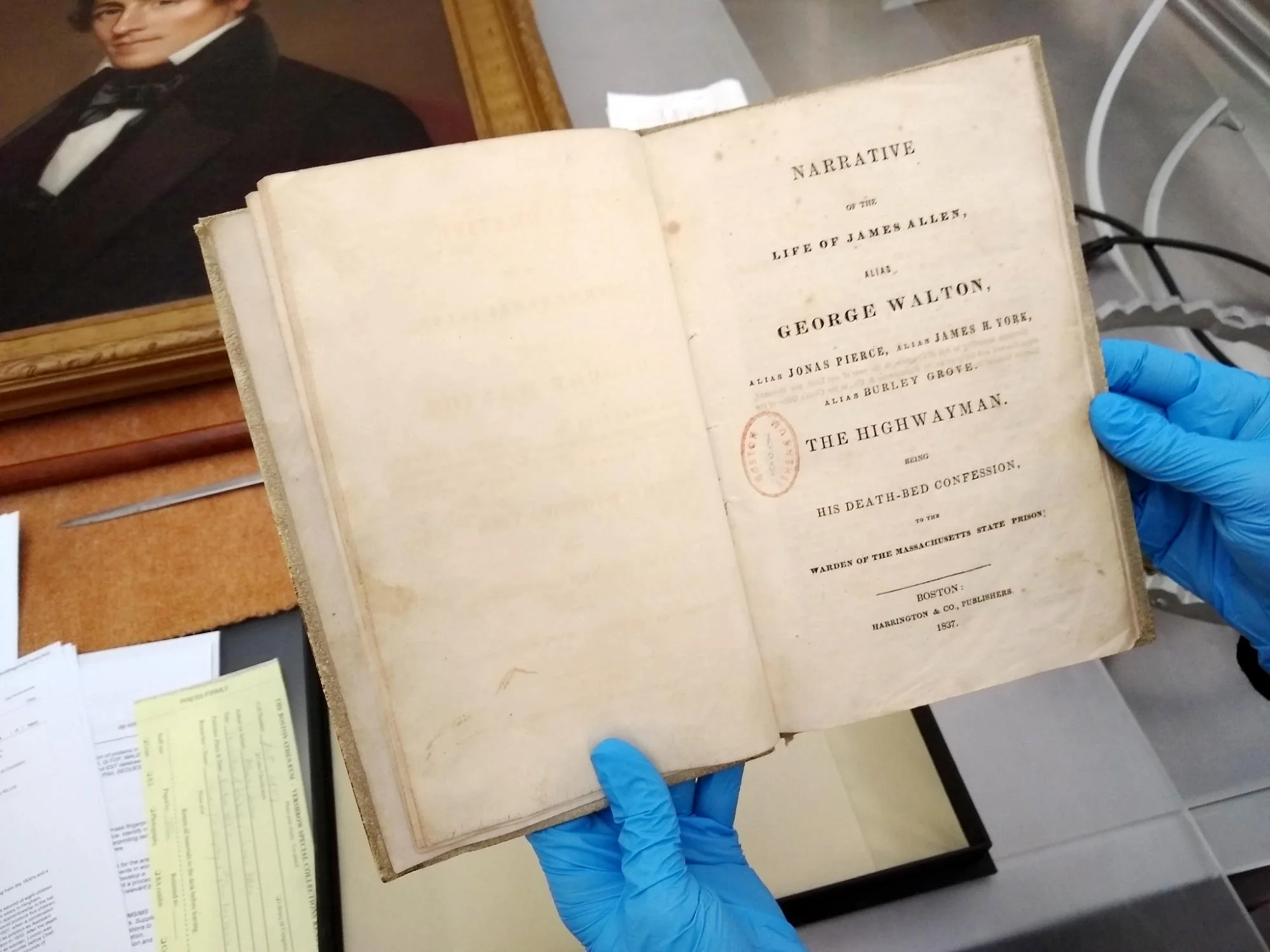
Many libraries own books rumoured to be bound in human skin, and most prove to be pig or sheep when tested. The Anthropodermic Book Project, which runs the tests, has confirmed this one is exactly what its label says. The binding is pale grey and has often been compared to worn deerskin.
7. The Lost Library Beneath the Kremlin, Moscow, Russia
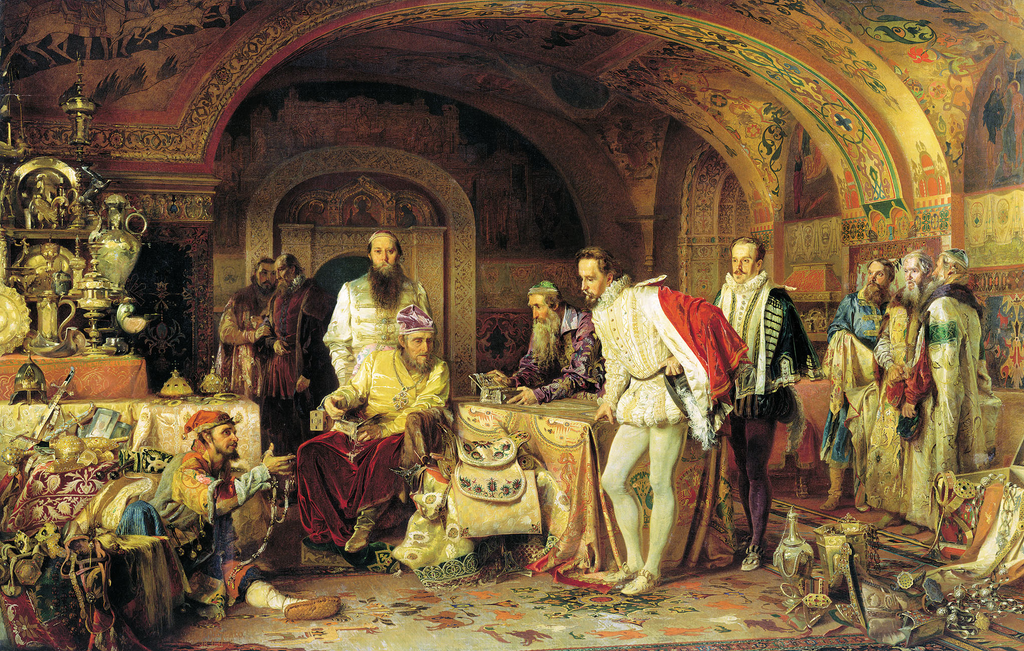
In 1472, Sophia Palaiologina, niece of the last Byzantine emperor, married Ivan III of Moscow, and the story goes that her dowry included the library of Constantinople, saved from the Turks: Greek and Latin manuscripts said to go back to Alexandria. Her grandson Ivan the Terrible is supposed to have hidden it beneath the Kremlin and cursed it, so that whoever came close to finding it would go blind. No catalogue, no manuscript, and no eyewitness has ever surfaced, and the searches are the only part of the story with dates attached.
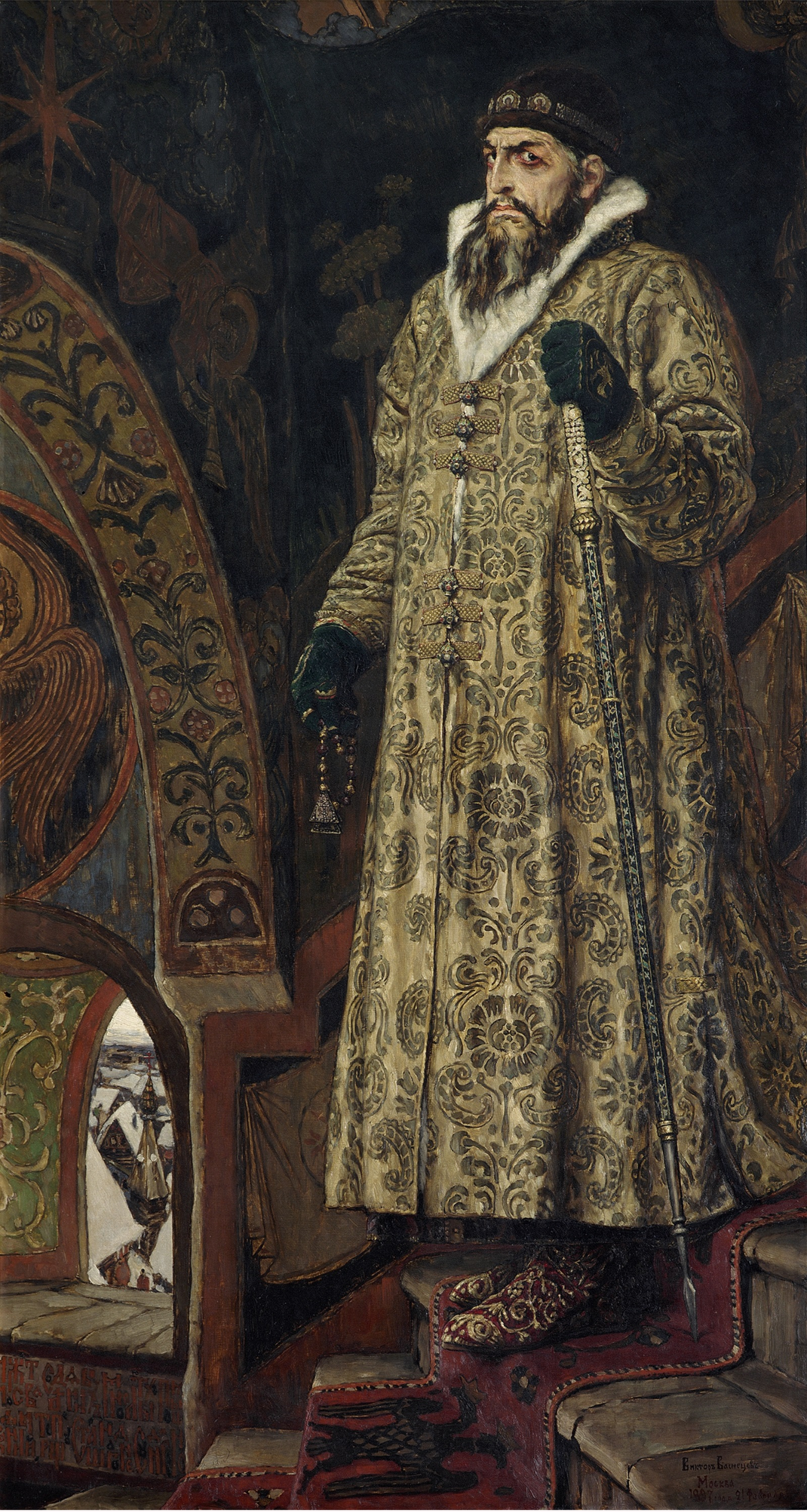
In 1724, a sexton named Konon Osipov told the authorities that a colleague had walked a secret passage and seen two rooms stacked with trunks, since sealed. In the 1930s, the archaeologist Ignatius Stelletskii dug under the Kremlin and found passages but no books. Historians note that the earliest account of the library was written decades after the fact by a monk with reasons to embellish, and that it may never have existed at all. The digging has never quite stopped.
8. The Gospel Book Found Under a Sod, Kells, Ireland
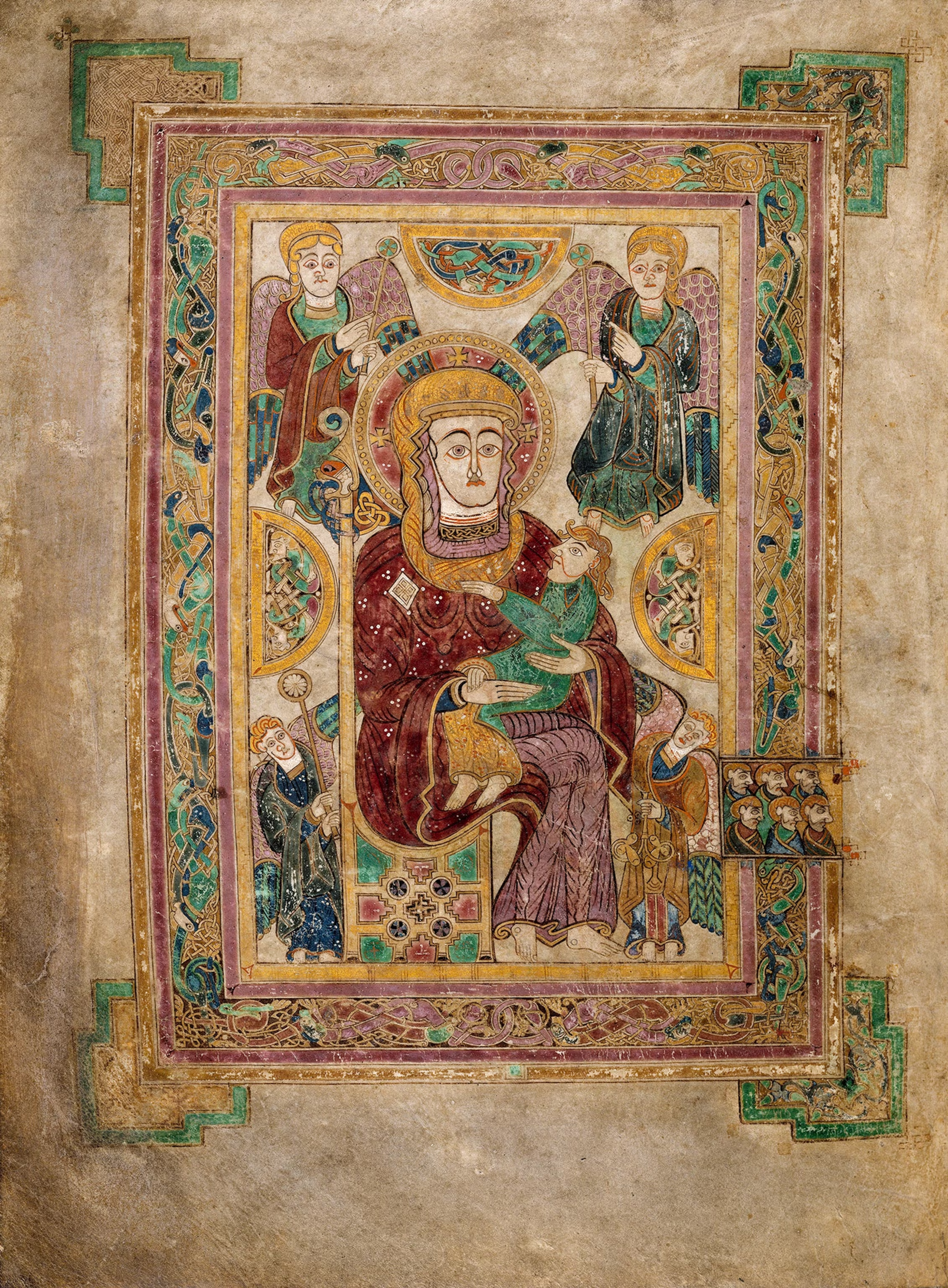
The Book of Kells, the ninth-century gospel manuscript that roughly a million people a year queue to see at Trinity College Dublin, spent a thousand years in far rougher company than its glass case, and the roughest episode is a matter of record. The Annals of Ulster, kept by monks at the time, note that in 1007 “the great Gospel of Columcille, the chief relic of the Western World” was stolen by night from the stone church at Kells, in County Meath, and found two months and twenty nights later “under a sod,” its gold cover torn off.
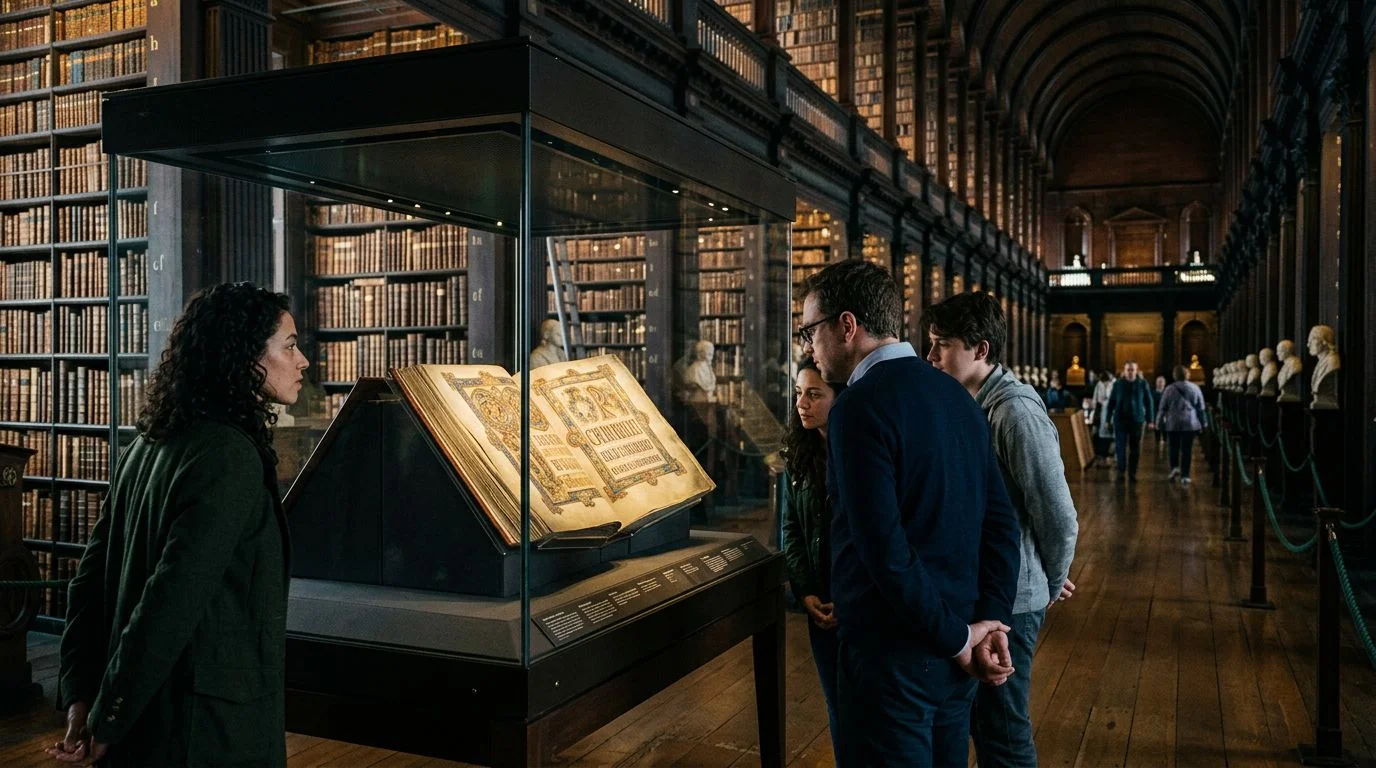
The thieves wanted the gold. The vellum, the only part worth anything to the monks, was thrown into a field, lay there through the Irish winter, and came back with its pages intact and its cover gone forever. It has been in Dublin since the 1650s, and nobody has tried to steal it since.
9. The Book Nobody on Earth Can Read, New Haven, USA
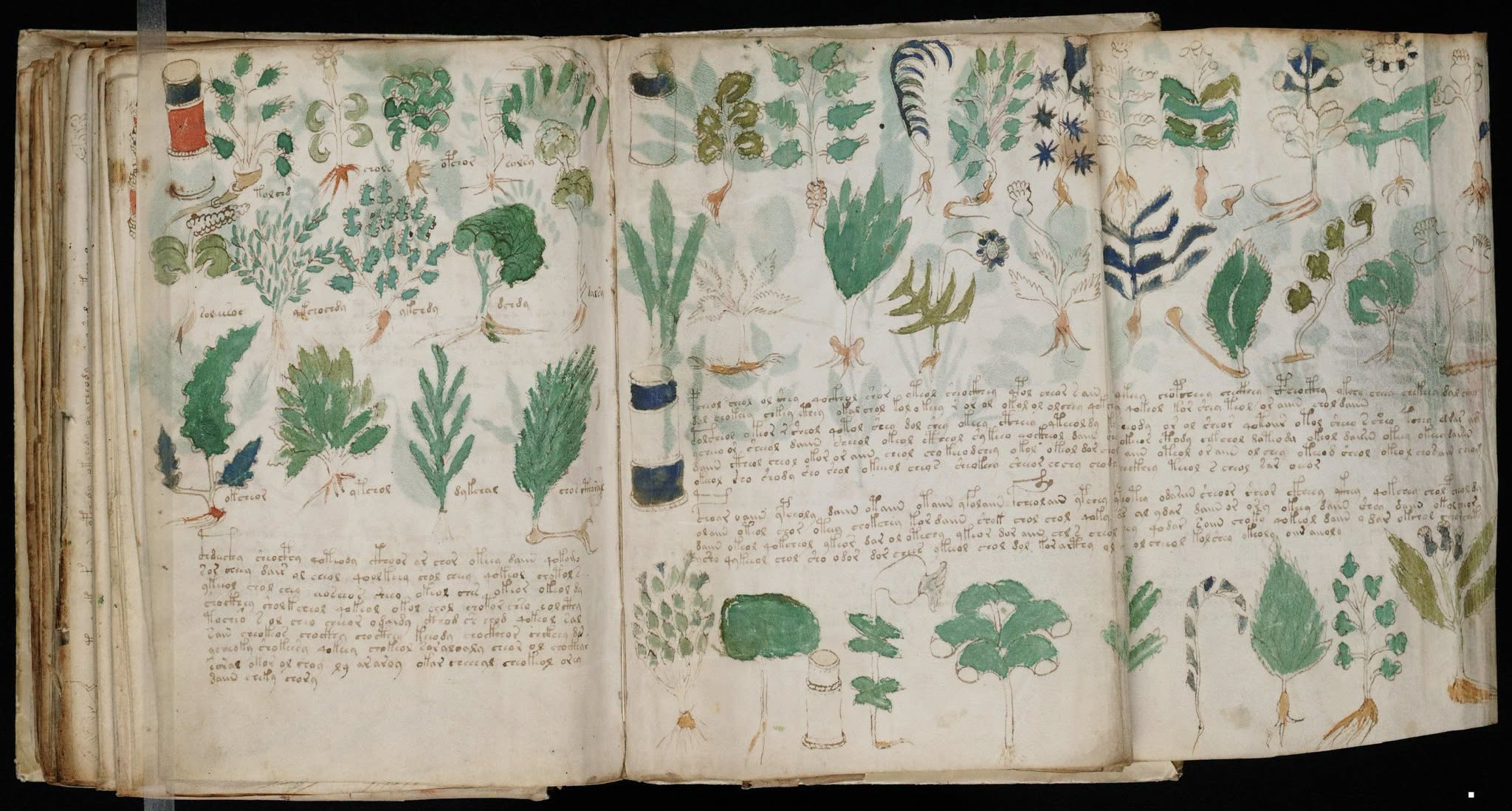
Nothing about this one needs believing; the book can be requested at the desk. In the Beinecke Rare Book and Manuscript Library at Yale, catalogued as MS 408, is a book of about 240 vellum pages whose parchment has been carbon-dated to between 1404 and 1438, and not one word of it has ever been read. The script, some 170,000 characters in an alphabet found nowhere else, flows in a confident hand without corrections. The pictures are stranger still: plants that match no known species, circular star charts, and page after page of small naked women bathing in green pools joined by pipes.
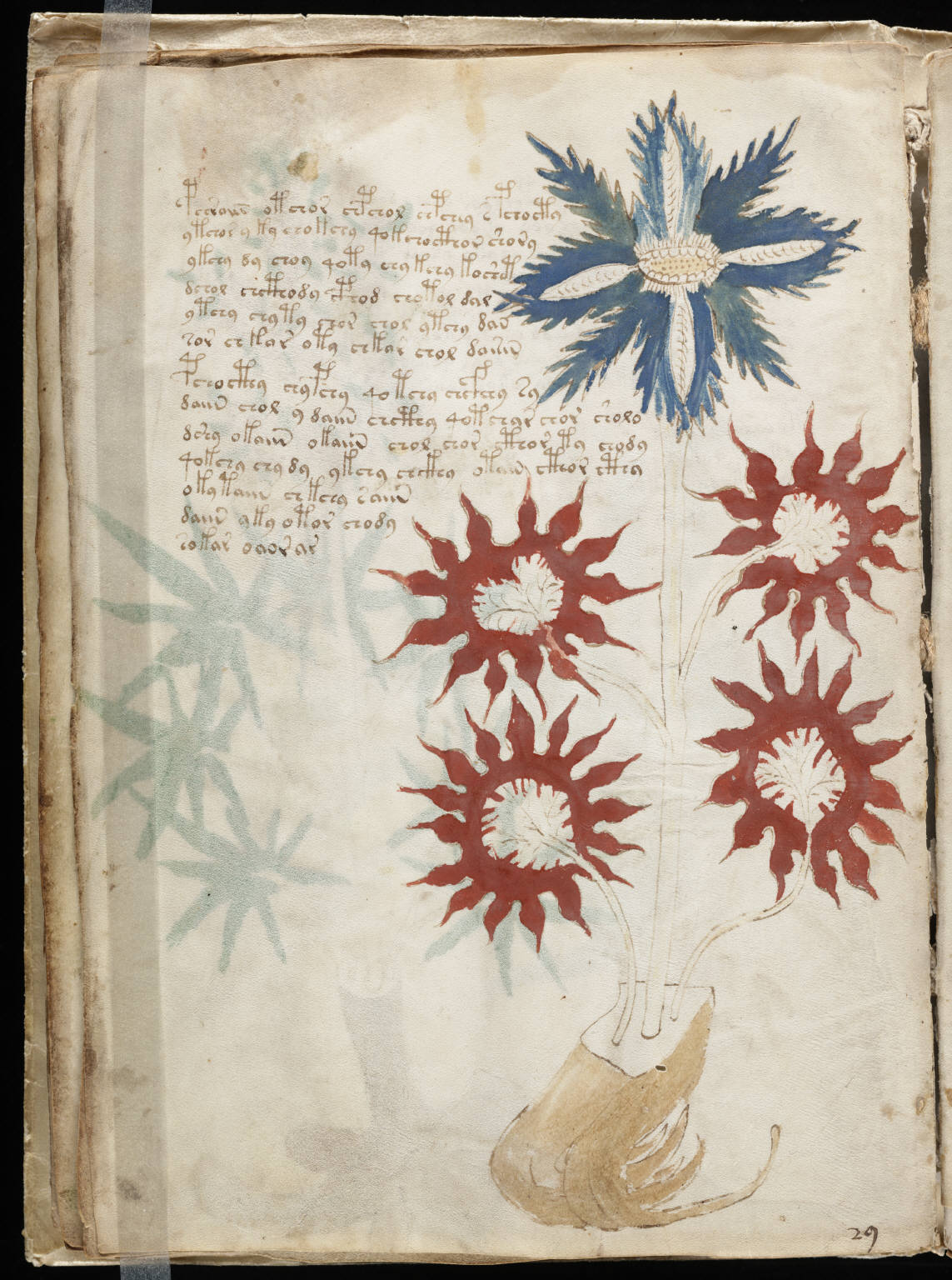
A letter of 1665 claims the Emperor Rudolf II paid 600 ducats for it. The book dealer Wilfrid Voynich bought it from a Jesuit college near Rome in 1912, and it carries his name. William Friedman, who led the team that broke Japan’s diplomatic cipher in the Second World War, worked on it for decades and died defeated. Every few years someone announces a solution, and every few years it fails. The pages are online, free to anyone, which has not helped at all.
10. The Library Angel

The last of these has no building, and no proof beyond the people who swear to it. The writer Arthur Koestler coined the phrase “the library angel” in The Challenge of Chance (1973) for a thing readers have always noticed: that a needed book sometimes arrives, or falls open, exactly when it is needed. His best example came from the novelist Rebecca West, researching the Nuremberg trials in 1972 in the 42 volumes of published transcripts, so badly indexed that she could not find a passage she needed. She complained to the librarian, took a volume at random from the shelf, opened it, and it was, she wrote, “not only the right volume, but I had opened it at the right page.”
Every librarian and every writer has a version of the story. Statisticians call it coincidence, and are probably right, and the people who have experienced it tend to stop wanting an explanation. Among all the curses, oaths, locks and bats on this list, it is the only superstition that works in the reader’s favour.

Vincent Phan
Vincent is the founder and Editor-in-Chief of 1000 Libraries Magazine. He is a Paris-born ex-corporate turned bookseller and philosopher, on a global mission to spread the joy of physical books in our age of digital technology.