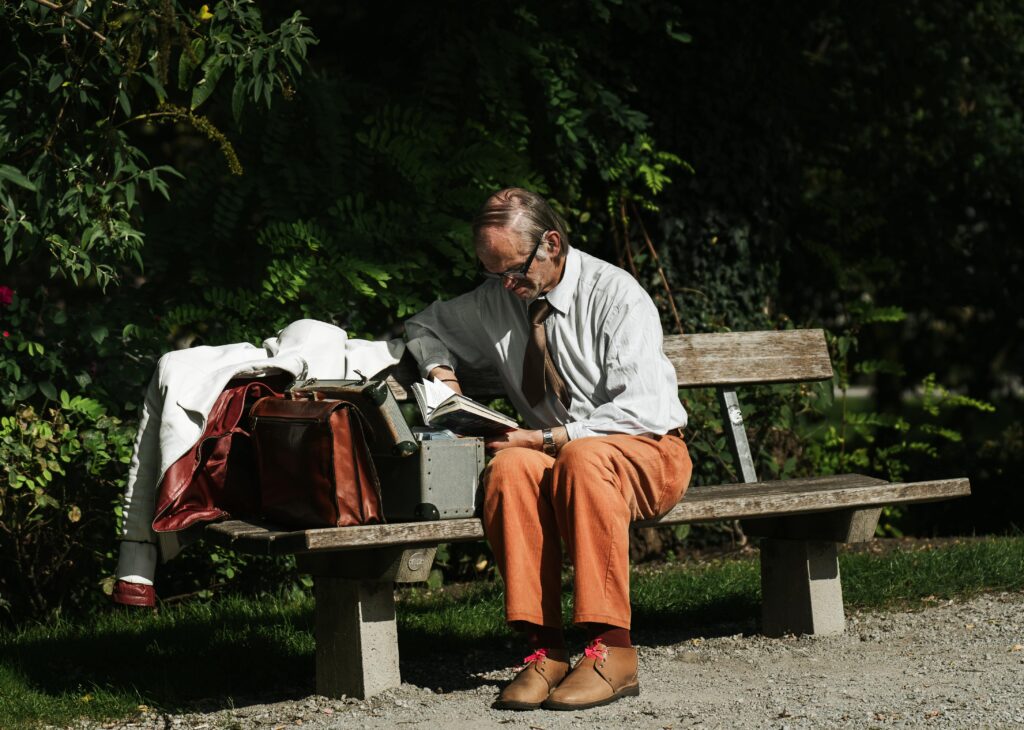

Could reading under open skies improve focus, mood, and imagination? Explore the science and beauty of outdoor reading.
When Claude Monet watched the way the light kissed the smoky port city of Le Havre, immortalising it with a soft fluttering of paint, he had no idea of what he was beginning. Monet’s Impression, Sunrise, would soon become the subject of a scathing article by art critic Louis Leroy, who mockingly coined term, ‘Impressionism’, in his article, ‘The Exhibition of the Impressionists.’ Leroy felt the work was unfinished and primitive, too far removed from the traditional and classic expectations of ‘good’ art.
Instead of feeling ashamed or disheartened by such a name, the group of ‘rejected’ artists did something unexpected – they adopted the label as their own. The name had somewhat united them, given them a kind of identity that allowed for their own freedom of interpretation whilst retaining the privilege of a sense of belonging.
The First Impressionist Exhibition was held in 1874 on the Boulevard des Capucines, a collection of work by a group of artists excluded by the esteemed Paris Salon. Amongst the artists were some of the now most honoured in the art world: Paul Cézanne, Edgar Degas, Pierre-August Renoir, and of course, Claude Monet.
Painting en Plein Air
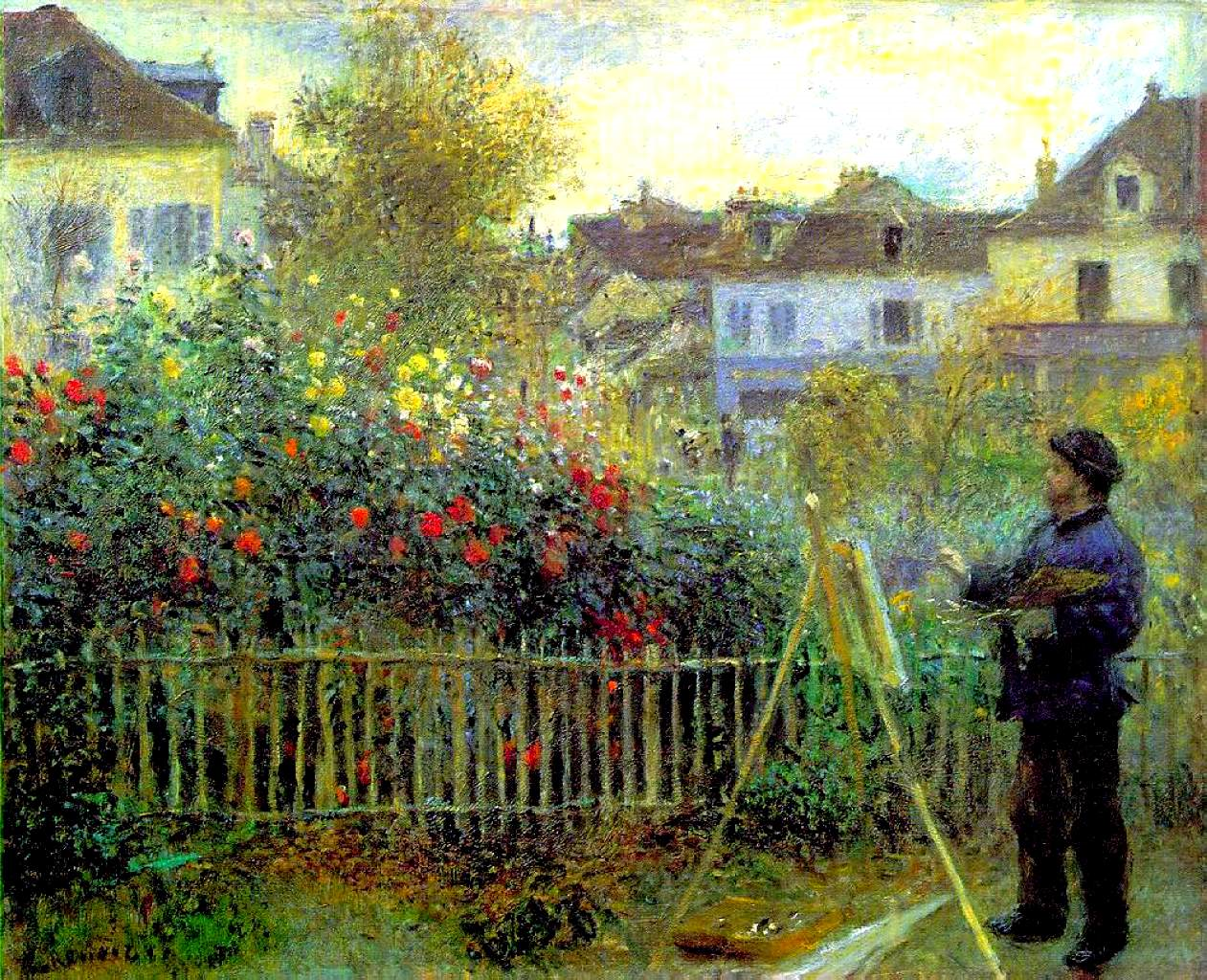
One of the most daring and different aspects of the Impressionist movement was the feature of painting en plein air. Instead of sitting inside painting a model or an object, the Impressionists made the bold choice to set their canvases and paint outdoors, focusing on capturing just an ‘impression’ of a moment, seizing the way the light might filter and dance at a certain instant, and then change entirely in the next.
Japan’s Influence on Nature and Art
Japanese art profoundly influenced the French Impressionist movement. Many tourists today take a day trip from Paris to Giverny to visit Monet’s famous Japanese-style gardens. Japan’s historical appreciation for nature, as well as Japanese artists’ use of floral patterns, heavily impacted the art Japan produced.
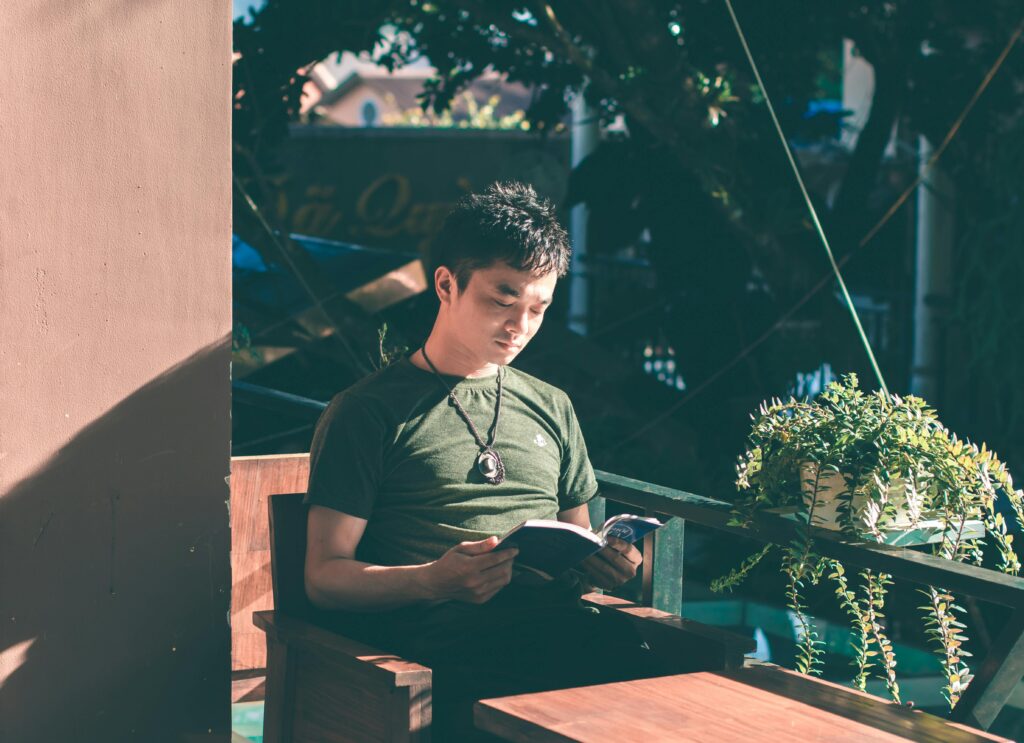
For many decades, the Japanese people have been conscious of the magnificent power of the environment, whether it be for art, writing, mental health, or well-being. This passion soon translated into scientific studies throughout the 80s, which aimed to test the efficacy of spending time in nature in reducing feelings of stress.
Unsurprisingly, the findings were clear – not only was it an interesting pastime, but also one that had a significant impact on one’s mental and psychological feelings of well-being.
Shinrin-yoku and the Healing Power of Nature
Thus, in the year 1982, the term shinrin-yoku was born, putting a name to the experience of ‘forest-bathing’. This philosophical and therapeutic movement reminded people that humans needed nature, that, scientifically, we were happier when we spent more time outside enjoying the earth.
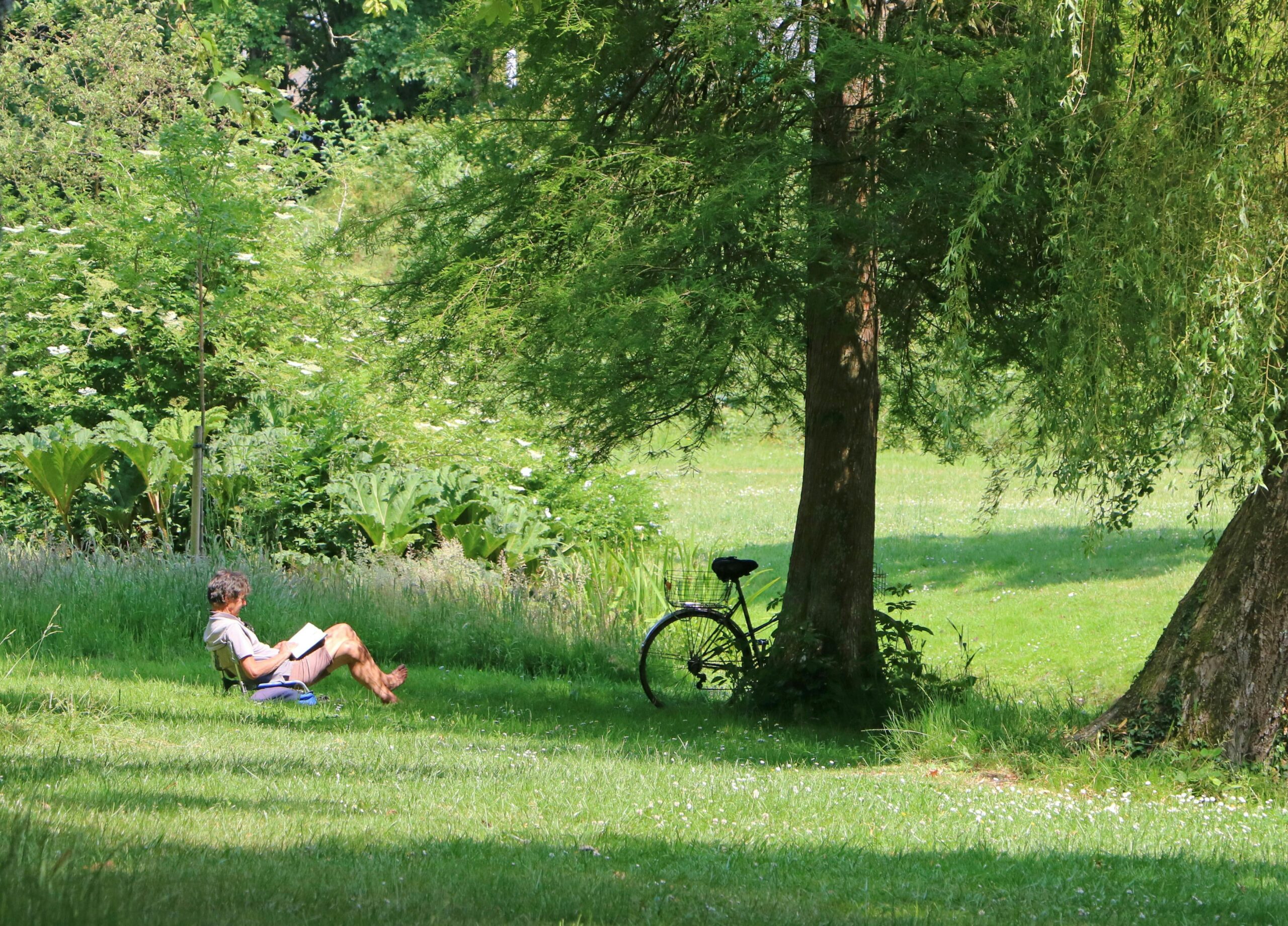
Unlike our intense, overwhelmingly digital worlds, the forest quietly allows you to breathe. To notice each broken twig on the dirt, the scattering of light through the tree tops, the singing of birds and the wind.
Reading Outdoors as Modern Forest-Bathing
Many of us are trying to make this return to the wilderness, sew back that human link we have to our planet. While some may think the return must be drastic, we can always start simply. Take the practice of reading. Reading is, as we already know, fantastic for almost every part of us.
It engages and stimulates us, develops our empathy, and reduces our level of cortisol – the stress hormone. Taking our books and novellas and poetry outdoors, and reading underneath the warm sunshine or soft clouds, might just be the best way to find our own shinrin-yoku.

Amongst even the youngest of bibliophiles, reading outdoors is linked to enhanced mental stimulation and a deeper comprehension of the stories we read. It builds up, little by little, our relationship with the world outside, and helps us feel more at home in the real world. A love for nature must be nourished, it must be fed – and fed with intention.
We do not need forests to bathe ourselves both physically and psychologically in nature; we can seek it out in our own ways. Carrying a book in our work bags and finding a few moments to sit on a park bench, or making a little morning outdoor ritual of a hot drink and a hardback.
Returning to the Natural World

When I have spent far too long staring at my laptop, I remind myself to practise my own shinrin-yoku. I truly believe that almost any state of mind can be gently eased by half an hour outside and just ten minutes of reading. Call it escapism or just plain enjoyment, it has become a vital part of my philosophical approach to life and personal wellbeing. Our lives are so digital and screen-dependent that we must act on our right to disconnection.
Most simply, despite being intelligent animals, we are still animals. Animals that require, at the base, the plainest of things, things like food, water, and sunshine. Although we have come to take our digital reality as the standard, we must question what kind of reality expects us to spend all of our lives within four walls.
To me, stepping outside into the world with a book in our hand is not only a return to our human nature, but also a gentle return to ourselves.


Vincent Minatozaki
Vincent is the founder and Editor-in-Chief of 1000 Libraries Magazine. He is a Paris-born ex-corporate turned bookseller and philosopher, on a global mission to spread the joy of physical books in our age of digital technology.