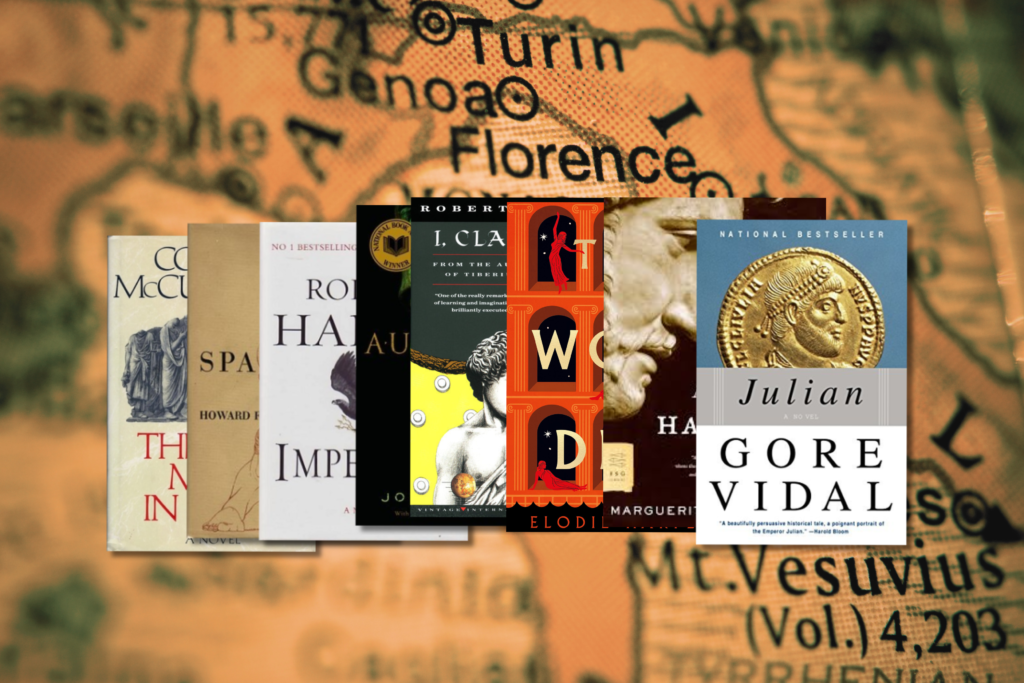

Travel through ancient Rome with 8 unforgettable historical novels that bring its emperors, rebels, and hidden stories to life.
Rome began as a huddle of huts on a river crossing and spent eight centuries outgrowing itself. By the reign of Augustus it held as many as a million people, a figure no city would match again until London in the nineteenth century. Its architects invented the apartment block to house them: the insulae rose six and seven storeys, shops at street level and families stacked above, until Augustus capped new buildings at seventy Roman feet. Around them stood temples painted in deep reds and blues, and a city that smelled of fish sauce, fresh bread and woodsmoke.
Other cities settled into what they were. Rome kept building, and it read as hard as it built. The Forum worked as marketplace, courtroom and temple precinct at once; nobody had an address, so you found a house by asking for the man who lived in it; and Asinius Pollio opened Rome’s first public library in 39 BC, Greek on one side, Latin on the other. But Rome’s story was never finished. In 2026, researchers digitally unwrapped a scroll buried by Vesuvius in AD 79, revealing words that had remained hidden for nearly 2,000 years.
The ancient city is still being read. These books will show you where to begin.
1. The First Man in Rome by Colleen McCullough
To truly understand how the Roman Republic fractured from a centuries-old democratic ideal into an autocratic empire, one must look back before Caesar, before Cicero, and before Augustus. You have to go back to the volatile, brilliant era of two men who laid the explosive groundwork: Gaius Marius and Lucius Cornelius Sulla. In The First Man in Rome, Colleen McCullough, who spent over a decade meticulously researching the late Republic, breathes life into a pivotal turning point in human history, constructing an epic that feels less like reading about the past and more like witnessing a high-stakes political thriller unfold in real time.
“The law should not be a huge and weighty slab which falls upon a man and squashes him into a uniform shape, for men are not uniform.”
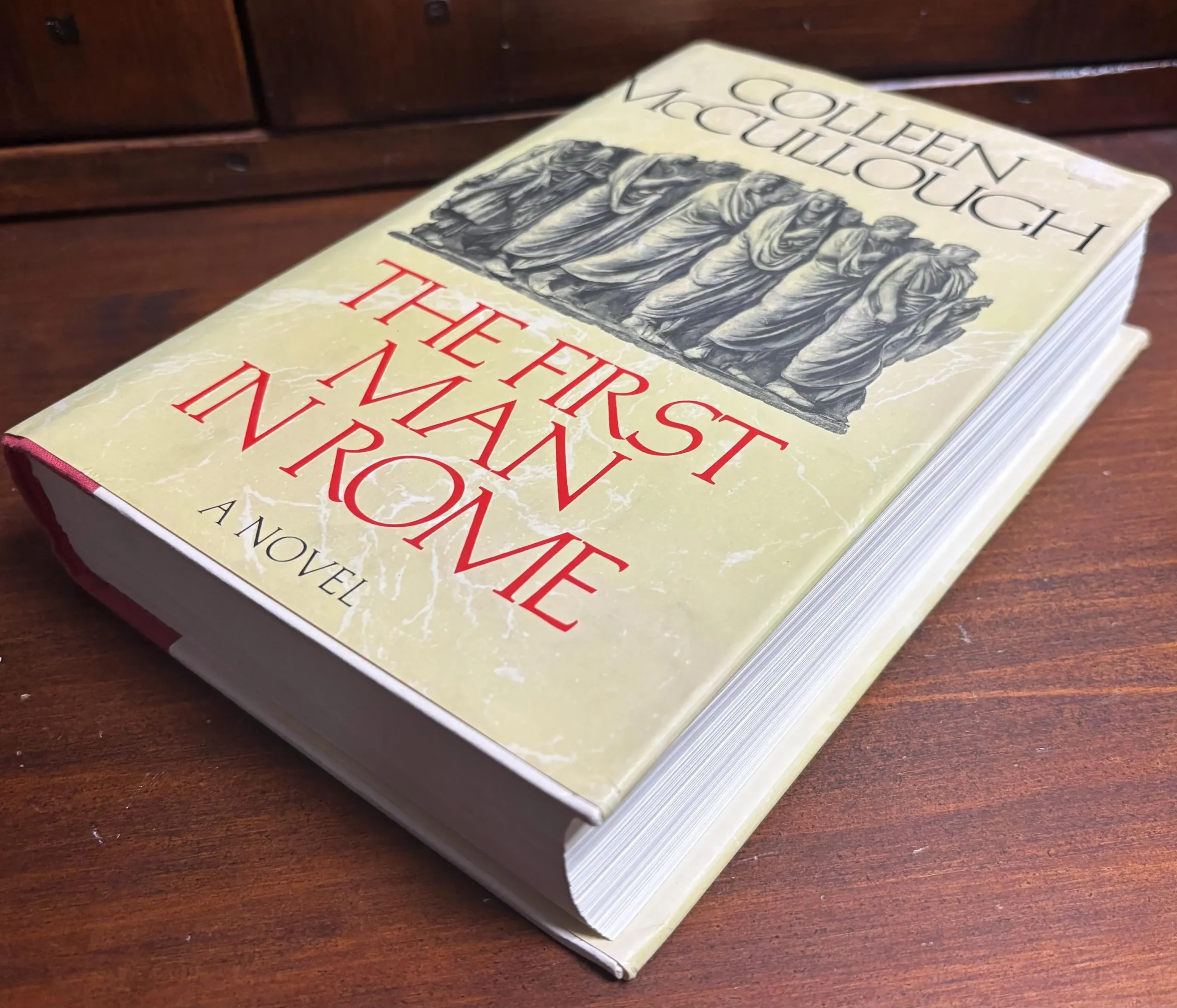
As the opening entry in her monumental seven-book Masters of Rome series, The First Man in Rome serves as the ultimate gateway for anyone who wants to fall in love with ancient history. It is an extraordinary invitation to step into a world of unyielding ambition, legendary rivalries, and brilliant intellects battling for the soul of an empire.
2. Spartacus by Howard Fast
To understand the terrifying drive of Roman ambition, one must also look at those who dared to defy its crushing machinery. Set in the immediate aftermath of the famous gladiator revolt, the novel is a raw and intensely moral novel that forces you to look beneath the magnificent aqueducts and grand arches to see the immense human cost that held the empire aloft.
“Let us say that kindness costs me so little and rewards me well.”

What makes the novel’s real-world history so extraordinary is that Fast wrote it while imprisoned in a federal penitentiary. Blacklisted upon his release, every major publisher refused to touch the manuscript out of fear, forcing Fast to self-publish the book. It went on to become a runaway international bestseller, proving that a story about human freedom could not be silenced by political persecution.
3. Imperium by Robert Harris
Long before Rome became an empire defined by absolute autocrats, it was a republic forged in fragile democratic ideals. No single figure fought harder to preserve that balance than Marcus Tullius Cicero. Imperium sees Robert Harris construct a heart-pounding political thriller out of the real-world historical record. What makes Cicero’s climb so fascinating is that he was a total outsider who lacked noble aristocratic blood as well as a private army. What he possessed in spades instead was his intellect, an unrivaled mastery of law, and a voice that could sway a room of hardened conspirators.
“Rome is not defined by rivers, or mountains, or even seas; Rome is not a question of blood, or race, or religion; Rome is an ideal. Rome is the highest embodiment of liberty and law that mankind has yet achieved in the ten thousand years since our ancestors came down from those mountains and learned how to live as communities under the rule of law.”
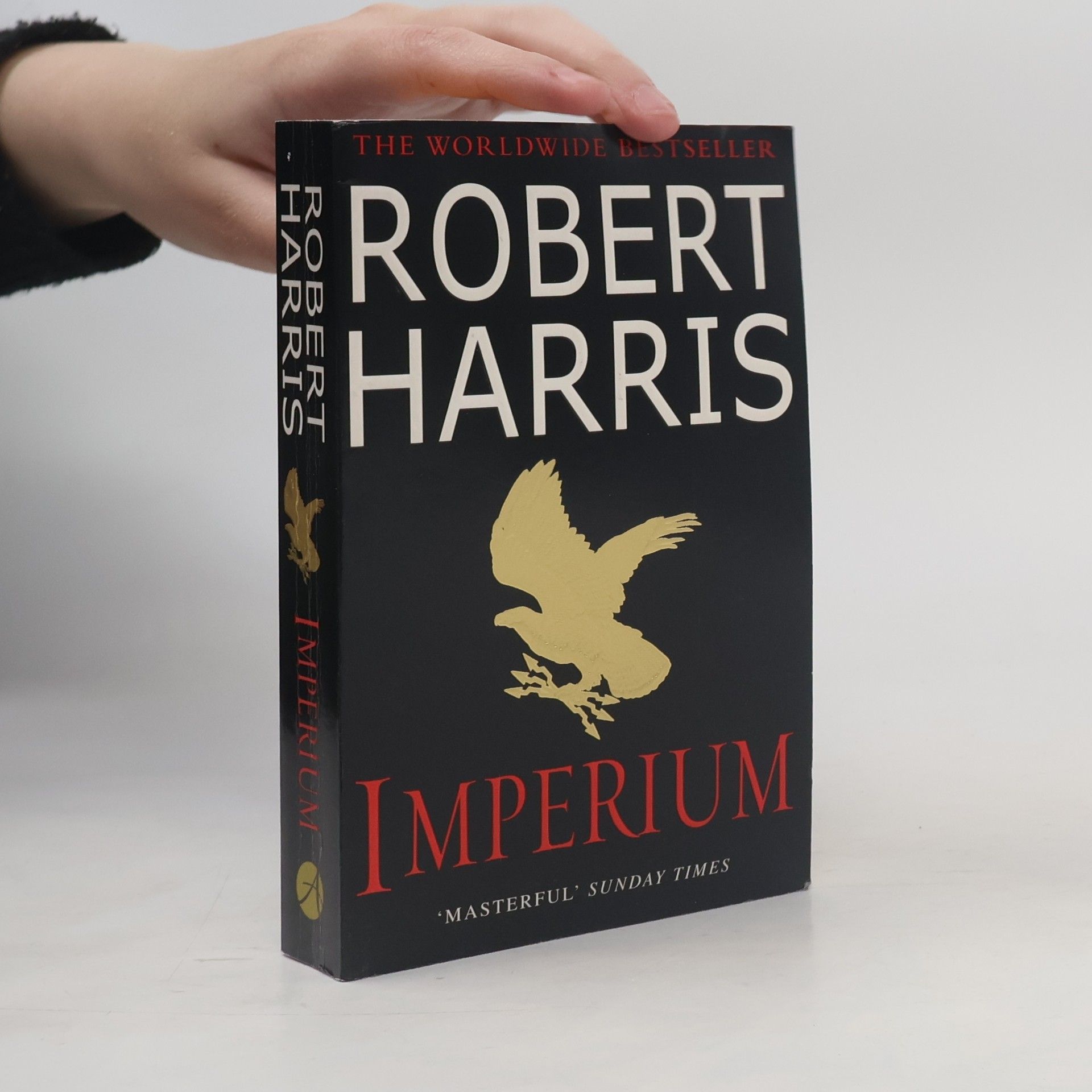
Harris has chosen Cicero’s secretary Tiro, who also invented shorthand to record his master’s speeches, as the narrator who takes readers into the high-stakes reality that was Cicero’s dangerous career. This lets the static marble of history class be stripped away to reveal the terrifying grit of a man trying to defend the rule of law in a room full of monsters.
Reading Imperium ultimately proves that the struggle between democratic survival and authoritarian ambition was as razor-sharp about two thousand years ago as it is today.
4. Augustus by John Williams
When the eighteen-year-old Gaius Octavius learned that his great-uncle Julius Caesar had been brutally assassinated and had named him chief heir, the Roman world dismissed him as a political non-entity. He had no military glory to his name, no private legion, and a frail constitution that frequently left him bedridden during times of crisis. But as Williams brilliantly demonstrates through a chorus of fictional letters, military dispatches, and private journal entries, wisdom in Rome was not born of age, but it was forged overnight in the fires of immediate, deadly necessity.
“A man may live like a fool for a year, and become wise in a day.”
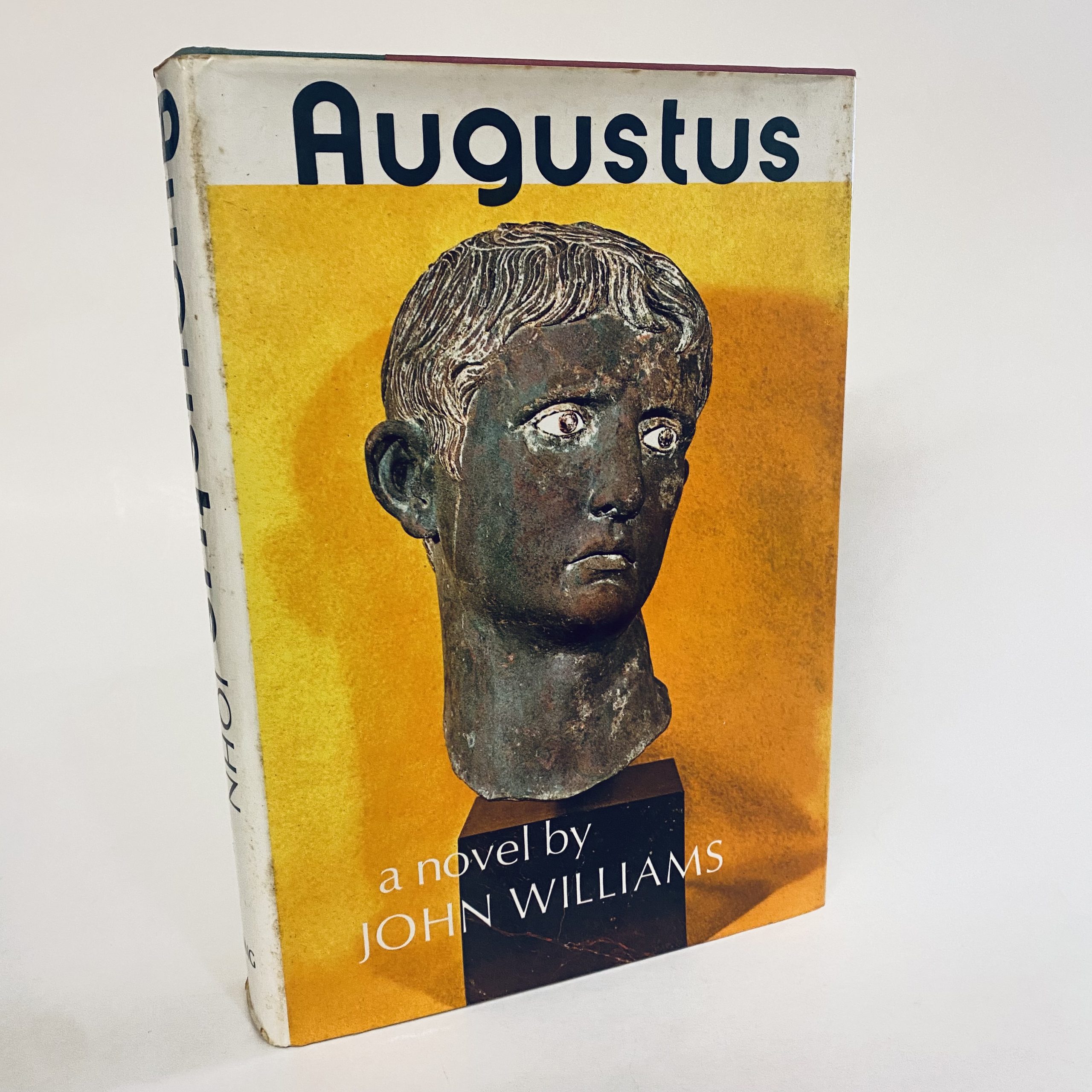
Through the eyes of his closest allies, his enemies, and his exiled daughter, we witness Augustus emerge as the man who methodically sacrificed his own happiness, friendships, and soul on the altar of statecraft. Augustus is a tale about the crushing isolation of supreme leadership, which proves that building an empire requires absolute surrender.
5. I, Claudius by Robert Graves
In the paranoid theater of early imperial Rome, survival was a brutal game of hide-and-seek played against autocrats who executed relatives on a whim. Robert Graves’ 1934 masterpiece delivers one of historical fiction’s sharpest narrators: Tiberius Claudius, a man whose real-world physical afflictions saved his life.
“The gift of independence once granted cannot be lightly taken away again.”
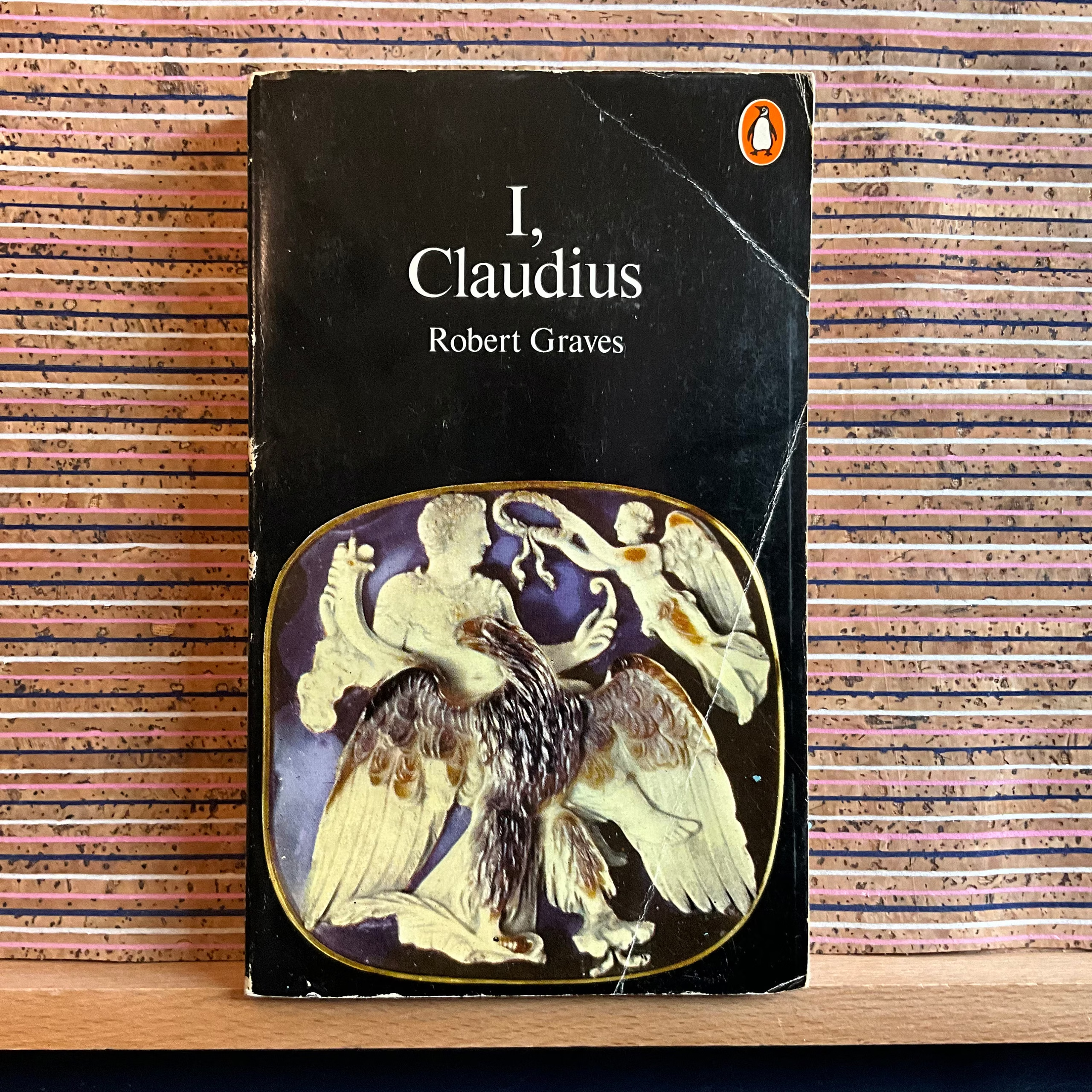
Framed as a secret autobiography written before the Praetorian Guard unexpectedly thrust him onto the throne, Graves’ novel shines through its narrator’s clear-eyed irony. Claudius is an idealistic Republican trapped inside an autocracy, watching the madness of power with devastating, dry wit. I, Claudius, plunges you into the terrifying psychology of a court where truth meant death, proving the smartest person in the room is often the one everyone ignores.
6. The Wolf Den by Elodie Harper
To truly grasp the sheer scale and terrifying weight of Ancient Rome, one must look beyond the gleaming marble and the polished armor of its legions. The empire was held aloft by the backs of millions whose names were never carved into stone, and Elodie Harper’s The Wolf Den gives these forgotten voices a resonant, unforgettable stage.
“Either we choose to stay alive, or we give up. And if it’s living we choose, then we do whatever it takes.”

Set in the bustling, sun-drenched shadow of Mount Vesuvius in nearby Pompeii, the novel shifts the focus entirely away from patricians and military commanders to center on the women who navigated the perilous underworld of the Roman world. As the thrilling first installment of The Wolf Den Trilogy, this book serves as an essential, complementary lens to imperial Roman history.
7. Memoirs of Hadrian by Marguerite Yourcenar
In Memoirs of Hadrian, Marguerite Yourcenar provides a breathtakingly majestic interior view from the summit of human power. Written as an intimate, extended letter from the dying Emperor Hadrian to his adopted grandson, Marcus Aurelius, this masterpiece depicts the historical figure of Hadrian grappling with the immense responsibility of governance while coming to terms with his own deteriorating mortality.
“Our great mistake is to try to exact from each person virtues which he does not possess, and to neglect the cultivation of those which he has.”
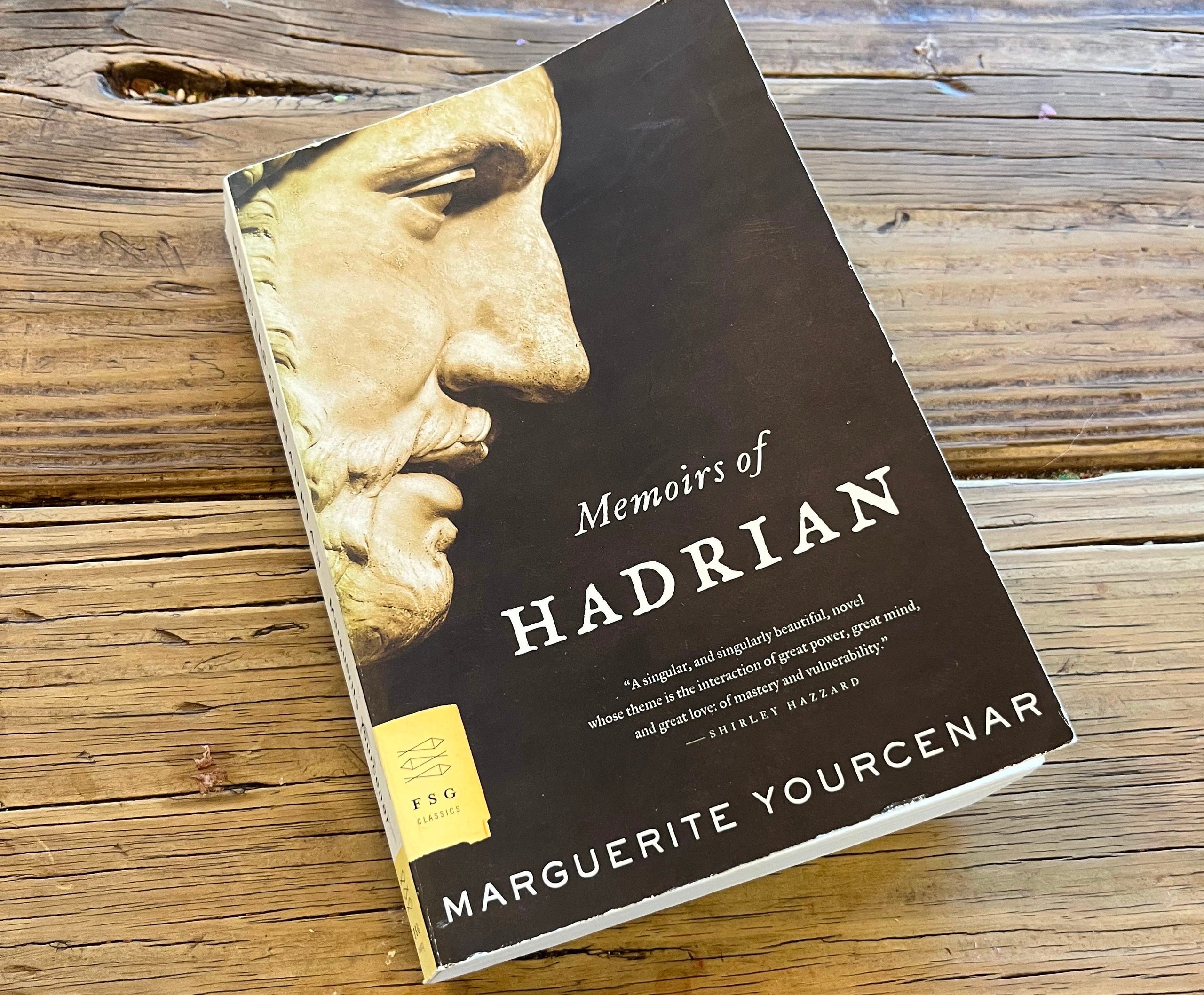
What makes Yourcenar’s portrayal so magnetic is how seamlessly it reveals the deeply human core by giving us an emperor who mourns the tragic loss of his beloved Antinous, reflects on the limits of autocratic rule, and understands that true leadership requires meeting human nature where it actually resides. The Memoirs of Hadrian is a stunningly melancholic work of art which invites you into the brilliant, quiet solitude of a ruler asking what it truly means to leave a lasting legacy.
8. Julian by Gore Vidal
Julian takes us to the bitter end of Rome’s classical era, when the ancient pagan temples were falling beneath the rising tide of Christianity. Gore Vidal navigates the story of the fourth-century emperor known to history as Julian the Apostate, the last ruler who attempted to turn back the clock and restore Rome’s classical gods, philosophy, and intellectual freedom.
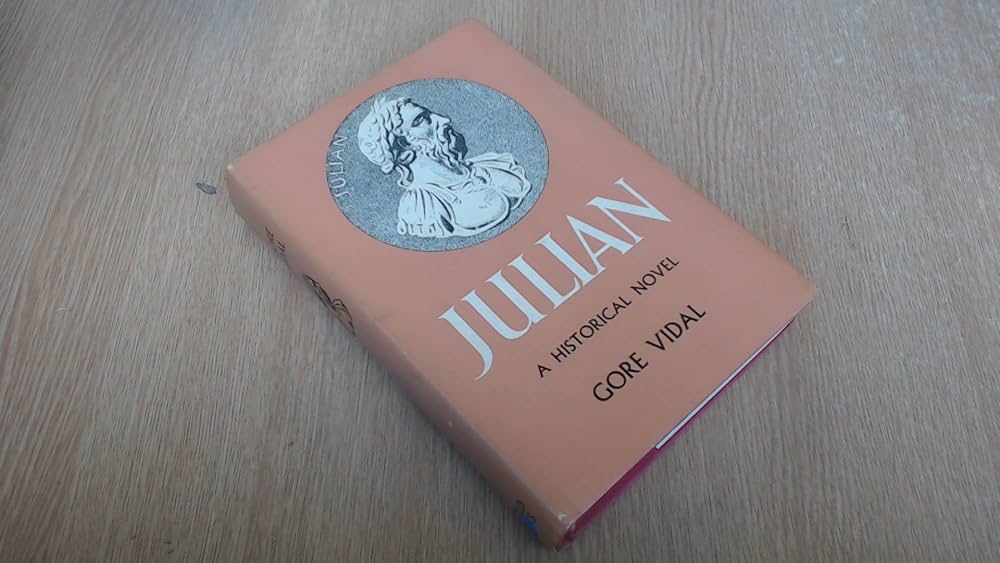
Vidal’s acidic and witty writing pairs well with the complexity of Julian as a reluctant scholar forced onto the battlefields and a romantic idealist trying to rescue an ancient world that has already moved past him. Written in the form of a rediscovered journal, Julian is a razor-sharp exploration of religious fanaticism, lost ideals, and the quiet tragedy of standing against the unstoppable march of history.
Let Rome Speak for Itself
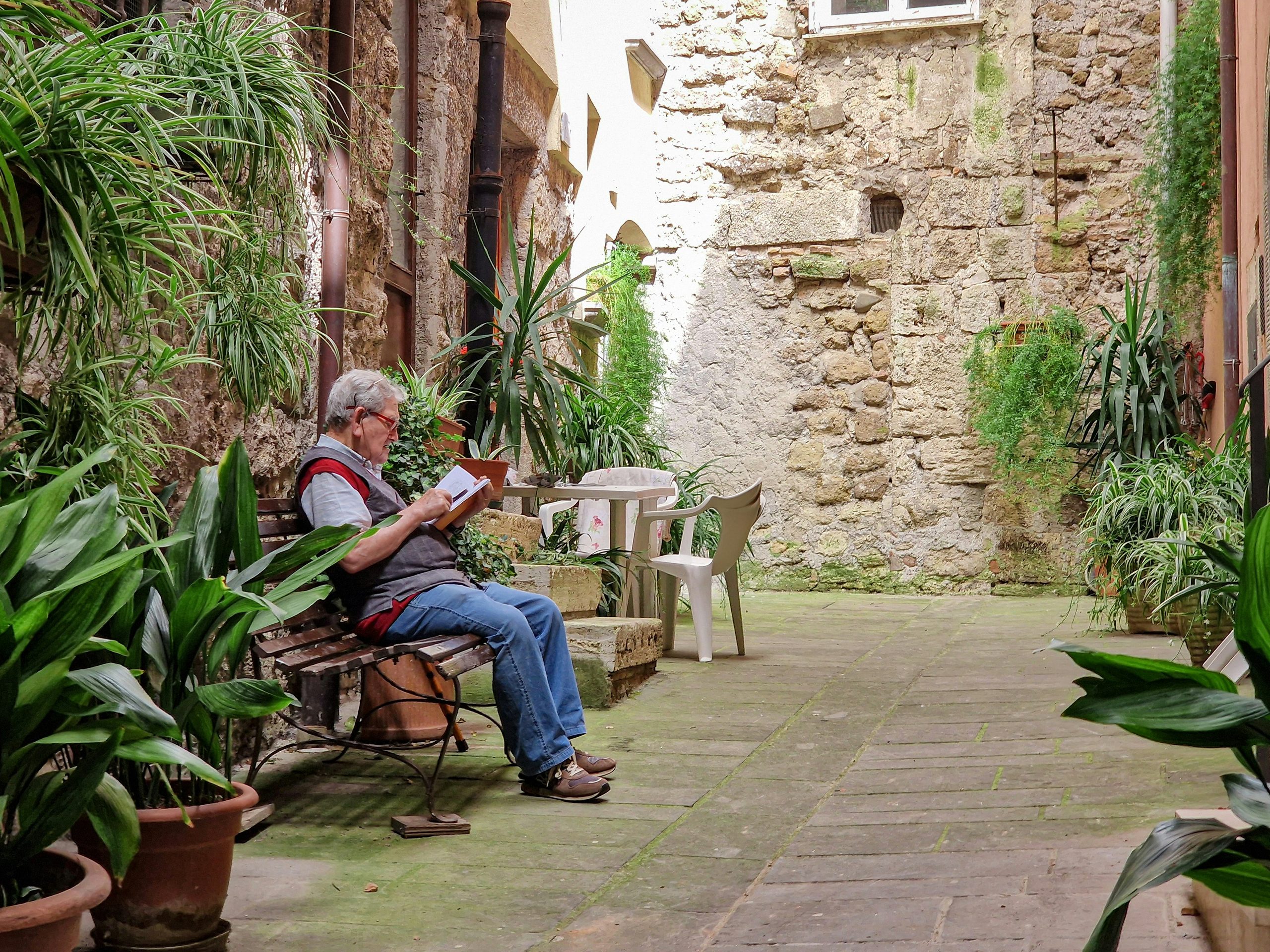
Sweep away the centuries of dust and Rome is still standing, not as ruins but as the blueprint for nearly everything that followed. These eight books hand you the noise, the ambition and the arguments, and leave you with the odd feeling that you have met these people before. Grab a copy, open to page one, and listen.

Charuta Pradhan
As a lifelong bibliophile, Charuta believes in the power of storytelling and its magical ability to connect readers. Happiest in the world of books, they are absolutely thrilled to be part of this global community that celebrates the power of words.