
Research shows posting a moment can shrink it. On a trip never shared, the tea masters’ ichigo ichie, and why unshared is not unlived.
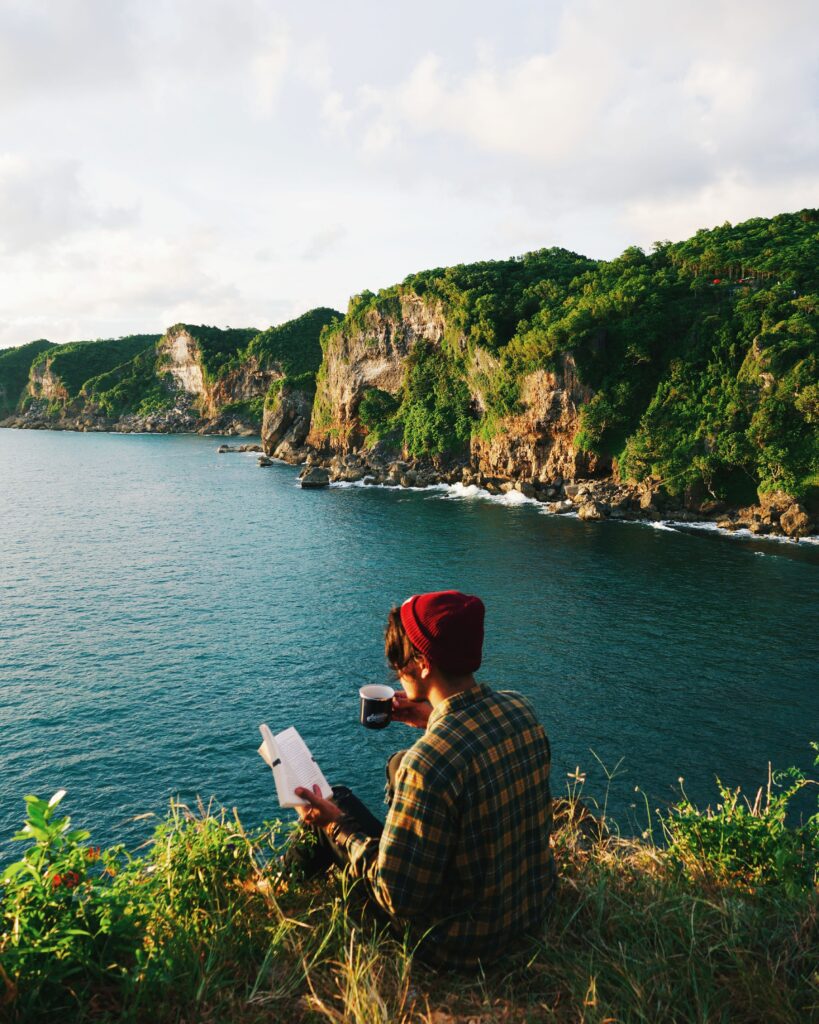
Last year I sat on the bank of the Mekong River, in Laos, where my parents were born. Decades ago, they crossed this water to escape a conflict that history now files under the almost apologetic name of the Secret War. I went back as an adult, to the country they carried with them. I met relatives. I met readers of this magazine, improbably, who wanted to hear how a former accountant ended up spending his life telling people about books. I read three books. I watched the river do what rivers do.
And I will tell you two things about that trip. First: it was not transformative. I did not find myself. I have no awakening to sell you, no course, no seven lessons the Mekong taught me about business. It was something quieter and, I think, better. It was simply mine.
Second: I never posted it. Not a photo, not a caption, not a story. This was not an oversight. It was the point.
The Audience in Your Pocket
We have grown so used to sharing that we forget it is a choice. The reflex is installed somewhere below thought: the sunset appears, and the phone is already out; the plate arrives, and the caption is already writing itself. Somewhere between the eye and the heart, a small editor has taken up residence, asking of every beautiful moment the same deadening question: how will this look?
I am not here to scold anyone. I take photographs too, and I love them; a photograph is one of the kindest technologies we have invented, a way of pressing a flower of time between glass. The trouble is not the camera. The trouble is the audience we now carry into every moment alongside it.
What the Feed Costs Us
This is no longer just a hunch of the grumpy and the analog. In a series of twelve studies with over 2,800 participants, researchers at NYU, Yale and USC examined what happens when we photograph our experiences with the intention of sharing them. The finding, published in the Journal of Consumer Research, is quietly devastating: people who took photos in order to post them enjoyed the experience less than those who took photos purely for themselves. The intention to share smuggles anxiety into the moment, a low hum of self-presentation, and the experience shrinks to fit the frame.
The same research found something redemptive, though. Taking photos for yourself, to remember, with no audience in mind, can actually deepen enjoyment. The camera, pointed outward for your own future self, is an instrument of attention. Pointed toward an imagined crowd, it becomes a mirror. The difference is not the device. It is who the moment is for.
One Time, One Meeting
The Japanese tea masters understood all of this four centuries before the first photo was ever tagged.
In sixteenth-century Japan, Sen no Rikyū, the master who shaped the tea ceremony into the form it still holds, taught that every gathering should be treated as “one chance in a lifetime.” His disciple Yamanoue Sōji wrote the instruction down: honour your host as though this meeting could occur only once in your life. Centuries later, the idea crystallised into four characters: ichigo ichie, one time, one meeting.
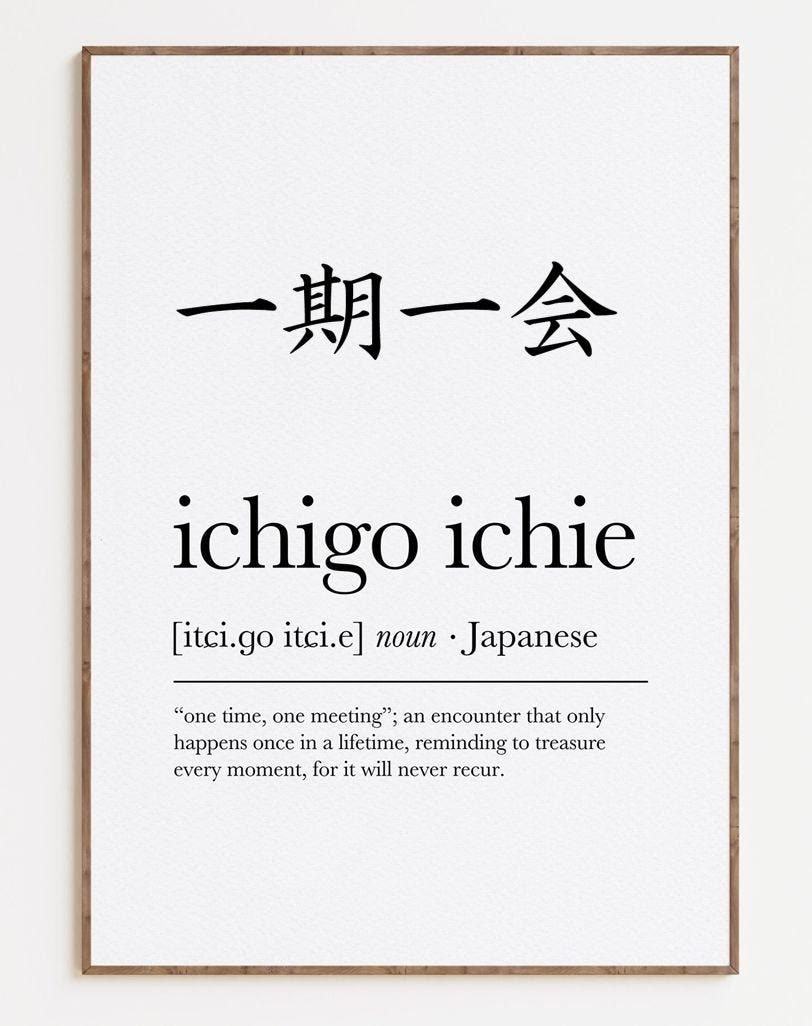
Ichigo is a Buddhist term meaning a single lifetime. The phrase says: this gathering, these people, this light, this bowl of tea, will never assemble in exactly this way again. Even if the same friends return to the same room tomorrow, it will be a different meeting, because you will be different, and so will they.
The man who finally fixed the phrase in writing was Ii Naosuke, a nineteenth-century lord and tea practitioner who lived under constant threat of assassination, and who was said to make tea each morning as though it were his last. In his book on the tea gathering, he wrote that even among people who meet often, “one day’s gathering can never be repeated exactly.” In 1860, the threat was made good, and he was killed. The man who taught that no moment ever returns turned out to be exactly right.
Here is why the tea masters belong in an essay about posting. The whole architecture of the ceremony, the seasonal flowers that will wilt, the charcoal burning to ash, the precise and unhurried attention, exists to hold one truth: that the moment is unrepeatable, and therefore deserves all of you. To step outside it, even mentally, in order to package it for people who are not there, is to leave the room while still sitting in it. The moment does not shrink because it goes unshared. It shrinks because you left early.
Montaigne’s Back Shop
The West had its own version of this wisdom. Four and a half centuries ago, Michel de Montaigne wrote in his essay Of Solitude that whatever we owe to family, work, and the world, some part of us must be held back.
“We must reserve a backshop, wholly our own and entirely free.” — Michel de Montaigne, Of Solitude (1580)

An inner room behind the public storefront of our lives, where no customer is admitted. Our real treasures, he added, should be kept where no one can enter, betrayed by nobody but ourselves. He was writing about the soul, long before anyone could broadcast a breakfast. But he had named it precisely: a life needs a storefront, and it also needs a room the public never sees. What we keep in that room is not what we are hiding. It is what we are.
The River’s Answer
Which brings me back to the bank of the Mekong.
In Laos there is a phrase you hear a dozen times a day: bo pen nyang. Literally, “it is nothing.” In practice it means no worries, never mind, it’s okay, it cannot be helped, and it is less a phrase than a national temperament, an easy equanimity that meets whatever the day brings with a shrug and a smile. The internet is down: bo pen nyang. The restaurant has run out of the dish you came for: bo pen nyang. What hakuna matata is to Swahili, bo pen nyang is to Lao.
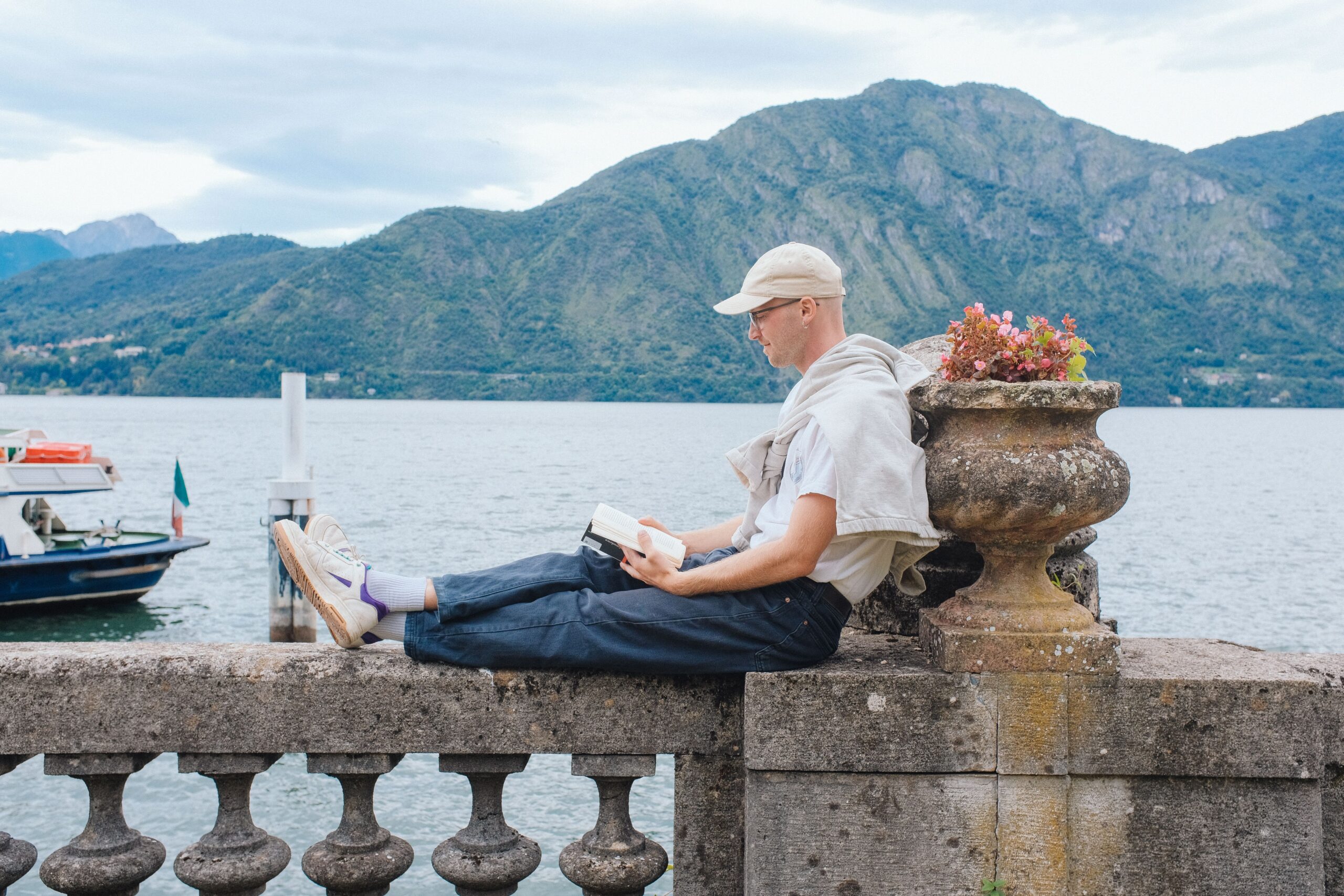
Sitting by that river, it occurred to me that the phrase held the answer to the question the feed keeps asking. How will this look? Bo pen nyang. It does not need to look like anything. The moment is not required to become content, or evidence, or a personal brand. It is permitted to simply be what it is, and then to end.
The two philosophies turn out to be halves of a single instruction. Ichigo ichie says: this will never come again, so attend to it completely. Bo pen nyang says: and it owes nothing to anyone afterwards, so let it go. Be fully there, then open your hand. Everything the sharing reflex gets wrong is contained in the refusal to do either.
Unshared Is Not Unlived
Here is the modern superstition the feed has taught us so gently we never noticed learning it: that an experience does not fully count until it has been witnessed. Pics or it didn’t happen, we joke, and the joke has quietly become a metaphysics.
But the experience you never shared is the only one that exists in a single copy. It has never been compressed into a caption, never cropped, never performed. It lives at full resolution in exactly one place. My river, my relatives, my three books, the particular gold of that particular light. I could show you. I am choosing not to. That is not secrecy. That is ownership.
And this is where the courage comes in, because keeping a thing unshared is harder than it sounds. To post is to outsource the verdict; the likes arrive and certify that the moment mattered. To stay silent is to certify it yourself. The unshared thought asks you to be the only witness your life requires, and to trust your own testimony.
Keeping One Room Dark
I am not suggesting we share nothing. Connection is real, delight is generous, and some joys genuinely double when passed around. I am suggesting a proportion: that some percentage of a life, perhaps the best percentage, be reserved for the back shop and the tea room. A trip that stays off the feed. A small triumph told to no one. A perfect afternoon that will never be evidence of anything, fully attended precisely because it will never come again.
Somewhere in your recent life is a moment you almost posted, and didn’t. You know the one.
What if that is the one you end up keeping?


Vincent Phan
Vincent is the founder and Editor-in-Chief of 1000 Libraries Magazine. He is a Paris-born ex-corporate turned bookseller and philosopher, on a global mission to spread the joy of physical books in our age of digital technology.