
A 48-hour itinerary for book lovers in Montreal, featuring charming bookstores, bilingual literary culture, famous authors, and hidden treasures.
There is a kind of travel that measures a trip not in sights ticked off but in culture absorbed: slow travel, the deliberate choice to stay longer, wander further, and let a place explain itself in its own words. Literary travel is its bookish branch. Instead of organizing a journey around monuments, you organize it around the culture of the book, the shops, libraries and archives where a city thinks out loud, and where a visitor and a local still meet as equals, as readers.
Few cities on earth repay that approach like Montreal, because few cities offer what Montreal offers: the largest French-speaking metropolis in North America, layered over a stubborn, brilliant English literary tradition, in the place that gave the world both Leonard Cohen and Michel Tremblay. Order a coffee almost anywhere, and the greeting arrives in stereo, “Bonjour, hi,” two words, two literatures, the entire identity of a city compressed into a doorbell.
The divide runs all the way down to the shelf; when the comics publisher Drawn & Quarterly opened a bookshop, it was because English stores stocked English books and French stores stocked French ones, and somebody wanted both in the same room. That instinct, to refuse the choice, is Montreal’s unique proposition to the travelling reader: come here, and you absorb not one culture but two, plus the third thing they make together. Here is how to read your way across the city, neighborhood by neighborhood.
Mile End and the Plateau
The artists’ quarter, where the bookshops, the bagels and a nine-storey poet all sit within a few blocks.
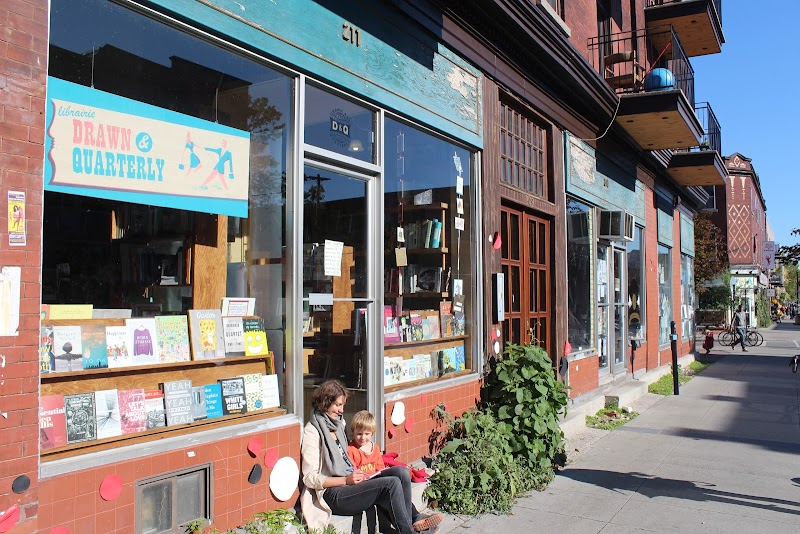
Start in Mile End, the old Jewish and immigrant district that became the city’s creative engine. Librairie Drawn & Quarterly anchors rue Bernard from a former Hasidic dress shop; renovators peeled back three layers of dropped ceiling to find the wooden slats now painted gold, and the fiction section lives inside an old barbershop fixture.
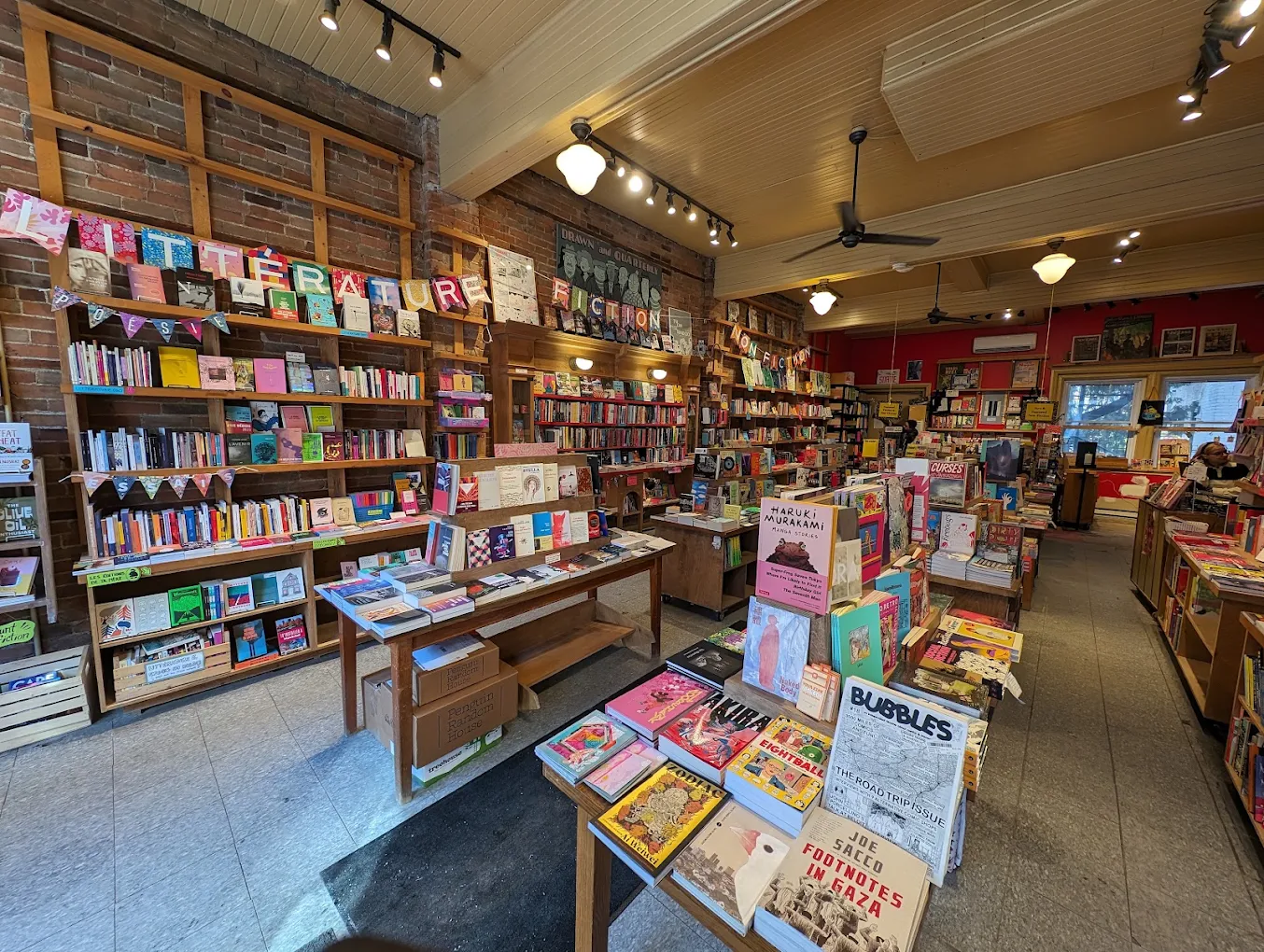
Since 2007, the shop has hosted the likes of Margaret Atwood and Roxane Gay, and grown into the city’s literary living room.
A block south, Joie de livres opened in 2025, the carpe diem project of sisters Claire and Sylvie Trottier, who had joked for years about a bookshop that also served nachos. It shelves French and English titles together on purpose, treats romance and fantasy as serious tools for community, and keeps a café-bar in the middle of the room.
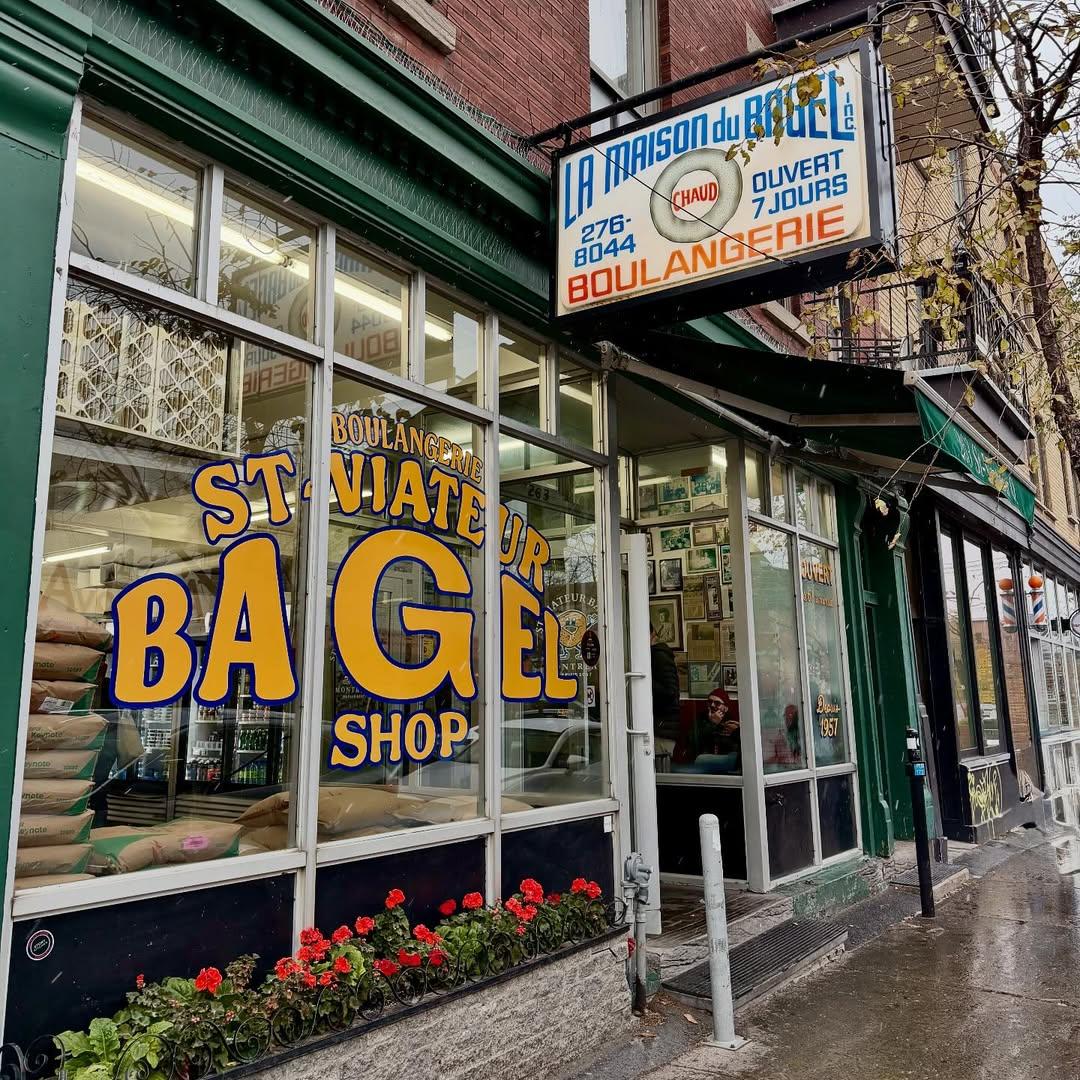
Reading is hungry work, and two streets over sits St-Viateur Bagel, running its wood-fired ovens around the clock since 1957. The founder, Myer Lewkowicz, was a Holocaust survivor who arrived in Montreal to begin again; the bagels are still hand-rolled, boiled in honey water and slid into the oven on a long plank.
Leonard Cohen, who lived nearby, was a regular. Cohen is everywhere in this neighbourhood, most literally on the façade of the Cooper Building, where in 2017 local artist Kevin Ledo painted him nine storeys high, bright lines fanning from his face like the static around his late songs. The wall looks out over the streets where the poet actually lived. That, not the size, is why people stop.
Milton-Parc and the McGill campus
A student quarter where a shop with a rotary phone shares a hill with two of the country’s great collections.
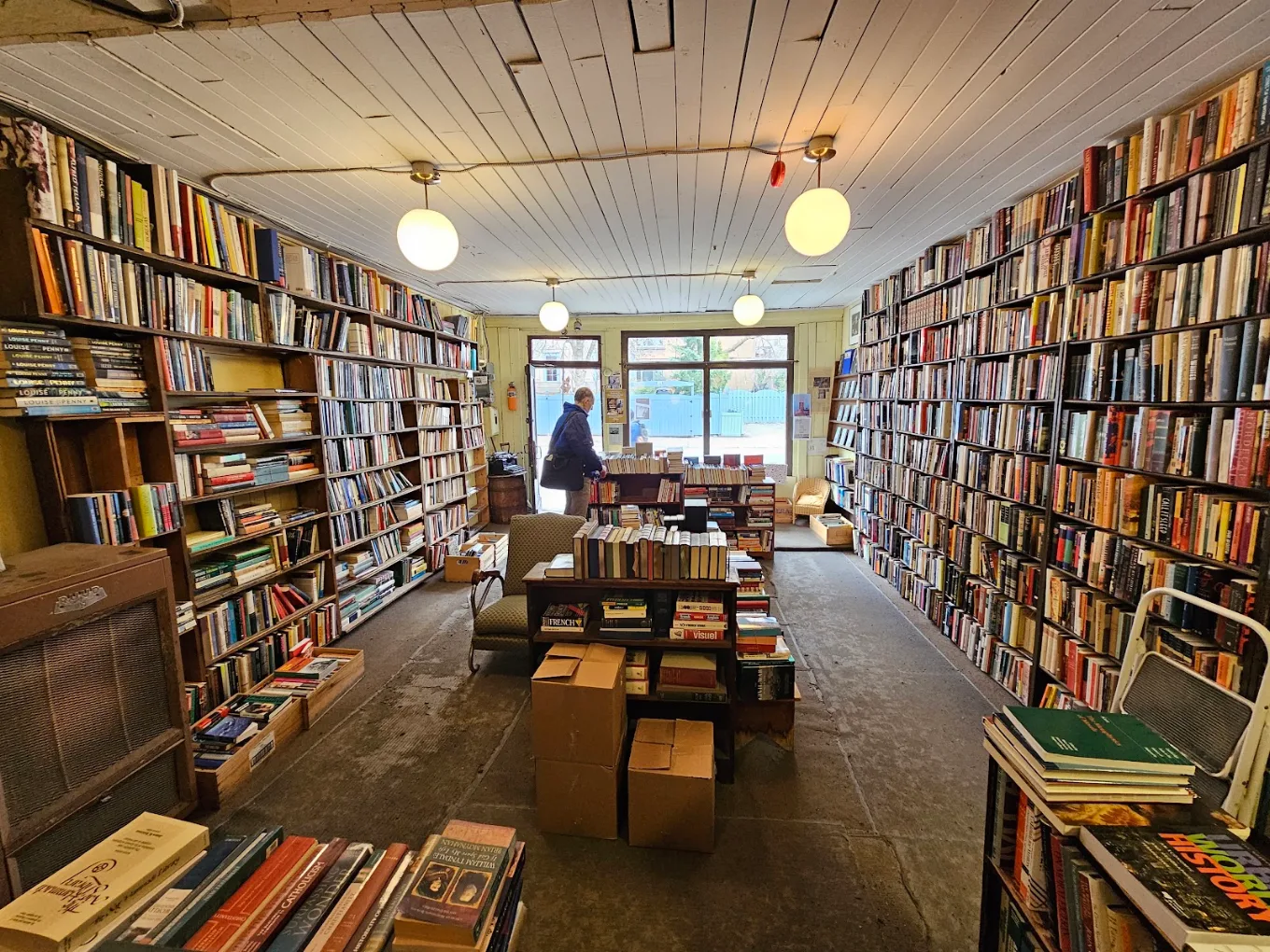
Walk downhill toward McGill and the register changes from bohemian to bookish. The Word began as an underground bookshop in the living room of Adrian King-Edwards and Lucille Friesen, a photo of George Bernard Shaw taped to their apartment window as the only sign; in 1975 they moved the books into a former laundromat on rue Milton, and the shop has barely changed since.
Fifty years on, with their son Brendan now running the room, there is still no computer and no electronic till; calls come in on a rotary phone, a gas stove warms the shop, and a dollar buys a paperback from the crates out front.
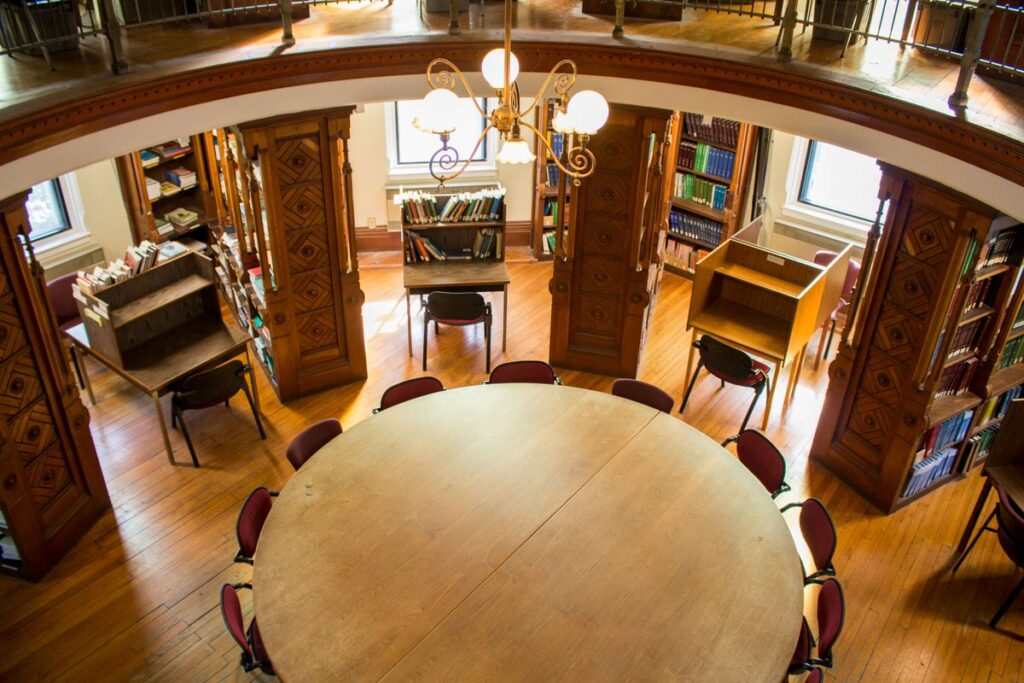
A few streets up, inside the 1882 stone of Morrice Hall, McGill’s Islamic Studies Library holds more than 150,000 volumes spanning the whole of Islamic civilization, among them a shelf of rare Turkish incunabula from the press of Ibrahim Müteferrika, the printer whose bust presides over the old book bazaar in Istanbul. It is a research library first, but visitors may ask to consult it.
Next door stands the Redpath Museum, the oldest building in Canada raised specifically to be a museum, built in 1882 to house the specimens of Sir William Dawson. Its galleries are a Victorian cabinet of the whole world: mineral drawers, a Gorgosaurus, Egyptian mummies.
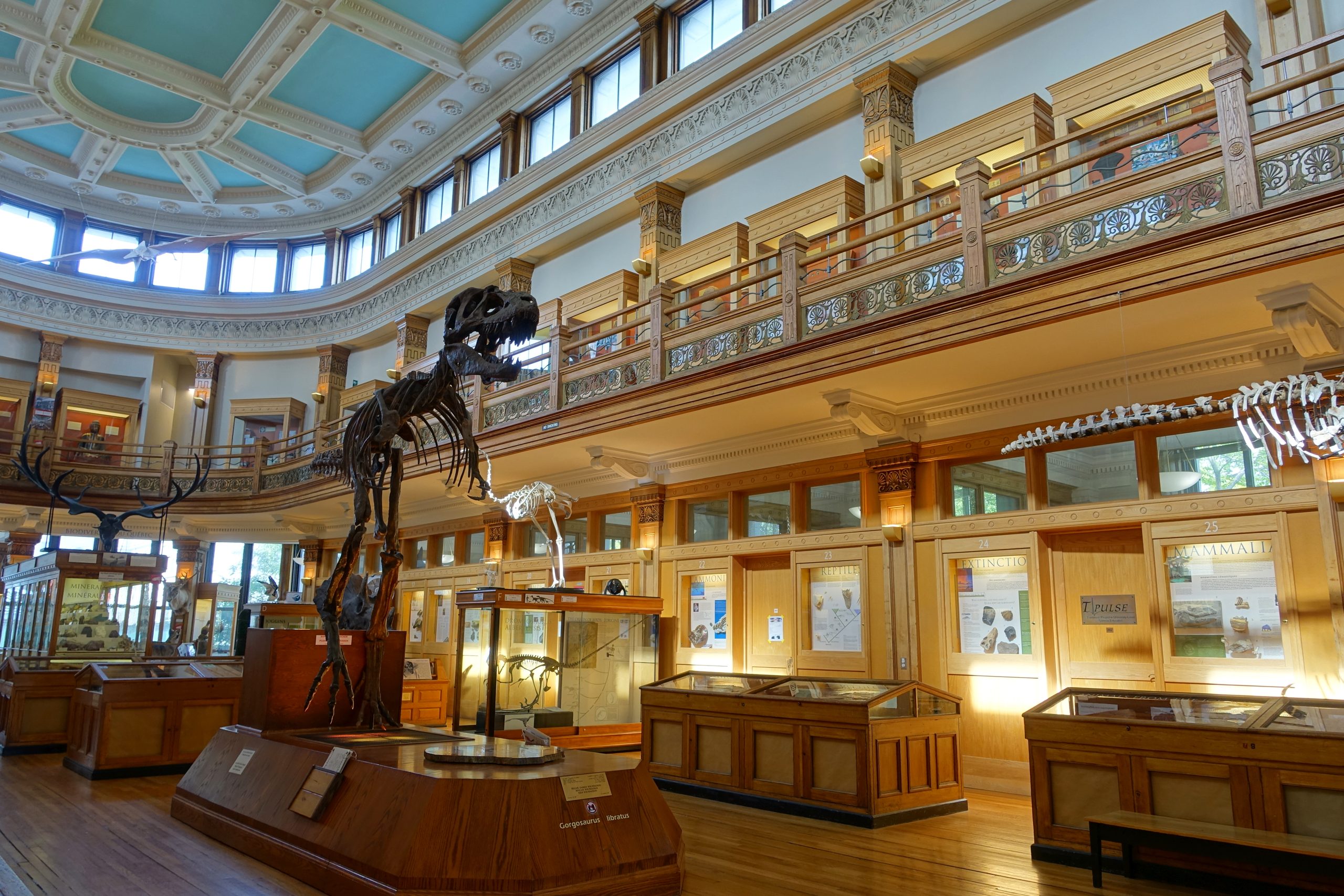
Dawson was Canada’s most famous opponent of Darwin, which makes the handwritten letter from Darwin among the museum’s treasures the most quietly satisfying object on the hill.
The Golden Square Mile
Downtown, where a tiny bookshop, an attic full of records and a 21-storey Cohen keep company with the country’s oldest art library.
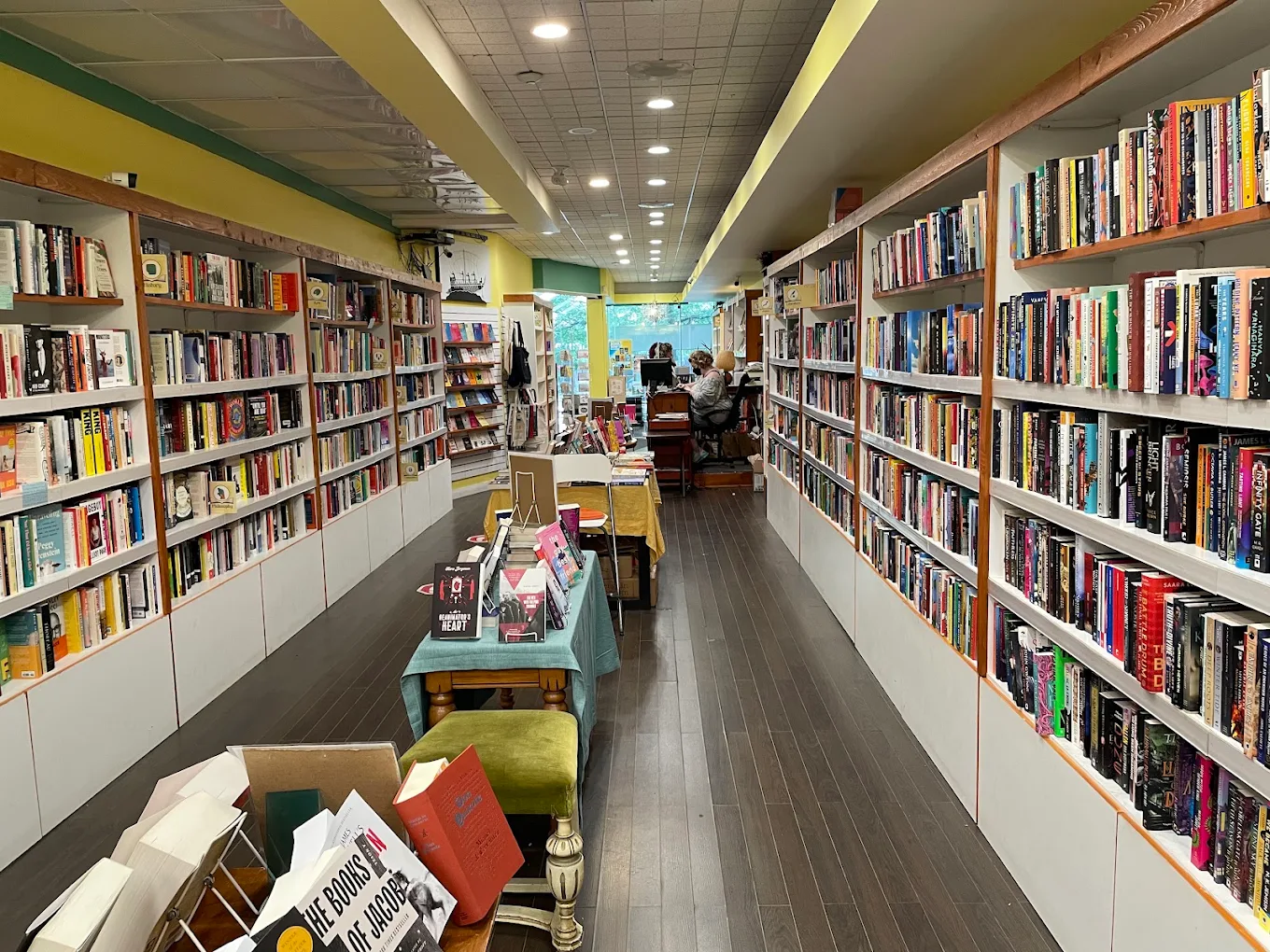
Downtown holds the survivors. Argo Bookshop, founded in 1966 and burned out of its first home within a year, is the oldest English-language independent bookstore in the city; in barely 200 square feet it packs some 6,000 titles, a bias toward speculative fiction and Japanese literature, and a standing open-mic night.
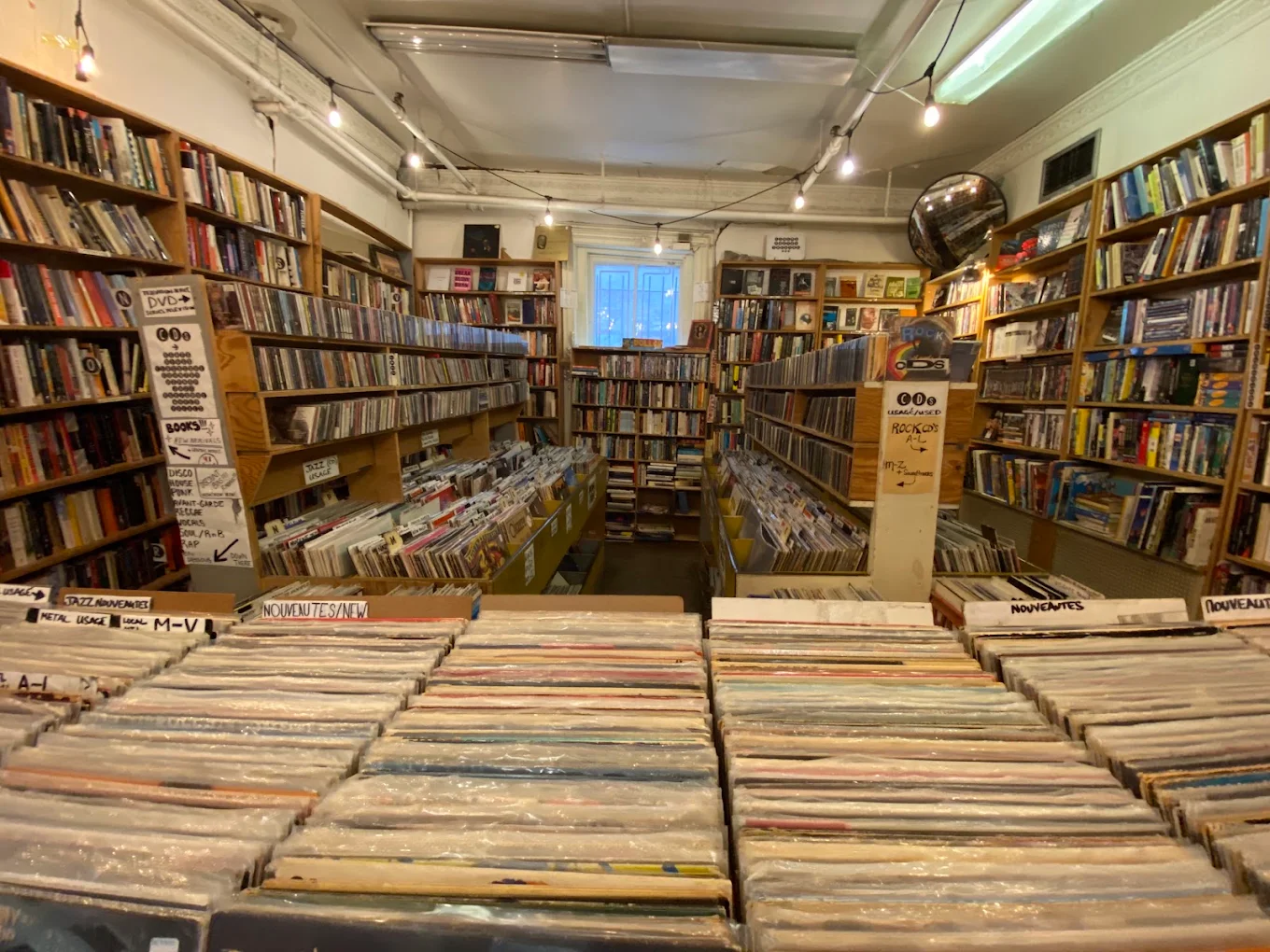
Up a steep, dim staircase on Metcalfe, Cheap Thrills has run since 1971 as the city’s first used record shop, its walls of vinyl shelved alongside the secondhand books that generations of students climbed those stairs to afford. Step back outside and look up: the 21-storey mural at 1420 Crescent, painted by El Mac and Gene Pendon from a photograph Cohen’s daughter Lorca took, watches the whole quarter. Cohen once said the feeling of being at home in Montreal only “gets stronger as I get older.”
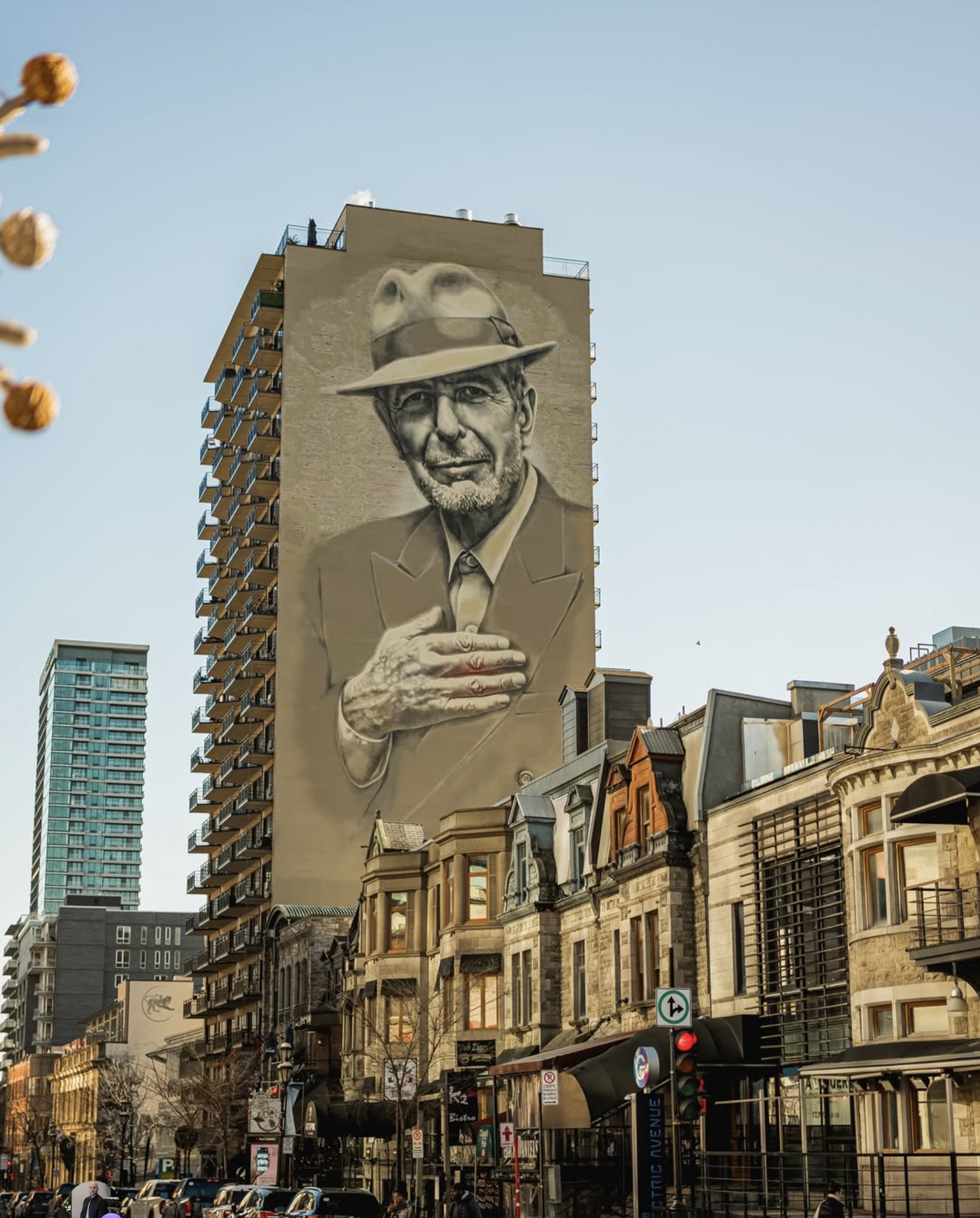
You can see that mural from the upper windows of the Musée des beaux-arts de Montréal, Canada’s oldest art museum, whose original reading room grew into the oldest art library in the country. And each spring the neighbourhood fills with writers for Blue Metropolis, founded by Linda Leith and running since 1999, now one of the largest multilingual literary festivals in North America, its interviews and debates spread across eight languages at recent editions. Salman Rushdie collected its Grand Prix in 2025. A festival that argues about literature in eight tongues at once could only have taken root here.
The Quartier Latin
The clash of the analog and the immersive, one metro stop apart.
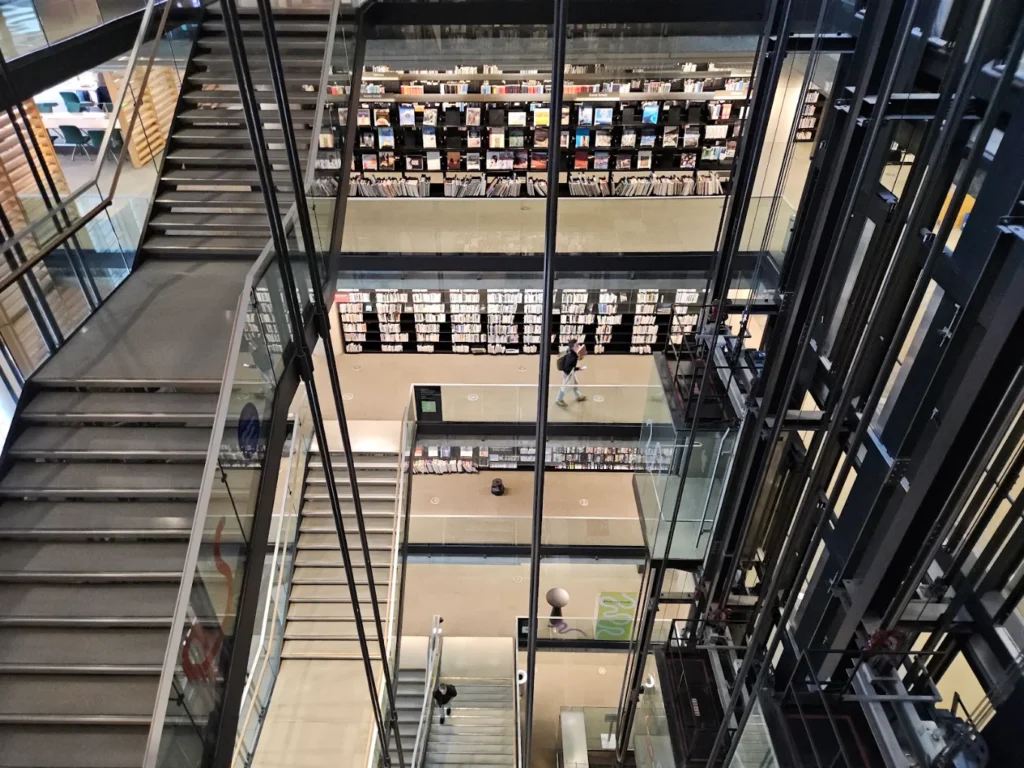
East of downtown, the Grande Bibliothèque rises in copper and glass, the busiest library in Quebec and the flagship of the national collection. It opened in 2005, the year Montreal held the UNESCO World Book Capital title, and the timing carried a charge: this is a province whose premier Maurice Duplessis is said to have boasted he had never read a book, in a city that had turned down Andrew Carnegie’s money for a public library decades before.
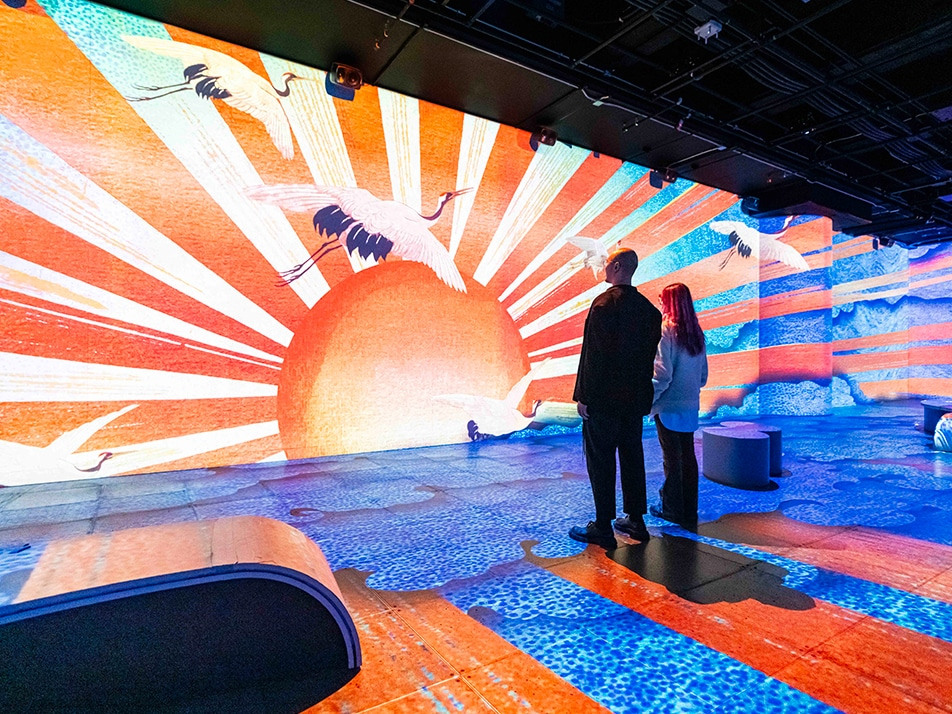
Today its floors fill daily with readers making up for lost time. A short walk away, on the ground floor of the Palais des congrès, OASIS Immersion runs Canada’s largest permanent immersive space, 105 laser projectors throwing story across the walls and floors of darkened galleries. One district, two ideas of reading: the silent room full of paper, and the room that wraps the story around you. The city seems happy to keep both.
Old Montreal
Where the city’s memory is kept, on paper and under glass.
Down by the river, the memory of Montreal is stored in two forms. BAnQ Vieux-Montréal, the national archives, occupies the Beaux-Arts bulk of the former business school on avenue Viger, its reading room filling daily with genealogists chasing an ancestor through parish registers.
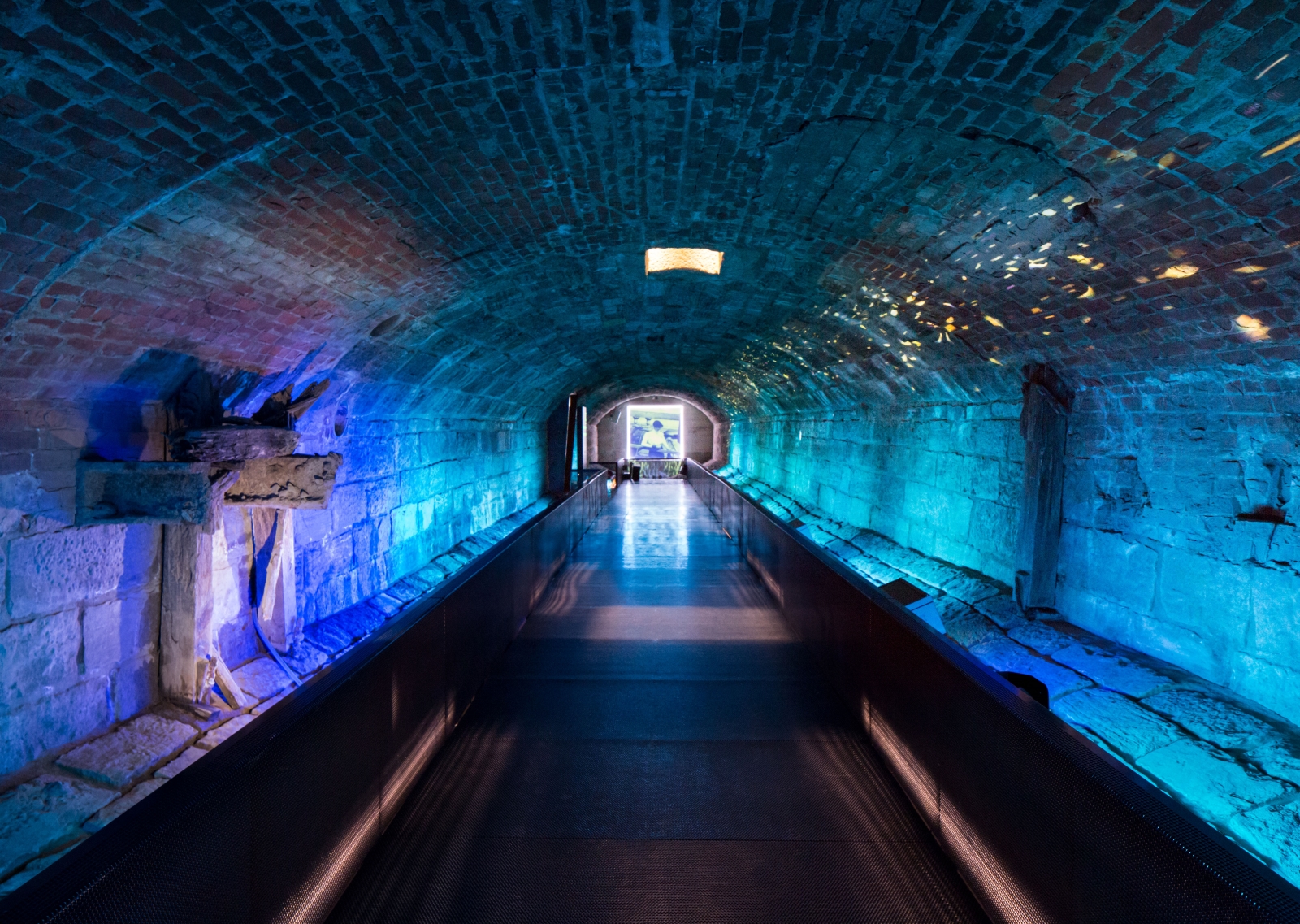
A few blocks on, Pointe-à-Callière stands on the exact spot where Montreal began: Fort Ville-Marie, founded in 1642 by Maisonneuve and Jeanne Mance. Opened in 1992 for the city’s 350th birthday, it lets you walk a glass floor above the excavated foundations and threads a light-and-sound piece called the Memory Collector through the vaulted old sewer beneath the streets. Most cities file their history away. This one lit it and let you stand on top of it.
Westmount
One shop for the reader who would rather cook the book than shelve it.
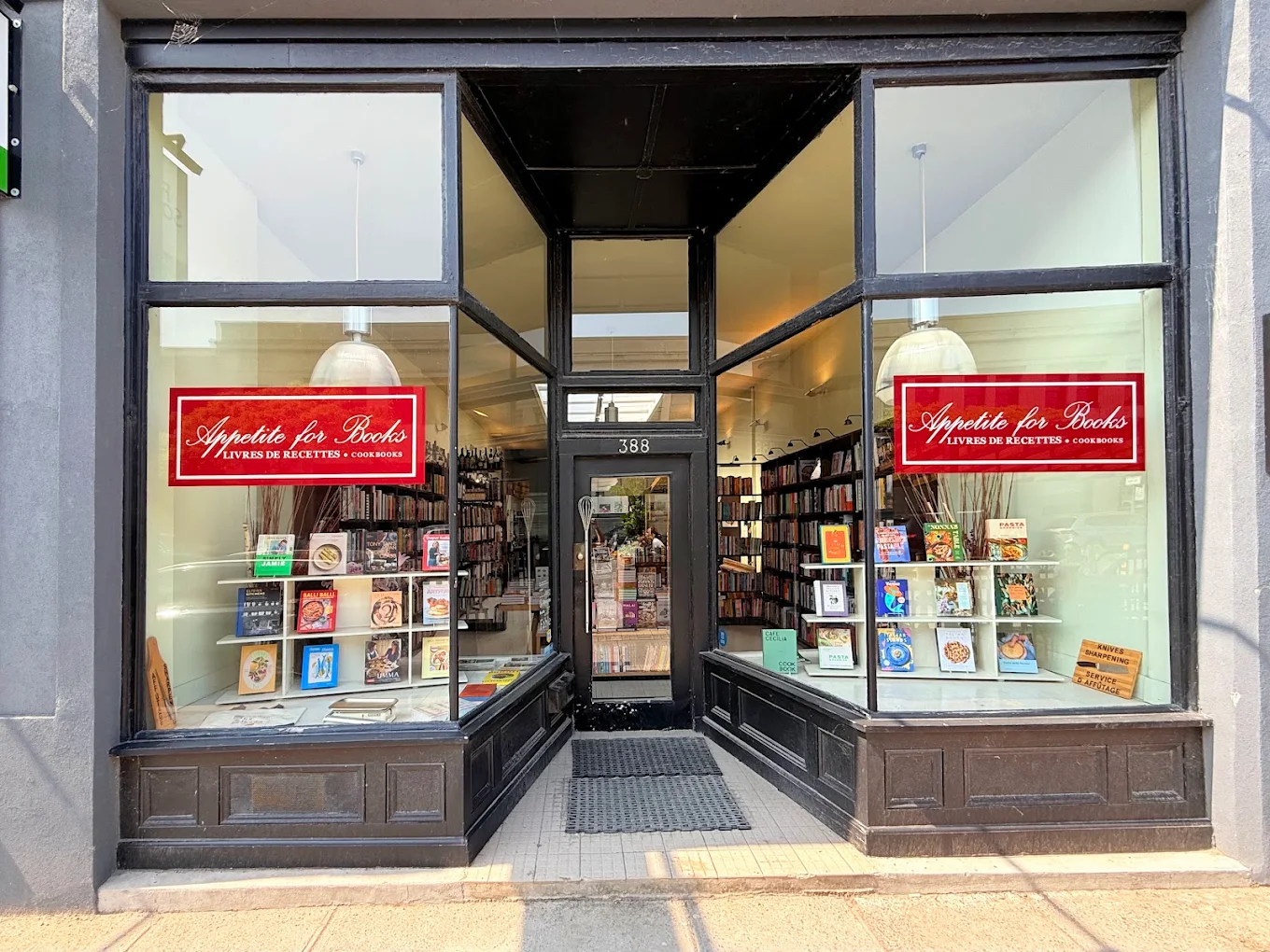
West of the mountain, in leafy Westmount, Appetite for Books has been the city’s only dedicated cookbook shop since 2005. Chef Jonathan Cheung runs cooking classes built around the books on the shelves: pick a cookbook, cook it together in the open kitchen at the back, sit down to the four-course result. The door handle is a giant whisk. It is the one bookshop in the city you can leave having eaten your purchase.
A Day Trip: The Eastern Townships
Ninety minutes south, the real region that dreamed up a fictional village.
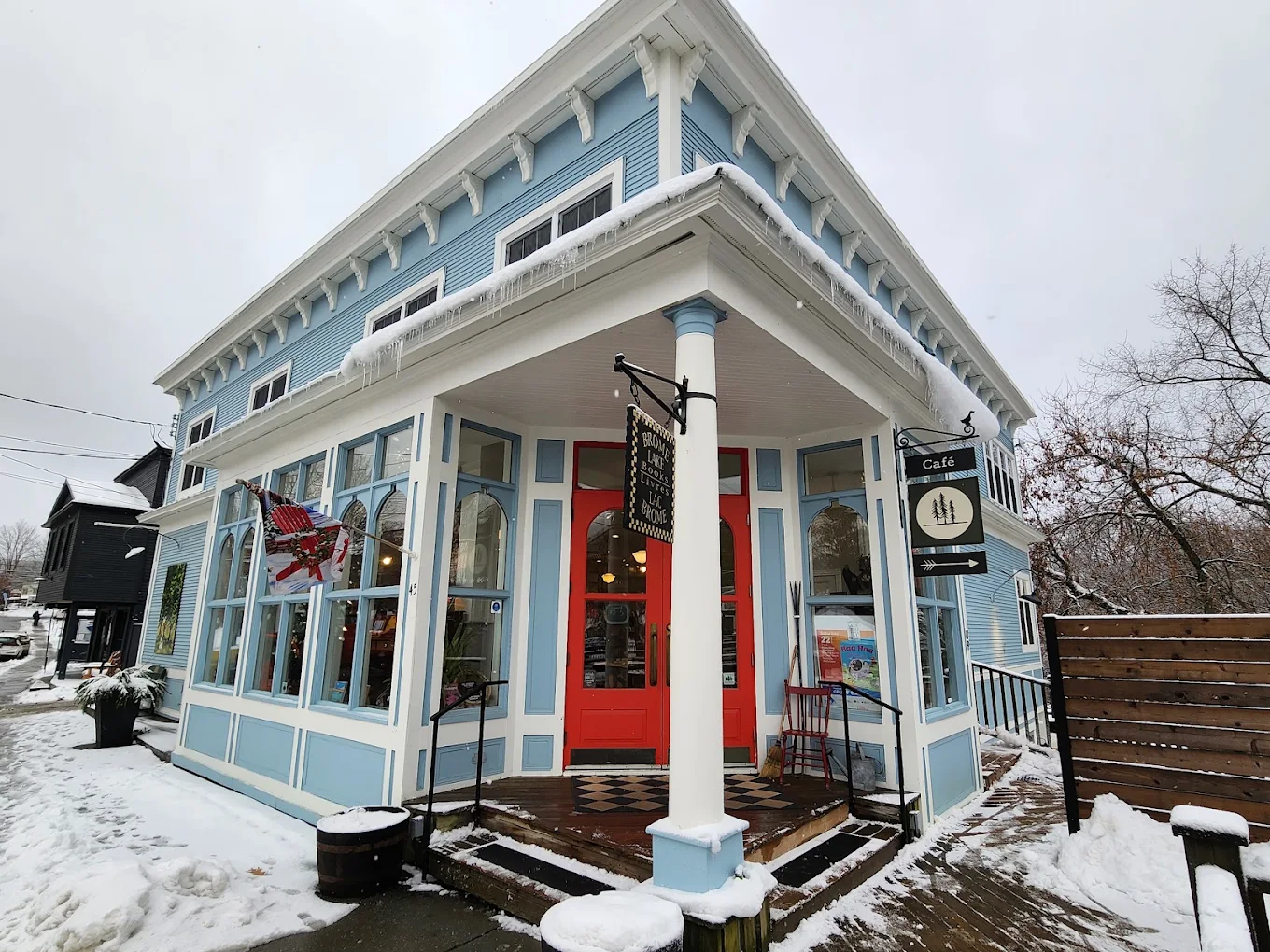
Finish outside the city. Roughly ninety minutes south, in the rolling farmland around Lac-Brome, Three Pines Tours traces the landscapes behind Louise Penny’s Chief Inspector Gamache novels and their fictional village of Three Pines. Presented in five chapters, the route stops at Brome Lake Books, run by friends of Penny’s and the host of her launches, and at the Musée Lac-Brome, which displays Jane’s painting from Still Life, the canvas at the heart of her first novel, made for the screen adaptation.
Visitors are asked to bring a children’s book to donate along the way. Fans set out hunting a village that does not exist, and come home having found the very real countryside that imagined it.
The City That Reads in Two Languages
The pattern only shows itself once you’ve walked the whole thing. A shop that refused to choose between French and English comics. A national library that opened in the same breath as a national apology for decades of not reading. A festival that debates in eight languages, an archive that keeps the city’s paper memory beside the ground it was founded on, a bakery run first by a man who survived the worst of the last century and then by the Italian teenager he trained. None of it was decoration. It was all the point.
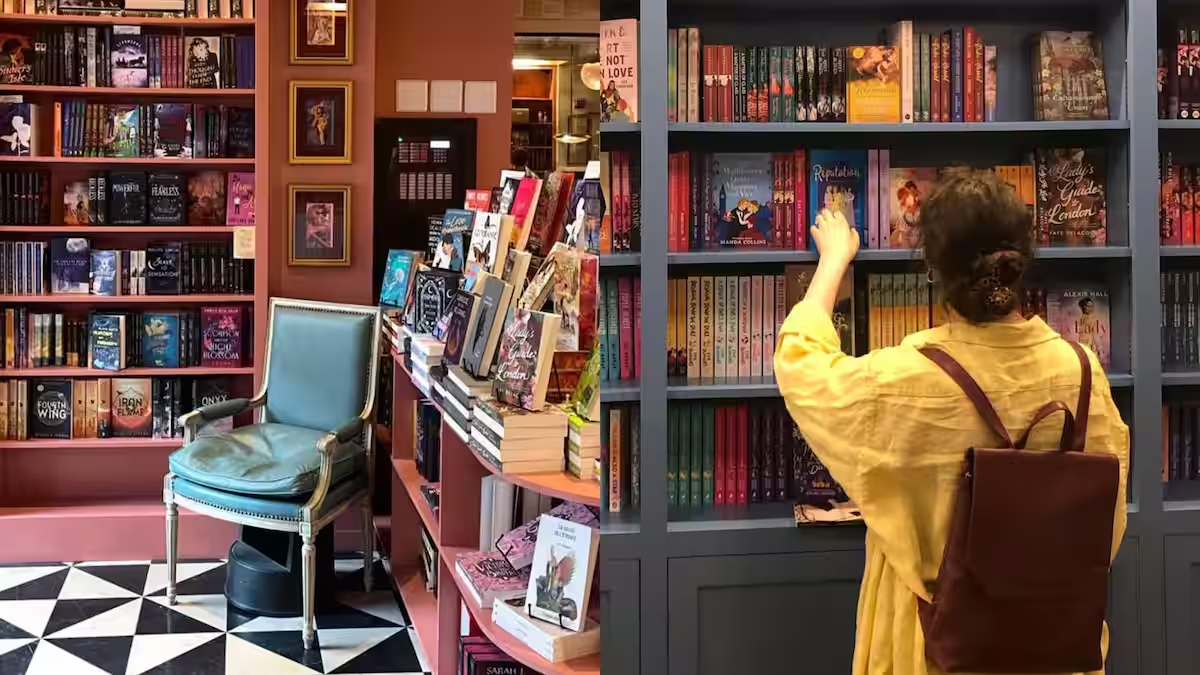
That is what a slow, bookish trip through Montreal leaves you with: the sense that reading here is not a private retreat from the city but the most sociable thing you can do in it. You do not have to pick a language. You order in whichever one you like, the bookseller answers in kind, and somewhere between the two the conversation simply becomes one. Bonjour. Hi. Sit down. What are you reading?

K Lou
K. Lou is a writer born in the U.S. who found her way to Japan through a spiritual calling—or, more precisely, better access to tea. She writes about travel, culture, and the occasional creative piece, inspired by her enduring love of books. This love began in high school when K. Lou carried books around to avoid seeming odd while lost in thought. Once she started reading, she never stopped. With zero regrets, she continues to explore the written word and invites others to join her in celebrating its varied forms.