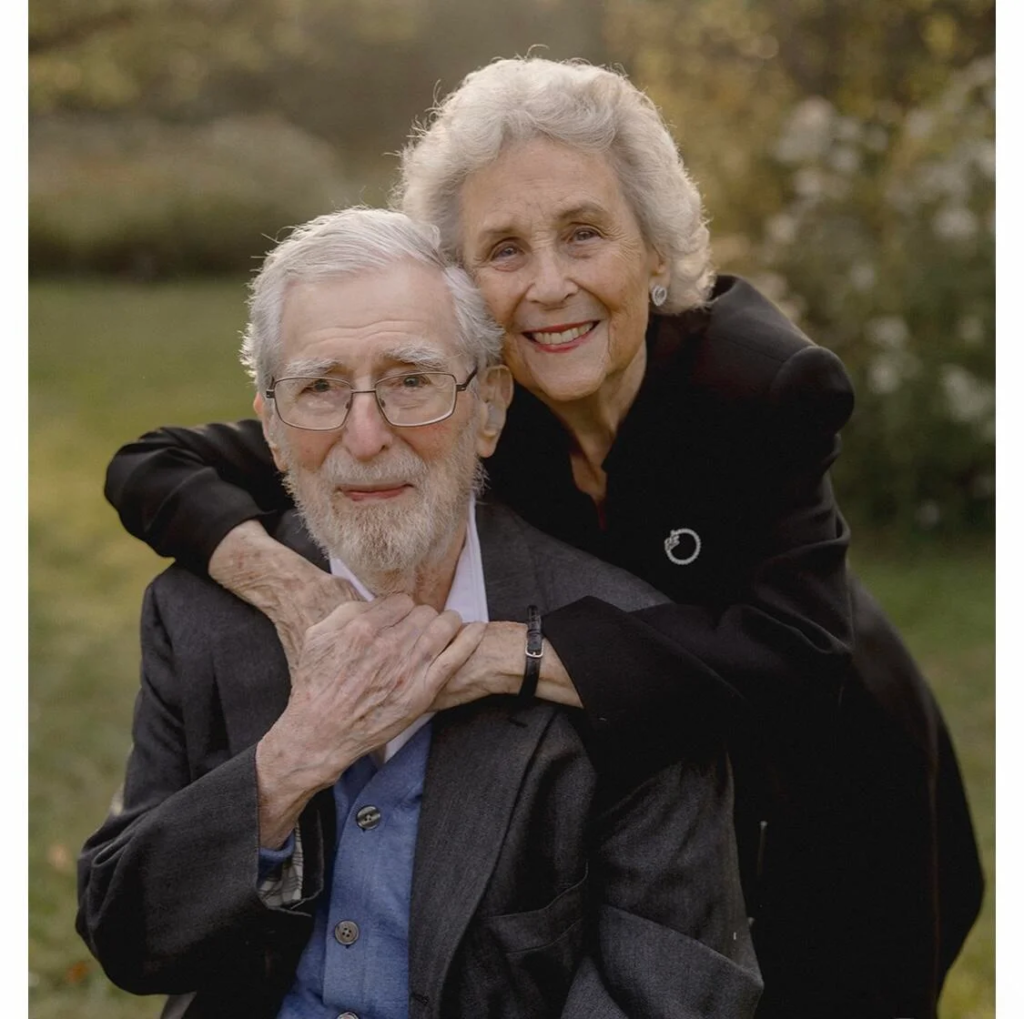

At 102 and 89, George and Nancy Strausman have been writing each other poems since 1959. Inside the slowest, most analog love story on the internet.
Every long marriage leaves behind a collection of memories: faded photographs tucked into albums, postcards mailed from holidays, birthday cards preserved in drawers, recipes scribbled onto stained index cards.
George and Nancy have something different. For the past 66 years, they have been writing poems to each other. Some are romantic, others delightfully mischievous, and many are filled with the kind of humor that only decades of shared life can produce. Together, these handwritten verses tell the story of a marriage that has lasted through changing decades, raising a family, growing older, and watching the world transform around them.
Today, George Strausman is 102 years old, and Nancy is 89. Their love story has recently found an unexpected audience after videos shared by their granddaughter, Francesca Rietti, introduced millions of people to the couple’s remarkable relationship.
A Love Story That Began on a Tennis Court
Like many memorable stories, theirs began on an ordinary summer afternoon. It was Thursday, August 20, 1959, at the tennis courts of a country club on Long Island. Nancy, then 22, had gone to play with a friend when a tall stranger walked past her court and remarked, with easy confidence, “You can always recognize a good tennis player by her backhand.” That stranger was George.
He was waiting for his brother, Ed, and before long he invited Nancy to rally a few balls. They talked between serves, exchanged phone numbers, and what began as a casual game soon turned into something far greater. Eight months later, they were married.
More than six decades on, Francesca shared that story with millions on TikTok and Instagram. In one touching post, captioned “Grandpa George is 102, Grandma Annie is 89. They’ve been writing poems to each other for 66 years,” she revealed the couple’s tradition.
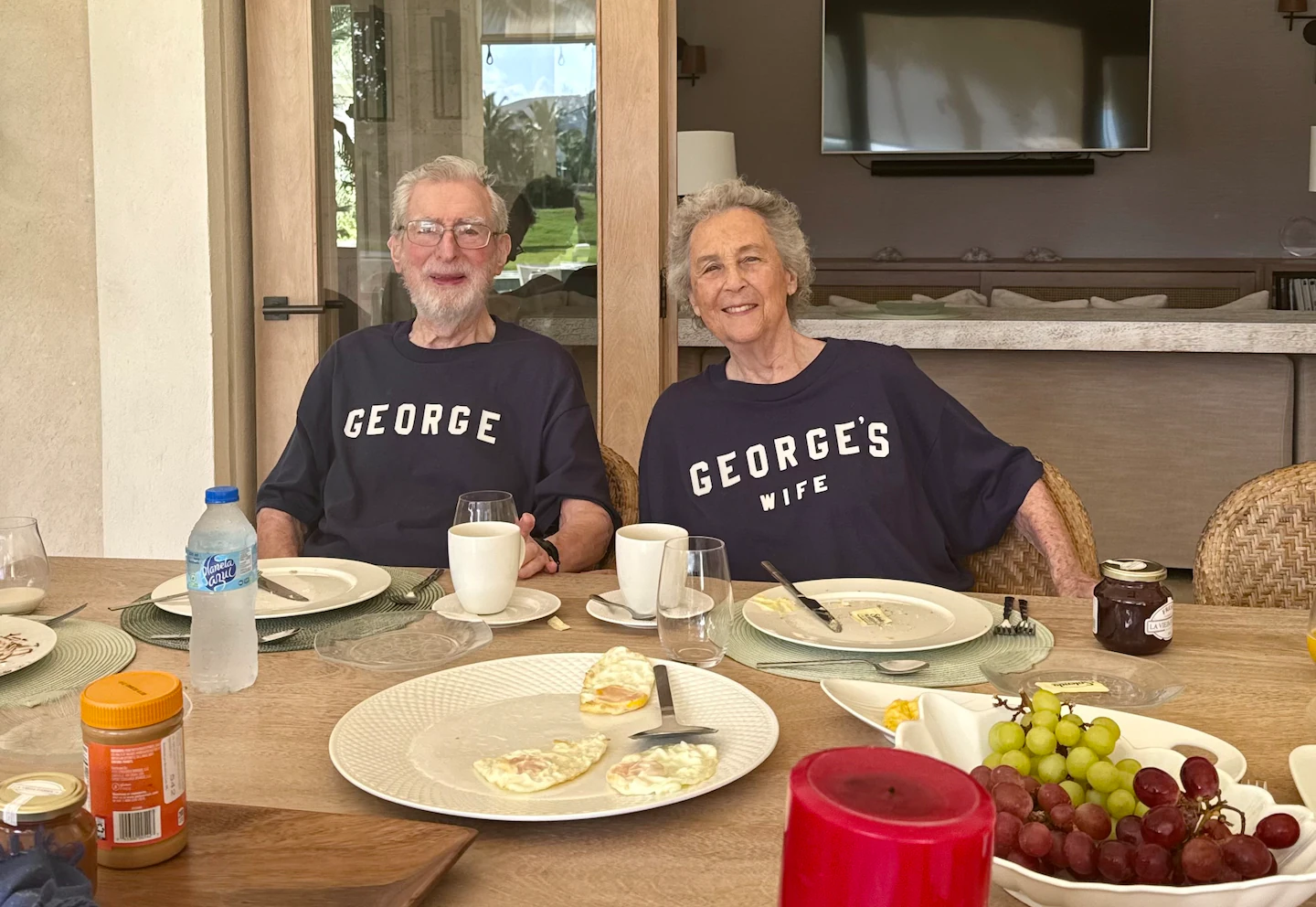
For those who are confused, Annie and Nancy are one person. The two names belong to the same woman. Her legal name is Elizabeth Nancy, but her brother insisted on the middle name, so she has been Nancy her whole life: Nancy on the tennis court, Nancy in the poems, Nancy in her own signature. Then the first grandchild arrived and could not quite manage the word “granny.” What came out instead was “Annie,” and it stuck; every grandchild since has called her Annie. Three names, and she chose none of them. Both renamings came from someone who loved her and simply said it their own way. The video features the poem Nancy wrote about the afternoon that changed both their lives:
I met him on the tennis court one summer afternoon in 1959.
Little did I know that day the game we played was love,
And soon he would be mine.
I met him on the tennis court one summer afternoon while he waited for his brother Ed.
He said, “Let’s hit. Let’s hit a few,” and eight months later, we were wed.
I met him on the tennis court one summer afternoon
When we talked and hit the ball.
He took my name and number, and brother Ed asked, “Why?”
But still I got his call.
I met him on the tennis court one summer afternoon,
And now I can’t imagine us apart.
And though I heard his jokes a million times,
He is my love, my friend, and dearest to my heart.
With all my love,
Nancy
The poem was never written for publication or social media. It was written for one person, and that sincerity is precisely why it has resonated with millions. It reminds us that lasting love is often built not on grand gestures but on ordinary afternoons that quietly become the beginning of an extraordinary life.
Poetry as a Love Language
Many couples exchange anniversary cards or thoughtful gifts. George and Nancy exchanged poems, written for birthdays, anniversaries, family milestones, and sometimes simply because inspiration struck. Rather than commemorating grand events, their verses celebrated the ordinary moments that make up a life together: a first meeting on a tennis court, familiar jokes repeated over the years, growing older side by side, and the quiet comfort of knowing someone better than anyone else does.
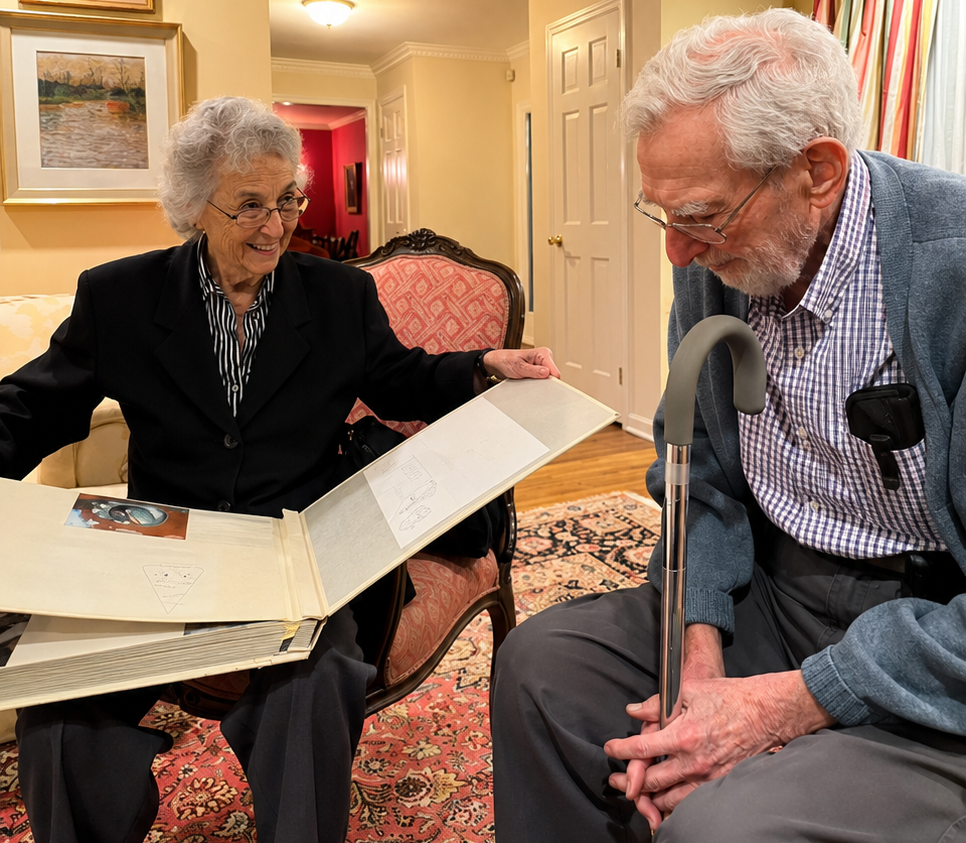
One of Nancy’s most beloved poems, shared by Francesca, was written for George’s 70th birthday. Titled “Ode to George,” it captures the playful humor that has long defined their relationship, as Nancy affectionately teases her husband about the unmistakable signs of aging:
Ode to George
The man I love he just turned 70
I should show respect, but I’m sure he’d prefer levity
Ode to George
He’s getting on in years
His hair has turned all white
He still thinks I look 22
That’s because he’s lost his sight
Ode to George
His hearing is going now, though he still can hear a let
Now unfortunately, it’s even when the ball hasn’t touched the net
Ode to George
He used to drool at a pretty dame
Sad to say now only our dentist can make that claim
Ode to George
And all the changes and the years gone by
That I always rag him
I truly love the guy.
The poem pokes fun at George’s white hair, fading eyesight, and declining hearing, yet every joke is wrapped in tenderness. The humor is never at his expense; it is the kind that only grows from decades of shared memories. In an age when love is so often portrayed through sweeping romantic gestures, George and Nancy remind us that the strongest relationships are built in the everyday. They remember the bad jokes, they notice the white hair, they laugh at the passing years instead of fearing them, and after more than six decades together they still find new ways to tell each other, in verse, what matters most.
The Beauty of Handwritten Words
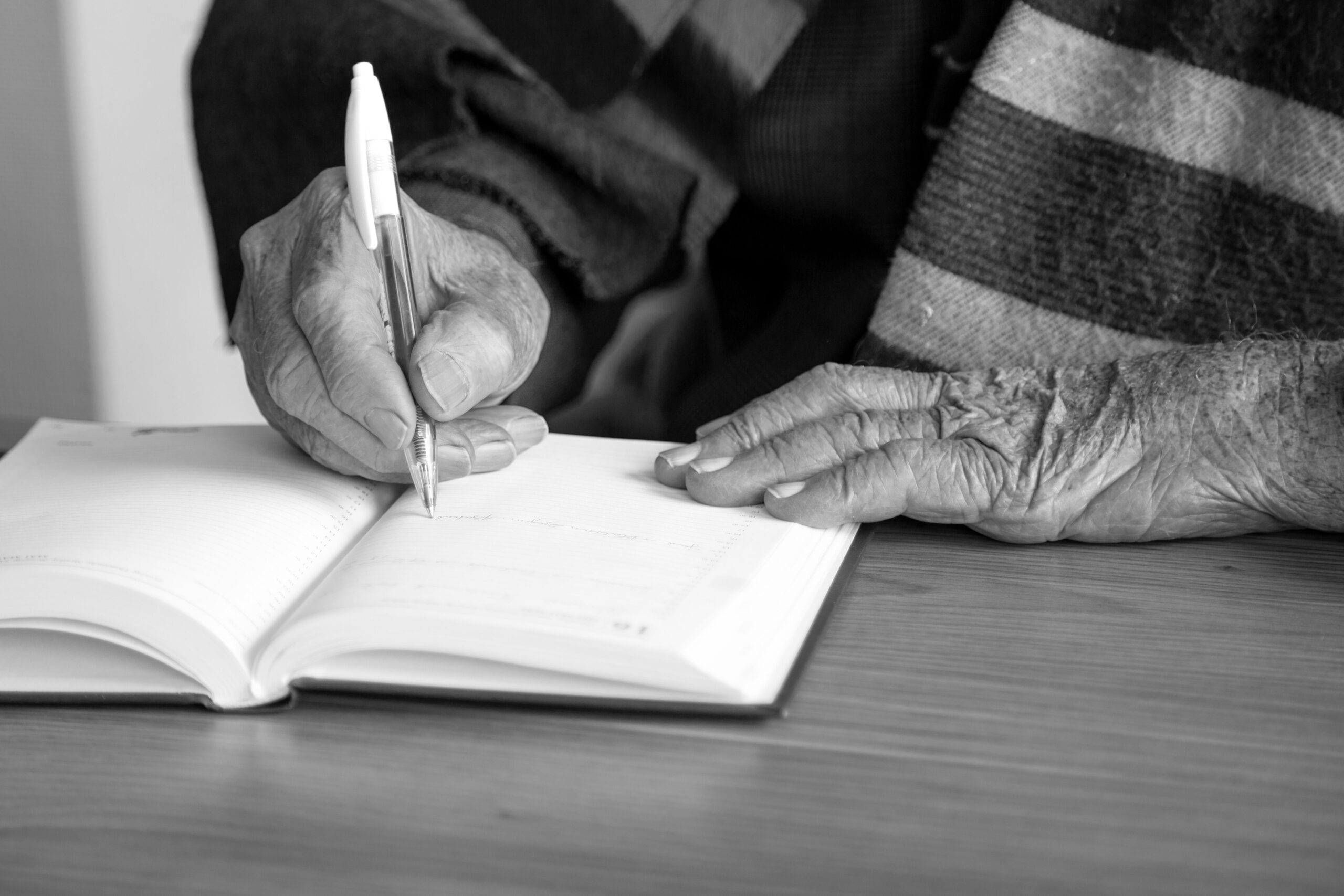
In an era when conversations disappear into endless message threads, George and Nancy’s handwritten poems possess a different kind of permanence. Poems written in ink ask us to slow down. Writing by hand requires intention: every word is chosen with care, every page becomes something worth saving, and every poem becomes a keepsake rather than a message. Researchers have found that writing by hand engages the brain far more deeply than typing, producing connectivity patterns crucial for memory formation, and for more than six decades George and Nancy instinctively created a personal archive of their lives through verse.
Each poem marked a birthday, an anniversary, or an ordinary day that felt worth remembering, and over time those poems became time capsules. Reading them years later means revisiting not only the memories they describe but the emotions that inspired them. It is difficult to imagine a text message carrying that same weight sixty years on.
Growing Older Without Growing Old
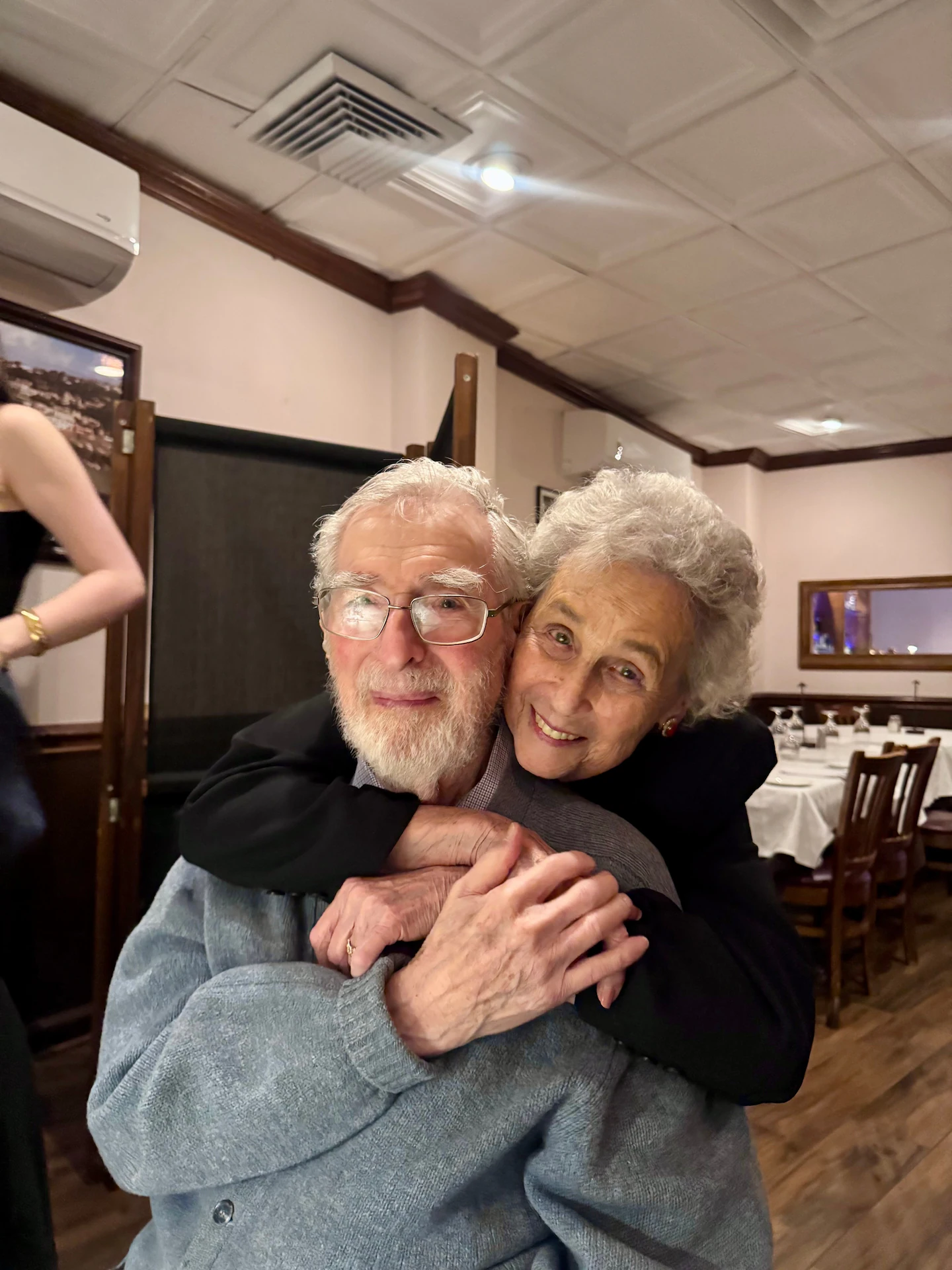
Their poems reveal another secret to a life well lived: George and Nancy never stopped paying attention to each other or to the world. At 102, George still drives himself to work four days a week at the family construction business, and still attends both a weekly pottery class and a weekly poetry class, the former taken up when he was in his nineties.
Francesca’s videos of his routine have introduced millions to his outlook on aging, proof that there is no expiration date on learning, creating, or embracing life with wonder.
The pottery tells part of his story, but George believes the poetry tells the more important one. In a recent post, Francesca shared a conversation that has stayed with her. Over breakfast one morning, George quietly told her, “I’d rather be remembered for my poems than my pottery.”
It is not hard to see why. Sixteen years earlier, at 86, he had written a poem of his own about exactly this, the strange arithmetic of a long life, in which the days move slowly and the decades do not.
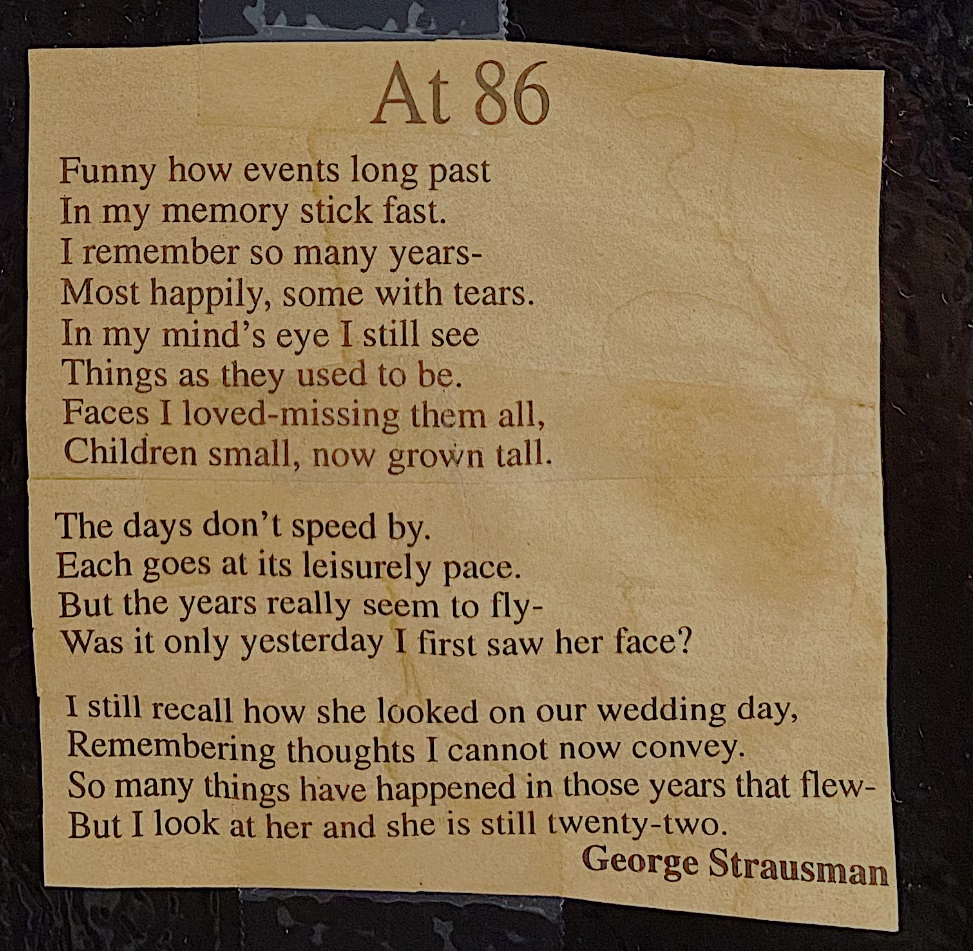
Nancy had teased, in “Ode to George,” that he only thought she looked twenty-two because his sight was going. His answer, written years later, was that he had never needed his eyes for it. Neither of them appears to have planned the exchange, which is rather the point: after half a century, they were simply still writing toward each other.
The remark over breakfast inspired the family to begin assembling a book of his poetry, ensuring that the verses he has spent a lifetime writing will be preserved for future generations. It is a fitting tribute to a man who has never measured success by fame, but by creativity, curiosity, and the words he leaves behind.
A Legacy Written One Poem at a Time
Perhaps the overwhelming response to their story says something about what many of us are longing for. We live in an age of instant communication, yet meaningful correspondence has become rare; we can send hundreds of messages in a single day without creating anything we will want to revisit years from now.
George and Nancy’s poems were never crafted for likes, views, or followers. They were written for one another, and that quiet sincerity is exactly what has touched millions of strangers around the world.
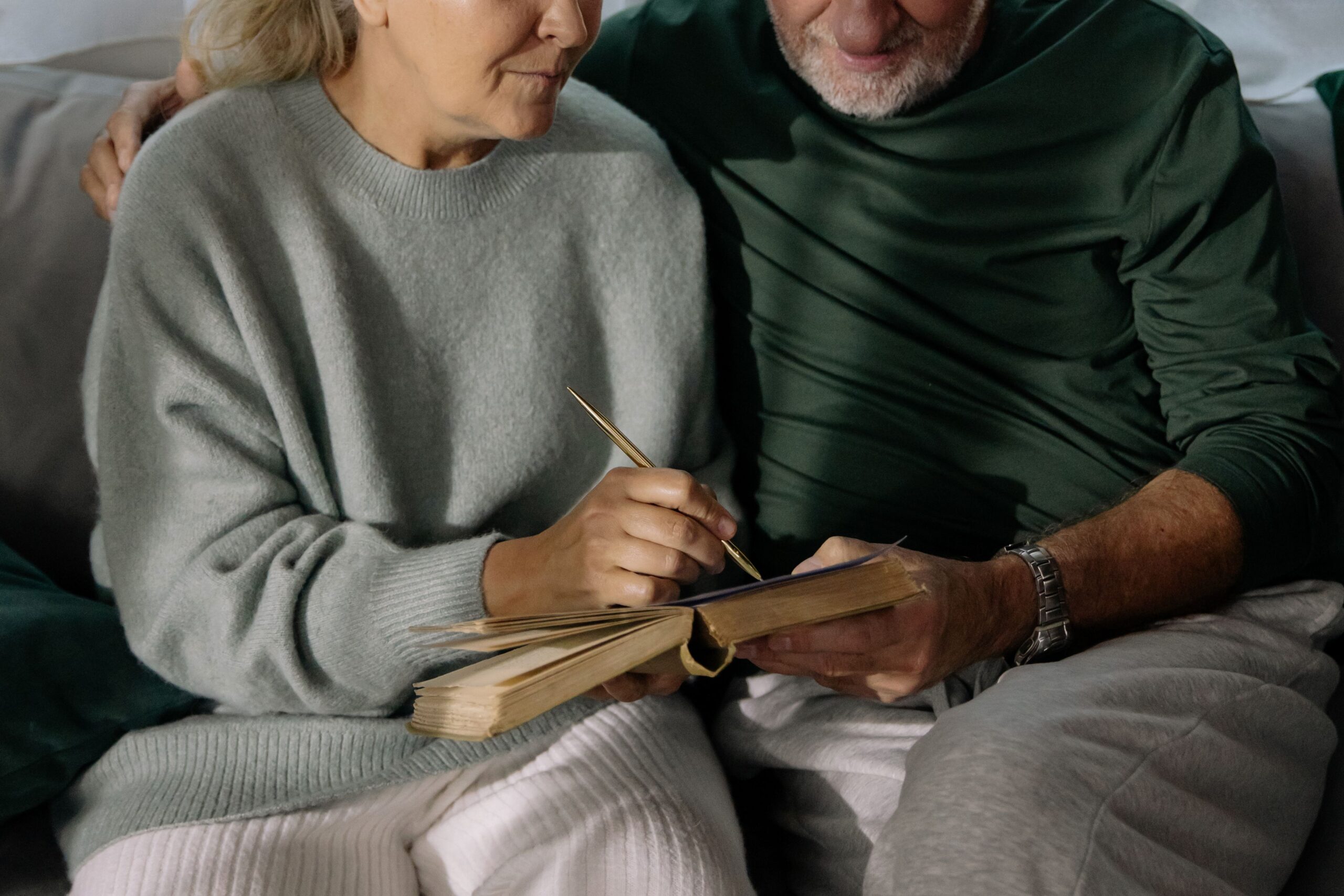
Every couple leaves behind a legacy. Some pass down jewelry; others preserve treasured recipes or shelves of photo albums. George and Nancy are leaving behind a lifetime of handwritten love, a reminder that romance does not have to be extravagant to be extraordinary. Sometimes it begins with a chance meeting on a tennis court. Sometimes it arrives as a birthday poem filled with affectionate teasing. Sometimes it simply says, after all the passing years and countless shared jokes, “I truly love the guy.”


Millie Ramm
Millie has been writing since she was a child, and has spent more time with her nose in books than anywhere else. She has been ghostwriting novels and editing for the past few years, and when not working she is curled up with her cats, looking for her next read.