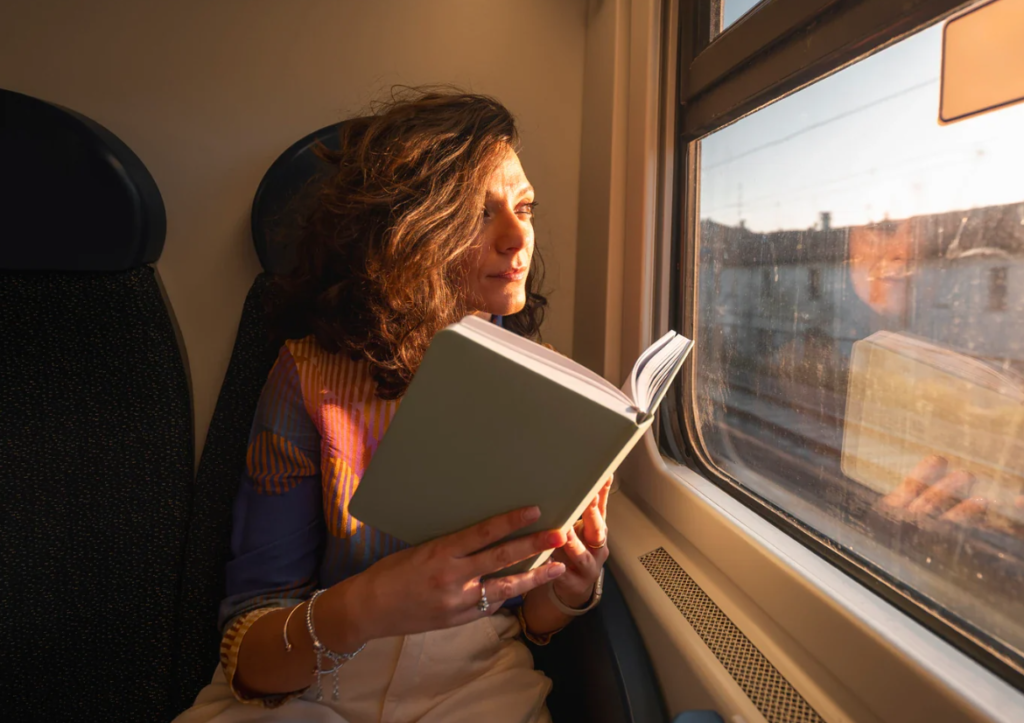

Travelers have always come home ready to begin again. Two decades of research now explains why, and the findings favor the slow, attentive journey.
In June 1867, Mark Twain left New York aboard the steamship Quaker City, bound for Europe and the Holy Land. As the University of Virginia’s Twain archive records, he had persuaded the San Francisco Daily Alta California to pay $1,250 for his fare, and over the five-month trip he sent the paper 51 letters. He reworked those dispatches into The Innocents Abroad, which, according to the Grolier Club, remained his best-selling book throughout his lifetime.
Travelers have been coming home changed for as long as there have been roads to travel. Some enroll in language classes, fill their kitchens with recipes gathered on the road, keep writing to the friends they made abroad, or pursue work inspired by what they saw in other places. Others, like Twain, who have lived a life of mystery, reach for a pen. Over the past two decades, psychologists and neuroscientists have begun to explain why a journey can reshape a life.
Two Roads to Change
Conversations about personal growth often turn to two places: the therapist’s office and the open road. Psychotherapy has one of the strongest evidence bases in mental health care. According to the American Psychological Association, psychotherapy helps with a wide range of mental and behavioral health issues across many populations, and its average effects exceed those of many medical treatments.

Travel works through its own channels, and Twain’s voyage offers an early case study. The same archive describes how the journey took him from a correspondent for a West Coast newspaper to an author of a book for a broad national readership, a major step toward his literary career and celebrity. Studies now show how unfamiliar places loosen old habits and sharpen a person’s sense of self, with the strongest effects appearing among travelers who slow down and stay.
Why a New Street Wakes the Mind

Much of daily life runs on habit, and habits attach themselves to the places where they form. Psychologist Bas Verplanken at the University of Bath calls this the habit discontinuity hypothesis. In a study of 800 adults in Peterborough, his team found a clear window of opportunity to change habits after people moved house, and that window lasted three months. His research focuses on the visible.
How Distance Brings the Self into Change
Travelers often describe feeling released from the roles that define them at home. Researchers from Rice University and Columbia Business School tested a related idea. Across six studies involving 1,874 participants, they found that living abroad was associated with greater self-concept clarity, the degree to which people’s beliefs about themselves are clearly defined and stable over time. The published study drew on online panels of adults and MBA students and found that time spent abroad enhanced self-concept clarity more than the number of countries lived in.

The team took its title from the German philosopher Hermann von Keyserling, whose 1919 travel diary declared, as Pacific Standard reported, that “The shortest path to oneself leads around the world.” The book has a life of its own in libraries. According to Princeton’s Shakespeare and Company Project, it circulated among members of Sylvia Beach’s lending library in Paris in 1925 and 1926, and its English translation can be read online today.
The Confidence of the Missed Train
Every traveler collects a few small disasters: the wrong platform, the bus that never came, the pharmacy conversation conducted entirely in gestures. One woman on a tour run by Project Por Amor watched Icelandic families swim in near-freezing ocean water before breakfast, then came home and looked again at the risks she had been avoiding. Another traveler told the company, “I handled things in a foreign country that terrified me at home.”

The trekking company Sacred Treks captures the moment well: miss a train in a country where you cannot read the signs, and there is no time to dwell on anxiety; you have to solve the problem, communicate without a shared language, and trust yourself. Psychology has a name for what such moments build. In a 1977 paper, Albert Bandura introduced self-efficacy, a person’s belief in their ability to succeed in a particular situation, and identified successful task mastery as its most powerful source.
Researchers at Leuphana University Lüneburg in Germany measured the effect. Over roughly six months, they compared 93 people who spent a semester abroad with 128 who stayed home, and found that time abroad significantly predicted higher self-efficacy. As Times Higher Education reported, those who planned to go abroad but had not yet left showed no such advantage, and the more social contacts participants met each week, the more their self-efficacy grew.
The Case for Staying Longer
Again and again, this research rewards patience. In studies published in 2009, William Maddux and Adam Galinsky found that time spent traveling abroad made no difference to creativity, whereas living abroad was associated with greater creativity. Galinsky put it simply: “You really need to immerse yourself in the culture.” The authors noted that their studies show a relationship but do not prove causation.
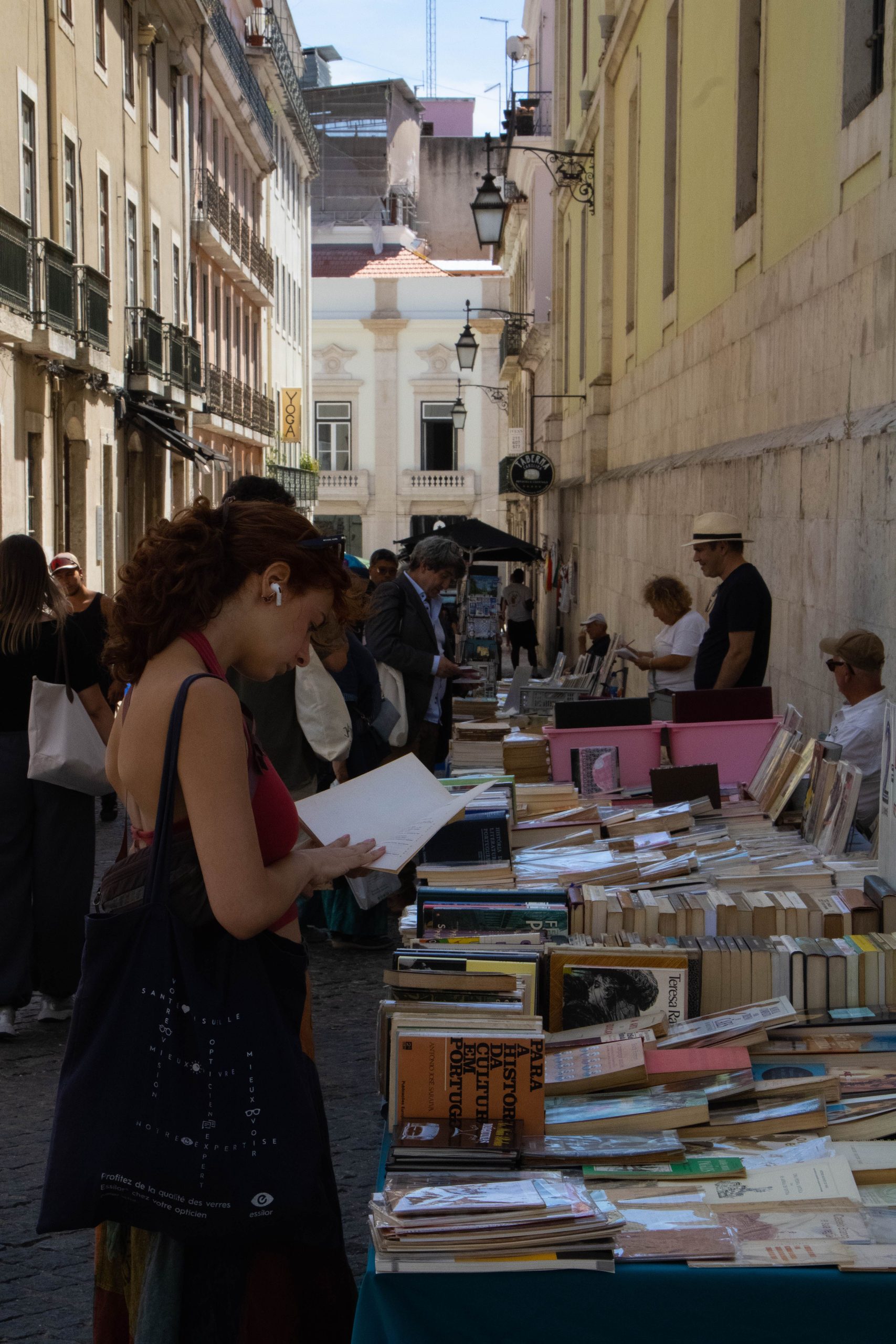
Patience lies at the heart of slow travel, which shares roots with the Slow Food movement. In 1986, Carlo Petrini organized a protest against a McDonald’s being built near Rome’s Spanish Steps, and his supporters, armed with bowls of penne, started a movement. The journalist Carl Honoré carried his philosophy further. Rice Business Wisdom notes that, after publishing In Praise of Slowness in 2004, he called slow travel “the most relevant front in the slow revolution.” Slow travelers put that philosophy into practice on the road. They rent a room for a month, learn the baker’s name, ride regional trains, and return to the same café until the owner sets down their cup unasked.
The Change Often Begins After You Return

Much of the work happens when you come home. A Dutch study of 1,530 adults found that vacationers were happier than non-vacationers before their trips, though afterward their happiness generally matched that of people who stayed home. Lasting change asks for more. Tourism scholars Ksenia Kirillova, Xinran Lehto, and Liping Cai interviewed leisure travelers about trips that changed them. They found that a triggering moment on the road began a process of meaning-making, and the unease motivated travelers to make real-life changes afterward. In Kirillova’s doctoral research, those changes tended to unfold back home, shaped by how travelers interpreted the experience.

Here the traveler’s quieter companions earn their place: the notebook filled on a night train, the novel bought in Lisbon, the letter to an old friend, the conversation with a therapist about why Kyoto felt like relief. Sacred Treks suggests using travel as a catalyst and therapy to process and integrate what the journey reveals. As Anthony Bourdain wrote in No Reservations, “The journey changes you; it should change you.” A line widely attributed to him, calls travel “education for living.”
The Traveler’s Library

Readers have long known that a book can work like a journey. In 2000, psychologists Melanie Green and Timothy Brock gave that feeling a scientific name, “narrative transportation.” Researchers define it as a combination of attention, imagery, and feeling in which a reader becomes immersed in a story world, and the more deeply transported readers are, the more likely they are to adopt the beliefs and attitudes a story implies. A novel set in Lisbon can send a traveler off with more curiosity, and it gives the reader who stays home a journey of their own.

Writing helps the journey settle. Psychologist James Pennebaker began studying expressive writing in 1986, and his team now describes it as a reliable tool for helping people process both major and minor life events, with more than a thousand studies published since. In one study, people who wrote about positive events also showed improvement in stress. According to the APA, the people who benefit most tend to explain causes and express emotion as they write, which may help them organize fragmented memories. Much of that work, including making sense of the restlessness many travelers feel on their return, can happen in a travel journal on the night train home.
A Citizen of Somewhere Larger
The deepest gift of slow travel may be a widening of sympathy. In the closing pages of The Innocents Abroad, Twain observed that “travel is fatal to prejudice, bigotry, and narrow-mindedness.” The research on what unfamiliar places do to the mind reads like a long footnote to his line.

Twain himself came home a different man. As research from the University of Nebraska–Lincoln notes, when he wrote to the Alta on November 20, 1867, to say he was back in America, newspapers across the country had picked up his letters, and he arrived home a national figure. Travelers who stay a while, share meals with their neighbors, and read through the long evenings are likely to return with a wider sense of the lives a person can live, and a warmer regard for the people living them. For readers who have always been a little old-fashioned, with their paper maps, library cards, and taste for lingering, that is reason enough to go, and reason enough to take their time.


Adam Ryan
Adam is a distinguished content writer, bookworm, and full-time adventurer with a constant craving for coffee. When he's not working, he loves exploring remote corners of the world, immersing himself in different cultures, and writing about his experiences.