Severance splits a person’s memory between work and home. Locke, Reid and a striking dementia study ask which version of you is really you.
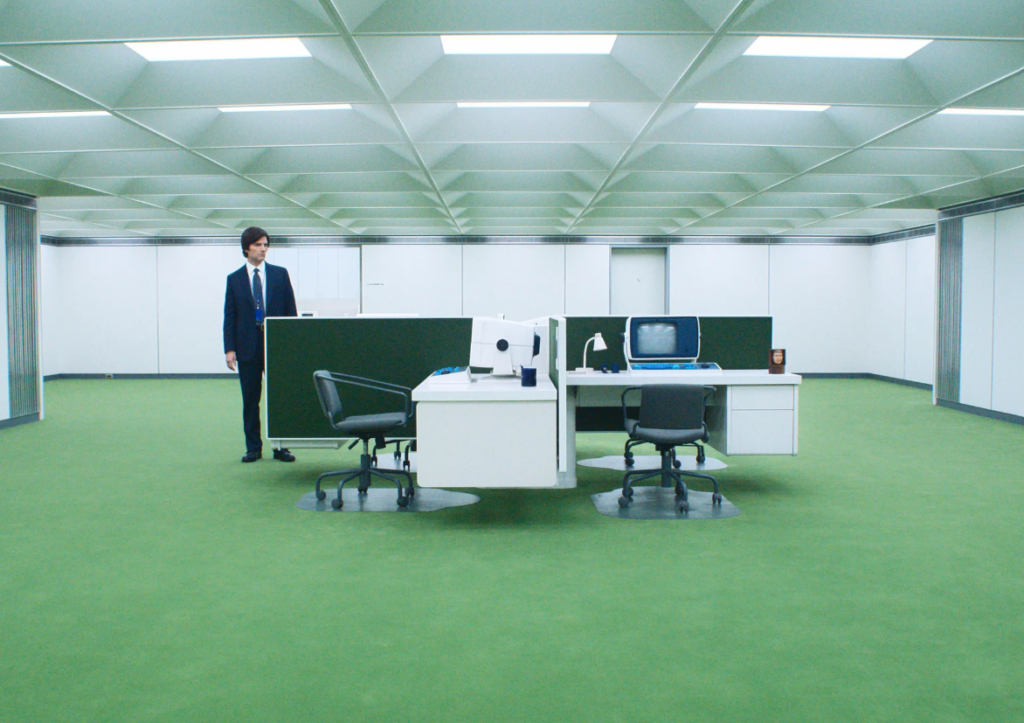
In the television series Severance, a man named Mark Scout works in an office he cannot remember. Each morning he takes a lift down to the severed floor of Lumon Industries, a vast and faintly sinister biotechnology company, and a chip in his brain switches him into a different person: his “innie,” who knows nothing of the world outside and has never seen the sky. At the end of the day, the lift rises, the chip switches back, and his “outie” walks out with no memory of the last eight hours. Mark, a former professor, chose the procedure after the death of his wife, Gemma, because of his grief. Eight hours a day without mourning seemed like mercy.
The show, created by Dan Erickson and largely directed by Ben Stiller, became, by Apple’s own account, the most-watched series in the history of its streaming service, and its second season won eight Emmys in 2025. Underneath the corporate horror, it asks one of the oldest questions in philosophy. If your memories were split in two, which of the two people would be you?
“What If I Could Skip the Eight Hours of the Workday?”

The idea began in a very ordinary place. Before he wrote television, Erickson worked at a company that made doors, in what he called “a very mindless job: cataloging all the different parts of doors.” One day the fantasy arrived fully formed: “What if I could skip the eight hours of the workday, to disassociate and just get it over with?” Most people who have watched the clock in an office have had a version of that thought, which is why the show lands so hard. “We define ourselves by our jobs,” Erickson wrote, while insisting that “we’re humans first, workers second.”
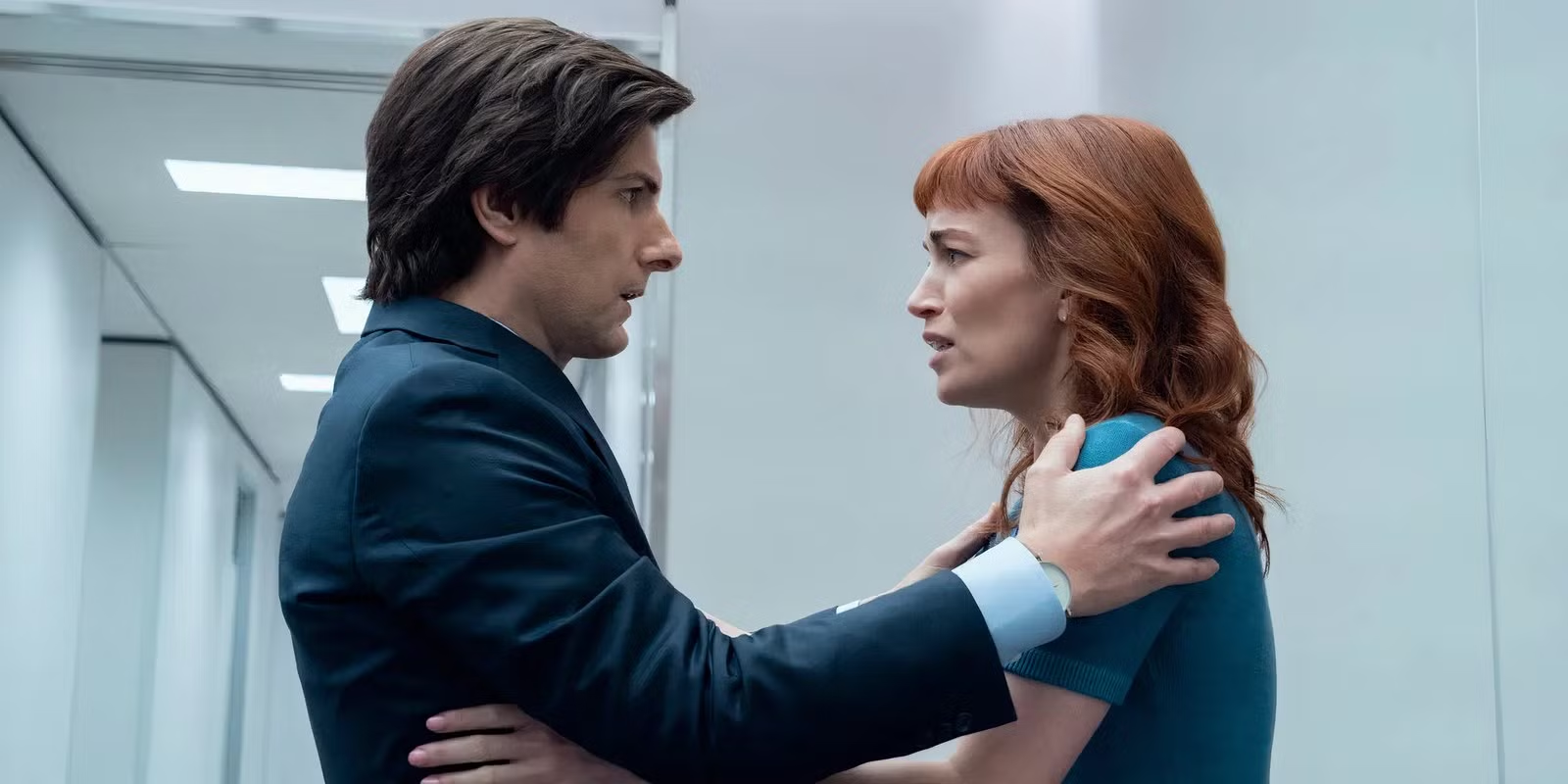
The innies, though, refuse to be anyone’s time-saving device. Over two seasons, the members of Mark’s department grow curious, then rebellious, then attached to one another. One of them, Helly R., turns out to be the daughter of Lumon’s chief executive, who had herself severed as a publicity stunt. The second season ends with a choice.
Mark’s innie guides Gemma, who turns out to be alive and kept on a testing floor inside Lumon, to an exit, and then turns back to stay with Helly. Erickson explained that the innie “is choosing his life over this life that he’s always felt beholden to, which is his outie’s.” The work self, built to save his outie eight hours of grief, has become someone who wants to live.
Same Man, Two Persons? Locke’s Answer and Reid’s Objection
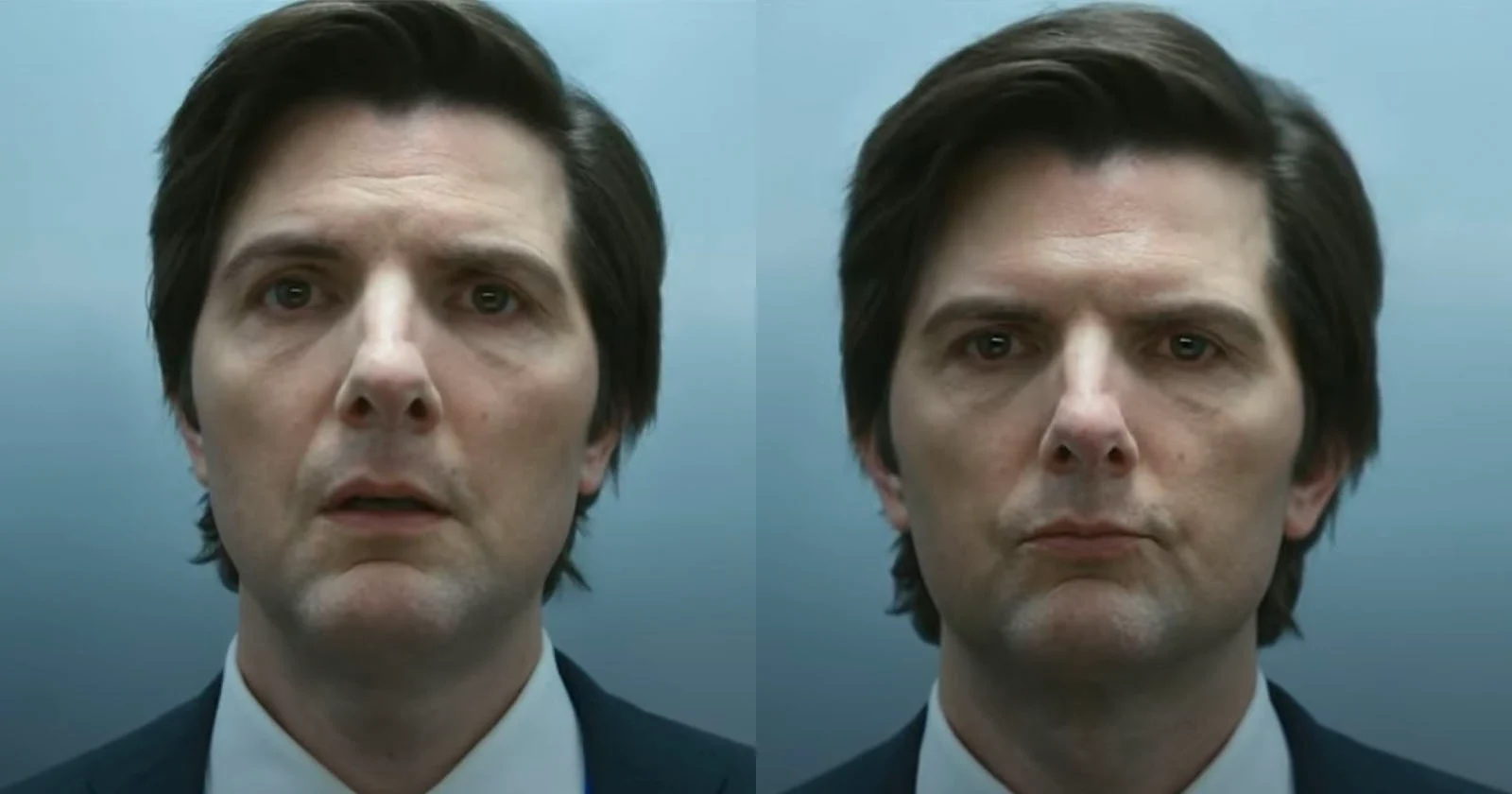
The English philosopher John Locke would have recognised the dilemma at once. In his Essay Concerning Human Understanding of 1689, he argued that what makes you the same person over time is consciousness, the memory that reaches back to your past actions: “it is that which makes every one to be what he calls self.” Locke drew a careful line between being the same man, the same living body, and being the same person. He even imagined the soul of a prince entering the body of a cobbler, and concluded that the prince, carrying his memories, would still be the prince.
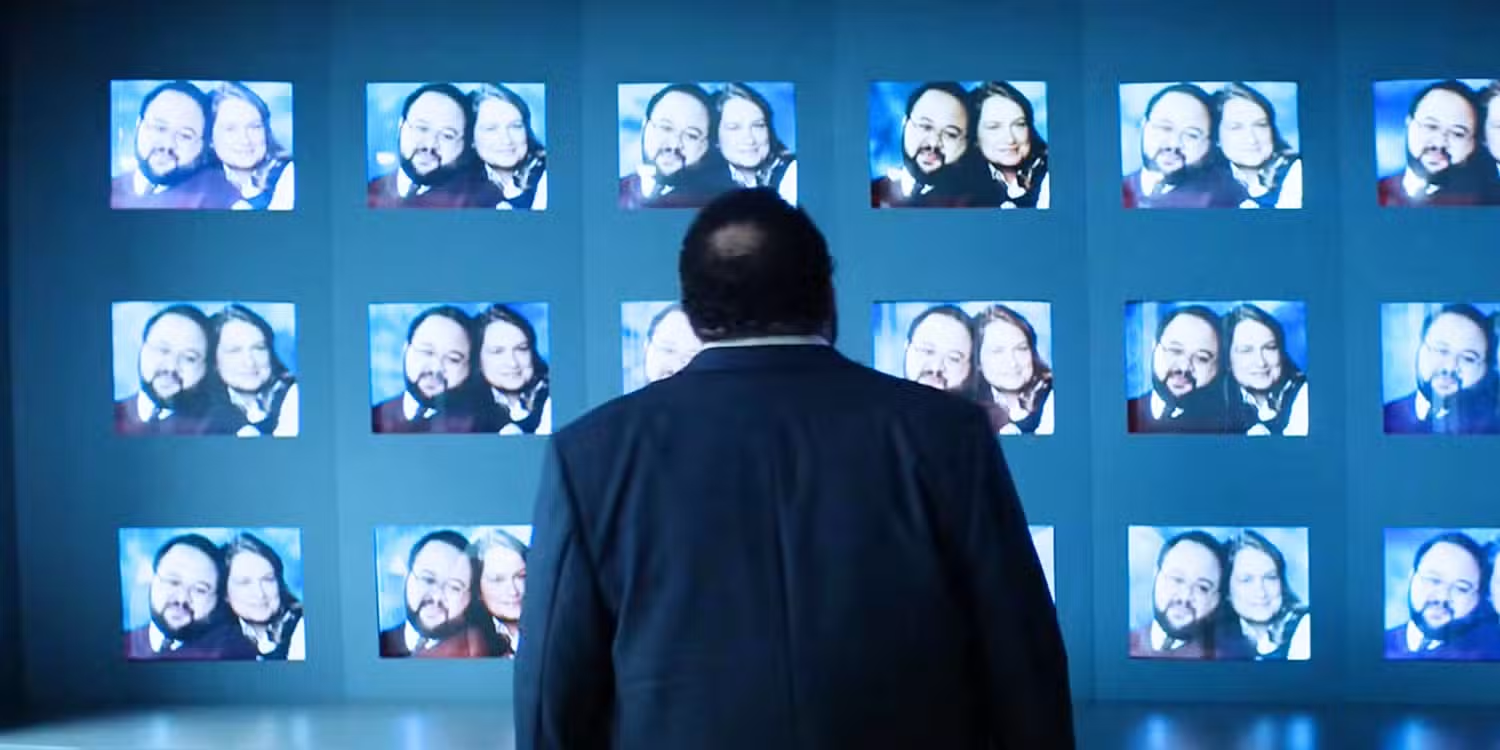
The philosopher Bertha Alvarez Manninen of Arizona State University uses Severance to teach exactly this distinction. Innie and outie Dylan, another member of Mark’s team, share one body, so they are the same man; with separate memories, she writes, they are not the same person. She also notes that the show’s characters begin with the opposite view. In the first season, Mark insists, “There is no ‘other one.’ It’s me. I do the job.” By the end of the second, the innies are negotiating with their outies as one person negotiates with another.
Locke’s theory has a famous problem, raised by the Scottish philosopher Thomas Reid in 1785. “Suppose a brave officer to have been flogged when a boy at school for robbing an orchard,” Reid wrote, then to have captured an enemy standard as a young soldier, and to have become a general in old age. The young officer remembers the flogging, and the old general remembers the battle but has forgotten the flogging.
By Locke’s logic, Reid pointed out, the general “is, and at the same time is not, the same person with him who was flogged at school.” One recent reading of Severance uses the same objection to argue that lost memories cannot mean a lost self. We forget most of our lives, and nobody thinks we become strangers as a result.
Families of Dementia Patients Judged Identity by Character, and Memory Came Second
For three centuries this was a debate between philosophers. Then the psychologist Nina Strohminger and the philosopher Shaun Nichols decided to ask ordinary people. In a series of experiments, they described someone who had lost different mental capacities after an accident and asked whether that person was still the same person. Memory mattered, but something mattered more: moral traits, “more than any other mental faculty,” were judged “the most essential part of identity.”

They then tested the idea in real life. In a 2015 study of 248 family members of people with frontotemporal dementia, Alzheimer’s disease or motor neurone disease, relatives felt their loved one had become a different person when the person’s moral character changed: their honesty, kindness or empathy. “Memory loss itself,” Strohminger said, “doesn’t make someone seem like a different person.”
The most famous case in memory research makes the same point. In 1985, the British musician Clive Wearing caught a brain infection that left him with a memory that lasts between seven and thirty seconds. He cannot remember yesterday. He can still play the piano and conduct a choir, and his love for his wife, Deborah, has remained undiminished. Whatever Clive Wearing is, nobody who meets him doubts that he is still Clive.
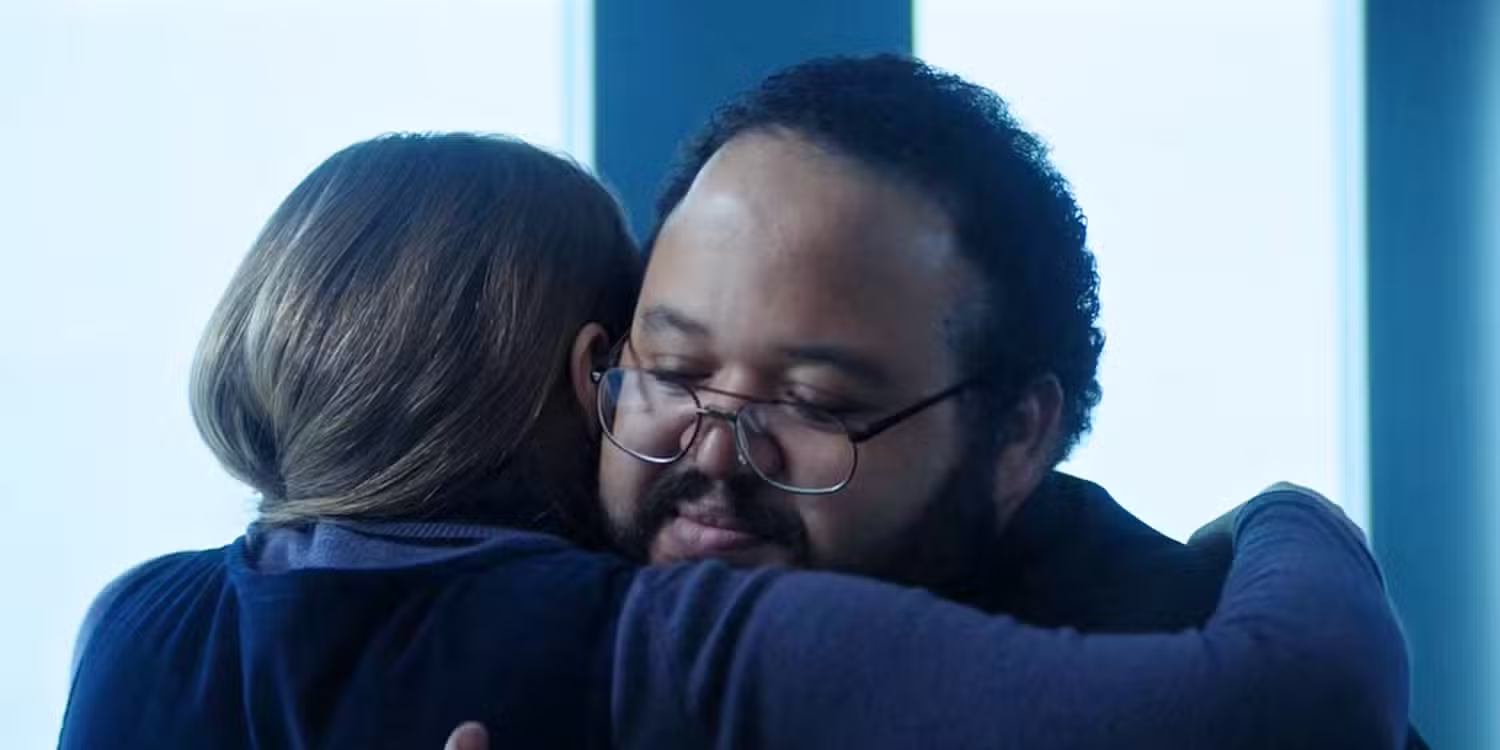
Seen in this light, Severance keeps quietly proving the psychologists right. The innies share no memories with their outies, and yet they are recognisably the same people: the same stubbornness, the same tenderness, the same humour. One writer has noticed that their feelings bleed over between their severed selves even when their memories cannot. The procedure divides a person’s past, and their character carries on intact on both sides of the split, which suggests that character is where we actually live.
Thirty-Five Per Cent of Britons Said They Would Sever Themselves
The reason the show unsettles so many viewers is that most of us already practise a mild version of severance. Organisational psychologists describe a spectrum from “segmentation,” keeping our work and home identities separate, to “integration,” carrying one into the other, and people differ in where they sit. A healthy amount of separation helps: research led by Sabine Sonnentag has found that people who fail to “detach” from work in their free time are more prone to burnout and lower life satisfaction. In Australia, a right-to-disconnect law, which took effect in August 2024, now gives most workers the legal right to ignore their boss after hours.
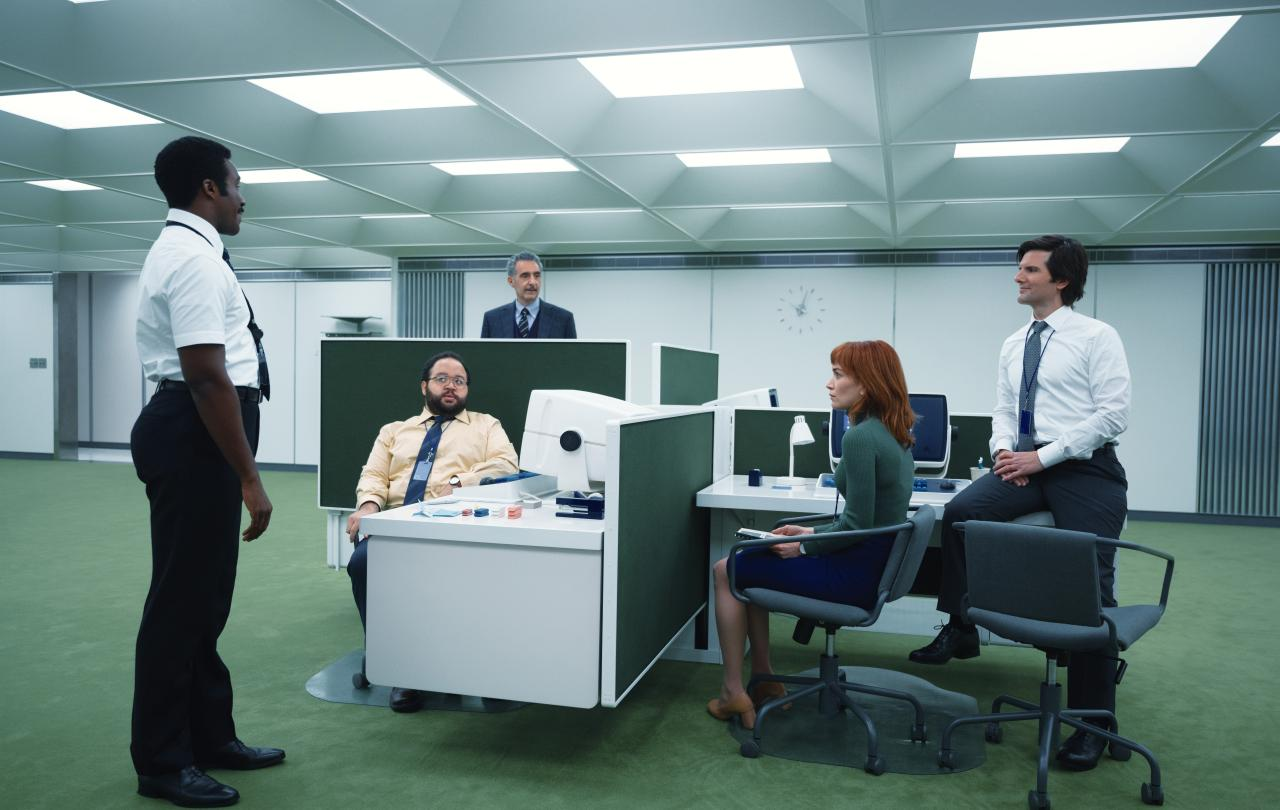
The appetite for something more drastic is real. When Severance‘s second season ended in March 2025, a survey by the workplace wellbeing company Unmind found that 35 per cent of Britons wished they could be severed, rising to 46 per cent of Gen Z, and that 38 per cent said they had a “work persona” different from their real self. A Marxist reading of the show points to its most disturbing feature: at Lumon, “the worker is not cheated; it is all done with her consent.”
The philosopher Peter West of Durham University, writing about the show, draws a gentler conclusion from Locke. Our histories make us who we are, and so, he argues, “we should be trying to make peace between the different parts of our lives.” The psychology points the same way. The self that survives every split, in the clinic and in the fiction, is made of character: the way we treat people, the things we care about, the kindness or the courage we bring into a room.
That self comes to work with us whether we remember it or not, and it goes home again at the end of the day. Mark’s innie, choosing to stay with the people he loves, may be the most fully human person in the show, because the one thing Lumon could never sever was the part of him that loves.

Vincent Minatozaki
Vincent is the founder and Editor-in-Chief of 1000 Libraries Magazine. He is a Paris-born ex-corporate turned bookseller and philosopher, on a global mission to spread the joy of physical books in our age of digital technology.