
Tolkien’s king weeps openly, heals the wounded, and kneels to hobbits. On Aragorn, the science of male silence, and the masculinity modern men have forgotten.
Let me begin with one of the scenes that made grown men cry.
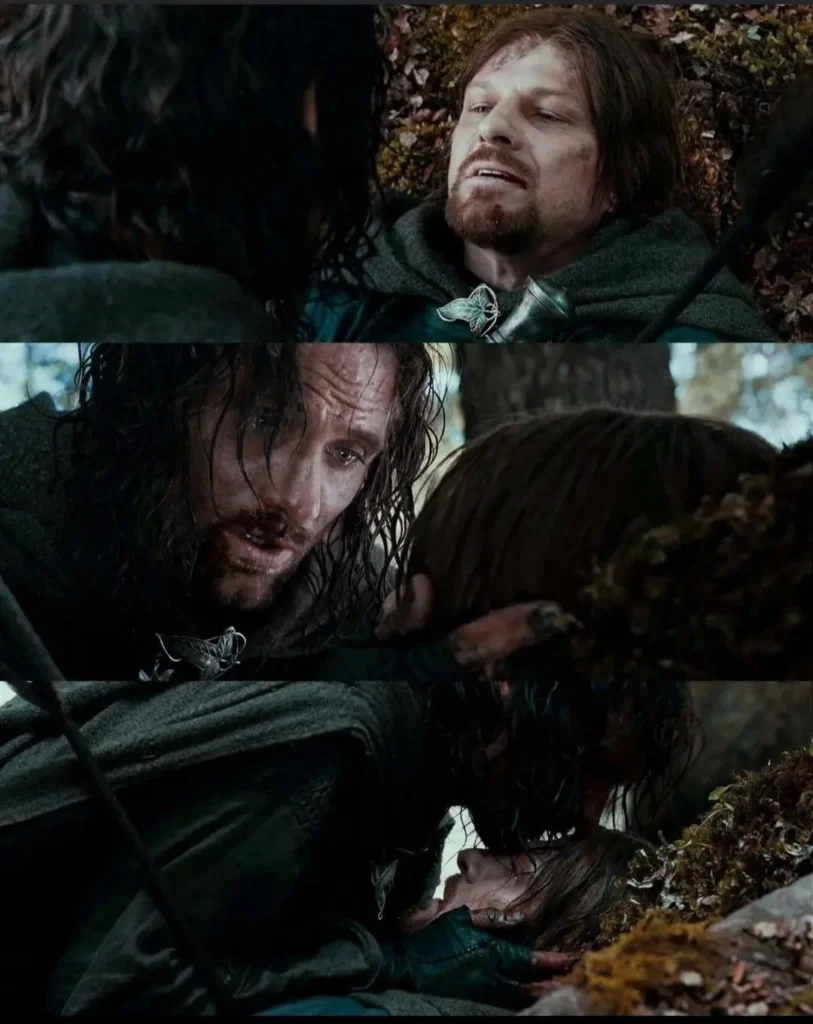
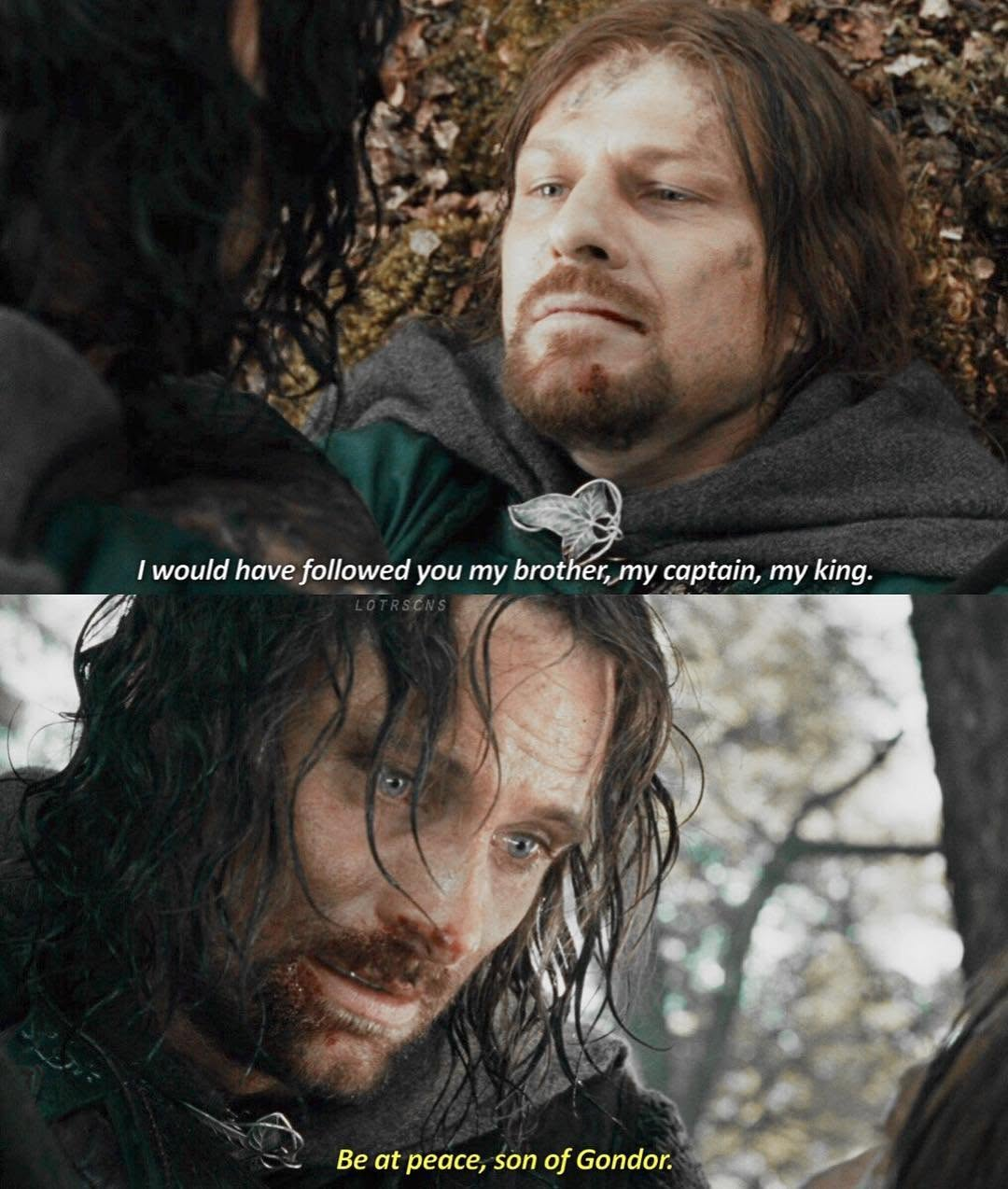
A warrior kneels beside a dying friend. He is, by any measure, the most dangerous man in the story: a swordsman with decades of war behind him, heir to a throne, feared by his enemies. His friend has fallen defending two of the smallest members of their company, and with his last breath he confesses his failures.
And the warrior does not straighten his back and deliver a stoic nod. In Tolkien’s telling, he kneels for a long while, bent with weeping, still holding his friend’s hand. That is how his companions find him. Openly crying, blaming himself aloud.
“It is I that have failed. Vain was Gandalf’s trust in me.” — J.R.R. Tolkien, The Two Towers (1954)
Nobody in the story thinks less of Aragorn for this. Nobody in the reading world ever has. And in that small fact sits almost everything the modern conversation about masculinity has forgotten.
The False Ranking

I grew up inside fantasy worlds, and I have watched, like you, the strange fire that surrounds the word masculinity today. On one side stands the loud door: dominance. Get rich, get hard, trust no one, treat compassion as a liability. And for the men who were never built that way, the ones born a little softer than the machos, quicker to trust, easier to move, more openly caring, the culture keeps a sneer on hand: beta male. As if men came in ranks, like wolves in a pack, with the gentle ones at the bottom. As if the kind man were merely a failed hard one.
Kindness is not weakness. Sensitivity is not weakness. Trusting people, caring deeply, crying openly: none of these are flaws in a man; they are among the best things in one. And the same fairness must run the other way, because the correction has overcorrected in some rooms. There is nothing regressive about a man who wants to be strong. The drive toward competence, financial security, reliability, the old quiet pride of being a provider and protector a family can build on: these are not toxic relics to be deprogrammed.
They are honourable, and many men, and many of the people who love them, still find deep meaning in those old roles, freely chosen. The error is the ranking itself, in either direction: the idea that the hard man is the finished product of masculinity and the soft-hearted man its rough draft, or that the traditional man is a fossil and the gentle one the future. What every child instinctively hopes for in a father is neither extreme: a man who is gentle and formidable at once, whose tenderness is safe precisely because his strength is real.
Tolkien imagined that man. He built an entire king out of him.
The Protector Who Went Unthanked
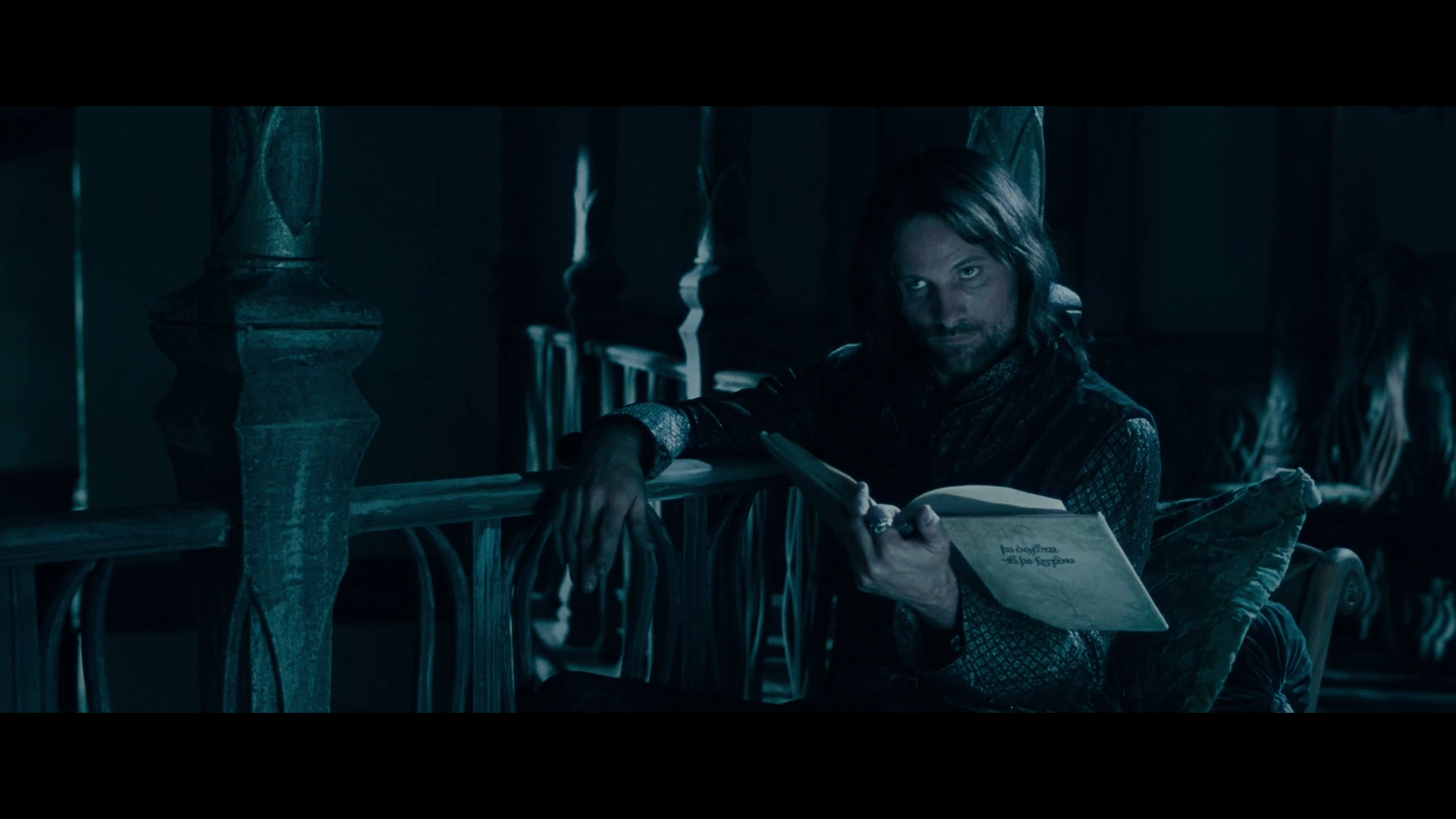
When we first meet Aragorn, he is not a king. He is a weather-stained stranger in the corner of an inn, known by a nickname the locals use with faint contempt: Strider. What they do not know is that this vagabond and his kin have spent decades quietly guarding their borders, absorbing their scorn as part of the job. Service without recognition. Protection without status. And when four small, frightened hobbits fall into his care, he binds himself to them with a vow that has no reward attached to it at all:
“If by life or death I can save you, I will.” — J.R.R. Tolkien, The Fellowship of the Ring (1954)
There is an internet legend about this kind of man, attributed to a conversation between Bruce Lee, the philosopher warrior, and one of his students. The student asks: you teach me fighting, but you speak of peace; how do you reconcile the two? And the master answers that it is better to be a warrior in a garden than a gardener in a war.
No record proves Lee ever said it, but the idea has an ancient, verifiable pedigree: the Roman military writer Vegetius gave us si vis pacem, para bellum, if you want peace, prepare for war. Aragorn is the parable made flesh. Sixty years of the sword, carried so lightly that frightened hobbits instinctively trust him. Strength is not the possession; it is the offering. A protector with no one to protect is just a weapon looking for a mirror.
The Hands of a Healer
Here is what the throne actually required. After the great battle for the city, Aragorn refuses to enter as a conqueror and claim his crown. He comes in cloaked and quiet, because the wounded are dying of hurts no ordinary medicine can touch, and there is an old saying among the people of Gondor:
“The hands of the king are the hands of a healer.” — J.R.R. Tolkien, The Return of the King (1955)
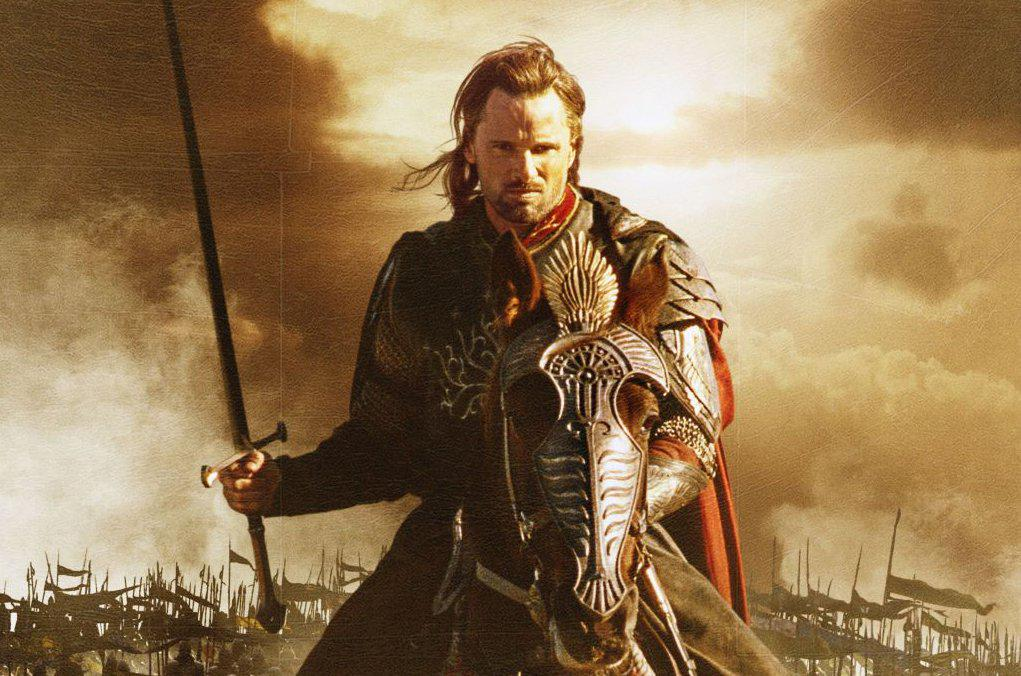
Not the sword of the king. The rightful king, in Tolkien’s world, is known by his ability to heal, and Aragorn spends the night after his greatest victory moving from bed to bed, calling the wounded back from the shadows. The films largely cut this sequence, which is a quiet loss, because it completes the story’s definition of strength: a man is measured not by what he can break but by what he can restore.
Tolkien did not invent the pairing. The samurai were raised on an ideal called bunbu ryōdō, the pen and the sword in accord: a warrior who could only fight was considered incomplete, and the same hands were expected to write poetry, practise calligraphy, and perform the tea ceremony. When Nitobe Inazō explained the samurai code to the West in his 1900 classic Bushido, he devoted a chapter to bushi no nasake, the tenderness of the warrior: mercy from the strong counts precisely because it is backed by the power to do otherwise. The Houses of Healing sit on very old foundations.
What the Silence Costs
The man who wrote Aragorn was not a soft-handed theorist. J.R.R. Tolkien fought at the Somme in 1916 and lost two of his closest friends to it. He came from the generation most brutally trained to swallow everything, and yet he filled his masterpiece with men who cry openly and are honoured for it. Aragorn weeps at Parth Galen and sings a lament for the fallen. Théoden weeps. At the story’s end, Gandalf farewells the hobbits by telling them, gently, that not every tear is an evil. From a survivor of the trenches, that is not sentimentality. It is testimony.
Modern research has caught up with him. A meta-analysis of nearly 20,000 men in the Journal of Counselling Psychology found that conformity to traditional masculine norms, above all self-reliance and emotional control, is consistently linked to worse mental health and a marked reluctance to seek help. Across the Western world, men die by suicide at several times the rate of women, and researchers point again and again to the same mechanism: distress that is never spoken.
The man who internalises everything does not become stronger. He becomes a pressure vessel, and the pressure goes inward as depression or outward as anger, and teaches his sons to do the same. Aragorn, who says I have failed out loud and lets his friends see him cry, is not the weak version of masculinity. He is the sustainable one.
Brotherhood, or Who a Man Can Talk To
Notice, too, whom Aragorn is vulnerable with. Men. His grief at Parth Galen is witnessed by Legolas and Gimli, and the friendship among those three becomes one of the great loves of the story. Boromir himself dies confessing his worst moment to Aragorn, and receives not judgment but absolution, and gives back the most quietly devastating line in the films:
“I would have followed you, my brother, my captain, my king.” — The Lord of the Rings: The Fellowship of the Ring (2001)
Brother first. King last. Kingship, in Tolkien’s order of operations, is not seized; it is conferred by love, one friend at a time. And men, the story insists, need this from other men: not networking, not banter that never drops below the waterline, but brothers who can hear I tried to take the Ring and answer with grace. The loneliness statistics of modern men are, in this light, not a mystery. We dismantled the fellowship and kept the war.
The Gentleman
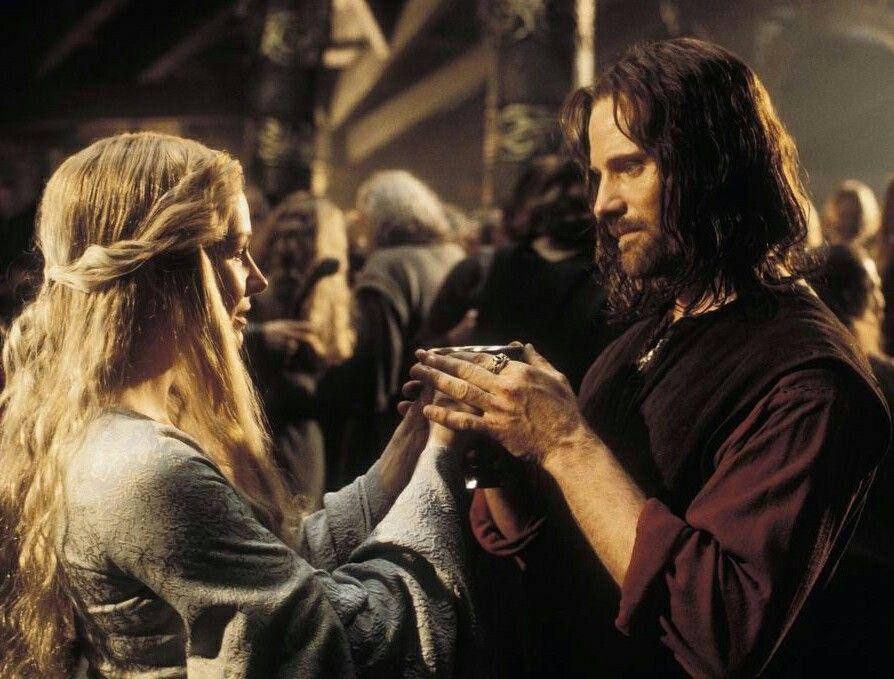
Two women stand near the centre of Aragorn’s story, and he wrongs neither of them. Éowyn of Rohan falls in love with him, and he sees it happening. A lesser man would take something: a little admiration harvested on the road to war, no promises made. Aragorn takes nothing. He refuses her gently, without a flicker of condescension, and later defends her to her brother with real insight: what she loved in him was a shadow and a thought, an idea of glory rather than the man. He declines her heart in a way that leaves it intact.
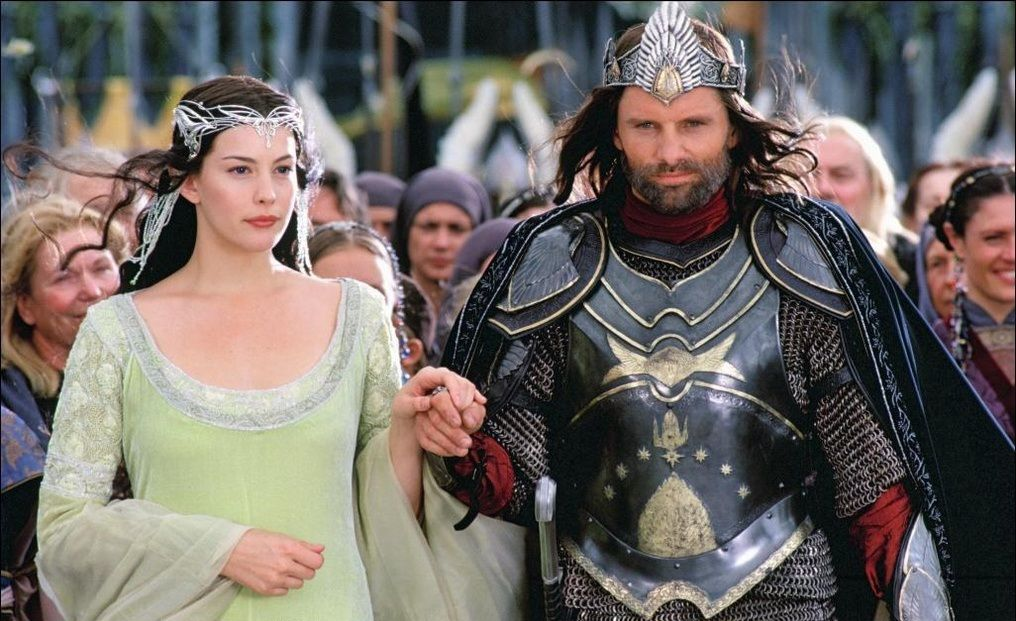
And Arwen: in the films, his great romantic gesture is a renunciation, urging the woman he loves to sail west with her people rather than spend her immortality on him. In the books, his devotion takes an older shape: decades of patient labour under her father’s near-impossible condition, without complaint and without ever treating her as owed to him. Either telling describes the same man, one who understands that to love a woman is not to acquire her.
This matters now more than it has in generations, because we are living through what can fairly be called a dating crisis. A record quarter of American 40-year-olds have never married, up from six percent in 1980; three in ten adults are single; nearly half of Americans say dating has gotten harder in the past decade. Beneath the numbers sits a widening gulf of incomprehension between young men and women, each side increasingly convinced the other is impossible to understand.
But listen to what many women actually say they are hoping to find, and it is far simpler than the discourse suggests. Someone who genuinely cares. Someone admirable, whose character they can respect. Someone safe to be soft around. A gentleman, in the old, unironic sense. The shortage is not of women willing to love men. The shortage is of men who have made themselves worth the risk.
Which means the step forward belongs to us men: to become providers as far as our circumstances allow, protectors, and equally loving partners who show up to serve rather than to score, and who respect the choices of the people we love even when the choice is to leave.

Psychology has a name for the foundation all of this rests on. Attachment theory, born with John Bowlby, observes that our earliest bonds write a template for how we love: some of us grow up secure, able to hold closeness without clinging and distance without panicking, while others learn to chase, or to wall off. The good news, and the part too few men are told, is that the template is not a life sentence. Security can be earned, and one of the proven roads to it runs through a therapist’s office.
Going is not weakness; it is the same logic as the gym, applied to the interior. A man does that work and becomes two things at once, which turn out to be the same thing: the rock his partner and children can build on, steady in the storm, and a door left open, vulnerable enough to let the people he loves actually reach him. Strength under restraint, restraint under love. That is a modern man that everyone can respect.
The Two Aragorns
Now, an honest complication, because this is a magazine that checks its sources. The hesitant, self-doubting Aragorn many of us love, the man who fears the weakness of Isildur in his blood and must be coaxed toward the crown, is largely Peter Jackson’s invention. In the books, Aragorn carries his reforged sword from the very beginning and never doubts his claim; his humility lives elsewhere, in decades of unthanked service and his refusal to take the city before the war is won.
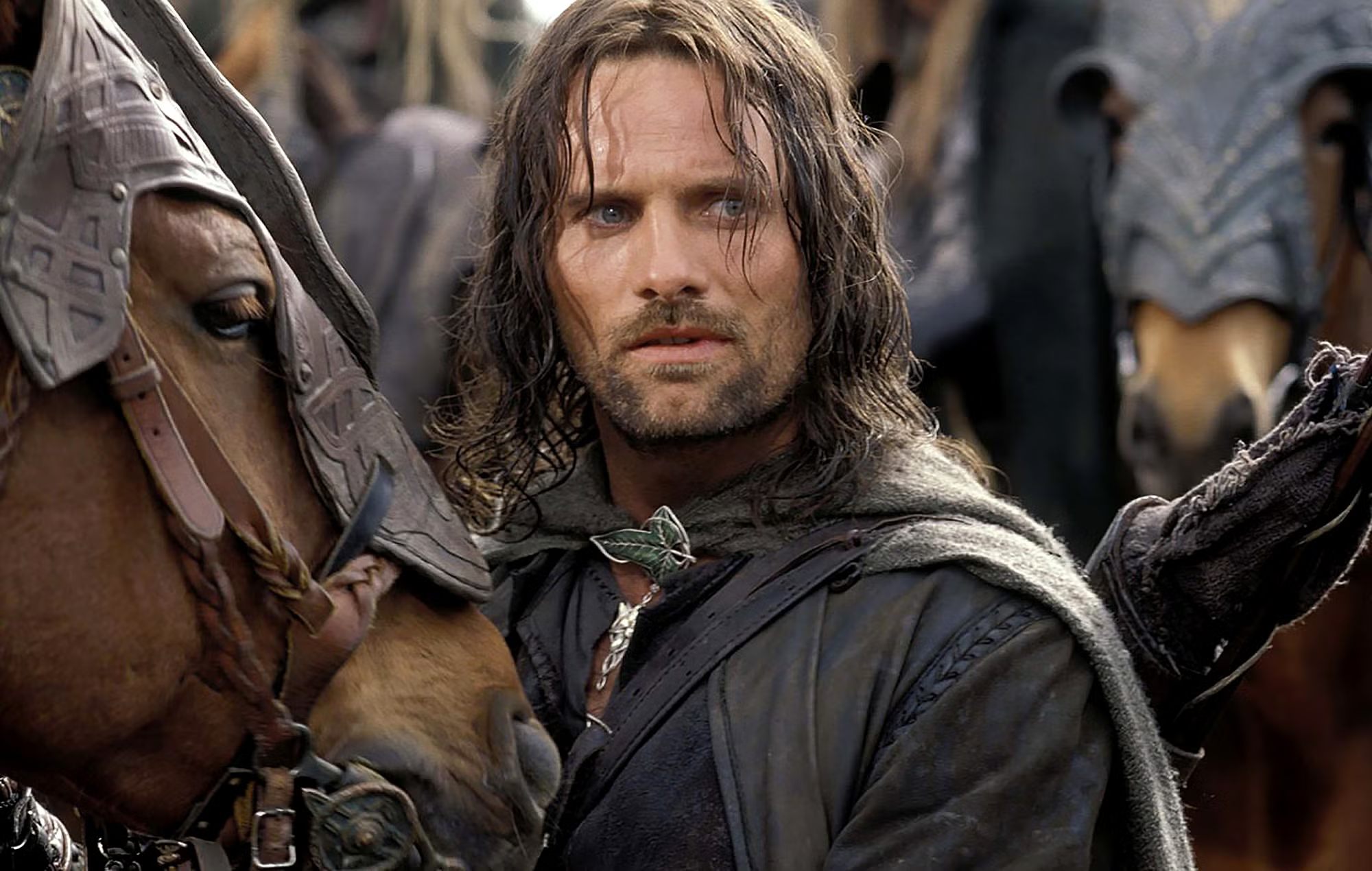
The films gave him an arc of reluctance; the books gave him open grief and healing hands. You can argue about which portrait is truer. But notice what neither version contains: cruelty, dominance for its own sake, contempt for the gentle, or shame at tears. Two different tellings, one conclusion. That is what conviction looks like when a story knows what it believes.
And in the films’ finest small moment, at Helm’s Deep, surrounded by farmers and boys conscripted to die, Aragorn does not lecture the frightened child beside him on hardness. He kneels to his eye level and hands him the only thing worth handing:
“There is always hope.” — The Lord of the Rings: The Two Towers (2002)
The King Who Bows
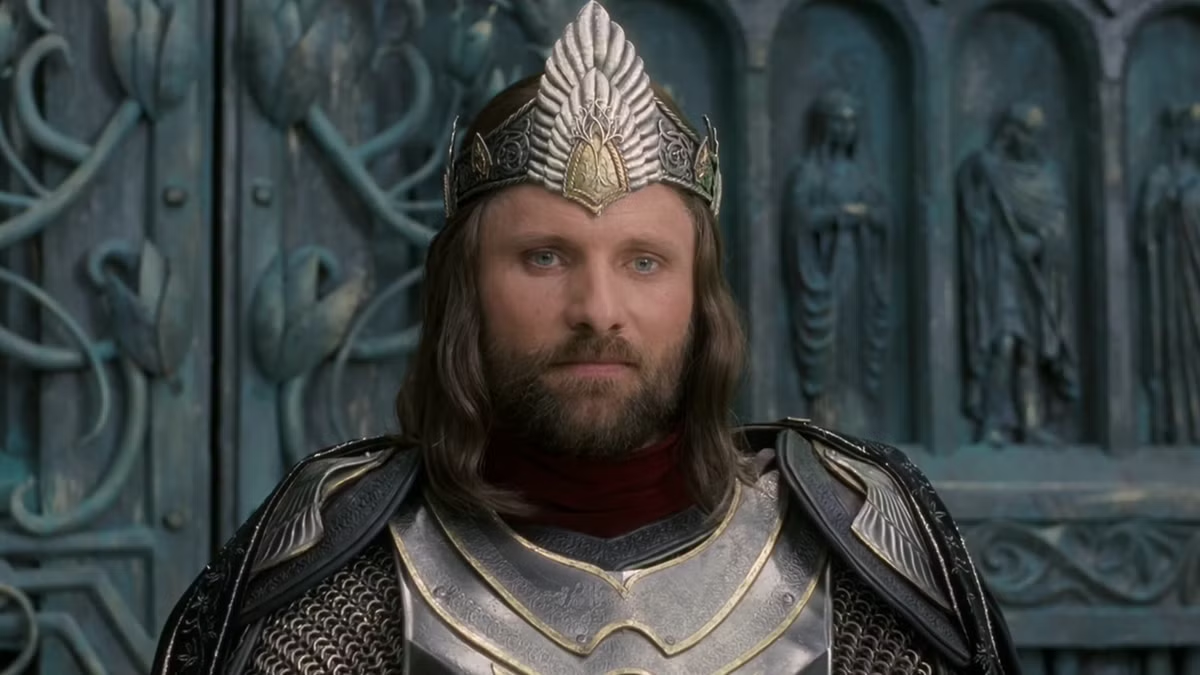
The last image. Crowned at last, standing before the assembled might of his kingdom, Aragorn comes to four small hobbits, and as they begin to kneel to him, he stops them:
“My friends, you bow to no one.” — The Lord of the Rings: The Return of the King (2003)
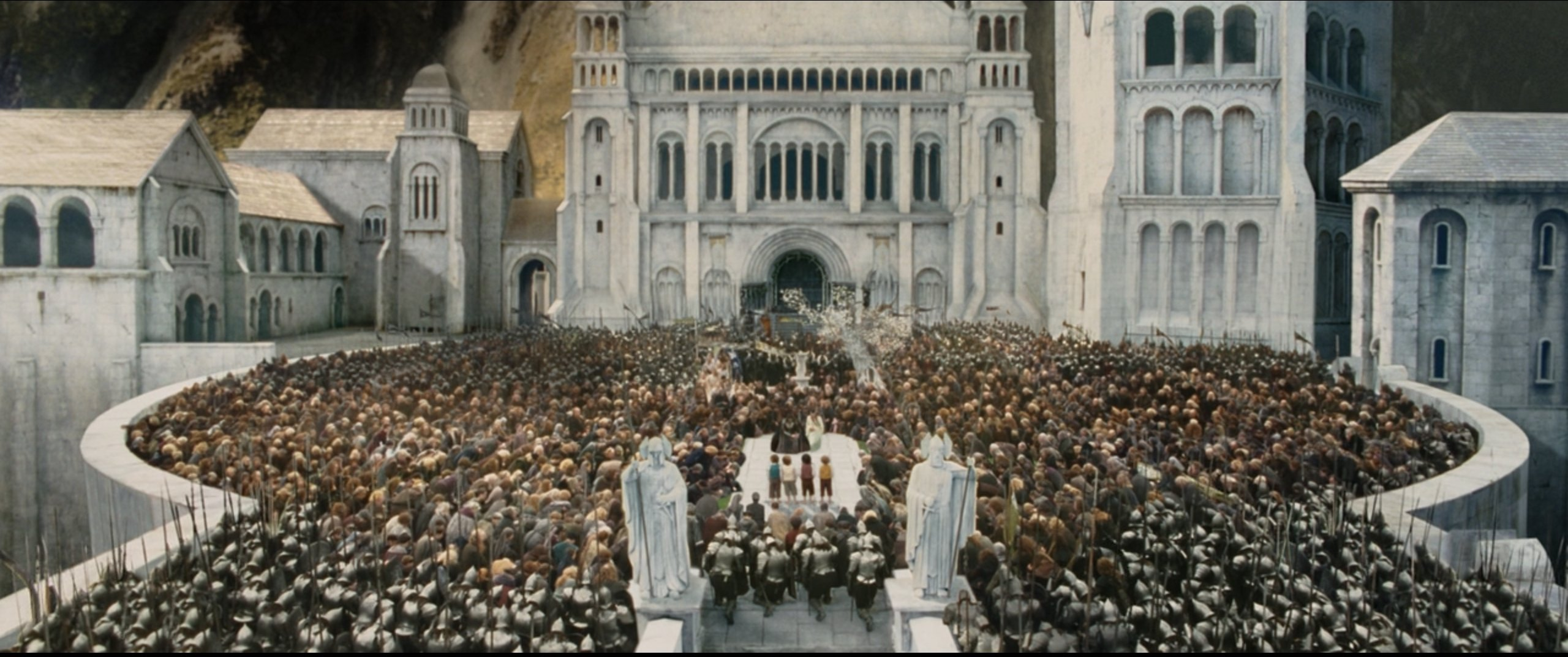
And the king kneels to the gardener. Power, at the summit of its arc, bending its knee to the small and the faithful. There is a modern proverb for this, passed around in many forms, that you can tell everything about a person by whether they treat the janitor the same as the CEO; its verified ancestor belongs, of all people, to Malcolm Forbes, the magazine publisher who spent his career ranking fortunes, and who said you can judge a man’s character by “how he treats those who can do nothing for him.” The hobbits, in the eyes of the assembled court, can do nothing for the new king. That is precisely whom he kneels to. No scene in the trilogy has drawn more tears from audiences, many of them from men who could not have told you why.
Be One

What the moment calls for is a resurgence: men who are warriors on the inside and gardeners in their days. Providers. Family men, oriented toward the people entrusted to them rather than the mirror. Secure men who commit to their partners, their children, their brothers, their word. Men who can look at their parents’ failures without flinching, and still choose to love them, and thank them for doing the best they could with what they had. Aragorn is not the answer to the question of which side of the masculinity war is right. He is the demonstration that the war itself is the mistake, and he has been standing in the middle of our divide, one foot in strength and one in tenderness, for seventy years.
Two thousand years before him, another king, Marcus Aurelius, a Roman emperor writing privately in an army camp, grew impatient with debates very much like this one, and closed them, in his Meditations, with a single line:
“Waste no more time arguing about what a good man should be. Be one.” — Marcus Aurelius, Meditations (c. 170 CE)
The world is not short of noise about what a man should be. It is short of Aragorns.


Vincent Minatozaki
Vincent is the founder and Editor-in-Chief of 1000 Libraries Magazine. He is a Paris-born ex-corporate turned bookseller and philosopher, on a global mission to spread the joy of physical books in our age of digital technology.