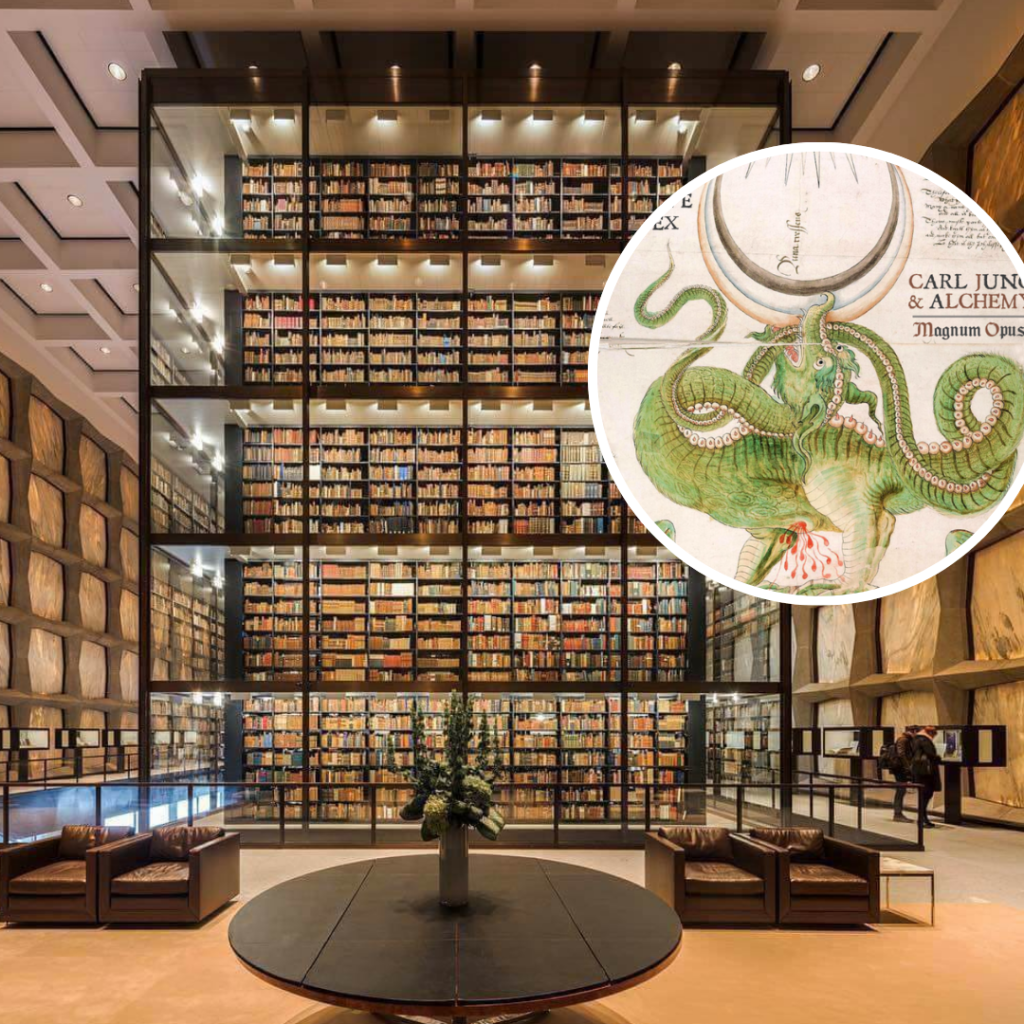

From Isaac Newton’s alchemy notes to centuries-old occult texts, Yale’s mysterious Mellon Collection is stranger than fiction.
Imagine walking into one of the most prestigious universities in the world and discovering that hidden among its scholarly treasures is a collection of books devoted not to mathematics, philosophy, or history, but to alchemy, magic, and the occult.
It sounds like the opening scene of a fantasy novel. But it’s completely real.
Tucked away at Yale University’s famous Beinecke Rare Book & Manuscript Library is the Mellon Alchemy Collection, one of the largest and most important collections of alchemical manuscripts in the world.
The Secret Library Hidden in Plain Sight
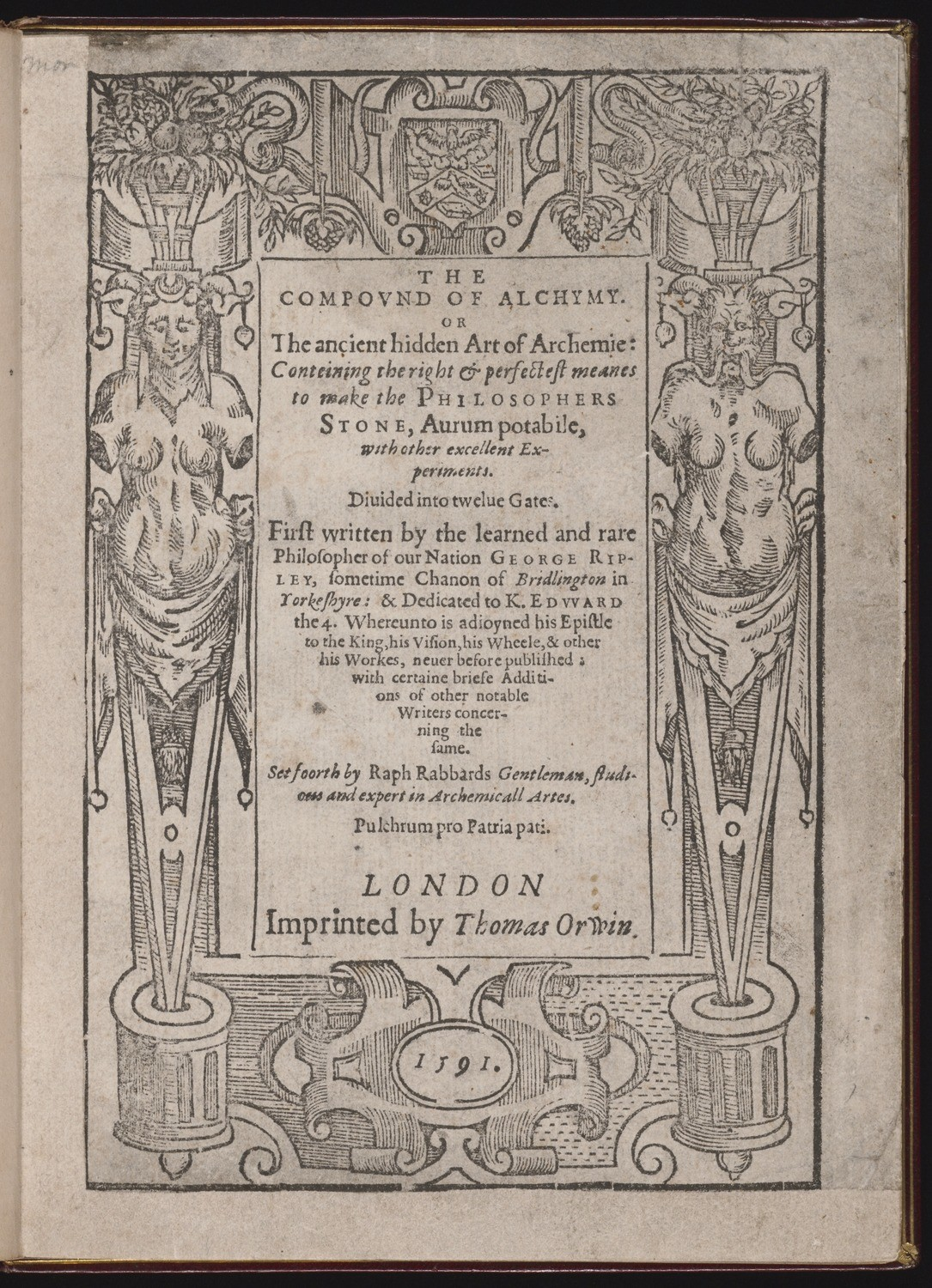
The Mellon Alchemy Collection is one of the world’s most important collections of alchemical manuscripts. It contains more than 300 medieval and Renaissance manuscripts, along with hundreds of rare printed books devoted to alchemy, astrology, magic, and other esoteric subjects.
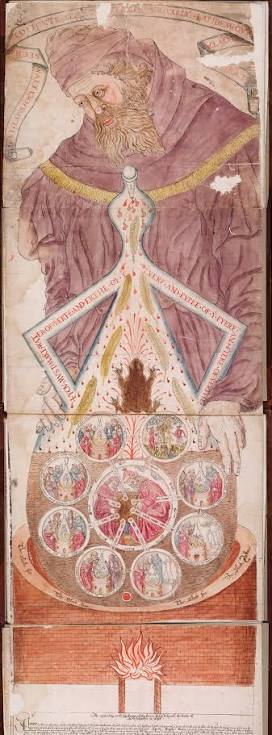
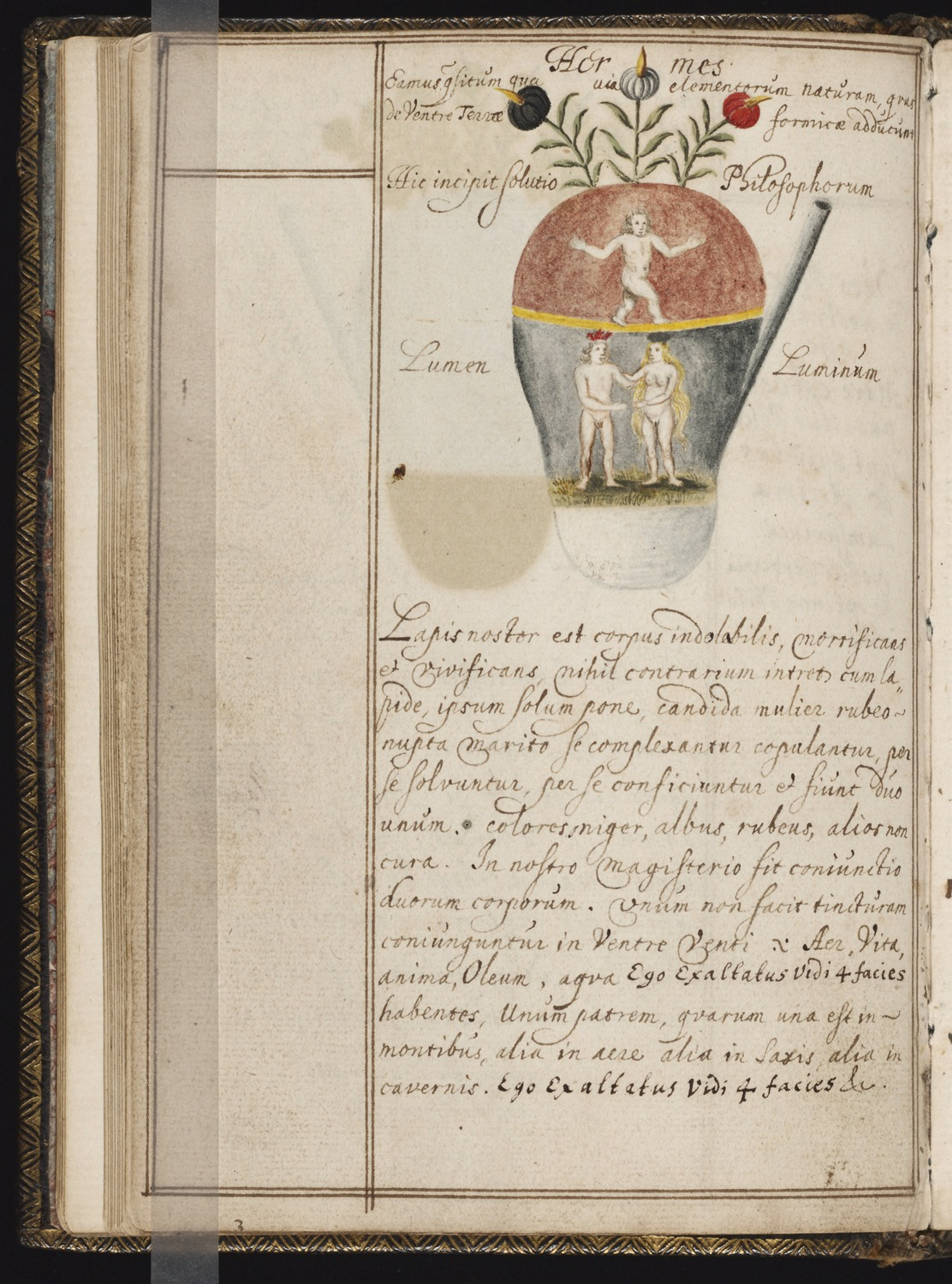
They contain recipes for creating the legendary Philosopher’s Stone, instructions for transforming base metals into gold, and elaborate symbolic diagrams that medieval readers believed concealed profound secrets about nature and the universe. Some manuscripts even discuss communicating with spiritual entities and unlocking hidden knowledge.
For centuries, these texts were sought after by kings, nobles, scholars, and secretive practitioners who believed they held the key to wealth, power, wisdom, or even immortality.
A Book You Have to See to Believe
If you want to grasp just how strange and beautiful the vault’s contents can be, look no further than its showpiece: the Ripley Scroll.
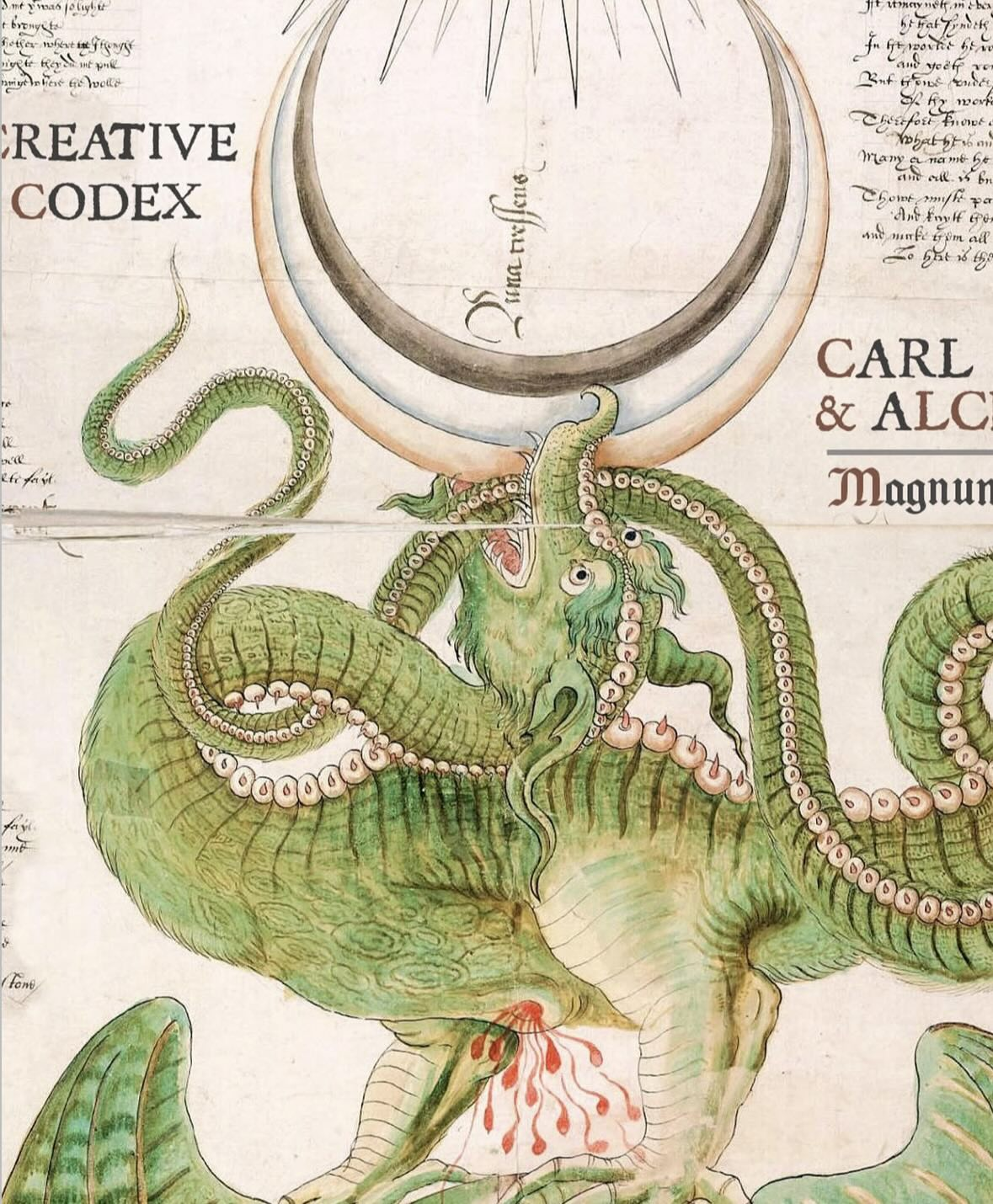
Cataloged at Yale as Mellon MS 41 and made in England around 1570, the Ripley Scroll is exactly what it sounds like — a scroll, but an astonishing one, stretching nearly twenty feet in length. Unrolled, it reveals a cascade of vividly painted emblems in ink and watercolor: dragons, suns and moons, robed figures, fountains, and cryptic verse attributed to the fifteenth-century English alchemist George Ripley, all meant to encode the secret stages of making the Philosopher’s Stone.
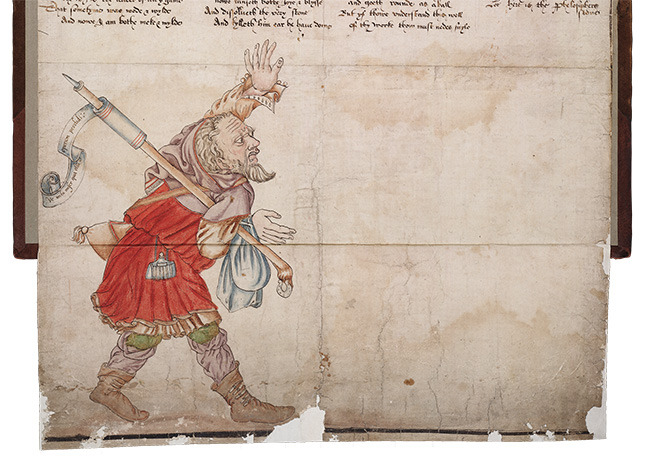
And it ends on a surprisingly human note. At the very bottom of the scroll, in the empty space where the miraculous Stone should have appeared, an artist painted a ragged beggar — mouth agape, hand raised in astonishment — carrying a banner that reads, in Latin, “Woe is me, a miserable man who has completely wasted my time and trouble.” After all that gorgeous symbolism, the scroll closes with a wry joke about alchemy’s most common outcome: failure. It is, in a sense, the whole tragicomedy of alchemy captured on a single sheet.
The Voices Inside the Vault
The Ripley Scroll is the star, but it is far from alone. The Mellon Collection is a who’s-who of alchemical thought across the centuries.
Among its highlights are manuscripts connected to some of the most famous names in the tradition: Paracelsus, the rebellious sixteenth-century physician who reshaped how Europe thought about medicine and matter; Ramon Llull, the medieval Catalan philosopher whose name became attached to a whole body of alchemical writing; and Johann Hollandus, the semi-legendary Dutch alchemist.
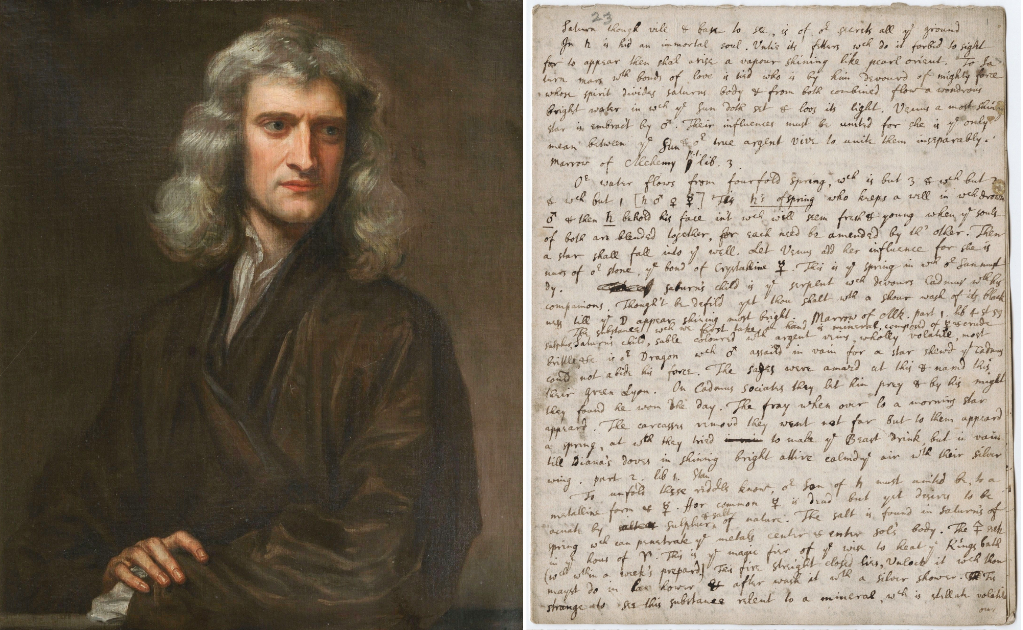
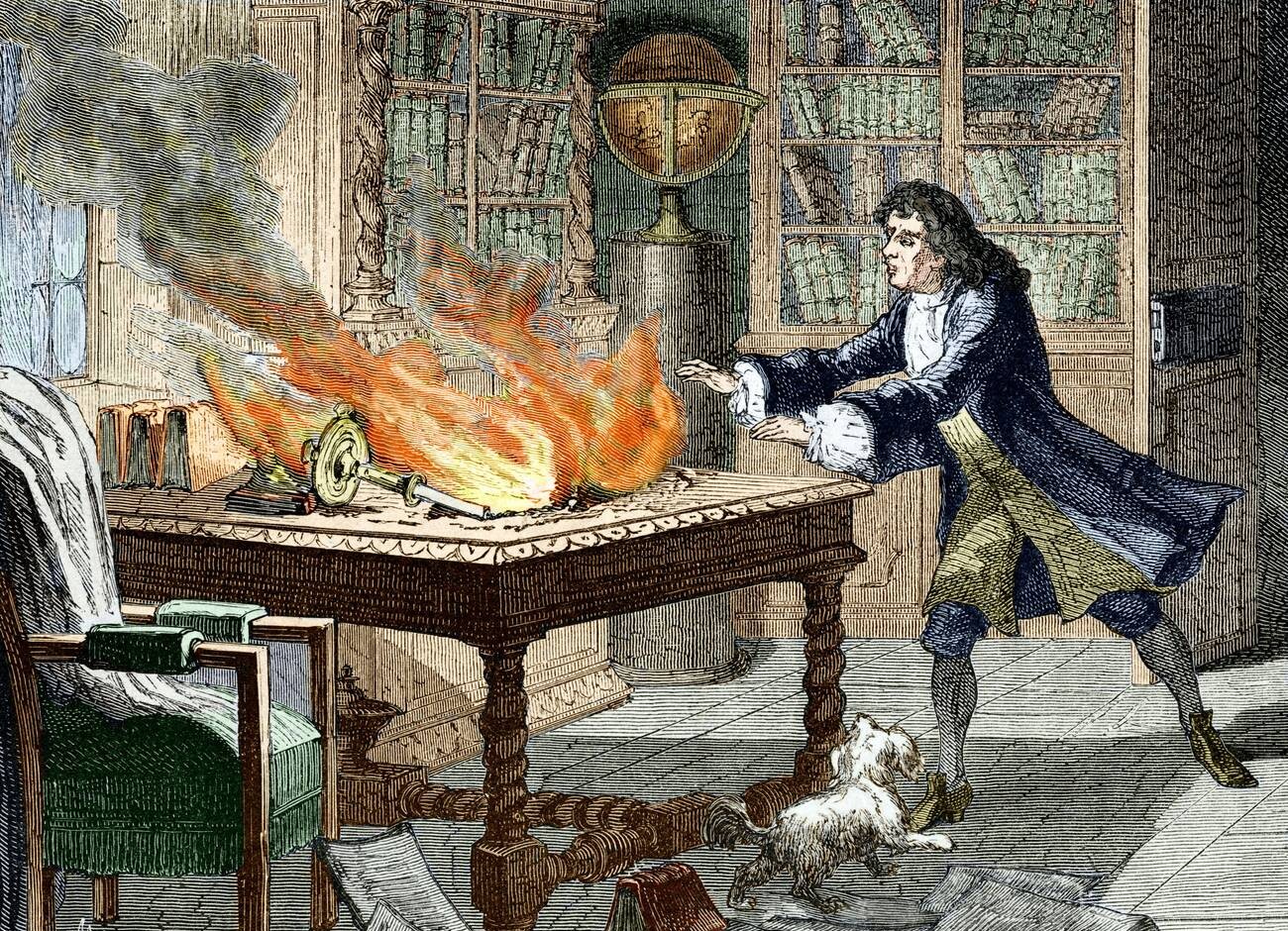
But perhaps the most surprising name in the vault belongs to one of history’s greatest scientists. Most people know Sir Isaac Newton as the man who explained gravity and established the laws of motion, one of the founders of modern science. What far fewer realize is that Newton spent decades immersed in alchemy, devoting an enormous amount of time to recording experiments, transcribing and annotating alchemical texts, and searching for hidden knowledge. His notebooks reveal a side of the great physicist that rarely appears in school textbooks.
The Mellon Collection holds a piece of exactly this hidden work: Newton’s own alchemical reading notes, dated around 1700, in which he copied out and studied passages on the properties and preparation of metals. It may seem strange that the father of modern physics was fascinated by alchemy, but in his lifetime the boundary between science and mysticism was far less fixed than it is today.
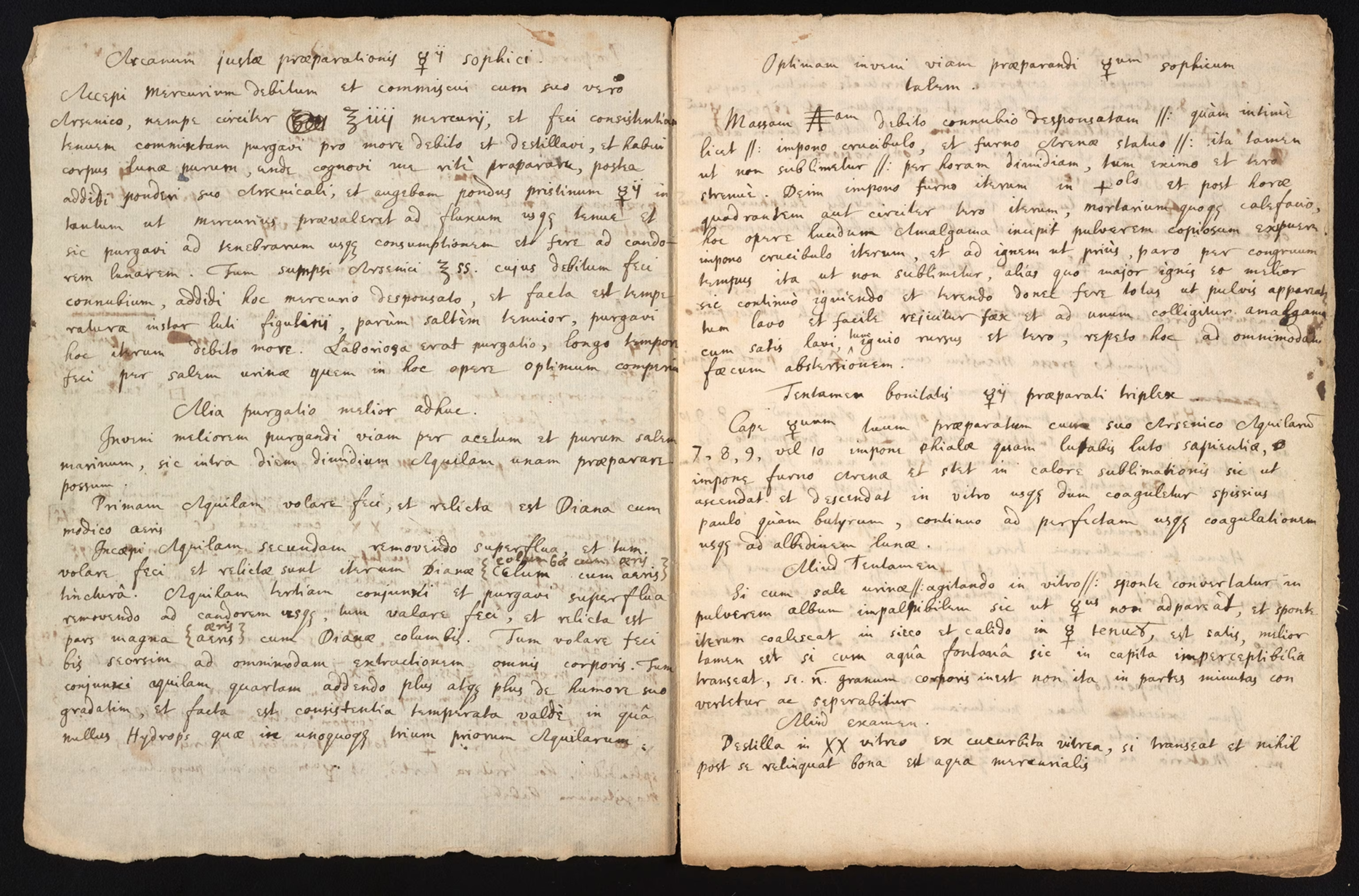
Many of the manuscripts are working documents rather than showpieces: laboratory notebooks, lists of substances, and recipe compilations copied and annotated by practicing alchemists. Others are dense miscellanies that stitch together the writings of authorities like Geber and Arnold of Villanova. Read together, they show alchemy not as a single doctrine but as a living, centuries-long conversation carried out in cryptic language and hand-copied secrets.
Why Alchemy Was Such a Big Deal
To understand why a collection like this matters, it helps to set aside the modern caricature. Today, alchemy is often portrayed as a failed attempt at chemistry — bearded men fruitlessly trying to turn lead into gold. But the reality is much more complicated.
For much of the medieval and Renaissance periods, alchemy was a serious intellectual pursuit that blended science, philosophy, religion, and mysticism into a single discipline. Alchemists believed that understanding the hidden processes behind matter could reveal the fundamental workings of creation itself.
Many of them were searching for spiritual enlightenment as much as material wealth. They viewed the transformation of metals as a symbol of personal transformation. Like the lead they were trying to perfect, they wanted to undergo a journey from imperfection to perfection. The Mellon manuscripts, with their fusion of chemistry and Christian imagery, prayer and procedure, capture that dual quest better than almost any other collection.
The Woman Behind The Collection
The existence of this collection can largely be credited to one woman whose name most people have never heard. Mary Conover Mellon was the wife of philanthropist Paul Mellon, heir to one of America’s great fortunes. In the 1930s and 1940s, she became deeply interested in alchemy after encountering the ideas of Swiss psychiatrist Carl Jung.
Jung viewed alchemy in a unique way. Rather than seeing it as a failed science, he believed its symbols reflected psychological processes and the transformation of the human mind. To Jung, alchemy represented a rich symbolic language for understanding human consciousness.

Mary Mellon was captivated. Using her resources and determination, she began acquiring rare alchemical manuscripts from around the world. Many of these texts were centuries old and existed in only a handful of copies. Over time, she assembled an extraordinary collection that would become one of the most significant repositories of alchemical literature anywhere.
Tragically, Mary died in 1946 at just 41 years old. After her death, her husband donated her collection to Yale University as a tribute to her passion and scholarship.
Why It Still Matters and How You Can See It
These aren’t just curiosities behind glass. For historians of science, the Mellon manuscripts are a window into the messy, fascinating origins of modern chemistry, back when experiment, symbolism, and spirituality were all tangled together. Scholars still travel to New Haven to pore over them, and researchers like the historians behind projects such as “The Chymistry of Isaac Newton” have shown that these encoded recipes often describe real, reproducible chemical procedures rather than mere fantasy.
Best of all, you don’t need to be a Yale professor to look. The Beinecke welcomes visitors, and its ground-floor and mezzanine exhibition spaces are open to the public free of charge, with the reading room available to registered researchers. Even from your couch, much of the collection is now digitized and viewable online through Yale’s digital library, including the Ripley Scroll itself, photographed segment by segment so you can scroll through all twenty feet of its strange imagery.
The Collection Today
The collection now resides in Yale’s famous Beinecke Rare Book & Manuscript Library, a building that looks almost as mysterious as the books it contains.
Completed in 1963, the six-story structure is famous for its translucent marble walls. During the day, sunlight filters through the stone, bathing the interior in a soft golden glow while protecting fragile manuscripts from direct exposure.

Naturally, a building dedicated to safeguarding priceless treasures has generated its share of legends. One persistent rumor claims that if a fire breaks out, the library’s systems would seal the building and pump out the air, saving the books at the expense of anyone trapped inside. It’s a wonderfully eerie story, and, happily, a false one. Yale staff have repeatedly debunked it: the library does use a special “clean agent” gas system instead of book-damaging sprinklers, but the gases are safe to breathe and are designed to stop a fire without harming the people in the room.

What remains is something better than any myth. Nearly a century after a curious young woman first fell under alchemy’s spell, her collection still glows quietly inside its marble box on the Yale campus, a reminder that the line between magic and science was once beautifully, mysteriously blurred, and that the urge to transform ourselves and our world is as old as human curiosity itself.

Millie Ramm
Millie has been writing since she was a child, and has spent more time with her nose in books than anywhere else. She has been ghostwriting novels and editing for the past few years, and when not working she is curled up with her cats, looking for her next read.