
Happy 127th Birthday, Ernest Hemingway! Today, we celebrate the author of The Old Man and the Sea, whose words reshaped modern literature.
Few writers have left a mark on literature quite like Ernest Hemingway. Known for his crisp prose, adventurous lifestyle, and unforgettable novels, Hemingway helped redefine modern storytelling in the 20th century. With July 21st being his 127th birthday, it’s the perfect time to look back at the life, works, and lasting legacy of the Nobel Prize-winning author whose influence continues to shape literature today.
Celebrating a Giant of American Literature
Ernest Miller Hemingway was born on July 21, 1899, in Oak Park, Illinois. He would go on to become a literary legend whose work continues to inspire readers, writers, and adventurers more than a century later.
:max_bytes(150000):strip_icc()/ernest-hemingway-514896254-5c91ba79c9e77c0001e11e36.jpg)
From war zones to fishing boats, from Paris cafés to African safaris, Hemingway lived the kind of life that most people only read about. Yet it was his ability to transform those experiences into unforgettable stories that cemented his place in literary history.
A Childhood That Shaped a Writer
Hemingway grew up in Oak Park as the second of six children and the eldest son, preceded only by his sister Marcelline. His father was a doctor, and his mother was a musician, giving him a childhood that balanced discipline, culture, and a love of the outdoors.
Some of the passions that would later define both his life and his writing emerged early. He learned to fish and hunt as a boy, activities that would appear repeatedly throughout his novels and short stories. Nature, survival, courage, and endurance all became recurring themes in his work.
As a teenager, Hemingway started to show signs of becoming a writer. He contributed to his high school newspaper and yearbook, sharpening the storytelling skills that would later make him famous.
The Newspaper Reporter Years
After graduating from high school in 1917, Hemingway skipped college and took a job as a reporter for The Kansas City Star. It turned out to be one of the most important decisions of his life.
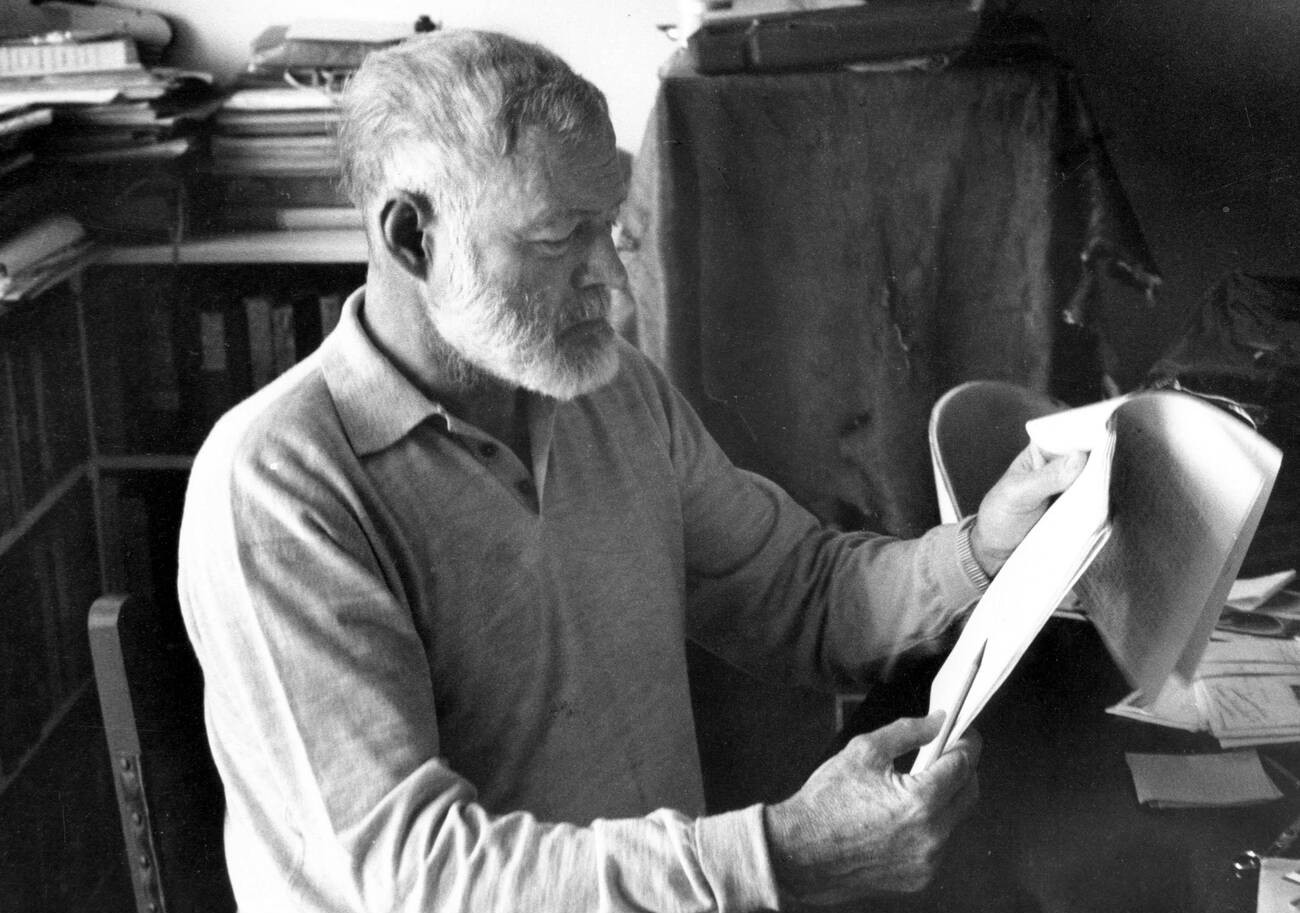
The newspaper required clear, direct writing. Reporters were taught to use short sentences, vigorous English, and precise language, and those lessons stayed with Hemingway forever. The voice that served him well as a reporter went on to become one of the most recognizable voices in modern literature.
Many literary scholars point to his journalism training as the foundation of the famous Hemingway style. That minimalist habit of stripping away everything unnecessary would eventually become his most celebrated literary technique, which he called the Iceberg Theory.
A Man Changed By War
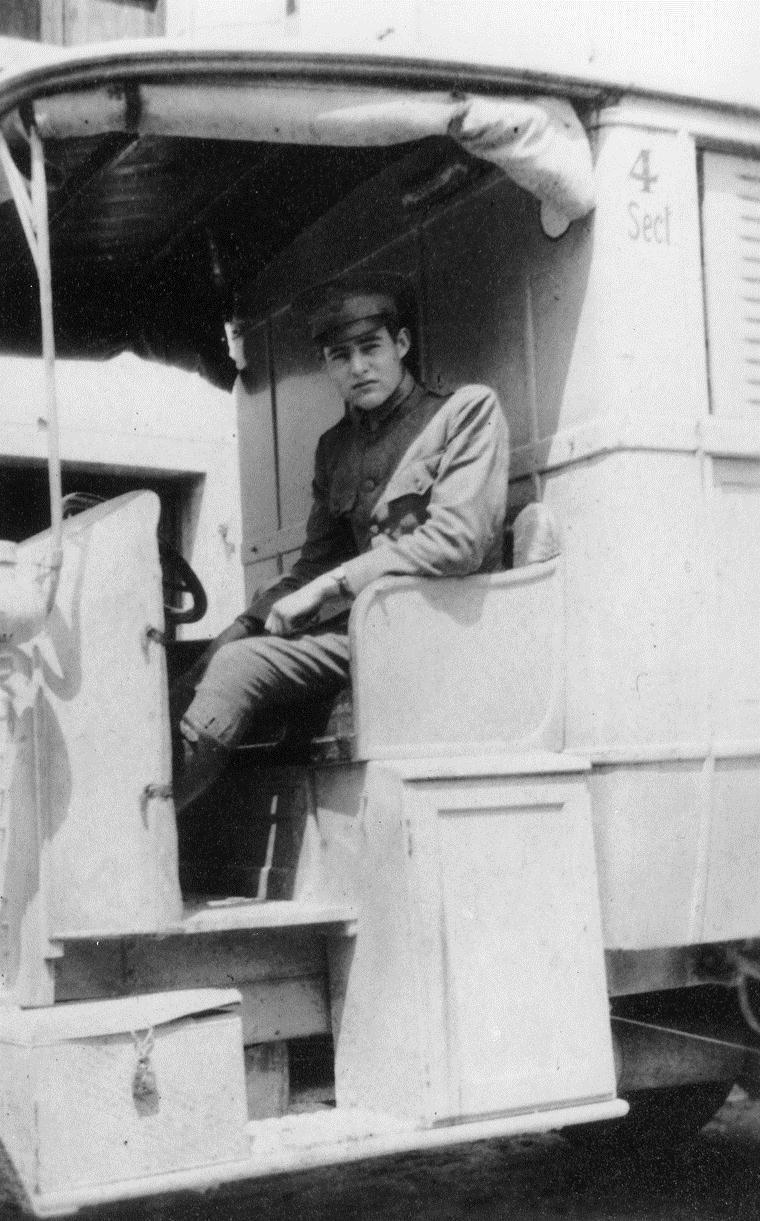
Like many young men of his generation, Hemingway’s life was dramatically altered by World War I. He was unable to enlist directly because of poor eyesight, but he volunteered as an ambulance driver for the American Red Cross in Italy. In 1918, he was seriously wounded by mortar fire while serving near the front lines. He survived, but the experience left both physical and emotional scars.
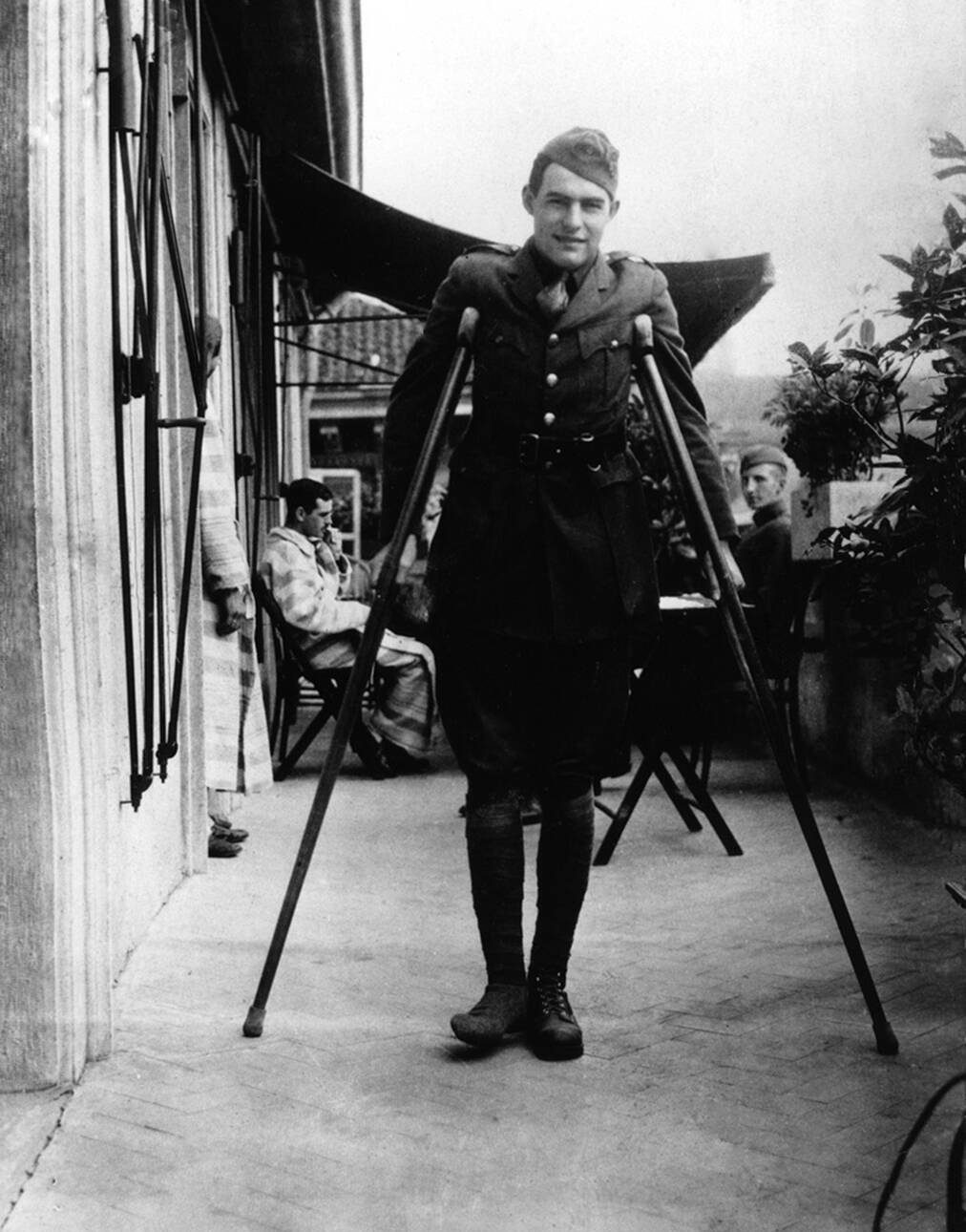
The war became one of the defining influences on his writing. Themes of loss, courage, trauma, and resilience appear throughout his work. Taking one look at his work shows that Hemingway understood firsthand the realities of conflict, and that authenticity and emotion gave his stories a power that readers continue to connect with today.
Time In Paris
The 1920s proved to be a turning point. Hemingway moved to Paris and joined a remarkable circle of writers and artists that included F. Scott Fitzgerald, Gertrude Stein, and Ezra Pound. This group became known as the “Lost Generation,” a term used to describe many young people whose worldviews had been shaped by the devastation of World War I.
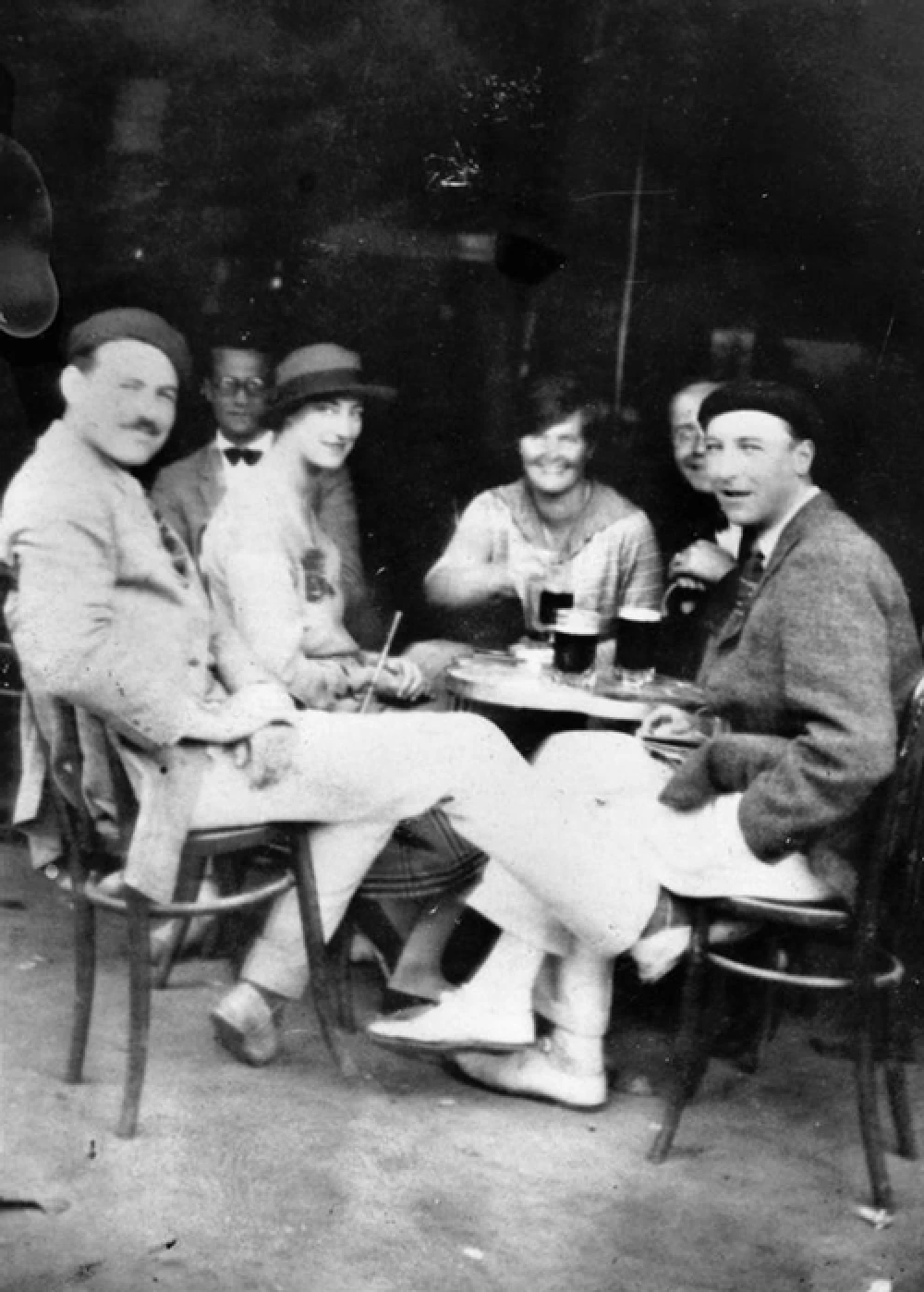
But Paris was more than just somewhere to meet other writers. For Hemingway, it was a creative laboratory. He spent his days writing in cafés, learning from fellow artists, and developing the style that would eventually make him famous. The city would leave such a lasting impression that he later wrote about the experience in his memoir A Moveable Feast, which was published posthumously in 1964, long after he had left the city.
The Iceberg Theory: Writing What You Leave Out
One of Hemingway’s most enduring contributions to literature was an idea. He called it the Iceberg Theory, or the “theory of omission”: the belief that a story’s deeper meaning should lie beneath the surface, never stated outright, but powerfully felt.
In his own words, from Death in the Afternoon (1932):
“If a writer of prose knows enough of what he is writing about, he may omit things that he knows and the reader, if the writer is writing truly enough, will have a feeling of those things as strongly as though the writer had stated them. The dignity of movement of an iceberg is due to only one-eighth of it being above water.”
This philosophy, rooted in his years as a journalist where brevity was a requirement, transformed how prose fiction was written in the 20th century. It is the reason a Hemingway sentence can feel simple on the surface and crushing underneath. Writers from Raymond Carver to Cormac McCarthy have cited his influence. It remains, arguably, the most practical theory of storytelling ever put into words.
Literary Breakthrough
Hemingway’s breakthrough came with The Sun Also Rises in 1926, a novel that captured the disillusionment and restlessness of the postwar generation. It quickly established him as one of America’s most promising young writers.

A Farewell to Arms (1929) drew on his wartime experiences and became one of the defining novels of the era. For Whom the Bell Tolls (1940), which Hemingway wrote after covering the Spanish Civil War as a war correspondent, remains one of his most celebrated works. His journalism and his fiction were always two sides of the same coin.
The Man Behind the Desk (Sort Of)
Away from the page, Hemingway was full of surprises. He was a passionate deep-sea fisherman who spent countless hours on the Gulf Stream off the coast of Cuba aboard his beloved boat, the Pilar. That obsession with the sea and with a solitary man testing himself against nature would eventually find its fullest expression in The Old Man and the Sea.
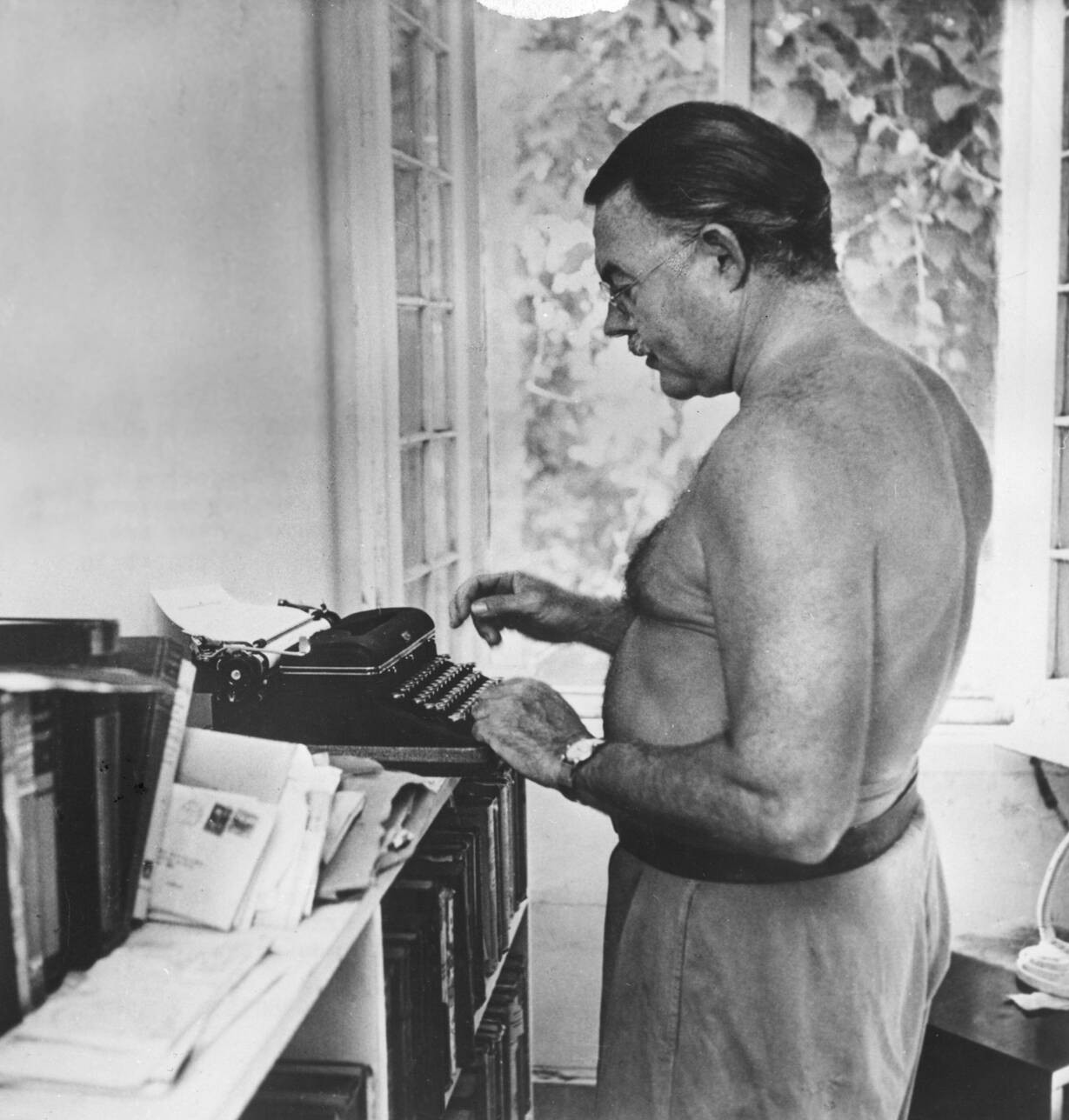
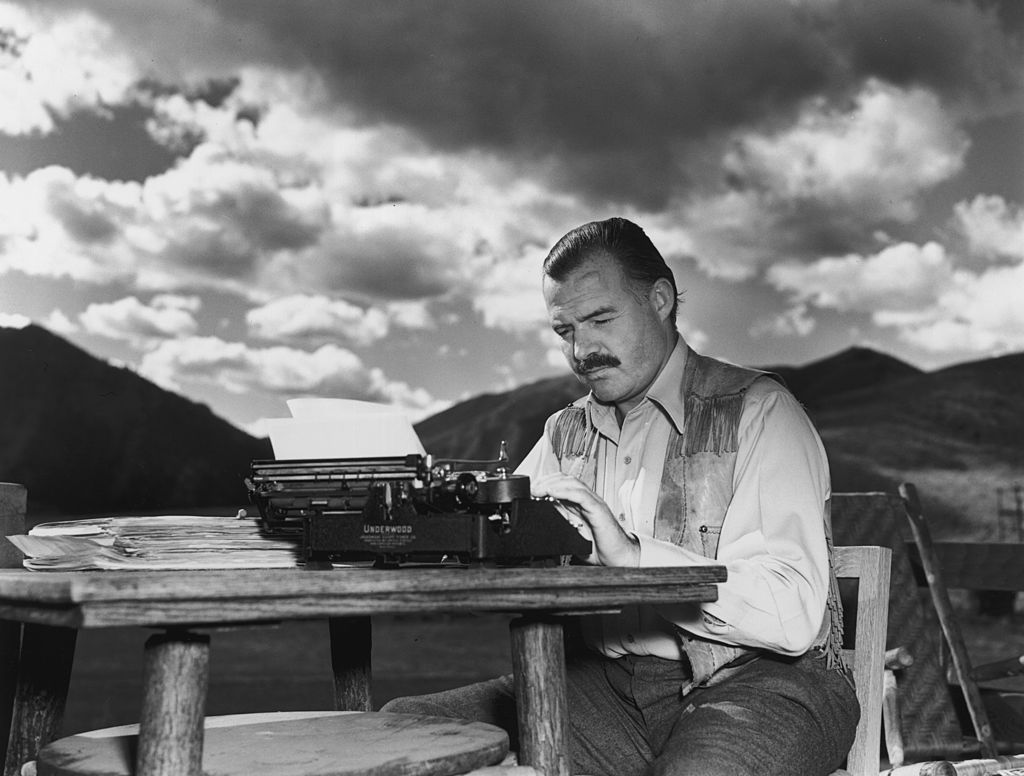
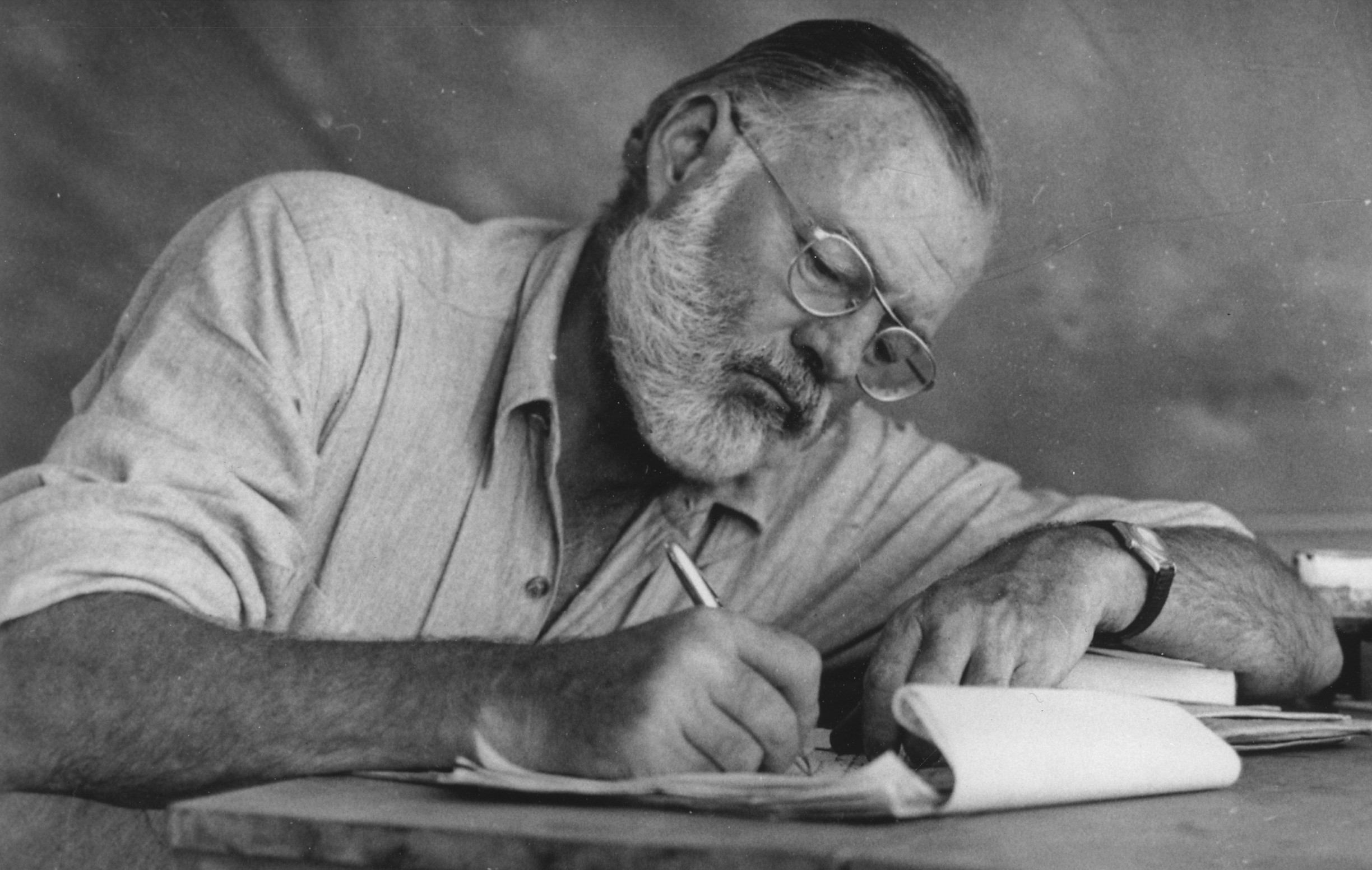
He famously wrote standing up, placing his typewriter on top of a chest-high bookcase rather than sitting at a desk. As The Paris Review documented in a celebrated interview, this was a working habit he kept from the very beginning. The typewriter rested on a wooden reading board with pencils and drafts spread across either side. He tracked his daily word count on a chart tacked to the wall, noting it was “so as not to kid myself,” and he considered 500 words a good day’s work.
He also kept a colony of polydactyl cats, which are cats born with extra toes, at his home in Key West, Florida. The original six-toed kitten, named Snow White, was a gift from a ship’s captain.

Today, approximately 60 cats descended from Snow White still roam the grounds of the Ernest Hemingway Home and Museum in Key West. They are cared for by a dedicated staff and named, following Hemingway’s own tradition, after famous people.
The Old Man and the Sea and the Nobel Prize
Then came The Old Man and the Sea in 1952. The novella tells the story of an aging Cuban fisherman engaged in an epic struggle with a giant marlin. On the surface, it is a simple story. Beneath that simplicity lies a profound meditation on perseverance, dignity, and human determination. It is, in many ways, the Iceberg Theory made flesh.
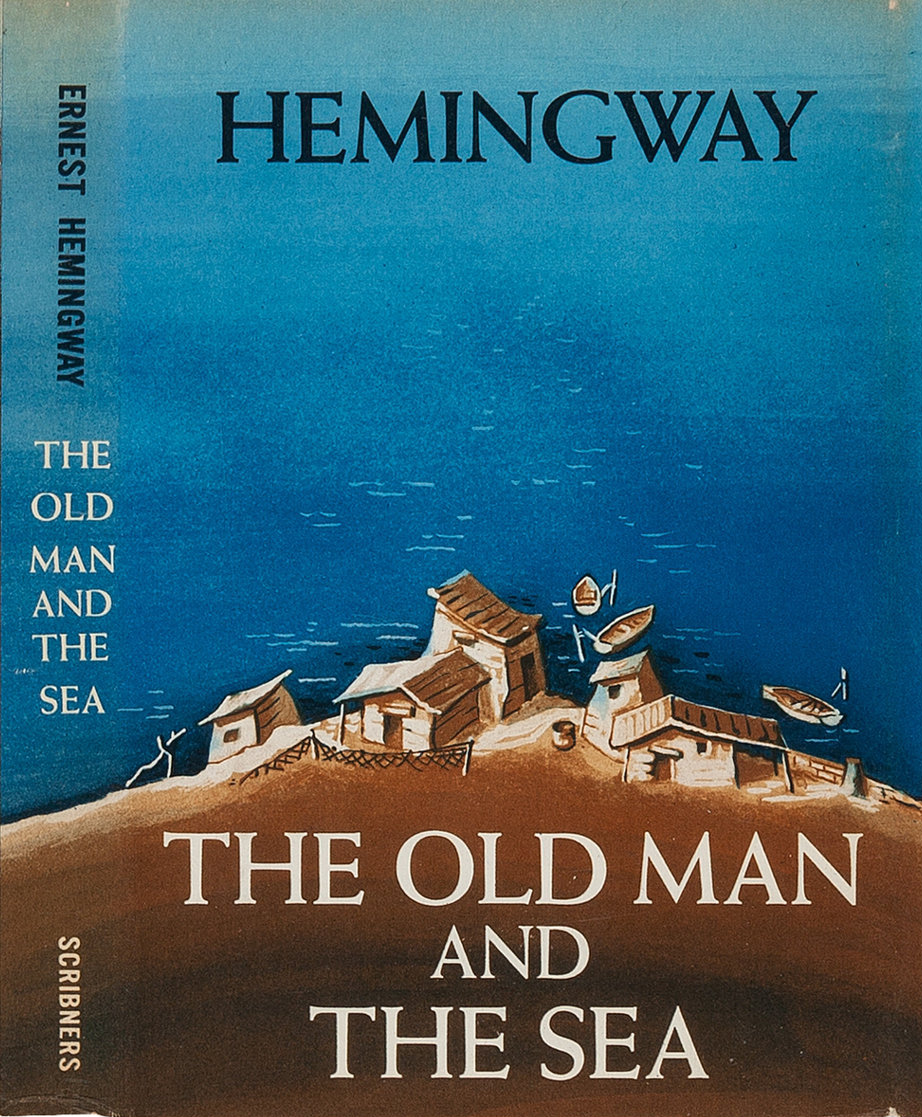
The book became a triumph, earning Hemingway the Pulitzer Prize in 1953. A year later, he received the Nobel Prize in Literature, securing his place among the greatest writers of all time.
Survival, Decline, and a Legacy That Endures
In January 1954, the same year he received the Nobel, Hemingway survived two separate plane crashes on consecutive days while on safari in Africa. He was so severely injured that early newspaper reports declared him dead. He survived, but the physical damage was immense, and the pain and health complications that followed marked the beginning of a long, difficult final chapter.
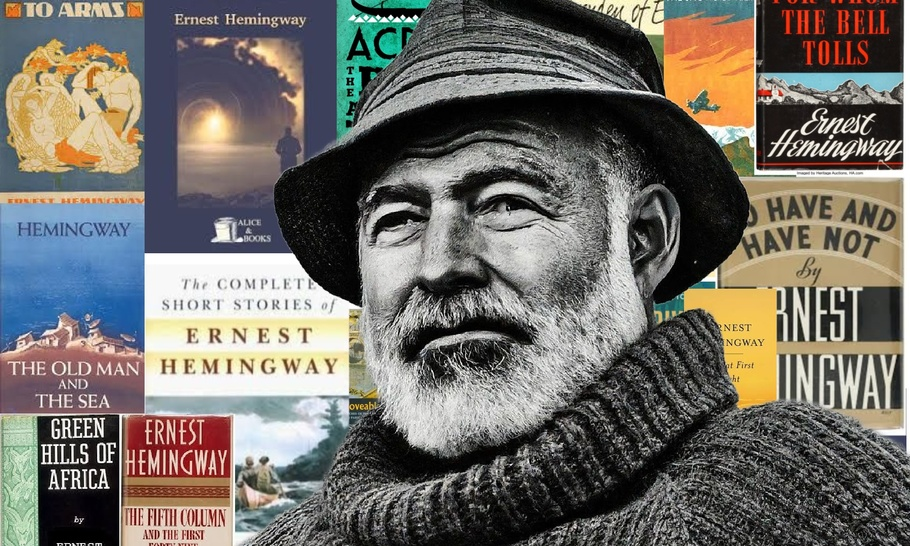
His later years were shadowed by declining health, depression, and creative struggle. He had long carried the weight of both physical pain and deep personal anguish, burdens that grew heavier as the years went on. On July 2, 1961, Hemingway passed away at his home in Ketchum, Idaho. He was 61 years old. His story is a quiet reminder that even the most outwardly adventurous lives can hold pain that the world does not see, and that strength and struggle are not opposites.
Three novels were published after his death: Islands in the Stream (1970), The Garden of Eden (1986), and True at First Light (1999), along with the memoir A Moveable Feast (1964).
Why Hemingway Still Matters
More than sixty years after his death, Hemingway’s influence on the written word is everywhere. The stripped-down sentence. The dialogue that says one thing and means another. The story that trusts its reader to feel what it does not spell out. These are the tools he forged, and they remain essential to how fiction is written today.
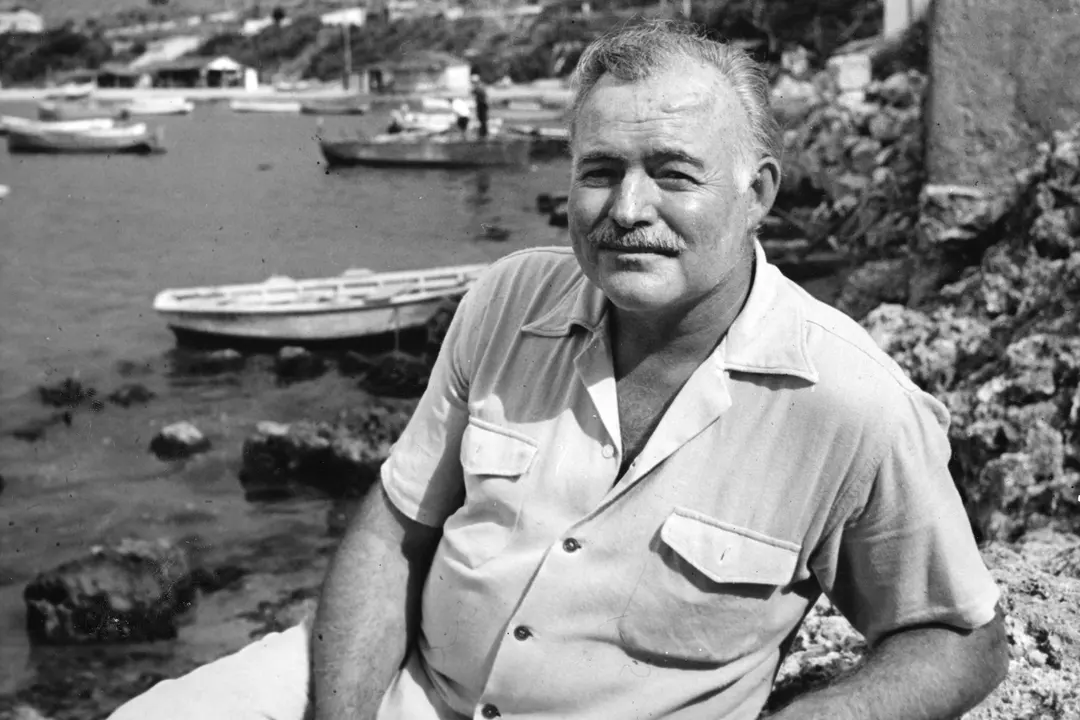
His Iceberg Theory did not just change literary style. It changed what readers expect from great writing. We have learned, partly because of him, to listen for what a story chooses not to say.
On his 127th birthday, the conversation keeps returning to what he knew: that the most powerful things in life, courage, grief, love, and endurance, are rarely spoken aloud. They live, like icebergs, mostly below the surface.

Millie Ramm
Millie has been writing since she was a child, and has spent more time with her nose in books than anywhere else. She has been ghostwriting novels and editing for the past few years, and when not working she is curled up with her cats, looking for her next read.