Why reading a book in the places where its story unfolds changes how you see both the book and the place, and what that has to do with slow travel, community, and the quiet pride of being an old soul.
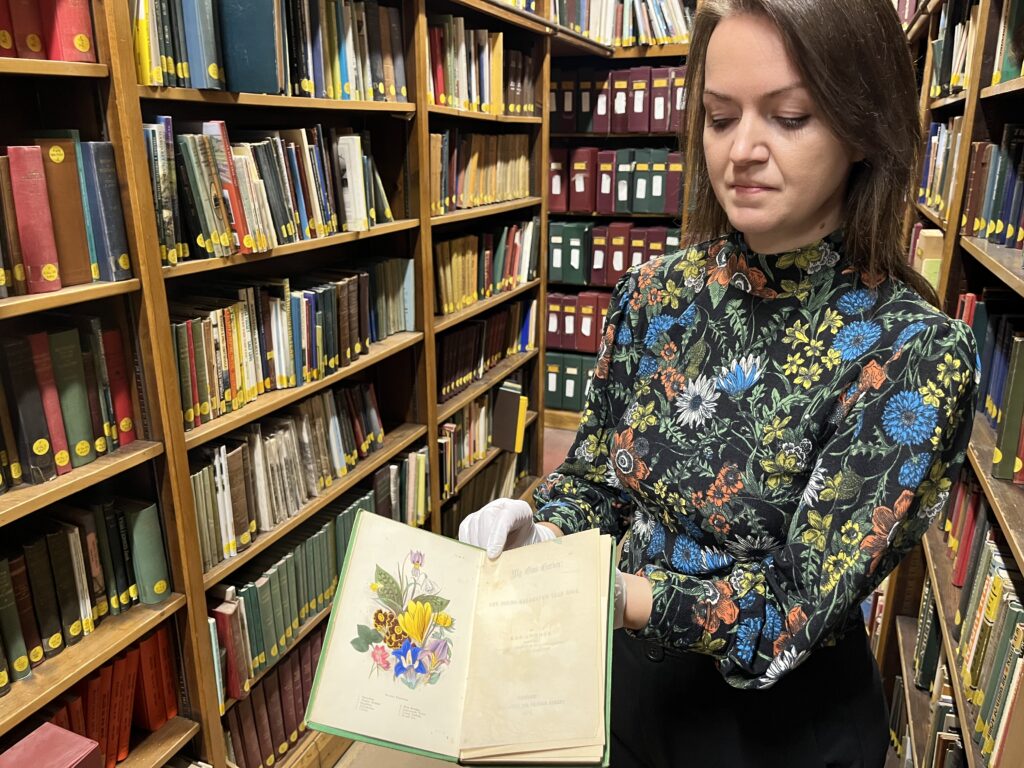
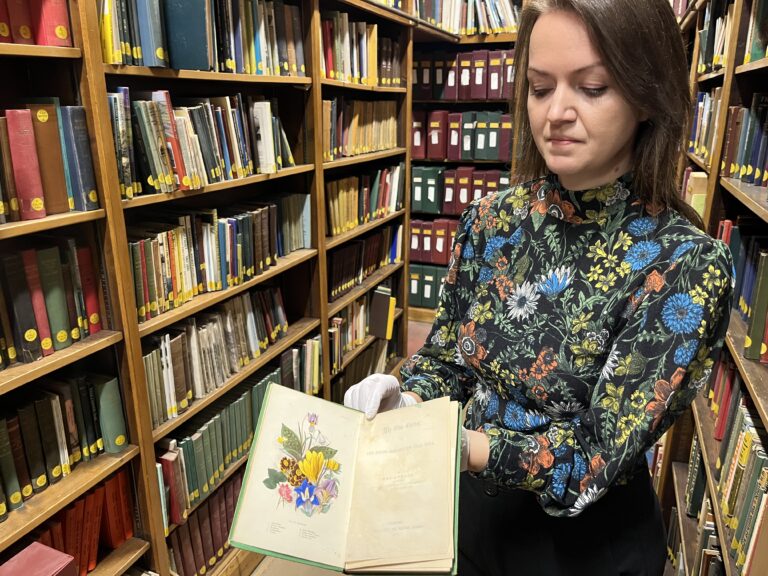
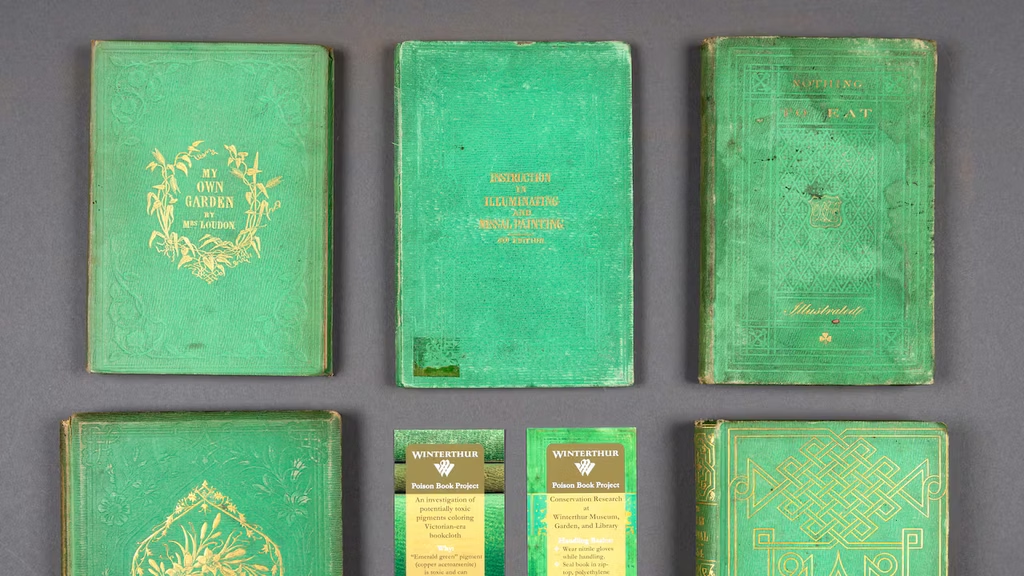
In 2019, a conservator at a museum in Delaware put a Victorian gardening book under her microscope and watched the green on its cover come away in flakes. The book was Rustic Adornments for Homes of Taste, published in London in 1857, a guide to ferns and birdcages for the middle-class parlour, and its cloth turned out to hold 1.42 milligrams of arsenic per square centimetre. A lethal dose for an adult is about a hundred milligrams. The cover was a sheet of poison wrapped around advice on keeping houseplants.
It was no accident. For about thirty years in the middle of the nineteenth century, publishers bound tens of thousands of books in that exact green, knowing roughly what it was made of, because it was the most beautiful colour anyone had ever been able to buy. The hunt for the survivors, now called the Poison Book Project, has since reached libraries on four continents.
Why Was the Green So Irresistible?
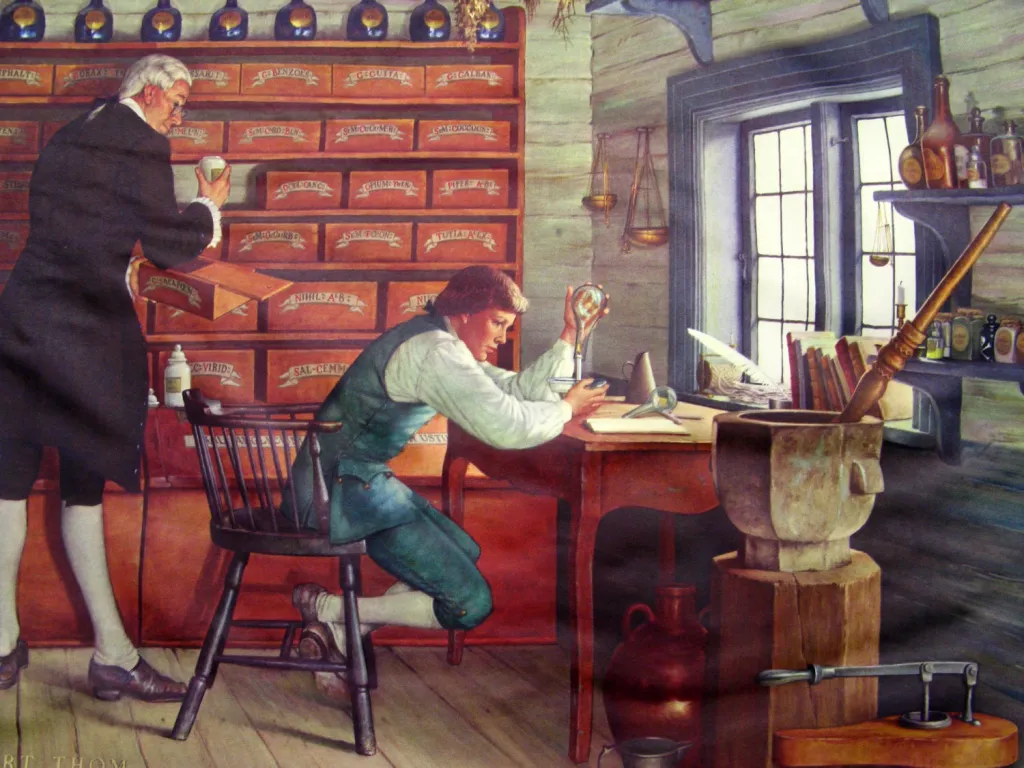
Green was the hardest colour to make. Plant dyes faded to brown within a season, and mineral greens were dull. In 1775, the Swedish chemist Carl Wilhelm Scheele combined copper with arsenic and produced a green of a brightness nobody had seen outside a leaf. He knew what he had made: a year before it went on sale, he wrote to a friend that buyers might want to be told it was poisonous.
In 1814, two manufacturers in Schweinfurt, Germany, improved the recipe into copper acetoarsenite, brighter still, almost permanent and cheap. Sold as Paris green, Vienna green, and emerald green, it was everywhere within a generation. By 1860 England alone was making more than 700 tons a year.
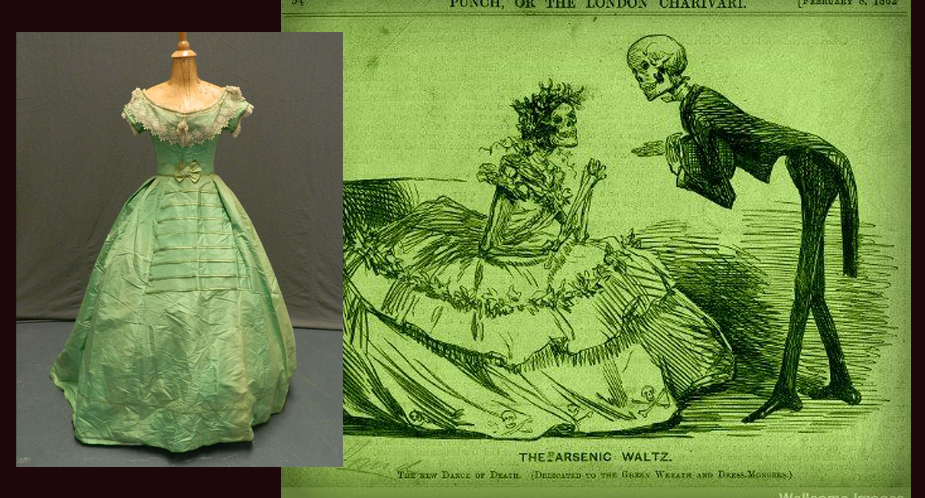
The Victorians put it on wallpaper, including William Morris’s, whose family fortune came partly from arsenic mines and who called the alarm “witch fever.” They put it on dress silks, on the artificial flowers women wore in their hair, on toys and candles. The new gaslight made it glow in evening rooms, and the craze for ferns and greenhouses made green the colour of refinement. The damage fell first on the makers. In November 1861, a nineteen-year-old London flower-maker, Matilda Scheurer, died after a fortnight of convulsions, vomiting green, the whites of her eyes green, telling her doctor that everything she looked at was green. Punch answered with a cartoon of two skeletons dancing “The Arsenic Waltz.”
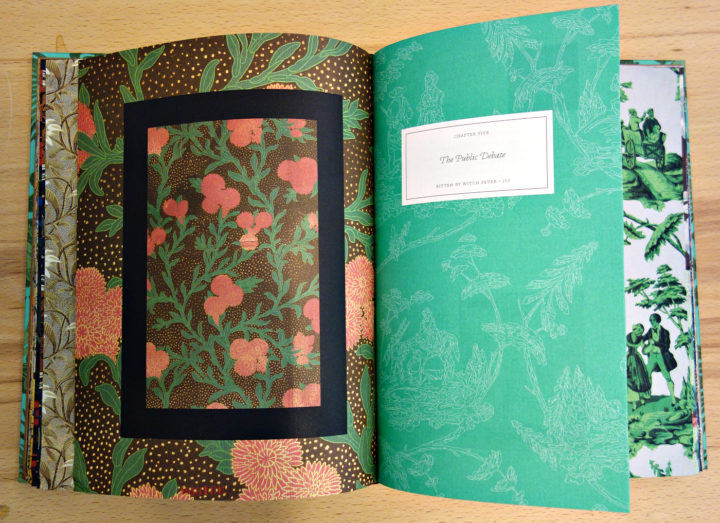
In 1874, a Michigan chemist, Robert Kedzie, bound a hundred copies of real arsenical wallpaper samples into a book called Shadows from the Walls of Death and sent them to libraries so people could match their own walls against it. Most librarians destroyed theirs. About six survive.
How Did It End Up on Books?
Until the 1820s, books were sold in paper wrappers, to be bound by the buyer, or in leather, which most people could not afford. Around 1821 the London publisher William Pickering and his binder Archibald Leighton began issuing small volumes in starched calico glued over boards, and by the 1840s the cloth-bound book, machine-made and ready to read, was the ordinary object it still is. Cloth could be dyed any colour, and colour sold books.
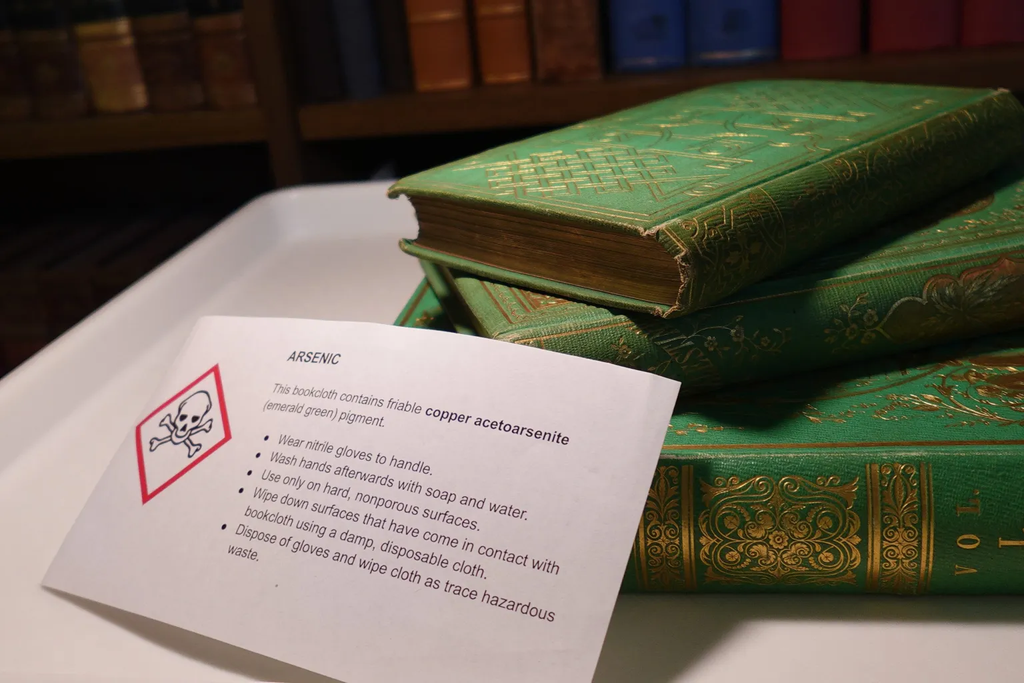
Emerald green took gilt lettering beautifully, held its colour in a shop window where other dyes faded, and matched the rooms the books were going into. The 1850s were its peak: gardening manuals, poetry, school prizes and Christmas gift books, mostly British and American. By the mid-1860s the pigment’s reputation had caught up with it, and publishers moved on.
The books did not. Dresses were thrown out, walls repapered, the sweets eaten. A book of 1855 in emerald green cloth is, in most cases, still in emerald green cloth, still shedding and still being handled.
What Is the Poison Book Project?
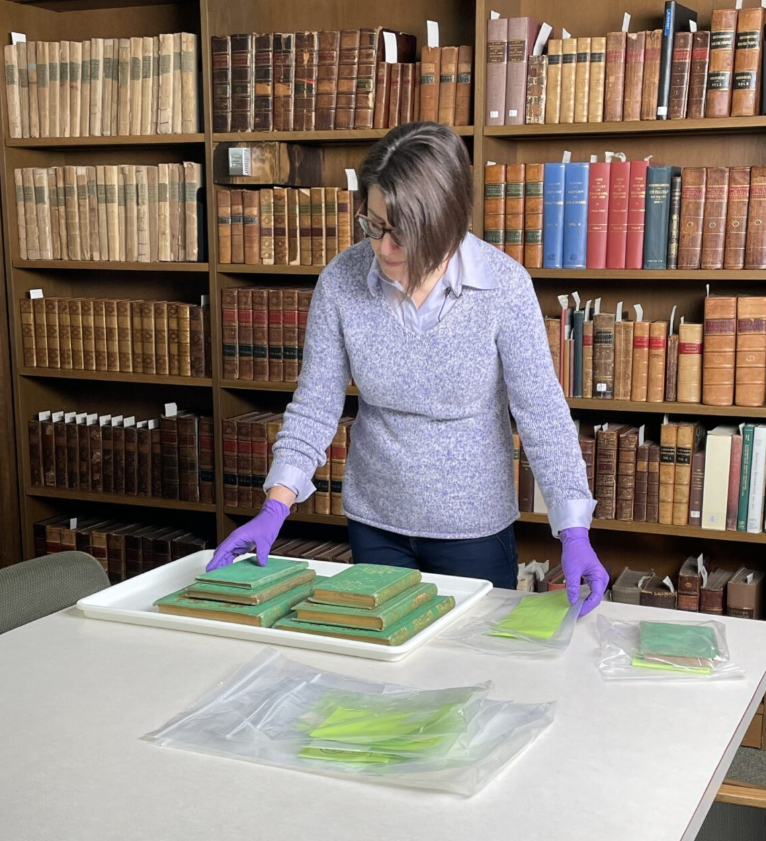
Melissa Tedone, head of library conservation at the Winterthur Museum, took the flaking 1857 book to her colleague Rosie Grayburn, who tested it with X-ray fluorescence, which reads the elements in a surface without touching it, and found copper and arsenic. Within months they had found nine more at Winterthur and 28 at the Library Company of Philadelphia, and in 2019 launched the Poison Book Project with the University of Delaware, publishing a database of confirmed titles so other libraries could check their shelves. The list passed 300 in 2024. About half the books tested also carry lead, from chrome yellow, and the period’s vivid reds contain mercury.
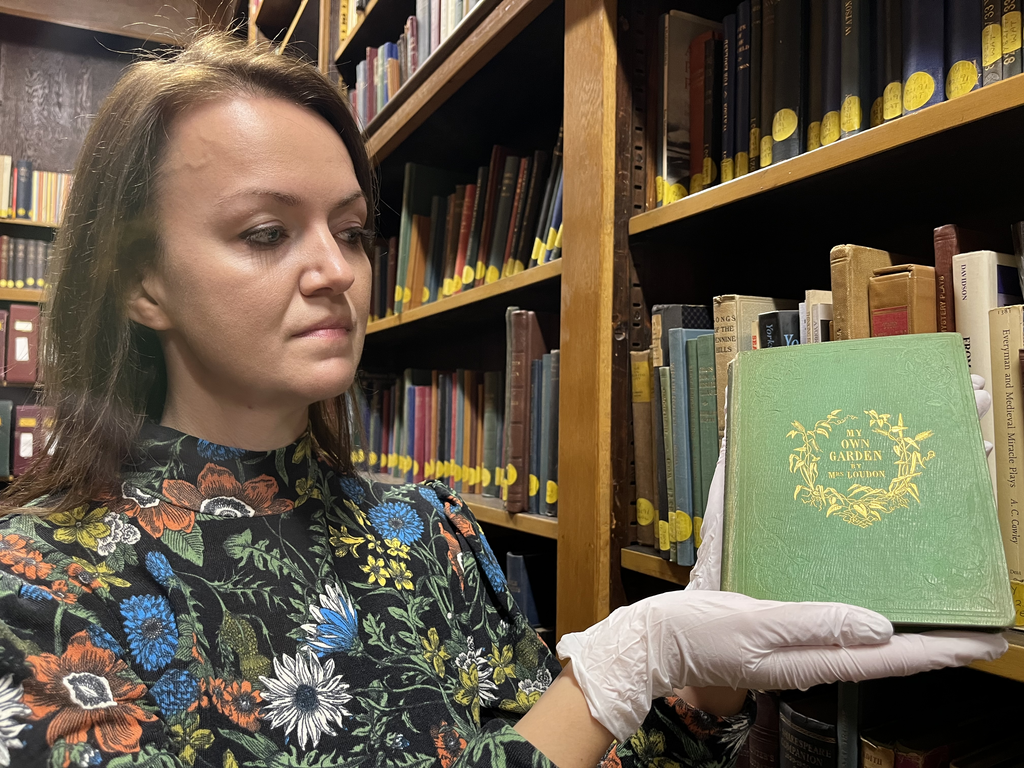
Libraries went looking. Leeds Central Library found an 1855 children’s gardening book in 2022. The Bibliothèque nationale de France quarantined four books in 2024. Bielefeld University in Germany locked away some 60,000 nineteenth-century volumes until they could be checked. In 2025 physicists at the University of St Andrews adapted a handheld mineral detector to recognise emerald green from the light a cover reflects; taken round Scottish libraries it found more than a hundred arsenical books among thousands screened, and at Edinburgh 44 of 52 suspect green books went straight back on the open shelves.
How Dangerous Are They?
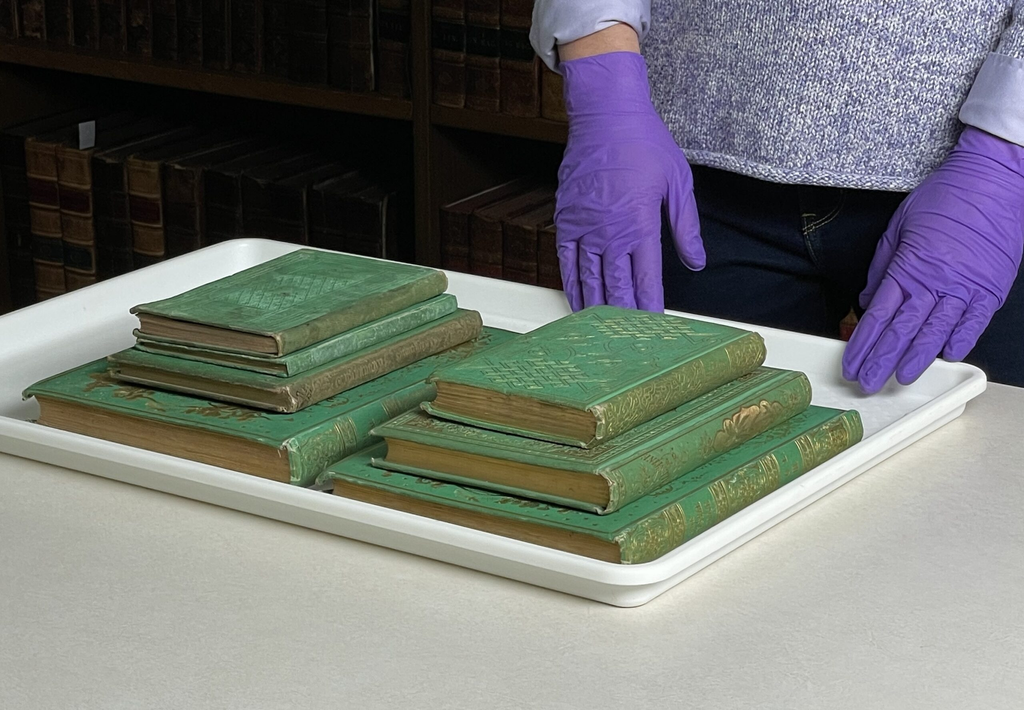
Dangerous to the wrong people in the wrong way, and otherwise not very. Nobody is known to have died of a book. The pigment sits in the starch on the cloth, and the hazard is the dust, which rubs off on fingers and settles on desks. For a reader who opens one once, the exposure is trivial; for a cataloguer, dealer or collector who handles dozens a week, it adds up, and chronic low-dose arsenic is linked to skin lesions, nerve damage and cancers. Casual contact can irritate the eyes, nose and throat. An adult, Tedone says, would have to lick a poison book to take a lethal dose, and smaller exposures “could make you unpleasantly ill or contribute to chronic health problems.”
What Should You Do With One?
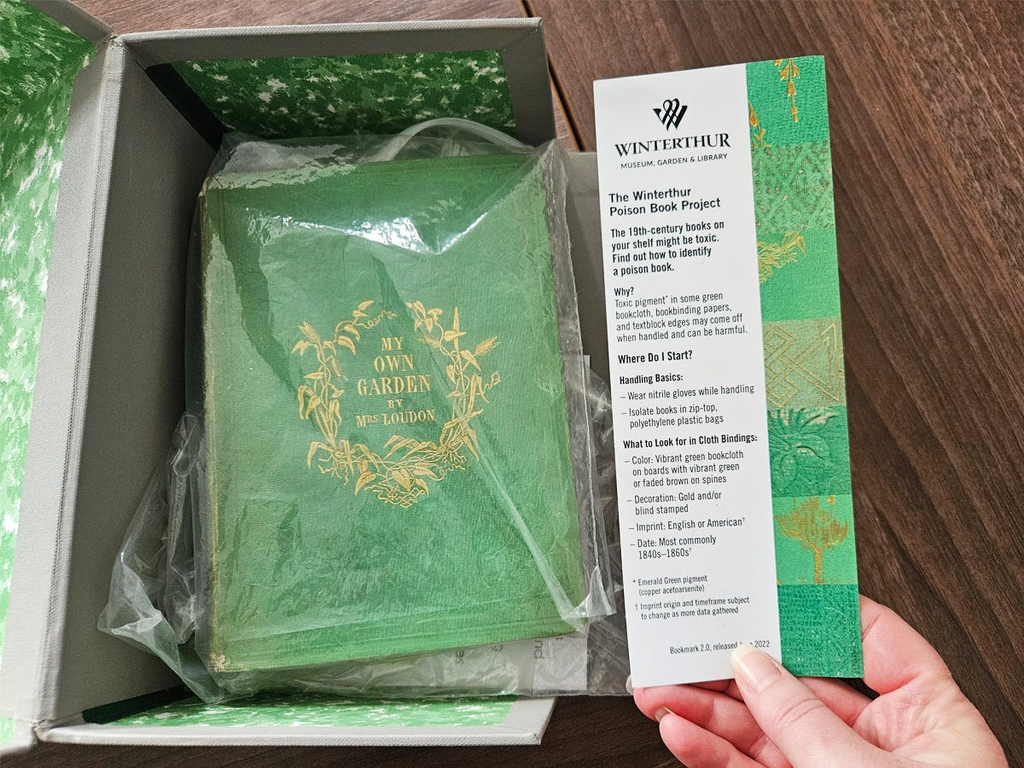
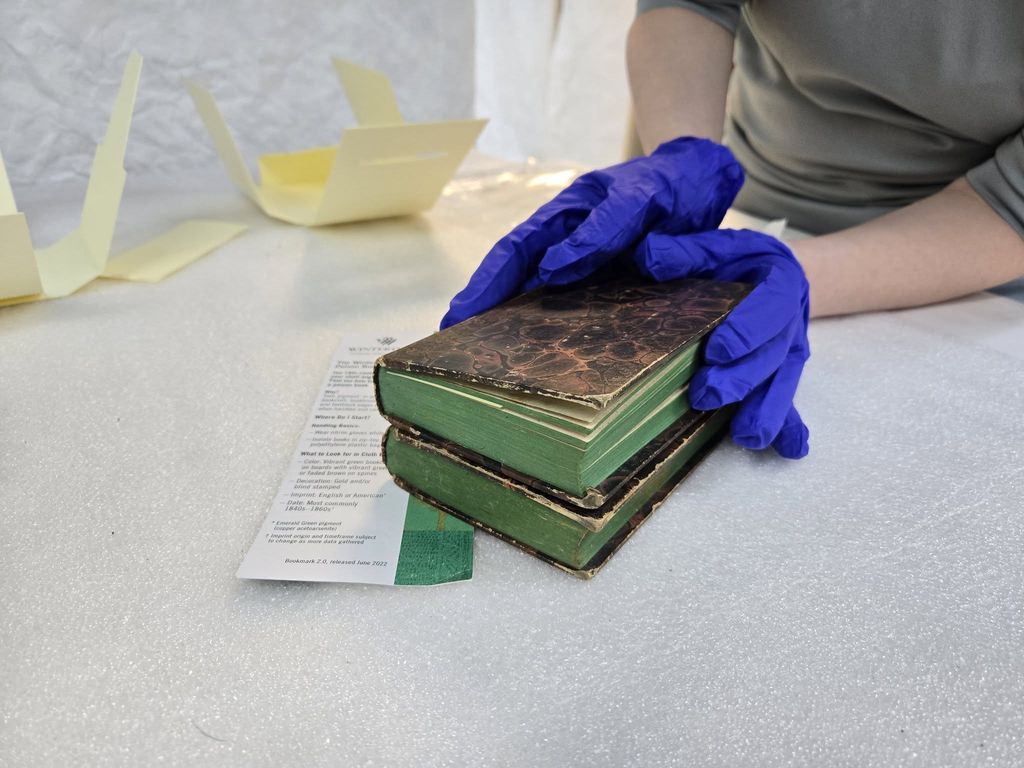
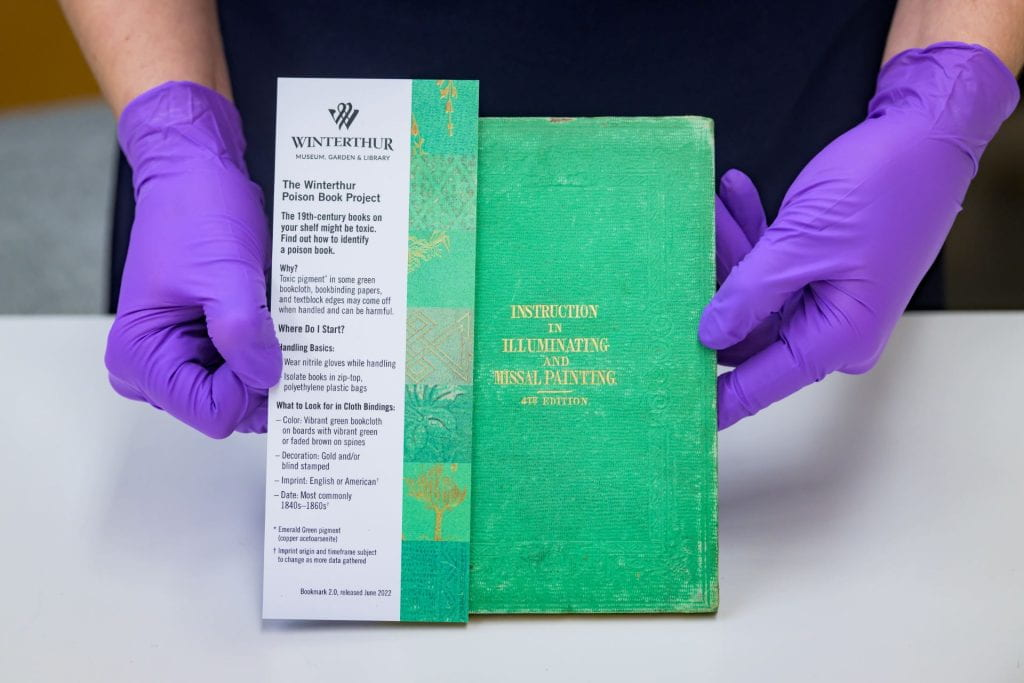
Look for a cloth cover in a vivid, slightly bluish green, printed between about 1840 and 1870, usually still in good colour because the pigment did not fade. “Any library that collects mid-nineteenth-century cloth publishers’ bindings is likely to have at least one or two,” Tedone says, and the same goes for a grandparent’s shelf. Do not throw it away. Keep it in a sealed plastic bag away from children and pets, handle it in nitrile gloves, do not eat or drink while you do, and wash your hands with soap afterwards. Winterthur will post you a free colour-swatch bookmark showing the exact shade.
Scheele knew in 1775, the flower-makers by 1861, the publishers by the end of the 1860s. The Victorians used the green anyway because it was beautiful and it lasted, and on the second point they were right: a hundred and seventy years on, it is still the loveliest thing on the shelf.

Vincent Minatozaki
Vincent is the founder and Editor-in-Chief of 1000 Libraries Magazine. He is a Paris-born ex-corporate turned bookseller and philosopher, on a global mission to spread the joy of physical books in our age of digital technology.