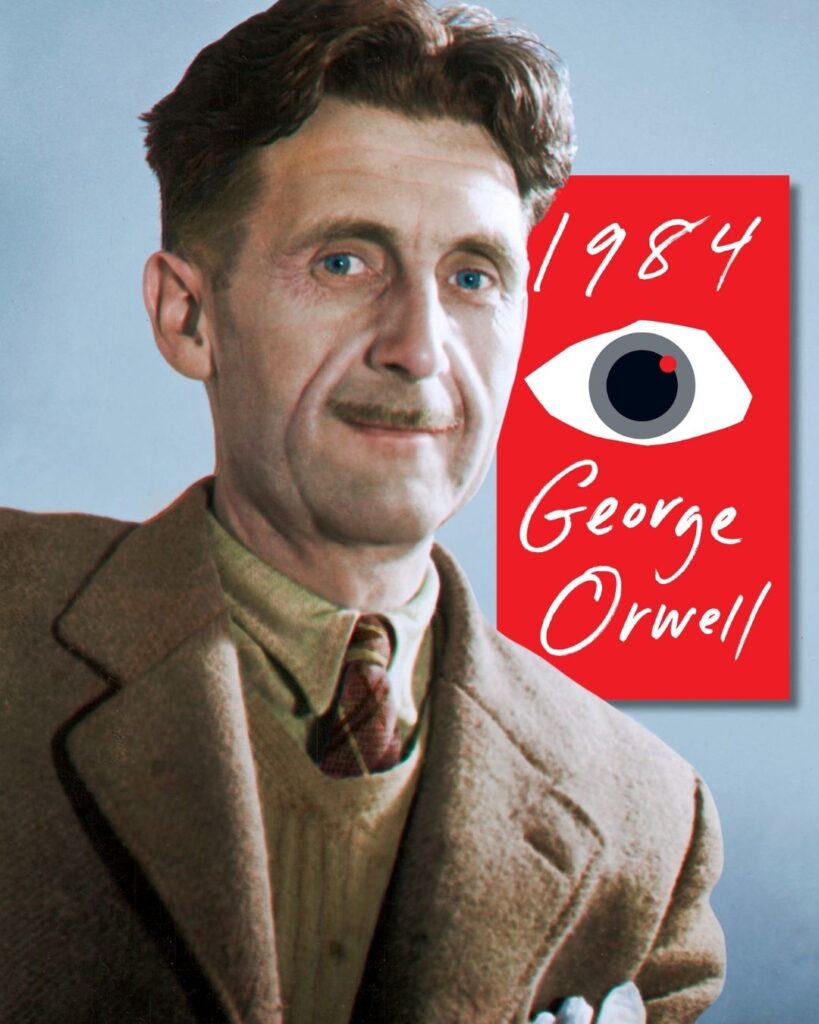

Decades later, George Orwell still hits hard. These quotes aren’t just iconic, they’re uncomfortably relevant.
Some quotes make you think. Others make you pause. And then there are the ones that feel a little too real, like they’re reaching out of the page and tapping you on the shoulder. Or like they’re looking into your life and whispering truths.
That’s what happens in 1984 by George Orwell.
Orwell has a way of turning abstract fears about power, truth, and control into sharp, unforgettable lines.
Now more than ever, some of those lines hit harder.
“Who Controls the Past Controls the Future”
“Who controls the past controls the future. Who controls the present controls the past.”
This quote sounds almost philosophical at first. But when you sit with it for a moment, it gets unsettling pretty quickly.
What Orwell is getting at here is the power of narrative. If those in charge can rewrite history, they can tweak it, erase parts of it, or reshape it to influence how people think about the present and what they expect from the future.
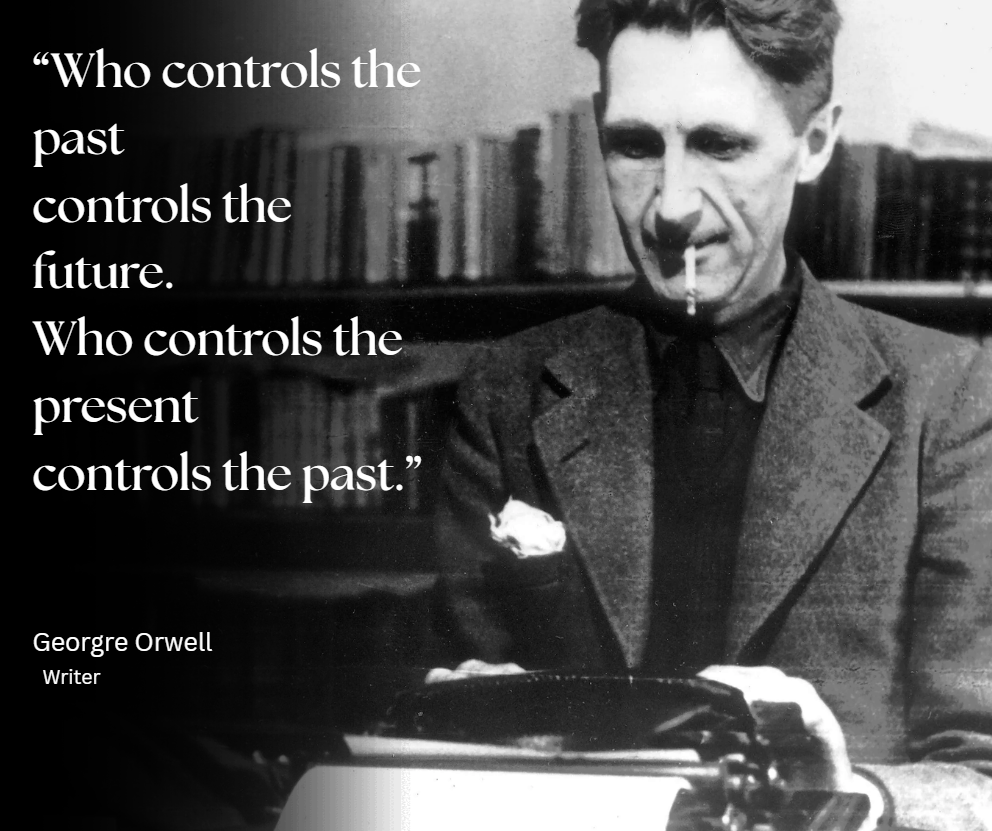
In 1984, history is constantly being rewritten. Records are altered, inconvenient facts disappear, and yesterday’s truth becomes today’s lie. The scary part? People are expected to just accept it.
And if you think about it, that idea isn’t locked in fiction. Debates over history, misinformation, and “who gets to tell the story” are everywhere.
It’s not just about the past; it’s about controlling the present.
“Reject the Evidence of Your Eyes and Ears”
“The Party told you to reject the evidence of your eyes and ears. It was their final, most essential command.”
This one feels especially intense.
Imagine being told not to trust what you see or hear. Not rumors. Not opinions. But to ignore your actual senses.
This quote taps into something deeper than propaganda. It’s about breaking a person’s confidence in reality itself. Once you can’t trust your own perception, you become far easier to control.
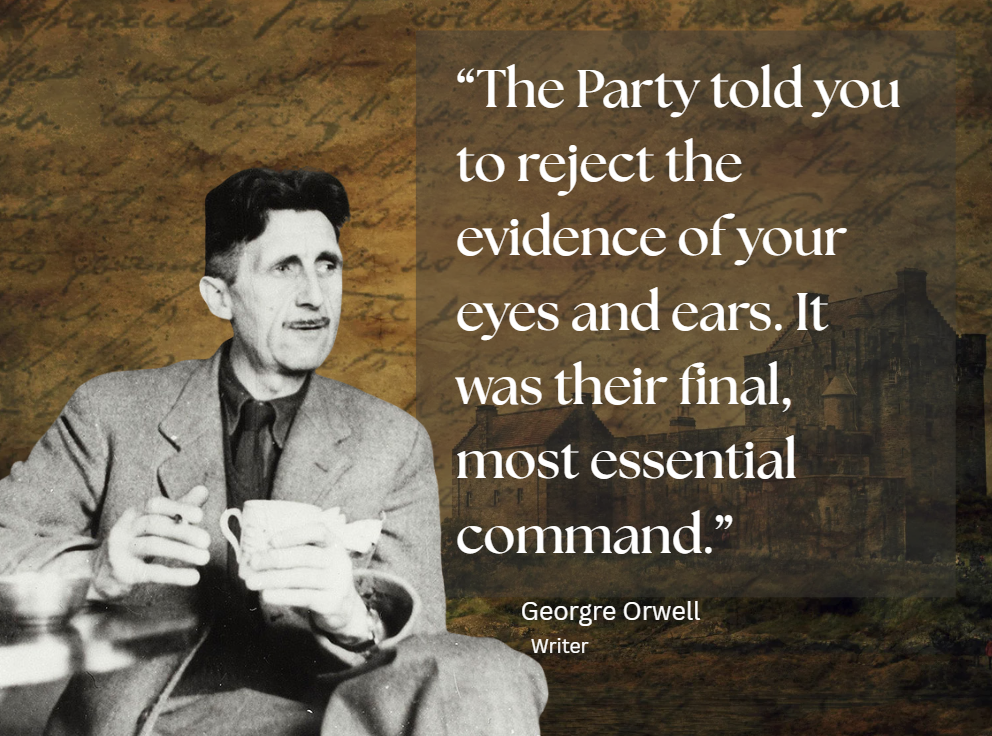
And let’s be honest, this idea hits differently in a world where information is constant, conflicting, and sometimes manipulated. When truth becomes blurry, it’s exhausting, and that’s exactly the point Orwell was warning about.
If we think about things like AI and misinformation, it’s not hard to see how this quote is perhaps more relevant than it ever has been.
“War Is Peace. Freedom Is Slavery. Ignorance Is Strength.”
“War is peace. Freedom is slavery. Ignorance is strength.”
This one is probably the most famous and the most paradoxical. At first glance, it sounds like nonsense. Contradictions stacked on top of each other.
These slogans are designed to confuse and condition. If people repeat something, even a structure like this, often enough, even if it makes no logical sense, it starts to feel normal. Over time, language itself becomes warped.
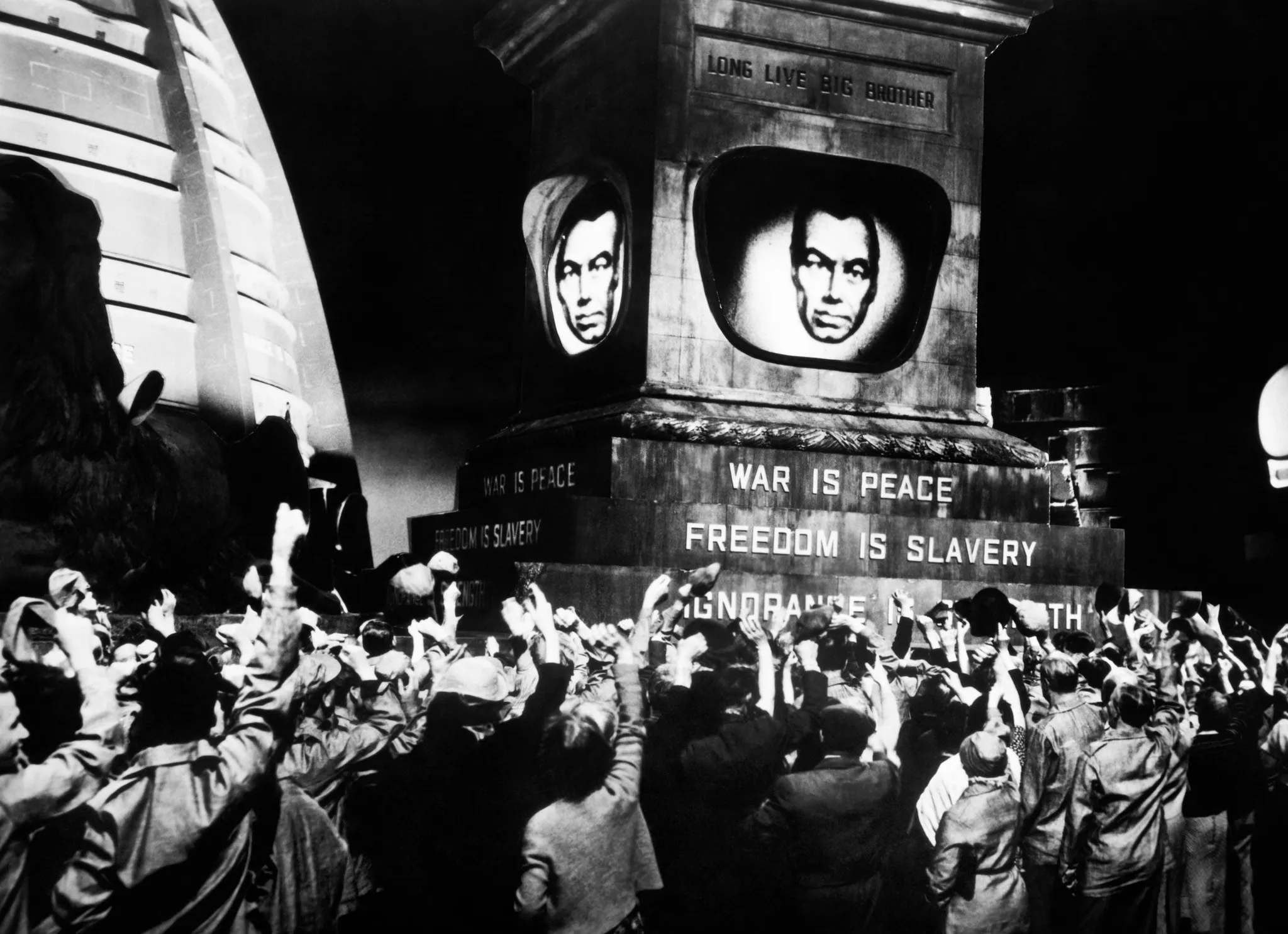
Orwell understood that controlling language is a powerful way to control thought. If you can redefine words, you can reshape how people understand reality.
And once again, it’s not hard to see echoes of this idea today in political slogans, spin, and messaging that twists meaning until it almost loses shape entirely.
“Big Brother Is Watching You”
“Big Brother is watching you.”
Short. Simple. Terrifying.
This might be one of the most recognizable lines in modern literature, and for good reason.
It captures the constant presence of surveillance in 1984. Citizens are always being observed, always being monitored, always aware that someone might be watching.
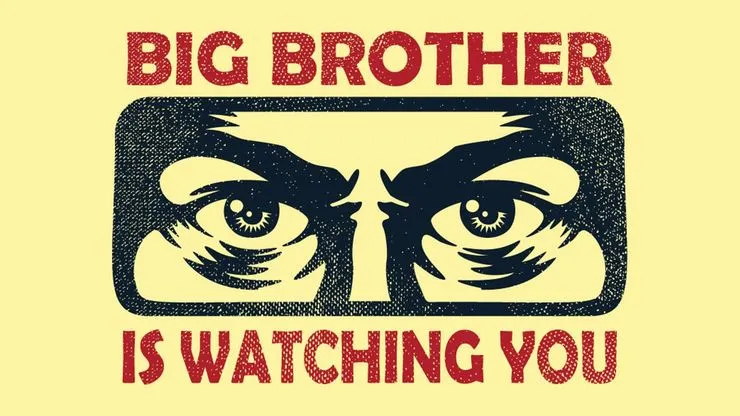
The result? People begin to police themselves.
They don’t just follow the rules, they internalize them. Even their thoughts feel unsafe.
And here’s where it gets a bit eerie: in a world of cameras, data tracking, and online footprints, the idea of being watched doesn’t feel quite as fictional as it once did.
Orwell didn’t just imagine surveillance; he captured the psychology of it.
“Power Is in Tearing Human Minds to Pieces”
“Power is in tearing human minds to pieces and putting them together again in new shapes of your own choosing.”
This quote gets right to the heart of Orwell’s idea of power. It’s not just about controlling what people do. It’s about controlling how they think.
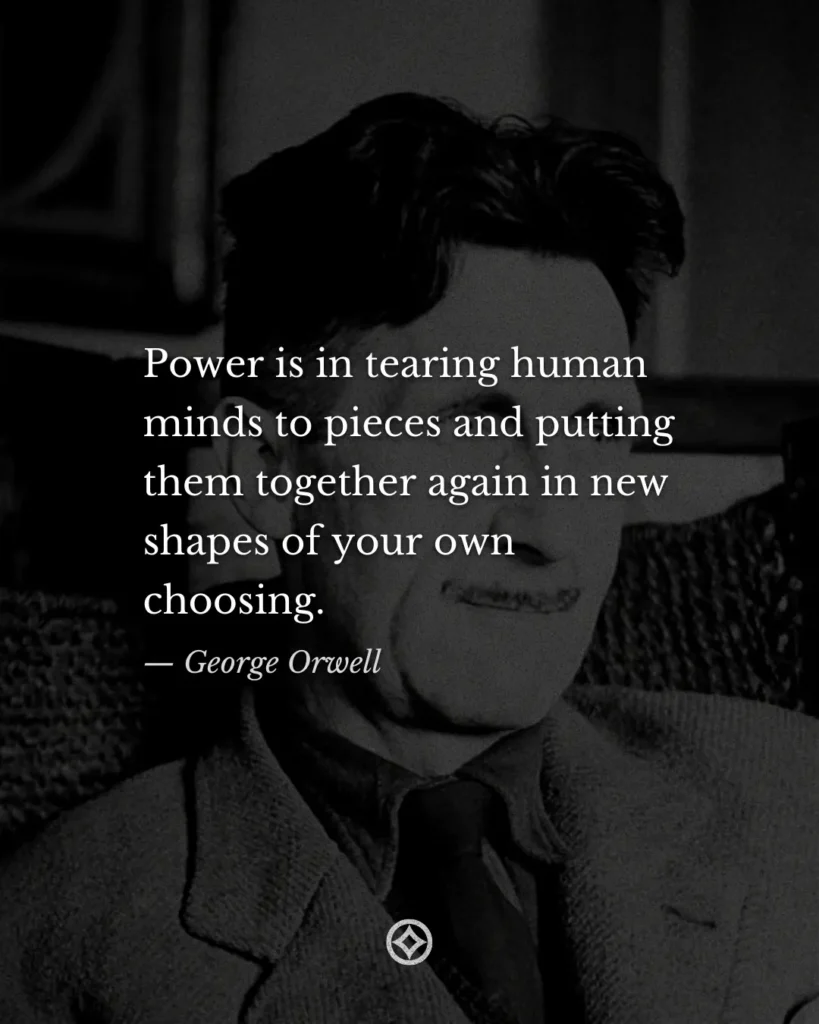
True power, in this world, comes from breaking down someone’s sense of self, their beliefs, their memories, and their identity, and rebuilding it in a way that serves those in charge. It’s psychological domination, not just physical control.
And that’s what makes it so disturbing. Because it suggests that the ultimate goal isn’t obedience, it’s transformation.
“Reality Exists in the Human Mind”
“Reality exists in the human mind, and nowhere else.”
This line plays with a genuinely unsettling idea: what if reality isn’t fixed?
In Orwell’s world, reality becomes whatever the Party says it is. If everyone is forced to accept a version of truth, then that version becomes reality, at least socially.
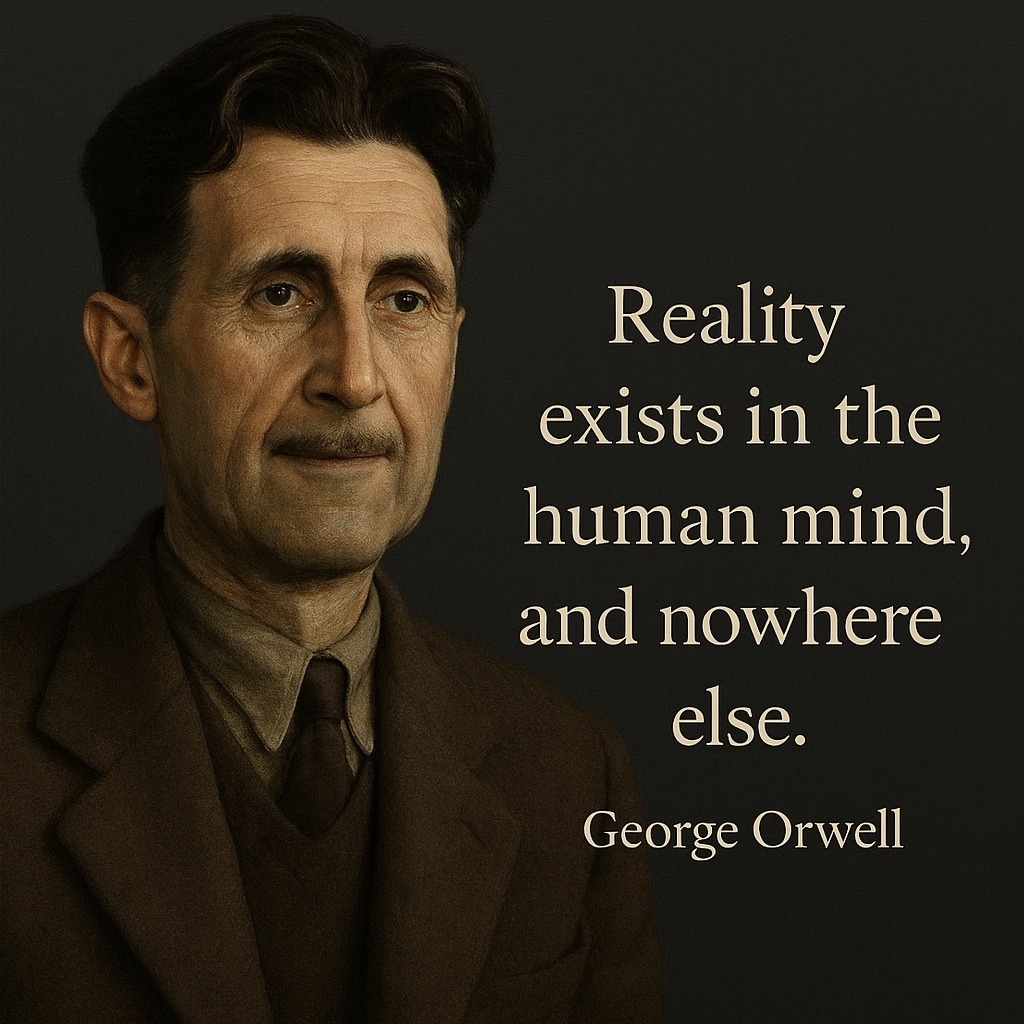
It’s a reminder of how fragile truth can be, and in a time where people can exist in completely different “versions” of reality depending on what they read, watch, or believe, this quote feels especially relevant.
It’s not just about truth. It’s about consensus.
“We Shall Meet in the Place Where There Is No Darkness”
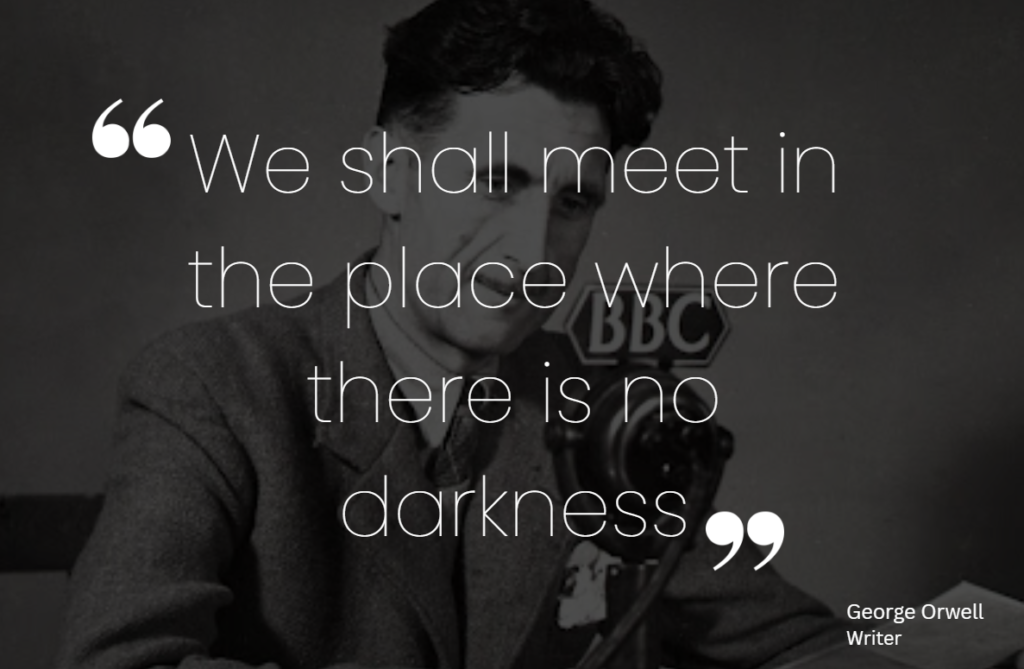
And finally, a quote that feels almost hopeful… until you realize it isn’t:
“We shall meet in the place where there is no darkness.”
At first, it sounds comforting, like a promise of safety or escape. But in 1984, it takes on a much darker meaning. The “place where there is no darkness” turns out not to be freedom, but a space of total control, where nothing is hidden, and everything is exposed.

Millie Ramm
Millie has been writing since she was a child, and has spent more time with her nose in books than anywhere else. She has been ghostwriting novels and editing for the past few years, and when not working she is curled up with her cats, looking for her next read.