

Discover nine books that take you inside Kyoto’s alleys, kitchens and temples, and travel to Japan’s old capital without leaving your chair.
Founded in 794 as Heian-kyō, Kyoto was Japan’s imperial capital for over a thousand years. When the court left for Tokyo in 1868, it took the government and left the culture behind. Kyoto was largely spared wartime bombing, so what survives is not a restoration but an inheritance: some 1,600 Buddhist temples, 400 Shinto shrines, hand-raked moss gardens, and artisan quarters still working the same trades, all folded into a working city of 1.5 million. Nothing here is retired, and nothing here can be hurried.
Tokyo rewards speed. Kyoto rewards the opposite: a morning given to a single temple, an afternoon lost in the lanes of Gion, an address that reads as a set of intersections rather than a number. It is Japan’s great slow travel city, which is why travelers who would rather walk than tick things off lose their hearts here and not in the capital.
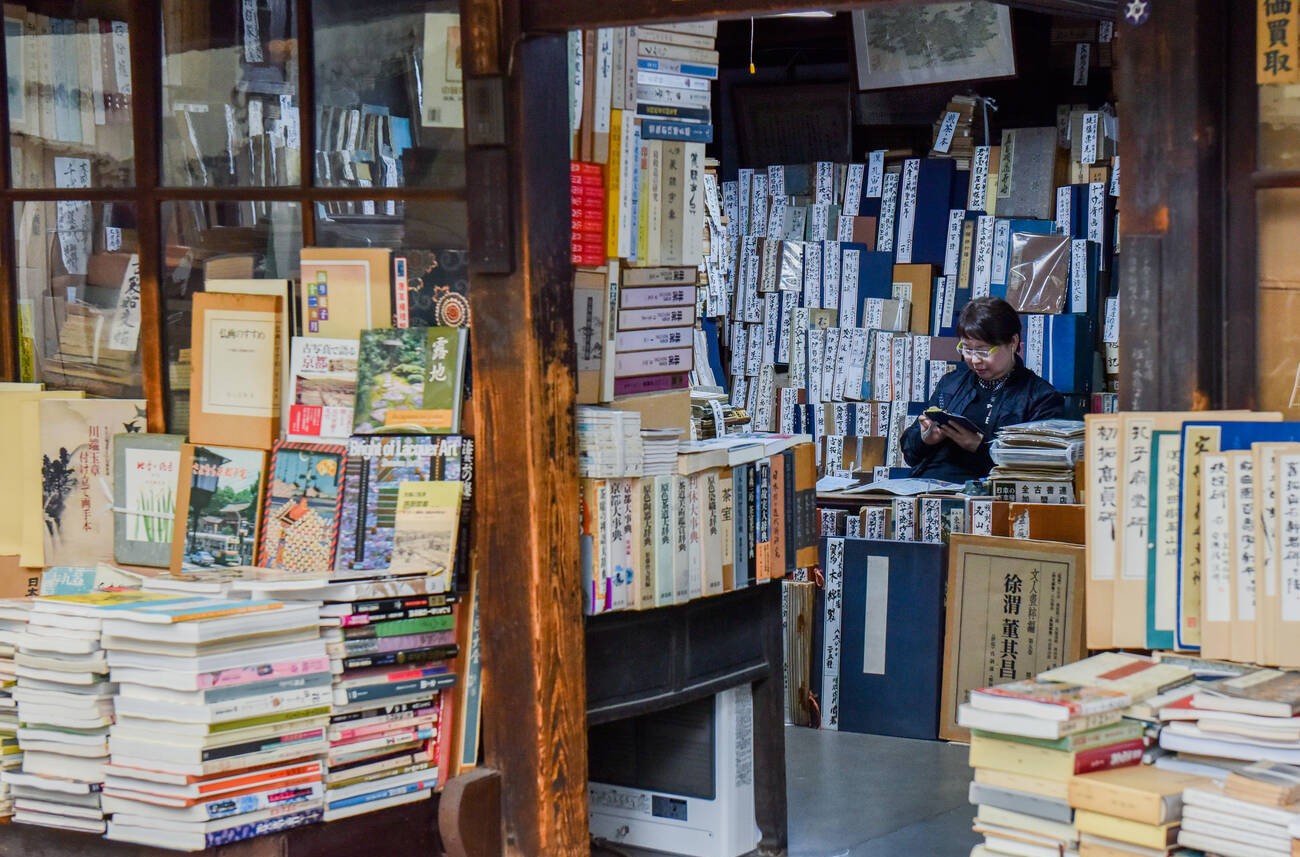
The literary proof arrives every August, when the Shimogamo Nōryō Furuhon Matsuri lays roughly half a million secondhand books across Tadasu no Mori, the ancient grove of Shimogamo Shrine. Edo-period printings sit beside paperbacks and one of the largest children’s sections in Japan; booksellers have gathered there for thirty-nine summers, and the shrine has stood since the sixth century. The city has the same hold on its writers. These books will let you travel there.
The Old Capital by Yasunari Kawabata
Yasunari Kawabata does not simply write about Kyoto; he captures the fragile, passing essence of a city suspended between two eras. Written in the decade following World War II, The Old Capital is less about a dramatic plot and more about a delicate atmosphere, including the sensory rhythm of ancient festivals that have anchored Kyoto for centuries.
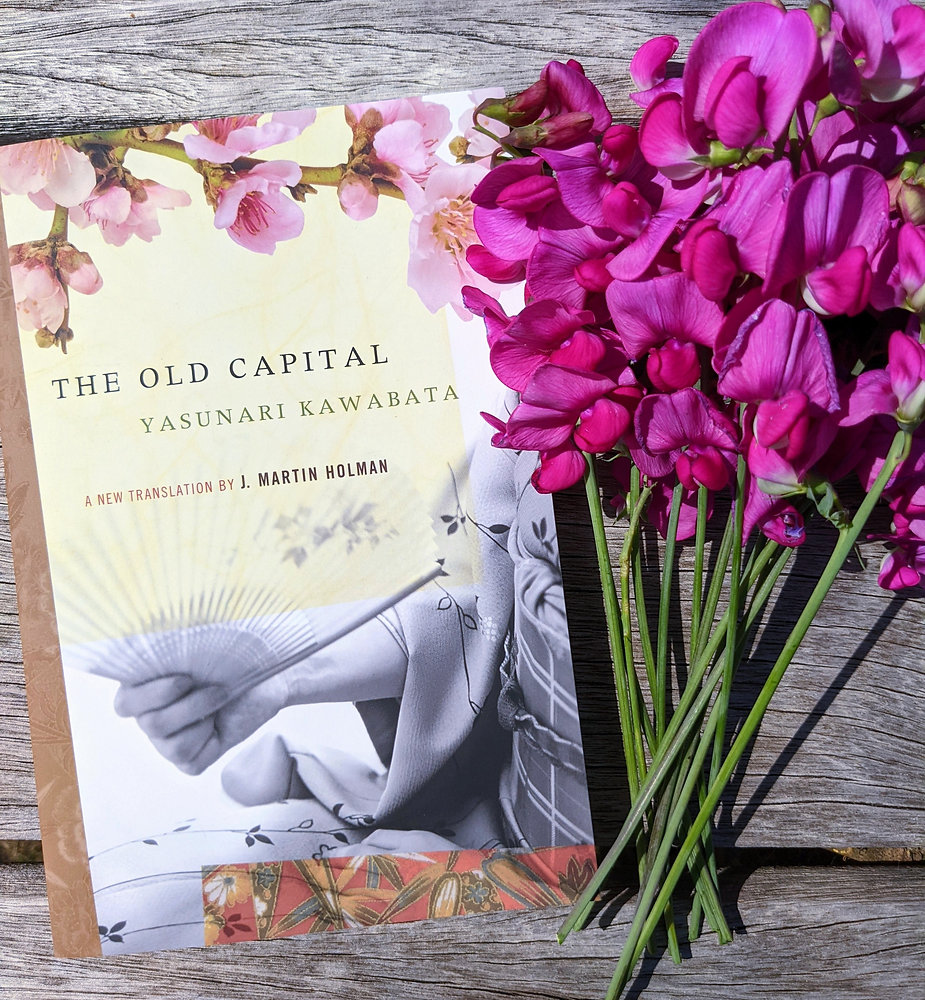
What makes The Old Capital unforgettable is how Kawabata uses the city’s changing seasons to mirror the internal lives of his characters.
Reading it feels like walking through a private temple garden at dawn, where every falling leaf carries emotional weight.
Kawabata was awarded the Nobel Prize in Literature in 1968, with this novel specifically cited for its mastery of Japanese sensibilities. If you are looking for a story that allows you to slow down and experience the soul of traditional Japan before it yields to modernity, this is the book to pick up.
The Kamogawa Detectives by Hisashi Kashiwai
There is a distinct magic to the backstreets of Kyoto, where down a quiet, signless alley near the Kamogawa River sits an unpretentious diner run by Nagare Kamogawa and his daughter, Koishi. On the surface, they serve ordinary, soul-warming local meals; hidden beneath, they operate a unique agency dedicated to a single, extraordinary goal: recreating forgotten dishes from their clients’ pasts.
Hisashi Kashiwai writes with such rich, sensory tenderness that the book reads less like a traditional mystery and more like an invitation to slow down and savor life.

As the narrative derives its power from the quiet intimacy of human memory, Kashiwai treats Kyoto itself as a living, breathing pantry, framing every chapter around local markets, traditional cooking techniques, and the tranquil atmosphere of the ancient city.
Reading The Kamogawa Food Detectives is the ultimate literary comfort food for the soul, guaranteed to leave you both deeply moved and immensely hungry. Best of all, if you find yourself falling in love with this quiet corner of Kyoto, this charming novel is just the beginning of a delicious series.
The Night is Short, Walk on Girl by Tomihiko Morimi
If you have ever wandered through a city after dark and felt as though normal logic had suspended itself, The Night Is Short, Walk On Girl was written for you. Tomihiko Morimi takes the historic streets of Kyoto and tilts them sideways into a glowing, dreamlike carnival.
Following a single, seemingly endless night in the life of an optimistic college student, the novel turns Kyoto into a playground of eccentric spirits, legendary book markets, and hidden bar crawls.
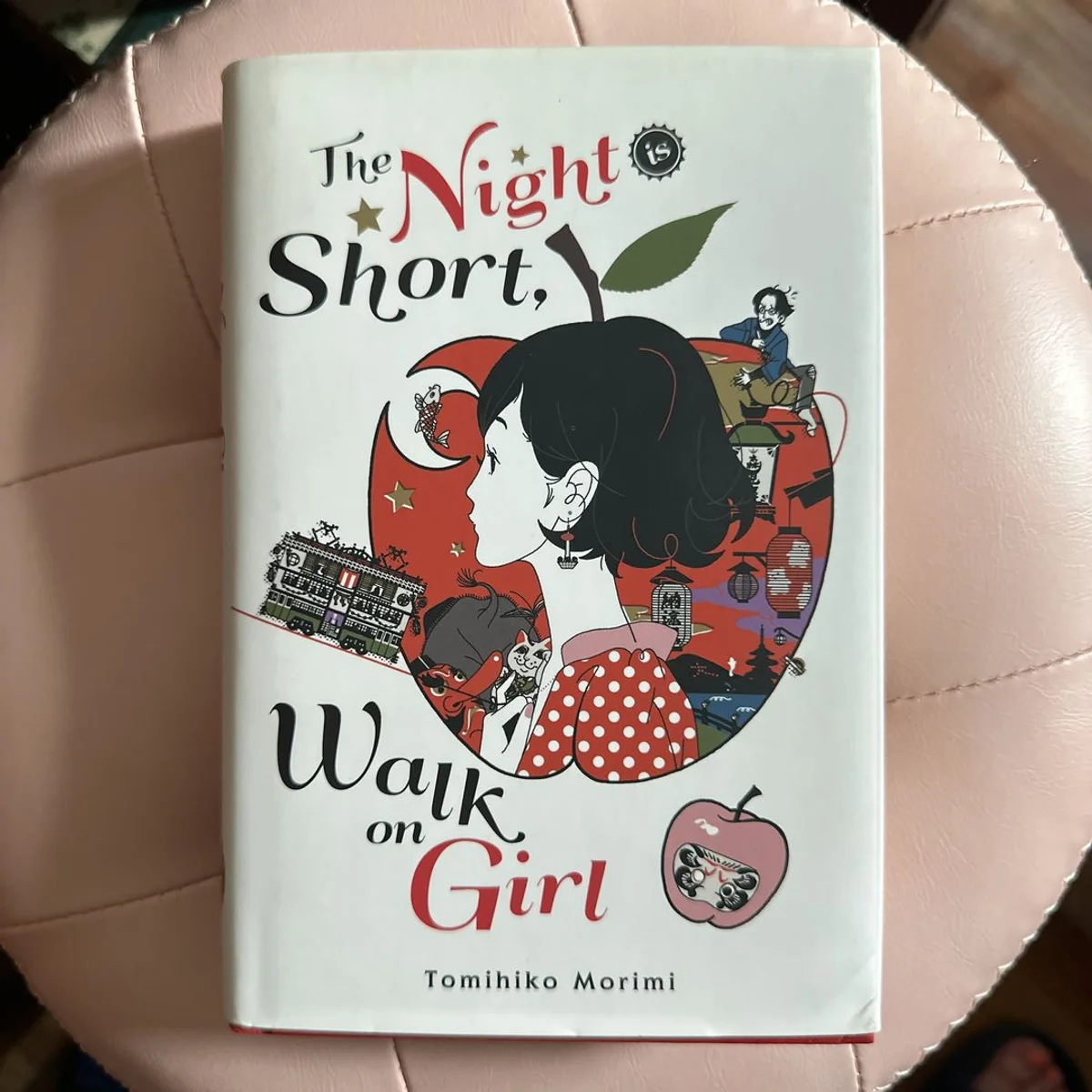
Through Morimi’s lens, Kyoto becomes a place where a god of second-hand books might sit at the next table, and where falling in love requires navigating a series of improbable, hilarious coincidences.
Reading this book feels like stepping into a midnight street festival where the alcohol flows infinitely, the conversations are delightfully absurd, and the city itself is alive with magic. It is a joyful, intoxicating romp that proves Kyoto’s spirit belongs just as much to its nocturnal dreamers as it does to its ancient history.
We’ll Prescribe You a Cat by Syou Ishida
Tucked away down an obscure, narrow alleyway in Kyoto and accessible only to those who are genuinely struggling and in need of help, lies the mysterious Kokoro Clinic for the Soul. Here, the prescriptions aren’t for conventional pharmaceuticals, but for temporary feline companions that are tailored specifically to what ails each patient. Syou Ishida uses this delightfully whimsical premise to explore the quiet, universal anxieties of modern life: workplace burnout, family friction, loneliness, and lingering grief.

What elevates the novel beyond a simple quirky concept is how deeply rooted it is in Kyoto’s local rhythms. Through the stories within these pages, we are reminded that healing rarely comes from grand revelations, but rather from moments of quiet presence, patience, and unconditional connection. For readers seeking a comforting ongoing escape, this delightful book is the beginning of a cozy series set in the heart of Kyoto.
The Temple of the Golden Pavillion by Yukio Mishima
Based on the shocking real-life event of 1950, Yukio Mishima’s masterwork is an intense, haunting exploration of obsession and art. Narrated by Mizoguchi, a troubled acolyte haunted by his physical shortcomings and stutter, the novel delves deep into a mind entirely consumed by the overwhelming, unobtainable perfection of the Golden Temple.
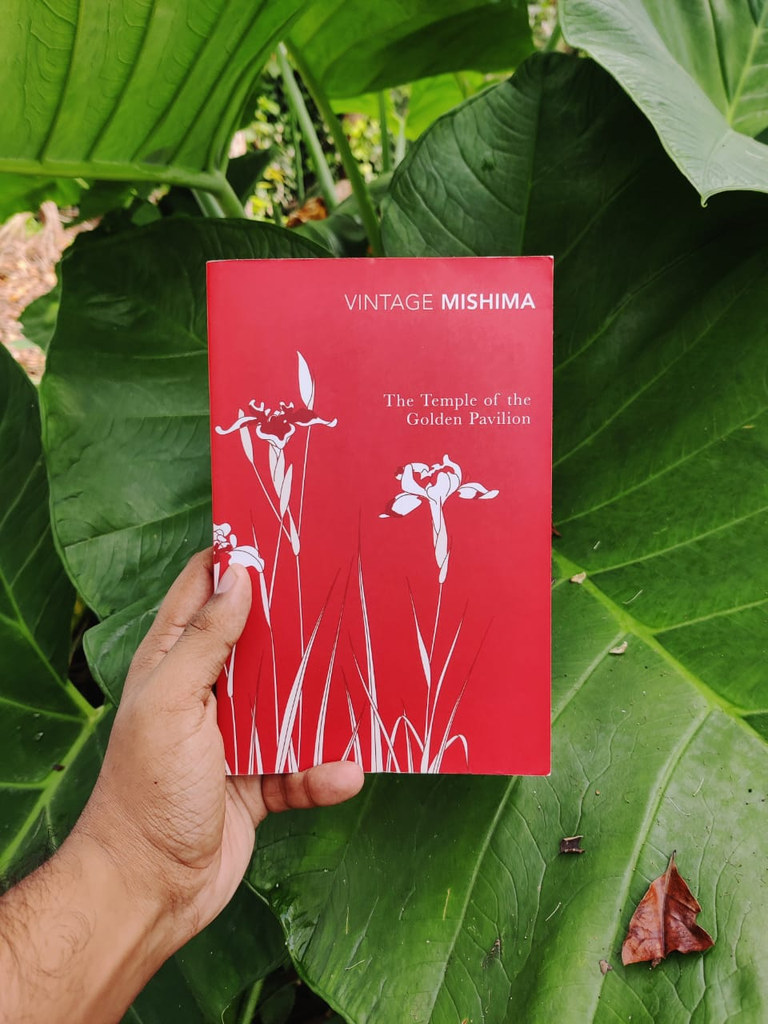
Mishima paints Kyoto not as a postcard-perfect destination, but as a brooding, atmospheric backdrop to a deeply psychological tragedy. The novel forces the reader to confront profound questions about the nature of beauty, envy, and whether absolute perfection can truly coexist with mortal existence. Written with rich, philosophical weight and breathtaking prose, The Temple of the Golden Pavilion is a dark, mesmerizing masterpiece that forever alters how you view one of the ancient capital’s most sacred treasures.
Holmes of Kyoto by Mai Mochizuki
Tucked away within Kyoto’s historic Teramachi Sanjo shopping arcade sits a quiet, traditional antique shop that feels like a world set apart from the bustling modern city outside. Here, human stories and forgotten histories pass across polished wooden counters, brought to light by Kiyotaka Yashiro, a brilliant graduate student whose astonishing power of deduction and sharp eye for detail have earned him the affectionate nickname “Holmes.”
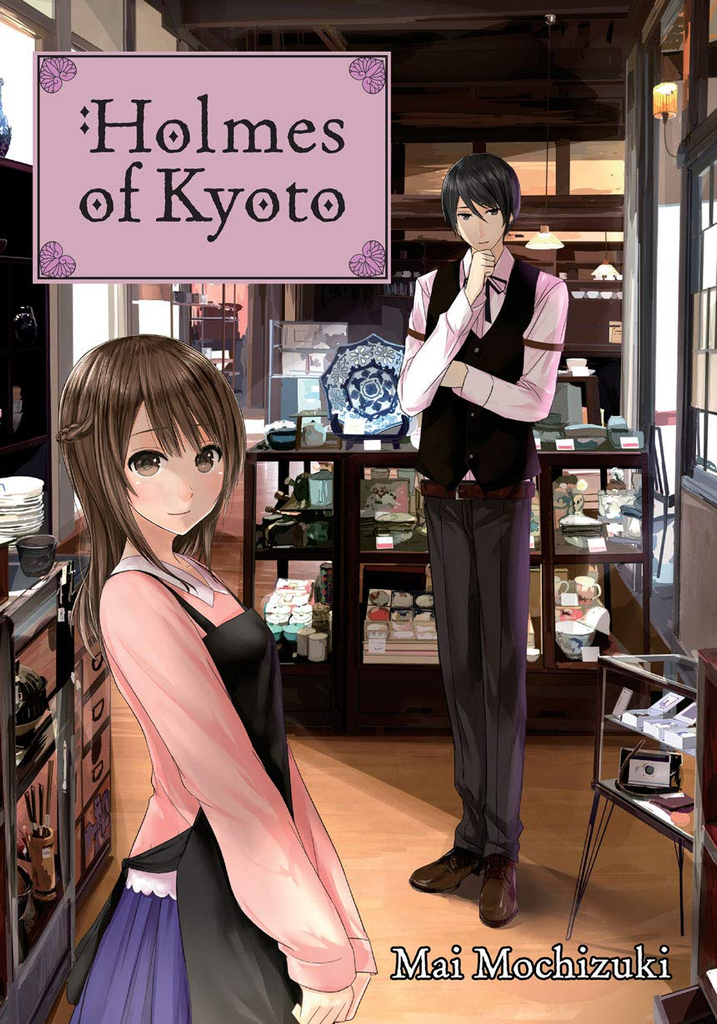
Written in the fast-paced, highly visual style of a Japanese light novel, Mai Mochizuki turns Kyoto into a vibrant treasure trove where every artifact holds a riddle and every ancient tradition tells a story.
For anyone who loves a clever, low-stakes mystery steeped in rich Japanese culture, this delightful story marks the beginning of an addictive, long-running series set against the backdrop of the ancient capital.
The Teahouse Fire by Ellis Avery
Few historical transitions were as turbulent or breathtaking as late 19th-century Japan, when a secluded nation suddenly opened its doors to Western modernization. Ellis Avery captures this seismic shift through the intimate, quiet world of Kyoto’s grand tea masters in The Teahouse Fire.
The novel follows Aurelia, a young American orphan who finds sanctuary in a prestigious Kyoto tea lineage, becoming a trusted companion to Yukako, the brilliant heiress tasked with preserving her family’s ancient art against an uncertain future.

Avery’s prose is extraordinarily sensory, treating the tea ceremony not merely as a quaint tradition, but as a living philosophy of mindfulness, devotion, and survival. The Teahouse Fire is a sweeping, deeply immersive epic that honours Kyoto’s enduring commitment to grace under pressure, offering a rare and luminous view into a world striving to hold onto its soul.
A Single Rose by Muriel Barbery
There is a quiet, restorative art to grieving, and Muriel Barbery turns Kyoto’s legendary zen gardens, secluded tea houses, and moss-covered temples into its ultimate sanctuary. Written after the author spent two years living in Kyoto, A Single Rose follows Rose, a 40-year-old French botanist who travels to Japan for the reading of her estranged father’s will, a wealthy art dealer she never knew.
Guided through the ancient capital by her father’s trusted assistant, Paul, Rose is led on a carefully curated itinerary through temples, shrines, and hidden sanctuaries that mirrors her inner landscape.

Barbery’s prose honors the Japanese concept of ma, the beauty found in silence and empty space. This allows the reader to slow their pulse to match the city’s ancient pace.
What makes A Single Rose even more breathtaking is its sister novel, One Hour of Fervor. Where Rose’s story is a journey of discovery after loss, One Hour of Fervor reveals the unspoken half of the equation; the life of her father, Haru, who loved her fiercely from across an ocean while bound to keep his distance.
Geisha, A Life by Mineko Iwasaki
For decades, the secretive world of Kyoto’s Gion Kobu district was shrouded in romantic myth and orientalist fascination. In Geisha, A Life, Mineko Iwasaki reclaims her narrative with breathtaking clarity, pride, and authority. Moving into an okiya (geisha house) at just five years old, Iwasaki rose to become the undisputed top artist of her generation during the 1960s and 70s, captivating royalty, international leaders, and artists alike.
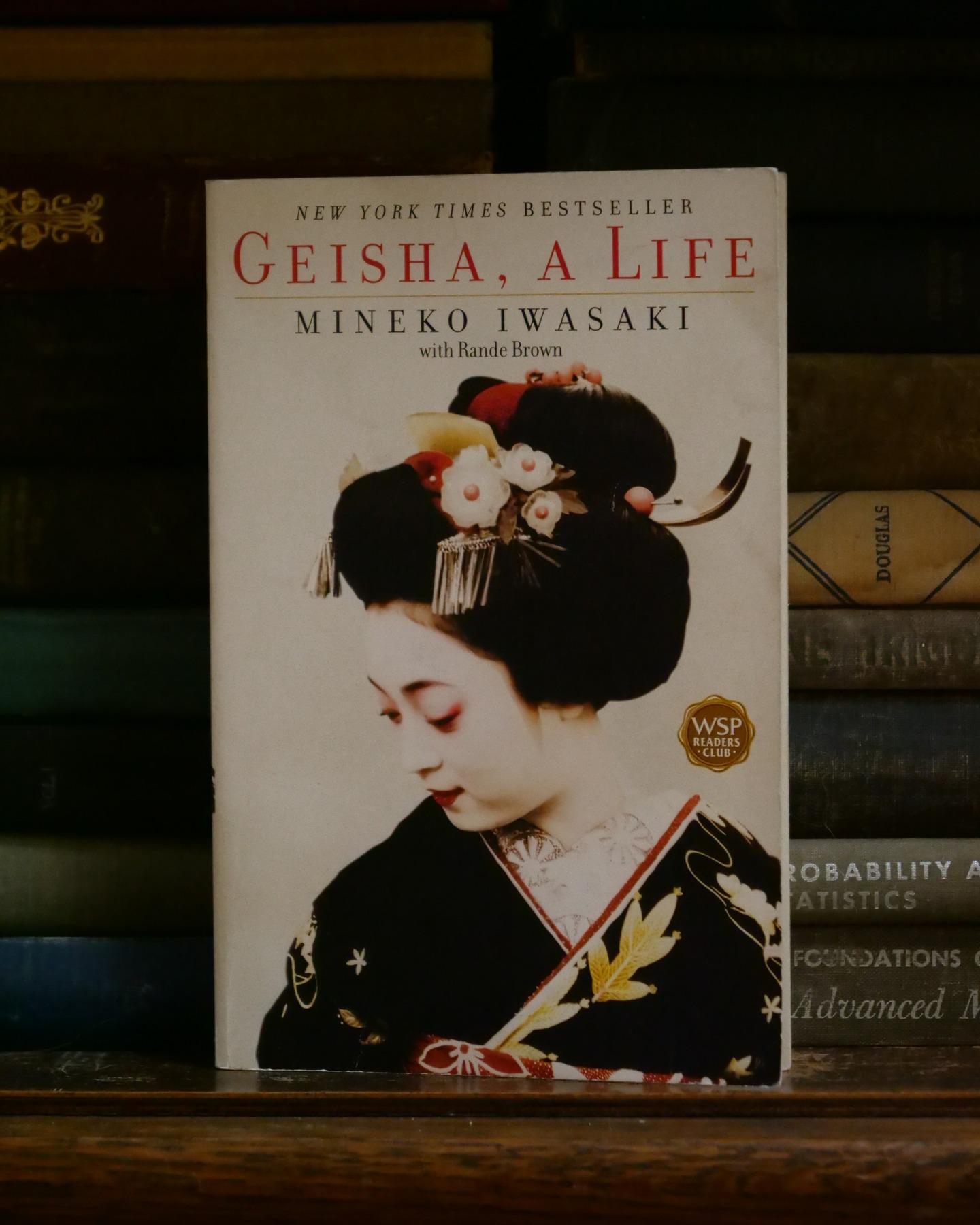
Throughout her journey, Iwasaki presents Kyoto’s traditional entertainment arts as a grueling, highly disciplined vocation of musical mastery, classical dance, and social diplomacy. Through her eyes, Gion Kobu’s quiet cobblestone alleys, traditional tea houses, and seasonal dances come alive not as exotic spectacles, but as a living guild system dedicated to preserving Japan’s classical arts.
Geisha, A Life is a triumphant, deeply empowering memoir that honors the art, resilience, and personal autonomy of the women who sustained Kyoto’s living traditions.
Step Into Kyoto, One Page at a Time
Kyoto does not reveal itself to people in a hurry, and it has had a thousand years to practice patience. Read your way in, and the city starts to open: the logic of its alleys, the weight of its seasons, all the intricacies a tourist walks straight past. Then go slowly, early, on foot, as a guest rather than a photograph. Kyoto can wait while you finish the chapter.


Charuta Pradhan
As a lifelong bibliophile, Charuta believes in the power of storytelling and its magical ability to connect readers. Happiest in the world of books, they are absolutely thrilled to be part of this global community that celebrates the power of words.