
Autumn colour is a reveal, not a change, and trees need cold hours to bloom. On mono no aware, the reading season, and why book lovers wait all year for this.
There is a particular grief to the end of August, and it deserves to be named rather than argued away.
What ends is not only warmth. It is a way of living: the long tables outside, the plans made lightly because the evening would hold them, the swimming, the bare arms, the sense that everybody was available. Summer is the social season, the season of the open door, and its closing carries the melancholy of the last guest leaving a good party.
Japanese has a word for the ache that beauty causes precisely because it is passing: mono no aware, the pathos of things, an idea drawn from Heian court literature and placed at the centre of Japanese aesthetics by the eighteenth-century scholar Motoori Norinaga. It is not sadness at a thing being bad. It is sadness at a thing being good, and finite.
But if you want consolation, do not look inward. Look at the tree outside your window, which is not shutting down. It is doing something considerably stranger.
The Great Unmasking

Start with the colour, because almost everyone has the science backwards. The yellows and oranges of autumn are not created in autumn. Carotenoids, the pigments behind them, are present in the leaf all summer long, quietly assisting photosynthesis and shielding the leaf from excess light, entirely masked by the overwhelming green of chlorophyll. When the nights lengthen, and chlorophyll production slows, the mask simply comes off.
Chemists call it a reveal rather than a change: the gold was in the tree the whole time, doing unglamorous work, waiting for the loud colour to step aside. Carotenoids were first identified in autumn leaves in 1837, in the same family of compounds that make carrots orange, and pumpkins glow.
The reds are the opposite story, and lovelier for it. Anthocyanins, the pigments behind scarlet maples and purple gums, are made fresh in autumn, manufactured deliberately by a tree that is otherwise powering down, apparently to protect the leaf while it finishes its final task. And that task is worth knowing about. As the leaf dies, the nitrogen in it migrates back into the twigs and is banked there for next year’s growth. The tree is not discarding its summer. It is packing it away.
Which may explain why the season has always attracted people who look closely. The line most often quoted about it belongs to Albert Camus, whose play Le Malentendu (1944) is the source of the sentiment that reaches us, in loose English translation, as:
“Autumn is a second spring when every leaf is a flower.” — after Albert Camus, Le Malentendu (1944)
The Rest is the Work
Now the fact that ought to change how anyone thinks about a fallow season.
The flowers that will open near you next spring have, in many species, already been built. Temperate trees form their flower buds before winter, complete with their floral parts, sealed inside protective scales, committed and waiting. And those buds cannot open until the tree has been cold. Botanists call it the chilling requirement: each species must accumulate a set number of hours at low temperature before dormancy will release. Apples typically need 800 to 1,000 chill hours; plums, 400 to 700. Only hours between roughly zero and seven degrees Celsius count toward the total, and the tree, by some means we are still working out, keeps the tally.
A tree denied its winter does not bloom harder. It blooms poorly, or not at all, which is precisely why warming winters alarm orchardists. The rest is not the absence of the work. The rest is the work, banked in advance, in the dark, without an audience.
And we are not exempt from this, whatever central heating has led us to believe. The animals around us make no secret of it: the bear denning up, the hedgehog and dormouse dropping into torpor, the squirrel who spent all autumn caching what it would need. For most of human history we did the same in our own fashion, because we had no choice. The harvest came in, the doors closed, and the dark half of the year was spent inside around a fire, mending, telling stories, making children, waiting. Nobody called it laziness. It was the season the work moved indoors.
Our physiology still remembers. In 2023, Berlin researchers published sleep-lab data showing that human sleep architecture genuinely varies with the seasons, even in a bright, light-polluted city: participants got roughly thirty minutes more REM sleep in winter than in summer, and their deep sleep dipped in autumn. One of the study’s authors put the situation plainly, noting that human physiology is quietly down-regulated over winter, which is why February can feel like running on empty. We are not built to bloom for twelve months. We were built to bank hours too.
Nature does not experience its quiet season as a failure of summer.
The Most Beautiful Season, and the Saddest
None of which would matter half so much if the season were not also, by common consent, the loveliest.
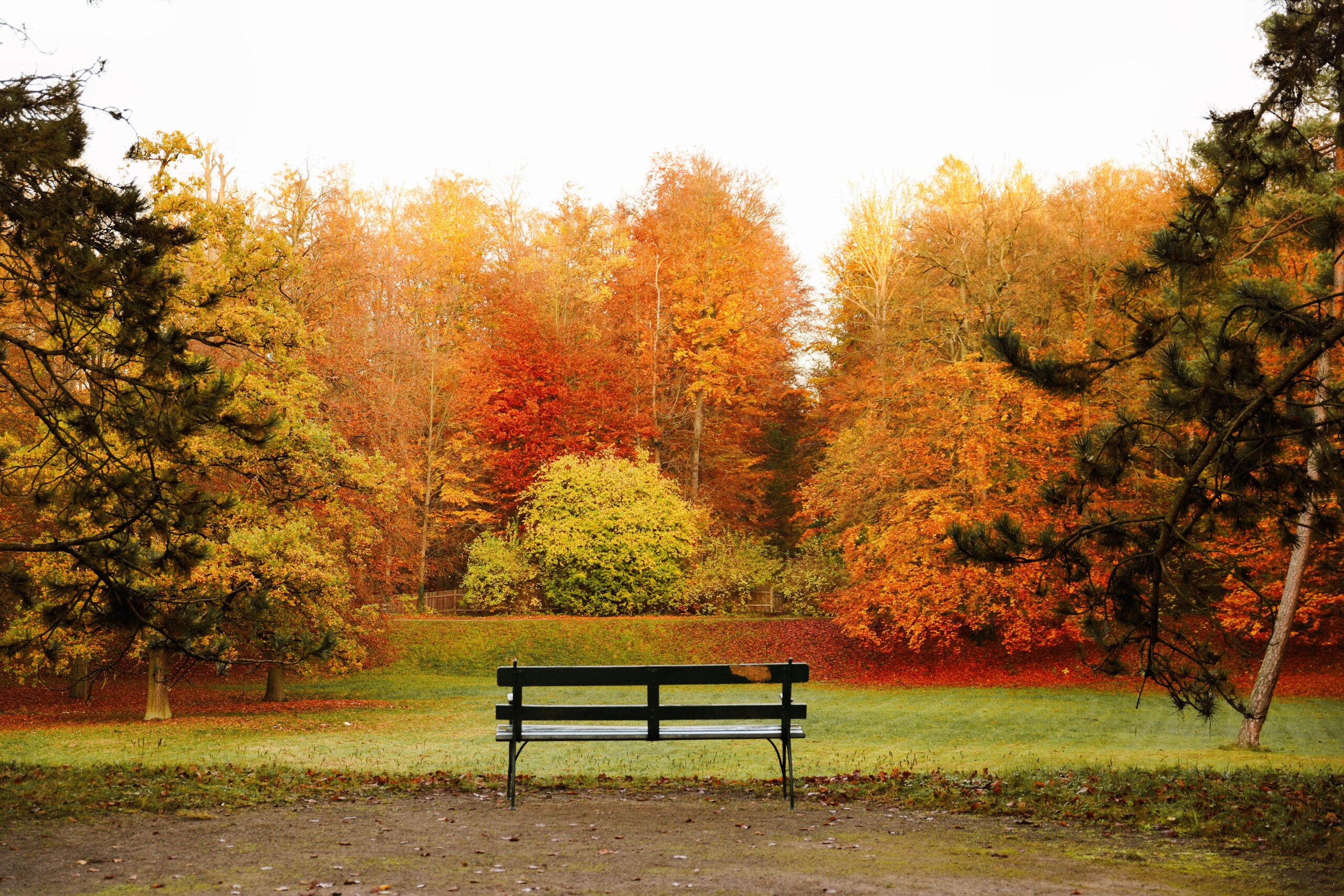
Autumn is the only season that improves as it declines. The light goes long and low and turns ordinary streets golden at four in the afternoon. Mist sits in fields. There is woodsmoke, and the smell of rain on warm pavement, and the specific sound of leaves underfoot, and fruit that tastes of something. Japan takes its autumn foliage so seriously that leaf-hunting, momijigari, is a national pastime, with millions travelling to time their arrival to the colour. Keats gave English its definitive autumn poem, To Autumn, in 1819, and two centuries of poets have been reaching for the season ever since.

The music makes the case even better, because the greatest of the autumn songs is itself a study in how beauty and loss travel together. “Autumn Leaves” began life in 1945 as wordless ballet music by the Hungarian-French composer Joseph Kosma, acquired French lyrics from the poet Jacques Prévert under the title Les Feuilles mortes, “the dead leaves,” and reached the English-speaking world in Johnny Mercer’s version.
It has since passed a thousand commercial recordings, one of the most recorded songs in jazz: Sinatra, Piaf, Miles Davis, Chet Baker, Eva Cassidy, and perhaps the most famous version of all: Nat King Cole’s. A song about falling leaves and a love that did not last has been sung more times than almost anything else we have written.
Which is mono no aware in a single artefact. We do not love the season in spite of its dying. The dying is the reason it is beautiful, and the reason we keep setting it to music.
The Season the World Turned Inward
Cultural history keeps the same shape. Before there were dates, there were seasons: the first calendars were made of weather, and every agricultural civilisation split the year into a bright outward half and a dark inward one, with autumn as the hinge. The hinge was celebrated, not mourned. Harvest festivals across Europe and Asia share one instinct: gather, count what you have, give thanks for it, go indoors.
Japan refined the passage into an art. In the traditional calendar, the year holds seventy-two microseasons of about five days each, named for what is happening outside: hawks learn to fly, cotton flowers open, the heat finally subsides. Autumn brings tsukimi, moon-viewing, in which people gather deliberately to look at the harvest moon at exactly the point in the year when the evenings turn long. Notice the move: the early dark, our chief complaint, is converted into the reason to assemble.

And then Japan does the thing that should make every reader sit up. The language has a family of phrases in the form X no aki, “autumn of X”: shokuyoku no aki, autumn of appetite, for the chestnuts and persimmons; geijutsu no aki, autumn of art. And dokusho no aki: autumn of reading. The phrase descends from a Tang dynasty poem by Han Yu praising autumn as the season for study, and entered common Japanese use in the early twentieth century after Natsume Sōseki, the country’s most revered modern novelist, invoked that older line.
A century later, the phrase is still doing commercial work: every autumn, Japanese publishers and bookshops run reading campaigns and book fairs under that banner, stacking their displays and recommendation tables around the idea that this is the season you are supposed to be reading. An entire industry, agreeing with the weather.
No Wonder It Is Book-Lover’s Favourite Season
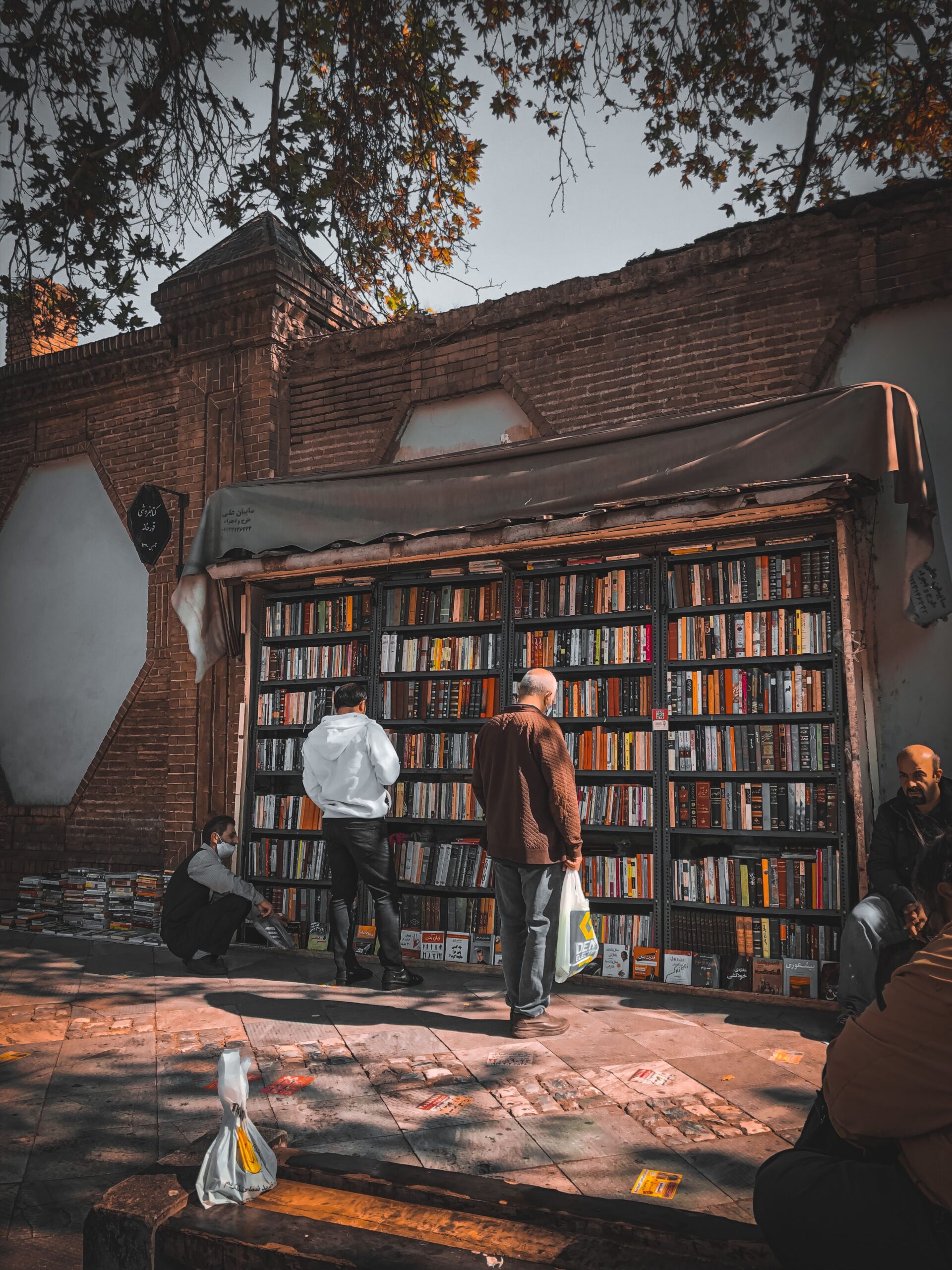
Here is the part booksellers know in their bones. Autumn is not merely a nice time to read. It is when the book world actually happens.
The publishing year is built around it. In Britain the trade has a name for its most crowded publication day, Super Thursday, coined by The Bookseller in October 2008 and now falling on the second Thursday of the month: in 2024 some 1,900 titles were scheduled for that single day, 457 of them hardbacks. Seven books published on one Super Thursday each sold more than a million pounds’ worth of copies, and the trade’s verdict on that autumn was, in one industry analyst’s phrase, “an unassailable triumph.”
In the United States, the same gravity applies: Publishers Weekly devotes an entire Fall Announcements issue to the season, its editors sifting thousands of submitted titles down to the most notable across thirteen categories, with literary fiction at the front. The trade’s “fall” runs from the first of August to the end of January, which tells you how much of the year’s ambition is packed into it. The best books of the year are, almost by definition, arriving now.

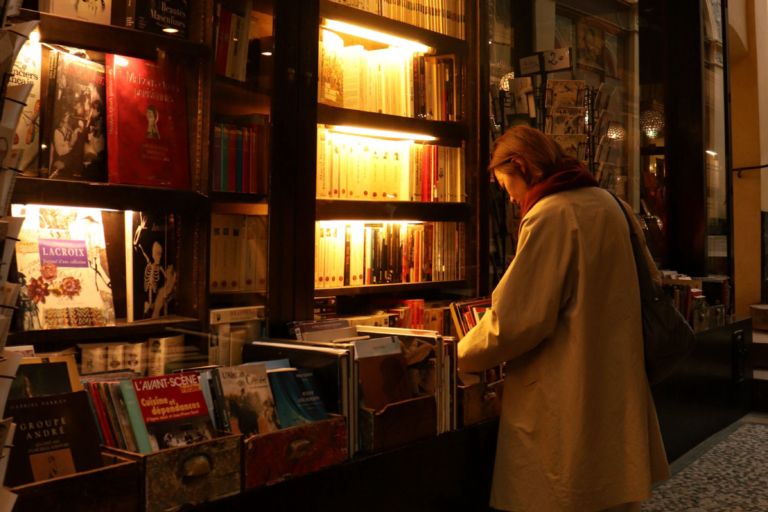
Then there is everything around the books. The coat, which is a garment with pockets a paperback fits into. The bookshop, which stops being a pleasant errand and becomes a refuge, warm and lamplit while the street is wet, with the specific hush of a place where nobody is hurrying you. The long evening that no longer has a party in it. As one London bookseller put it during a Super Thursday, people have come to realise “the value of books and how special they are”, and there is no season in which that value is more obvious than the one where the weather makes the argument for you.
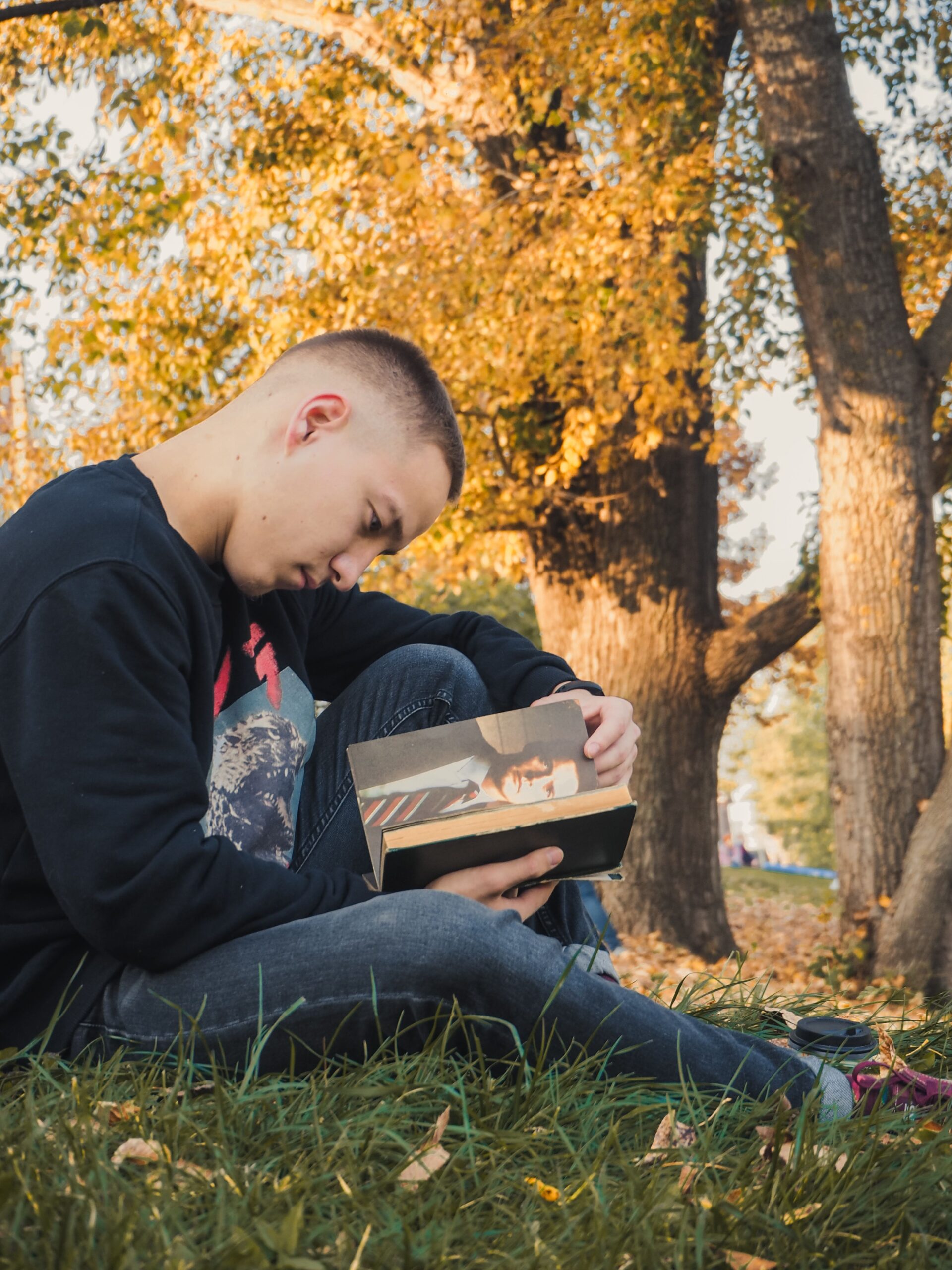
So: the party is ending, and the tree outside is holding next spring’s flowers, waiting for its cold hours. The gold was under the green all along. The publishers are loading the shelves. The bookshops are lighting their lamps.
What will you read while the world rests?


Vincent Phan
Vincent is the founder and Editor-in-Chief of 1000 Libraries Magazine. He is a Paris-born ex-corporate turned bookseller and philosopher, on a global mission to spread the joy of physical books in our age of digital technology.