
On a lava cliff in El Hierro, El Elevador can only be booked by handwritten letter. Inside the Canary Islands retreat redefining slow, analog travel.
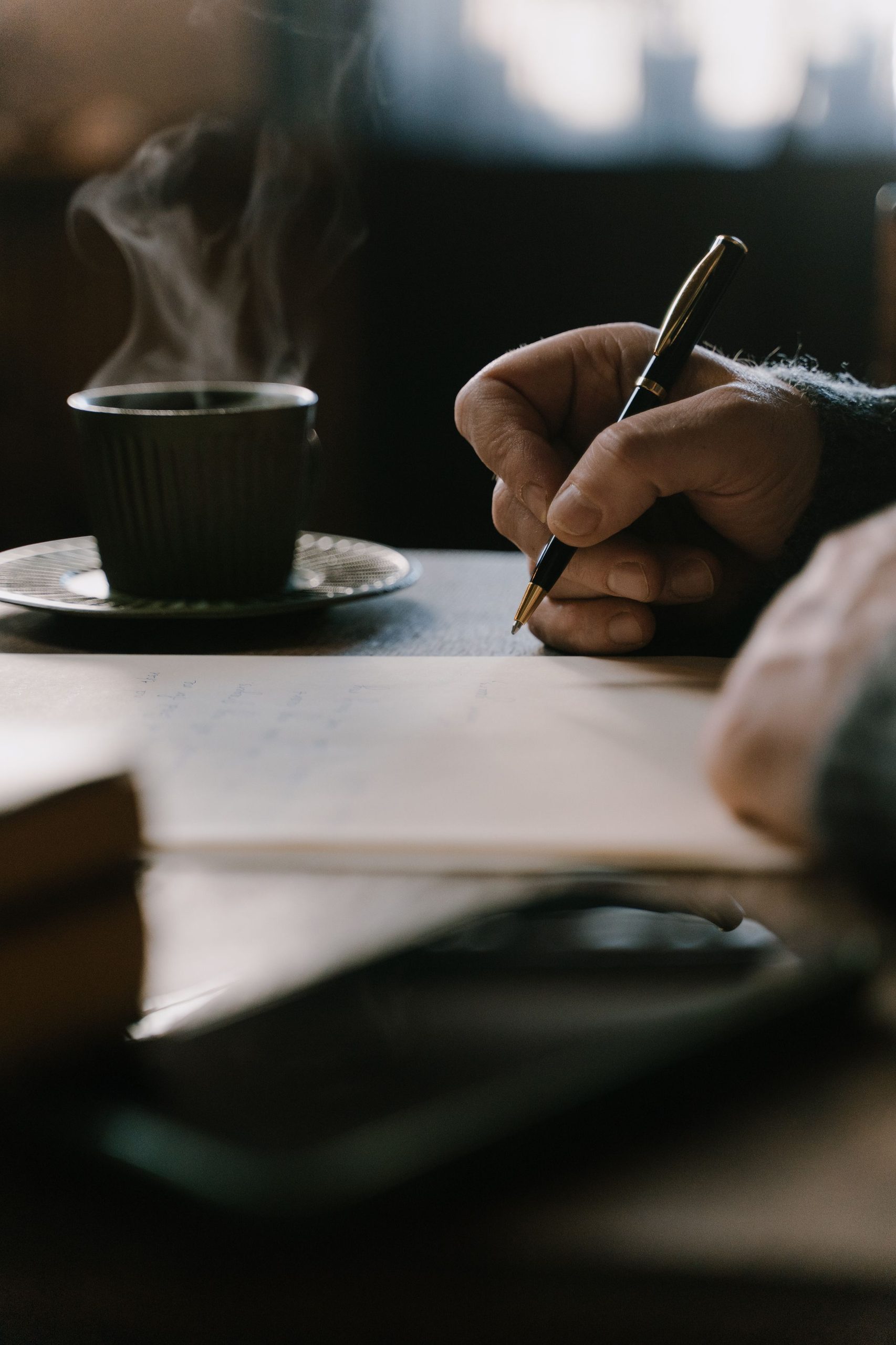
There is a post office box on a small Atlantic island that has become one of the most interesting readaways around the world. It is Apartado de Correos 14, in Villa de Valverde on the island of El Hierro. No booking engine leads there. No availability calendar, no confirmation email, no instant anything. To stay at El Elevador, you must write a letter, by hand, on paper, explaining what draws you to this place and what you hope to find in it. Then you must find a stamp. Then you must wait.
Weeks later, a handwritten reply arrives by post, containing a preliminary reservation and a single private link through which dates can finally be chosen. That link is the only digital moment in the entire exchange.
The arrangement reads at first like a velvet rope, and much of the coverage has treated it that way. La Revue des Hôtels describes a filter that sorts applicants by intention, and The Denizen notes that every letter is read individually. The owners’ account is more generous: every handwritten letter they receive secures a reservation.
Penmanship, prose style, and pedigree play no part in it. What the house asks for is willingness: the few quiet minutes it takes to sit down, think about why you want to go somewhere, and say so in ink. An industry that has spent two decades engineering effort out of travel has been given a small demonstration here that effort itself can work as an invitation.
A House Built by a Man Who Raised Water
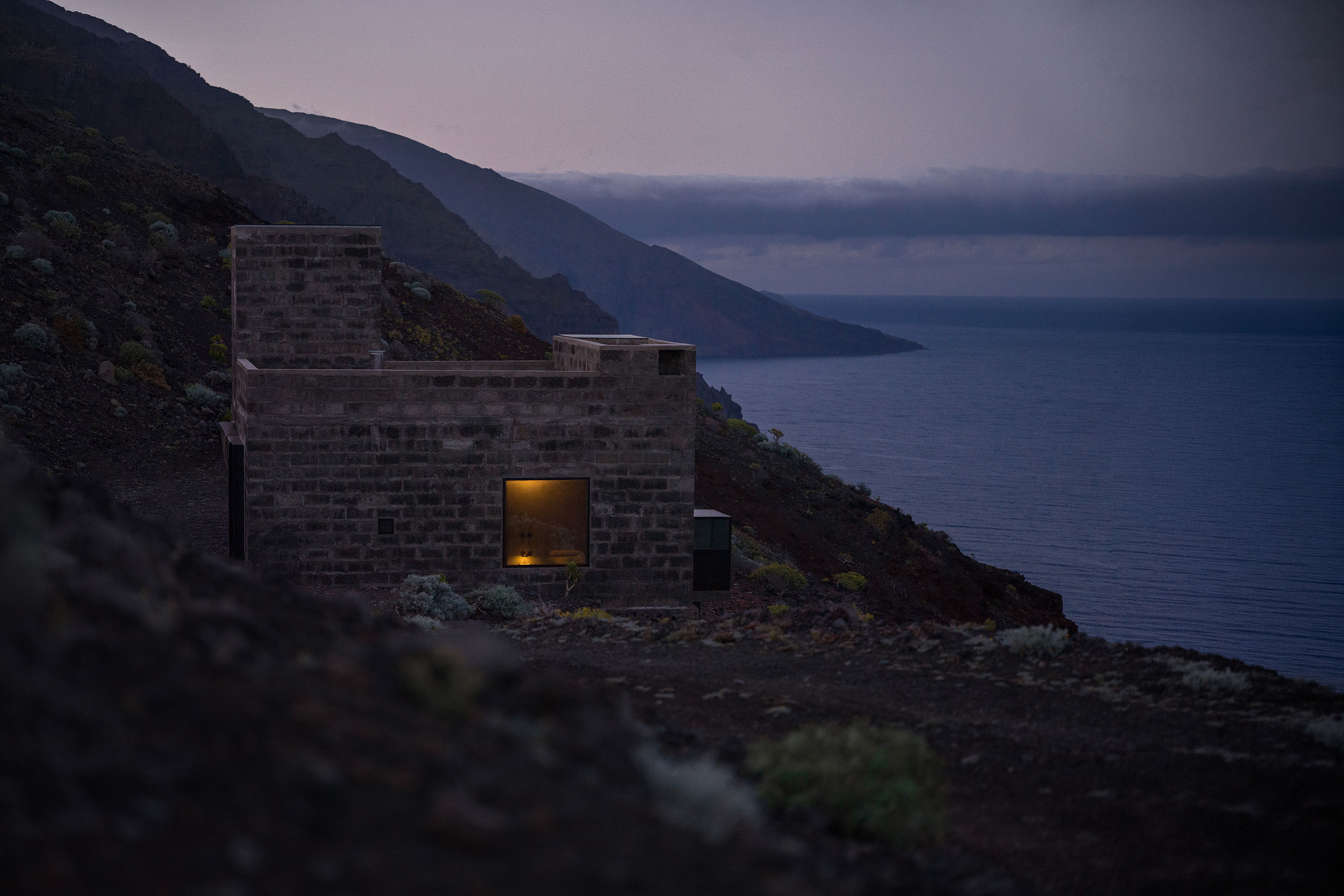
The building began as a piece of pure utility. El Hierro’s story is a story of drought, which pushed thousands of herreños to emigrate, mainly to Cuba and Venezuela, during the first half of the twentieth century. For generations, islanders knew of a freshwater spring at sea level beneath the towering Iramas cliffs in the far south, reachable only by boat.
Ever since a storm felled the island’s sacred water-bearing tree in 1610, the history of water on El Hierro has been bound to its few springs. In the 1960s, a local flour mill owner named Juan Casañas designed and largely hand-built a system that pumped water up through pipes inside the rock to supply the fishing village of La Restinga.
He had already carved a vertiginous path into the cliff face himself. The small concrete shed on the clifftop housed the machinery. It is, as the owners put it, the story of an ordinary man who did something extraordinary.
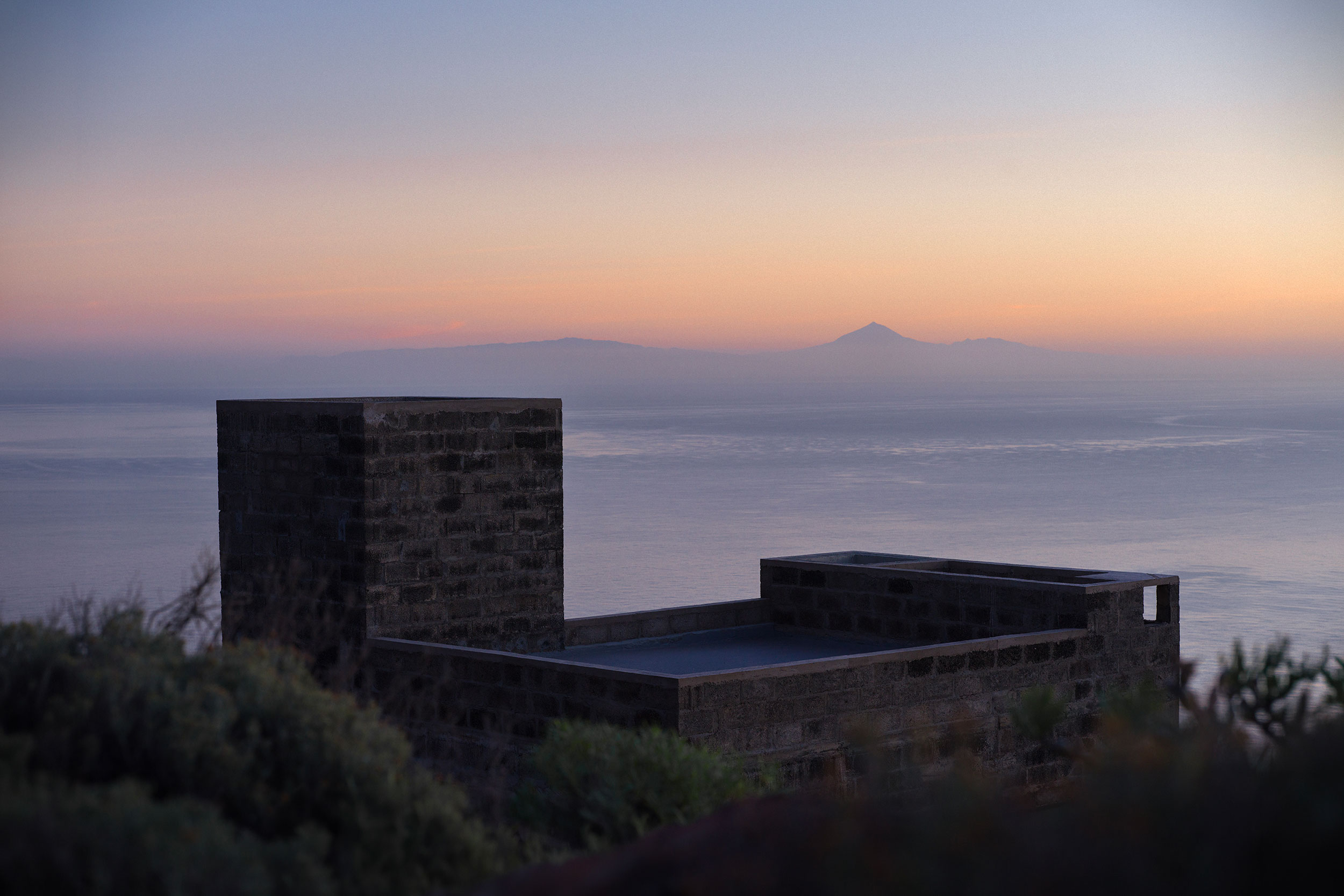
By 2021 it was a ruin. Tenerife-based photographer and entrepreneur Alberto del Hoyo Mora and Silvia Rodríguez, the couple behind BeTenerife, found it, understood it, and asked the Canarian architect Alejandro Beautell to give it a second life. Elevar means to raise. Once, the building helped raise water. Now it proposes to raise attention. PAVE makes the point well: nothing new was built on virgin lava, and the project’s value lies in reviving infrastructure that had already lived one life. It qualifies as regenerative travel in the most literal sense: a structure that once served its community and has been asked to serve it again.
Rough Magic: Architecture That Listens
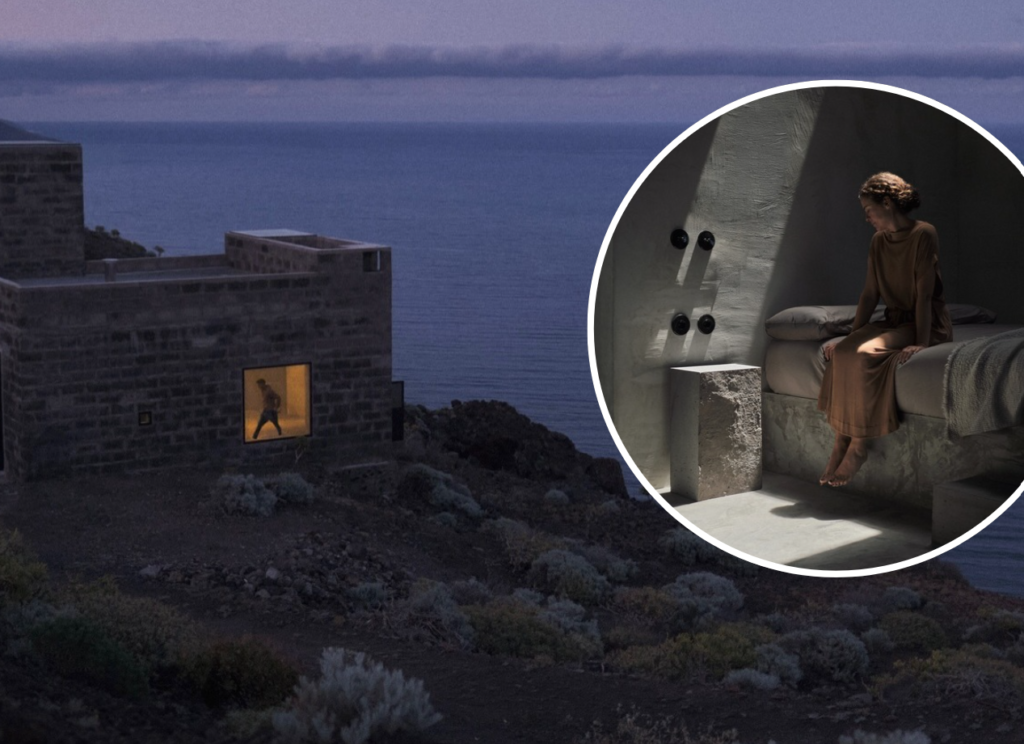
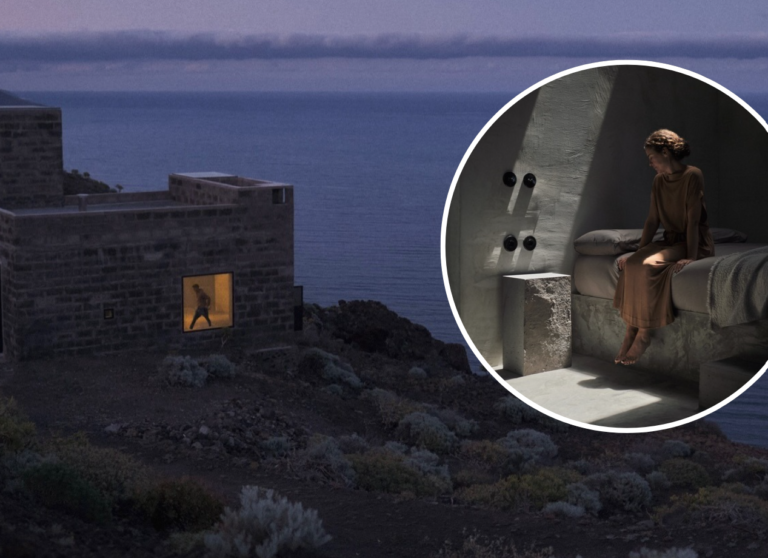
Beautell is known for raw poured-concrete churches and chapels; his Stella Maris chapel in El Pris, Tenerife, won a Faith & Form International Award in 2017. He brought that monastic sensibility to the cliff. Outside, the weathered breeze blocks of the original pumping station remain. Inside is a single open space of roughly 60 square meters, unadorned grey concrete, its shifting floor levels lending volume to a small footprint, with a kitchen tucked discreetly into a black-lacquered steel core.
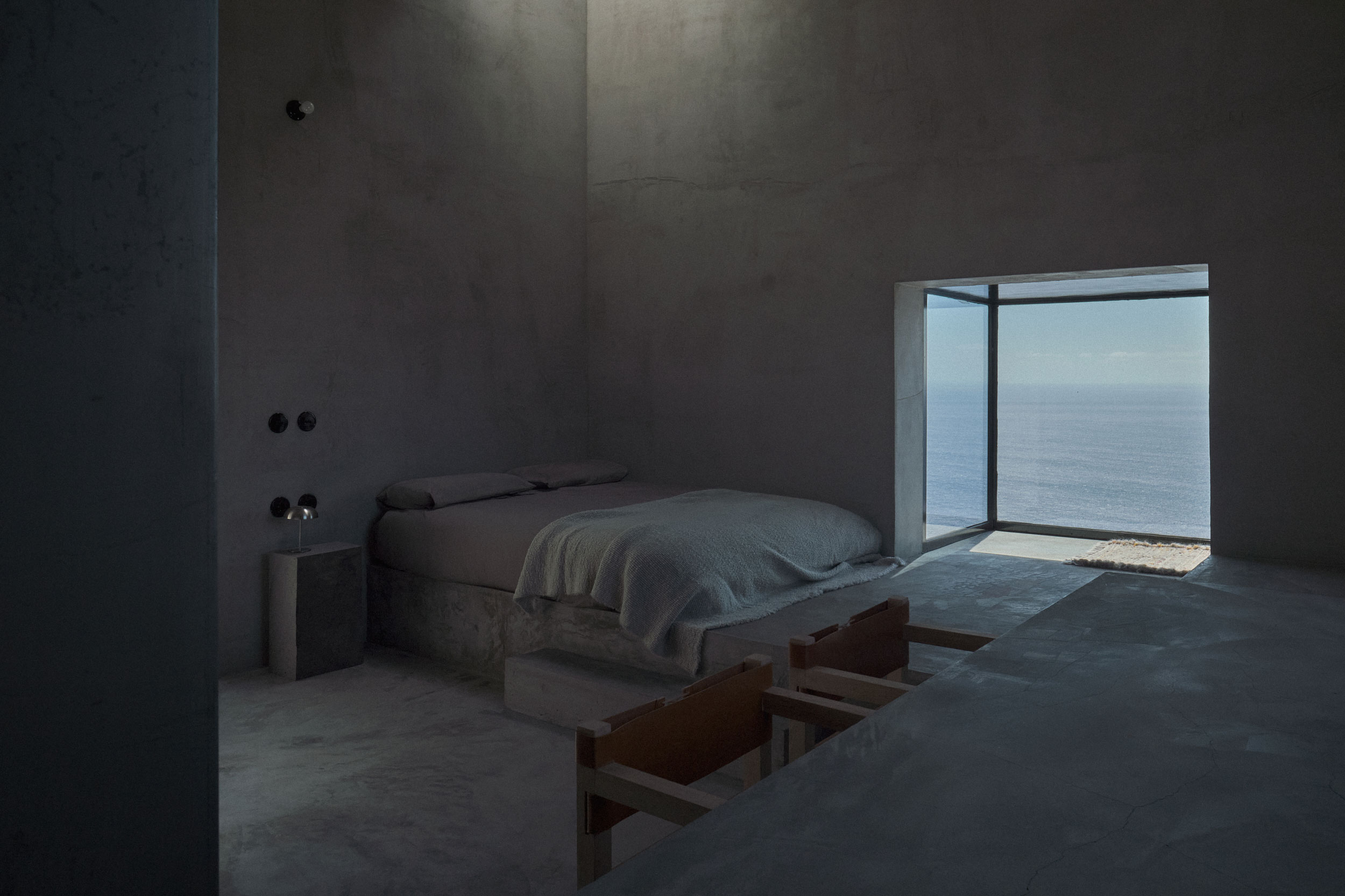
A glass-walled eyrie juts out over the void like the bridge of a ship. The old six-meter transformer tower is now a glass-roofed bathroom where the shower is a single gush of water from a pipe high on the wall. On the terrace, as PRIOR’s reviewer observed, an altar-like table of solid basalt faces a view that makes decoration redundant.
The house sits on pahoehoe basalt flows more than 15,000 years old, a landscape of cooled energy, a pause between eruptions. Two hundred and fifty metres below, the Atlantic never stops moving.
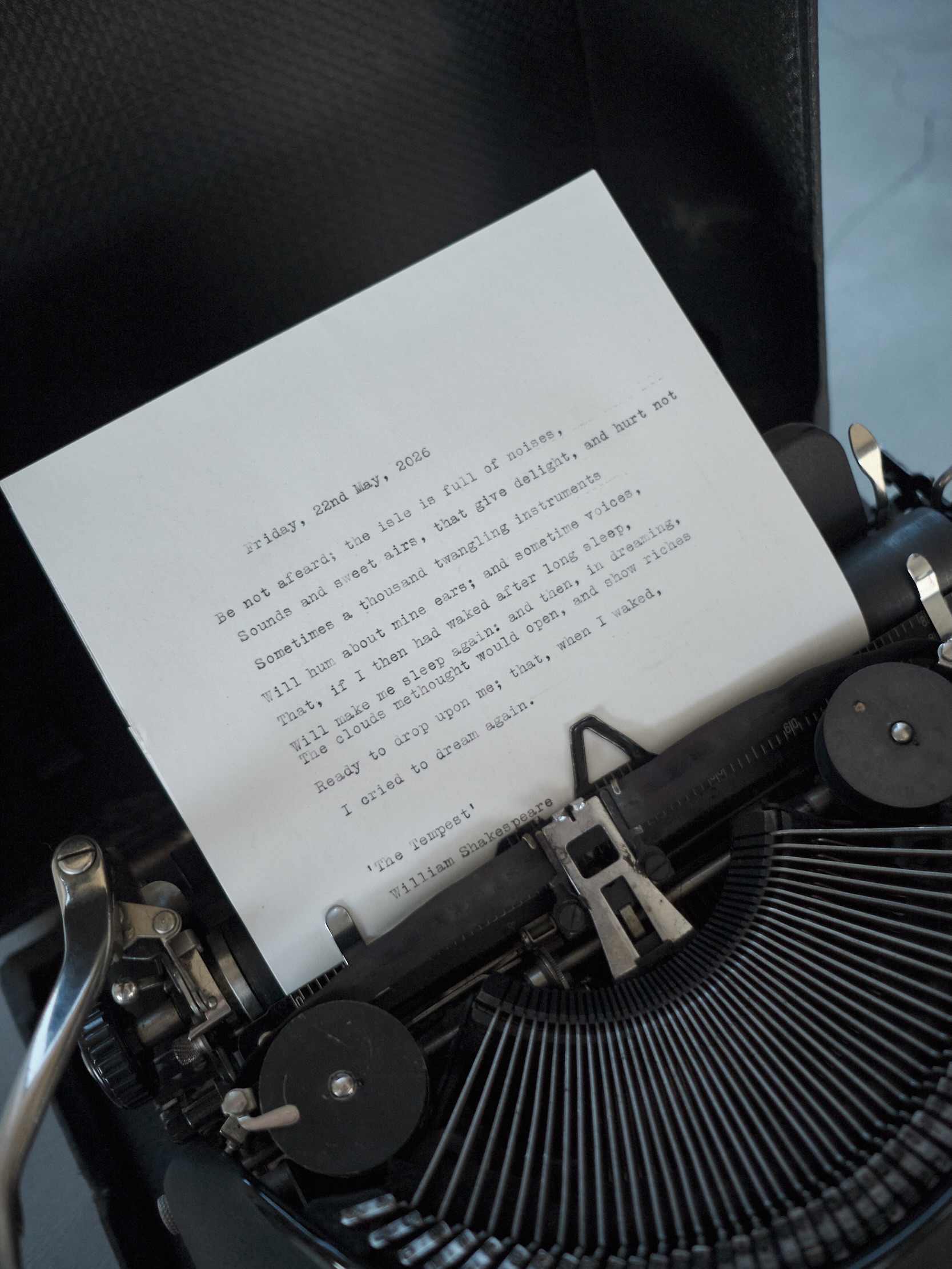
El Elevador’s two-word description of itself is rough magic, the phrase Prospero uses when renouncing his powers on his island at the end of The Tempest. As Lulu Townsend noticed, guests have found Caliban’s speech waiting in the typewriter:, the isle is full of noises. Somebody here has read their Shakespeare properly, and that alone tells you what kind of traveller the place hopes for.
The austerity has been carefully calibrated. The Egyptian cotton comes from the Catalan house Bassols; the pots and pans are Mauviel; the wine glasses are handblown Josephinenhütte. The fridge arrives stocked with island wines, pastries and cheeses, to be cut with handmade knives from Gáldar in Gran Canaria.
Twelve Frames, One Typewriter, and a Book
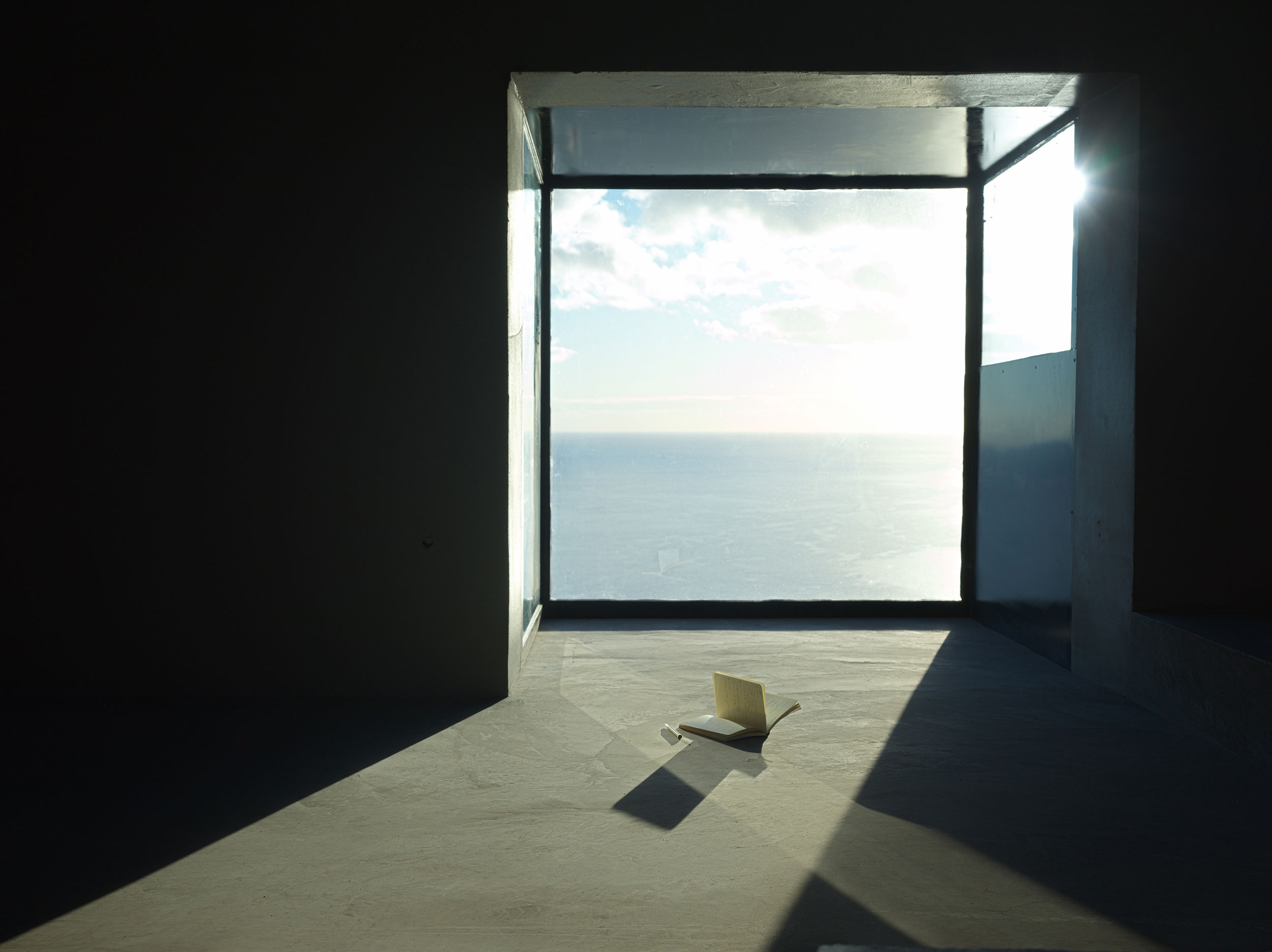
There is no Wi-Fi, no television, and mobile reception is unreliable at best. In place of screens: a 1930s Remington typewriter in working order, handmade Japanese writing paper, a stick of sealing wax, and a vintage Hasselblad loaded with a twelve-exposure roll of Ilford film.
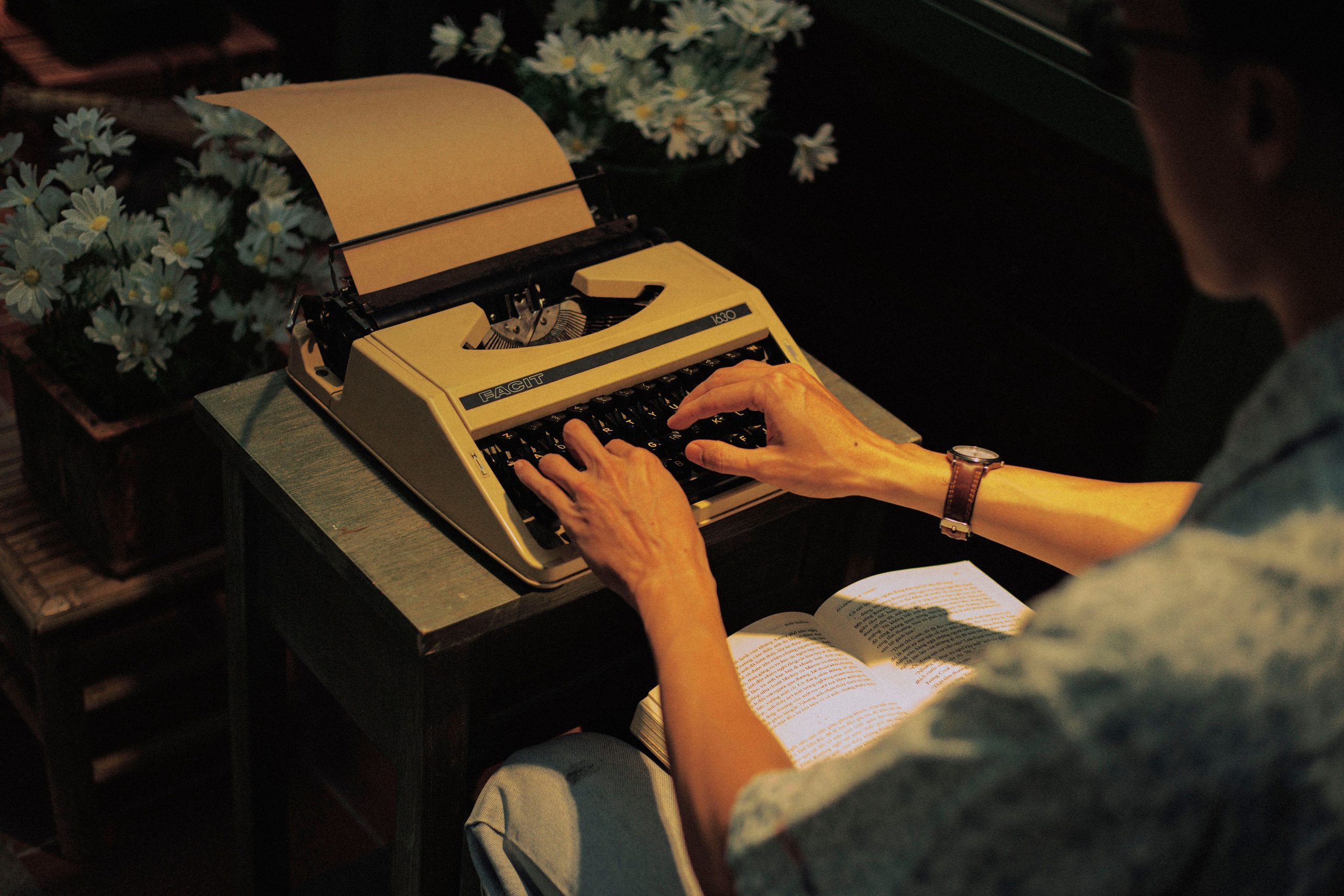
Twelve exposures, in a culture where a phone can produce several hundred holiday pictures before lunch. Each frame costs something, so composition acquires consequence. The typewriter operates on the same logic: a sentence stays where you put it, so you think before you strike. The house is making a design argument about attention, and there is some science behind it.
In a high-density EEG study at the Norwegian University of Science and Technology, 36 students who wrote words by hand showed markedly more elaborate brain connectivity, involving widespread networks associated with memory formation and learning. A 2025 commentary raises fair methodological caveats, so the finding is best treated as suggestive. The physical act of forming letters appears to engage broad networks across the brain, potentially supporting the processes involved in learning and memory.
A book, then, earns its place in your luggage. The Financial Times writer who stayed for days after completion reported that his sleep improved and his sense of time loosened, alone with something to read and no digital chatter to argue with. Boredom, del Hoyo wrote in the papers left for guests, brings us to the point where distractions fall away and a conversation with ourselves begins. Readers have understood this for centuries.
The Island That Was Once the Edge of the World
El Elevador would be a curiosity anywhere. On El Hierro it belongs to something older and larger.
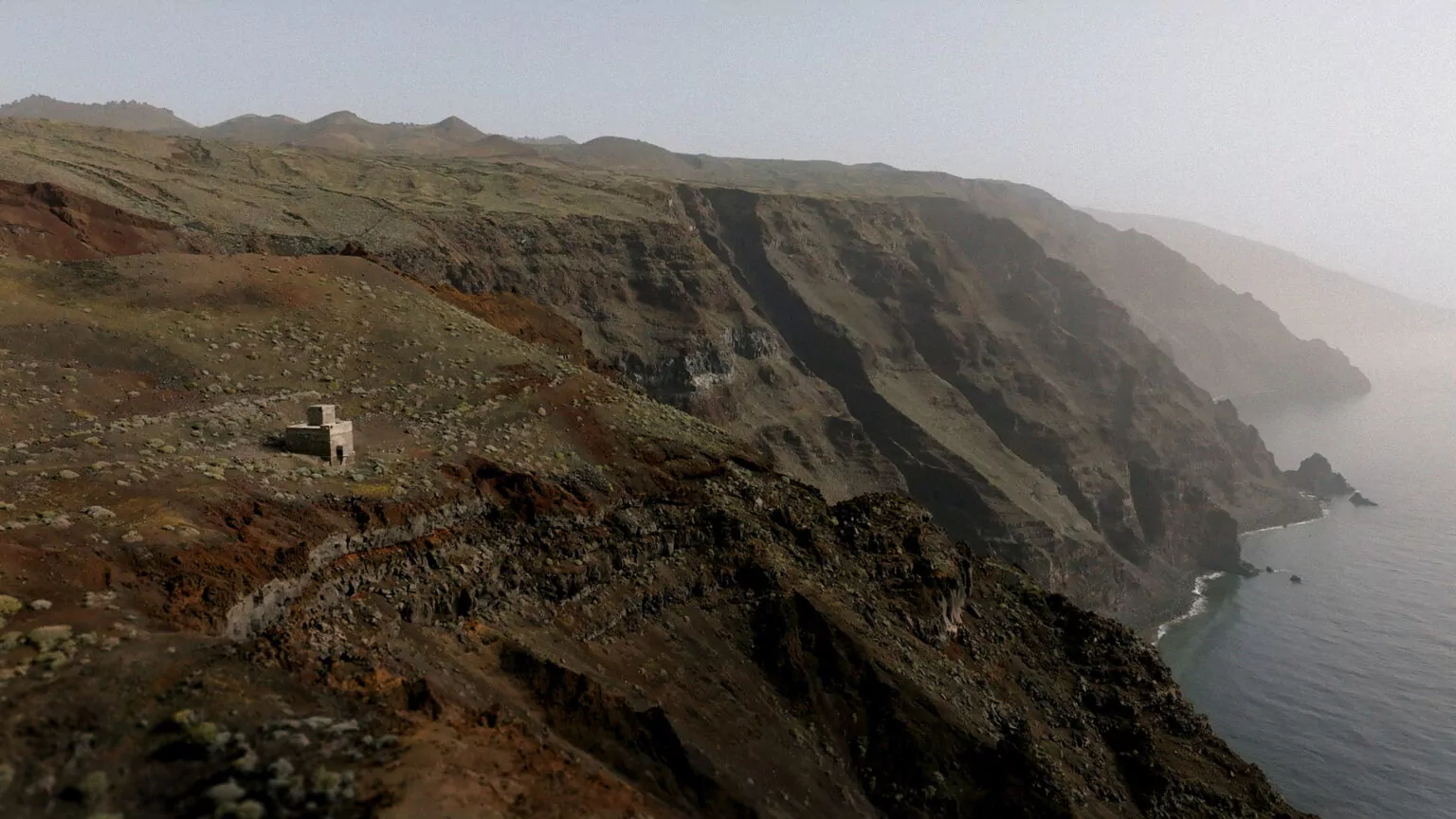
This is the westernmost and southernmost of the Canaries’ main islands, 268 square kilometres of wildness, about half the size of Ibiza, which received 21,970 international visitors last year, compared with 16.3 million for the archipelago as a whole. Around 10,000 people live here, roughly half of them in Valverde, the capital. The first settlers, the Bimbaches, arrived from North Africa around 120 CE and survived on an island with no rivers or lakes, partly thanks to the Garoé, a sacred til tree that condensed cloud moisture into drinkable water, horizontal rain, until the 1610 storm. It was replanted in 1949 and still sits at the centre of the island’s flag.
For roughly two centuries, European cartographers ran their prime meridian through Punta de Orchilla at the island’s southwestern tip, until Greenwich took the title in the 1880s. Until Columbus proved otherwise, this really was the end of the known world.
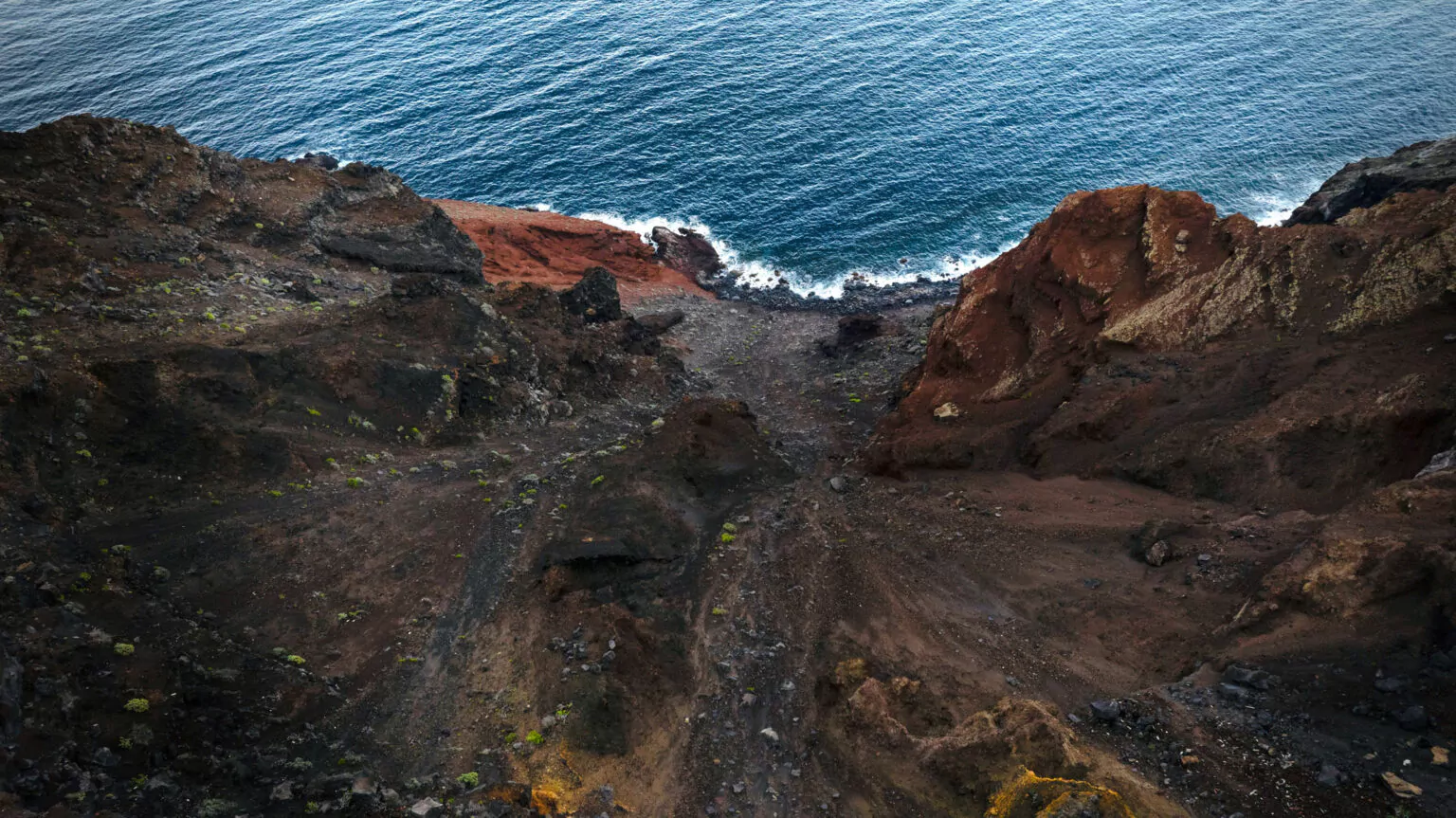
It has since become a template. UNESCO declared El Hierro a Biosphere Reserve in 2000 and a Geopark in 2014; the Gorona del Viento wind-and-pumped-hydro plant has since run the entire island on renewables for up to 18 consecutive days, a milestone UNESCO itself marked when the grid first ran clean in August 2015. An island that once lost its children to thirst now sends its surplus wind uphill as stored water, and calls itself, fairly, the sustainable island. Casañas would recognize the logic exactly.
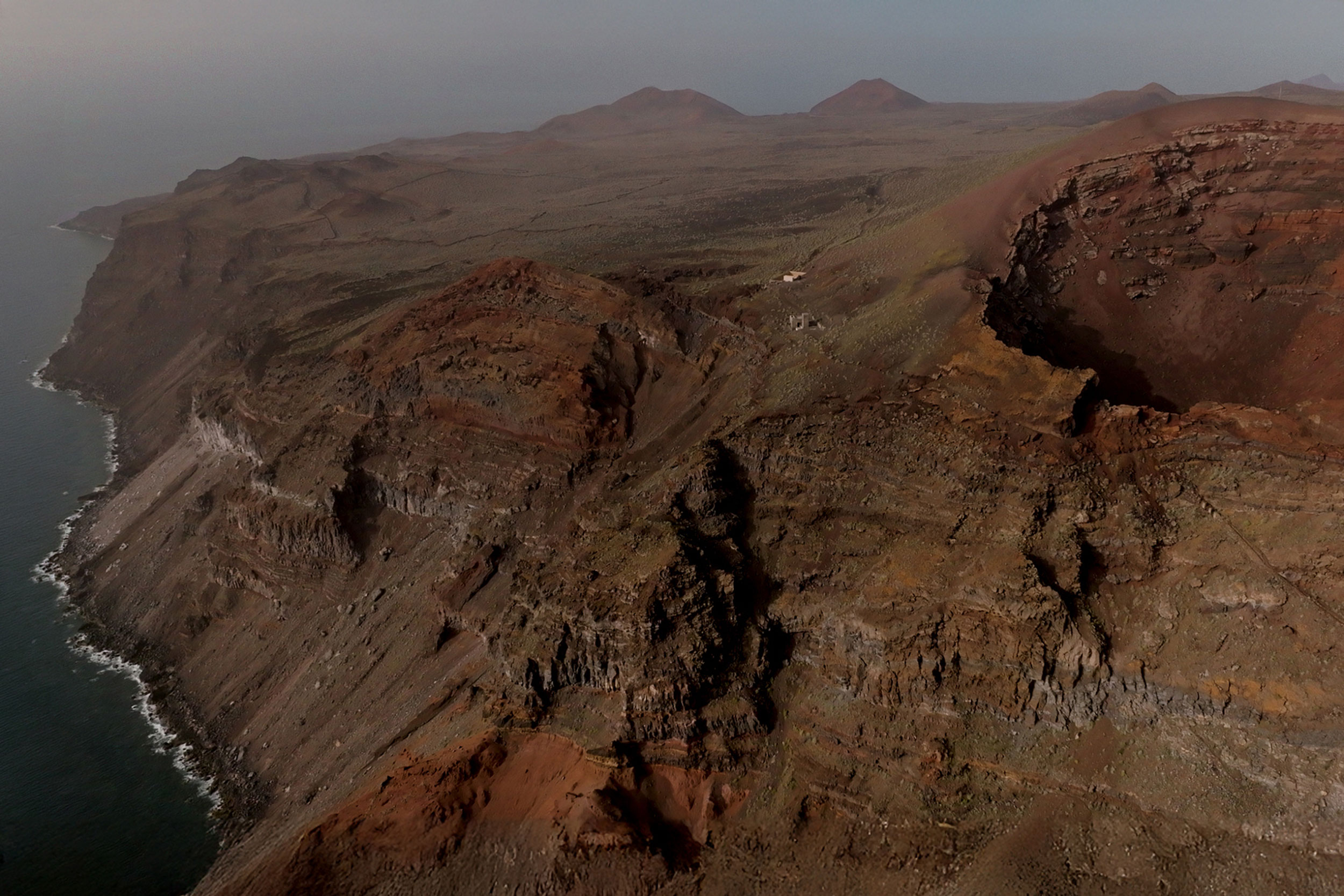
And then there’s the table. Island cooking runs the gamut from grilled limpets to carne fiesta and ropa vieja, with aromatic wines from indigenous grapes like Vijariego and Baboso Blanco, grown in pocket-sized walled plots. In Valverde, chef Marcos Tavío cooks for a maximum of eight guests at 8Aborigen, a tasting menu built as an archaeological dig through herreño food culture: gofio, limpets, halophytic plants, black pigs. Elsewhere, Hotel Puntagrande, a converted customs shed dating to 1830, entered the Guinness Book in 1984 as the world’s smallest hotel. The coast offers few beaches and many charcos, black lava tidal pools clear enough to snorkel.
Who Should Write
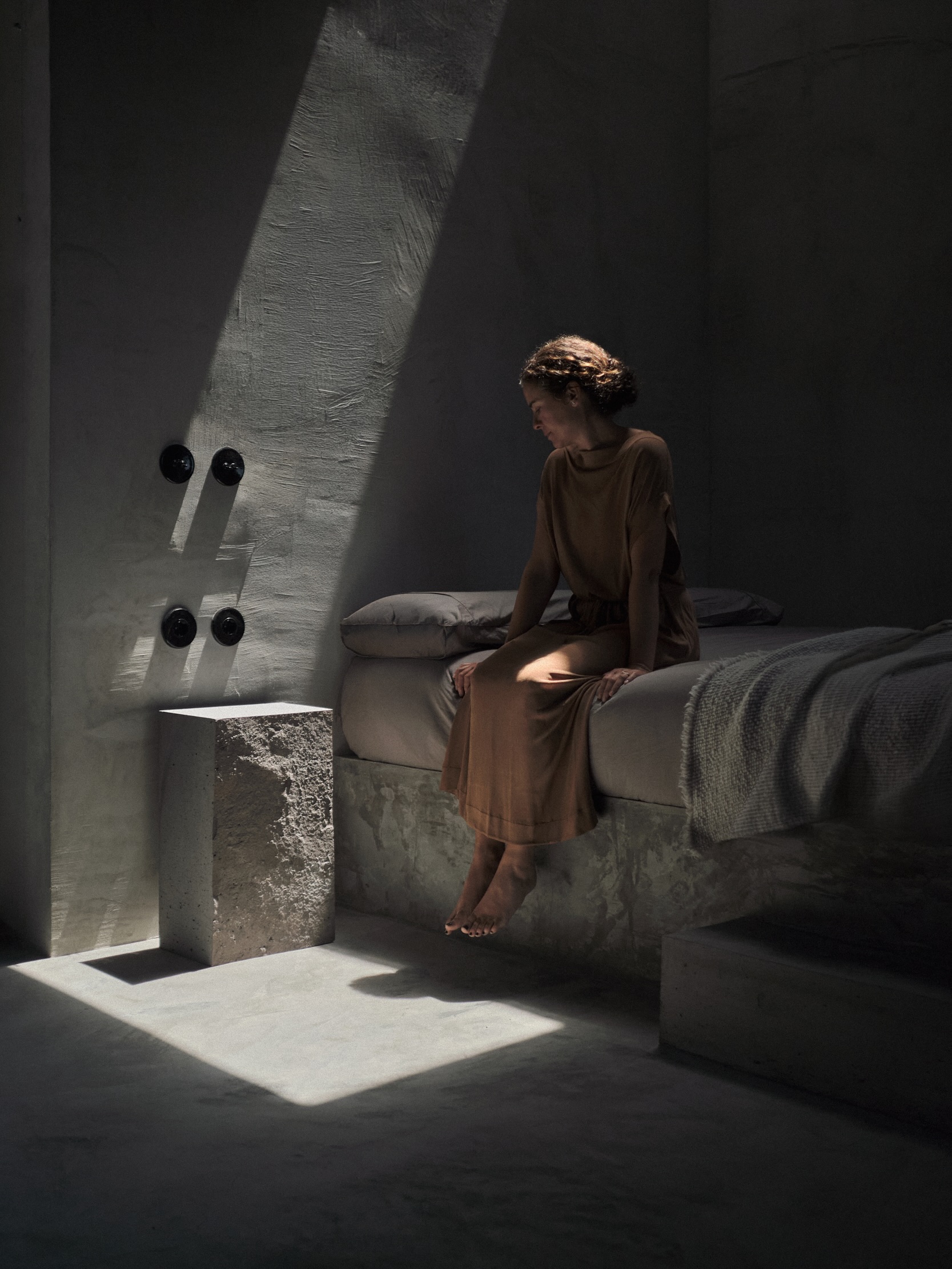
Not everyone, and the owners are honest about it. This is no place for children, pets or vertigo; there are no guardrails between the terrace and a 250-meter drop, and no curtains either. It suits one or two people willing to spend a few days alone with a book, a view, and their own undiluted company and their own company undiluted. Rates aren’t published; reported estimates put a night somewhere in the region of €600 to €1,000, though you’ll discover the real figure the old-fashioned way, by asking, in writing.
Getting there is part of the fun: a flight to Tenerife, then a short turboprop hop with Binter to the island’s small airport, then a drive south through pine forest, cloud-sea lookouts and lava badlands to a dusty track above the ocean. It is, as PRIOR puts it in its Canary Islands hotel guide, a promising development for an archipelago long associated with bland resorts.
The travel industry has a vocabulary for all this now. Hilton’s 2026 trends report calls it hushpitality; a wider analog revival is filling letter-writing clubs and vinyl nights around the world, and one in four adults now say they choose trips without phones or internet. The labels are useful shorthand. The pull of the place runs through something simpler and older: somewhere on El Hierro, a person will open your envelope, read what you hoped to find, and answer you by hand.
The whole exchange belongs to the long tradition of correspondence, the oldest and kindest technology we have for turning a stranger on the far side of the world into someone who knows your handwriting.


Adam Ryan
Adam is a distinguished content writer, bookworm, and full-time adventurer with a constant craving for coffee. When he's not working, he loves exploring remote corners of the world, immersing himself in different cultures, and writing about his experiences.