
Why books make the best souvenirs. Inside literary travel culture: from the Shakespeare and Company stamp to Hay-on-Wye, and how to make a shelf into an atlas.
Somewhere on your shelf is a paperback with a foreign price sticker you never peeled off. You can still remember the room where you bought it. There is sand in the gutter of page 200. There is a receipt on page forty from a café whose name is gone. If you have ever been handed a book across a counter in Paris and watched the bookseller press a violet stamp onto the title page, you know the particular weight of that object in a bag for the rest of the trip.
You did not buy it as a souvenir. You bought it because you wanted something to read on the train. And yet it has outlasted every keyring and fridge magnet you ever carried home, because it records something no photograph can. A photo proves where you stood. A book remembers what you were thinking while you stood there. Which is why more than half of travelers now say they would plan a trip around literature, and why book lovers have always traveled a little differently from everyone else.
The Only Souvenir That Reads You Back
A book bought abroad is a strange object. It is mass-produced and unrepeatable at once. Ten thousand identical copies exist, and yet yours has a coffee ring from a specific morning and a marginal note in your own handwriting that you no longer entirely agree with.
That is the difference between a souvenir and a keepsake. A souvenir proves you were somewhere. A book records what you were thinking while you were there, which is a far rarer document. This is part of why your brain treats a physical book differently from a screen: the object has a location, a weight, a place in space, and your memory attaches to all of it. Open one five years later, and you meet a slightly younger person with different anxieties, underlining sentences you would now skip. Stories shape memory and identity, and the copy in your hands has been keeping the receipts.
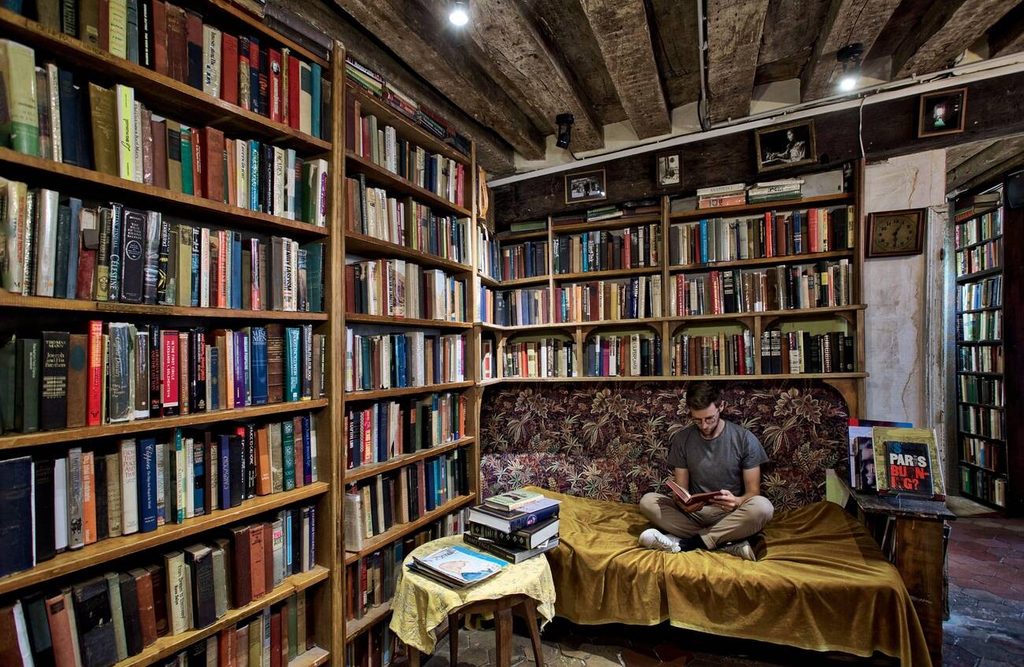
Collectors and scholars call this provenance: the accumulated evidence of ownership that turns one copy into a specific copy. Bookplates, dates, place names, prices in faded pencil on the endpaper. Rare book librarians read these marks the way archaeologists read pottery. The useful thing to realize is that when you write “Lisbon, October” inside a paperback, you are doing exactly what a seventeenth-century owner did. You have joined a very old habit.
An Unlikely Boom
If this sounds nostalgic, the numbers say otherwise. Literary travel is not a hangover from a slower era. It is one of the fastest-growing reasons people are flying.
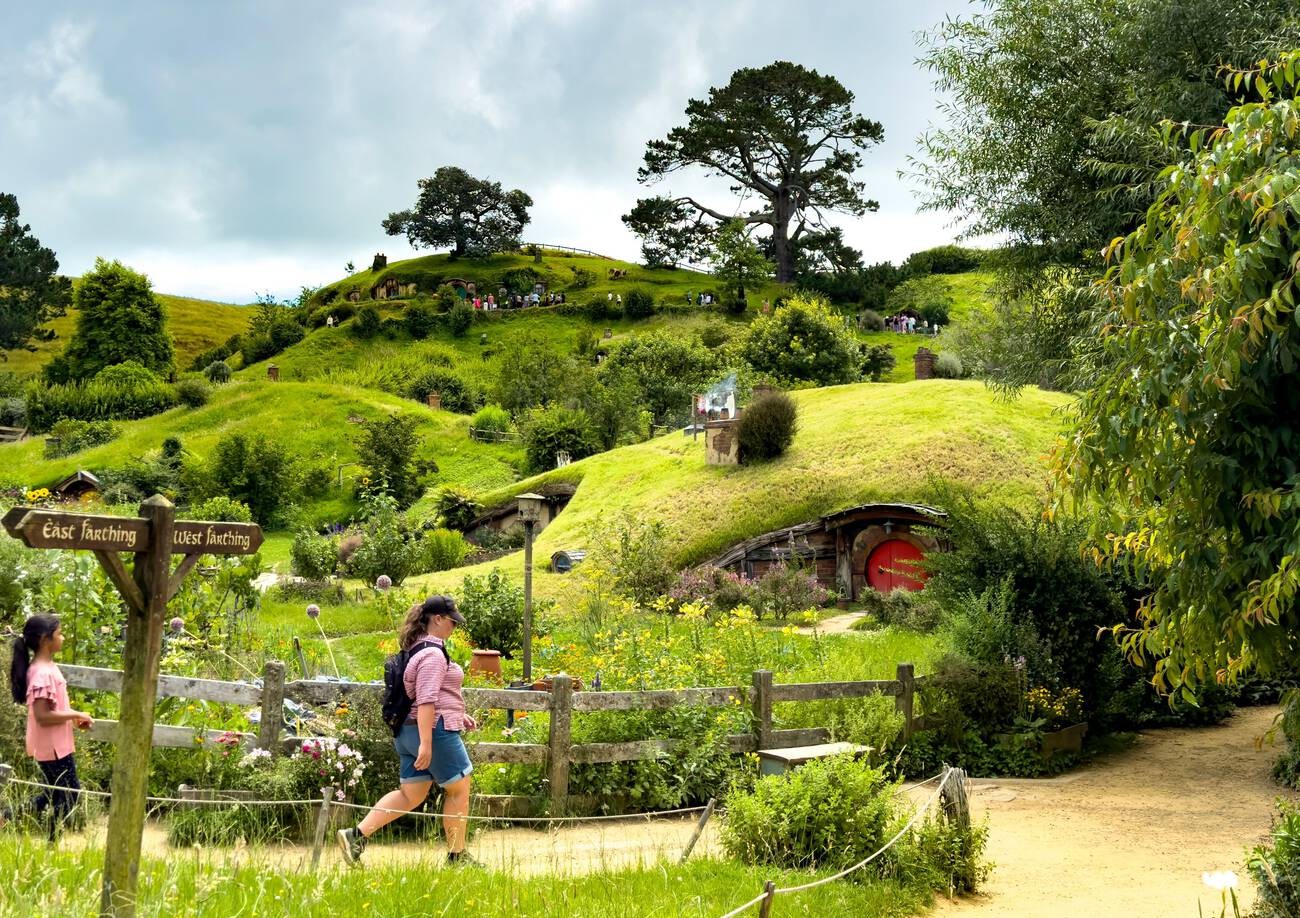
Research published by the flight-search company Skyscanner, reported in 2026, found that 55% of travelers have booked or would consider booking a trip inspired by literature, and that searches using the site’s “library” filter rose 70% globally year over year. People are planning holidays around reading rooms.
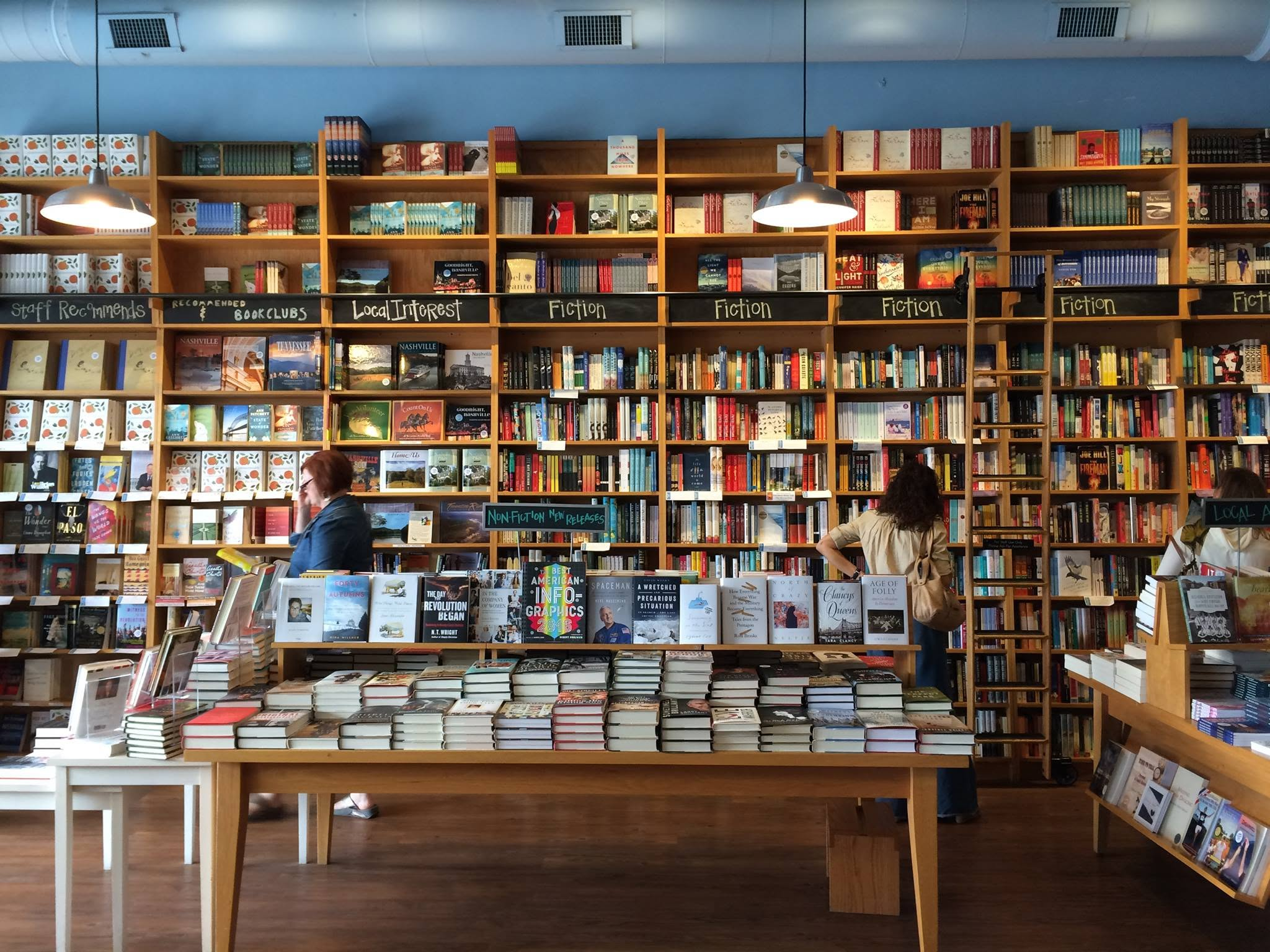
Shops are thriving too. The American Booksellers Association’s 2025 annual report showed 605 new independent bookstores opening across the United States in a single year, compared with 65 closures, with membership up 19% and overall growth reaching 151% over six years. An earlier ABA study with Civic Economics found roughly 29% of an independent bookstore’s revenue stays in its local economy, which makes the paperback you buy in a small town a modest act of civic participation.
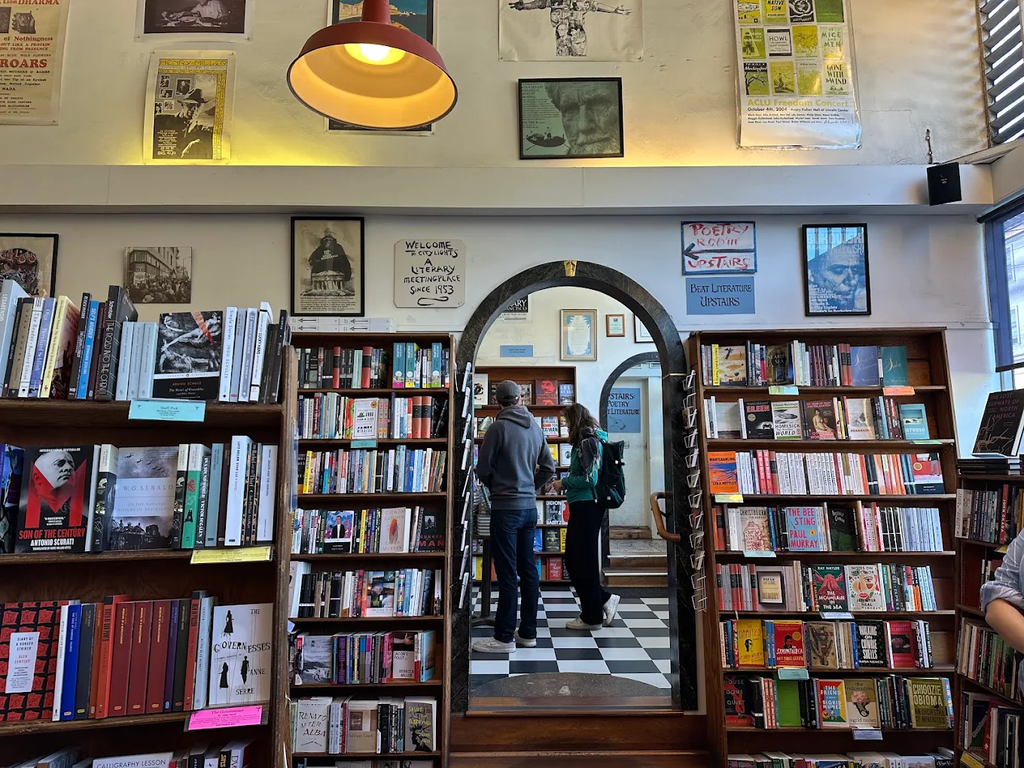
None of this is an accident. It belongs to both the broader comeback of analog life and a hunger for third spaces where people can simply be around each other without buying anything. The internet was supposed to kill the bookshop. Instead, it seems to have made people desperate for rooms where books are physical, and the staff has opinions.
The Stamp on the Title Page
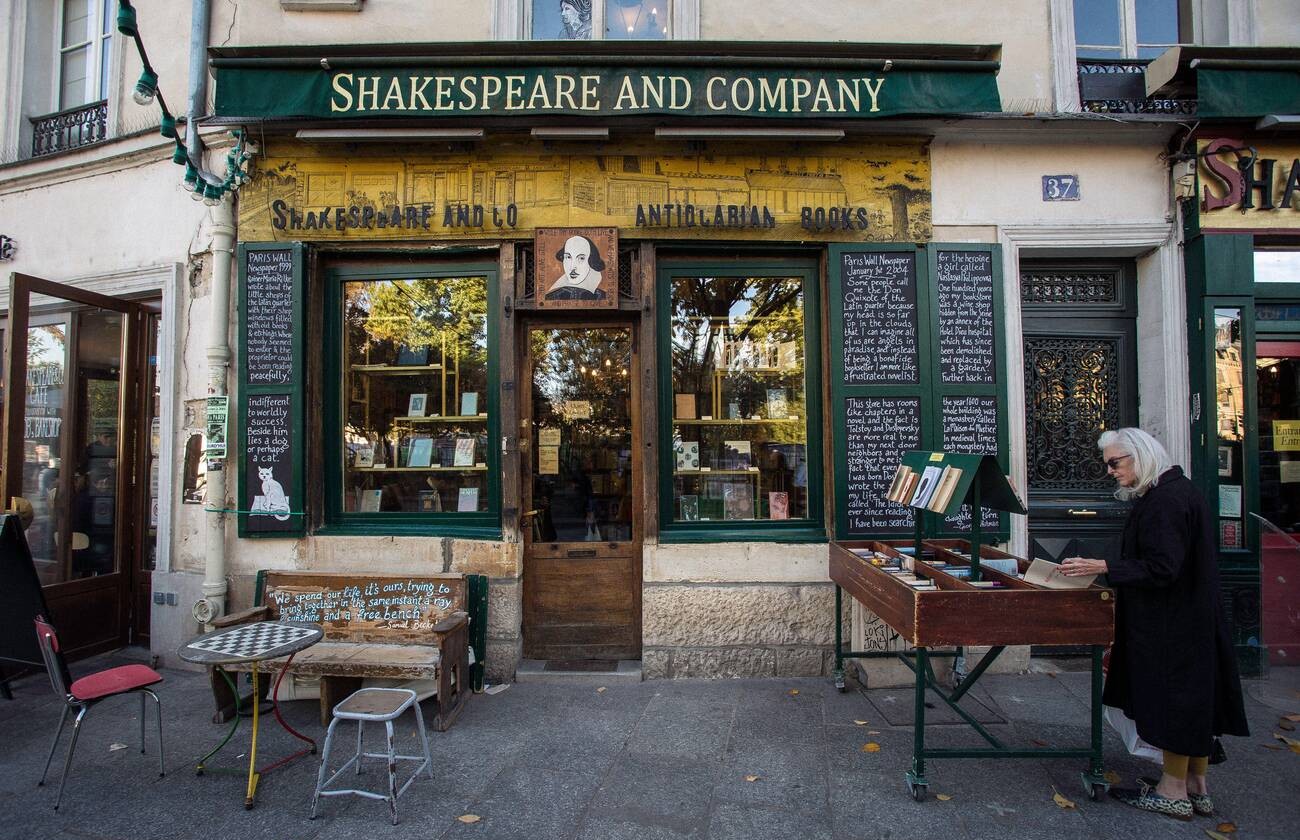
No shop better illustrates the souvenir instinct than Shakespeare and Company in Paris, where the ritual is formalized: buy a book, and the bookseller presses a stamp onto the title page. It is the closest thing publishing has to a passport stamp.
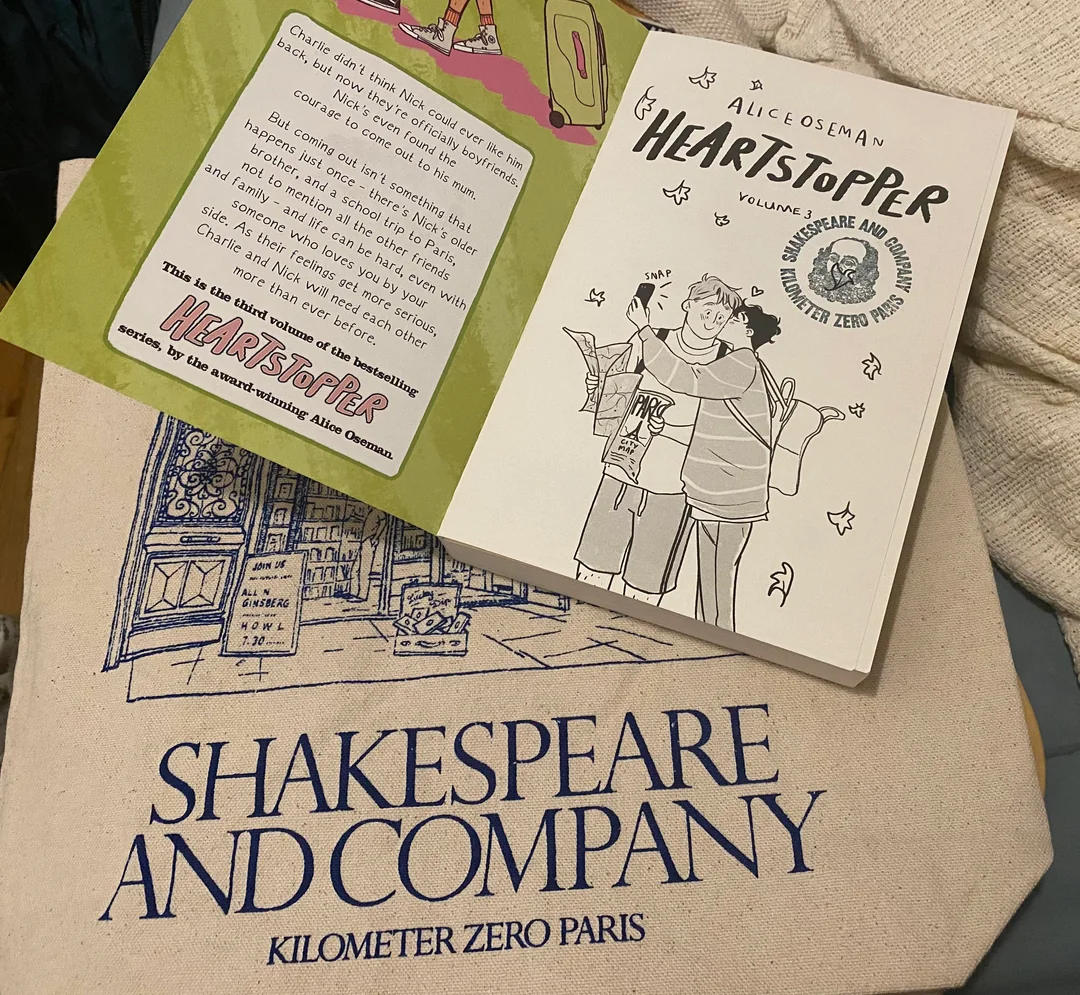
The history earns the sentiment. Sylvia Beach, an American, ran the original Shakespeare and Company from 1919 until 1941, when the German occupation forced it to close for good. Hers was as much a lending library as a shop, a hub for Hemingway, Fitzgerald, Stein, Pound and Joyce, and in 1922 she published Ulysses when no established house would touch it. In 1951, George Whitman opened his own English-language shop at 37 rue de la Bûcherie. Beach handed him the name in 1958, and he adopted it formally in 1964, on the 400th anniversary of Shakespeare’s birth. He described the place as “a socialist utopia masquerading as a bookstore”.
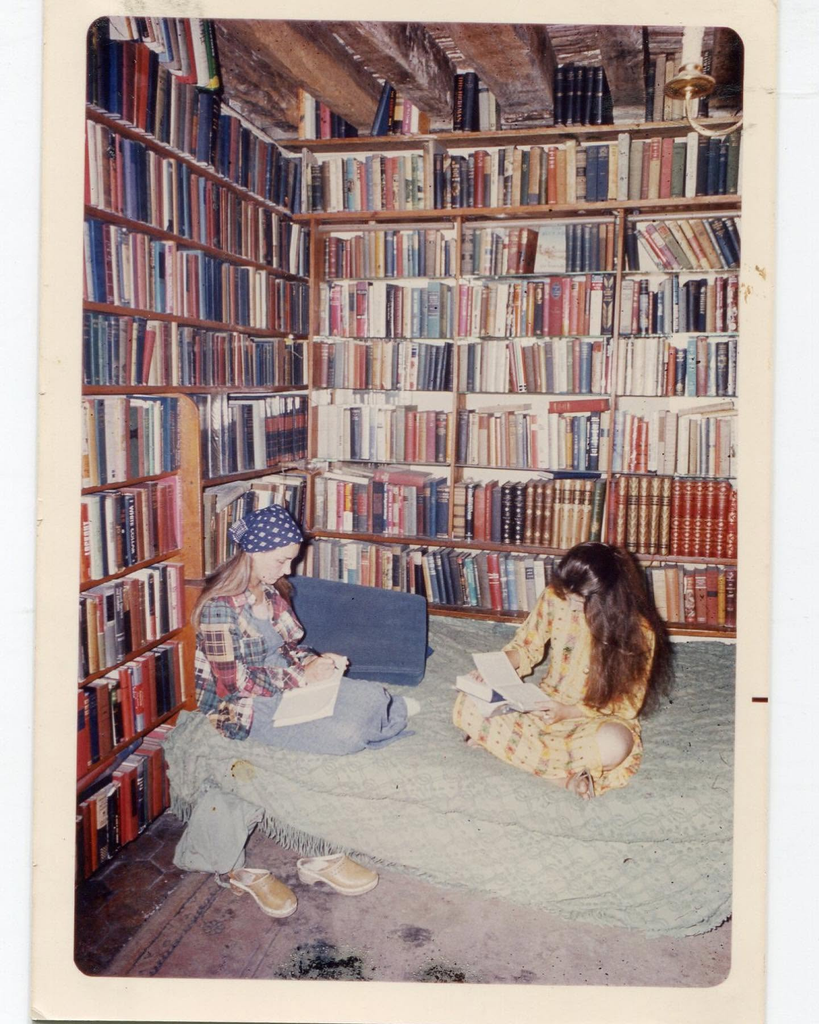
He meant it. From the beginning, writers were invited to sleep among the shelves. He called them Tumbleweeds, after the plants that blow about on the winds of chance, and asked three things of each of them: a couple of hours of work, a one-page autobiography for the archive, and a promise to “read a book a day”. Roughly 30,000 people have slept there. Painted above a doorway is the shop’s motto, borrowed from scripture: be not inhospitable to strangers lest they be angels in disguise. Sylvia Whitman, George’s daughter, runs it now with David Delannet.
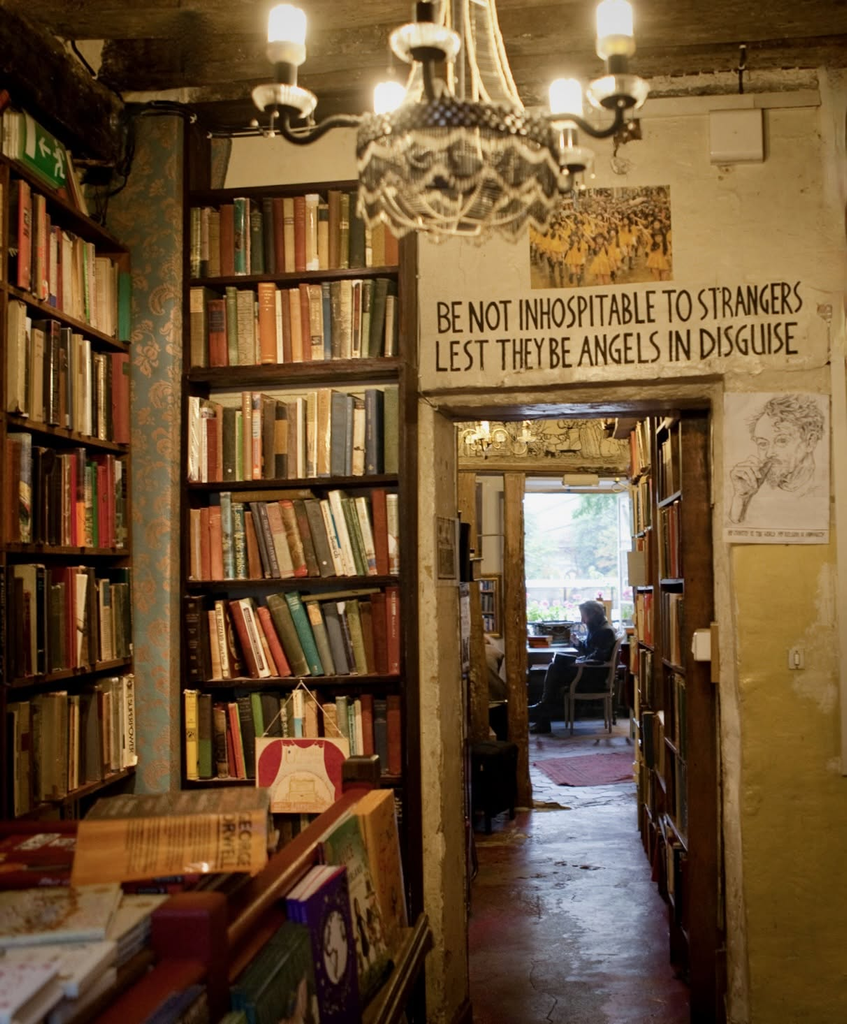
That is what the stamp certifies. Not that you visited a photogenic bookshop, but that you passed through a room built on the assumption that a stranger might be worth feeding.
Towns That Chose Books
If you want to see literary travel at its slowest and most stubborn, go to a book town.
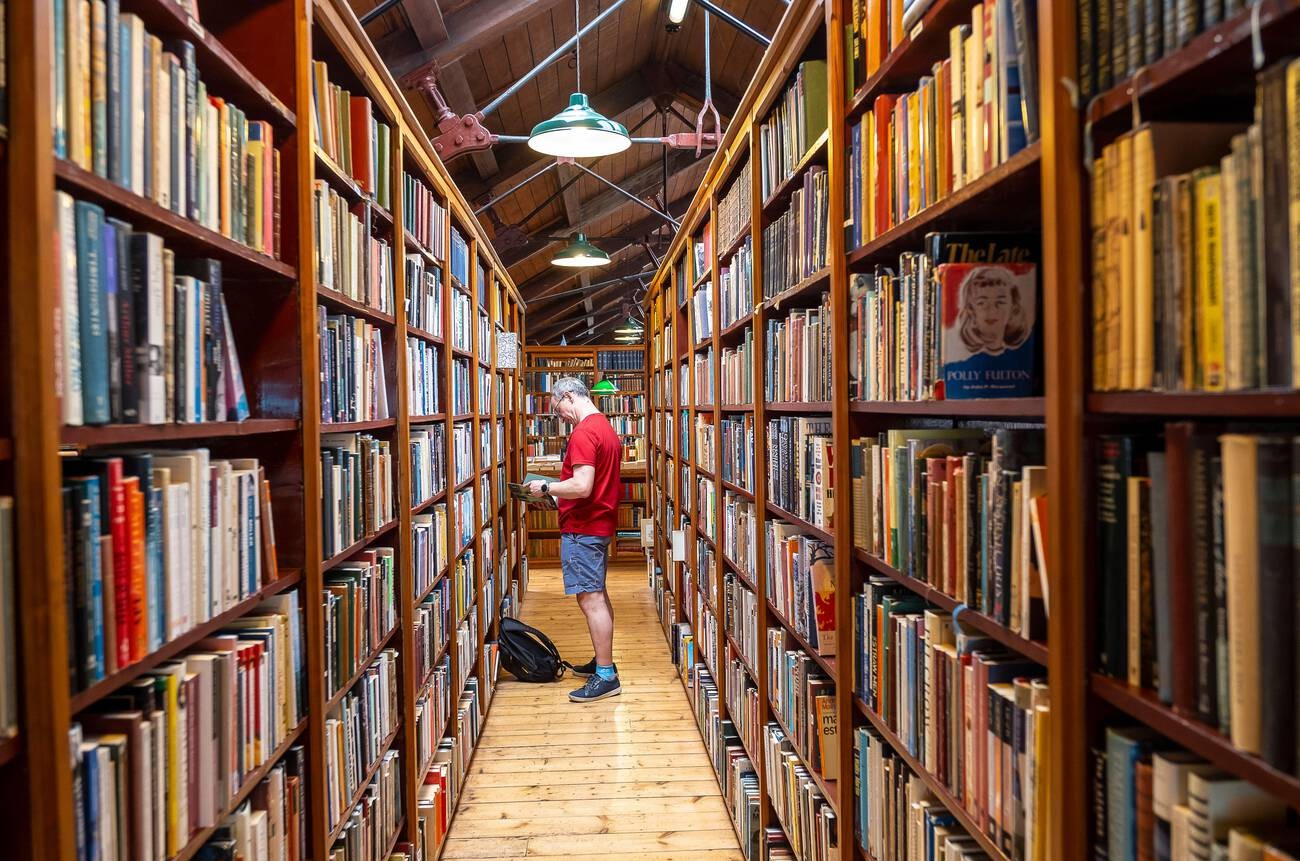
The idea belongs to Richard Booth, who in 1961 began filling the empty storefronts of Hay-on-Wye, a Welsh border town of fewer than two thousand people, with secondhand books. There are more than twenty bookshops there now, including one devoted to crime and horror and an honesty bookshop where you choose your volume beside old castle ruins and leave coins in a box. The Hay Festival spawned in 1987 became Britain’s foremost literary event.
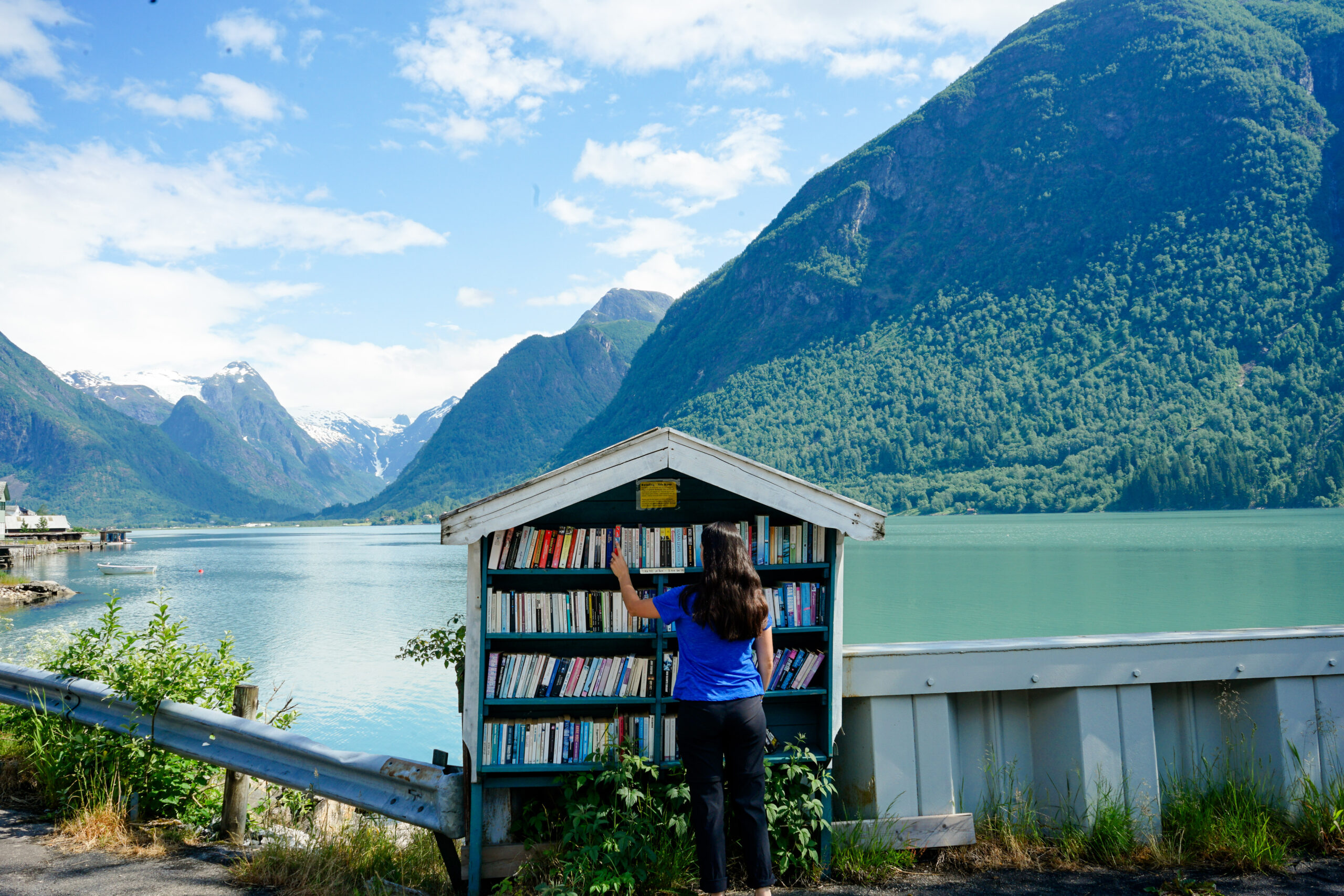
The model spread deliberately, often as rural development policy. Redu in Belgium followed in 1984. Then Bredevoort in the Netherlands, Bécherel and Montolieu in France, Saint-Pierre-de-Clages in Switzerland, Fjærland in Norway, and Sysmä in Finland. Wigtown became Scotland’s national book town in the late 1990s. The European network alone now runs to a dozen towns, and it reaches well beyond: Óbidos in Portugal, Paju in Korea, several across Asia, Clunes in Australia. It is coordinated by the International Organization of Book Towns, and the definition is charmingly precise: a small rural town or village where secondhand and antiquarian bookshops are concentrated, usually in a scenic setting.
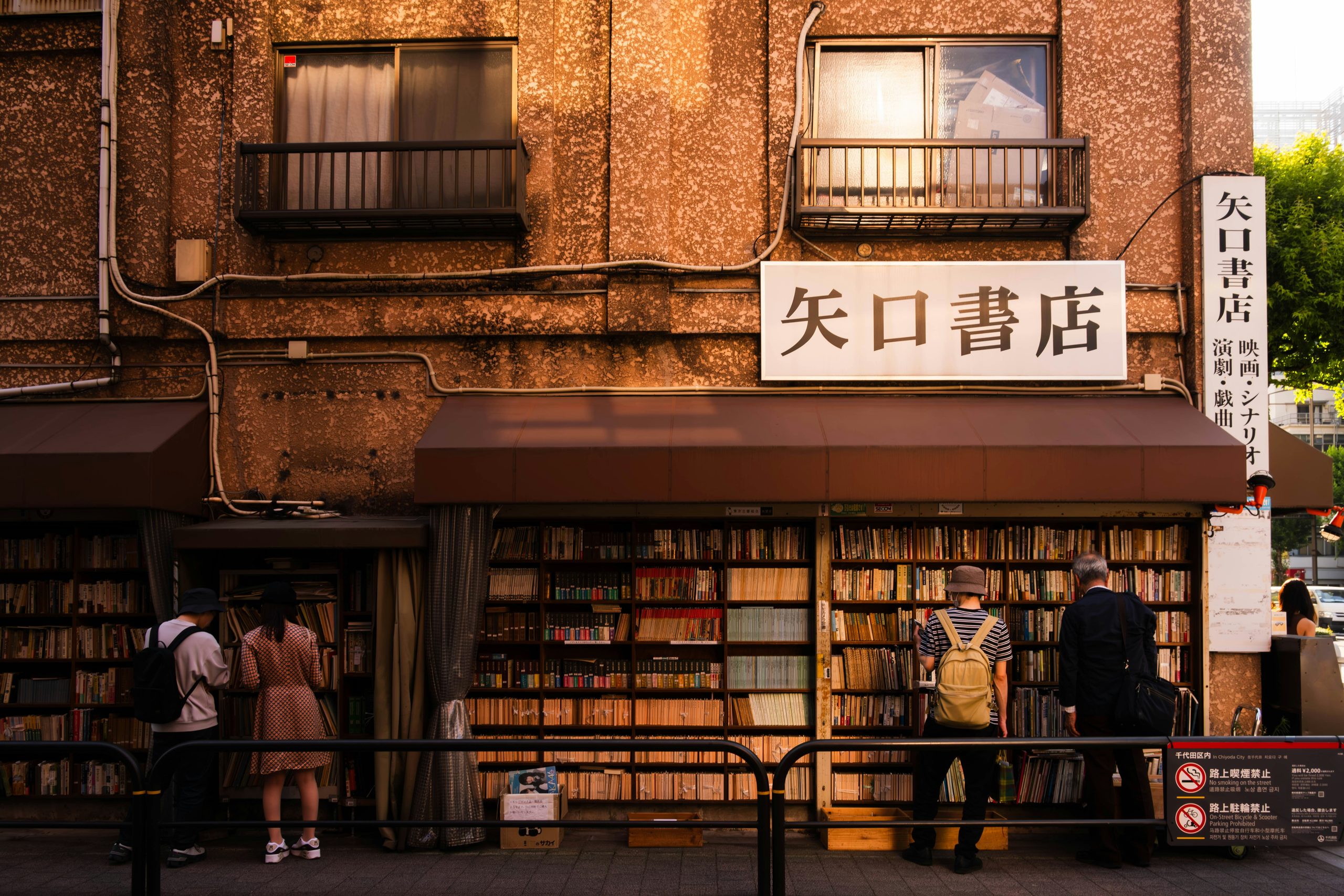
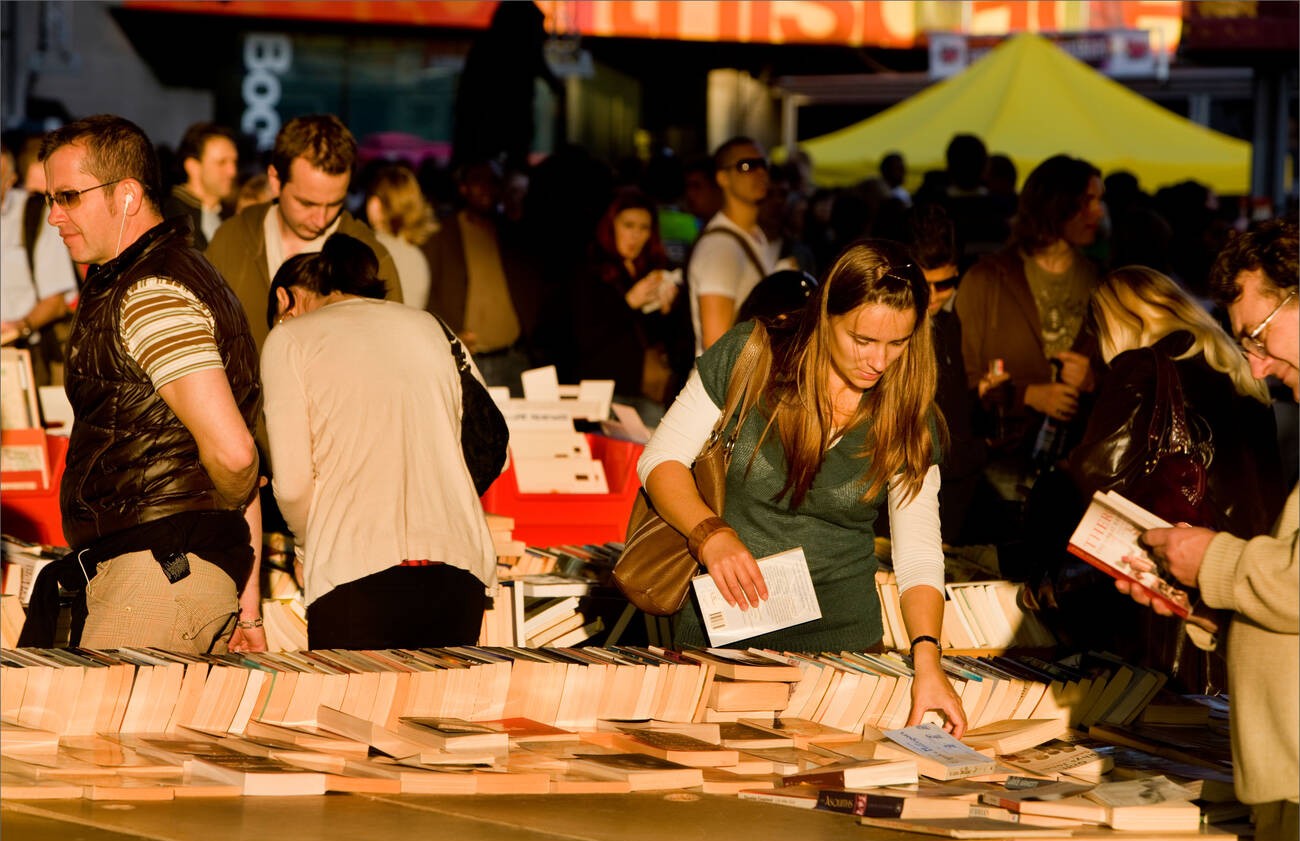
These places cannot be rushed, which is their entire argument. You cannot speed-run a shop of unsorted secondhand stock. You have to stand there, tilt your head, and read spines until something surprises you. It is the art of the aimless wander applied to shelving, and it explains why we lose track of time in bookshops in a way we never do in other stores.
Somebody Else Was Here First
The deepest pleasure of buying books while traveling is not what you write in them. It is what you find already written.
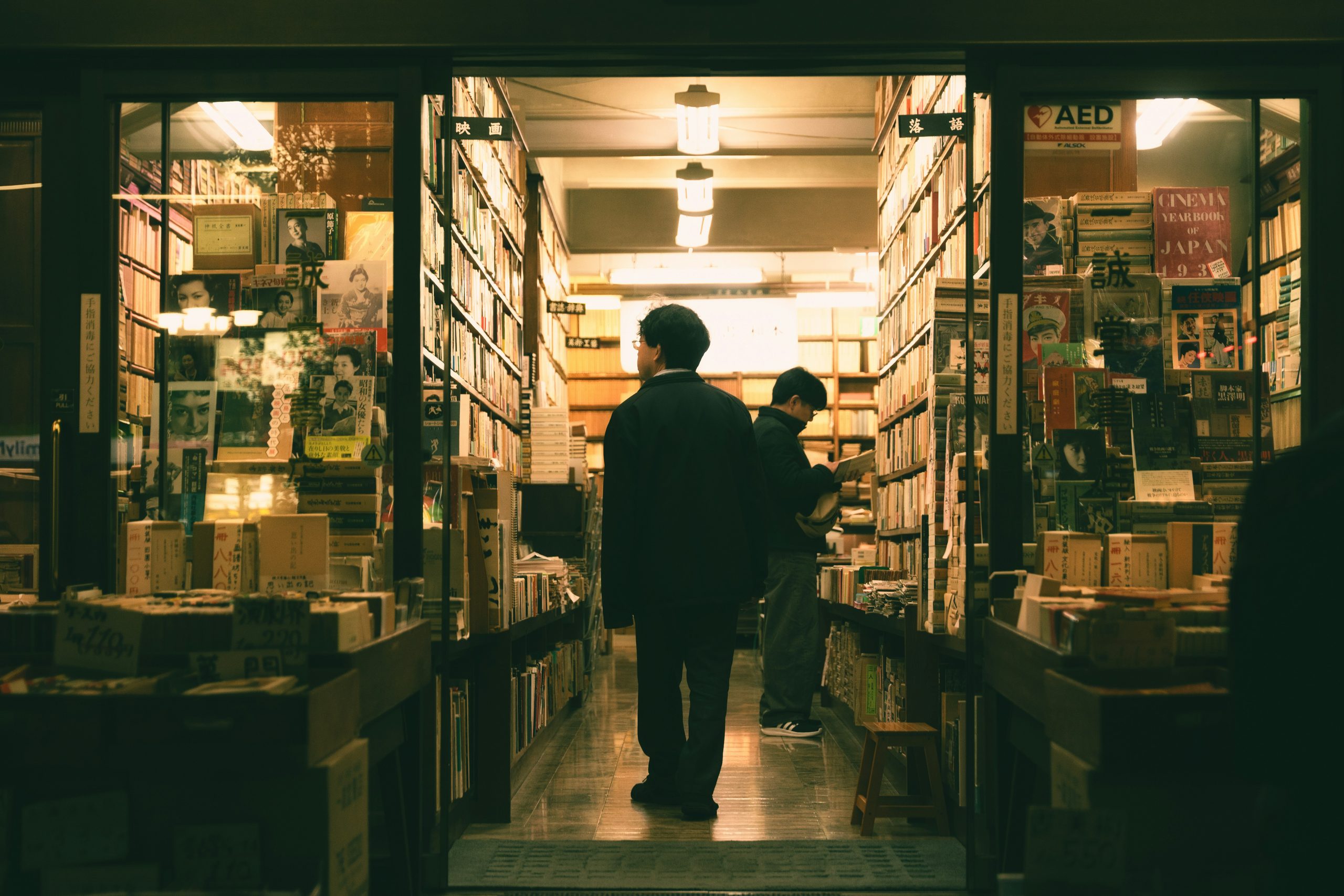
A used book is a time capsule with a stranger inside. The University of Virginia runs a project called Book Traces, which documents handwritten inscriptions and readers’ marks in old library books. When the University of Connecticut sampled 2,000 volumes published before 1925, about 12% contained markings, and roughly 1.5% held what researchers call notable interventions: real evidence of a specific human being reading.
Mortimer Adler argued in How to Read a Book that you do not truly own a book until you have written in it. A margin note turns a monologue into a conversation, and finding one left by someone who died 50 years ago makes it three-way. It is the same intimacy that makes book swaps feel like more than a transaction.
Read the Place, Not Just the Guidebook
Here is what makes literary travel more than a hobby for tidy people. Buy the local writers. Not the international bestseller in the train station, but the novel everyone in that country read at school, the poet whose name is on a street, the essayist arguing about a national wound you had never heard of. Ask a bookseller what their country is embarrassed about and what it is proud of. You will be handed things no algorithm would surface, because algorithms recommend what people like you already bought, and the point of going anywhere is to stop being only that person.
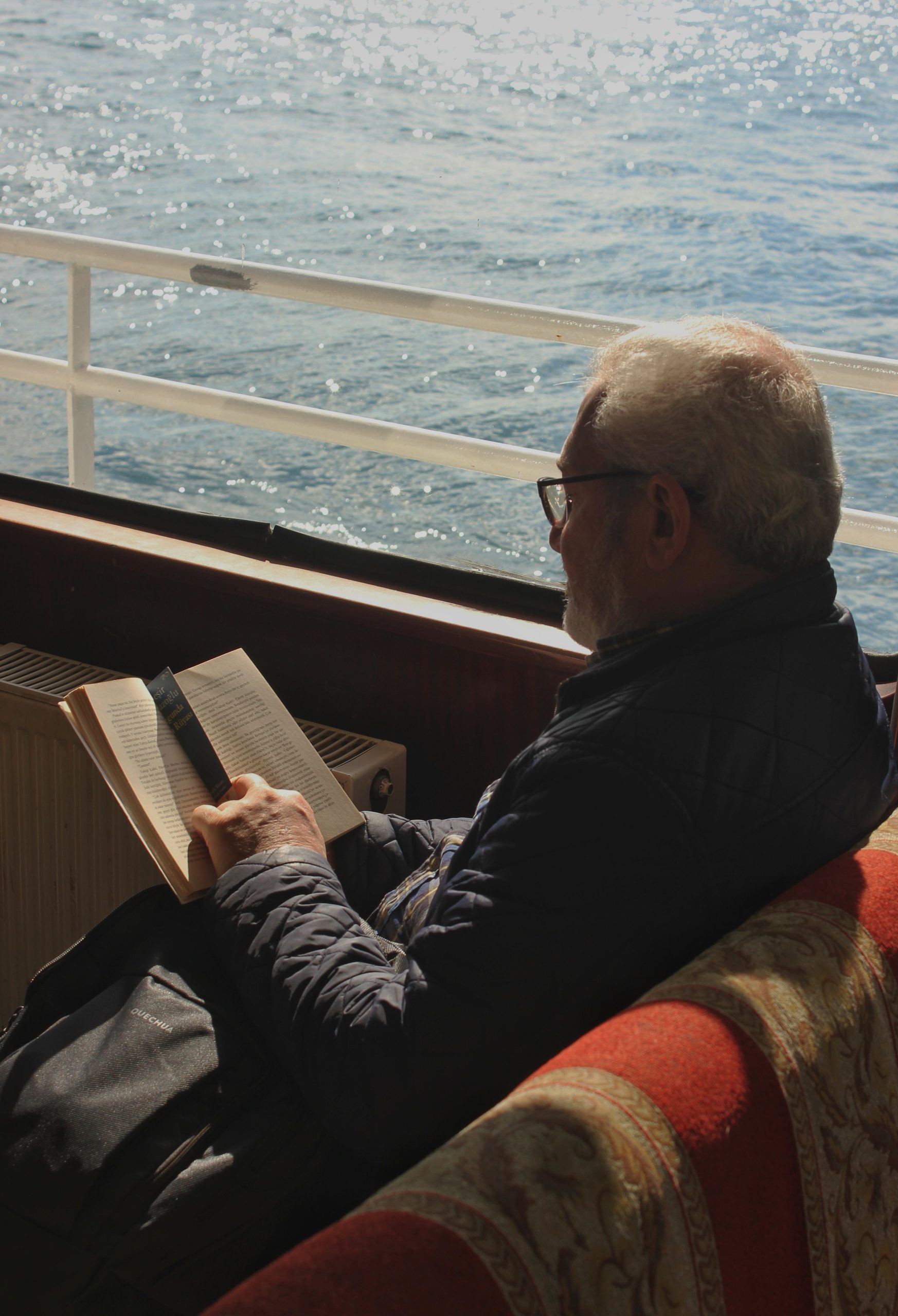
This is how a shelf becomes an argument for world citizenship rather than a trophy case. It is also, measurably, how a person softens: fiction is one of the more reliable routes we have into other people’s inner lives. Over the years, the shelf fills with voices you would never have chosen, from places you happened to stand in for a week.
So write it in. Front endpaper, top corner, in pen: the city, the month, the year, the shop. It takes four seconds, and handwriting still does something typing cannot.
Decades from now the sand will have fallen out, and the coffee ring will have faded, and that small line of handwriting will still be there, telling you exactly where you were standing when the world got a little bigger.

Adam Ryan
Adam is a distinguished content writer, bookworm, and full-time adventurer with a constant craving for coffee. When he's not working, he loves exploring remote corners of the world, immersing himself in different cultures, and writing about his experiences.