TikTok’s burnt toast theory is 2,100 years old. On the Chinese farmer, the Indian king, the Talmudic sage, a Persian fairy tale and Steve Jobs, all telling the same story.
You know the feeling. The toast burns. The exit is missed. The flight is delayed, the queue is long, the traffic is the traffic. None of it is a catastrophe, and all of it lands the same way: a small, hot flash of why is this happening to me, followed by the older, quieter question underneath, why can’t things just go the way I planned?
Somewhere around 2023, the internet gave that feeling a comfort, and a name. The comfort turns out to be one of the oldest ideas humanity owns, told in every language that has a word for luck. This is the story of how it reached a toaster.
A Short History of a Very New Idea
The earliest trace anyone has found is an Instagram video posted on 4 April 2023 by an account called @latenightepiphanies_, which laid the whole idea out in two sentences: if you burn your toast in the morning, the time you spend making another slice may have saved you from a car accident, because everything happens for a reason. The toast was chosen well. It is the smallest domestic failure a person can suffer, so ordinary that everyone has done it and nobody has ever grieved it, which makes it the perfect stand-in for every minor thing that goes wrong before nine in the morning.
The idea travelled quietly for four months, then found its carrier. In August 2023, a TikTok creator named Ingrid, posting as @offthe__grid, recorded a short video explaining that she had recently learned about the burnt toast theory and that it was helping her accept the things she could not control. Her caption was generous about where it came from: shoutout to the internet, she wrote, for sharing this wisdom, so she was passing it along.
@offthe__grid Monday morning thoughts… shoutout to the internet for sharing this wisdom so passing it along 💖❤️🩹 #therapytiktok #advice #anxiousattachment #fyp ♬ original sound – Faye 💛😋
The hashtags placed it in its ecosystem, therapy TikTok and anxious attachment, the corner of the platform where people who struggle with uncertainty trade ways of living with it. The video gathered close to a hundred thousand likes, the Daily Mail covered it within the week, and by January 2024 the theory had spread across the platform and into every lifestyle magazine that follows it.
The name deserves a moment of its own. There is no experiment behind the burnt toast theory and no theorist. The word theory belongs to a TikTok naming convention, the same one that produced the orange peel theory and a dozen cousins, in which a piece of folk wisdom is given a title so that it can be explained, debated, and passed along.
This is a very old process wearing new clothes. Every culture that ever produced this idea eventually compressed it into something short enough to carry: a proverb, an idiom, a name, and the internet simply did what the Han dynasty, the Talmud, and the English language had already done before it.
The Old Man at the Frontier
Around 139 BCE, a Daoist text called the Huainanzi was presented to the Han emperor. Buried in it is a story every Chinese schoolchild still knows.
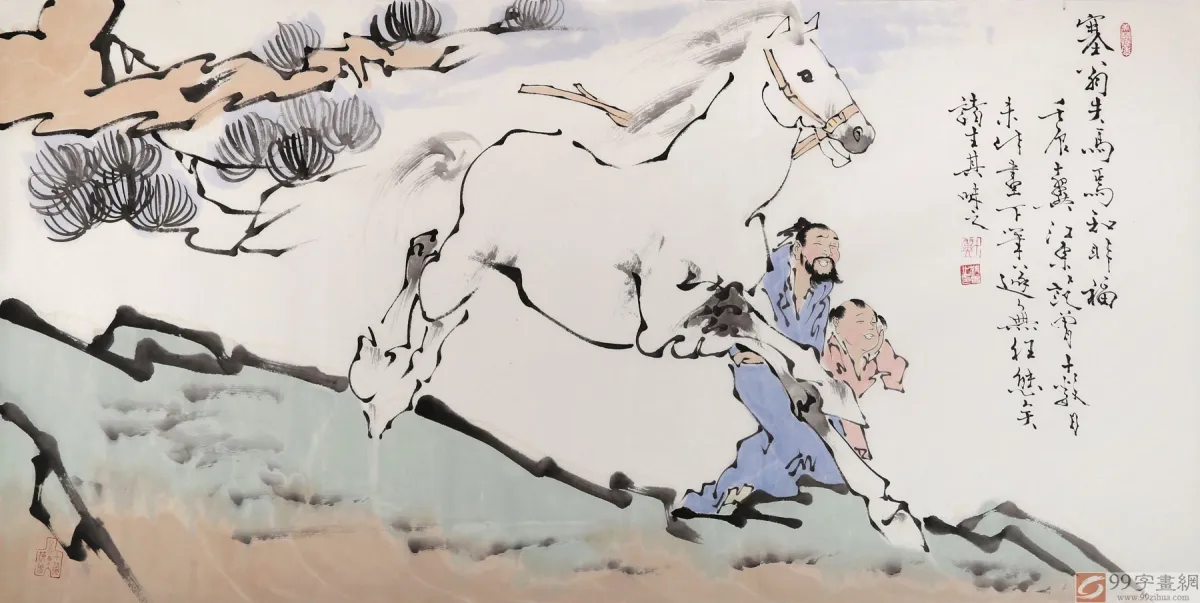
An old man lives near the northern frontier with his son and a single horse. One day the horse runs away across the border. The neighbours come to console him. The old man declines to be consoled. How do you know, he asks them, that this is not a blessing? Months later the horse returns, and it brings a fine wild stallion with it.
The neighbours come to congratulate him. How do you know, he asks, that this is not a misfortune? His son, delighted with the new horse, rides it, falls, and breaks his leg. The neighbours come to console him. He asks the same question. Then war comes, the army sweeps through the frontier villages conscripting every able-bodied young man, and most of them never return. The old man’s son, with his broken leg, stays home and lives.
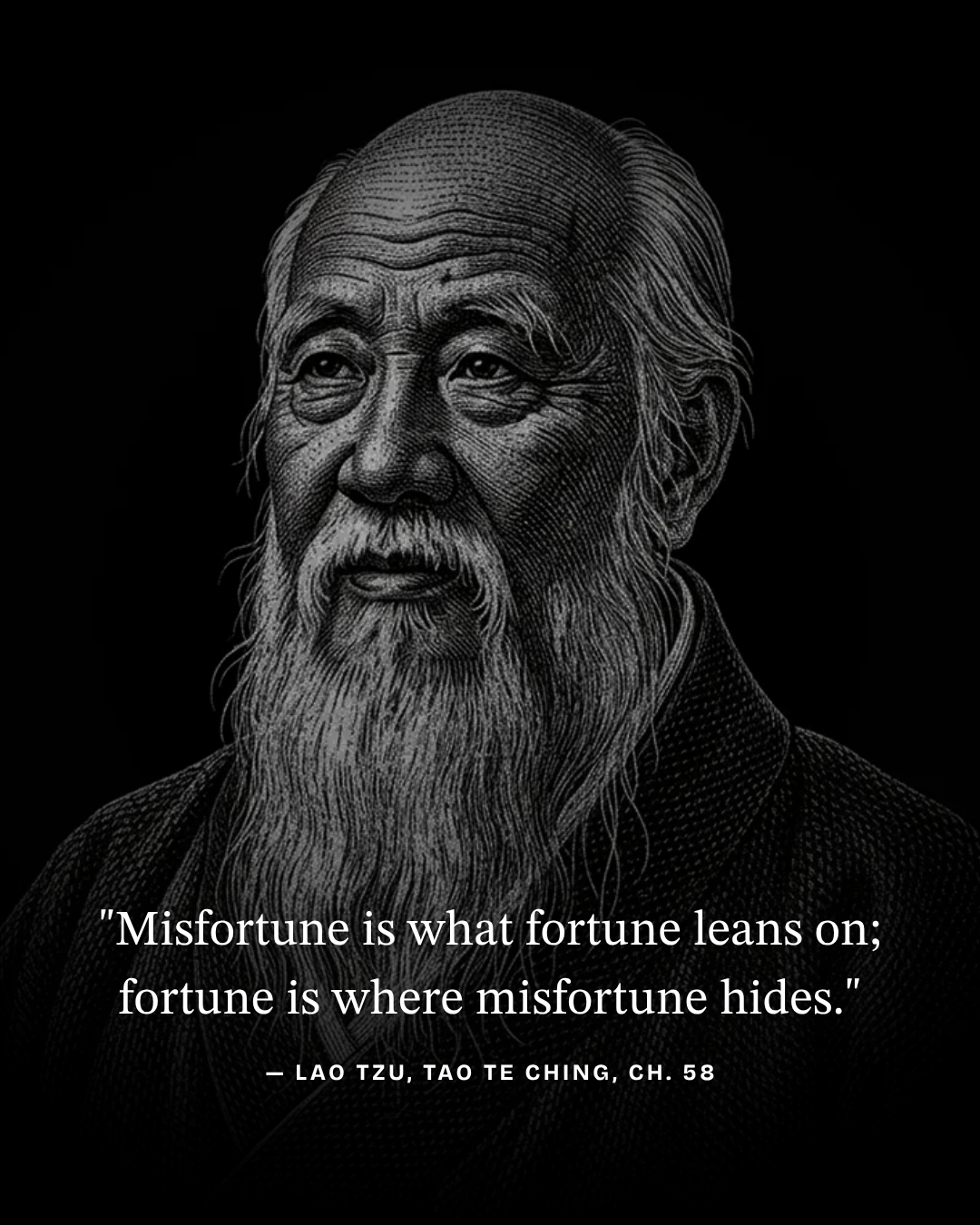
The tale became a four-character idiom, Sāi Wēng shī mǎ: the old man at the frontier lost his horse, and it is still used every day, the way we say blessing in disguise. Alan Watts told it to Western audiences in the 1960s as the story of the farmer who answers every piece of news, good or bad, with a single word: maybe. The Tao Te Ching, written in the same tradition, puts the whole worldview in one breath: misfortune is what fortune leans on, and fortune is where misfortune hides.
This is the burnt toast theory, in full, with a horse instead of a toaster and a war instead of a traffic jam, twenty-one centuries before anyone filmed it. And the old man adds something the toast version leaves implicit: the peace comes early, long before you learn what the setback was for. He is calm in the first scene, with nothing yet to show for it. The theory asks for the same faith, and the parable suggests it is a reasonable one to have.
The King Who Lost a Finger
Travel west and south from that frontier, and the story changes costume without changing shape. A tale told across India and West Africa, in a dozen versions, concerns a king who loses a finger, in a hunting accident in some tellings, at sword practice in others. His minister, a man who says of everything that happens that it happens for the good, says it again. The king, in pain and in no mood for philosophy, throws him in prison.
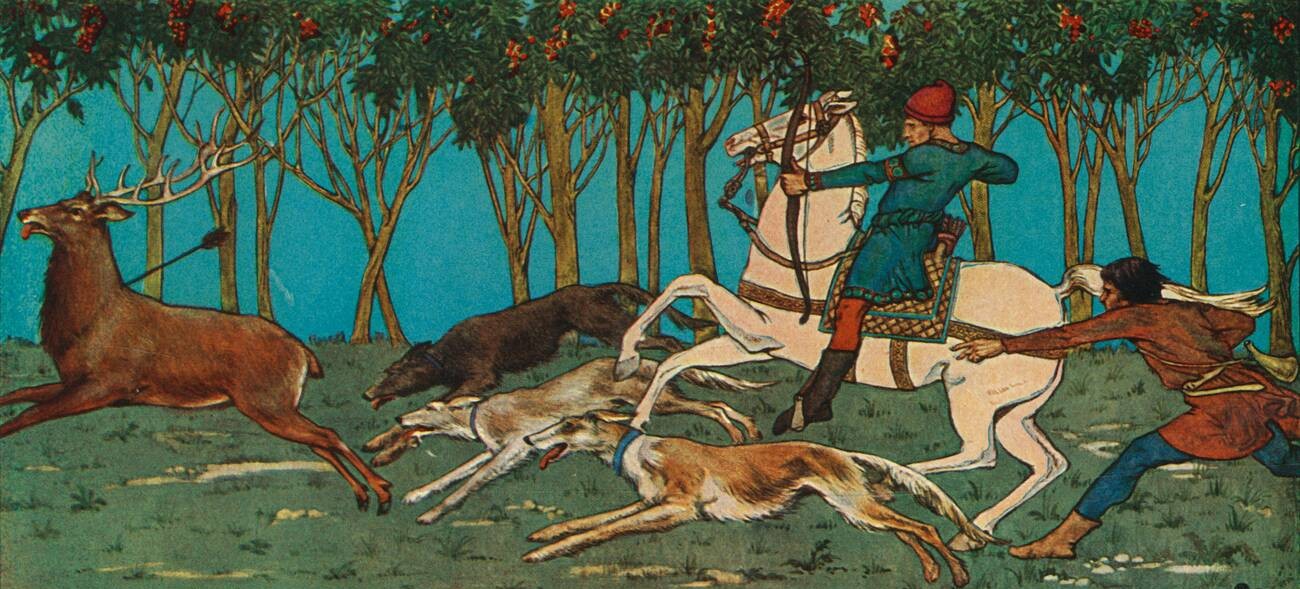
Some time later the king rides out to hunt alone, strays into enemy territory, and is captured by a tribe preparing a human sacrifice to their goddess. He is tied to the tree, the drums begin, and the priest comes to inspect the offering. The priest finds the bandaged hand and stops everything. An offering must be whole, he says; this man is already cut.
They let the king go. He rides home, straight to the dungeon, and tells the minister he was right. And the minister, in the detail that makes the story worth two thousand years of retelling, thanks the king for the prison. Had he been free, he says, he would have ridden out with you, and I have all ten fingers.
Two setbacks, one small and one large, both of them rerouting two men away from the one afternoon that would have killed them. The toast burned twice.
The Sage Who Said “This Too”
The Jewish tradition produced a man so committed to the idea that it became his name. Nachum, a sage of the first century, met every misfortune with the same three words, gam zu l’tovah, this too is for the good, until people simply called him Nachum Ish Gamzu, the man of this too. The Talmud tells his best story. Sent to Rome with a chest of jewels as a gift for the emperor, he stops at an inn, where the innkeeper empties the chest overnight and refills it with earth. Nachum finds the earth in the morning, says his three words, and continues to Rome.

The emperor opens the chest, sees the dirt, and orders him executed for the insult. At which point an adviser, whom the Talmud confides was the prophet Elijah in disguise, suggests that this might be the legendary earth of the patriarch Abraham, which turns to weapons when thrown at an enemy. The emperor tests it in battle, wins, and sends Nachum home with honours and a chest full of treasure.
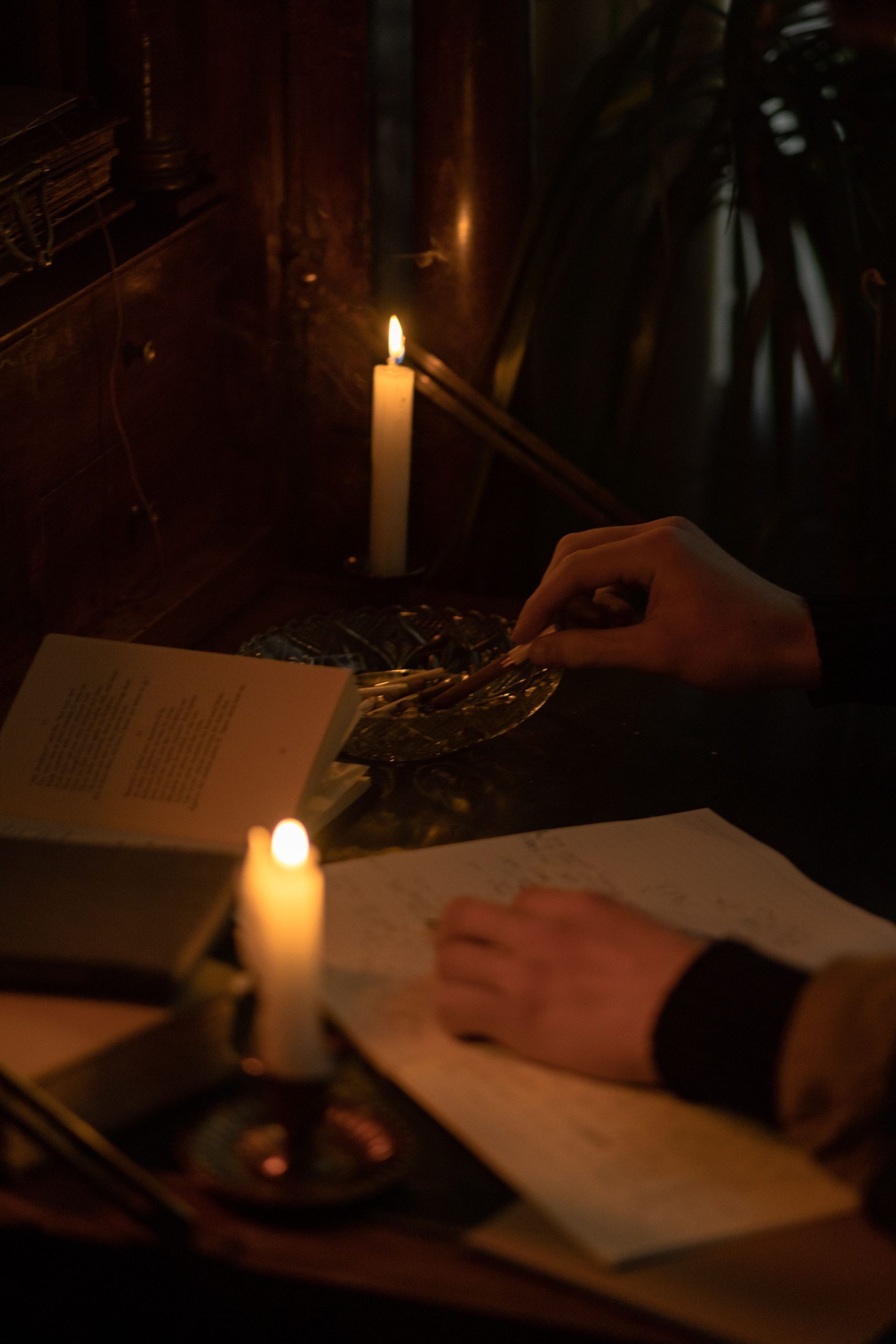
His student Rabbi Akiva inherited the habit and added the version closest to the toast. Refused a room at an inn one night, Akiva camped in a nearby wood with his donkey, his rooster and a candle. A wind put out the candle; he said all was for the good. A cat took the rooster; he said it again. A lion took the donkey; he said it a third time. In the morning he learned that raiders had sacked the town in the night, and that a burning candle, a crowing rooster or a braying donkey would have led them straight to him. Every loss had been a silencing, and every silencing had kept him alive.
The scriptures of the region agree. Joseph, sold into slavery by his own brothers and risen to rule Egypt, tells them at the end of Genesis that what they meant as evil, God meant for good, and the famine that followed proves him right. The Qur’an says it as a general rule: it may be that you hate a thing that is good for you, and love a thing that is bad for you, and God knows what you do not. Three faiths, one instruction, and none of them required a toaster to arrive at it.
The Word for the Accident That Turns Out Well
The West did not lack the idea; it lacked the vocabulary, and it built the vocabulary out of fairy tales.
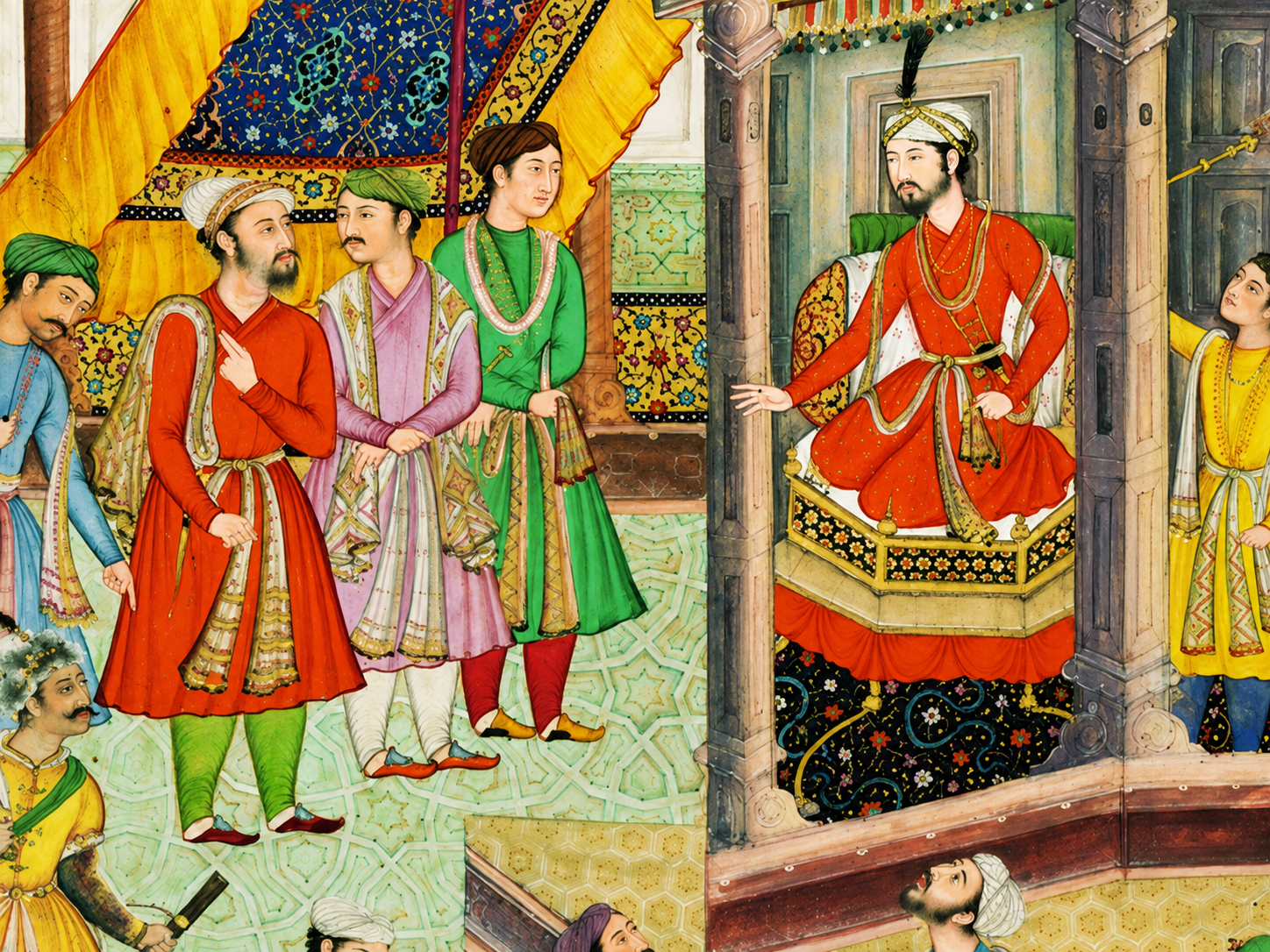
In January 1754, the English writer Horace Walpole, explaining a lucky discovery in a letter to a friend, coined a new word for it. He had once read, he said, a silly fairy tale called The Three Princes of Serendip, a Persian story in which three princes, sent out into the world, kept stumbling on things they had never set out to find. Serendip was the old Persian name for Sri Lanka. The word he made from it was serendipity, and he defined it, in the letter, as the princes’ gift for making
“discoveries, by accidents and sagacity, of things which they were not in quest of.” — Horace Walpole, letter to Horace Mann (1754)
That is the burnt toast theory’s happy twin: the wrong turn that leads somewhere better than the destination. And its cousin has a birthday too. John Milton wrote of a dark cloud that would turn forth her silver lining in Comus in 1634, and the proverb we use today, every cloud has a silver lining, first appeared in print in 1840, in a magazine that misquoted a novel and accidentally created a saying. The English language’s own version of the theory was born of a mistake that turned out well, which is exactly the kind of thing it describes.
Why We Only See It Later
If the idea is this old and this widespread, why does it still feel like a discovery every time? A Danish philosopher answered that in his journal in 1843:
“Life can only be understood backwards; but it must be lived forwards.” — Søren Kierkegaard, journals (1843)
The full entry goes further: life can never be entirely understood at all, Kierkegaard adds, because there is no moment when time pauses long enough for us to turn around and look. Meaning arrives late by design. The missed exit becomes a story once you have arrived somewhere and can trace the road back, and you are never standing at the end of the road while you are driving it. This is why the old man at the frontier looks wise, and his neighbours look foolish: he alone has stopped expecting to understand the day while it is still happening.
The most famous modern telling of the same idea came from a commencement stage. In 2005, Steve Jobs told Stanford’s graduates about dropping out of college, a decision that looked at the time like a small disaster and freed him to wander into a calligraphy class with no practical purpose whatsoever. Ten years later, designing the first Macintosh, he gave it beautiful typography because of that class, and every personal computer since has inherited the fonts. His summary of the lesson has become its own proverb:
“You can’t connect the dots looking forward; you can only connect them looking backward.” — Steve Jobs, Stanford commencement address (2005)
Which is the burnt toast theory in the language of an engineer. The dots are the burnt toast, the missed exit, the class you had no reason to take. They connect eventually, and the theory’s quiet request is that you extend them a little credit in the meantime.
The Doors That Closed
The hardest cases are the ended relationship, the job that said no, the person who left. For those, the most beautiful modern telling comes from Korea.
Inyeon, a word drawn from Buddhist ideas of providence, describes the fated connection between people specifically, and it belongs to a family of ideas that runs across East Asia, yuán in Chinese and en in Japanese, all describing the thread that draws two lives together for exactly as long as they are meant to touch.

If two strangers brush sleeves in the street, the saying goes, there was something between them in a past life. If two people marry, they have accumulated eight thousand layers of inyeon over eight thousand lifetimes. Celine Song’s film Past Lives (2023), nominated for two Oscars, is built entirely on the idea, and it is honest enough to let its heroine dismiss it at first as
“just something Koreans say to seduce someone.” — Past Lives (2023)
The film then spends two hours showing her, in the gentlest possible way, that it was true. Nora and her childhood love, separated by an emigration when they were twelve, find each other again twenty-four years later, and nothing happens, and it is one of the most moving nothings in recent cinema. The relationship that never resumed becomes one layer of something that takes lifetimes to complete, and the life she built instead, with someone else, may be the eight thousandth layer of a different bond. The door closed behind her, and she was already through it.

That is the burnt toast theory grown up. What ended was one part of a longer story, and the space it left filled again.
The Practice
Every tradition that arrived at the idea also arrived at a way of living it, and they agree with each other to a striking degree.
The Stoics made it a discipline. Epictetus, a former slave, opened his handbook by dividing the world into two:
“Some things are within our power, while others are not.” — Epictetus, Enchiridion (c. 125 CE)
The burnt toast belongs to the second category, and the meaning you give it belongs to the first. Marcus Aurelius, ruling an empire from a war camp, went a step further and wrote that what stands in the way becomes the way, the obstacle turning into material for the work. India said the same thing in the voice of a god: in the Bhagavad Gita, Krishna tells the warrior Arjuna that he has a right to his actions and never to their fruits, so he should act fully and hold the outcome loosely.

And Nietzsche, in the nineteenth century, gave the practice its most demanding name, amor fati, the love of fate, the discipline of wishing nothing in your life to have been otherwise, the toast included. Tolerate it, use it, love it. Three rungs of one ladder, and each of the old traditions has a foot on it.
Modern psychology has since confirmed that the ladder works. Researchers call the move cognitive reappraisal, changing the meaning you assign to an event so that its emotional weight changes with it, and a meta-analysis of 306 experiments found it to be the single most effective emotion-regulation strategy tested. One recent paper’s example could have been lifted from the trend itself: someone irritated by traffic reframes the jam as a chance to listen to music, and the irritation drops. The old man at the frontier, the sage of this too, and the woman on TikTok were all, it turns out, practising something the laboratory would later measure.
The Toast, Every Morning
So here is what the burnt toast theory really is: the newest name for one of the oldest and most widely shared pieces of human wisdom, arrived at independently on the Chinese frontier, in an Indian court, in a Roman dungeon, in a Persian fairy tale, in a Danish journal and on a Stanford stage. Every one of those tellings agrees on the shape of it. The setback comes first, the meaning comes later, and the peace is available in between, to anyone willing to say maybe instead of why me.

The toast is the smallest possible rehearsal. It burns, and for a few seconds you get to practise the thing the old man practised with his horse and the king practised with his finger, on stakes so low that failure costs nothing. Do it enough mornings, and it becomes a habit, and the habit is ready on the day something larger goes wrong.
The old man at the frontier would ask you one question, and it is the friendliest question in the world’s oldest stories. How do you know?
What went wrong for you this week that has not finished turning out yet?

Vincent Phan
Vincent is the founder and Editor-in-Chief of 1000 Libraries Magazine. He is a Paris-born ex-corporate turned bookseller and philosopher, on a global mission to spread the joy of physical books in our age of digital technology.