
From the beautiful anxiety of uhtceare to the wonderfully specific lanspresado, these forgotten words remind us that language once had a name for almost everything.
Every language is its own kind of library, and English has an enormous, half-forgotten back room. When the Oxford English Dictionary’s second edition was published in 1989, it carried full entries for 171,476 words in current use, and another 47,156 marked obsolete: words that once did real work in real mouths, on real ordinary mornings. That snapshot is decades old now, and lexicographers will tell you no honest count of English is possible. But the ratio holds the point. For every four words we still use, there is one we have quietly set down.
There’s something wonderful about wandering into that back room. It’s the same feeling as pulling a cracked spine off a secondhand shelf, or catching a phrase in another language with no clean English equivalent: the sense that someone, centuries ago, felt precisely what you feel now, and cared enough to name it. Many of these words arrived via Greek, Latin, Old Norse, French, or Yorkshire and Scots dialect, a reminder that English has always been a citizen of the world, borrowing freely and thinking nothing of it.
Here are twenty of its loveliest castaways, and why they deserve a second life.
The Small, Human Hours

Uhtceare is Old English for the sorrow that arrives in the hour before dawn. Uht was the last stretch of night before sunrise; cearu was grief. It appears in The Wife’s Lament, a poem of exile preserved in the Exeter Book, and it is a hapax legomenon: the word survives exactly once in the whole body of Old English. Worth saying plainly, since the internet usually softens it: the speaker is not anxious about her to-do list. She is awake before dawn because she has lost everyone.
If the fog only partly lifts, you may be philogrobolized: hungover, without admitting you’d been drinking. Word-history writer Mark Forsyth revived it in his 2012 book The Horologicon, alongside fudgel, the specific art of looking busy while doing nothing at all.

If you manage to rise, Shakespeare has you covered. In Romeo and Juliet, the Nurse scolds a sleeping Juliet: “fie, you slug-a-bed!” It is the earliest recorded use we have of a word we still quietly need. And if you’re dressed but itchy, you may have shivviness, an old Yorkshire word for the discomfort of brand-new underwear.
Words for People Who Talk Too Much
Every era needs sharper words for its loudest people. A snollygoster is a shrewd, unprincipled politician, dated to 1845. An 1895 Georgia editor defined one as a man who wins office by sheer “talknophical assumnacy.” Harry Truman revived it in a 1952 speech, then cheerfully misdefined it when reporters asked. The dictionary dropped the word in 2003 for lack of use, and restored it in 2017. Words can come home.

Enough snollygosters in one government and you have a kakistocracy: rule by the worst. Its earliest known use is a 1644 sermon by the Reverend Paul Gosnold, warning against a well-tempered monarchy collapsing into “a mad kind of kakistocracy.” Novelist Thomas Love Peacock is often credited with coining it in 1829, but he revived it. Gosnold beat him by 185 years.
In seventeenth-century England, the perpetually discontented were grumbletonians, a jeer aimed at the opposition Country Party, built on the pattern of real religious sects like the Muggletonians and Grindletonians.
Then the specific menace of confident ignorance. An ultracrepidarian holds forth on subjects they know nothing about. The word traces to the painter Apelles who, according to Pliny the Elder, told a shoemaker to stop critiquing his work once the critique moved past the sandals. William Hazlitt aimed it in 1819 at rival editor William Gifford: “You have been well called an Ultra-Crepidarian critic.” The barb had teeth. Gifford had been apprenticed to a bootmaker in his youth.
Should a person arrive at dinner without a wallet, they’re a lanspresado. Nathan Bailey’s 1736 Canting Dictionary has him exactly: “He that comes into Company with but Two-pence in his Pocket.” It descends from the French lancepessade, a low-ranking foot soldier. And if it’s all just noise, call it twattling, idle chatter, recorded from the 1570s and still with us in disguise: modern twaddle is a later alteration of it.
Words for a Life Well Lived
The most delightful forgotten words are the ones that forgive us. Perendinate goes one step better than procrastinate: where procrastinate comes from Latin cras, tomorrow, perendinate comes from perendie, the day after. Thomas Blount’s 1656 Glossographia defines it as “to put off for a day.”
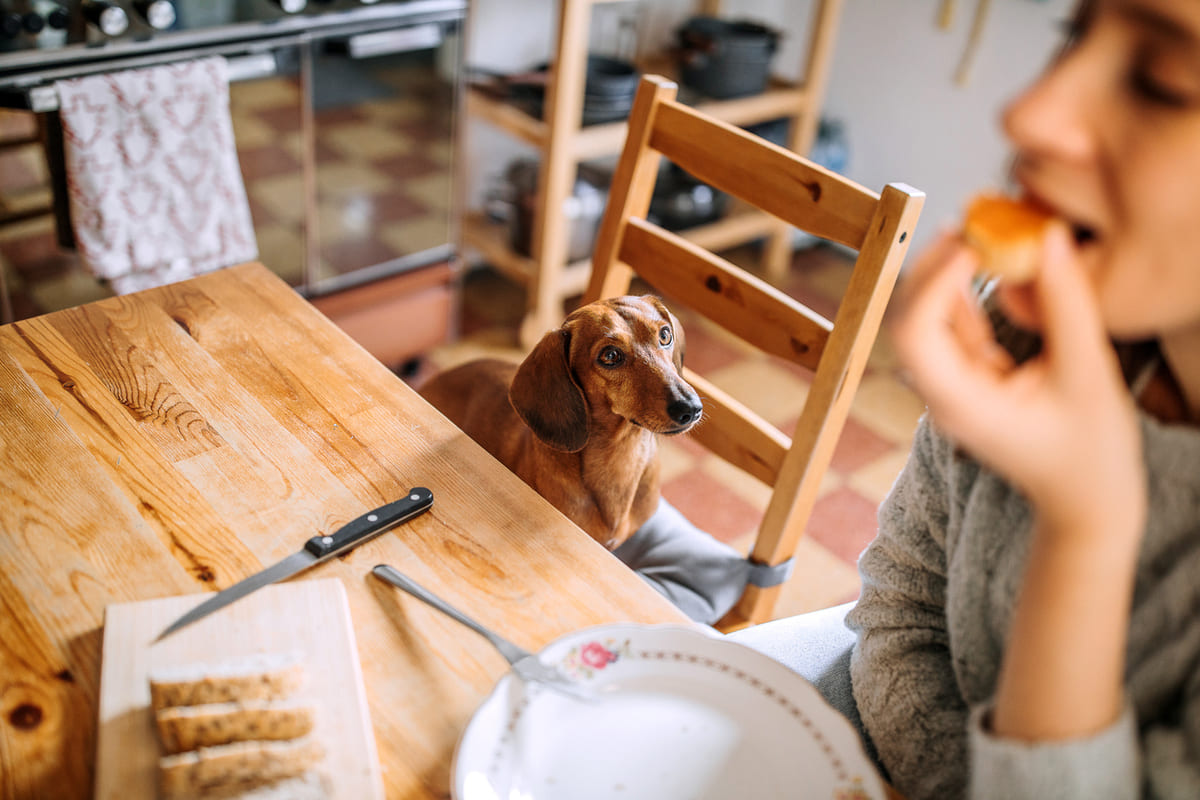
If a hopeful dog or small child hovers by your plate, they’re groking, Scots dialect for staring at someone eating in hope of a share. Two asides: it has nothing to do with Heinlein’s grok, and the Moomins’ Groke is a coincidence, an English translator’s rendering of Tove Jansson’s Mårran.
When you finally curl up warm and unbothered, you’re grufeling. Jamieson recorded it in Roxburghshire in 1825, noting it was “used in ridicule,” which makes reclaiming it all the sweeter. Its cousin hurkle-durkle means “to lounge after it is time to get up,” from Jamieson’s 1808 dictionary. Lexicographer Susie Dent began championing it in 2015; it went viral on TikTok in 2024. Proof that old words find new mornings.

Some of these words are simply generous. Abligurition means spending lavishly on good food, from a Latin verb meaning to squander on delicacies, ultimately from a root meaning “lick” that also gave us lichen. Cacoethes names any irresistible, faintly reckless urge; it’s Greek, but Juvenal made it famous in the phrase “insanabile scribendi cacoethes,” the incurable itch to write. Callipygian means having beautifully shaped buttocks, from Greek kallipygos. The Venus Callipyge stands in Naples, its epithet borrowed from a story in Athenaeus about two Syracusan sisters. Appreciating a good figure is a habit that is at least two thousand years old.
And Chaucer, writing in the 1380s, gave English pigsney, an odd, tender term of endearment. He uses it of Alison in The Miller’s Tale: “She was a prymerole, a piggesnye.” It appears to come from Middle English pigges eye, though etymologists hedge, since pigs rarely figured in medieval compliments.
Three Words That Didn’t Survive the Fact-Check
Half the pleasure of old words is looking them up, and looking things up sometimes spoils the story.
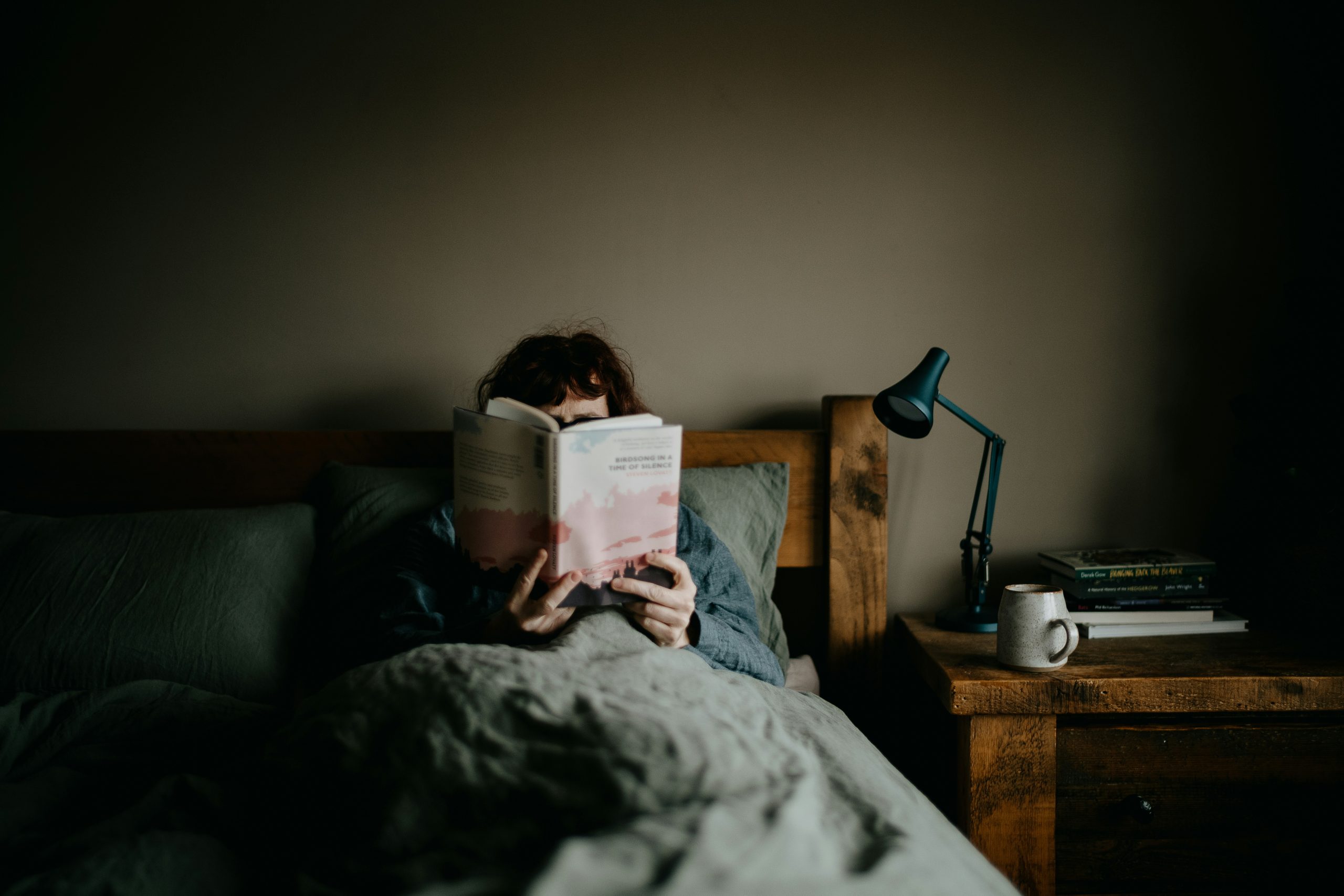
Dysania, a deep desire to stay in bed, is not an old word at all. It has no OED entry and no historical trail, and the Sleep Foundation notes that neither it nor its cousin clinomania is widely recognized by doctors. A modern coinage in an antique coat. Where mornings are genuinely immovable, that belongs with a doctor rather than a dictionary.
Frobly-mobly, feeling neither well norn unwell, may once have been real, but it appears in no dictionary available to check. Not the OED, not Joseph Wright’s English Dialect Dictionary, not the Dictionaries of the Scots Language. Every instance online traces to a single post.
Pig puff may be a typo. The real word is peg-puff, a young woman who behaves and dresses like an old one, recorded in MacTaggart’s Gallovidian Encyclopedia of 1824. One mistyped vowel, copied a thousand times.
Why Bother
None of these words is efficient. That’s the point. Reaching for perendinate instead of procrastinate is a vote for texture over speed, the linguistic equivalent of taking the slow train.
Every one carries a person with it. A Yorkshire grandmother complaining about her new petticoat. An exiled Anglo-Saxon woman awake before dawn. A Scottish farmhand describing his begging dog. Learning them is a small, portable form of travel. No passport required, just a library card and a little patience.
That’s where the old souls live. Go dust one off today.
The Full List
- Uhtceare – Lying awake in the hour before dawn, sad and unable to sleep.
- Philogrobolized – Clearly hungover, but not willing to admit you were drinking.
- Fudgel – Looking busy at work while actually doing nothing.
- Slugabed – Someone who stays in bed long after they should have got up.
- Shivviness – The itchy, uncomfortable feeling of wearing new underwear.
- Snollygoster – A smart politician with no principles at all.
- Kakistocracy – A government run by the worst and least able people.
- Grumbletonians – People who are always angry at the government.
- Ultracrepidarian – Someone who gives confident opinions on things they know nothing about.
- Lanspresado – The friend who always turns up without any money.
- Twattling – Chatting on and on about things that do not matter.
- Perendinate – To put something off until the day after tomorrow.
- Groke – To stare at someone while they eat, hoping they will share.
- Grufeling – Lying wrapped up warm and comfortable.
- Abligurition – Spending far too much money on food and drink.
- Cacoethes – The strong urge to do something you know is a bad idea.
- Callipygian – Having a beautifully shaped bottom.
- Pigsney – An old word for a sweetheart, used by Chaucer.
- Dysania – Finding it very hard to get out of bed in the morning.
- Frobly-mobly – Neither well nor unwell, just so-so.

Millie Ramm
Millie has been writing since she was a child, and has spent more time with her nose in books than anywhere else. She has been ghostwriting novels and editing for the past few years, and when not working she is curled up with her cats, looking for her next read.