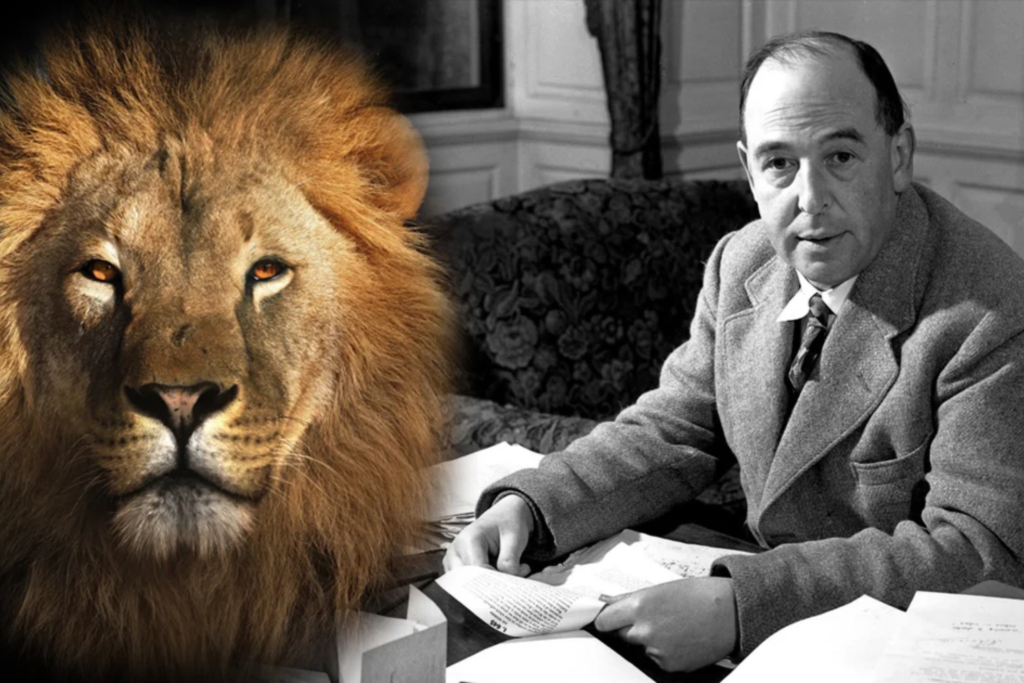

Mr Beaver said Aslan wasn’t safe, only good. C. S. Lewis, Confucius and modern psychology on why being liked by everyone is the wrong thing to aim for.
Four children are sent out of London during the war to wait out the bombing in a large house in the country. The youngest, a girl called Lucy, hides in a wardrobe during a game of hide-and-seek and feels the fur coats give way to fir branches and snow. That is how The Lion, the Witch and the Wardrobe begins.
Its author, C. S. Lewis, was an Oxford don who taught English literature and had spent the war years explaining Christianity to ordinary listeners on BBC radio, and the book he published in October 1950 became the first of seven that we now call The Chronicles of Narnia. They have sold more than a hundred million copies in 47 languages, and Greta Gerwig’s new film of the series, due in cinemas in February 2027, will introduce Narnia to a generation that has never opened the wardrobe.
A Lion Who Isn’t Safe
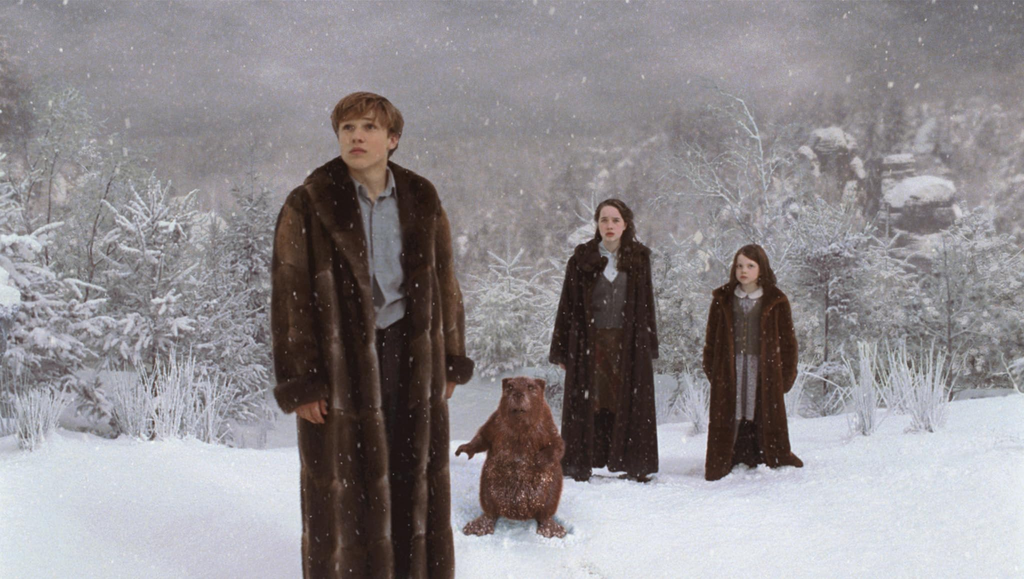
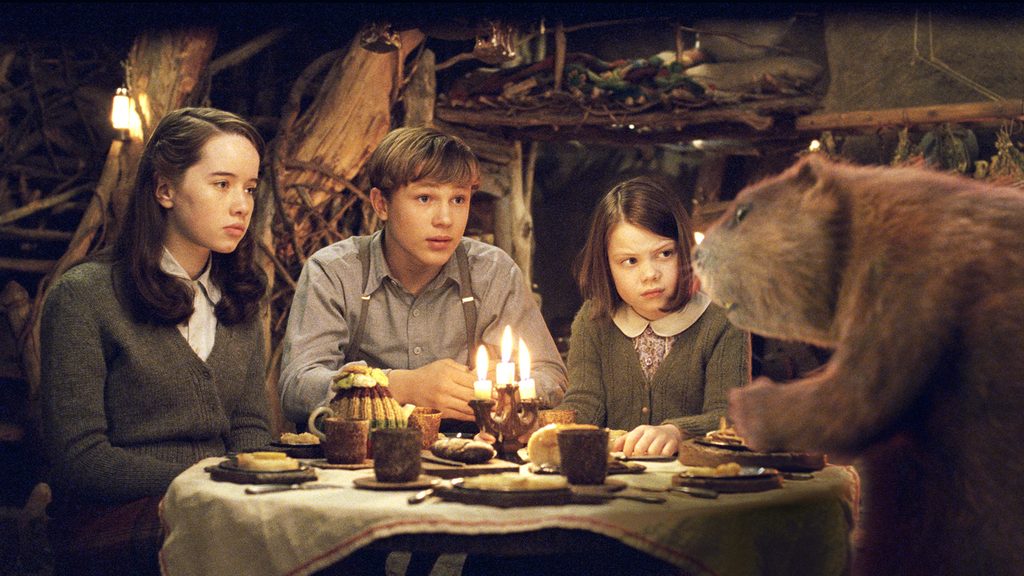
The land on the other side is ruled by a White Witch who has made it always winter and never Christmas. The children hear that a lion called Aslan, the true king, is on the move, and that his return will break the spell. Before they meet him, sheltering in the home of two talking beavers, one of the girls asks the question any sensible person would ask about a lion. Is he safe?
“‘Course he isn’t safe,” Mr Beaver tells her. “But he’s good.”

It is the best-loved line of dialogue in the book. On Goodreads, it sits among the three most liked passages from the novel, ahead of anything Aslan himself says, and on a first reading it slides past as a piece of charm. Read it again as an adult, and it does something more unsettling. It takes two words we treat as near synonyms, safe and good, and pulls them apart. A safe thing gives no trouble. A good thing may cost you a great deal. Aslan will go on to lay himself on a stone table and be killed in the place of a boy who betrayed his own brother and sisters, and the whole moral weight of the book rests on the fact that this was good and in no sense safe.

Lewis meant every word of it. Six years earlier, in the 1944 radio talks that became the last part of Mere Christianity, he had given a whole chapter to the difference between being nice and being good, and he addressed it to the pleasant, the easygoing and the naturally agreeable. His worry was on their behalf. A nice temperament, he argued, is a gift a person did nothing to earn, as dependent on the body as a good digestion, and the danger of such a gift is that its owner can spend a lifetime mistaking it for virtue.
He was in old company. Two and a half thousand years earlier, in China, Confucius had saved his sharpest phrase for the man everybody in the village liked. A century after that, in Athens, Aristotle described the person who praises everything so as to give no pain to anyone, and listed it among the ways a character goes wrong. And in our own century, psychologists following newlyweds through their first five years and tallying the pay of agreeable men have found a pattern both old philosophers would have recognised at once.
What follows is a reading of that suspicion: what Lewis actually warned, where the warning came from, and what a lion who is not safe has to offer anyone who has ever been praised, a little too often, for being easy to get along with.
Dick Firkin, Miss Bates, and the Niceness That Depends on Digestion
The chapter is called “Nice People or New Men”, and Lewis builds it around two invented neighbours. Miss Bates is a Christian with an unkind tongue. Dick Firkin is an unbeliever whom everyone finds pleasant. Lewis raises the obvious objection to his own faith first: if religion works, why is Miss Bates harder to live with than Dick? His answer is that the comparison is rigged, because the two did not start from the same place. Dick’s good nature came with him, the way a good digestion does, and would go the same way if his digestion changed. “The niceness, in fact, is God’s gift to Dick, not Dick’s gift to God.”

Take away the theology and the point still stands. Some people are born with a low temper, an easy smile and a dislike of conflict, and they receive credit all their lives for what is closer to weather than to character. Lewis has nothing against the weather. His concern is with what the nice person concludes about themselves. Someone who has never had to fight for their patience, he writes, is likely to believe the patience is their own doing, and may never feel the need for any better kind of goodness. That is the danger, and it is why the chapter contains the one word he gives an exclamation mark, addressed to the pleasant: beware.

The strange, generous turn in the chapter is that Lewis’s sympathy is with the nasty. A person born with a bad temper who wrestles it to a draw has done something Dick Firkin has never had to do. From the outside the two may look the same, or the wrestler may look worse. On the inside, only one of them has been changed by the effort. Lewis’s whole distinction between nice and good comes down to that. Nice is a starting condition. Good is what happens to a person who has to work.
The Man Everyone in the Village Liked, Whom Confucius Called a Thief
Lewis was writing in a Christian idiom, and some readers will stop there. It is worth not stopping, because the same suspicion appears in a tradition with no interest in Christian salvation at all, and it appears there first.
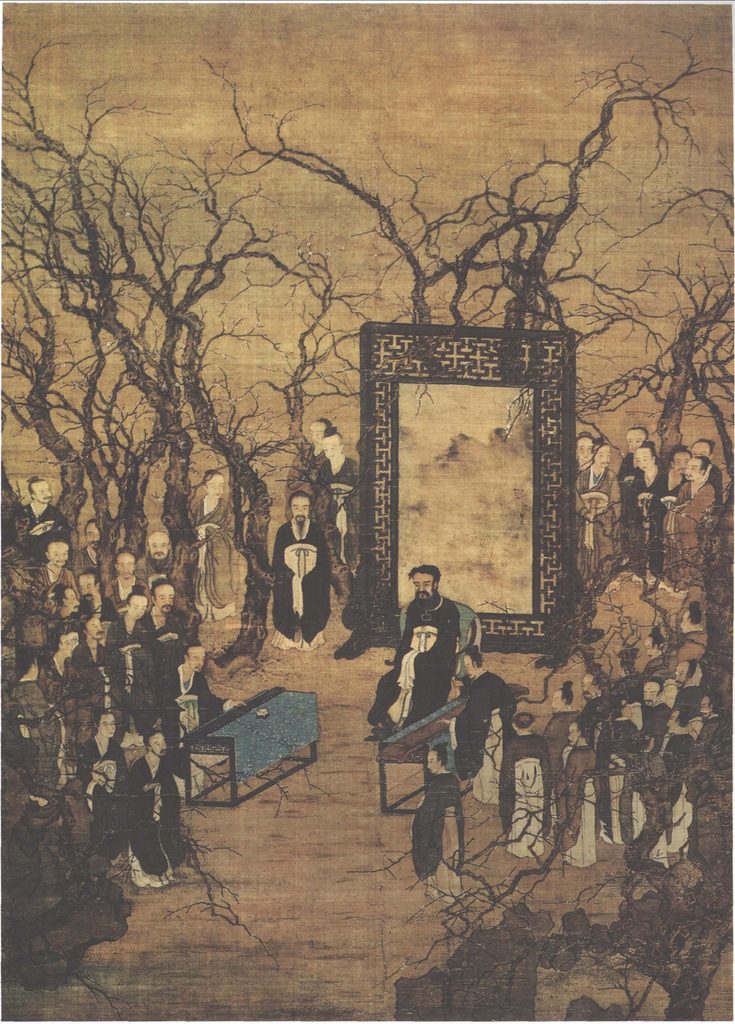
In the Analects, the collection of sayings gathered by the followers of the Chinese teacher Confucius in the fifth century BCE, there is a line that translators have struggled with for a long time. In James Legge’s Victorian rendering it reads: “Your good, careful people of the villages are the thieves of virtue.” The Chinese phrase is xiangyuan, and modern scholars usually translate it as the village worthy. He is the man of good local reputation. Nobody has a bad word for him.
A century later, the philosopher Mencius, the most important Confucian after Confucius himself, was asked what could possibly be wrong with such a person, and his answer is the clearest account of the problem anyone has given. If you try to condemn the village worthy, Mencius says, there is nothing you can point to. He agrees with the customs of his time. He seems honest and pure. The crowd delights in him, and he considers himself right. And yet, Mencius concludes, “you cannot enter into the Way of Yao and Shun with them.” Yao and Shun were the legendary sage-kings of Chinese antiquity, the standard of what a good ruler and a good person could be. The village worthy will never get there, because he has no reason to try. Everyone already approves of him. He is a thief of virtue in the precise sense that he takes the reputation of goodness without paying for it, and in doing so he makes the real thing harder for everyone around him to recognize.
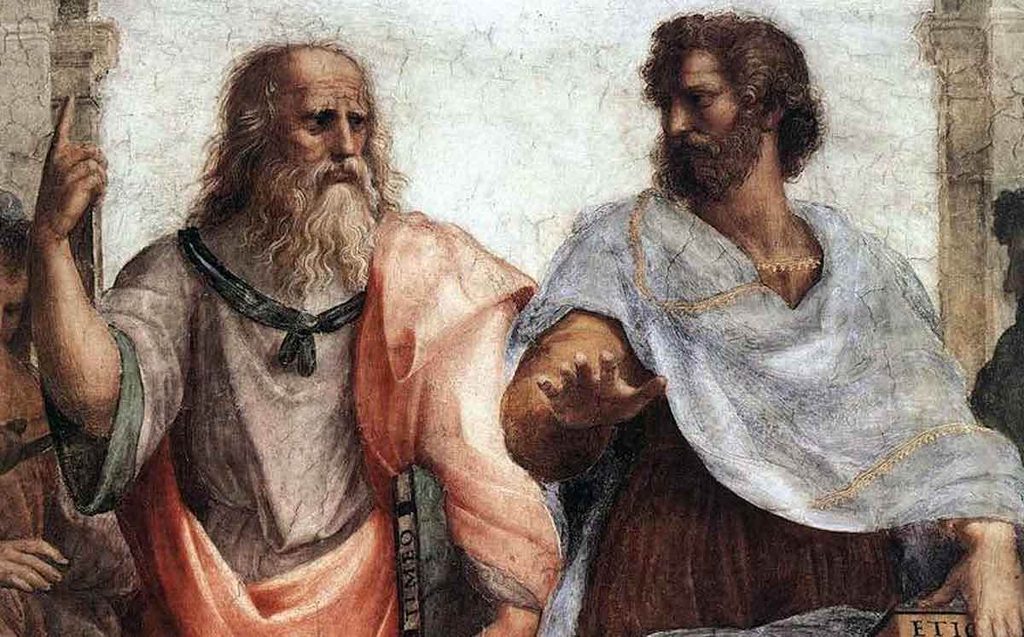
Aristotle, teaching in Athens in the same decades as Mencius, reached the same conclusion from a different direction. In the Nicomachean Ethics, his handbook on how to live, he describes a virtue so ordinary it has no name: the knack of being good company. As with all his virtues, it sits between two failures. On one side is the quarrelsome person who objects to everything. On the other is the person who, in the classic English translation, praises everything and never opposes, thinking it their duty “to give no pain to the people they meet”. If they do it for money, Aristotle calls them a flatterer. If they do it because they cannot bear friction, he calls them obsequious, and he counts it a fault. The person in the middle, the one he admires, will put up with the right things and resent the right things. Goodness, for Aristotle, includes the capacity to be displeased.
Three teachers, three continents, two and a half thousand years, and the same warning. Being liked by everyone proves little about goodness, and may only mean that goodness has never been asked of you.
Five Years of Marriage, an 18 per cent Pay Gap, and the Lion’s Claws
The old philosophers had only observation. We now have data, and it points the same way.
In 2010, a team led by the psychologist Laura Luchies published four studies in the Journal of Personality and Social Psychology under a title that has since entered the language: the doormat effect. The first study followed couples through the first five years of marriage. The question was what forgiveness does to the forgiver, and the answer depended entirely on the other person. When a partner who had caused hurt made amends, signalling that the forgiver would be safe and valued, forgiving strengthened the forgiver’s self-respect and their sense of who they were. When no amends came, and the forgiver forgave anyway, both measures fell. The kindness was the same in each case. What differed was whether the kind person had any ground to stand on.

Two years later, Timothy Judge of Notre Dame and his colleagues compared agreeableness scores with income and found that men who scored below average on agreeableness earned about 18 per cent more a year, roughly $9,772, than their more agreeable peers. For women, the gap was around 5 per cent. “Nice guys are getting the shaft,” the co-author Beth Livingston said when the findings were released. Both studies leave kindness standing as a virtue. What they measure is the cost of kindness without a self behind it, without the Aristotelian capacity to resent the right things, and the cost is billed to the kind person, with interest.

Lewis put the point in one sentence, in The Problem of Pain, ten years before Narnia. Love, he wrote, is “more stern and splendid than mere kindness.” Kindness wants the other person comfortable. Love wants them well, and is prepared to make them uncomfortable to get there. Which is why the scene in all seven Narnia books that matters most for this argument is about a boy nobody liked.

It comes in The Voyage of the Dawn Treader, published in 1952. A cousin of the Pevensie children, a boy called Eustace Scrubb, is dragged into Narnia against his will and behaves badly from the first page, complaining and shirking. On an island he sneaks off to avoid work, finds a dead dragon’s hoard, stuffs his pockets with gold and falls asleep on the pile, and wakes as a dragon, his greed made visible. He is miserable. He tries to shed the skin himself and cannot. Then Aslan comes and tells him he will have to let the lion do it. Eustace describes what happened afterwards: “The very first tear he made was so deep that I thought it had gone right into my heart.” It hurt worse than anything he had ever felt, and the only thing that let him bear it was the pleasure of feeling the stuff come off.
That is the answer Narnia gives to the question Lucy asked in the beavers’ house. A safe lion would have left Eustace a comfortable dragon. A nice one would have told him the scales looked fine. The good one used its claws, and the boy who came out of it was a different person, which is the only outcome Lewis ever counted as goodness. Nice is what you are handed. Good is what is left of you after something with claws has been allowed to work.


Vincent Minatozaki
Vincent is the founder and Editor-in-Chief of 1000 Libraries Magazine. He is a Paris-born ex-corporate turned bookseller and philosopher, on a global mission to spread the joy of physical books in our age of digital technology.