
Happy 128th Birthday, C. S. Lewis! On November 29, readers celebrate the birthday of the man who wrote Narnia. Discover the story of how he spent his royalties may be one of the finest gifts he left behind.
On a winter morning in the early 1950s, the post at The Kilns would have looked like a small snowdrift. The Kilns was the house on the site of an old brickworks at the edge of Oxford where C.S. Lewis lived with his brother Warnie. Fans wrote to him: children wrote about Aslan; widows, about grief; and strangers, about rent they could not pay.
Lewis believed he owed every correspondent a reply, and he spent part of most mornings writing back. Warnie served as his unofficial secretary and typed more than 12,000 letters on his behalf. Some of those strangers also received money without ever learning where it came from.
Clive Staples Lewis was born in Belfast on November 29, 1898, and this November marks his 128th birthday. Readers usually honor the day by returning to the wardrobe, the lamppost, and the snowy wood. Yet alongside the stories of Narnia lies another, less familiar account: for years, Lewis directed a substantial share of his income toward charitable causes, often without seeking recognition. His generosity was not merely an extension of his public image. It was a private commitment that shaped how he handled his success.
The Man Behind the Generosity
In the early 1940s, years before the first Narnia book appeared, Lewis asked his old friend and solicitor Owen Barfield to set up a charitable trust. They called it the Agape Fund, after the Greek word for selfless love.
The timing is notable because The Lion, the Witch and the Wardrobe was published in 1950, followed by the other six books in The Chronicles of Narnia between 1951 and 1956. Meaning, the fund operated after he started becoming successful with works like The Screwtape Letters and Mere Christianity, but before his fame skyrocketed with Narnia. It also means his charitable giving was not limited to Narnia royalties. Barfield later recalled that his friend would have bound himself to give away everything if his lawyer had allowed it.
Estimates of the total vary. Christian History Institute has put the share of his income given to charity at 90%. Barfield and Hooper, who handled his affairs, recorded two-thirds. Much of this became public only after Lewis’s death, when Hooper revealed how much of his income had quietly gone to others.
Lewis’s generosity was largely kept out of public view. According to an account published by the National Catholic Register, the fund distributed anonymous gifts to people in need, particularly widows and orphans. Lewis did not want charitable giving to become part of his public reputation. For him, the purpose was to help people, not to be known as the man who helped them.
How a Tax Surprise Created the Agape Fund
The fund grew out of a very Lewis-like problem. In 1941, The Screwtape Letters ran in instalments in The Guardian, a Church of England weekly. Lewis asked the paper to send his payment to a fund for clergy widows. He did the same with his fees for the BBC wartime talks that became Mere Christianity.
Then the tax authorities informed him that money already given away still counted as his income. Lewis, who was cheerfully hopeless with numbers, faced a bill for funds he no longer had.
Barfield untangled the mess. He structured the trust so that taxes were settled first and the remainder could flow outward. The gifts reached people in poverty, clergy widows, students, churches, and charities. Lewis took pains to ensure that no recipient could trace a cheque back to the author of Narnia.
A Modest Life at the Kilns
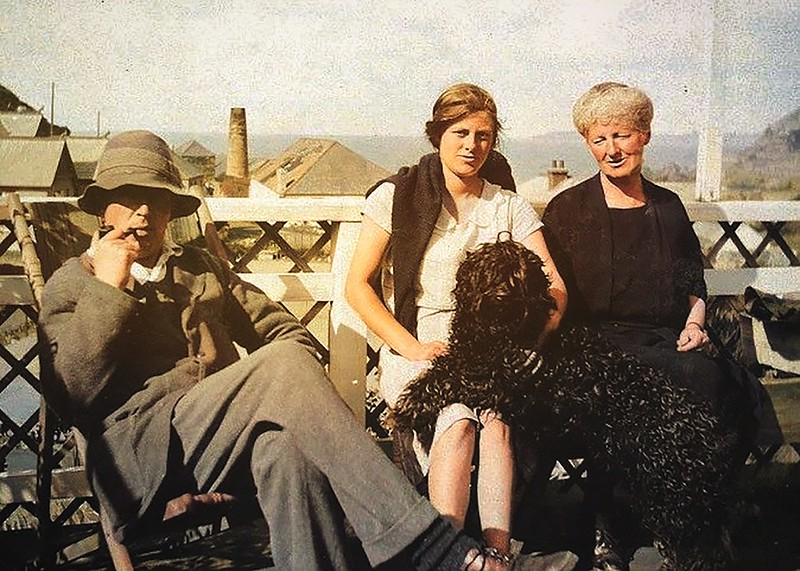
Lewis kept living as he always had. An Oxford don’s salary was modest, and for decades it supported a full household. That household included Warnie and Mrs. Janie Moore, the mother of a friend killed in the First World War. Lewis had promised to look after her, and he kept that promise for some 30 years.
During the Second World War, the household took in children evacuated from the cities. The experience of wartime displacement provides an interesting parallel with the opening of The Lion, the Witch and the Wardrobe, in which four children are sent away from London to the country home of an old professor. Although the fictional story is not a direct account of Lewis’s household, both reflect the world in which children were separated from their familiar surroundings during wartime.
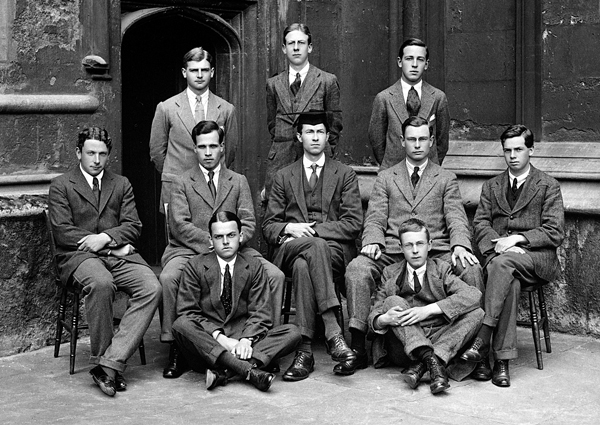
In 1954, Lewis accepted a professorship at Cambridge, and his habits stayed the same. When he died, his estate was valued at £37,772.
At his memorial service in the chapel of Magdalen College in November 1963, his friend Austin Farrer called him “endlessly generous.” Farrer then told the congregation he would keep what he knew of Lewis’s charities to himself. Given his attitude in life, Lewis would almost certainly have approved of the silence.
Lewis was generous to his workers, as well. Fred Paxford, the gardener of the Kilns, was Lewis’s model for Puddleglum, the gloomy and loyal Marsh-wiggle of The Silver Chair. At the reading of the will, Paxford learned he had been left £100. He took it in good part, observing that his employer had never had much idea of money: “‘Is mind was always set on ‘igher things.’”
“Give More Than We Can Spare”
Lewis set down his philosophy of giving in Mere Christianity. He declined to name a fixed amount and offered what he called the only safe rule: to “give more than we can spare.”
His test was practical. If our spending on comforts and amusements matches that of neighbors with similar incomes, he suggested, we are probably giving too little. Charity, in his view, should pinch a little. There ought to be pleasures we forgo because of it.
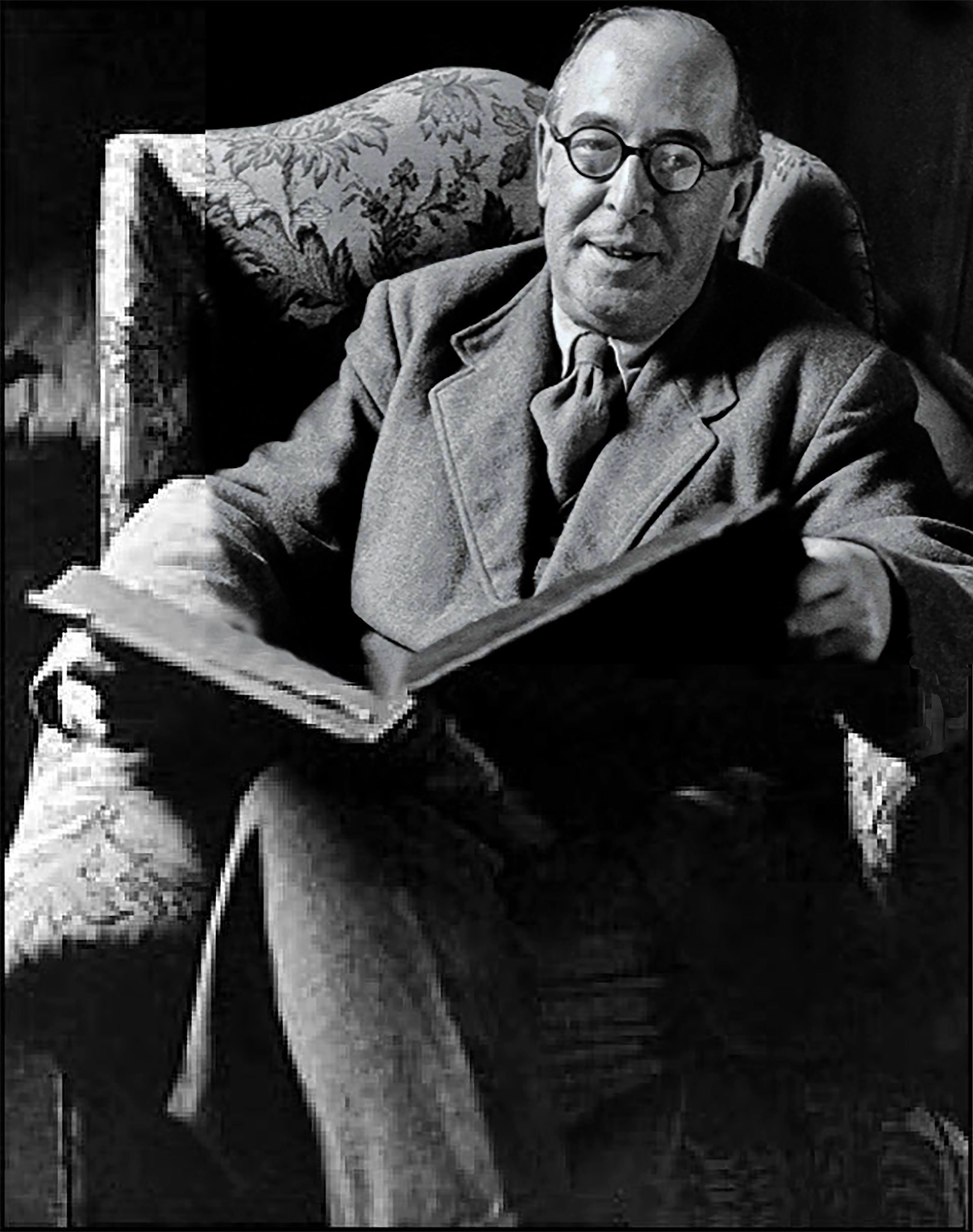
He also named the obstacle he knew best. For many people, he wrote, the great barrier to charity is fear of insecurity. He wrote those words as a man who had wrestled with that fear himself.
His friend George Sayer believed Lewis had inherited his father’s fear of bankruptcy. Lewis himself confessed in a letter that poverty frightened him “more than anything else, except large spiders and the tops of cliffs.” He gave anyway, and with dry, good humor. When people warned that a beggar might spend his coins on drink, Lewis answered that he would probably have drunk the money himself had he kept it.
Remembering the Man Behind Narnia
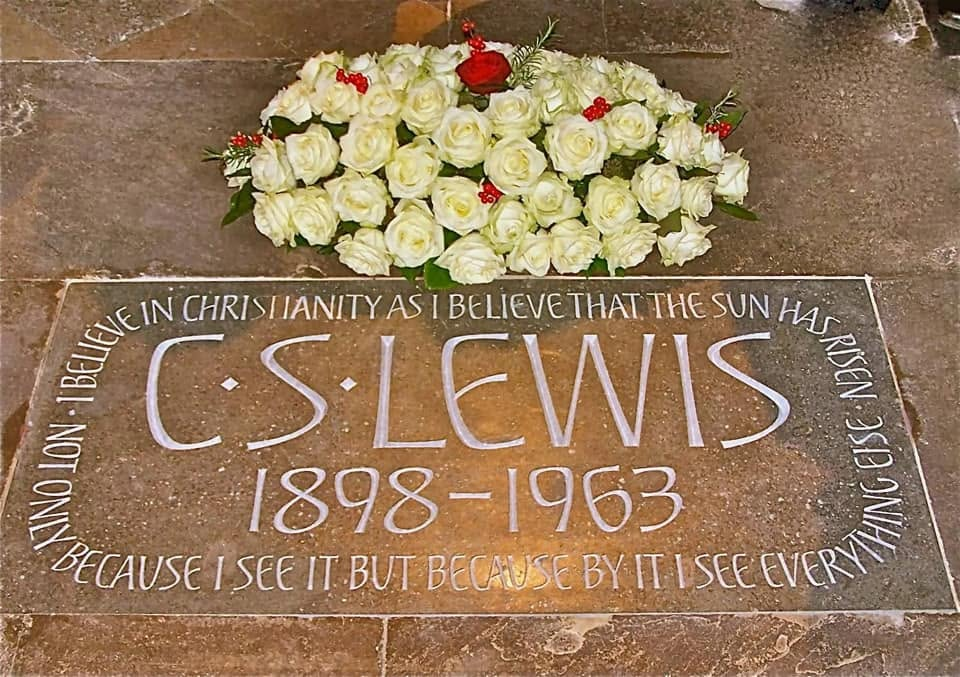
Lewis died on November 22, 1963, one week before his 65th birthday. On the 50th anniversary of his death in 2013, Westminster Abbey unveiled a memorial stone in his honor in Poets’ Corner. His books continue to invite readers into extraordinary worlds, but his private generosity offers a lesson just as enduring.

Belfast also keeps C.S. Lewis’s memory close. Lewis was baptised at St Mark’s Church, Dundela, and grew up at Little Lea in east Belfast. Each November, the C.S. Lewis Festival celebrates his legacy, with events inspired by his life and stories. Visit Belfast highlights Narnia-themed activities, children’s storytelling, and walking tours that explore the places associated with his childhood.
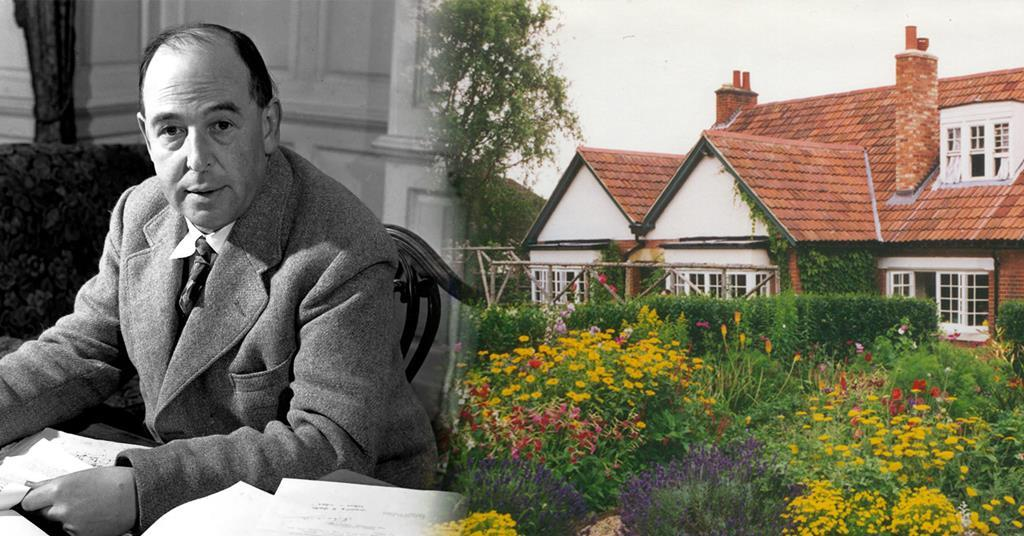
In Oxford, visitors can arrange tours of The Kilns, Lewis’s former home, through the C.S. Lewis Foundation. Tours are available by appointment, generally on Tuesdays, Thursdays and Saturdays, subject to availability. A short distance away stands Holy Trinity Church, Headington Quarry, where Lewis worshipped for more than 30 years and where he is buried. The church’s Narnia Window and the pew associated with the Lewis brothers offer another way to remember the writer beyond the pages of his books.
His stories have travelled far beyond these places. The Chronicles of Narnia have reached generations of readers around the world. Netflix reported that the seven-book series had sold over 100 million copies and been translated into more than 47 languages.
A new generation will soon step through the wardrobe. Greta Gerwig’s Narnia: The Magician’s Nephew, an adaptation of the story about Narnia’s creation, is scheduled for a global theatrical release on February 12, 2027, with IMAX previews beginning two days earlier. It will arrive on Netflix on April 2, 2027, according to Netflix’s official announcement.
On what would have been his 128th birthday, I encourage you to celebrate C.S. Lewis from wherever you are. Read a chapter aloud to someone you love. Make an anonymous gift to a library, a literacy charity, or a neighbor in need. Write a letter by hand, or leave a well-loved paperback on a café shelf for a stranger to find. Raise a cup of tea to the professor at the Kilns, and remember the stories, the promises he kept, and the good fortune he shared.
For Lewis, perhaps the best stories were never the ones we told about ourselves, but the good we left behind.

K Lou
K. Lou is a writer born in the U.S. who found her way to Japan through a spiritual calling—or, more precisely, better access to tea. She writes about travel, culture, and the occasional creative piece, inspired by her enduring love of books. This love began in high school when K. Lou carried books around to avoid seeming odd while lost in thought. Once she started reading, she never stopped. With zero regrets, she continues to explore the written word and invites others to join her in celebrating its varied forms.