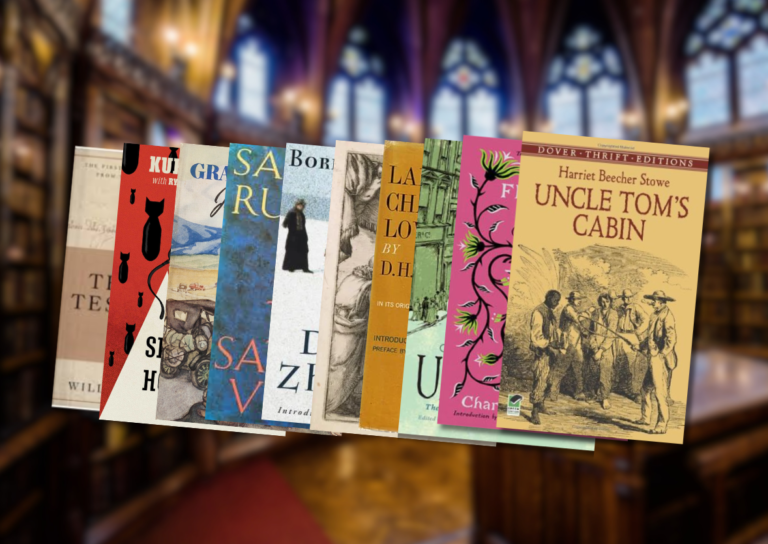

What does reading great literature do to your mind? Discover how books shape empathy, focus, and deeper thinking.
Samwell Tarly is ungainly. Described as overweight, short, with a kind of pale moon complexion and a meek demeanour. Samwell’s father, Randyll Tarly, views his son as unmanly and a disappointment, and decides to send him away from his home to join the Night’s Watch. There, at the edge of what feels like everything, Samwell feels like more of an outcast than ever.
However, although his father and other men might call it unmasculine, Samwell possesses an affinity for something surprising. He loves to read. In the Game of Thrones universe, reading is hardly seen as a useful skill. At least, not by the general population. And yet, through reading, whether it be history or myth, Samwell slowly begins to uncover the buried secrets of the seven kingdoms.
Spending hours trawling through old, weathered pages might earn him ridicule, but it also leads to the success and prosperity of his people. Seeking out this type of covert information is also a form of courage, and proves, to at least himself and the friends he has made, that he is worthy of the Tarly name and title.
George R. R. Martin is known to be unforgiving with his characters. He might introduce them just to kill them off in the following chapter, especially if they seem morally just and kind. This makes it even more surprising that – spoiler ahead – Samwell survives. His affinity for the written word, as well as his strong moral compass, make him an invaluable personage in this cruel, fictive world.
The Theory of Mind and Fiction
The Theory of the Mind, in terms of psychology and philosophy, refers to our capacity to understand that other people have different mental states than our own. This ability is vital for our development as human beings; it allows us to increase our empathy for others and question the hopes, fears, and feelings of the people in our own lives.

In understanding how they feel, we can respond with gentleness and compassion. When we were children, this ‘theory of the mind’ ability was far less developed. Kids tend to be, scientifically, far more egocentric. It is more difficult for them to truly infer what another person feels. A child who picks up a book, however, might just fare a little better.
Reading in the Digital Age
Reading literary fiction is not just a fun pastime; it actually strengthens our capacity to understand others and their mental states. Before we read people, we read about people. We read about princesses and knights and dragons, enchanting tales and mysteries and fables. It was like a practise run; we could understand the emotions through the characters that felt them.
Readers learn nuance and empathy; they stop and question why a person acts in a certain way instead of moving quickly to anger and outrage. In a digital world that chases sensationalised emotions and reactions, reading literature teaches us patience and critical thinking.
Social media might be useful for transmitting quick information, but it can never replace the experience of reading a work of literary fiction. The online world rewards short content that captures our attention, videos, and posts with just a couple of brief sentences. It is not a sphere that allows for longer contemplation. Reading literature is like resistance training for your mind, forcing you to keep the attention that the digital age tries to deplete.
The Books That Stay With Us
The books we read, whether in childhood, adolescence, or adulthood, linger in our memories throughout our whole lives. Samwell Tarly might have taught us to be kind in an often-cruel world. Hermione Granger may have shown us the power of intelligence and honesty. Elizabeth Bennet and Mr. Darcy might have taught us love, against all odds.

Words on a page transform into experience, born often from real emotion. A love or hate or something in-between for the characters and their lives. We do not have to experience betrayal to know it hurts; reading allows us to practice in life and place ourselves in somebody else’s perspective.
Reading as a Gentle Rebellion
Reading has grounded my whole life. Even in times of isolation, I have found comfort and amity with the books on my shelf. And yet, every so often, I fall into the trap of endless and unfruitful scrolling. The type of scrolling that heightens my anxiety, makes me irritable, and never puts my mind at ease.

In moments like these, I’ve found that I need to remind myself of the power of literature. Revel in what happens to my mind when I get lost in the pages of a literary adventure. Screen addiction might be difficult to move past, but it is not impossible. Even reading for ten minutes each day – no matter how busy my schedule – feels like a gentle rebellion against this era of immediacy.
We might be living in this world, but it does not mean we cannot escape it. We can choose to lose ourselves in poetry or prose or fiction, and, when we are ready, find ourselves once again upon finishing the chapter.

Vincent Minatozaki
Vincent is the founder and Editor-in-Chief of 1000 Libraries Magazine. He is a Paris-born ex-corporate turned bookseller and philosopher, on a global mission to spread the joy of physical books in our age of digital technology.