
Follow the classic Harry Potter pilgrimage through Britain, from Glenfinnan Viaduct to Alnwick Castle; these are the places that shaped Rowling’s stories.
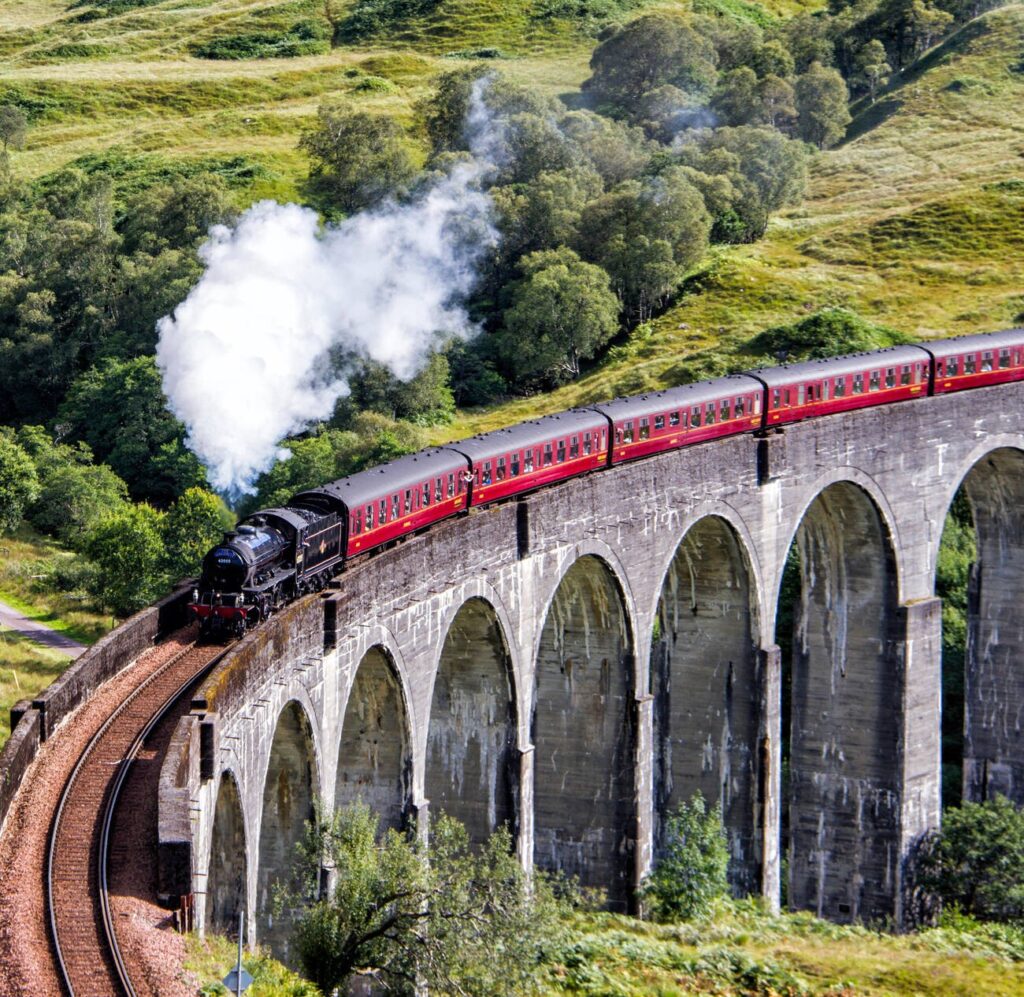
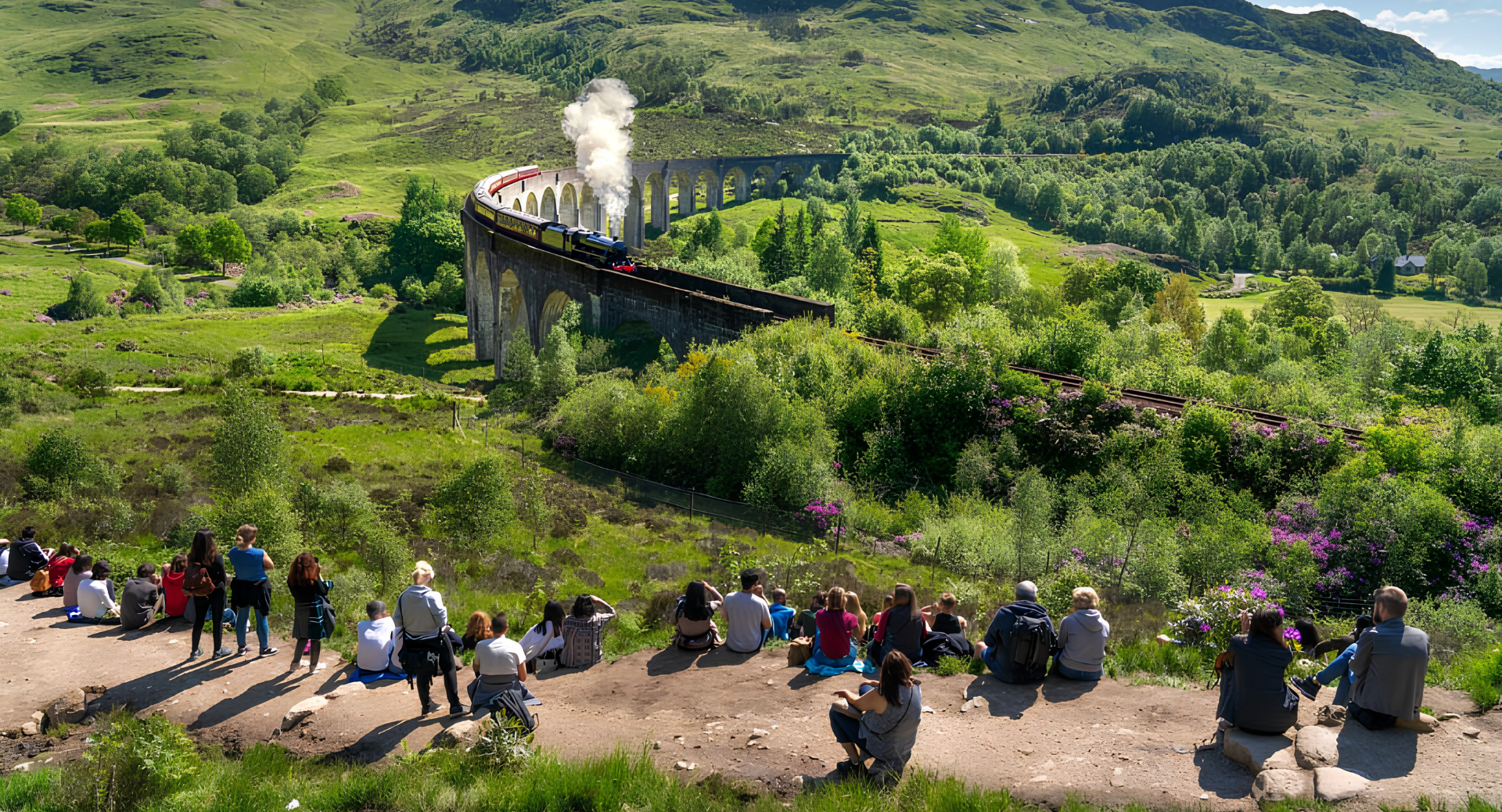
One mid-morning in Lochaber, a crowd of several hundred people stands on a Highland hillside, watching an empty railway viaduct. Nobody speaks much. Then a whistle carries up the glen, a plume of steam appears between the hills, and The Jacobite swings out across the twenty-one concrete arches of the Glenfinnan Viaduct, a hundred feet above the River Finnan, exactly as it does in the films.
The crowd films it on their phones. Then everyone walks back down to the car park, quietly delighted, having travelled a long way to watch a scheduled train service pass a bridge built in 1901.
That hillside is the strange heart of the world’s biggest literary fan trail. Harry Potter tourism now touches every corner of Britain, and it is unlike any other kind of literary travel, because so much of it is challenged by the author herself. In 2020 and again in 2022, J.K. Rowling spent several amused posts dismantling the inspiration industry that had grown up around her books: the café that calls itself the birthplace, the graveyard names, the colourful Edinburgh street. “No real street inspired Diagon Alley, I’m afraid. It came out of my head,” she wrote of the most famous claim of all.
It sounds like bad news for a pilgrimage, and is actually the opposite. Strip away the folklore and what remains is one of the richest verified trails in Britain: the actual rooms where the books were written, and the medieval cloisters, working steam railways and Atlantic beaches where the films were made. This guide deals in that checkable Britain, and flags the folklore where you’ll meet it, because you will. A pilgrimage is better when you know which ground is holy.
Where Was Harry Potter Written?
Not in the famous café. The true writing map runs from a delayed train to a five-star hotel room with a signed statue.
The story begins in 1990, on a delayed train from Manchester to London King’s Cross. Rowling, then in her mid-twenties, had been flat-hunting; as the countryside passed outside the window, the idea of a boy wizard arrived, in her own account, essentially complete. She had no pen and was too shy to borrow one, so she spent the four-hour delay building Hogwarts in her head. If you define a birthplace by the moment of the idea, the birthplace of Harry Potter is a stretch of railway line.
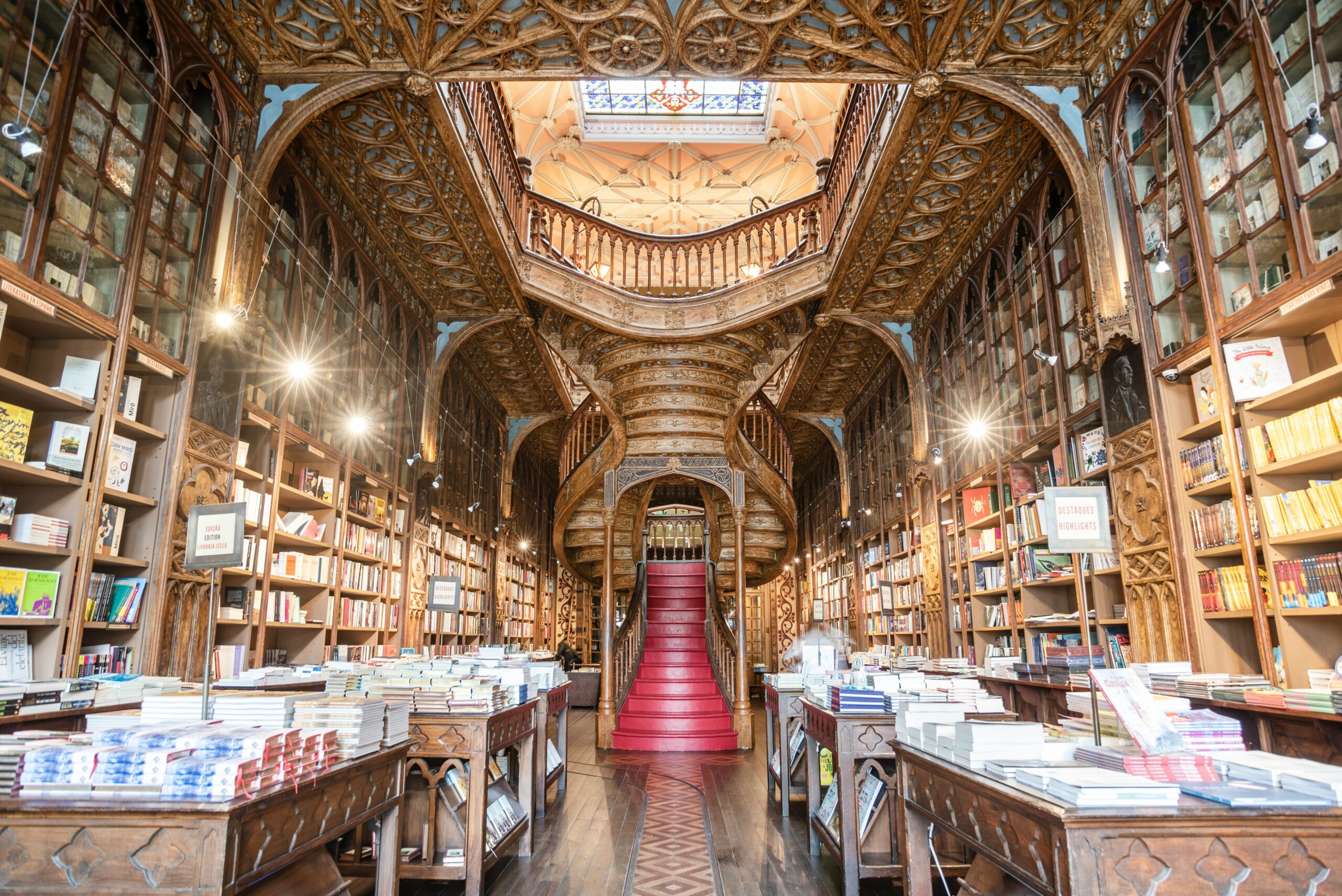
The writing itself was itinerant. She worked on the early chapters in London, then in Porto, where she taught English in the early 1990s and where the city’s famous Livraria Lello has spent decades gently encouraging the assumption that its crimson staircase shaped Hogwarts. Rowling has never confirmed it, and has said she is amused by the whole genre of claimed inspirations.
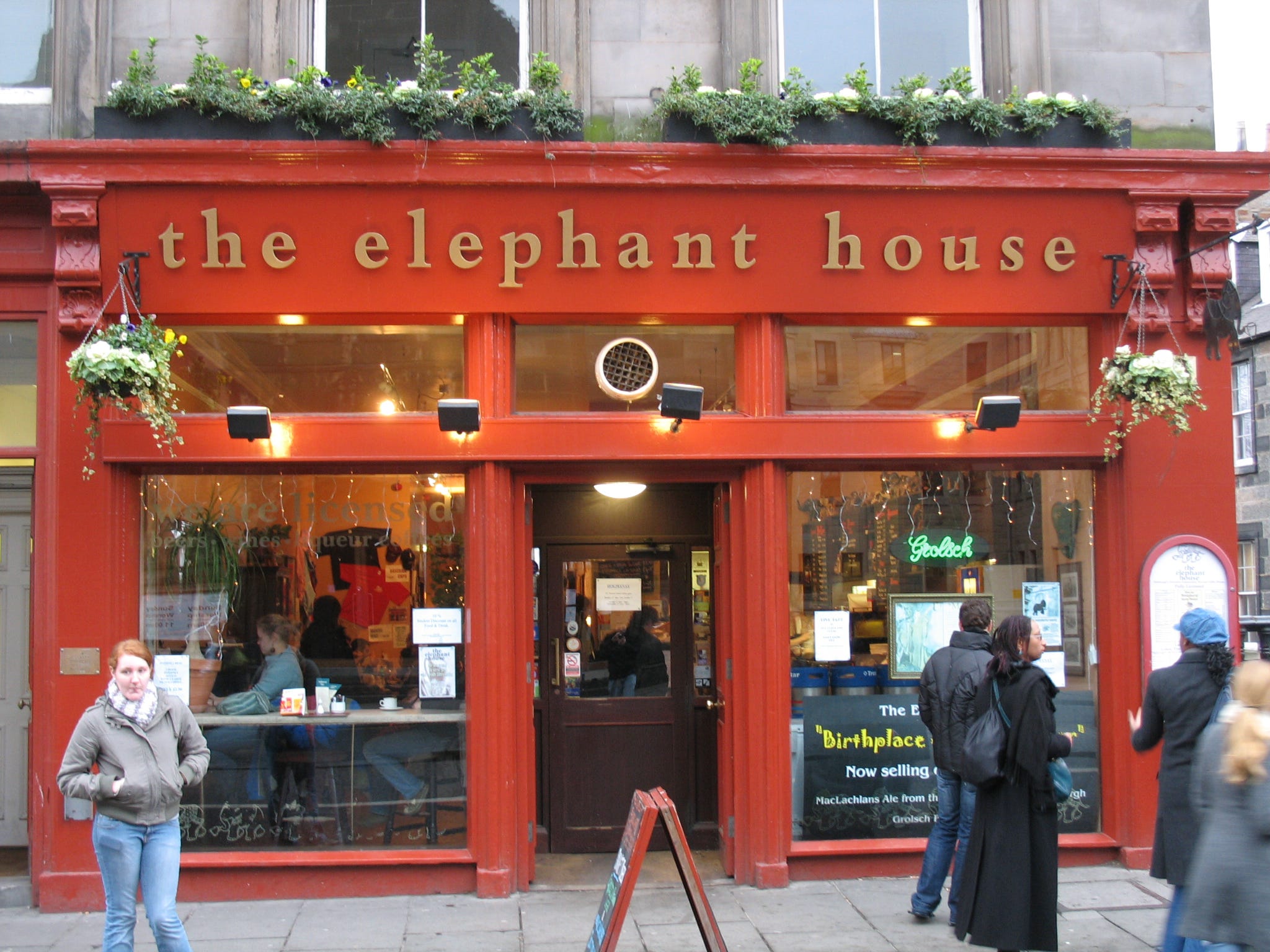
In 1993 she arrived in Edinburgh with three chapters of Harry Potter and the Philosopher’s Stone in her luggage, and Edinburgh is where the series was substantially written, in cafés around the Old Town. Just not, at first, the café. The Elephant House traded for years as “the birthplace of Harry Potter” until Rowling clarified that she’d been writing Potter for several years before she ever set foot in it, though she did write there later.
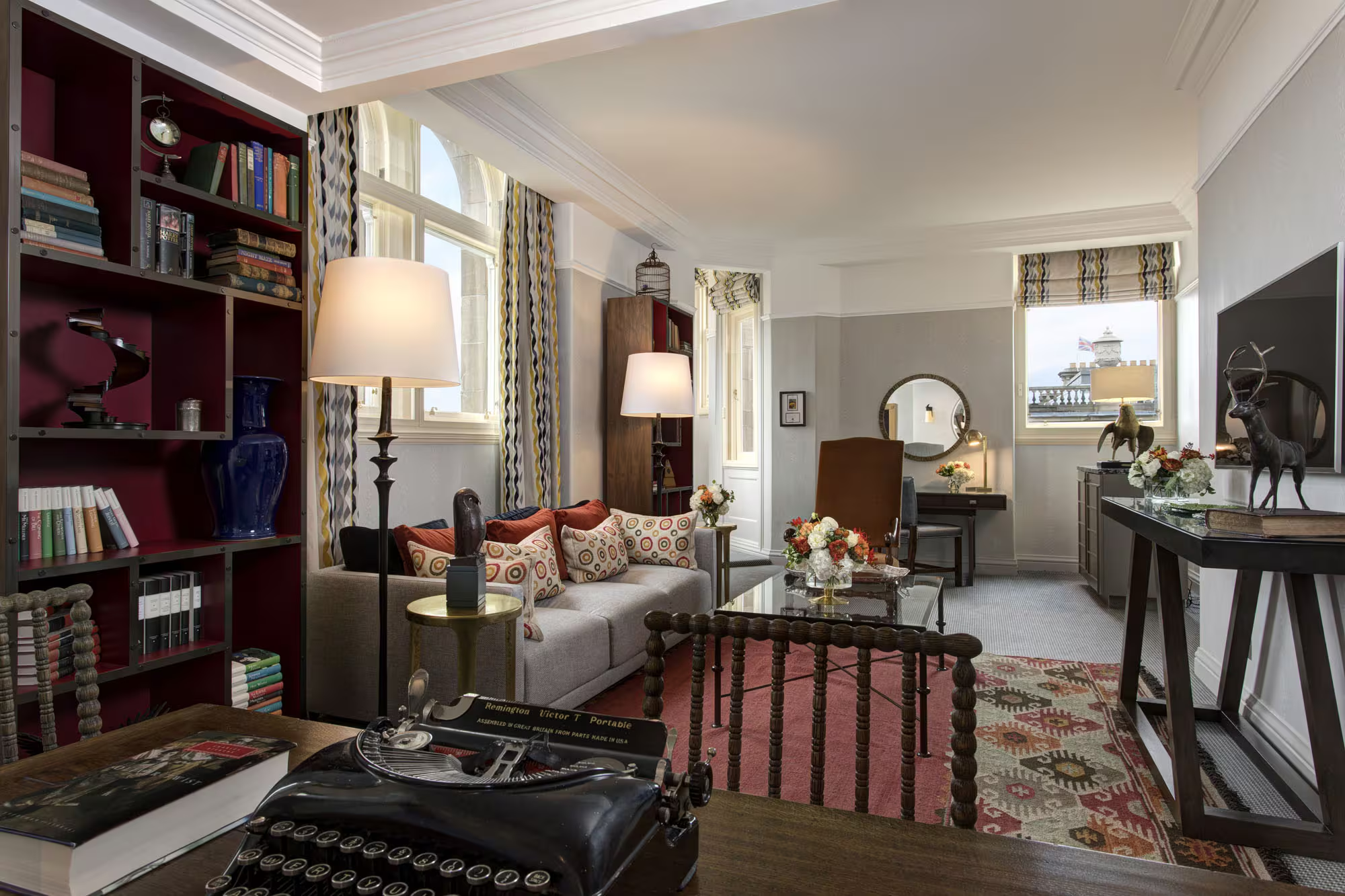
The ending, at least, is beyond dispute, because the author signed it. In August 2006, struggling to finish the seventh book in a busy household, Rowling quietly checked into room 552 of The Balmoral, the grand railway hotel above Waverley Station, and worked there for a period of time while the staff kept her secret. On the 11th of January 2007, she wrote the final words of Harry Potter and the Deathly Hallows, and then celebrated by inscribing the book, the room number and the date on a marble bust of Hermes.
The hotel has kept the bust under glass ever since, renamed the room the J.K. Rowling Suite, and fitted the door with an owl knocker. Seventeen years of writing, bookended by a train and a hotel room, four hundred miles apart. The whole pilgrimage is really the journey between those two points.
How to Plan a Harry Potter Literary Pilgrimage
Three essential stops and a week-long route workable by rail or by road.
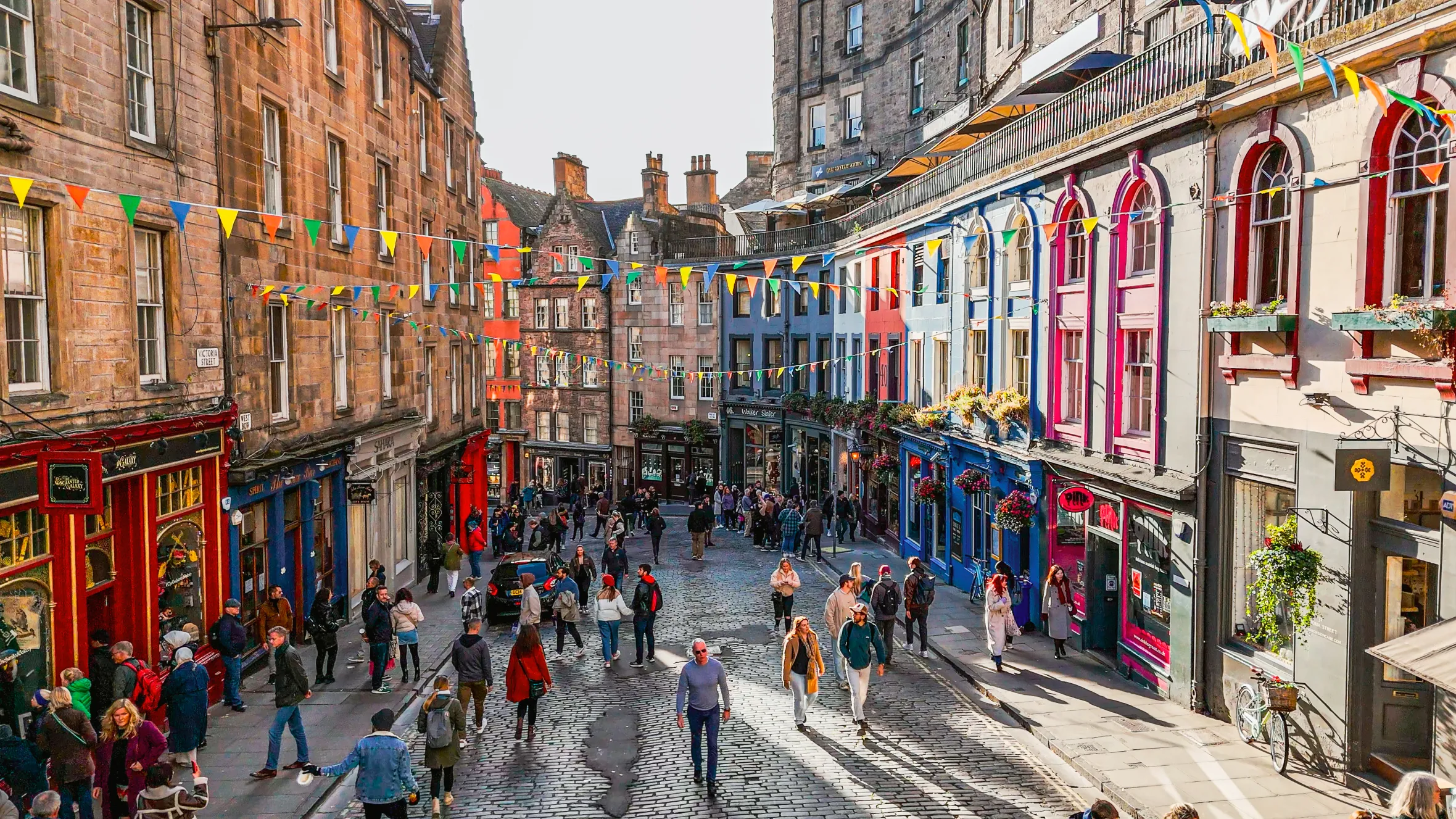
If you only visit three places on your Harry Potter literary pilgrimage, make them these. Edinburgh, for the writing city: the cafés, the Balmoral, and the fan-trail folklore of Victoria Street and Greyfriars Kirkyard, taken with the pinch of salt this guide will supply. Greyfriars Kirkyard, specifically, because whatever Rowling says about her sources, standing at the weathered headstone of one Thomas Riddell at dusk is the closest the trail comes to a ghost story. And the Forest of Dean, because it’s the one landscape that is both a real filming location and genuine Rowling country: she spent her teenage years in Tutshill on its edge, and the forest enters the books by name.
One week by train. London first, with a day trip out to the Warner Bros. Studio Tour at Leavesden. Then Oxford. Then west: Bristol and Yate, where Rowling was born, with Chepstow and the Forest of Dean beyond. Half a day in Manchester for the John Rylands Library and the memory of that 1990 train, then York, then Edinburgh, and finally Fort William for the West Highland Line and Glenfinnan.
One week by car. The same arc, with one advantage: the car gives you access to the West Country properly, letting you take Lacock, Gloucester and the Forest of Dean in sequence and adding the long, worthwhile detour to Freshwater West in Pembrokeshire.
One caveat, stated plainly: Lacock, Malham, Goathland and Alnwick all need a bus or a taxi from the nearest railway station. The train route above works, but those four stops will test your patience with rural timetables. Drivers have the easier week.
Filming Locations by Scene
The index: where each piece of the wizarding world actually sits on the map of Britain.
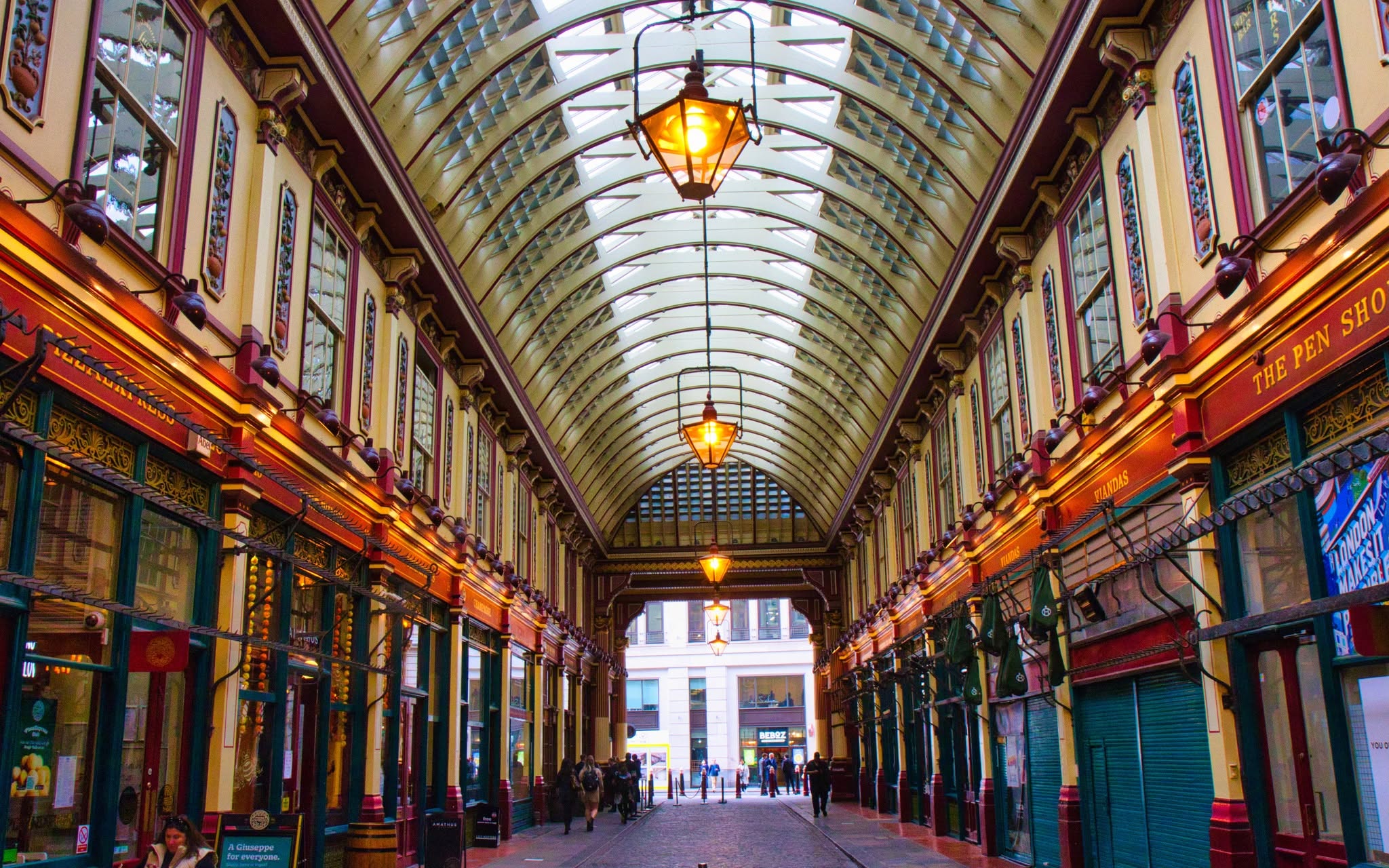
Diagon Alley: Leadenhall Market, London. For Philosopher’s Stone, the wizarding shopping street was conjured inside Leadenhall Market. This is a Victorian covered market in the city rebuilt in 1881 on a site traders have used since Roman times. Try to go on a weekend, when the finance workers are gone, and the empty painted arcades feel exactly like a street hiding in plain sight.
The Leaky Cauldron entrance, first film: Bull’s Head Passage, Leadenhall Market. The blue door Hagrid leads Harry through belongs, in the Muggle world, to an optician’s shop. It remains the only pub entrance in London with a waiting list of photographers and no beer.
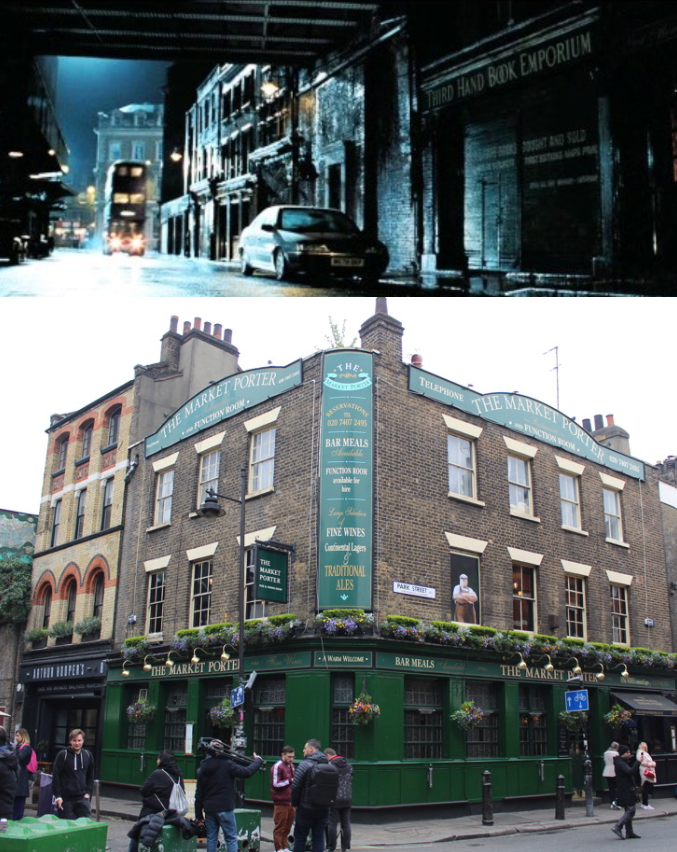
The Leaky Cauldron entrance, third film: Stoney Street, Borough Market, London. Alfonso Cuarón wanted a darker London and a street wide enough for a triple-decker bus, so Prisoner of Azkaban moved the pub south of the river, under the railway arches beside the food market. Go hungry; the market is the point.
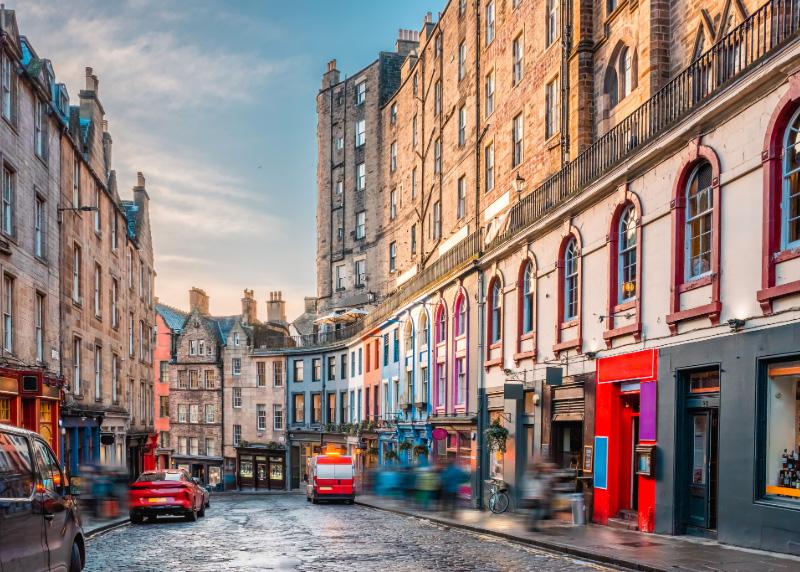
Diagon Alley, the myth: Victoria Street, Edinburgh. The curved, candy-coloured street climbing from the Grassmarket is a fixture of every Potter tour. Rowling has been explicit that she’d never seen it when she invented Diagon Alley. It stays on the itinerary anyway, partly because it’s one of the prettiest streets in Scotland, and since watching a myth outlive its own debunking is its own kind of sightseeing.
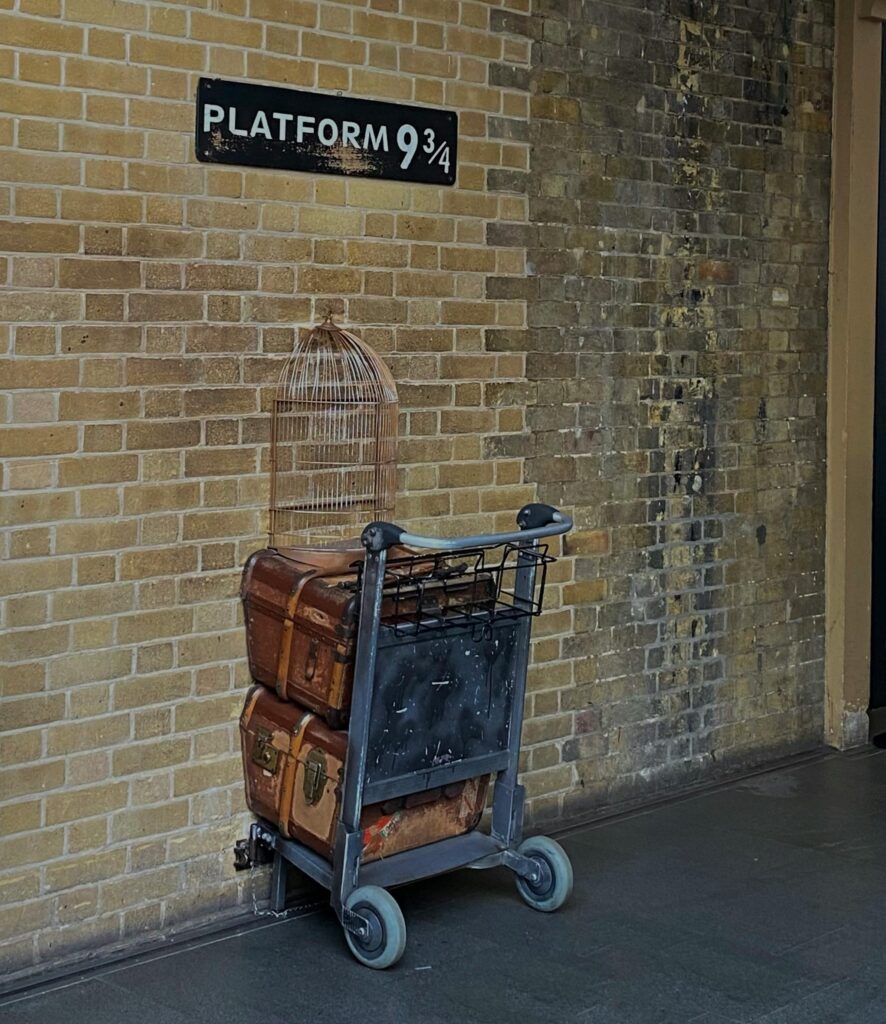
Platform 9¾: King’s Cross Station, London. The films used platforms 4 and 5; the station has installed a trolley half-vanished into the wall near the concourse, and the queue for a photograph can pass an hour. Rowling chose King’s Cross because her parents met on a train departing from the station. For once, the romance is documented.
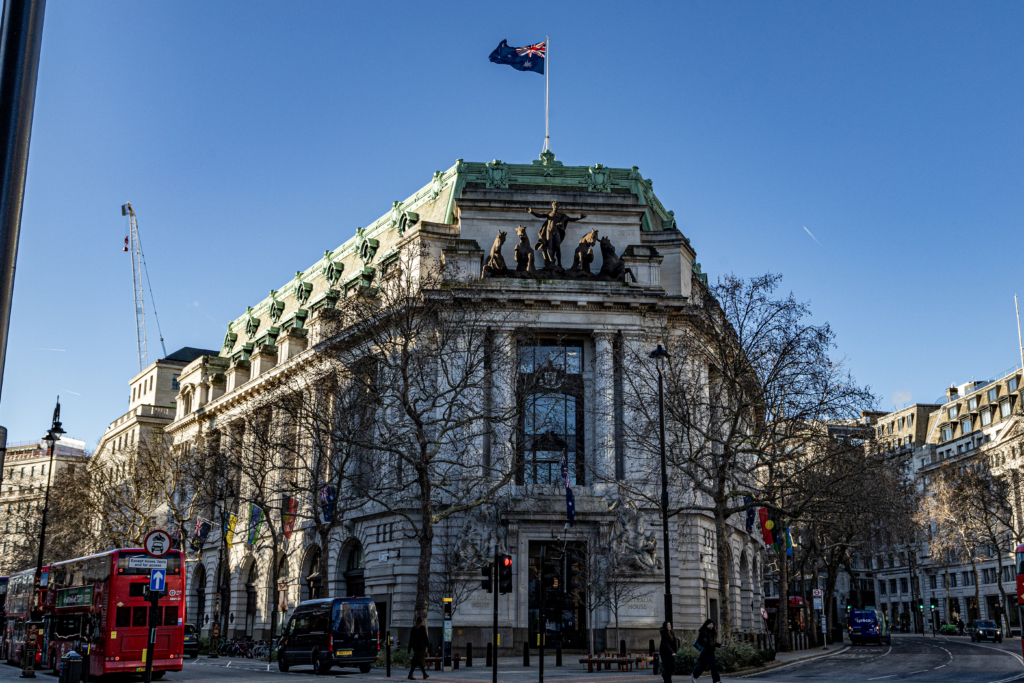
Gringotts Bank: Australia House, London. The marble banking hall of Philosopher’s Stone is the interior of the Australian High Commission on the Strand, a working diplomatic building, which is why you can’t go in. Peer through the doors and the chandeliers are exactly where the goblins left them.
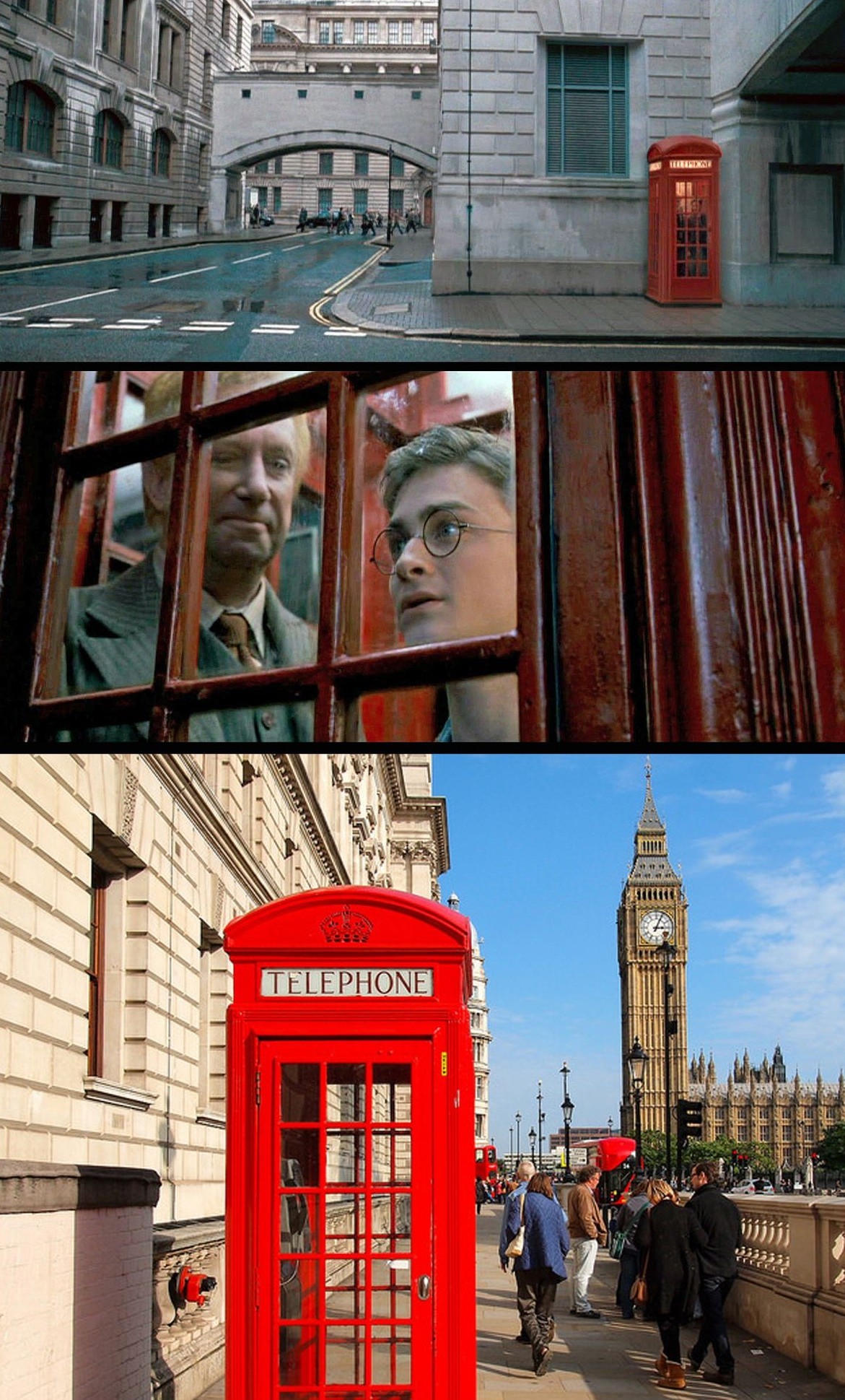
The Ministry of Magic visitors’ entrance: Scotland Place, London. The red telephone box that swallows Harry and Mr Weasley in Order of the Phoenix stood at the corner of Scotland Place and Great Scotland Yard. It was a prop, removed after filming. Wizards, it turns out, commute through Whitehall like everyone else.
The largest collection of original sets, props and costumes: Warner Bros. Studio Tour, Leavesden. All eight films were made at Leavesden. When production wrapped in 2010, the crew found themselves custodians of a decade of handmade Britain: the Great Hall, Dumbledore’s office, more than 500 costumes, and Olton Hall, the actual steam locomotive that played the Hogwarts Express. The tour opened in 2012. It is the one stop on this list of Harry Potter literary locations in Britain where nothing is borrowed, because everything here was already Hogwarts.
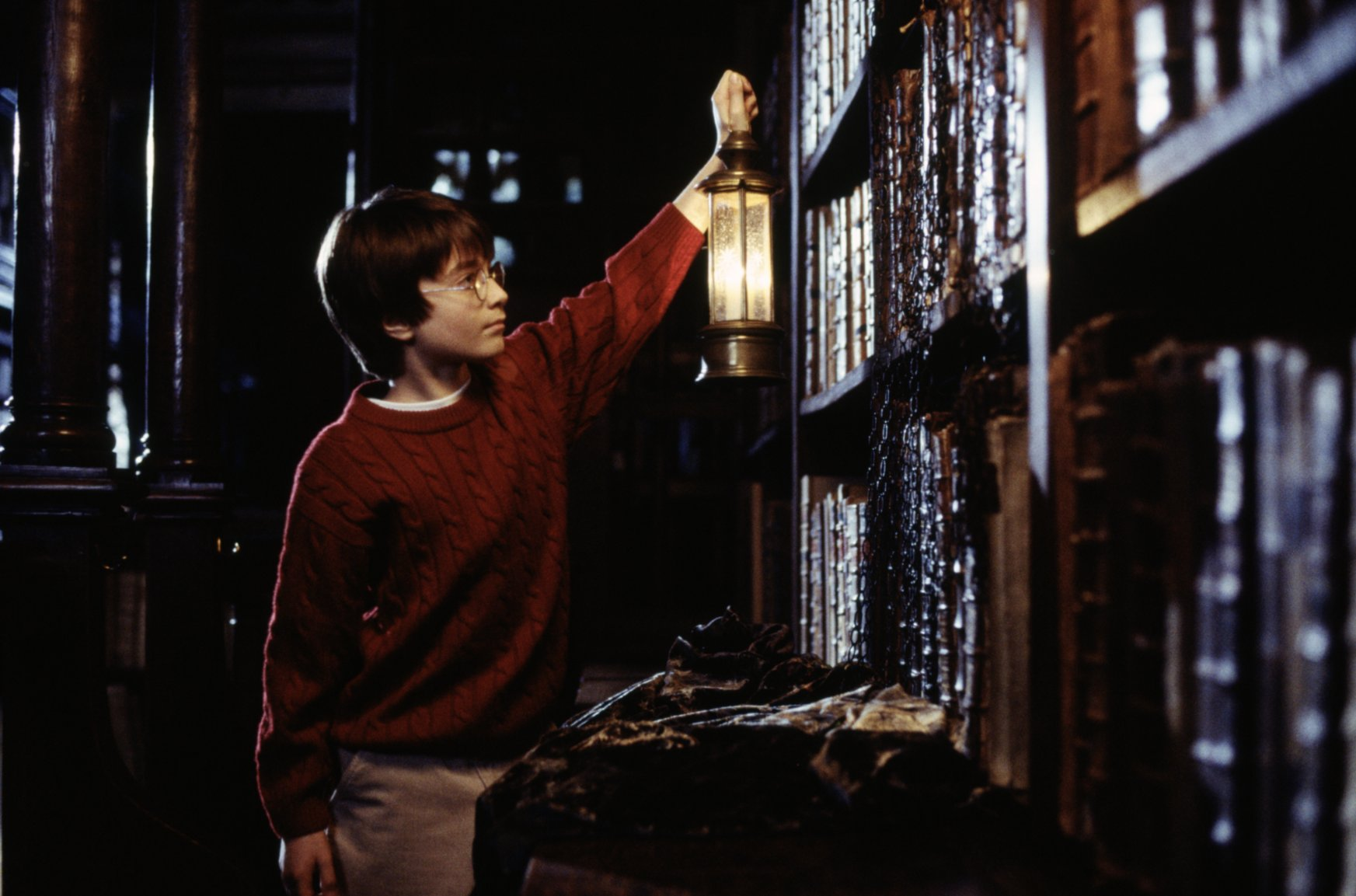
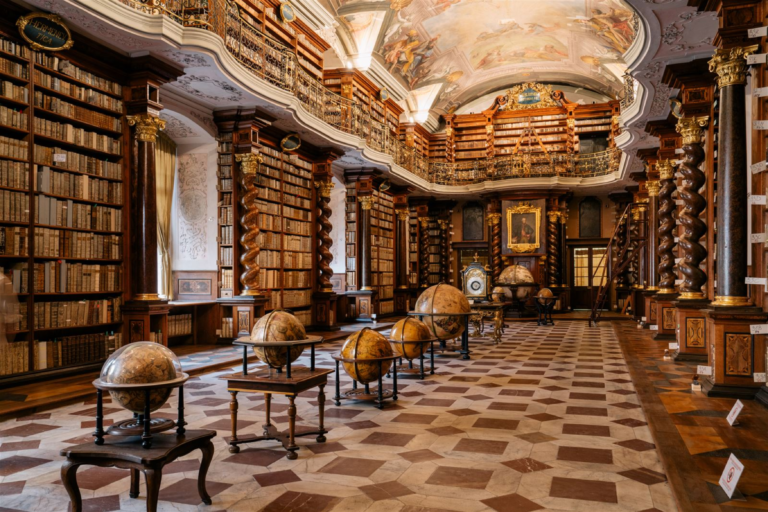
Hogwarts Library: Duke Humfrey’s Library, Bodleian, Oxford. Harry prowls the Restricted Section under his invisibility cloak in the Bodleian’s oldest reading room. This is where the books were once chained to the shelves, and readers still swear a centuries-old oath that includes a promise not to kindle flame. The filmmakers needed a library that took books seriously to the point of menace. There was really only one candidate.
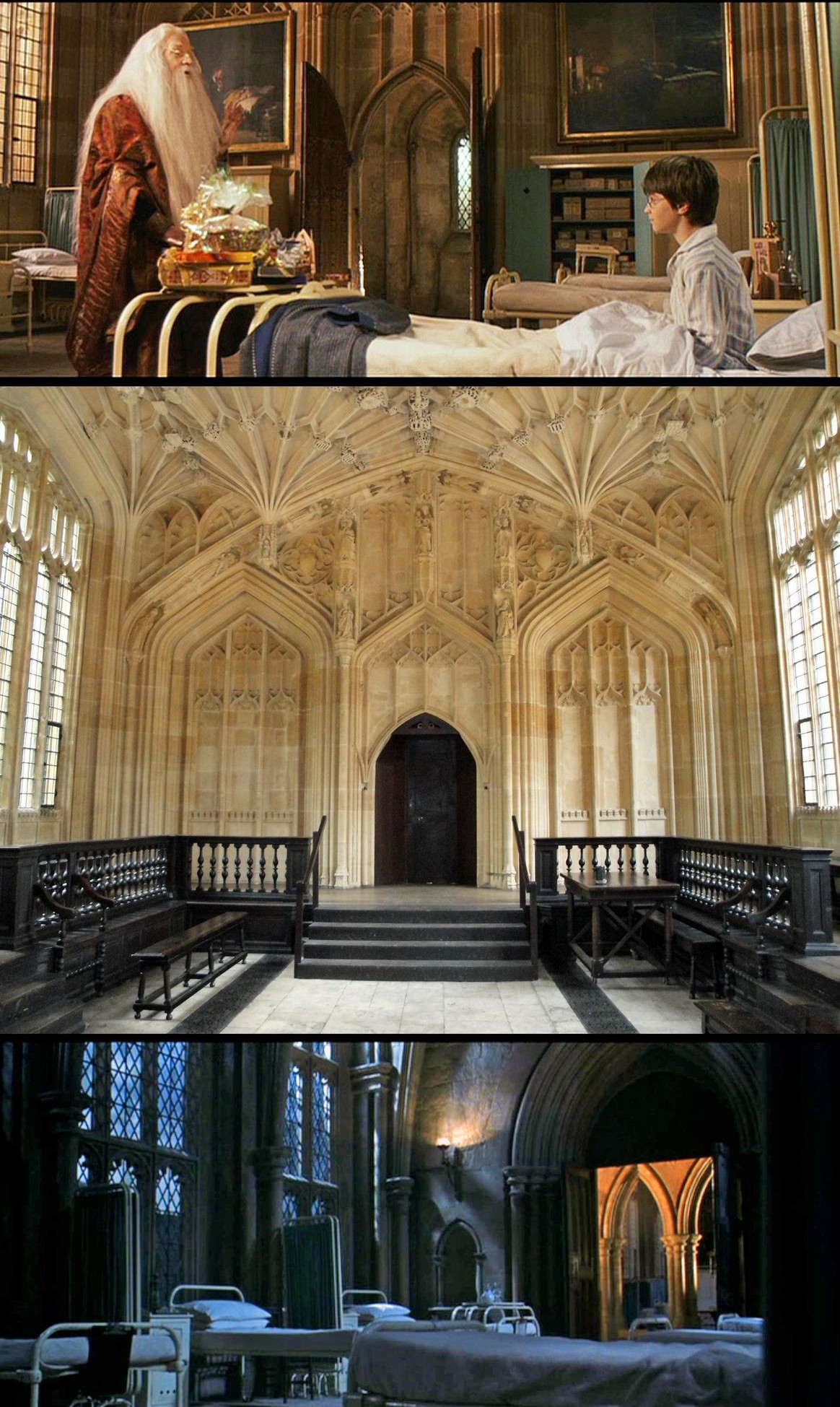
Hogwarts Infirmary: Divinity School, Bodleian, Oxford. Downstairs, the university’s first purpose-built lecture room, finished in the fifteenth century under a ceiling of carved stone, became the hospital wing where Harry wakes at the end of the first film. It is also where McGonagall teaches Ron to dance in the fourth. Six hundred years of examinations, and the room’s most famous scene is a waltz.
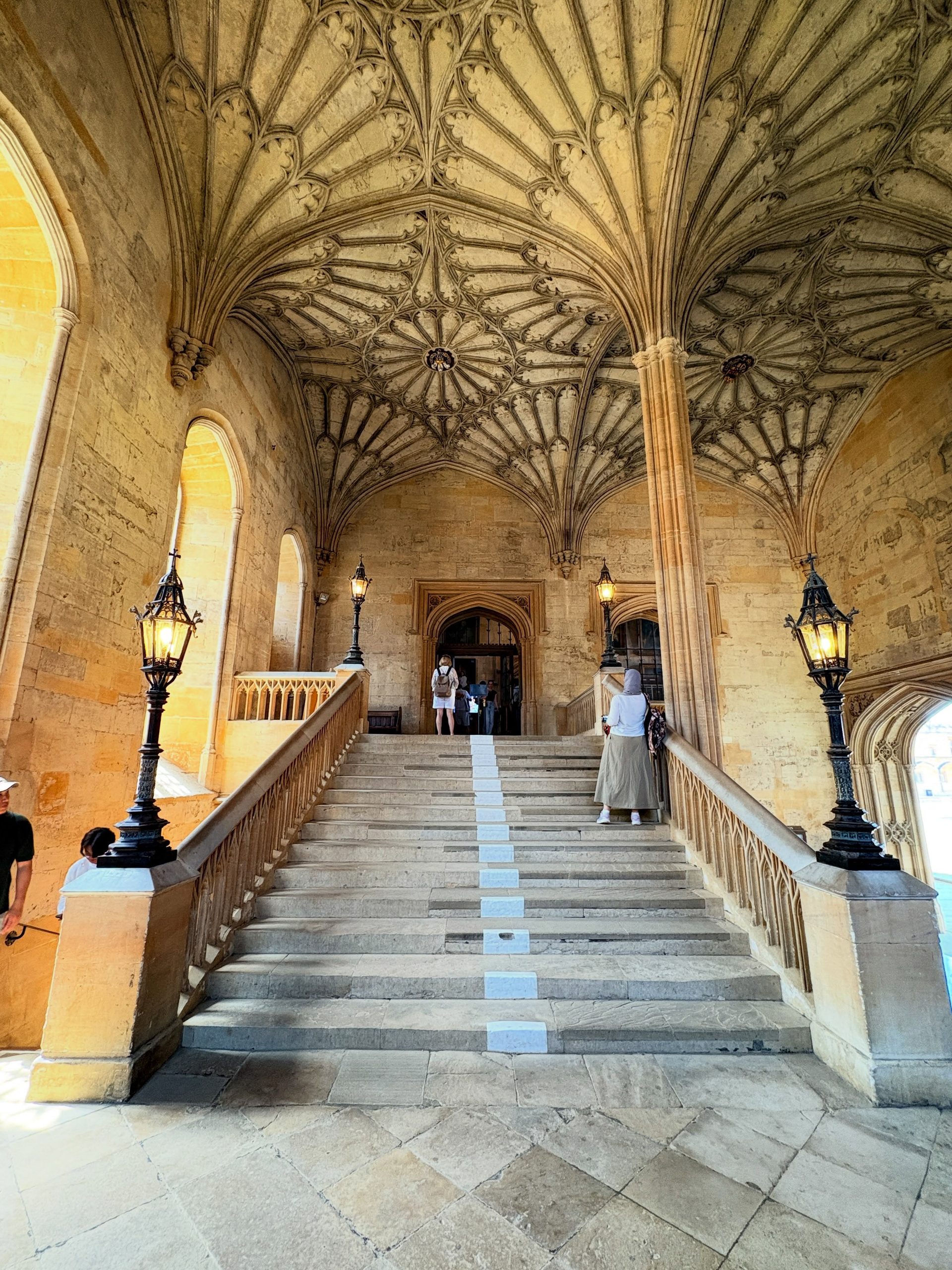
First years arriving at Hogwarts: Bodley Tower staircase, Christ Church, Oxford. McGonagall greets the new students on the stone staircase beneath fan vaulting installed in 1638. Generations of undergraduates have climbed it to dinner; the eleven-year-olds of the films just looked more nervous.
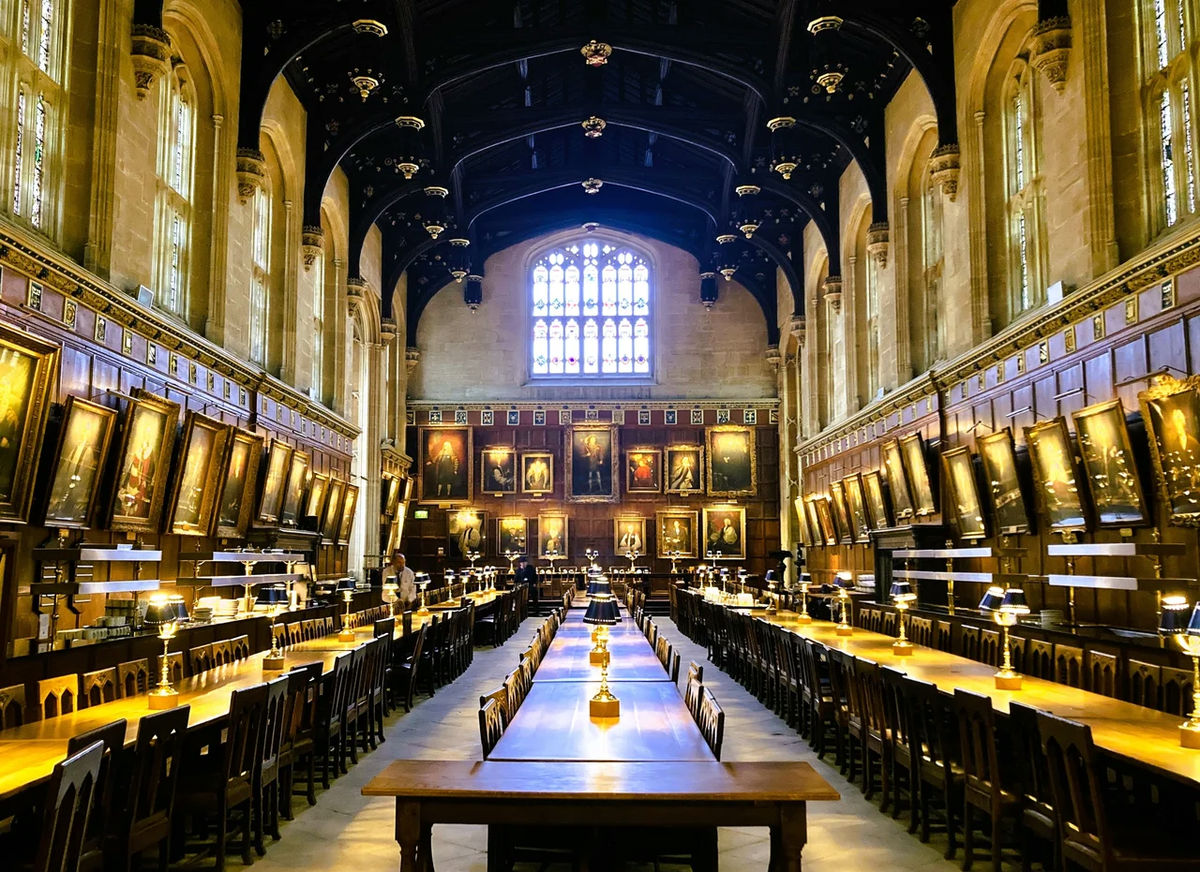
The Great Hall, the inspiration: Christ Church dining hall, Oxford. Filming never happened in the Tudor hall itself; the Great Hall set at Leavesden was built from its likeness, long tables, high table and all. Eat your heart out at the doorway, then notice the students eating lunch under the portraits, entirely used to it.
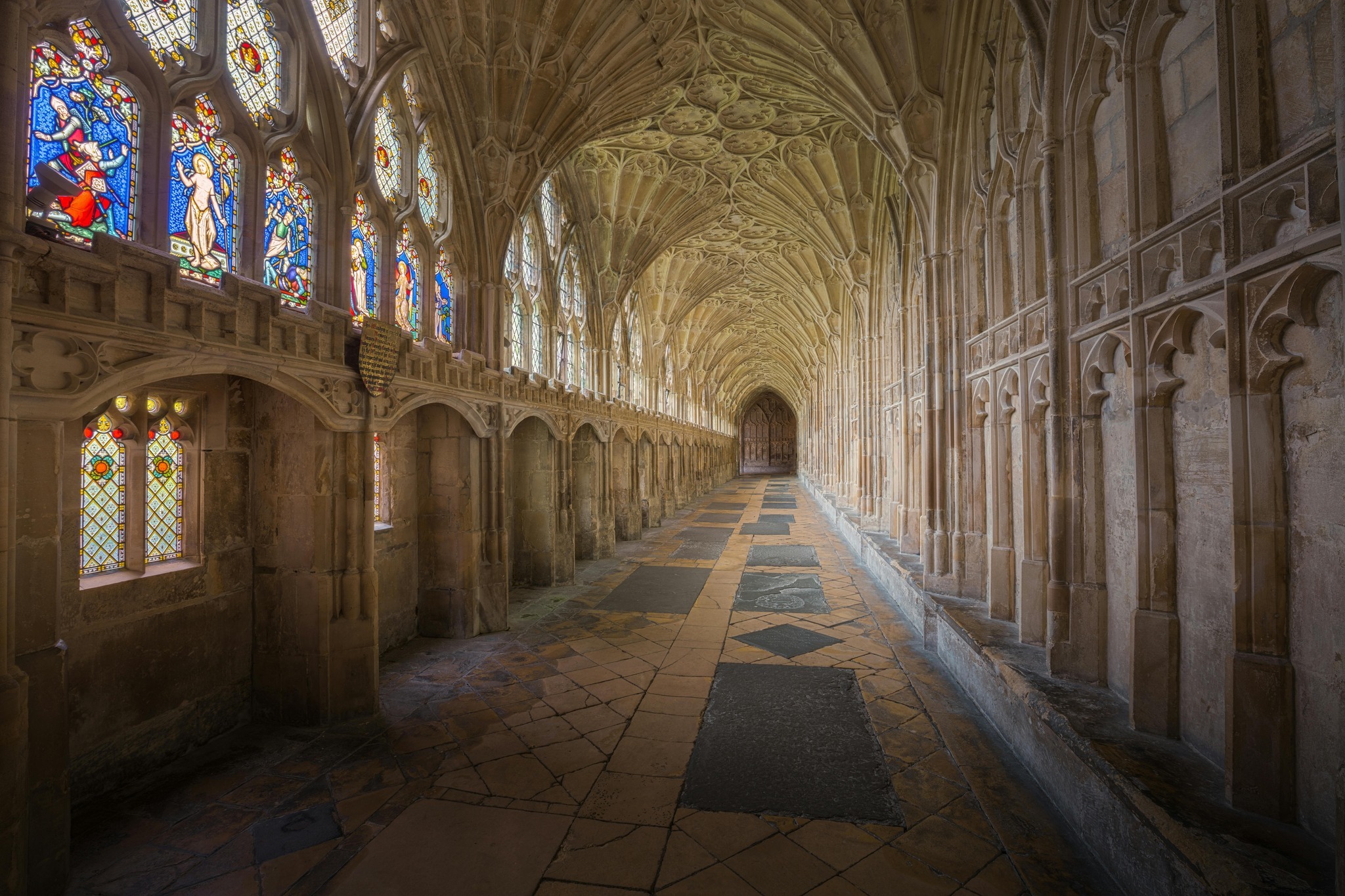
Hogwarts hallways: New College and Christ Church, Oxford; Gloucester Cathedral; Durham Cathedral; Lacock Abbey. Hogwarts’ corridors are a composite of the best cloisters in England. Gloucester Cathedral contributed its fourteenth-century cloisters, the earliest surviving fan vaults in the country, where the wall carries the Chamber of Secrets’ message and Harry and Ron hide from the troll in the monks’ old washing place. New College’s cloisters host Mad-Eye Moody’s ferret trick in Goblet of Fire. On screen, it’s one school. On the ground, it’s a masterclass in English Gothic, five sites wide.
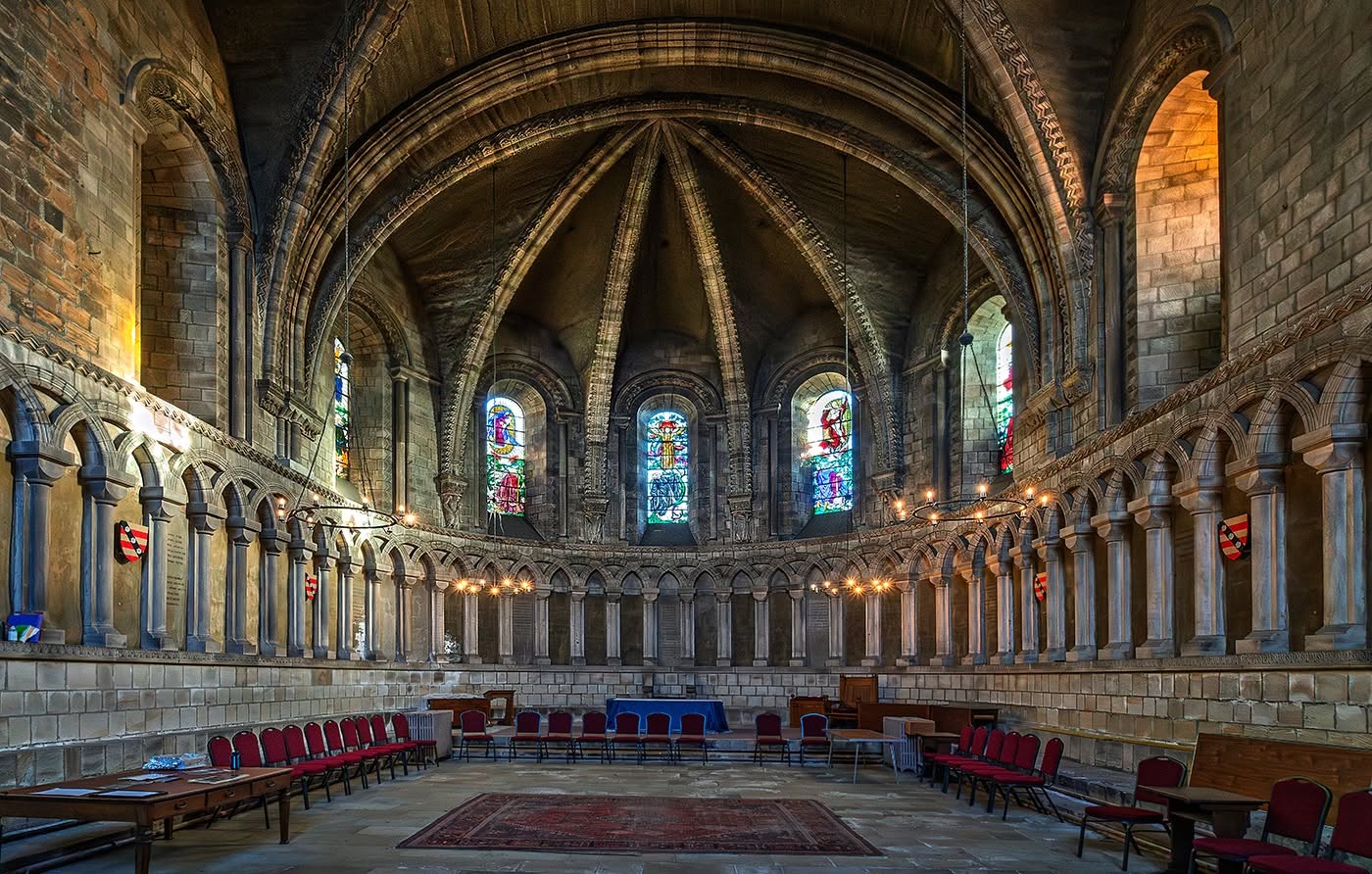
Hogwarts classrooms: Lacock Abbey; Durham Cathedral. Snape’s potions dungeon and Quirrell’s Defence Against the Dark Arts room occupy the medieval spaces of Lacock Abbey in Wiltshire; the Mirror of Erised stood in its chapter house. McGonagall’s transfiguration classroom is the chapter house of Durham Cathedral, which dressed the set from its own collections: the inkwell on her desk, carved with owls, once belonged to the cathedral’s clerks. Hogwarts didn’t need much set dressing here. The furniture was already in character.
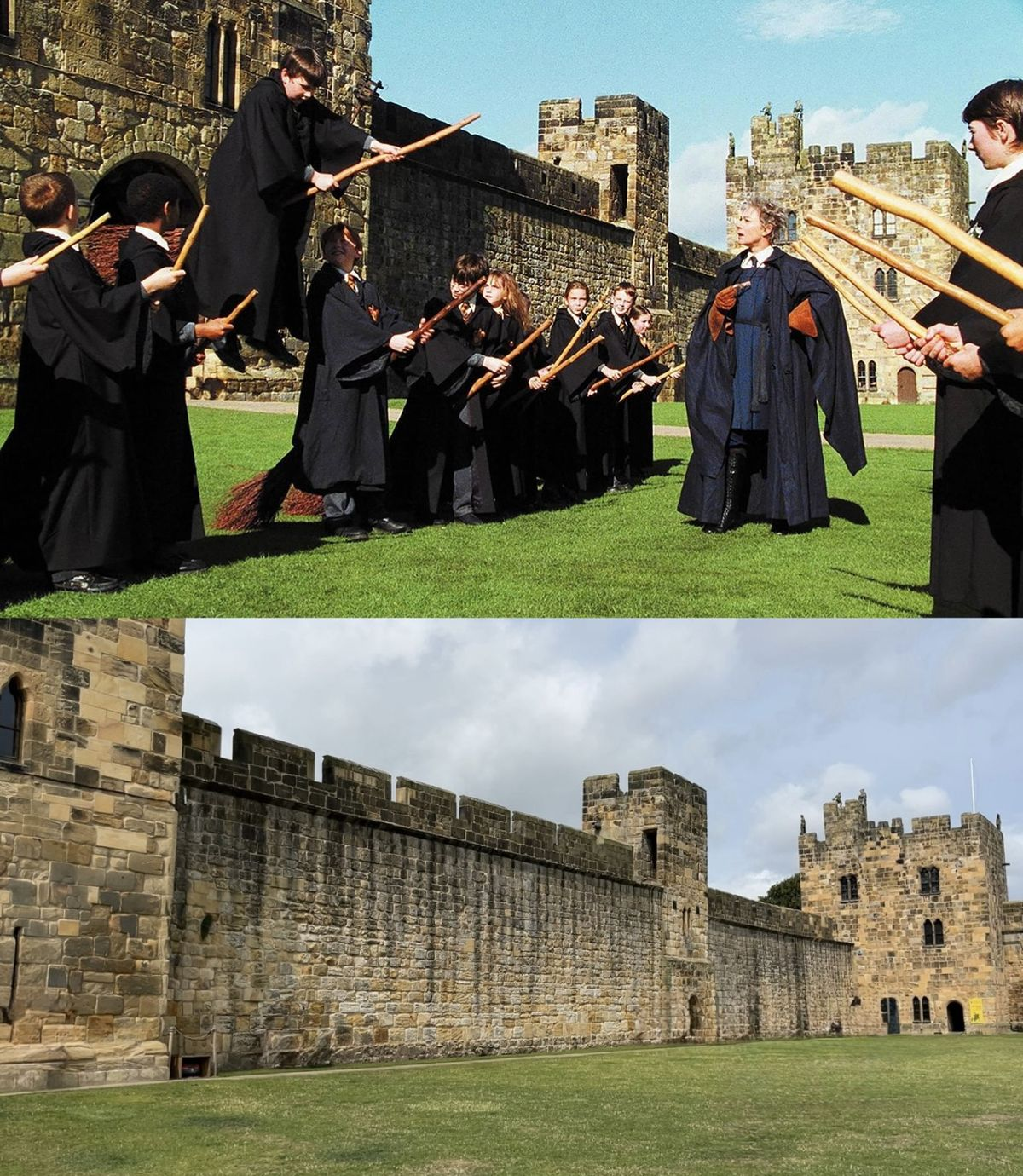
Hogwarts exteriors and broomstick lessons: Alnwick Castle, Northumberland. Madam Hooch’s first flying lesson took off from the Outer Bailey of the Percy family’s castle, the second largest inhabited castle in England. Ron crash-lands the flying Ford Anglia in its Inner Bailey. The castle now runs broomstick training on the same lawn. Watch a seven-year-old achieve lift-off in a photograph and try to feel cynical about franchise tourism.
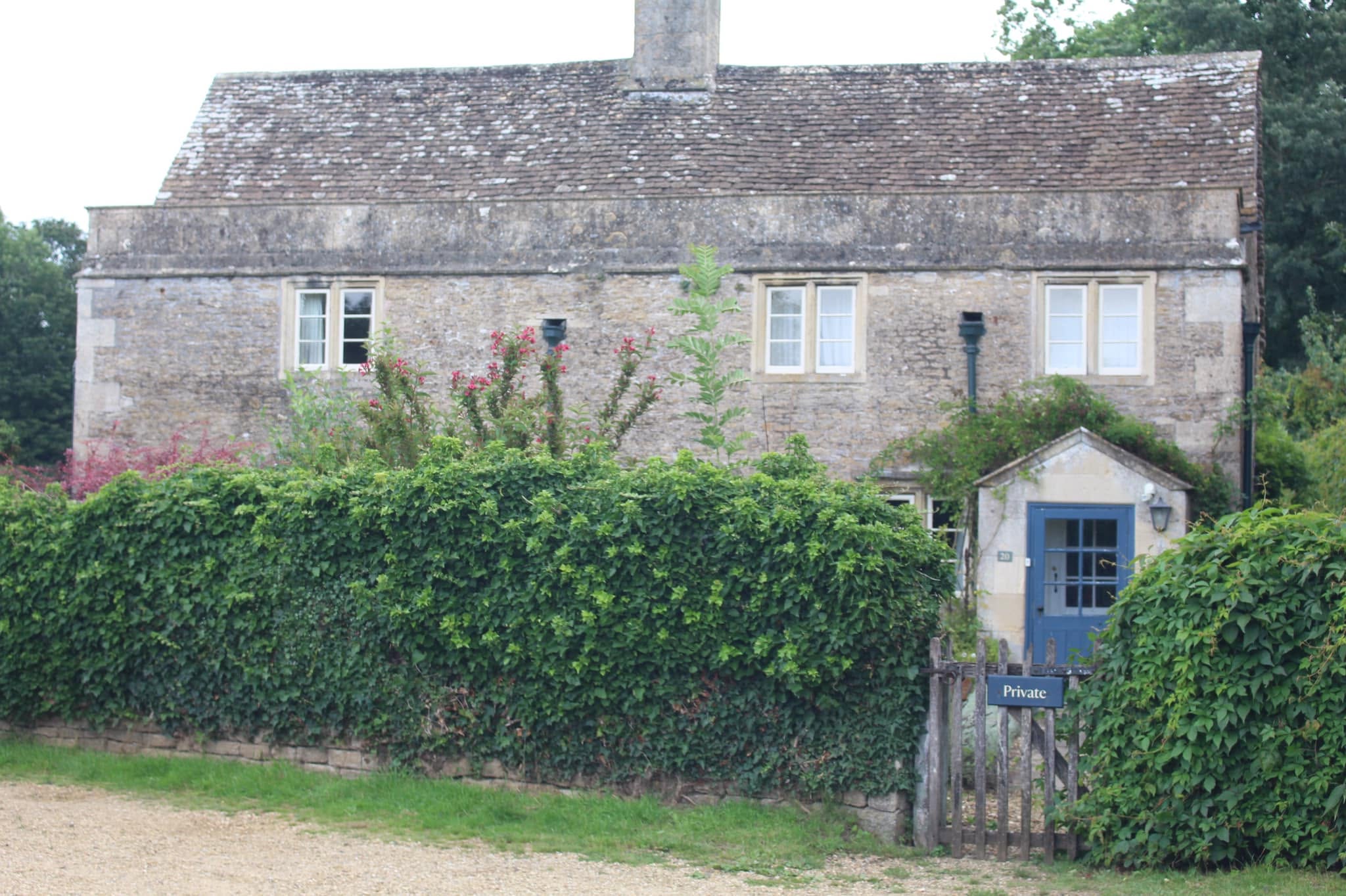
The Potters’ cottage, Philosopher’s Stone flashback: Church Street, Lacock, Wiltshire. The house where Voldemort comes on Halloween night is a private cottage at the end of a village street, which the National Trust has essentially kept unchanged for two centuries. Admire it from the lane; the owners have earned their hedge.
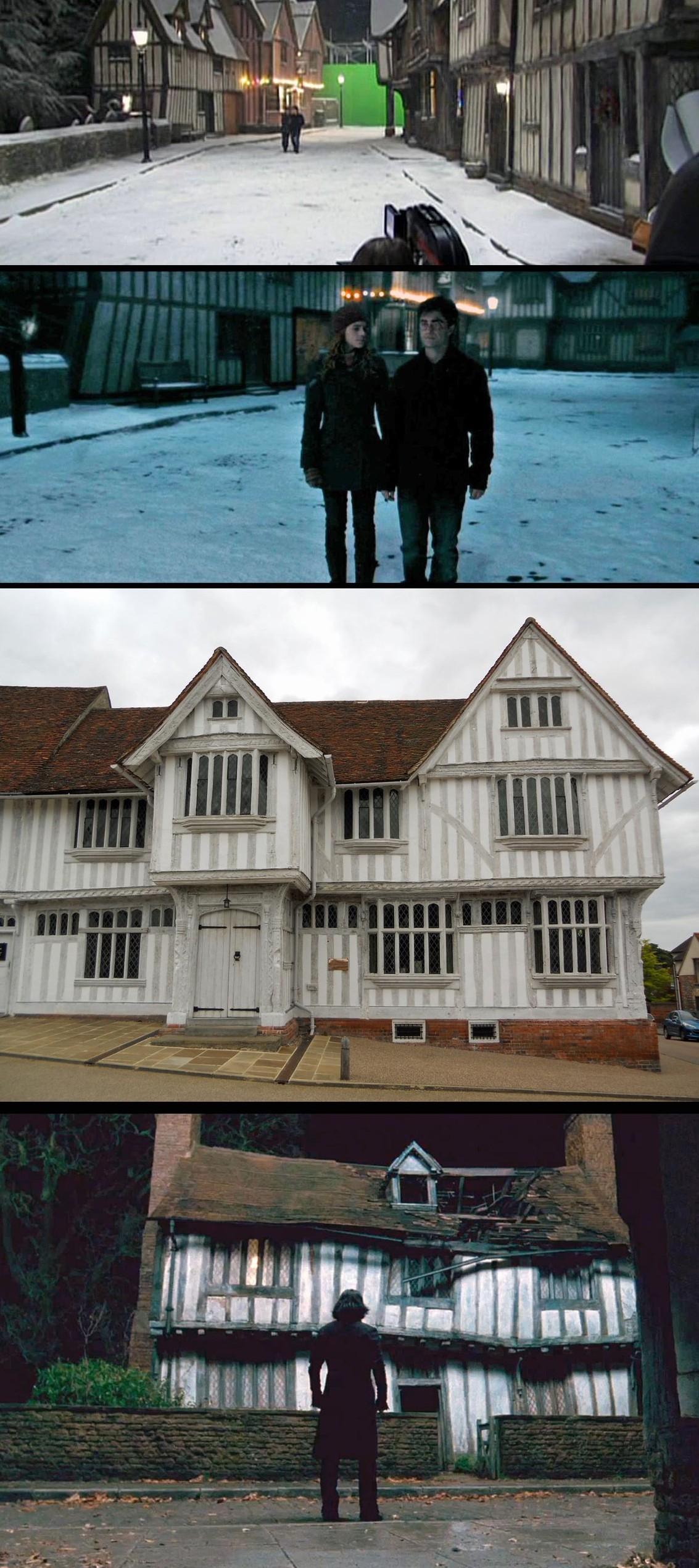
Godric’s Hollow, Deathly Hallows Part 1: Lavenham, Suffolk. For the seventh film, Harry’s birthplace became Lavenham, medieval England’s great wool town, with the crooked, timber-framed Guildhall of 1530 playing the ruined Potter house. Lavenham was once among the richest towns in England. Then history simply forgot to modernise it. The film needed a village frozen in time and found one that genuinely was.
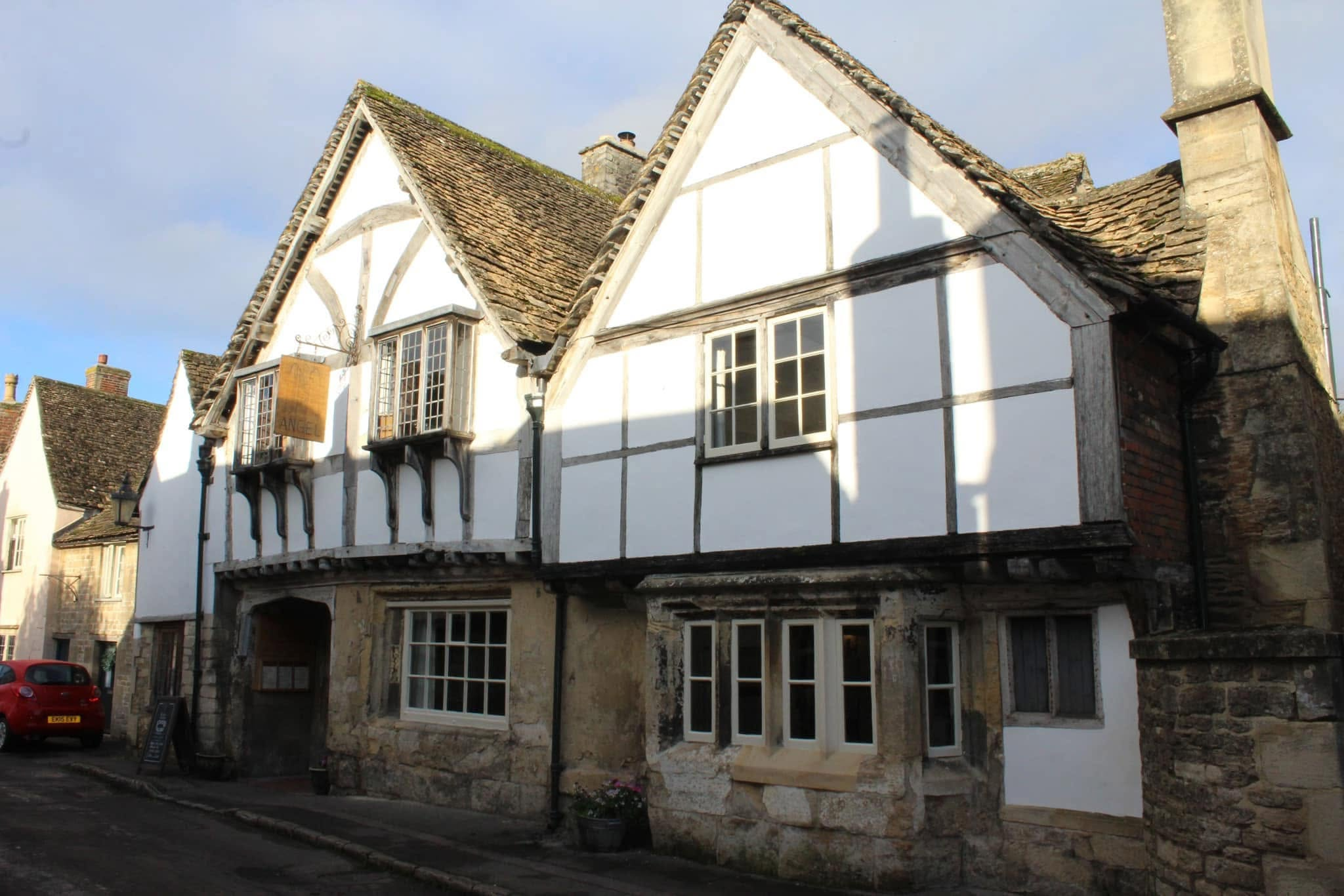
Budleigh Babberton: Lacock village, Wiltshire. The village where Dumbledore and Harry recruit Horace Slughorn in Half-Blood Prince is Lacock again. The fifteenth-century Sign of the Angel inn plays the Babberton Arms, while a fake war memorial is installed at the end of Church Street. One Wiltshire village, three separate roles across the series. Lacock is the character actor of English film.
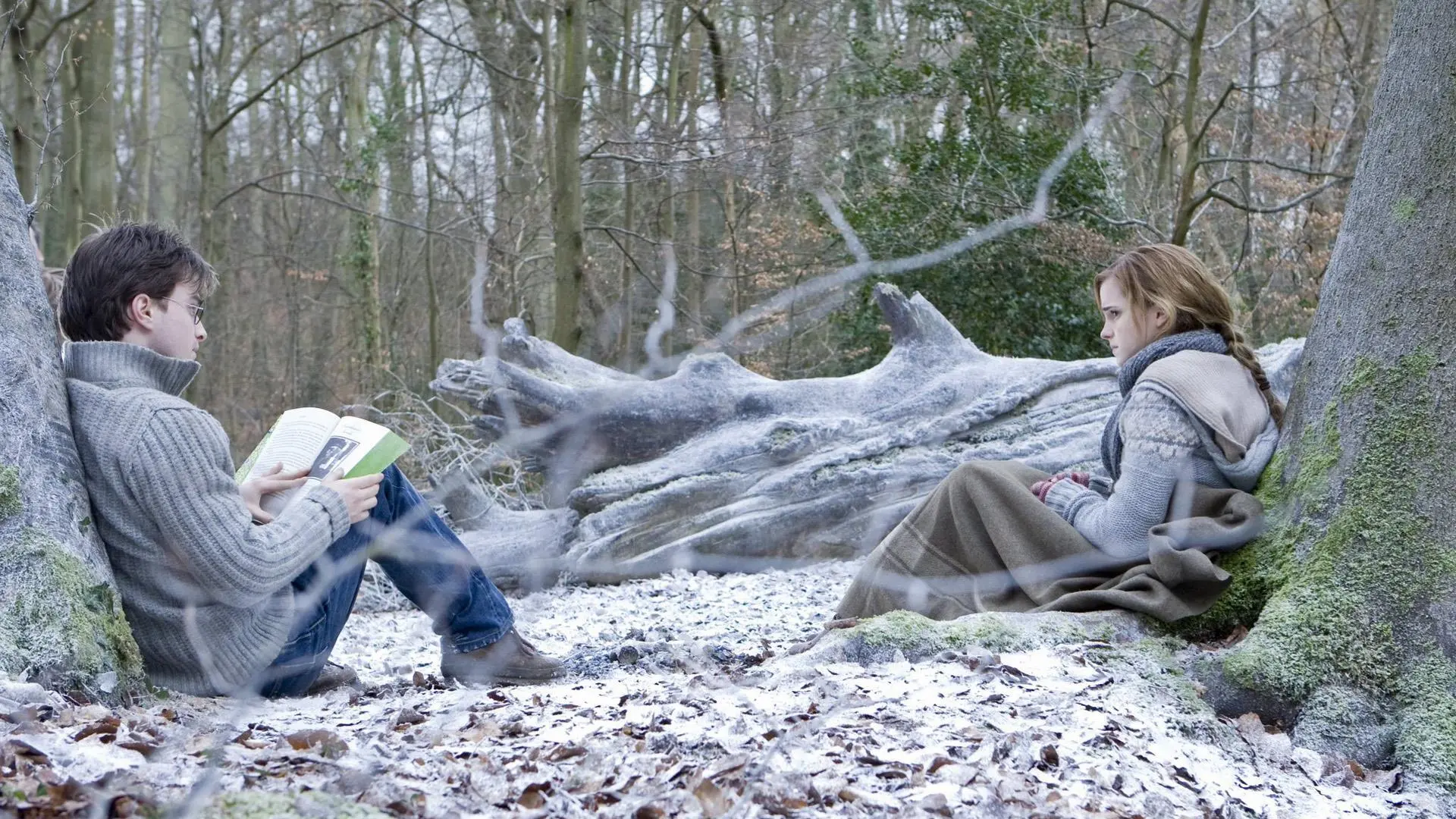
Harry and Hermione in the Forest of Dean: Coppett Hill, near Goodrich. The snowy hillside where a dazed Harry asks where they are, and Hermione answers with the forest’s real name, is Coppett Hill above the River Wye. The trailer’s aerial shot of the trio follows the river’s horseshoe bend, best seen from Symonds Yat Rock. Rowling grew up at Tutshill on the edge of the forest, which makes this the trail’s one perfect overlap: the place on screen, the place on the page, and the author’s own childhood ground, all the same woods.
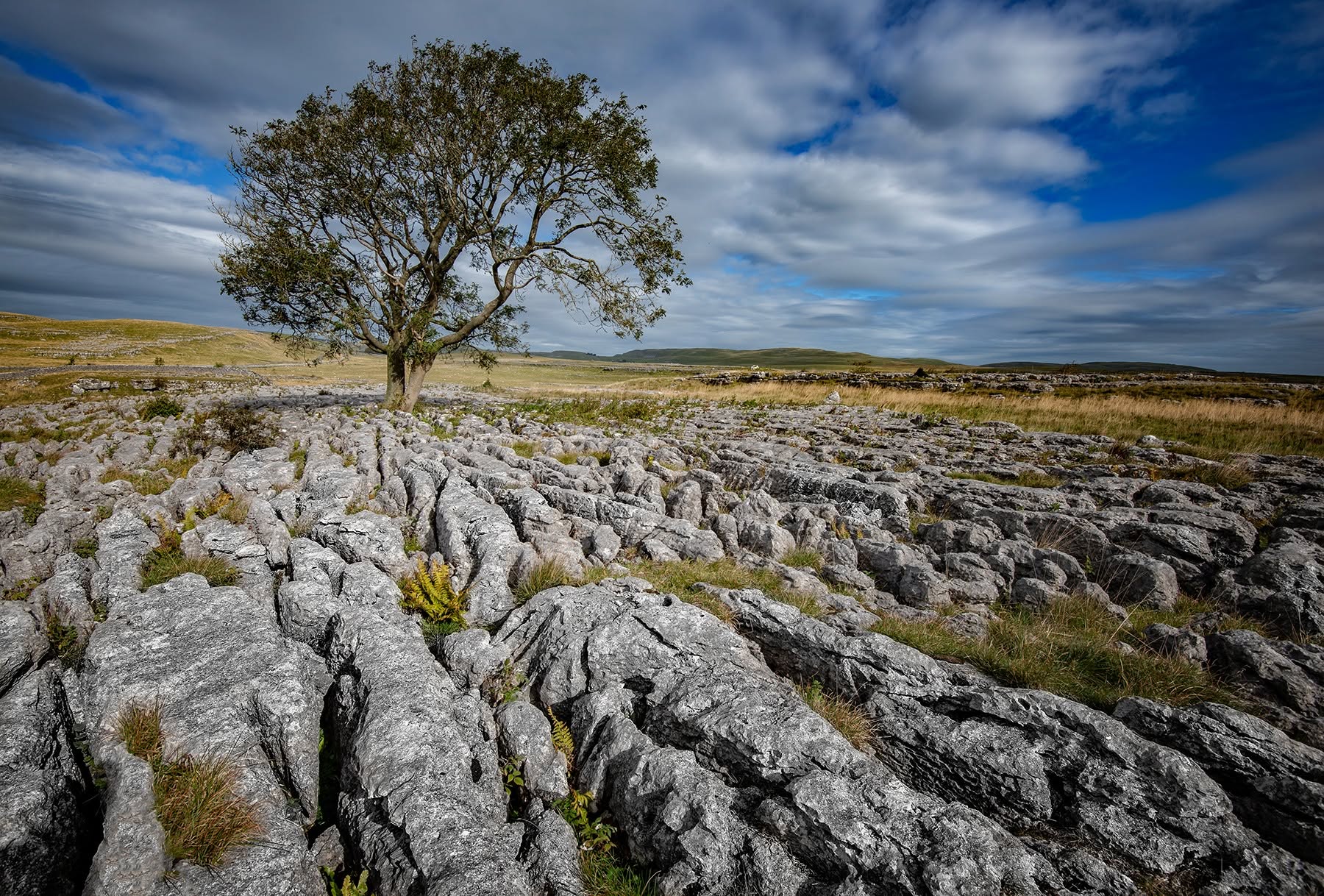
Harry and Hermione’s camp: Malham Cove, North Yorkshire. For Deathly Hallows Part 2, the fugitives pitch their tent on the limestone pavement above Malham Cove, an eighty-metre curved cliff in the Yorkshire Dales. It’s a steep walk up from the village, and the pavement’s fissured white slabs need careful feet. The location scout’s logic is visible the moment you arrive: it’s the most convincing edge of the world in England.
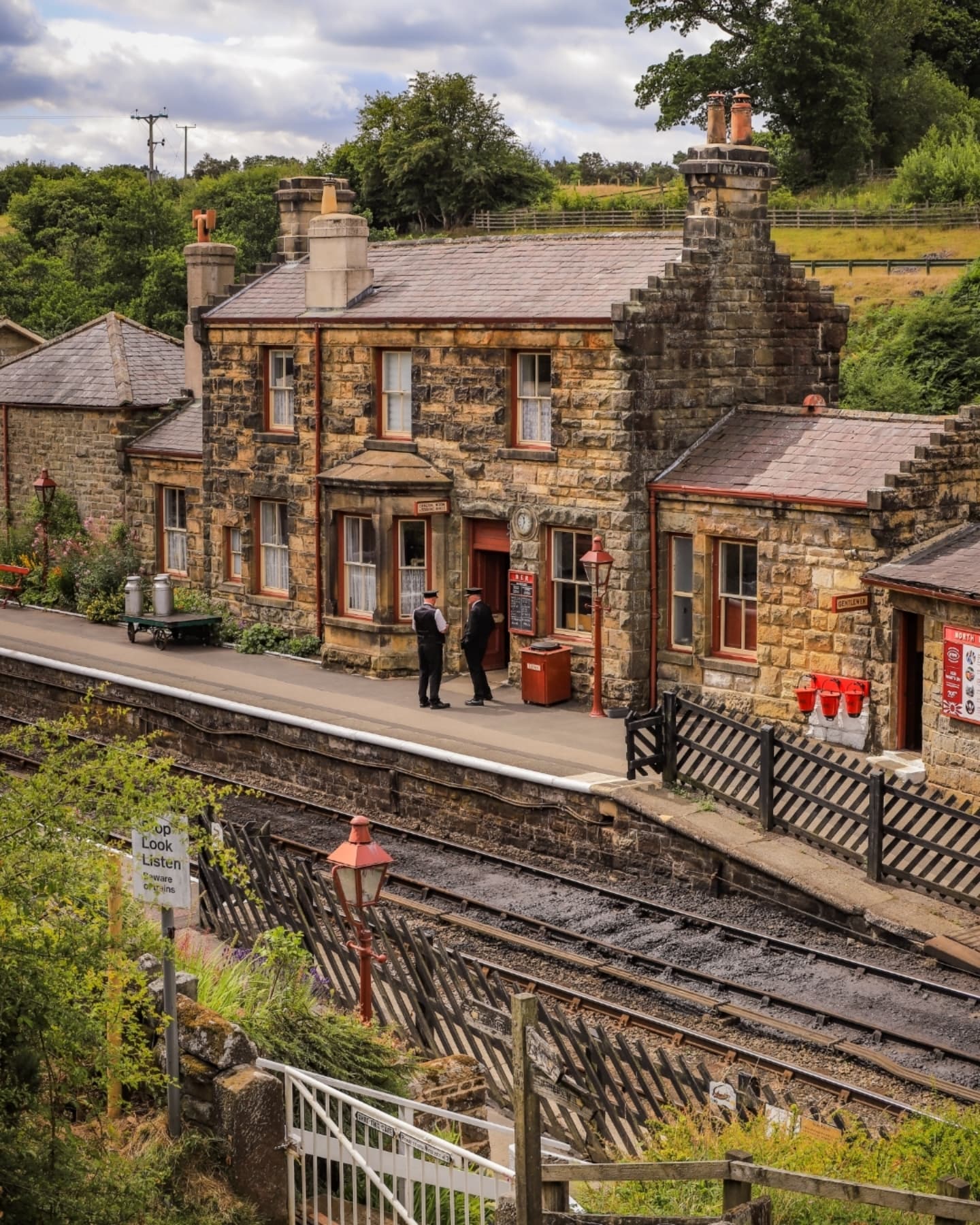
Hogsmeade Station: Goathland Station, North York Moors. Harry steps off the Hogwarts Express for the first time at Goathland, a station that opened in 1865 and now forms part of the North Yorkshire Moors Railway, reached by heritage steam services from Pickering and Whitby. The station also spent two decades as Aidensfield in Heartbeat, making this small moorland platform, by any fair measure, the hardest-working fictional station in Britain.
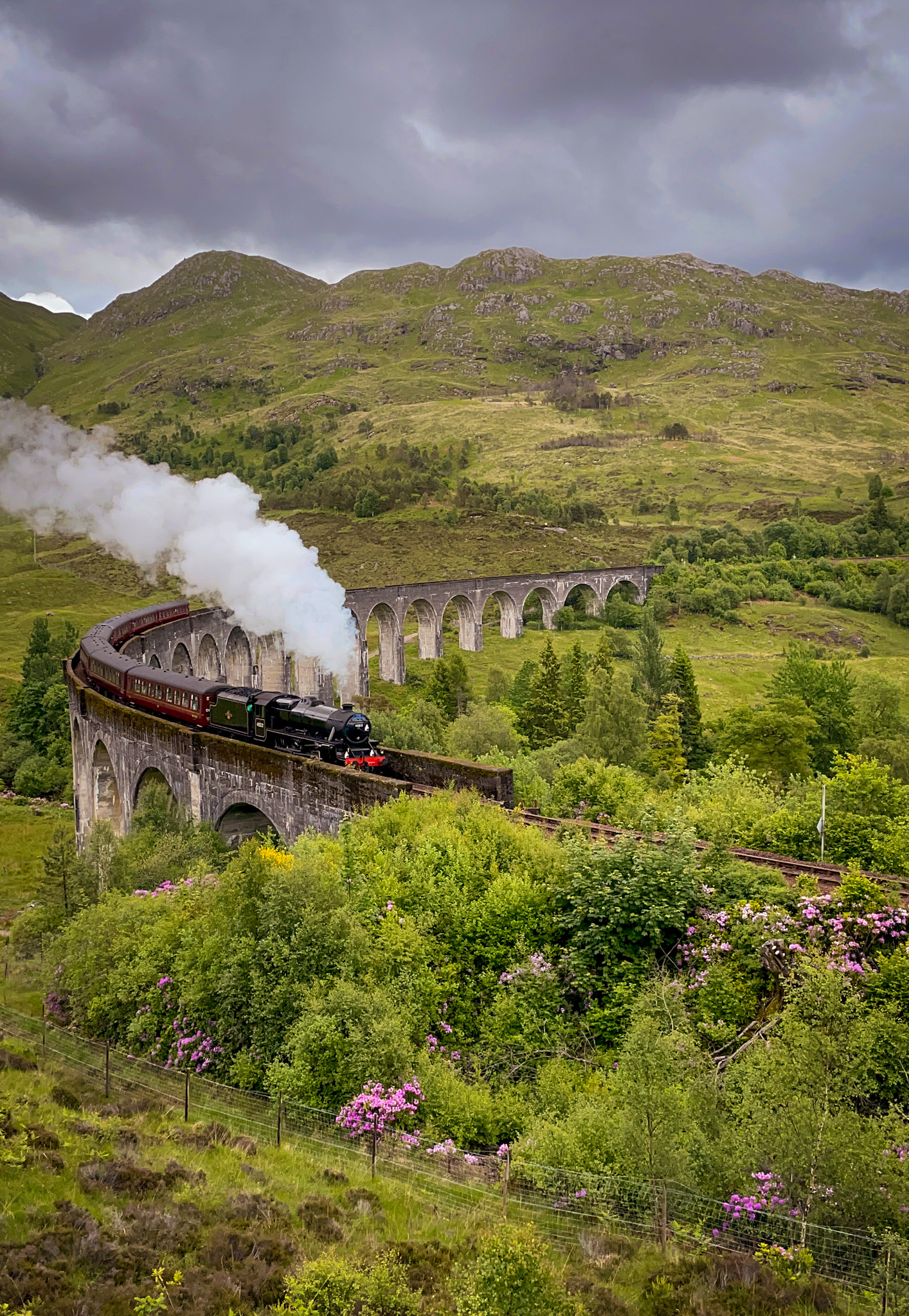
The Hogwarts Express: Glenfinnan Viaduct and The Jacobite, Lochaber. The flying Ford Anglia chases the train across Glenfinnan’s arches in Chamber of Secrets, and the viaduct appears in three more films. The Jacobite steam service crosses it daily throughout the operating season on the Fort William to Mallaig line, driven through this landscape in 1901 by Sir Robert McAlpine, nicknamed Concrete Bob for the material that made the viaduct possible. Ride it, or join the hillside crowd at the viewpoint. Either way, you’re watching the one piece of Hogwarts that runs on a timetable.
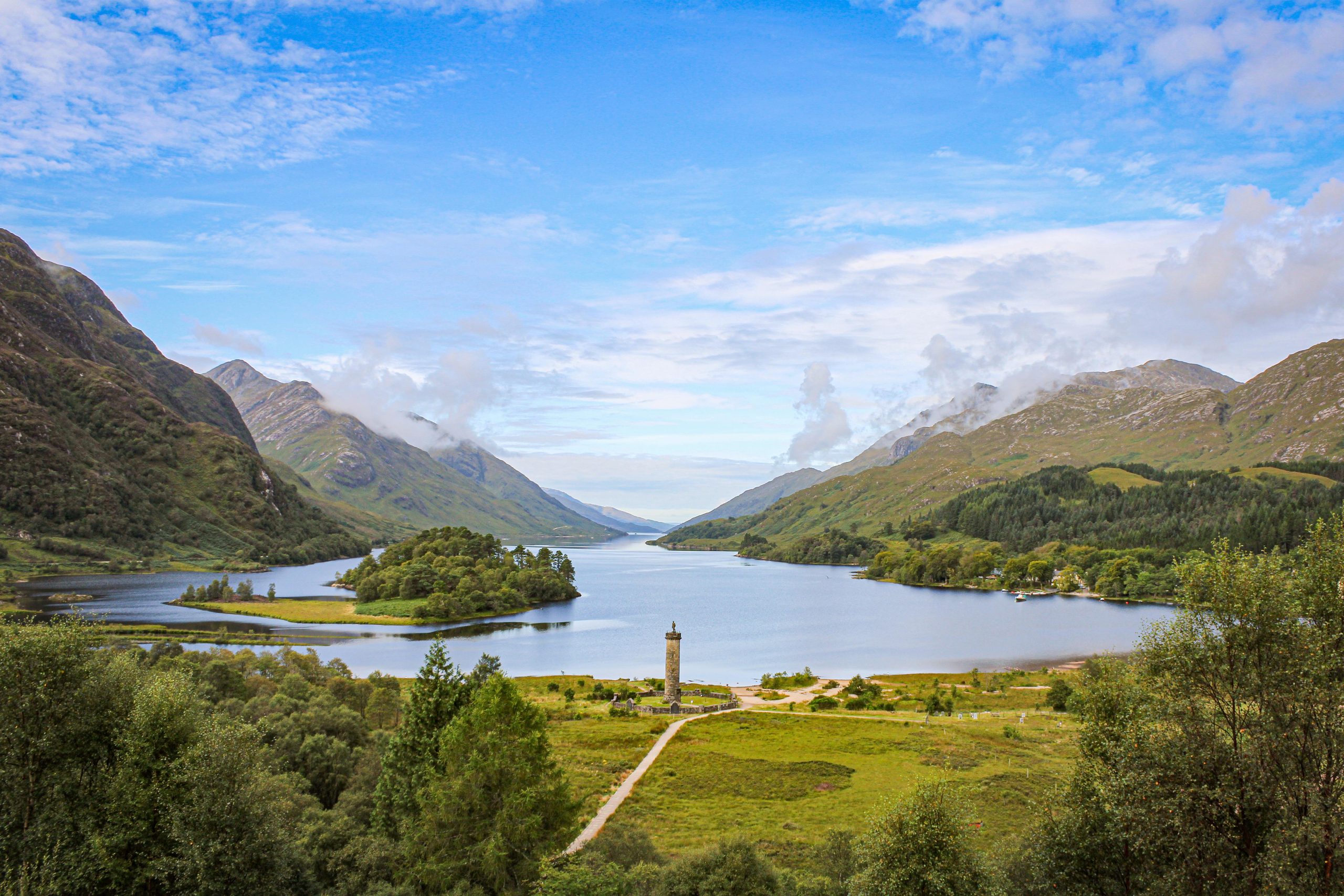
The Black Lake: Loch Shiel, Lochaber. The loch below the viaduct played the lake in the Hogwarts grounds, with the 1815 monument to the Jacobite rising standing at its head, politely ignored by the camera. Two mythologies share this water: Bonnie Prince Charlie raised his standard here in 1745. Only one of them has a gift shop.
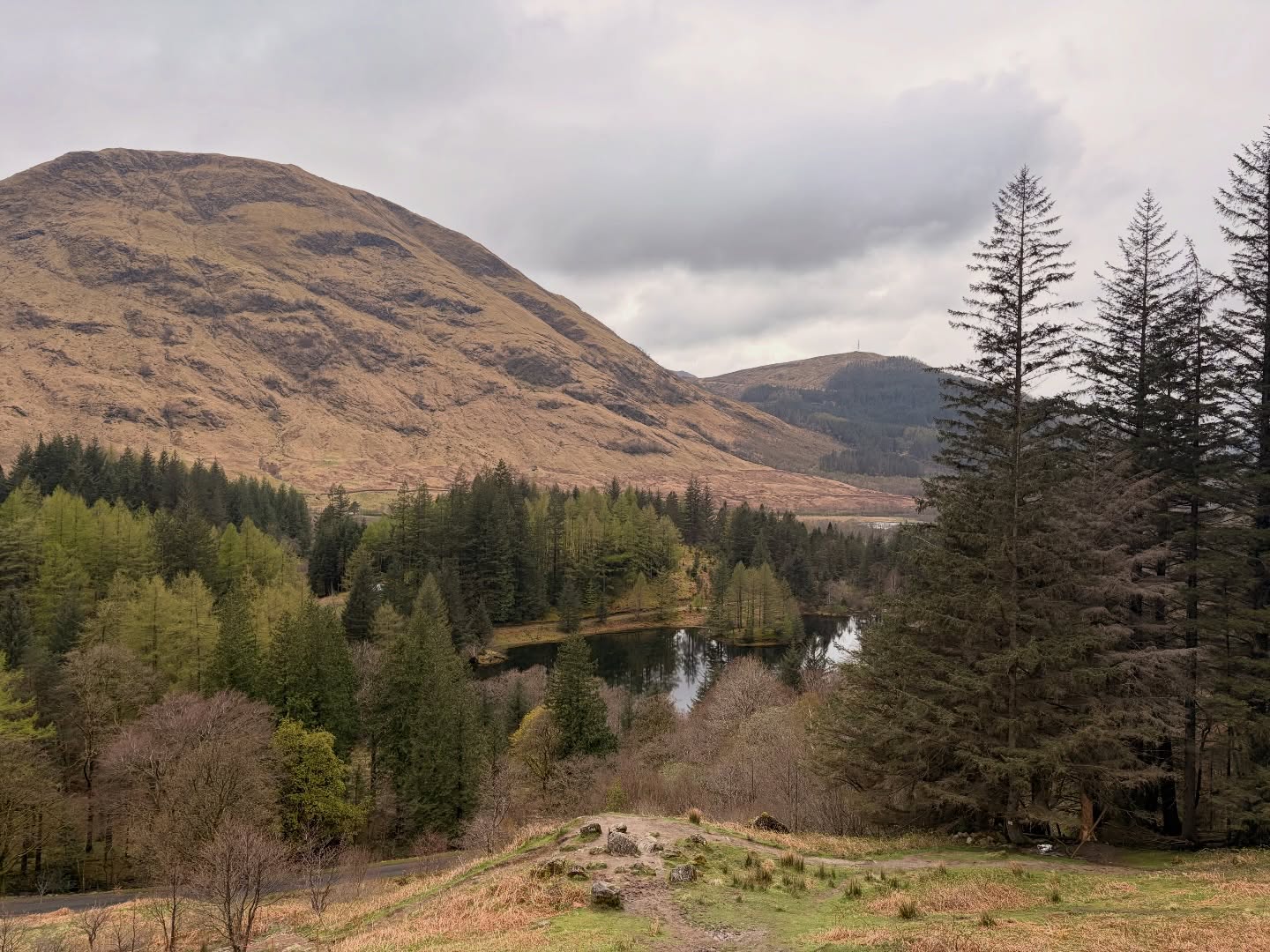
Hagrid’s hut: Clachaig Gully, Glencoe. For Prisoner of Azkaban, the production built Hagrid’s hut, pumpkin patch, and a covered bridge on the hillside above Torren Lochan, across the road from the Clachaig Inn, in the spring of 2003. Guards watched the pumpkins around the clock to stop souvenir hunters. The sets are long gone, and the hillside has healed over; the mountains, which needed no set dressing, remain exactly where they were.
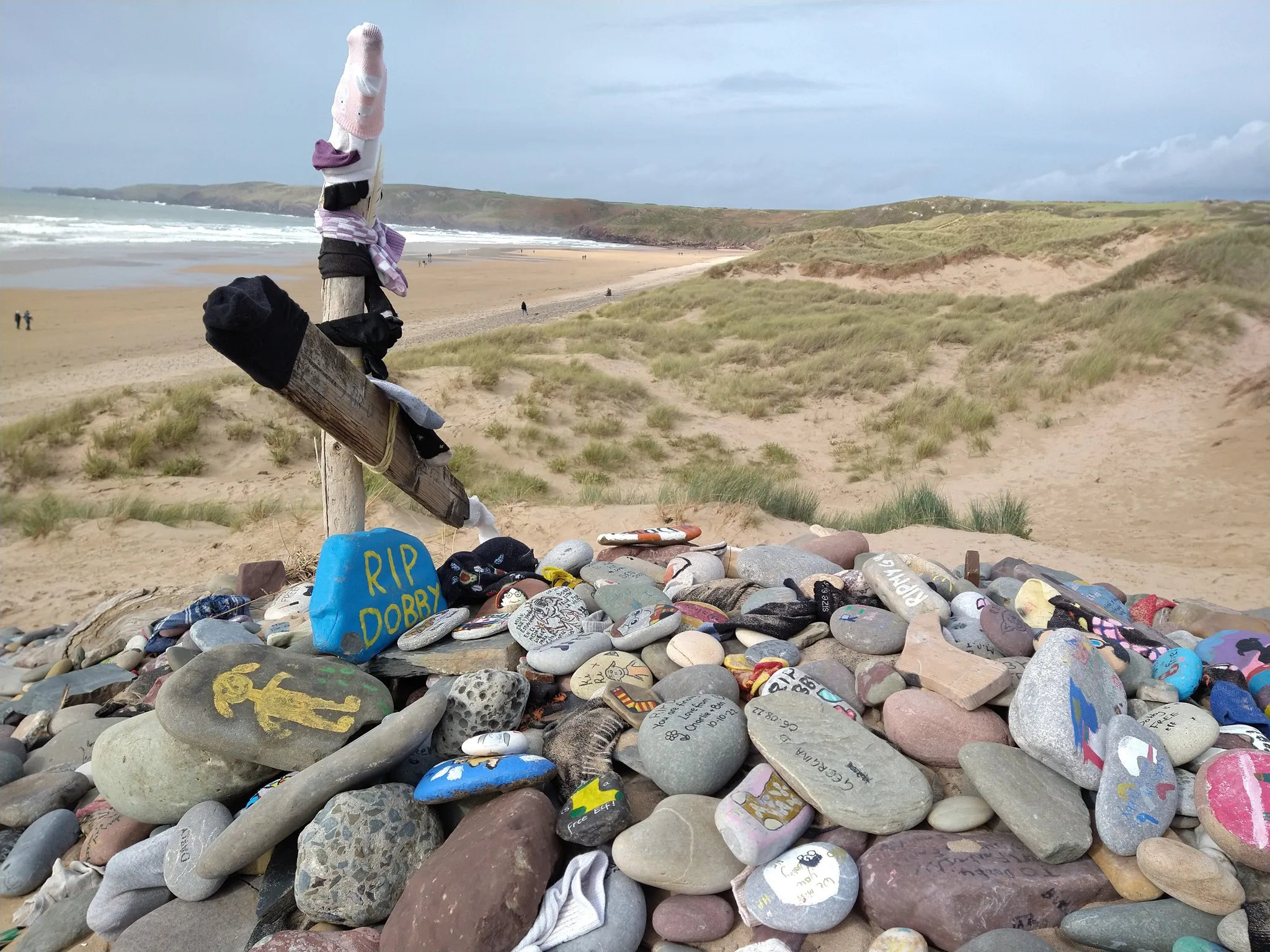
Dobby’s grave and Shell Cottage: Freshwater West, Pembrokeshire. Bill and Fleur’s cottage was built full-size on this Atlantic surf beach and dismantled after filming in 2010. What remains is stranger and better: in the dunes, fans have built Dobby a grave of painted pebbles and small tributes, unofficial, unplanned and continuously maintained by strangers. When the National Trust thought about removing it, there was fierce resistance. In the end, the memorial ended up staying, with visitors asked to leave only photographs. A fictional elf, mourned in real stone, on a real beach. No other spot on this trail says as much about what readers do with stories.
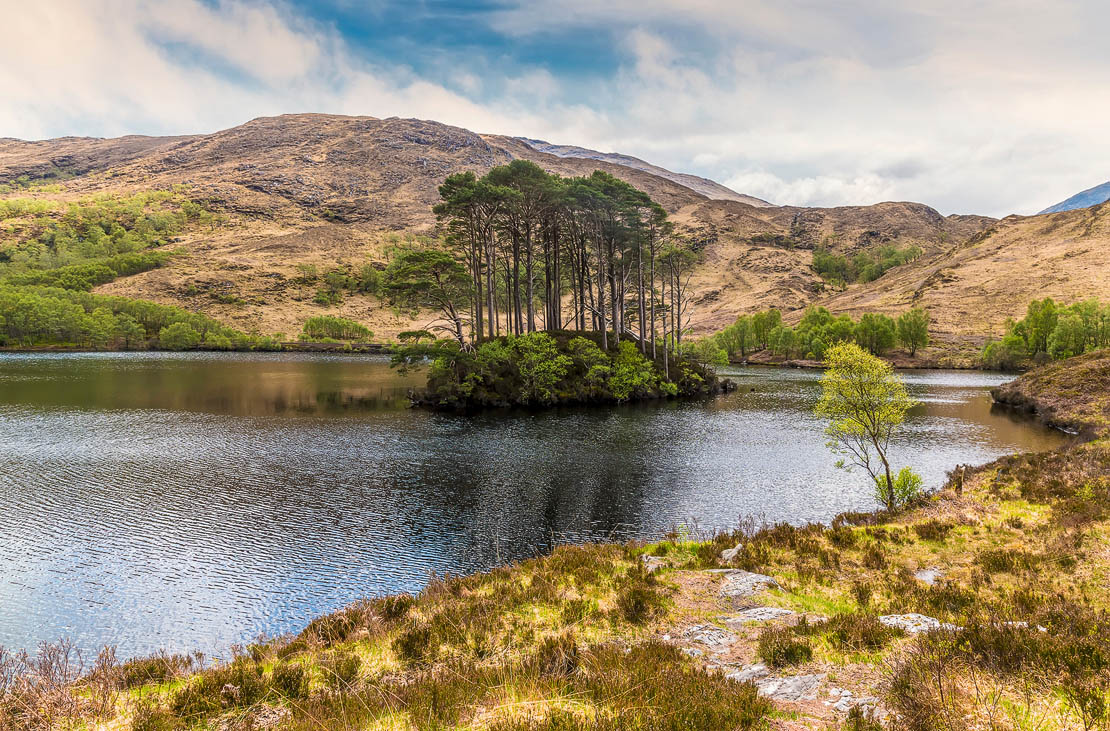
Dumbledore’s grave: Eilean na Mòine, Loch Eilt, Lochaber. The headmaster rests on a tiny pine-covered islet in Loch Eilt, visible from a lay-by on the Mallaig road after a five-minute boggy walk. On a still morning, with the island doubled in the water, it may be the most beautiful grave in Britain, and it holds no one at all.
Harry Potter Filming Locations in the UK
The full checklist, region by region. Add them to your UK road trip plans.
London and Eastern England
1. Leadenhall Market, City of London: Diagon Alley, and the Leaky Cauldron entrance in Bull’s Head Passage.
2. Borough Market, London: the Leaky Cauldron entrance in Prisoner of Azkaban.
3. Australia House, London: Gringotts.
4. Scotland Place, London: the Ministry of Magic visitors’ entrance.
5. King’s Cross Station, London: Platform 9¾.
6. Warner Bros. Studio Tour London, Leavesden: the studio behind all eight films.
7. Lavenham, Suffolk: Godric’s Hollow, with the Guildhall as the Potters’ ruined house.
Oxford and the Cotswolds
8. Duke Humfrey’s Library and the Divinity School, Bodleian, Oxford: the library and the infirmary.
9. Christ Church, Oxford: the Bodley Tower staircase, the cloisters, and the dining hall that inspired the Great Hall.
10. New College, Oxford: the cloisters and courtyard in Goblet of Fire.
11. Lacock, Wiltshire: the Potters’ cottage, Budleigh Babberton, and the Abbey’s cloisters and classrooms.
The West Country and Wales
12. Gloucester Cathedral: Hogwarts corridors.
13. Forest of Dean and Wye Valley: Coppett Hill and the Symonds Yat view, plus Rowling’s childhood ground at Tutshill.
14. Freshwater West, Pembrokeshire: Dobby’s grave and the Shell Cottage site.
Northern England
15. John Rylands Library, Manchester: not a filming location, but the finest neo-Gothic library in the country, opened on New Year’s Day 1900, and the right place to honour the delayed train of 1990.
16. Malham Cove, North Yorkshire: Harry and Hermione’s camp.
17. Goathland Station, North York Moors: Hogsmeade.
18. Durham Cathedral: cloisters and McGonagall’s classroom.
19. Alnwick Castle, Northumberland: Hogwarts exteriors and broomstick lessons.
Scotland
20. Victoria Street, Edinburgh: not a filming location, and not an inspiration Rowling has ever endorsed; a fixture of the fan trail all the same.
21. Glencoe, Lochaber: Hagrid’s hut at Clachaig Gully.
22. Loch Eilt, Lochaber: Eilean na Mòine as Dumbledore’s grave.
23. Loch Shiel, Lochaber: the Black Lake.
24. Glenfinnan Viaduct and The Jacobite, Lochaber: the Hogwarts Express.
The Pilgrimage That Survives Its Own Debunking
Here is the odd, hopeful thing about this trail. Rowling told the world, cheerfully and repeatedly, that the inspiration map was mostly fiction. Diagon Alley came out of her head. The graveyard names were coincidence. And the pilgrims kept coming, in greater numbers than ever, because it turns out that isn’t what the journey was ever about.
What the trail actually offers is Britain itself, seen through the excuse of a story. A fifteenth-century library that still makes readers swear an oath. A cathedral cloister with the earliest fan vaults in England, a steam train over a concrete viaduct, a Welsh beach where strangers keep a grave for someone who never lived. The films borrowed a thousand years of real places to build an imaginary school. Following them back is simply a very good way to meet those places, one reader at a time.
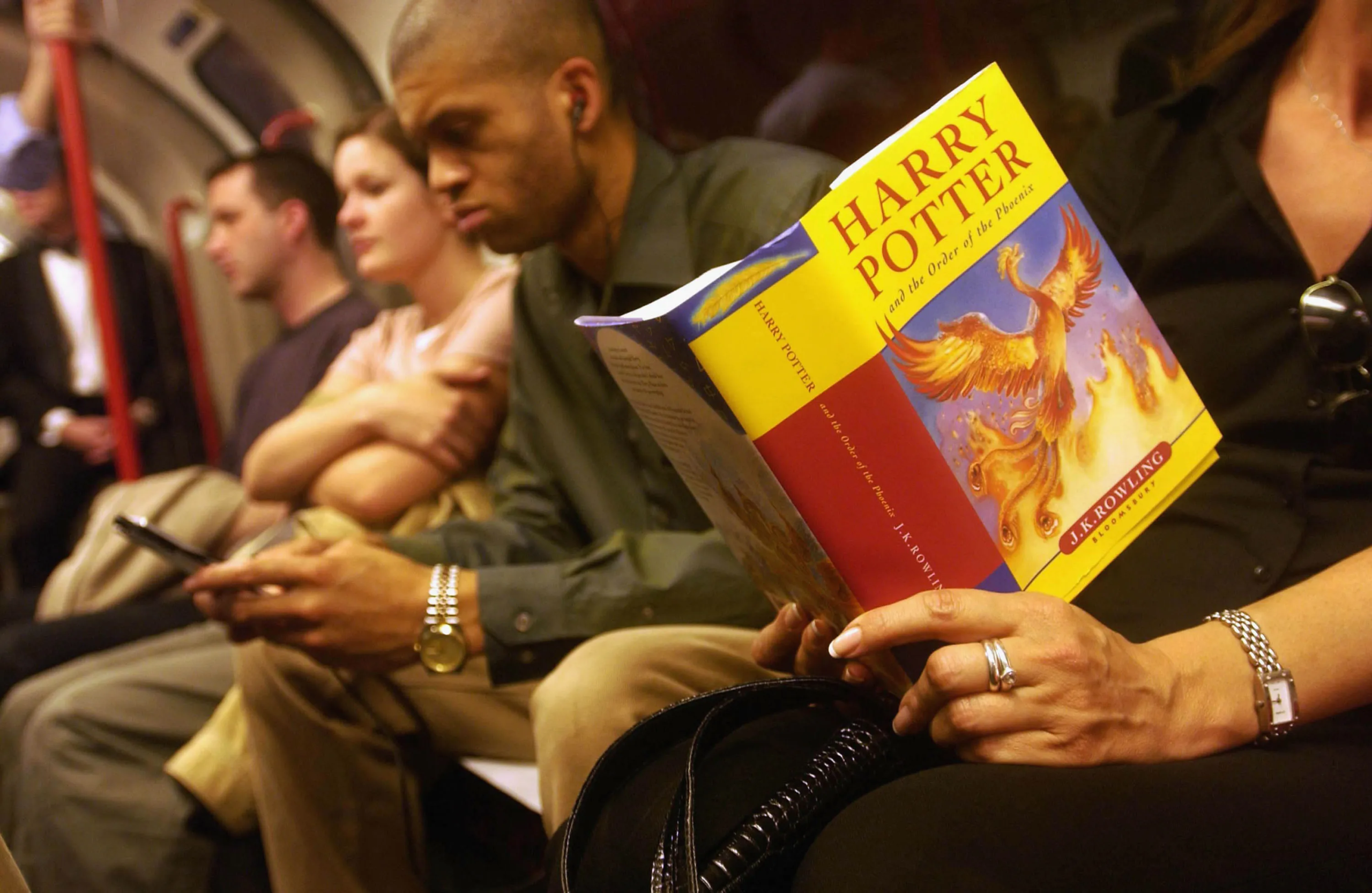
So take the books with you. Read Deathly Hallows in the Forest of Dean, where the author walked as a teenager, and the trio hid on screen. Stand in the Bodleian and remember that this room has guarded knowledge for centuries before anyone imagined a Restricted Section. The magic was never on the map. But the map, it turns out, was magic all along, and it was here before the story and will be here after. That’s what the best books do: they send you out the door, and Britain is waiting on the other side of it.


Adam Ryan
Adam is a distinguished content writer, bookworm, and full-time adventurer with a constant craving for coffee. When he's not working, he loves exploring remote corners of the world, immersing himself in different cultures, and writing about his experiences.