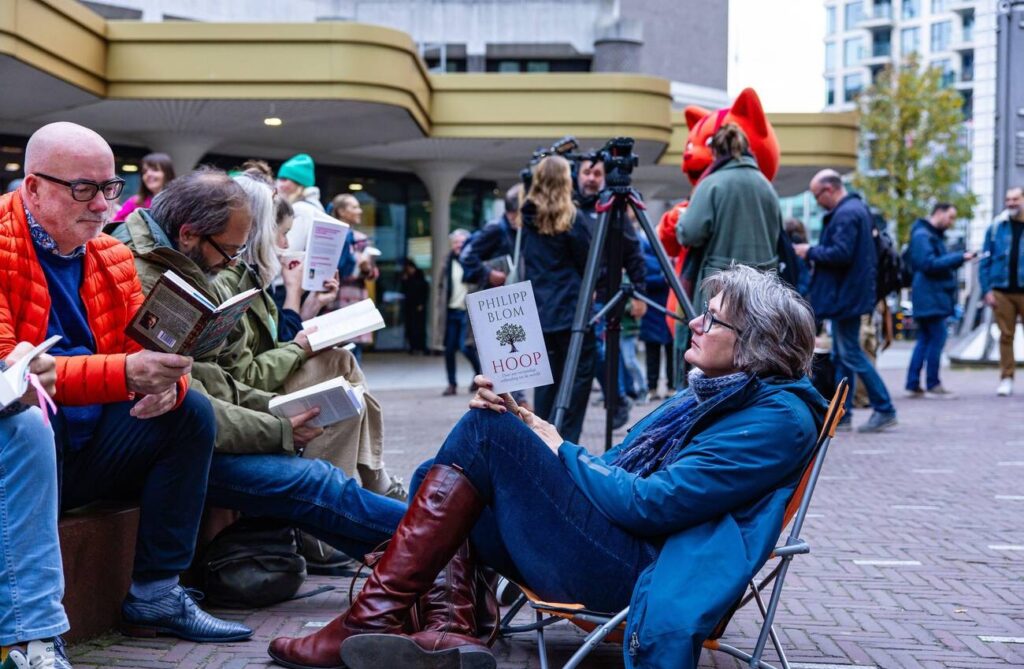

Discover why silent reading with strangers feels surprisingly intimate and explore what makes these gatherings so meaningful.
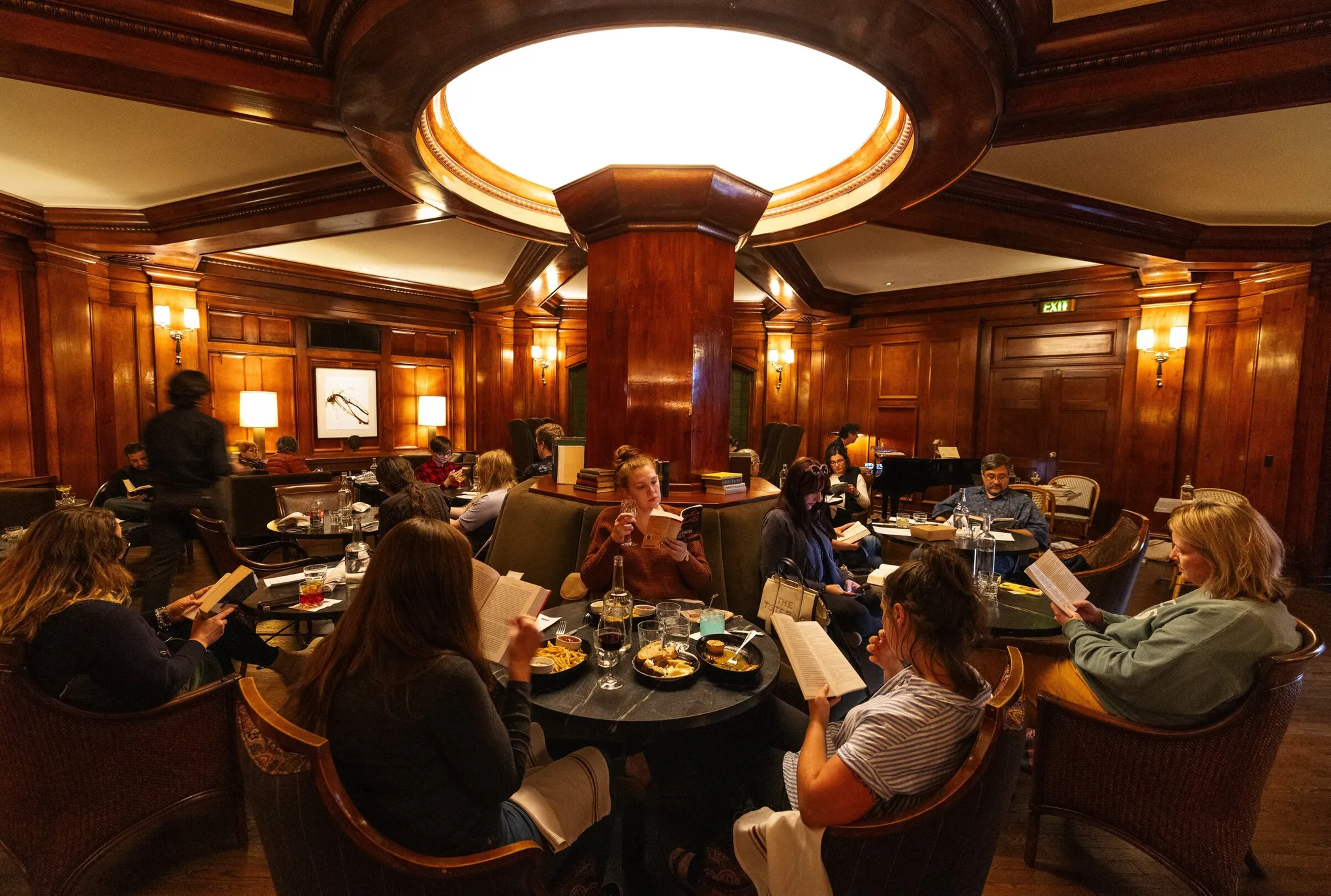
In 1909, the Hotel Sorrento opened on Seattle’s First Hill. A century later, for its centennial, an editor at the alt-weekly The Stranger proposed an unusual party: one where nobody talks. Guests would settle into the Fireside Room, with its mahogany walls, crackling fireplace, and baby grand, and read silently to o themselves. A pianist would play. Servers would bring drinks. That was the entire program.
The idea had a private prototype. Years earlier, three critics at the paper realized they were all heading home after work to read alone, so they went to a colleague’s apartment instead (he had the most chairs), stopping for whiskey, cheese, chocolate and figs. They read side by side, saying almost nothing, and had such a good time that they made it a habit.
The first public Silent Reading Party in 2009 overflowed: a line out the door, readers sitting on the carpet. It still runs twice a month, and its founder, Christopher Frizzell, still takes pleasure in the sight of grown adults sitting on the ground just to read.
Something is happening in that room. It is now happening in thousands more, on six continents, and it looks less like a fad than a correction.
The Strange Intimacy of Not Talking
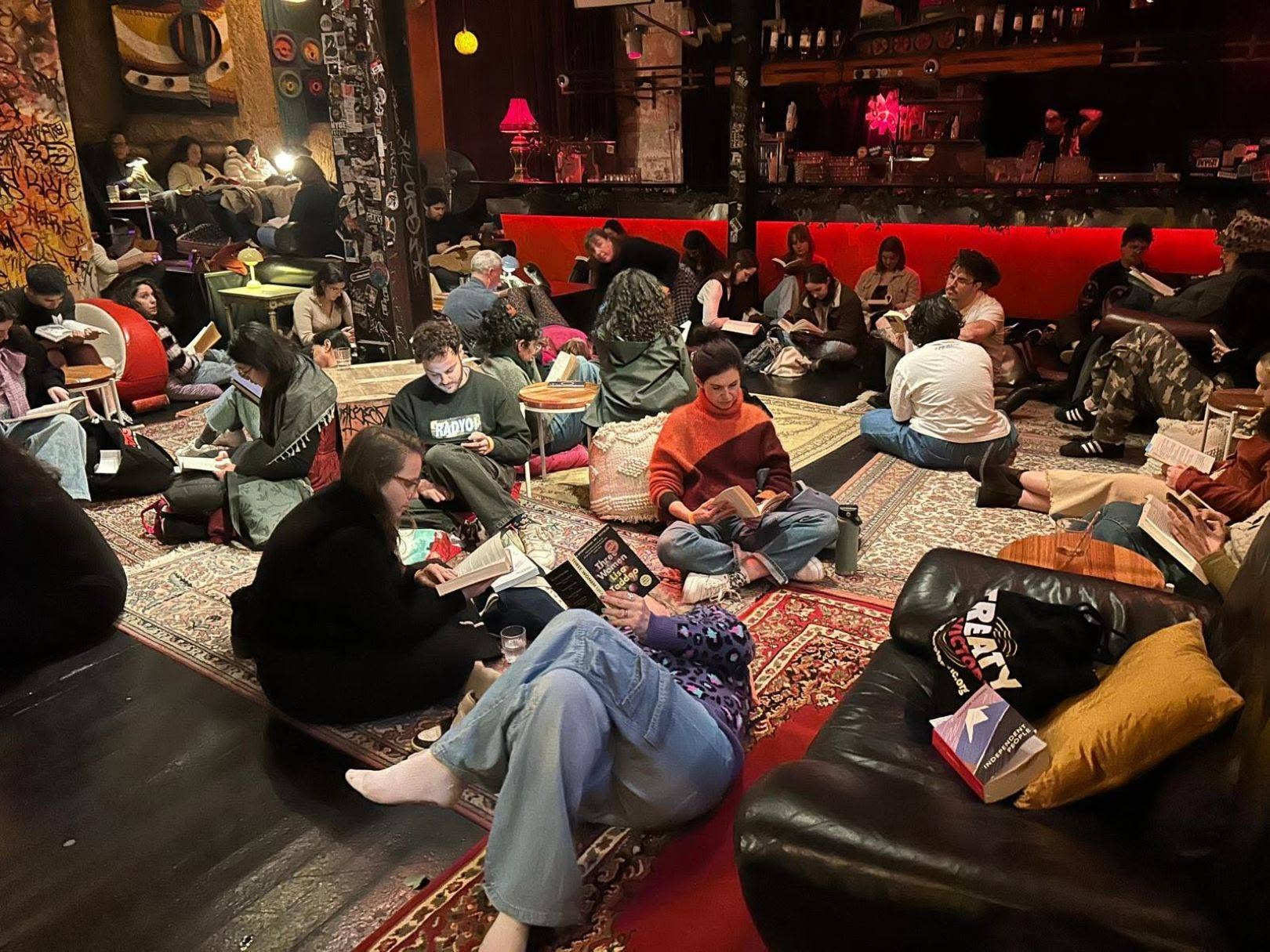
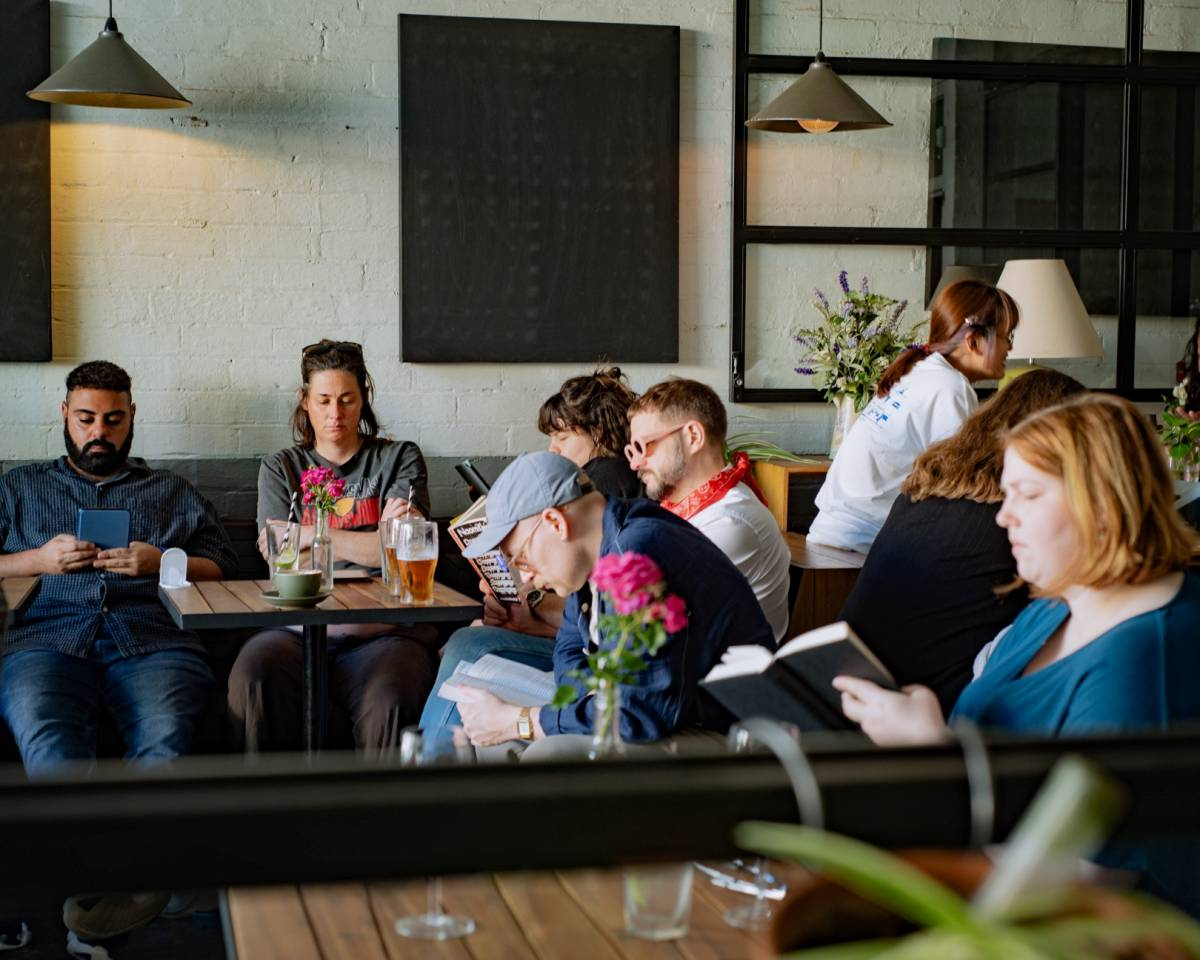
The format is disarmingly simple. You arrive with whatever you are reading, whether a novel, a comic, a textbook, or an e-reader. There is no assigned book, no homework, no thesis to defend. A host says a few words. The room goes quiet for an hour or two. Afterwards you talk, or you don’t.

What surprises first-timers is how tender it feels. Melbourne’s Book Doof, built on the premise of being social in silence, draws readers to a bar in East Brunswick where the usual clatter drops away. Its founder, Grant Richard Krupp, describes reading as a collective act that creates “an intimacy that you rarely get from strangers.”
That paradox is worth sitting with. Small talk is often the barrier to connection rather than the bridge. Strip it out, and what remains is unexpectedly sturdy: a shared bookmark, a glimpsed cover, a raised eyebrow at a plot twist.
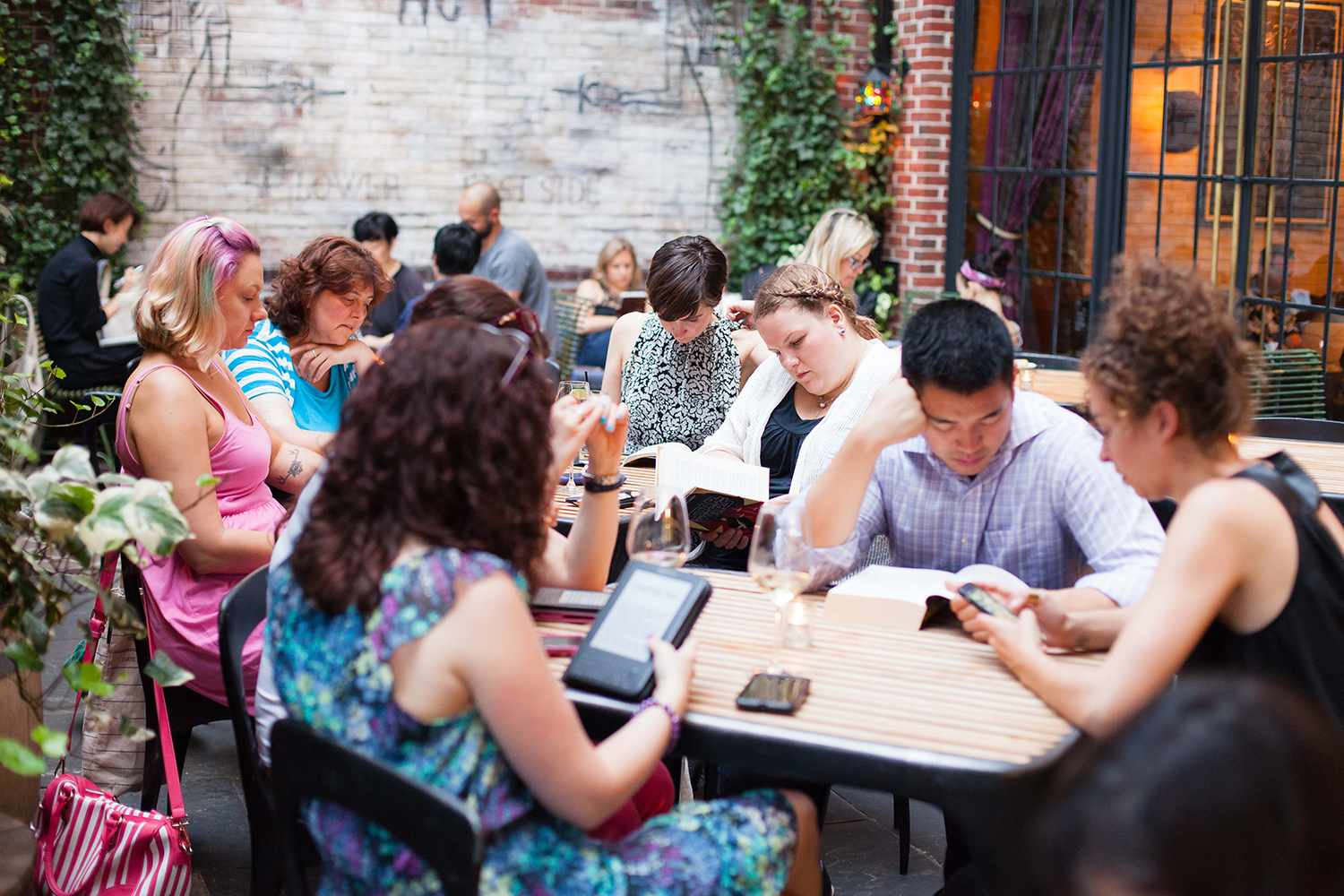
Silent Book Club front-loads 30 minutes of chatting so that introverts have a graceful exit into their pages, an approach co-founder Guinevere de la Mare calls an “out.” Elsewhere you will find conversation cards on the tables. Nobody is required to perform.
There is a longer history here, too. For most of the history of the written word, reading was audible and communal. Augustine, in the fourth century, was struck enough by the sight of Ambrose reading without moving his lips to write it down. As late as the 1700s, the historian Robert Darnton has noted that reading among ordinary Europeans remained a social activity. Silent, private reading is the innovation. Reading silently in company is not a novelty at all. It is a homecoming.
From Two Friends in a Wine Bar to a Million Readers
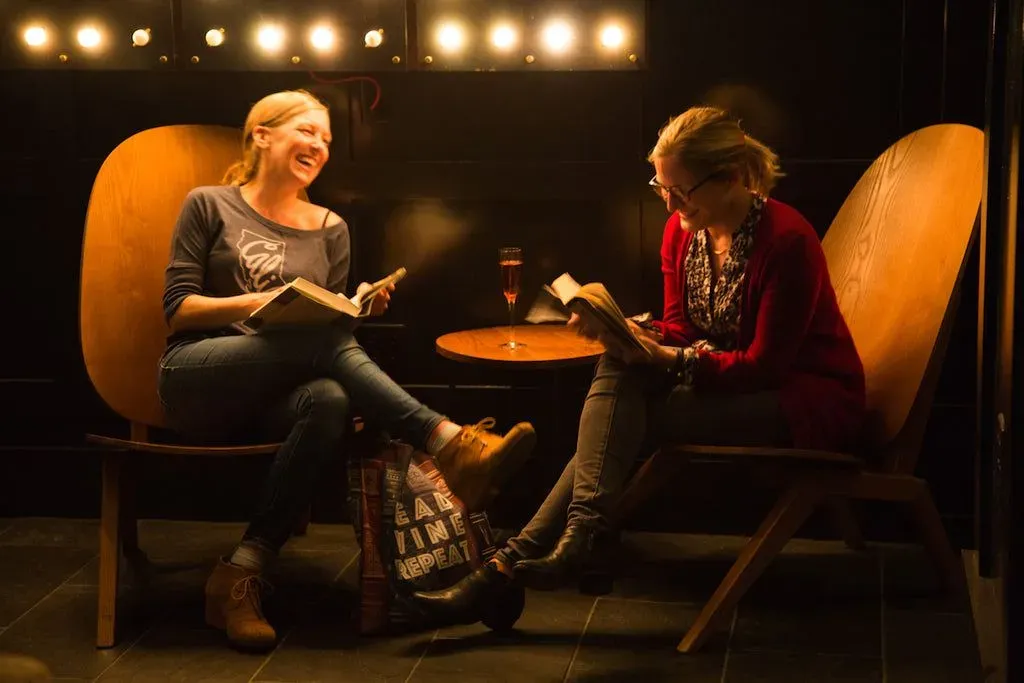
Silent Book Club began in 2012 when de la Mare and Laura Gluhanich started reading together at their neighborhood wine bar in San Francisco. Their earlier book clubs had fizzled under the scramble to finish and the pressure to say something smart. They kept the wine and dropped the homework, coining the tagline “introvert happy hour” that has outlived the hustle culture it was reacting against.
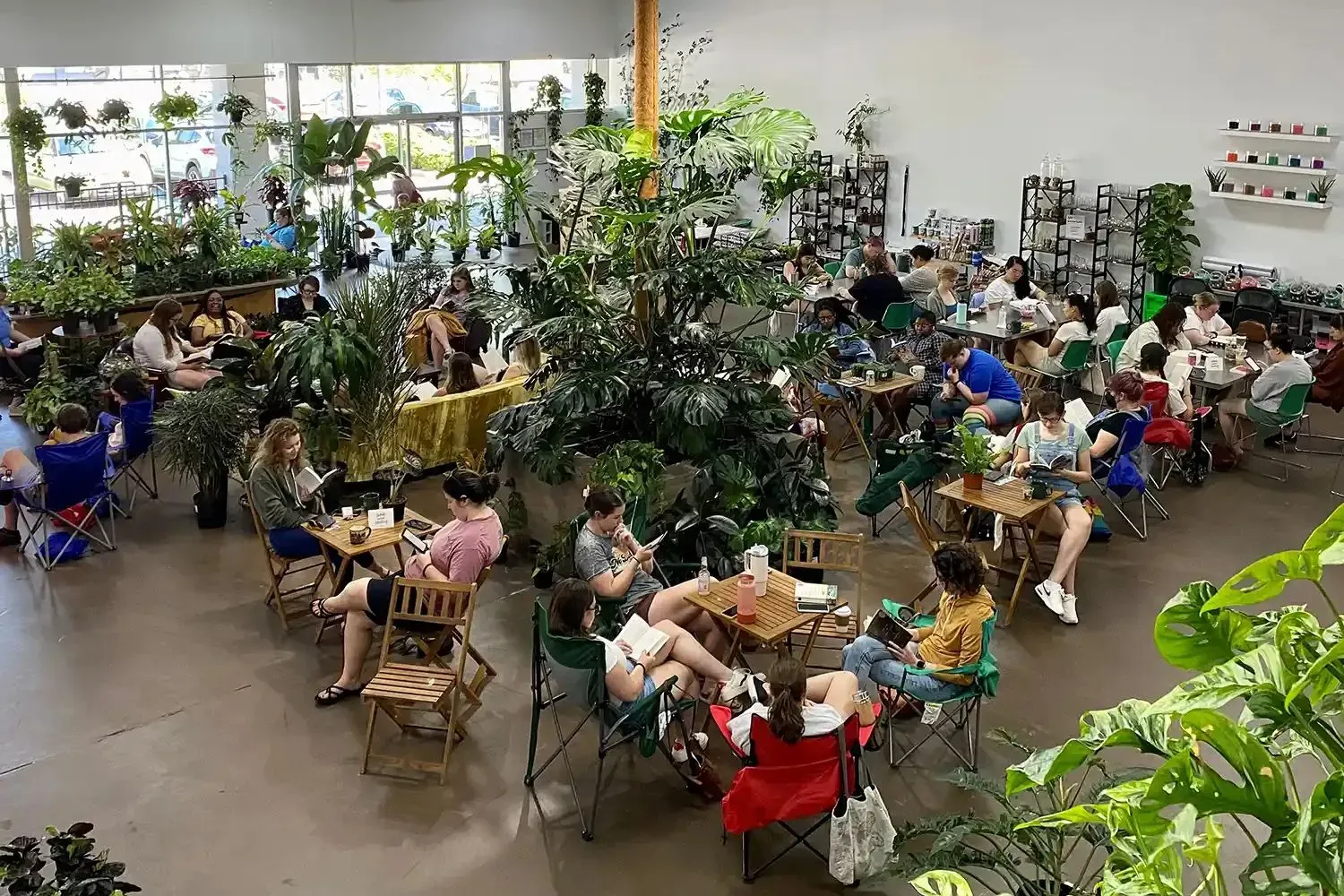
Growth came in waves. A viral radio story took them from 70 chapters to 180 in a single year. A front-page newspaper feature doubled them again. In 2024 alone, they added more than a thousand chapters, and by their tenth anniversary they counted roughly 2,000 chapters in 61 countries, with more than a million readers meeting monthly. Ticketing data tells the same story from another angle: silent book club listings on Eventbrite rose 223% between 2023 and 2024, with the sharpest growth in Chicago, Indianapolis, New York, Seattle, and Atlanta.
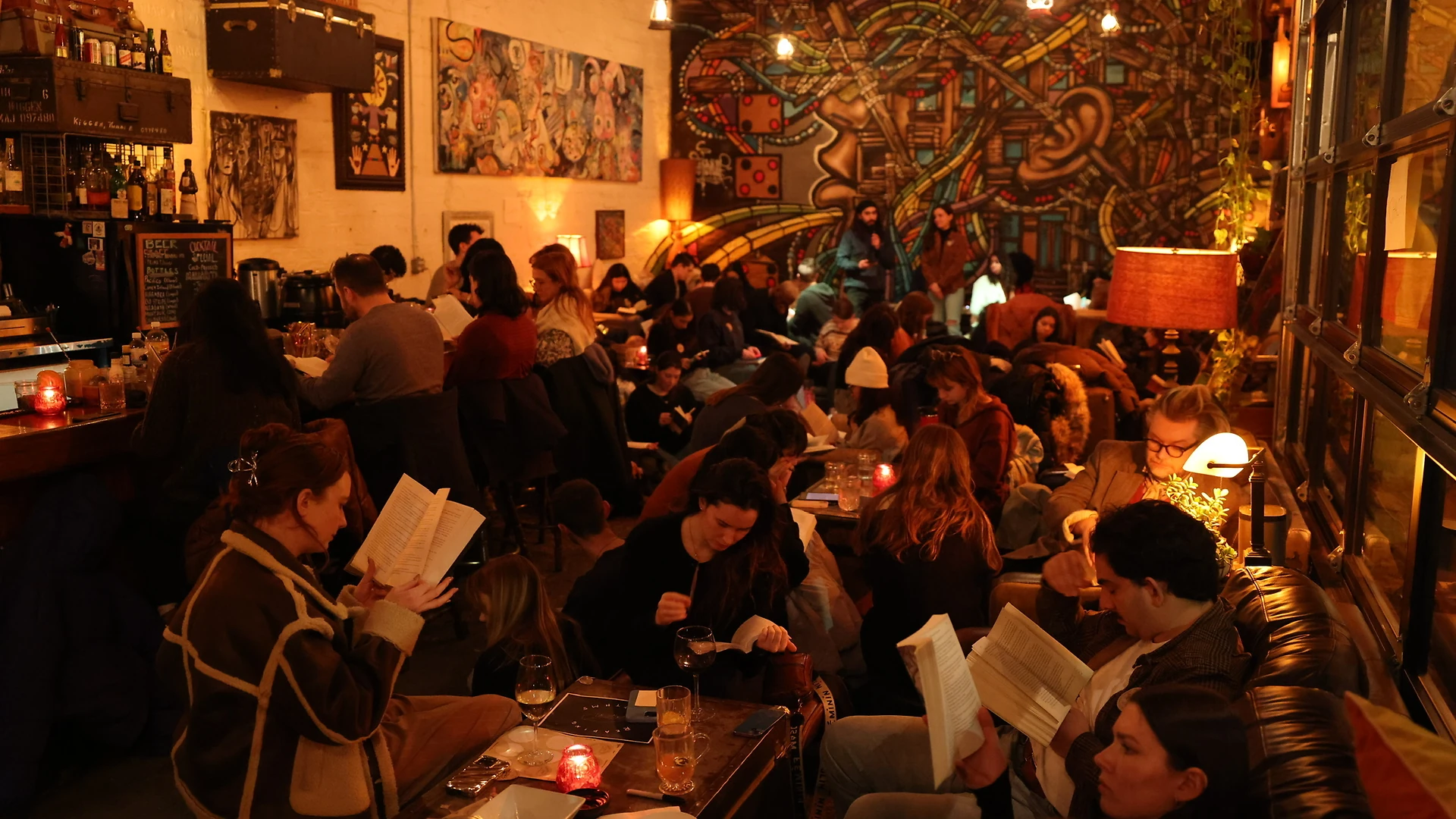
Meanwhile, a Brooklyn rooftop gathering of ten friends in June 2023 became Reading Rhythms, which bills itself as a reading party rather than a book club and sets the hour to ambient playlists. It now has more than 50,000 readers across twenty-plus cities.
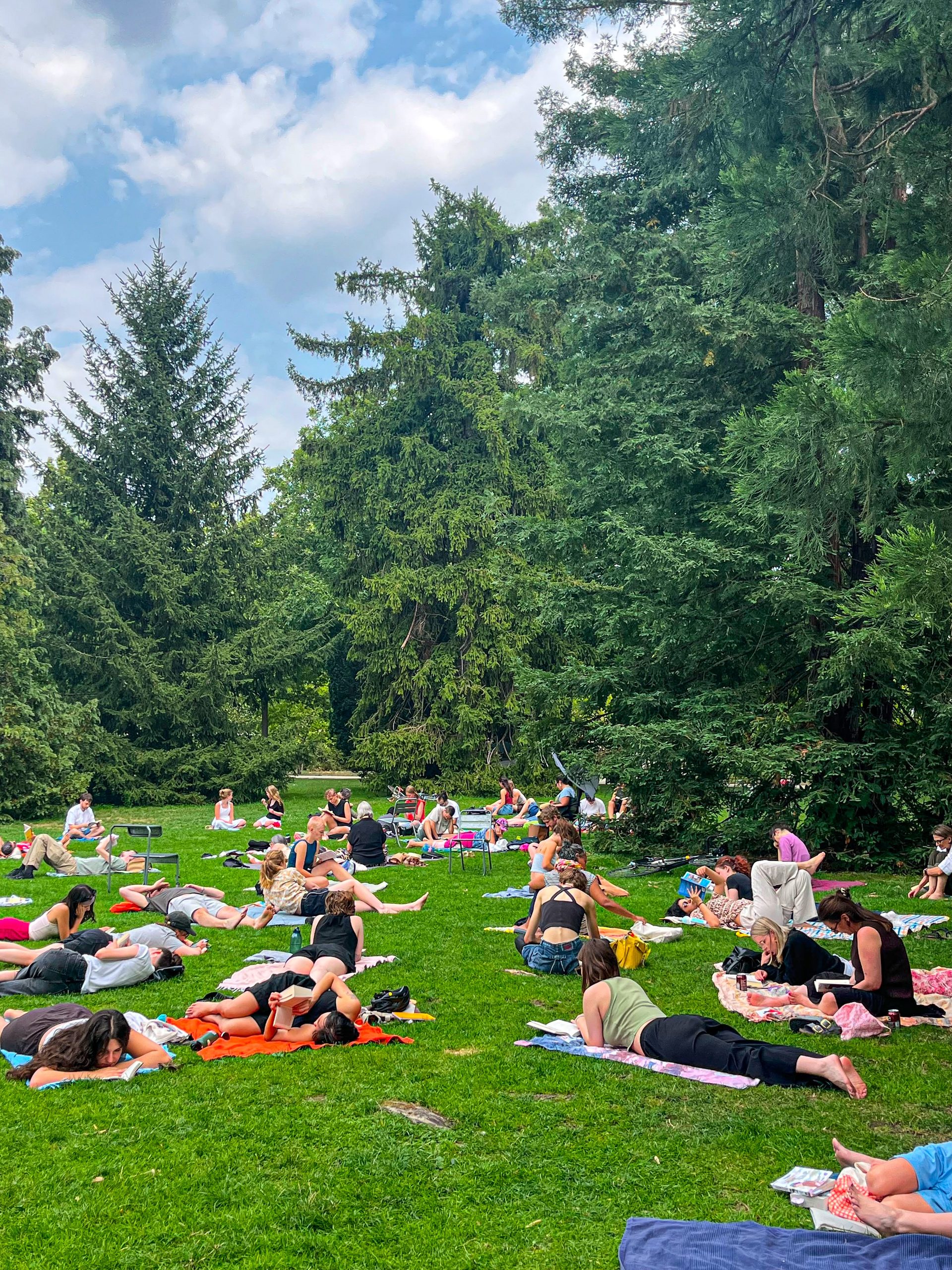
The movement’s texture is gloriously local. A Zurich collective stages reading raves in museums, parks, and even on farms. Chapters meet from Japan to Brazil and the UK, in cafés and breweries and, increasingly, in libraries and independent bookshops that host them for free. Even in Genoa, a couple who met through their local chapter tagged the organization in their wedding photographs.
Why Sitting Quietly Beside a Stranger Works
There is real science under the sentiment. Psychologist Garriy Shteynberg’s work on shared attention finds that experiencing something at the same time as other people amplifies it, producing stronger memories, deeper emotions, and firmer motivations. The effect holds between strangers, even across political divides, and it does not require shared beliefs. Attention itself is the glue.
That glue is in demand. In June 2025, the WHO Commission on Social Connection reported that one in six people worldwide is affected by loneliness, and it is linked to an estimated 871,000 deaths a year, or roughly 100 deaths an hour. Rates are highest among adolescents and young adults, and in lower-income countries.
Silent reading parties are also a quiet answer to a housing shortage, not for people but for sociability. In 1989, the sociologist Ray Oldenburg coined the term “third place,” meaning the pub, library, or park bench that is neither home nor work, and warned that it was vanishing. Eric Klinenberg later argued that such spaces are social infrastructure as essential as roads. A reading party is a third place you can build in an afternoon with a room, a book, and a friend.
The Analog Dividend
None of this is nostalgia. Readers are voting with their feet and their wallets. More than 400 new bookshops joined the American Booksellers Association in 2025. Print sales reached around 707 million units, 57 million more than in 2019, and physical books remain about three-quarters of the market. The number of independent bookstores in the United States has climbed by roughly 70% over the past five years.

Put the trends together, and the appeal sharpens: two hours in which the phone stays in the bag, and attention is allowed to lengthen. As de la Mare has observed, half an hour with a book leaves you feeling profoundly different from half an hour of scrolling.
Have Book, Will Travel
Slow travel has caught the scent. Vrbo’s Unpack ’26 report found that 91% of travelers are interested in getaways centered on reading, relaxation, and time with loved ones, and christened the trend the readaway. Pinterest searches for book club retreat ideas surged 265%. Reading retreats now run all over the world: the Loire Valley, Marbella, Cornwall, the Blue Mountains and Cape Cod, where the itinerary stretches to author dinners, a walk, and little else besides turning pages.

This is where a reading habit becomes a passport. A meta-analysis of leisure reading concluded that frequent readers show slightly higher levels of empathy and theory-of-mind ability, the everyday skill of imagining another mind from the inside. Those effects are small, correlational, and still debated, though they recur across studies. But the practice is unmistakable.

A novel set in Lagos, Naples or Manila is a rehearsal for world citizenship, and a room full of people reading different books is a room deliberately resisting the echo chamber. Melbourne’s Reading Party organizers say precisely that about their own gatherings: reading is something almost anyone can access, and it brings strangers from different backgrounds into the same space.
In Praise of Old Souls
If you have ever been asked why you brought a book to a party, consider this your vindication. The old soul was right all along. Attention is a form of love, silence can be a kind of hospitality, and paper is a technology for time travel. The novelist and bookseller Ann Patchett, who spoke recently, described how reading “shines the light that disrupts the dark isolation” that so many people find themselves in.
Starting a chapter requires almost nothing: a friend, a comfortable public setting, and a book. There is very likely one near you already. Your library will very likely say yes. Then comes the hardest and easiest instruction in the world. Sit down together, and be quiet.
.


Adam Ryan
Adam is a distinguished content writer, bookworm, and full-time adventurer with a constant craving for coffee. When he's not working, he loves exploring remote corners of the world, immersing himself in different cultures, and writing about his experiences.