Tsundoku’s real 1879 origin, the science of why unread books still shape a mind, and why a home library means you never run out of wonder.
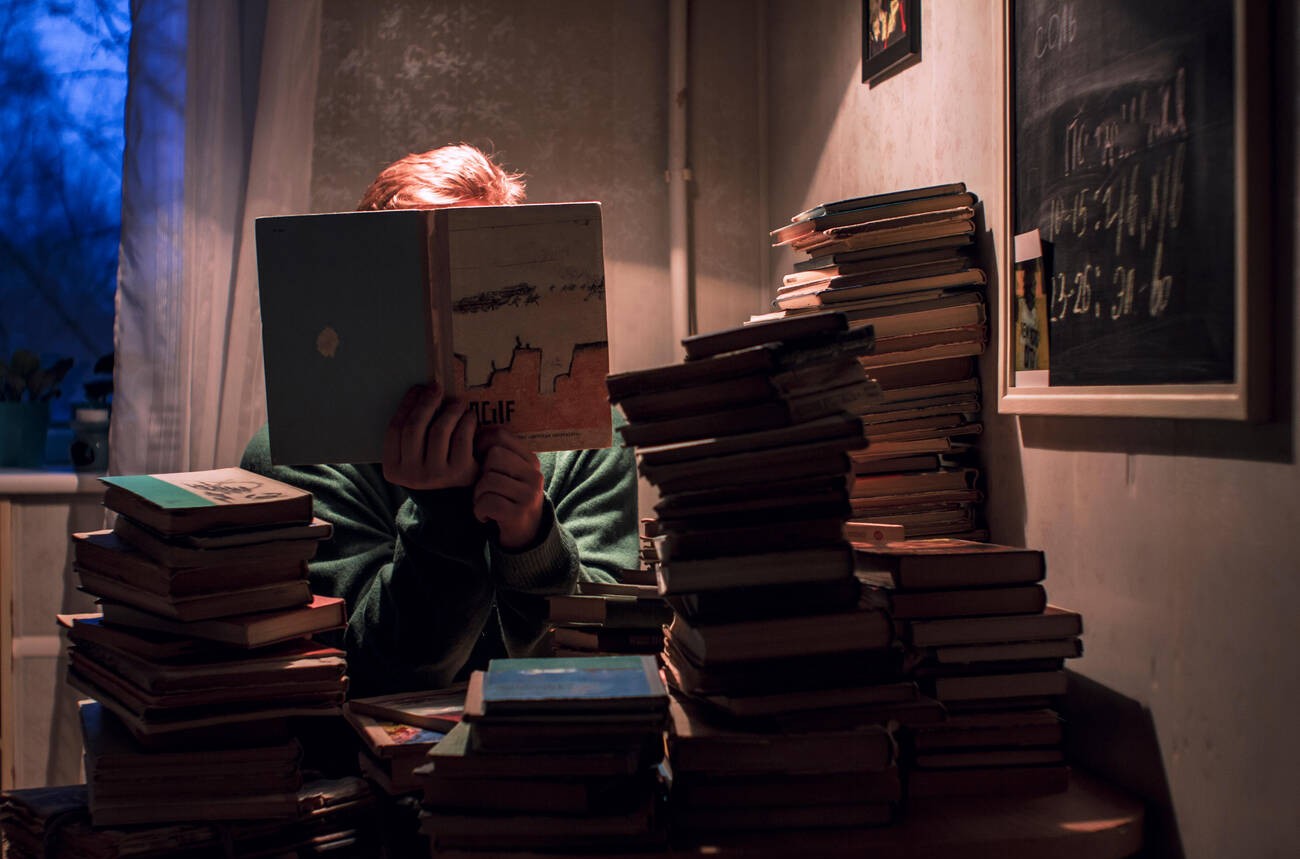
Somewhere in your home there is a stack of books like this one, bought in good faith, each still carrying the particular hope of the day you brought it home. Most of them remain closed. You feel, faintly, guilty walking past them, as though the stack itself were a small unpaid debt.
Set the guilt down for a moment. By the end of this, the case will be that the stack is not a debt at all. It is closer to a promise, one that never expires, that you will not run out of wonder before you run out of days.
The Word Japan Needed by 1879
Tsundoku, 積ん読, describes a very specific act: acquiring a book with sincere intention to read it, and then leaving it stacked. It is a pun. Tsunde oku means to pile something up and leave it; run together with doku, to read, because tsunde doku proved too awkward to say, and the two words fused. The earliest known appearance is in a Japanese satirical text from 1879, noted by the bibliographer Mori Senzo, describing a teacher whose shelves groaned under books he had never opened. It was a gentle joke even then, aimed at scholars who could not resist buying more than they could finish, and it has carried no real malice in the century and a half since.
The feeling itself is not even uniquely Japanese, which is the detail most retellings leave out. By 1921, the American book collector A. Edward Newton was independently writing about the same condition on the other side of the world, in his own tone of amused self-recognition. Two cultures, unconnected, arrived at the same observation about the same very human habit within about forty years of each other. Wherever books became cheap and plentiful enough to buy freely, this stack appeared, and eventually someone had to name the specific ache of owning more curiosity than time.
The Shelf Remembers What You Wanted
Here is the reframe worth sitting with. An unread book is not a failure of follow-through. It is a record.
Think about who you were on the day you bought each one. The person who picked up the difficult Russian novel had just watched a documentary that cracked something open. The person who bought the book on tidal ecosystems had spent a week by the sea and did not want to let the feeling go. The person who grabbed the memoir in the airport was trying to understand a kind of grief they had just started to recognise in themselves. None of those people vanished when the book went unread. They are still in you, on a shelf, patiently waiting to be let back in.

The Argentine writer and librarian Jorge Luis Borges, who spent the second half of his life either running a national library or going blind trying to read all of his own, returned again and again to a single image: paradise, for him, took the shape of a library. In one of his stories he describes a scholar who is uneasily aware that he will never know the whole of his own collection, and treats that awareness less as a failure than as the natural condition of anyone lucky enough to own more books than a single life can hold.
Borges understood something: the guilt gets backwards. The unread shelf is not evidence against you. It is evidence of how much you have wanted, across how many versions of yourself.
What the Books Are Doing While You Are Not Looking
Here is the part that moves this from consolation to something closer to proof.
Researchers tracking 160,000 adults across 31 countries found that the number of books present in a person’s home during adolescence, whether or not each one was ever finished, predicted meaningfully higher adult literacy, numeracy, and technology skills decades later, an effect that held even after accounting for how much schooling that person went on to complete. The gains were sharpest for the first eighty or so books in a home, and kept accruing, more gently, up to around 350. The average American household, for context, holds about 114.

The researchers call this scholarly culture: the theory that simply being surrounded by books, handling them, half-reading them, absorbing the ambient presence of all that unclaimed knowledge, shapes a mind in ways that finishing every last one never could. An unread book on your shelf is not a task on a list. It is doing quiet, structural work on the household it sits in, whether or not you ever make it past chapter three.
There is a related finding that matters just as much for anyone raising a reader. Watching the adults in a house treat books as something normal and constantly reached for, whether or not everyone gets finished, appears to shape a child’s own relationship with reading almost as much as any single book does.
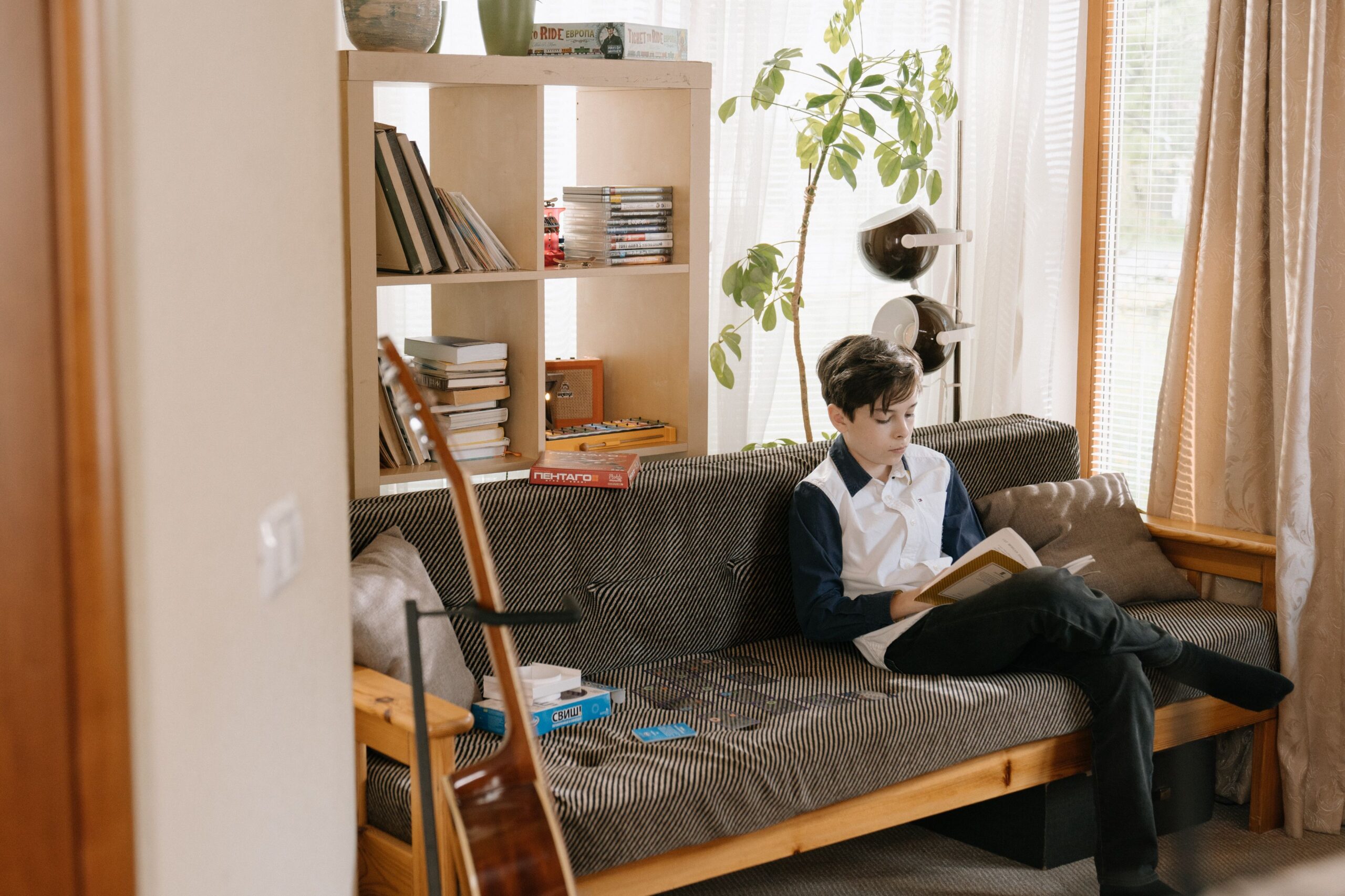
One long-running survey of American six- to fourteen-year-olds found that the vast majority, 83%, said they loved being read to at home and wished it happened more often, and their own reasons had less to do with the plot than with the closeness of the time itself. A half-read shelf in the living room is teaching a similar lesson before a child can even sound out the spines: this is a house where reaching for books, and for more of them than anyone has finished, is simply what people do here.
Why the Wonder Never Runs Dry
This is the piece worth understanding properly, because it is the actual mechanism behind the promise made at the start.
In 1994, the psychologist George Loewenstein published what became the most influential modern account of curiosity, known as the information gap theory. Curiosity, he argued, is triggered not by total ignorance but by a specific, bounded gap between what you know and what you want to know.
You cannot be curious about something you are not aware of at all. You can be intensely curious about something you know just enough to want more of. This is why a single fact half-learned pulls at the mind far harder than an entire subject never encountered.

Now look at your shelf again. Every unread book on it is a manufactured information gap, sitting in physical form, waiting. You know enough about it- the cover, the first page, the friend’s recommendation to want what is inside. You do not yet have it. That gap is not an accusation.
According to science, it is the exact condition under which wonder is generated, and it does not deplete with age the way other pleasures can. A shelf of forty unread books is not one disappointment. It is forty separate, still-live sources of the one feeling that guarantees you will never sit in a room with genuinely nothing left to want to know.
This is what a home library actually insures you against. Not against being uneducated. Against the particular flatness of having nothing left to reach for.
An Old Appetite, Not a Modern Failure
Buying has outpaced reading in every generation that could afford to do either, from the Meiji-era scholars satirised in 1879 to A. Edward Newton, amused by his own shelves in 1921. It is not a modern failure of discipline. It is a remarkably consistent feature of anyone who has ever loved books.
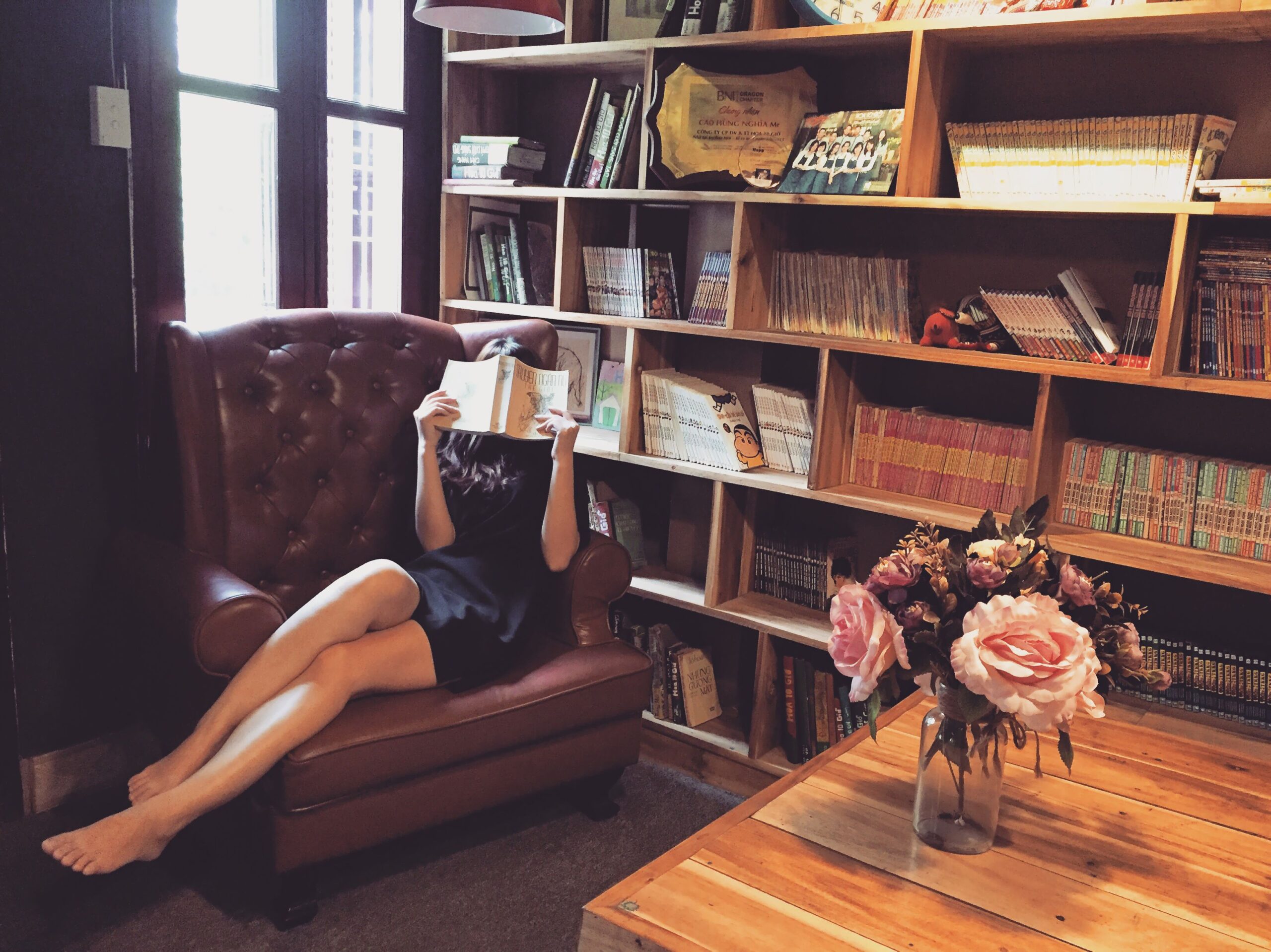
You may already know the writer Nassim Taleb’s term for a version of this, the antilibrary, built around the novelist Umberto Eco’s thirty thousand largely unread books. It is a good idea, and worth knowing. But it makes a narrower claim than the one this essay is making. Taleb’s antilibrary is mostly about humility, a standing reminder of how much you do not know.
What your own half-read shelf offers is not just humility. It is supply. It is the guarantee, sitting a few feet from wherever you are reading this, that boredom has an antidote already paid for and waiting on the shelf.
What a Shelf Says Before You Do
A room without books does feel like something is missing, and there is a real, if slightly mangled, two-thousand-year-old witness to that feeling. Cicero is widely quoted online as having said that a room without books is like a body without a soul, a tidy line that turns out to be a nineteenth-century gloss rather than his actual words.
What Cicero really wrote, in a letter to his friend Atticus, was smaller and better: once his librarian Tyrannio had finished arranging his books, he reported, the house seemed to have acquired a soul. Not a general remark about rooms in the abstract. A specific, delighted observation about his own home, on the day the shelves were finally put in order.

That instinct has not gone anywhere in two thousand years. It resurfaced, almost comically intact, in 2020, when a Twitter account called Bookcase Credibility began reviewing the bookshelves visible behind public figures on video calls, gathering over a hundred thousand followers who apparently had nothing more urgent to do than judge a newspaper columnist’s double-wide shelf or a celebrity’s suspiciously colour-coordinated spines. The joke worked because everyone understood the premise instantly: whatever sits behind you when you speak says something about who you are, and a wall of books says it more persuasively than almost anything else you could put there.
This is not vanity, or at least not only vanity. A curated shelf is one of the few possessions able to display taste, history, and aspiration all at once, in a single glance, with no caption required. It adds warmth to a room that a blank wall never will. It tells a guest, correctly, that curiosity lives here.
And it is allowed to make you feel something as simple and unfashionable as proud. Being surrounded by the books you have loved, are loving, and still mean to love is one of the few forms of self-display that costs nobody anything and asks nothing back.

So here is the fuller version of the reframe. Your half-read shelf is not a scoreboard of failures. It is a self-portrait, a record of every version of you that reached for something slightly beyond your grasp. It is doing quiet cognitive work on you and everyone in your household regardless of whether you ever finish it. And every single spine on it is a small, manufactured wellspring of the one feeling that keeps a mind from ever going flat: the specific, sturdy, endlessly renewable curiosity of knowing that something is in there, waiting, and that you get to find out.
You will not run out of days before you run out of wonder. That is not a consolation for the unread shelf. It is the entire point of having one.
What is the oldest unread book on your shelf, and which version of you was it waiting for?

Vincent Phan
Vincent is the founder and Editor-in-Chief of 1000 Libraries Magazine. He is a Paris-born ex-corporate turned bookseller and philosopher, on a global mission to spread the joy of physical books in our age of digital technology.