
Why do we celebrate Halloween? Trace the night from the Samhain fire on Ireland’s Hill of Ward to trick-or-treating and Tokyo, and find the Irish festivals, from Púca to Derry, where it lives on.
Somewhere around 1900, in a village in the far north-west of Ireland, someone hollowed out a turnip, cut a face into it and set a candle inside to frighten the neighbours. A plaster cast of it sits today in a museum in County Mayo, grey and shrunken, and it is the direct ancestor of every pumpkin that will glow on a doorstep this month, from Ohio to Osaka. The pumpkin is an American improvement. The idea arrived in the 1840s with a million people fleeing famine, and it has since travelled further than almost anything else Ireland ever produced.
Three in four American adults will celebrate Halloween this year, spending a forecast US$13.5 billion between them. Tokyo closes the streets of Shibuya for it. Germany adopted it in 1991 to fill the gap left by a cancelled carnival. Yet the night is older than any of the countries that now keep it. It began as Samhain, the Irish New Year, on a hill in County Meath where, the chroniclers say, every fire in the country was put out and relit from a single flame. This is the story of how that night left Ireland, what the world did with it, and where, this October, you can still stand beside the fire.
The Night the Year Turned
Samhain, pronounced roughly “sow-in”, means “summer’s end” in Irish, and in the medieval Irish tales it is one of the four great festivals that divide the year, along with Imbolc in February, Bealtaine in May and Lughnasa in August. It fell on the night of October 31, when the harvest was in, the cattle came down from the summer pastures and the animals that could not be fed through the winter were slaughtered. It was the hinge of the year, and the Irish treated it as the year’s beginning.
Because it stood between one year and the next, Samhain belonged to neither, and the stories say the borders of the other world went slack for the night. The sídhe, the fairy mounds, opened. The dead came back to their old houses and were left a place at the table. The great set pieces of Irish mythology, the battles and the bargains between gods, are again and again set on this night.
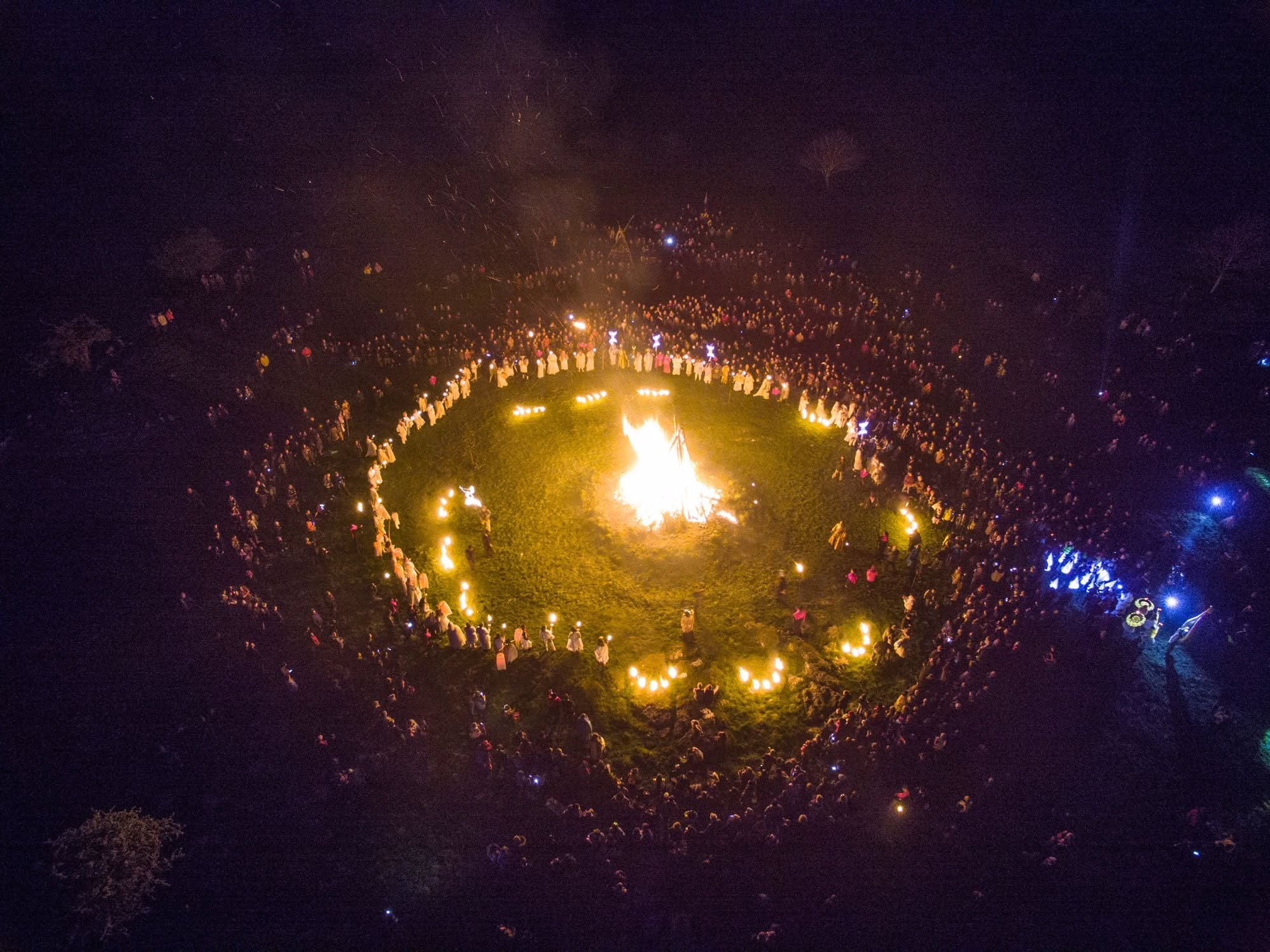
The fire belongs to the Hill of Ward, known in Irish as Tlachtga, after a druid’s daughter who, in the legends, died there giving birth to three sons. Geoffrey Keating, a priest writing his history of Ireland in the 1630s, recorded that the druids gathered on the hill on the eve of Samhain to sacrifice to the gods, that every fire in Ireland was put out, and that no household could rekindle its hearth except from the Tlachtga flame.
Keating was writing a thousand years after the events and had his own reasons to make pagans look fearsome. What the archaeology confirms is that the place mattered for a very long time: excavations by University College Dublin found three overlapping enclosures, the largest around 195 metres across and probably raised in the Late Bronze Age, with evidence of feasting and ceremony running through to the early medieval period.
How Samhain Became Halloween
Christianity arrived in Ireland in the fifth century and did what it did everywhere: it kept the calendar and changed the names. In the eighth century, Pope Gregory III fixed November 1 as the feast of All Saints, and the church later added All Souls’ Day on November 2 for the ordinary dead. All Saints was “All Hallows” in English, and the night before it became All Hallows’ Eve, which Scots speakers wore down to Hallowe’en. The word is Scottish; the night was already Irish and Scottish both, the two countries sharing a Gaelic culture across a narrow sea.
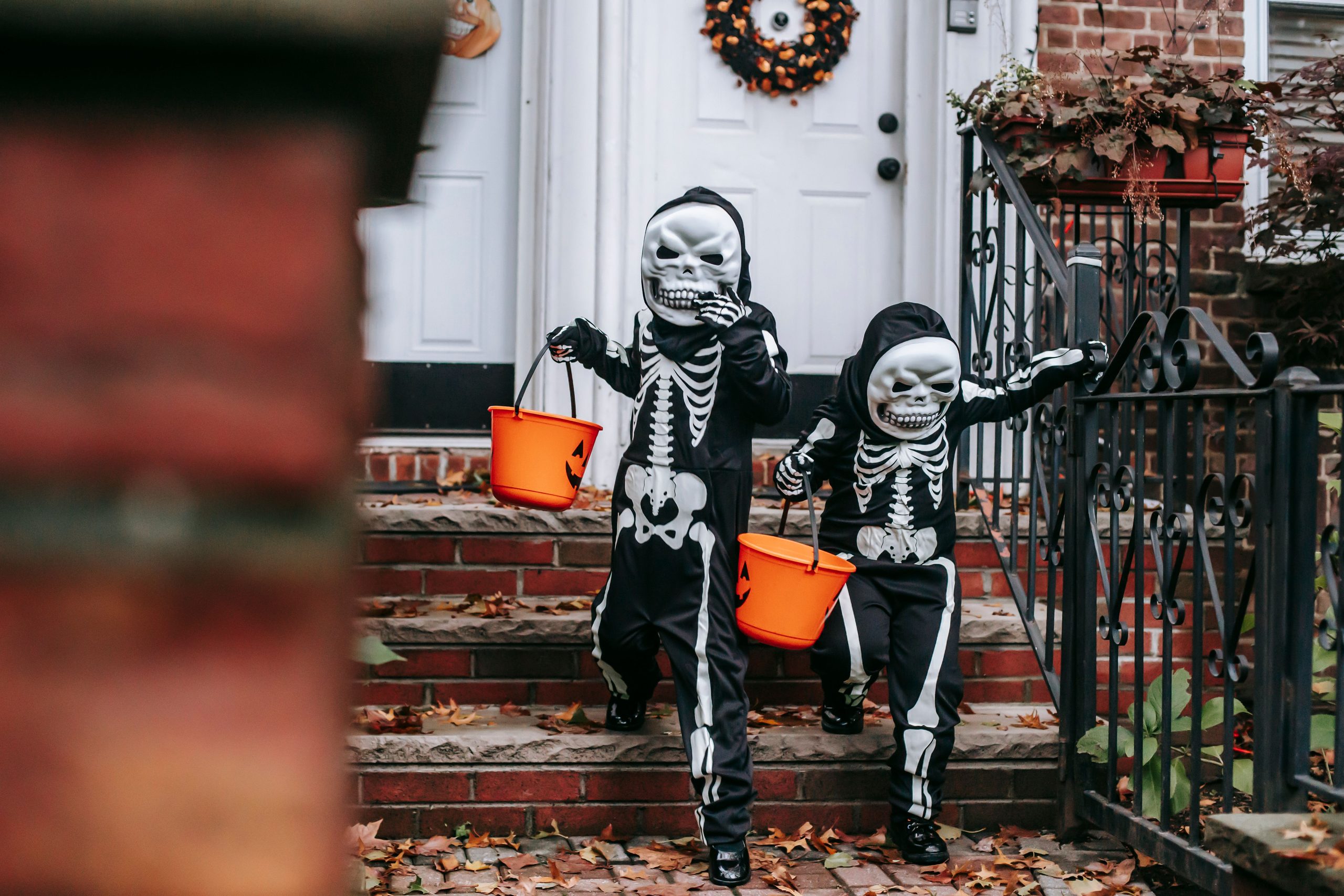
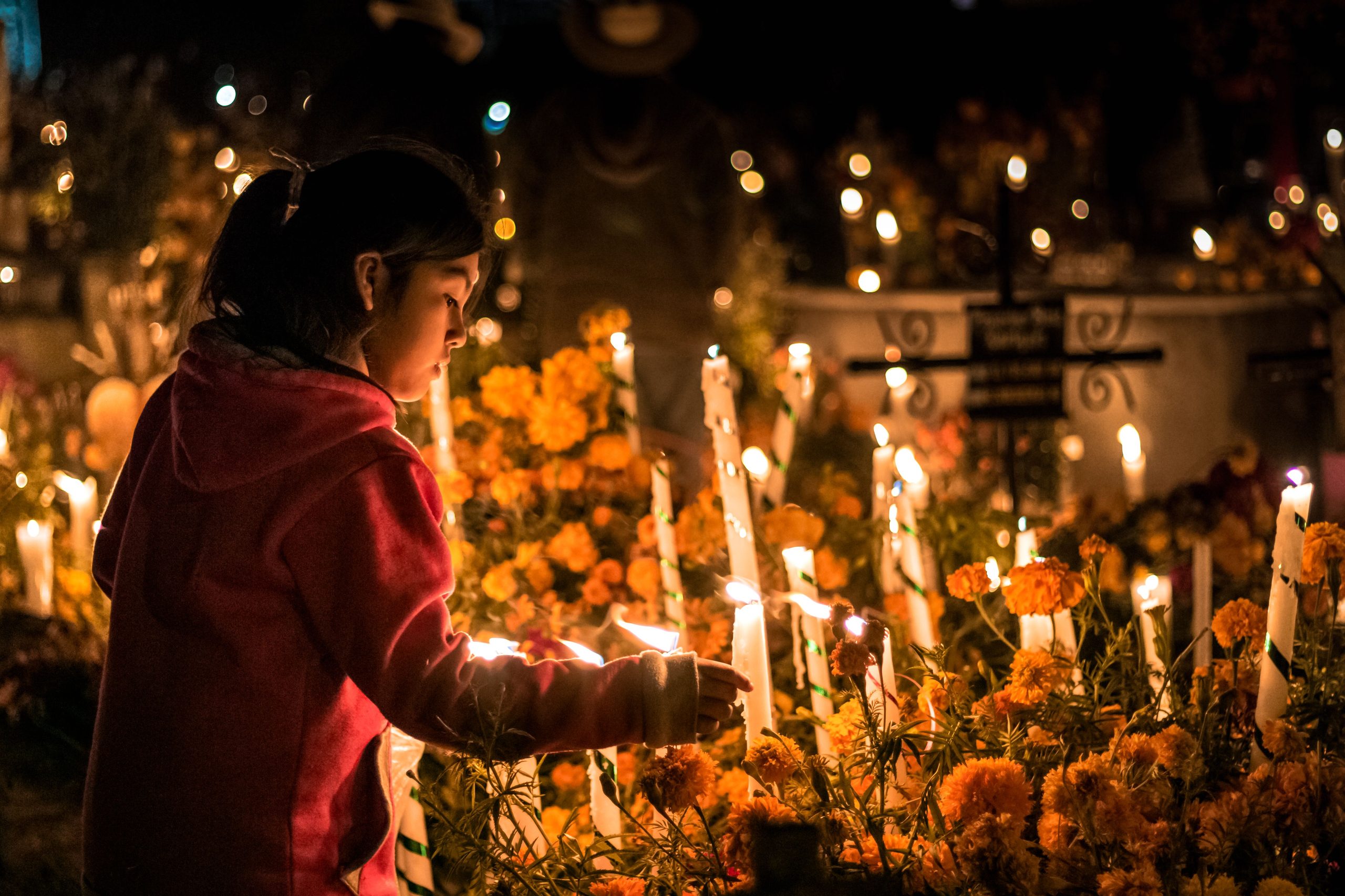
The old customs survived the new names without much difficulty. People still lit bonfires. The poor went door to door offering prayers for the dead in exchange for small cakes, a custom called souling. Young people in Ireland and Scotland went “guising”, disguised in masks and old clothes so that any spirits abroad would take them for their own kind, and sang or performed for food at each house.
Above all, it remained a night for finding out the future. Robert Burns wrote his poem “Halloween” in 1785 as a catalogue of these divinations, with footnotes for readers who had never seen them: nuts placed side by side in the fire to see whether two lovers would burn quietly together or jump apart, cabbage stalks pulled blindfold from the ground to read a future spouse in the shape of the root. For most of its history, Halloween was the night you found out whom you would marry.
The Turnip That Crossed the Atlantic
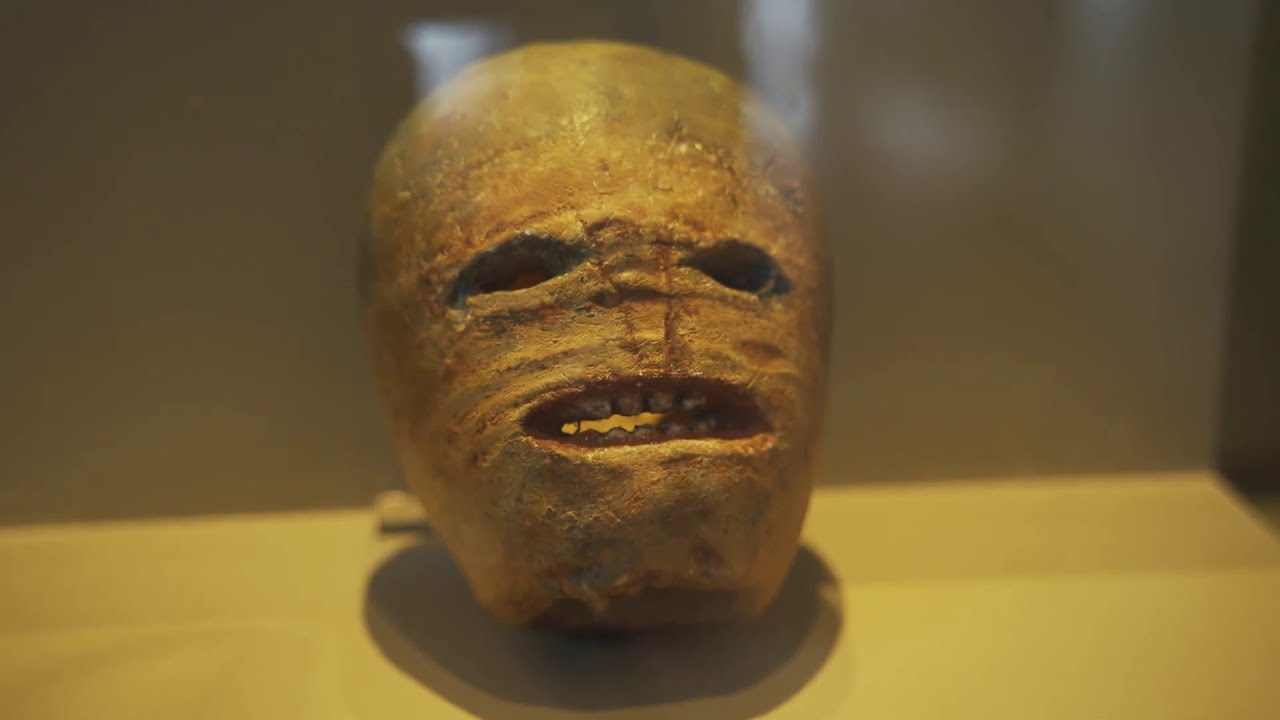
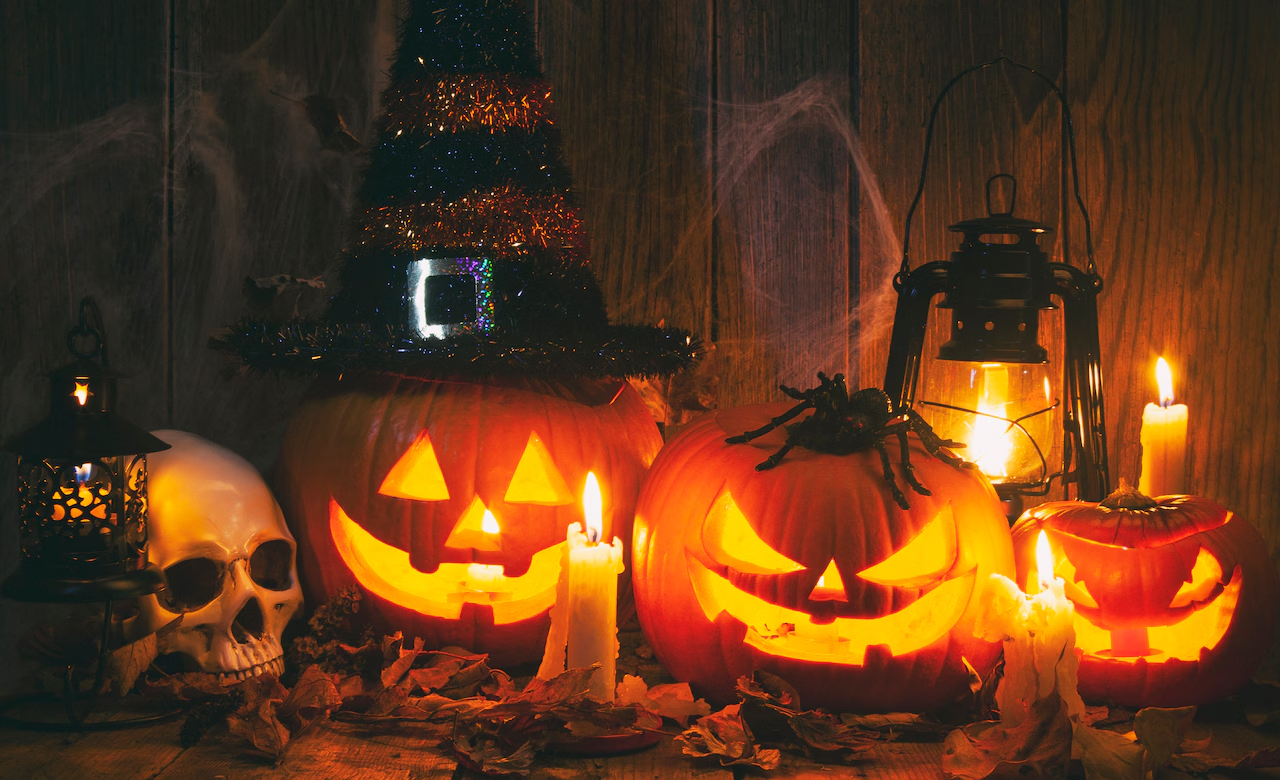
The turnip in the museum has a name and an address. The National Museum of Ireland calls it the ghost turnip and keeps it at its Country Life branch in Castlebar. It came from the village of Fintown, in Donegal, and a schoolteacher named Rois Ní Braonáin gave it to the museum in 1943 as an example of what her neighbours had done at Halloween when she was young. Turnips rot, so what survives is the cast the museum’s artist Eileen Barnes made from the original and painted, its mouth a slash, far more disturbing than any pumpkin. The museum’s label states plainly that the pumpkin of today is an American development of this Irish tradition.
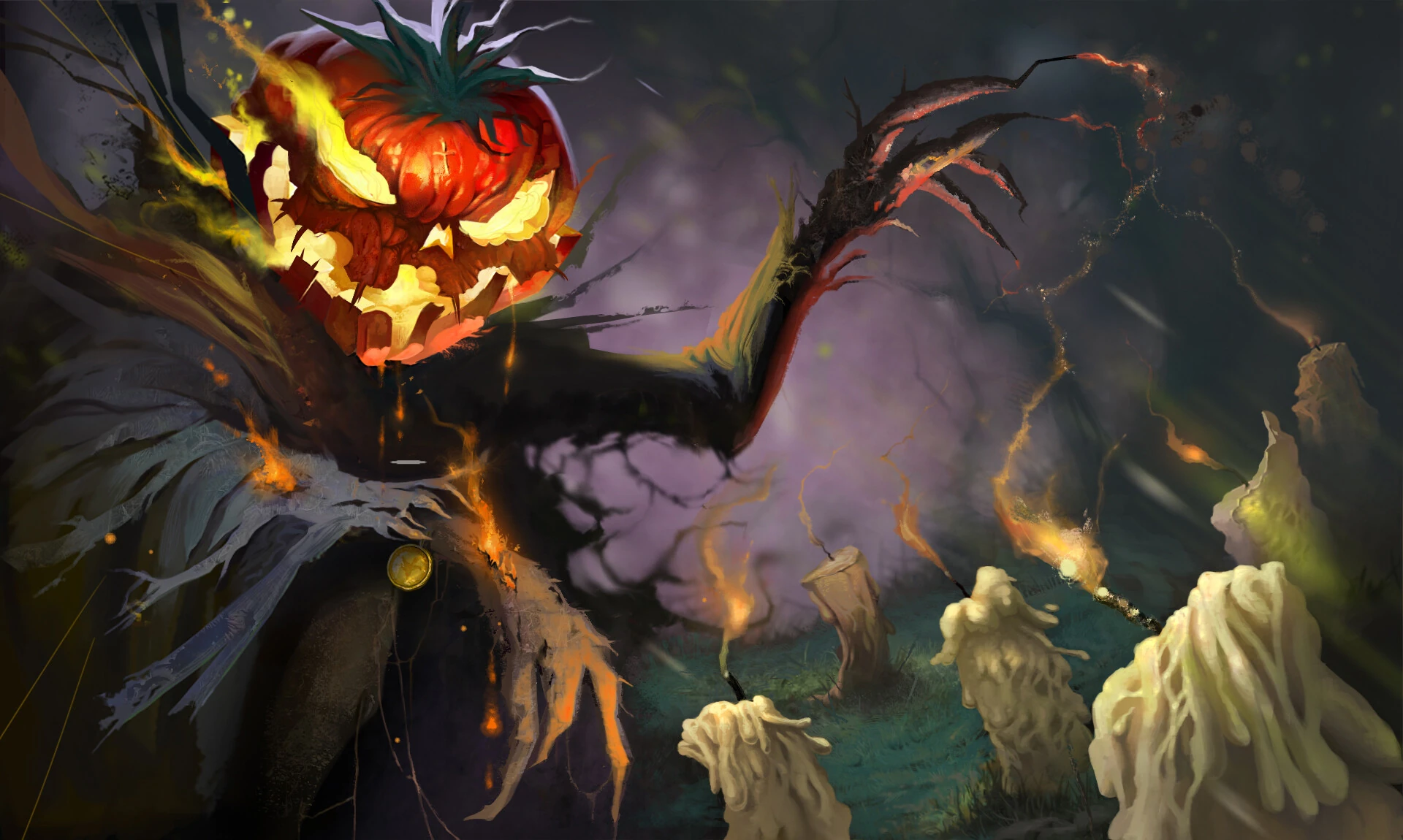
The lantern had a story attached. Stingy Jack, in the folktale, was a drunkard and a trickster who twice caught the devil and made him promise never to take his soul. When Jack died, heaven would not have him, and hell was bound by its promise, so the devil threw him a burning coal, and Jack put it inside a hollowed turnip to light his wandering. He was Jack of the Lantern.
Then the Irish left. Between 1845 and 1852, the potato blight killed around a million people and drove more than a million more to emigrate, most of them to America, and they took the last night of October with them. In the new country, they found a fruit that was larger, softer, and easier to carve than any turnip, and one of the earliest known images of a carved pumpkin appeared in Harper’s Weekly in 1867. Guising became trick-or-treating, which spread across North America between the 1920s and the 1950s. By the time the festival was exported back across the Atlantic, in films and television, it wore an American face.
A Festival for the Whole World
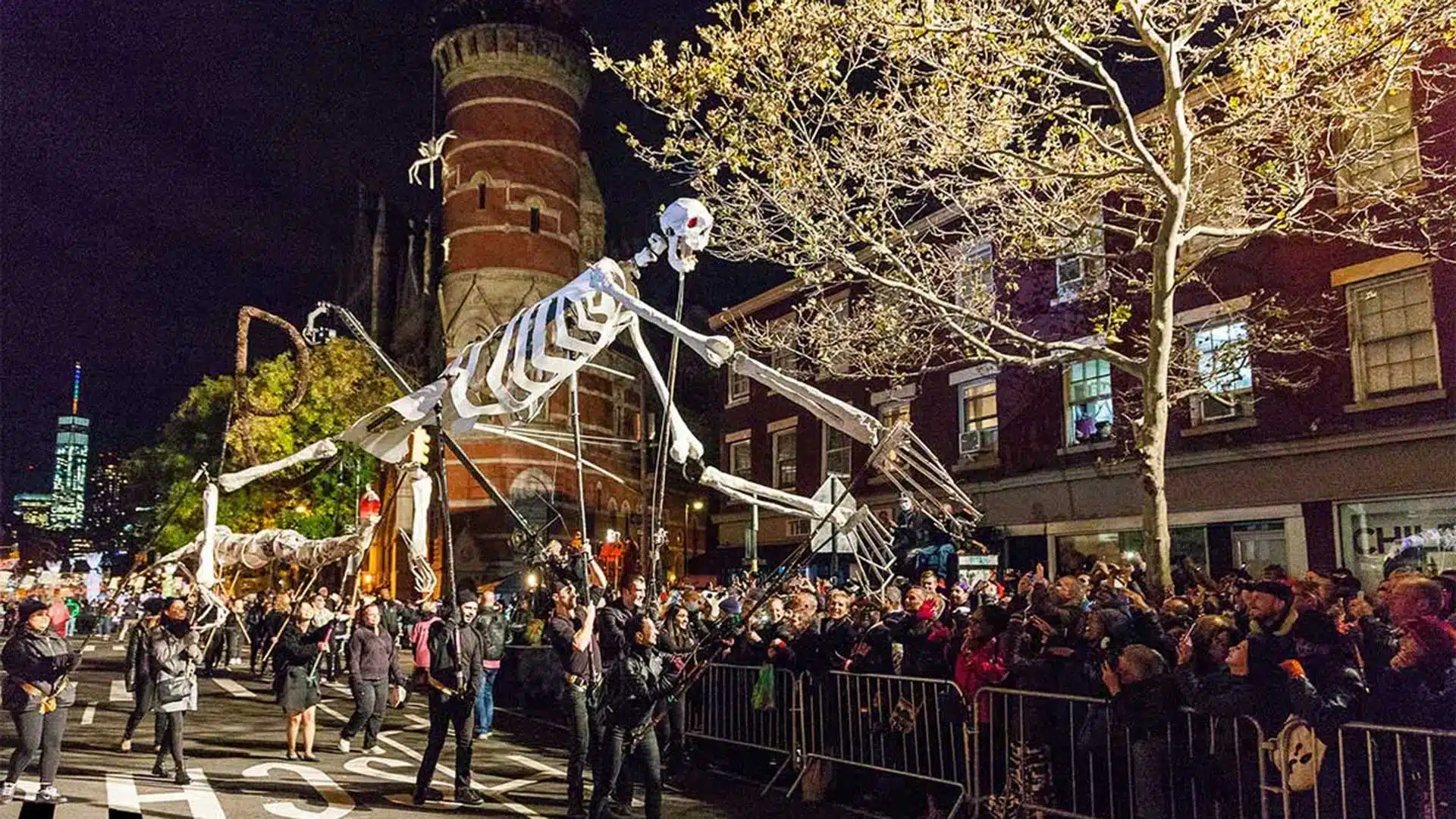
The scale it has reached is hard to take in. The National Retail Federation expects Americans to spend US$13.5 billion on Halloween in 2026, about US$115 a head, with three in four adults planning to celebrate. Germany had almost no Halloween until 1991, when the Gulf War led to the cancellation of Carnival and a novelty-goods consultant named Dieter Tschorn promoted the American festival as a replacement, taking his cue from the parties American soldiers held at Frankenstein’s Castle near Darmstadt.
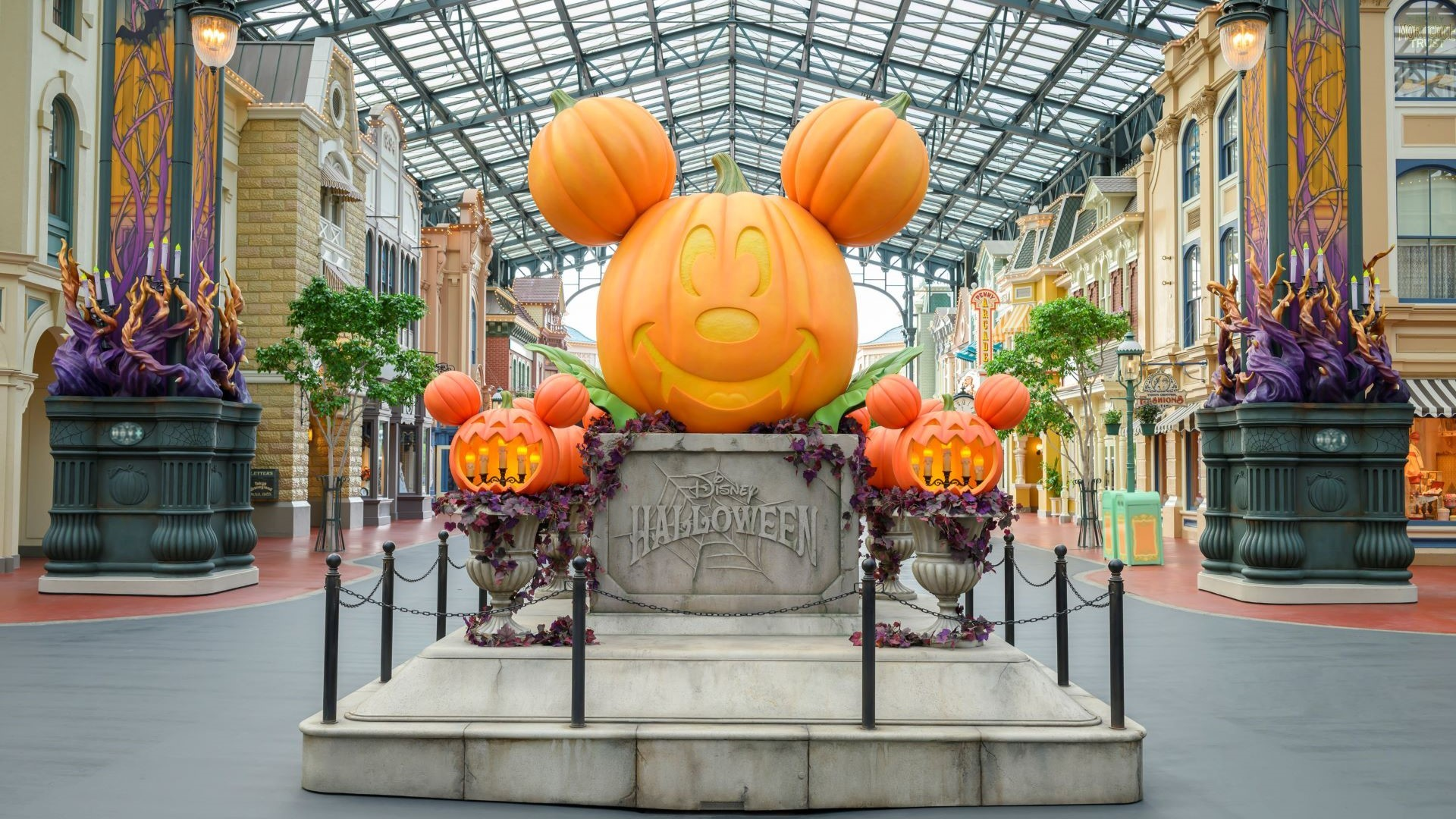
Japan’s Halloween began at Tokyo Disney Resort and escaped into the streets; by 2015 an estimated 20 million Japanese were taking part, and the crowds in Shibuya on October 31 have become a matter for the police. In Britain, where it had faded to almost nothing, nearly half of consumers were spending money on it by 2016.
Why did this one night travel so well, when Bealtaine and Lughnasa stayed home? The historian Nicholas Rogers, author of a standard history of the festival, told National Geographic that Halloween is “a day of festive license, transgression, and a certain lack of inhibition,” and that it appeals most to the young, who in every country have found in it a night to be someone else. Samhain was always a night when the ordinary rules were suspended, and strangers in masks were welcomed at the door. That part has survived intact.
Where to Stand Beside the Fire
Ireland, having given the night away, has begun to claim it back, and the last week of October is now one of the best times to visit.
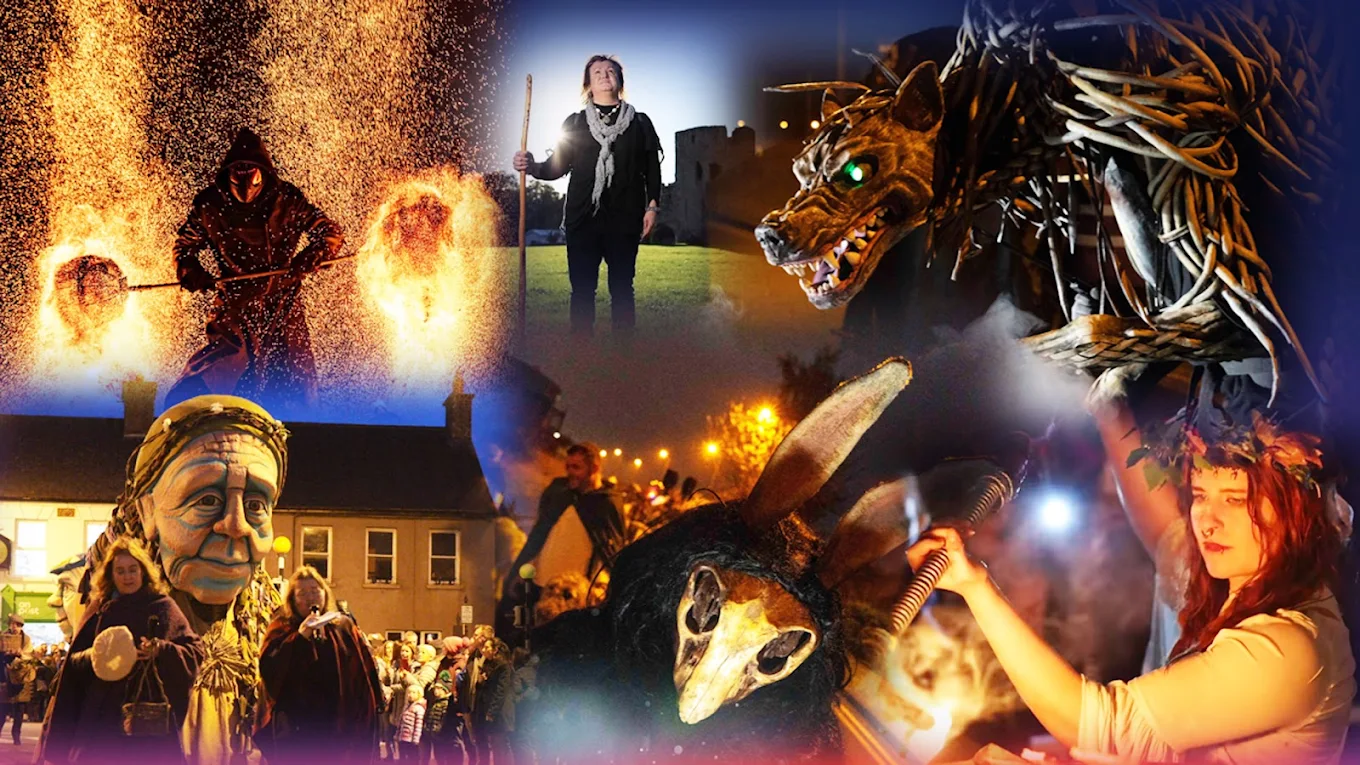
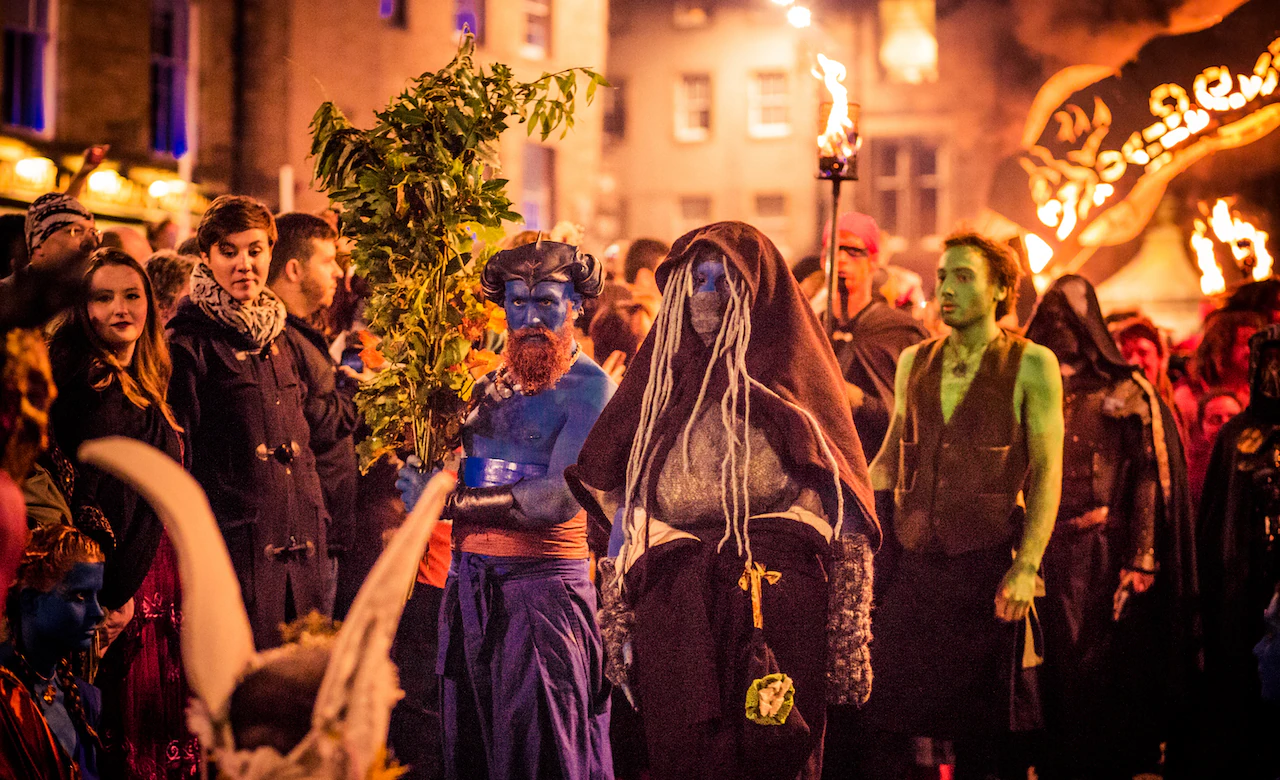
The Púca Festival, named for the shapeshifting spirit of Irish folklore, runs from October 29 to November 1, 2026 in the County Meath towns of Trim and Athboy, forty-five minutes from Dublin. Trim has the largest Norman castle in Ireland, lit for four nights with projections while a procession of spirits moves through the streets below. Athboy is the town under the Hill of Ward, and the festival’s central act is the lighting of the Samhain fire, on the ground where Keating placed it.
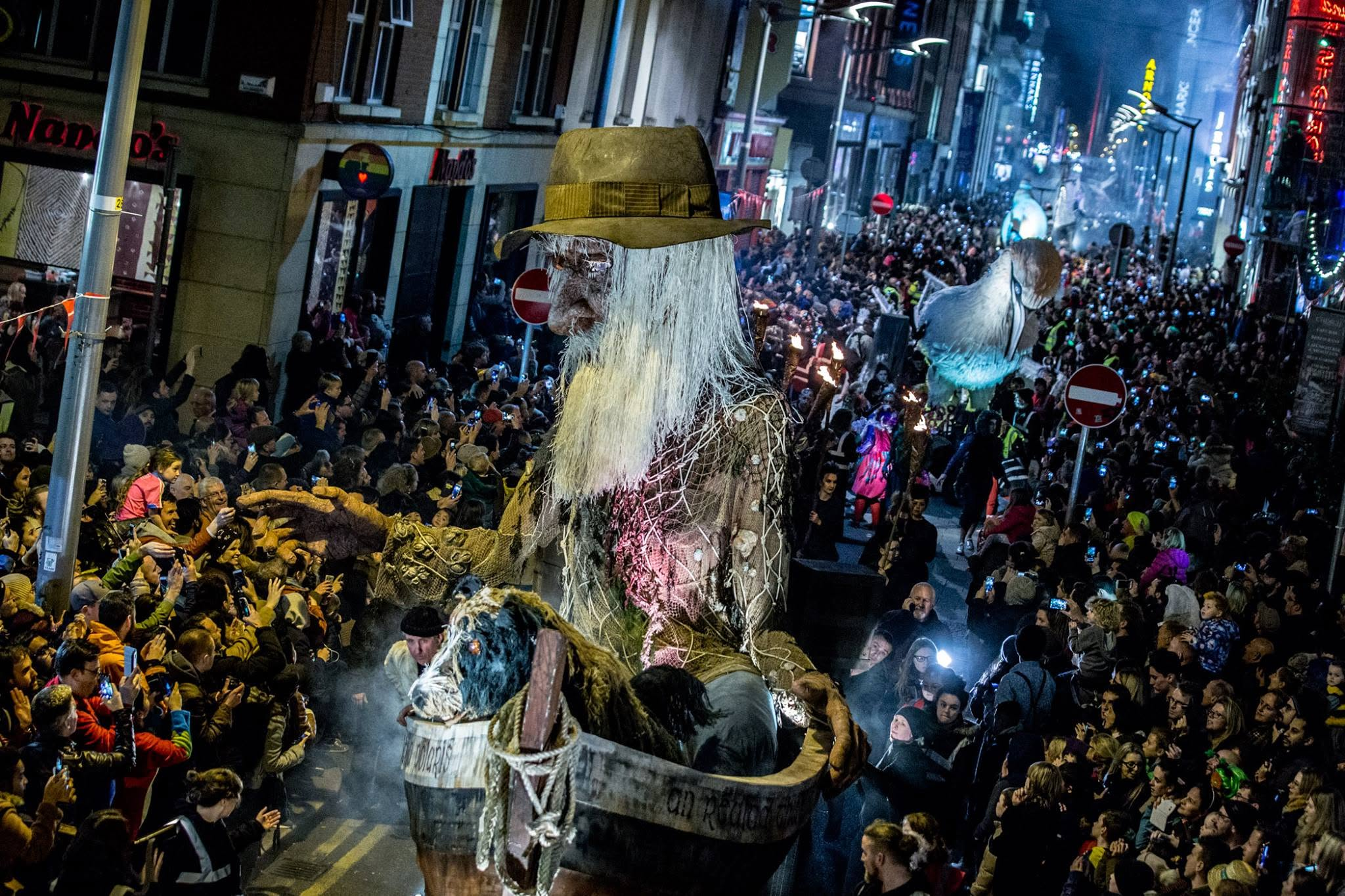
Further north, in the walled city of Derry, Derry Halloween began in 1985 with a fancy-dress night at Doherty’s Bar on Magazine Street. This was the height of the Troubles; the pub filled past capacity, a security alert emptied it onto Shipquay Street, and the crowd in costume became, without meaning to, the city’s first Halloween parade. It now draws more than 120,000 people over four days, with a carnival parade, fireworks over the River Foyle and events along the four-hundred-year-old walls, and USA Today has named it the world’s best Halloween destination. The 2026 festival, from October 28 to November 1, marks its 40th anniversary.
Dublin, meanwhile, can claim the creature that goes with the night. The two books that turned the vampire into a modern literary figure were both written by Dubliners. Sheridan Le Fanu published Carmilla, the story of a young woman preyed upon by a female vampire in a castle in Styria, in 1872. Bram Stoker, born in Clontarf on the city’s north side in 1847, the worst year of the Famine, read it and published Dracula in 1897. Every vampire since, from Anne Rice’s Lestat to Buffy, True Blood and Twilight, descends from those two books, for better or worse. The Bram Stoker Festival, run by Dublin City Council, fills the long weekend of October 23 to 26, 2026 with Gothic theatre, night walks and family events in the city where the genre was born.
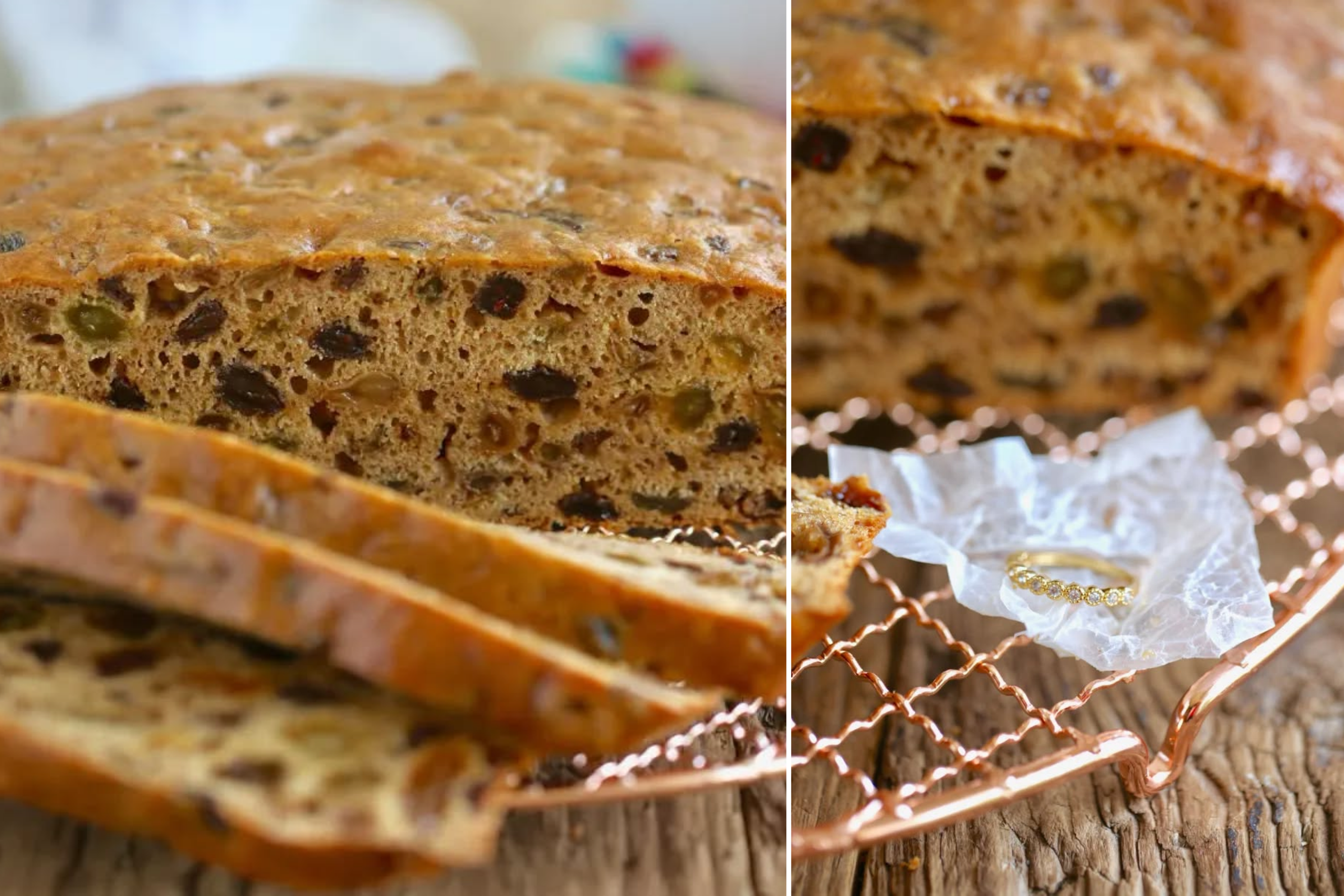
The rest happens at home. On Halloween night in Ireland, the barmbrack, a fruit loaf with a ring baked into it, is cut at the table, and whoever finds the ring is told they will marry within the year; a coin means money, a rag means hard times.
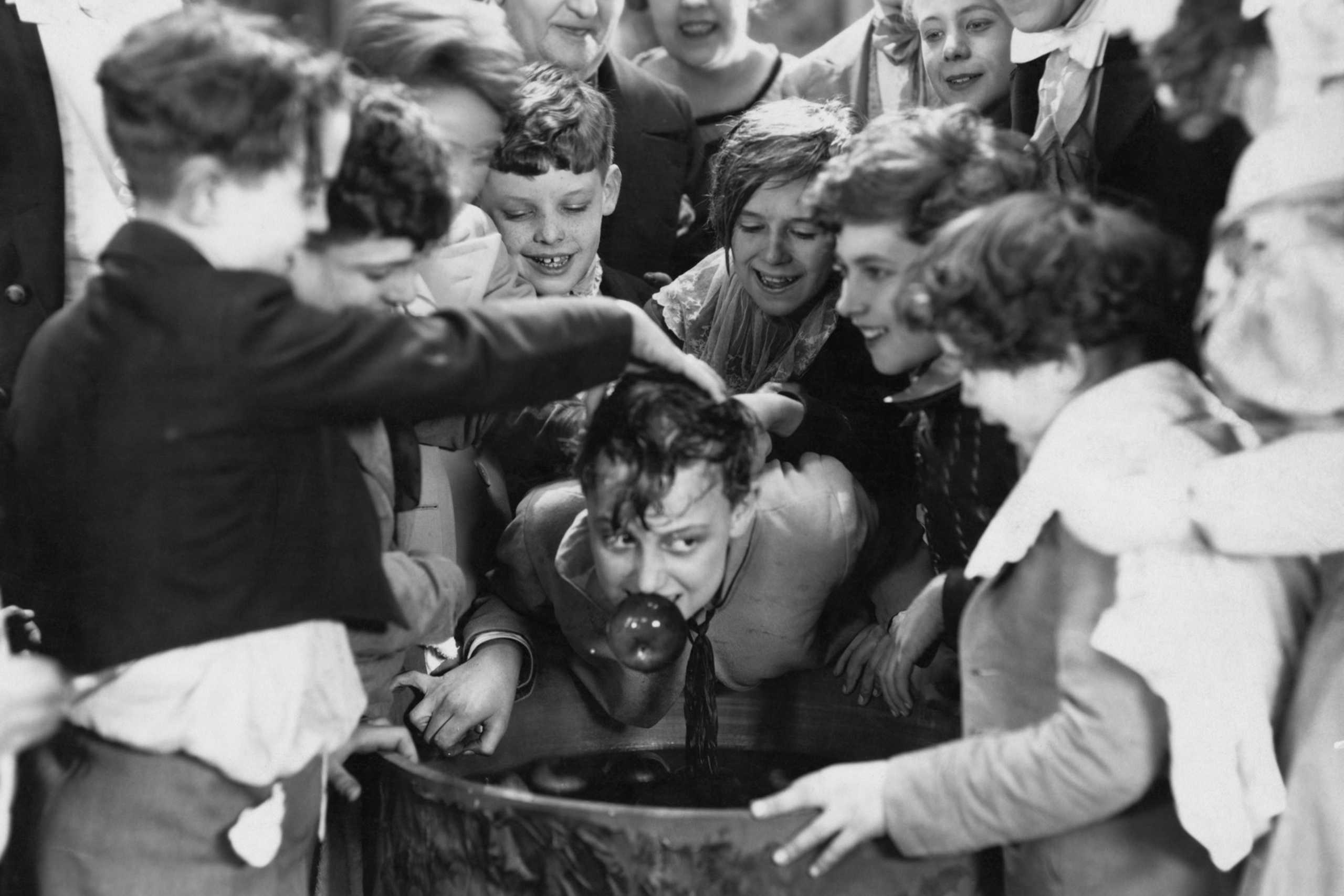
Children duck for apples in a basin of water, and the first to bite one, tradition says, will be next to the altar. Masks go on, doors are knocked, and the strangers on the step are welcomed in, as they have been on this night for a very long time.
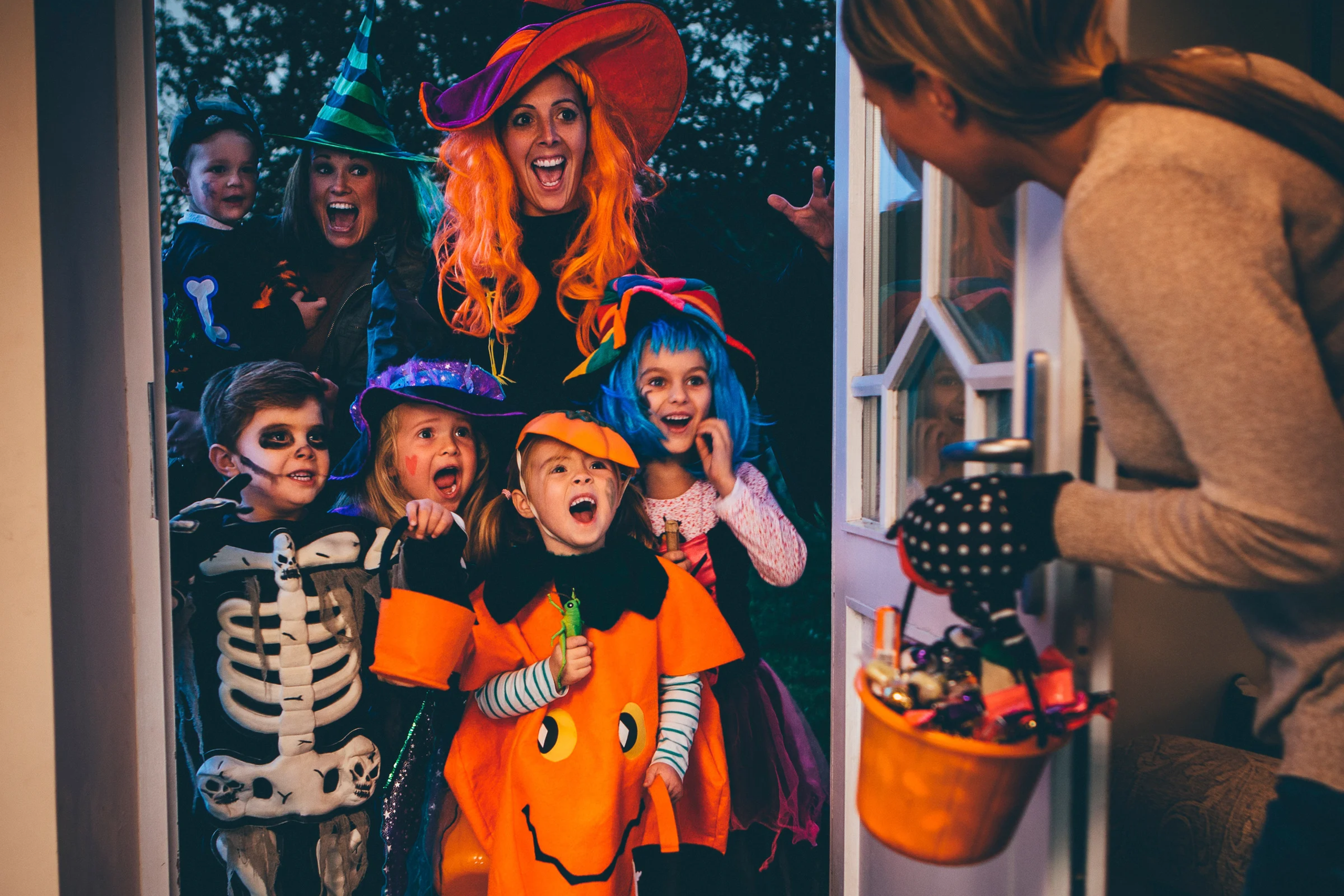
Stand on the Hill of Ward when the fire is lit, and the town below is doing all of this at once: the flame on the hill, the children at the doors, the ring in the bread, the carved faces in the windows. A visitor from Ohio or Osaka will recognise every part of it, because every part of it went home with them long ago. What Ireland kept is the reason. Elsewhere the night is a costume party whose origins nobody asks about; here the origin is a fire on a hill north-west of Dublin, still lit on the last night of October, from which, the chroniclers said, every other fire in the country once took its light.

Vincent Phan
Vincent is the founder and Editor-in-Chief of 1000 Libraries Magazine. He is a Paris-born ex-corporate turned bookseller and philosopher, on a global mission to spread the joy of physical books in our age of digital technology.