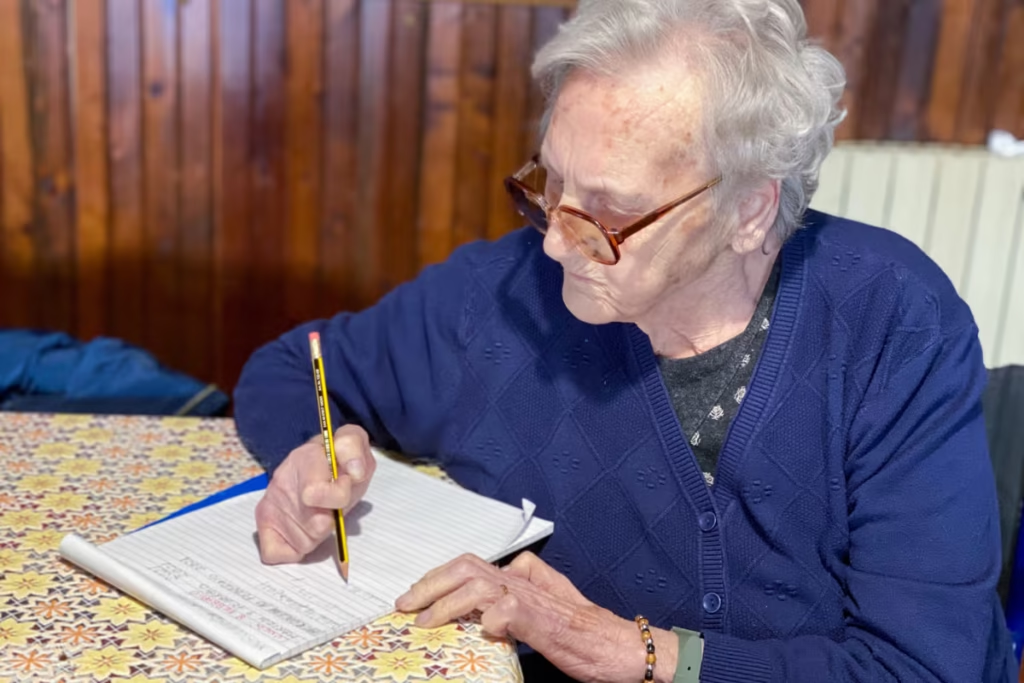

At 85, Nadine Stair reflected on the life she lived and the things she would do differently, offering a timeless lesson to slow down and live fully.
There is a particular kind of wisdom that arrives late. It’s the kind of wisdom that sounds like an older person looking back and admitting that, given another chance, they would make more mistakes. Take more chances. Climb more mountains, swim more rivers, eat more ice cream. Worry less about troubles that existed only in their imagination. And pick more daisies.
Those final words belong to the best-known Nadine Stair, aged 85, who wrote If I Had My Life Over – I’d Pick More Daisies, which appeared in the Association for Humanistic Psychology Newsletter of July 1975. Since then, Nadine’s words have carried on through books, speeches and the internet into a kind of modern folk wisdom. The central idea stays wonderfully simple: perhaps a good life is not one where everything goes to plan, but one we are present enough to notice, which makes it all the stranger that the byline has never once been right.
A Story That Traveled
Although the passage is widely associated with Nadine Stair, an earlier and substantially similar essay can be traced to the American humorist and cartoonist Don Herold, whose “I’d Pick More Daisies” appeared in College Humor in 1931.
Later versions were shortened, revised, and attributed to other names, including Stair.
That history does not diminish the passage. If anything, it adds a layer. Like a well-loved book passed from one reader to another, the words traveled and changed as they went: a university president’s farewell speech in Kentucky, an advice column read by millions, a book title, and then a Spanish translation loved across Latin America as a poem Jorge Luis Borges never wrote down.
Somewhere along that route, someone added the finest lines in it. Nobody knows who. Which may be the most fitting thing about it: a passage about impermanence, carried forward by strangers who each left a little of themselves in it and then let it go.
“I Would Travel Lighter Than I Have”
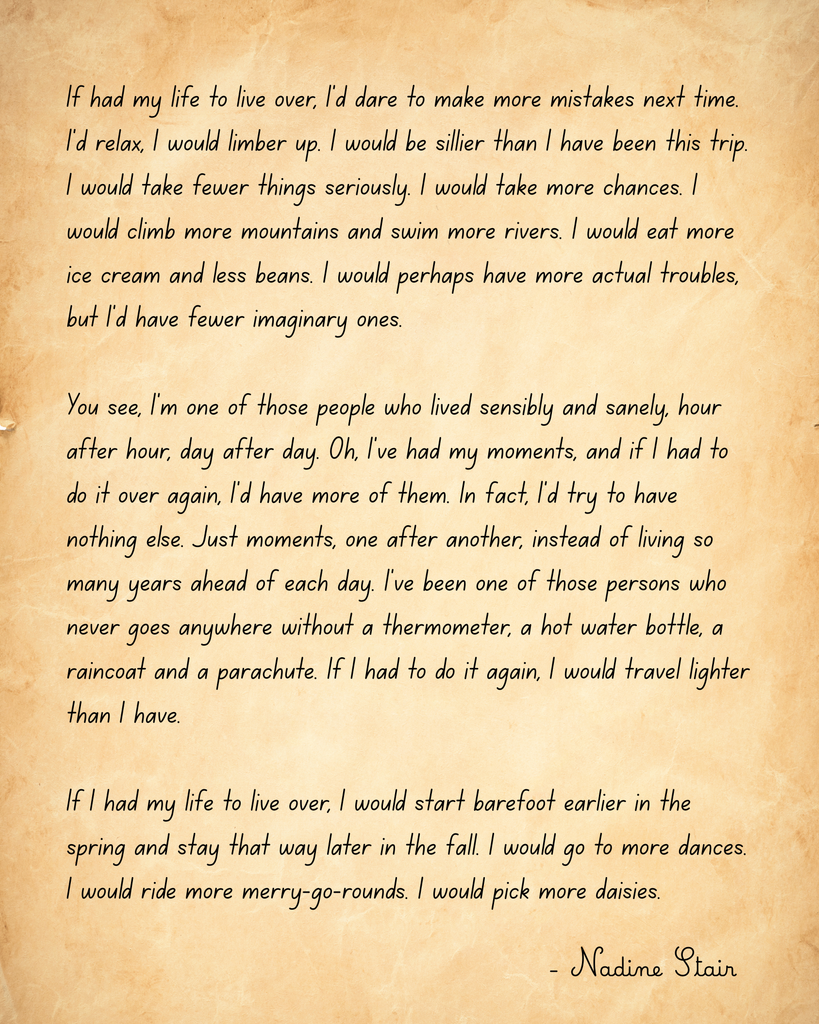
What is striking about the passage is that its regrets are not grand. The imagined second life is filled instead with ordinary pleasures: dancing, walking barefoot from early spring into late autumn, riding a merry-go-round, simply being sillier. The narrator admits to having lived sensibly and sanely, hour after hour, and wishes she had lived in moments instead, one after another, rather than years ahead of each day.
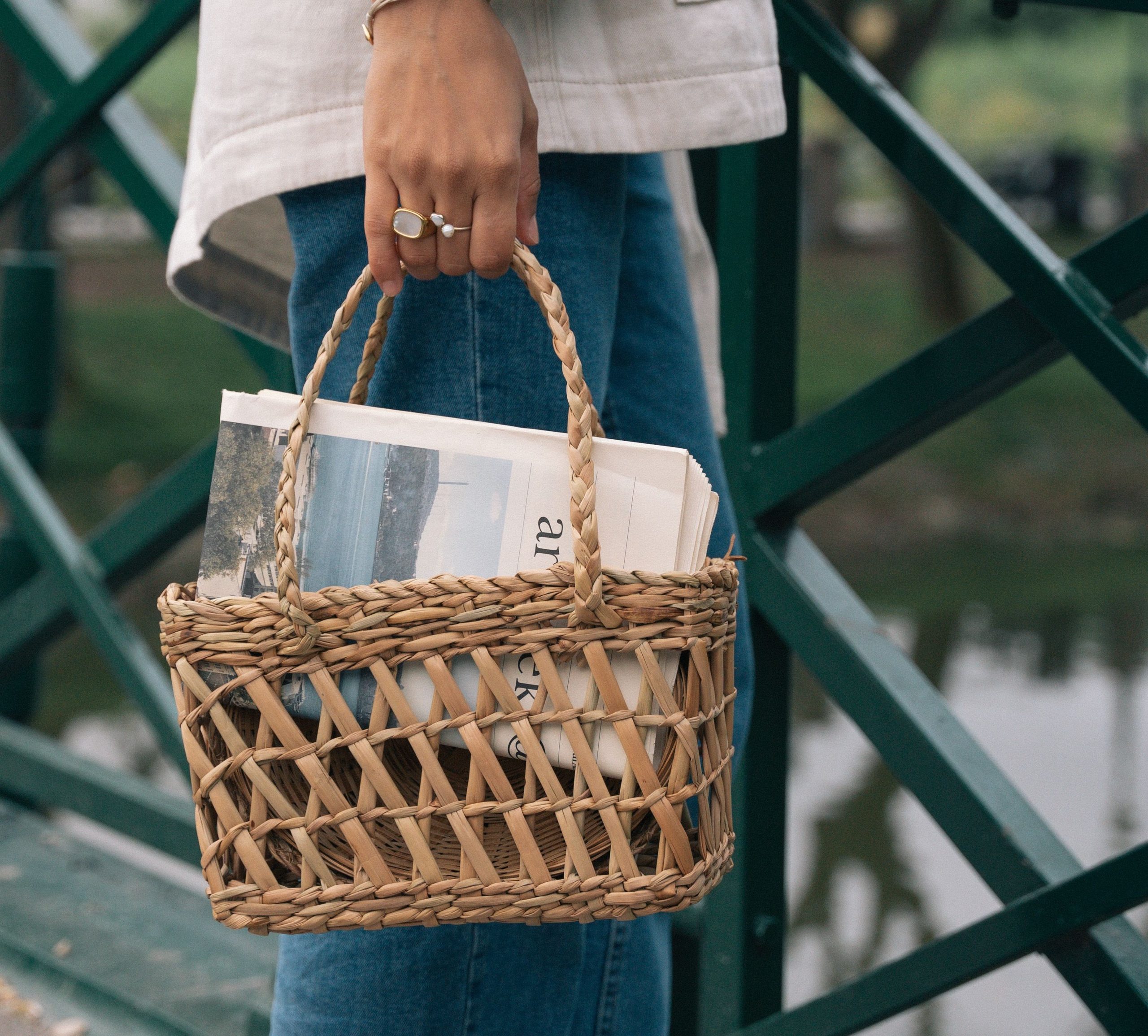
Most striking of all is one line: “I would travel lighter than I have.” She has been carrying a thermometer, a hot water bottle, a raincoat and a parachute. Each is a small monument to a disaster that never happened. It works as both a literal and a philosophical instruction. We plan so carefully, so painstakingly, for hypothetical futures that we sometimes forget to experience the very things we planned. The antidote is not recklessness. It is presence.
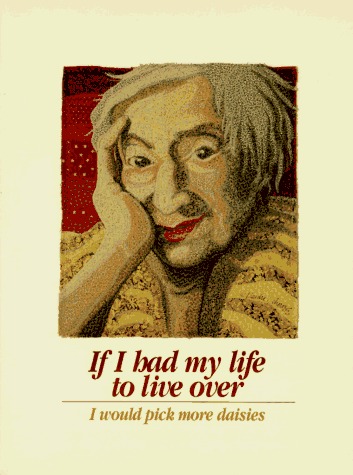
The full text is available here, and in Sandra Haldeman Martz’s anthology If I Had My Life to Live Over I Would Pick More Daisies (Papier-Mache Press, 1992).
The Woman Nobody Could Find
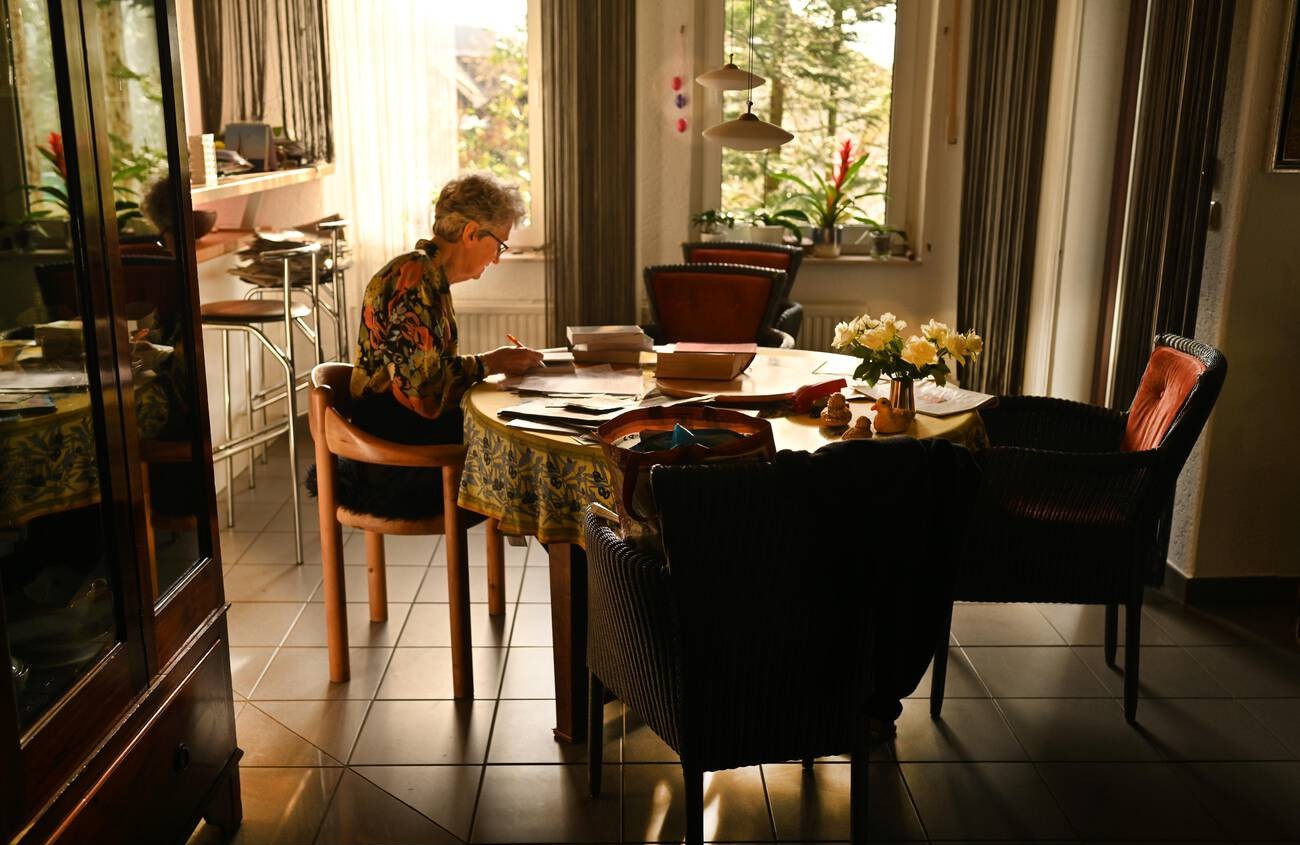
When that anthology appeared, readers wanted to know who Nadine was, and some went looking properly, on foot and by telephone. Joannie Liesenfelt, a researcher whose specialty was tracing lost people, traveled to Kentucky. She found four Stair families in the state and not one Nadine. But one of those families had been receiving the letters, and Laura Stair had begun her own search. She turned up a name one letter off.
Nadine Strain.
She was real. Born on July 1, 1892, she died in a Louisville nursing home on November 20, 1988, aged 96, and left her body to the University of Louisville School of Medicine. Byron Crawford of the Louisville Courier-Journal wrote about her in June 1992. Her niece told him that her aunt’s true vocation had been music, and that the family knew of no other writing by her.
Whether Strain wrote a version of her own, or simply became the closest real person to a byline already adrift, has never been settled. The scholar Iván Almeida, whose account for the University of Pittsburgh’s Borges Center remains the most thorough anyone has produced, noted that by the time her name attached itself, the text had been circulating for 25 years.
A music teacher in Kentucky, a cartoonist in Indiana, an army of anonymous editors. The words outlived them all.
The Forgotten Luxury of Having Time
Modern life has made speed feel like a virtue. We hurry through breakfast, answer messages while walking, photograph places before looking at them. Even leisure becomes an assignment: see ten sights, visit six cafés, move on. Slow living asks a quietly radical question. What if we stopped treating every minute as something to maximize?

The contemporary Slow Movement grew out of Slow Food, founded in Italy in 1986 by Carlo Petrini against the spread of fast food and formalized internationally in Paris in 1989. Journalist Carl Honoré later popularized the philosophy with In Praise of Slowness, and made a point that still gets missed: slow does not mean doing everything slowly. It means finding the right pace for the moment, and resisting the assumption that faster is automatically better.
By 1999, the thinking had reached town halls. Italian mayors founded Cittaslow, a network now numbering more than 300 towns in over 30 countries, none larger than 50,000 people, each marked with the sign of a snail. Fewer cars, more squares, food grown nearby. The daisy instruction, written into policy.
Travel Lighter
The same philosophy changes how we travel. Slow travel is more than a slower train or a longer stay. It is giving ourselves enough time to experience a place rather than collecting evidence that we were there. Instead of racing between landmarks, we walk a neighborhood. Instead of eating where an algorithm sends us, we ask a local.
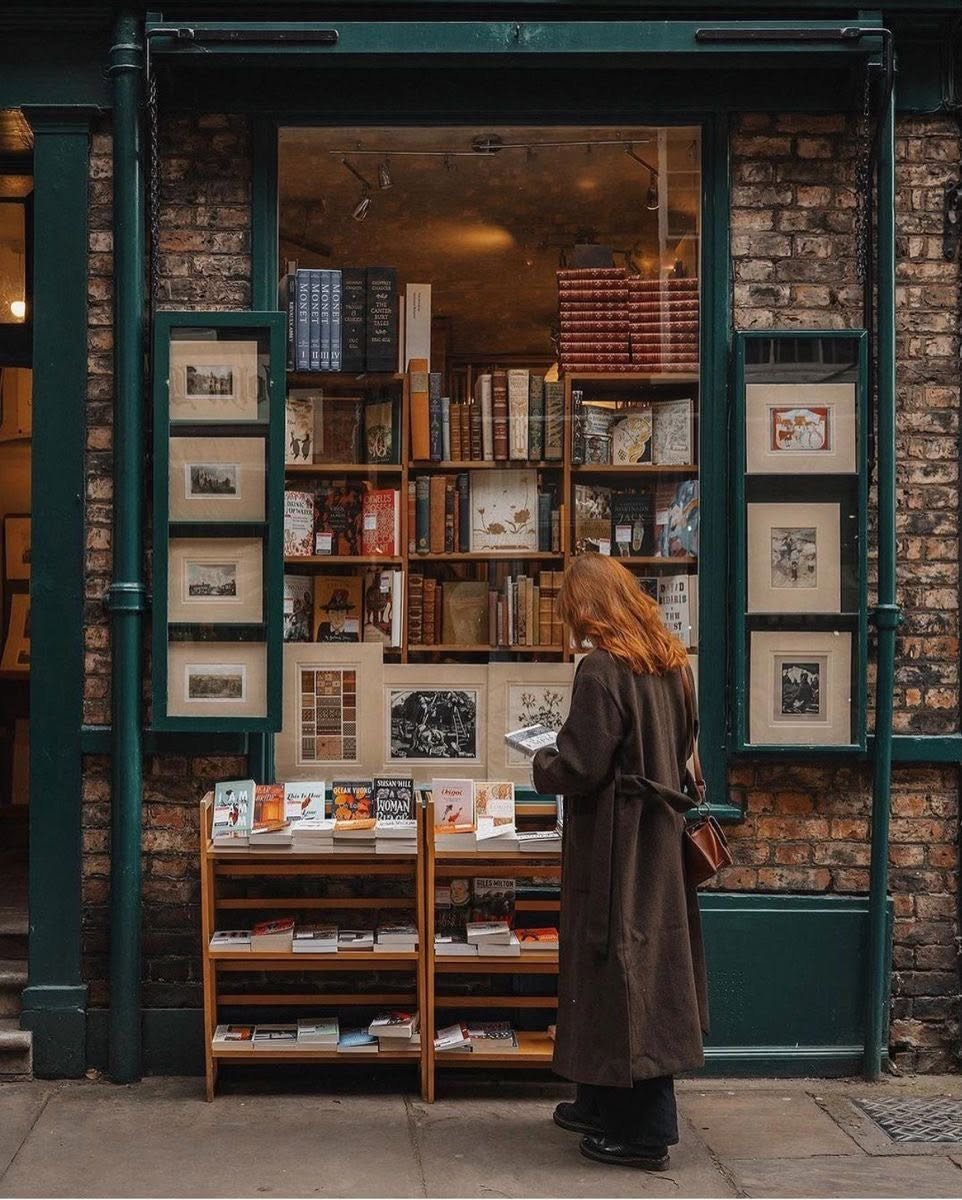
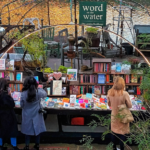
We might visit the library, or find a second-hand bookshop without knowing what we are looking for, or read in a café all afternoon and accomplish nothing on the itinerary. That may be exactly what the day needed. What changes is the relationship itself. A city stops being a collection of attractions waiting for our camera and becomes somebody’s home.
Books Teach Us How to Linger
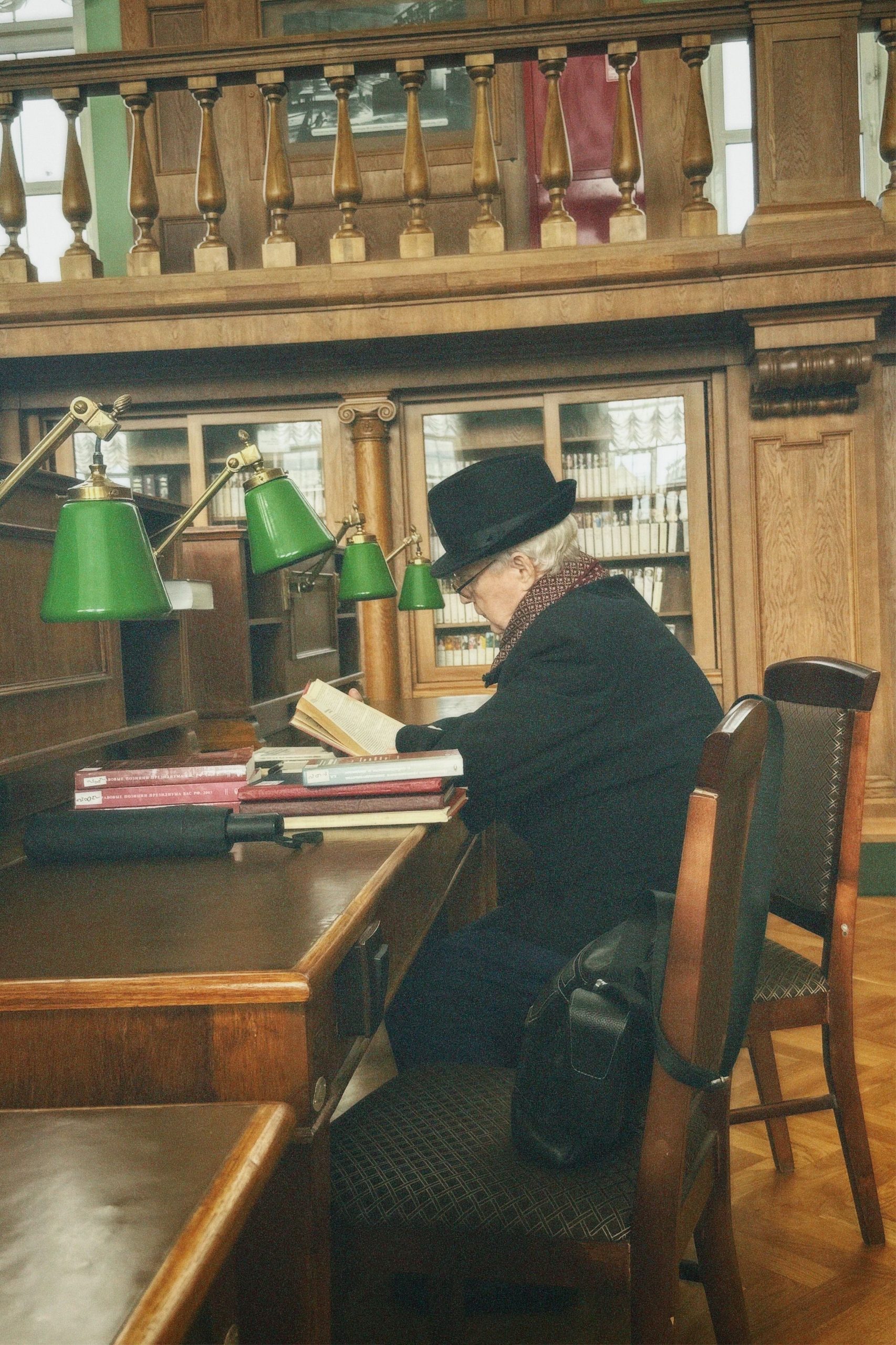
For readers, none of this is new. A book is already an invitation to slow down. You cannot rush a novel and have it work. A period at the end of a sentence asks you to stop. A story written a century ago places you inside the emotional world of someone who died before you were born. The very nature of stories is time-bending, taking us out of the rush of our world and into another, a slower, more thoughtful place.

This is why libraries, bookshops, and reading rooms feel increasingly precious. They are physical spaces organized around attention. They ask us to sit down, to browse, to become absorbed in something that cannot be scrolled past.
Books also make travelers of us long before we buy a ticket. When we finally go, we arrive differently. We recognize a street from a novel. The more we read, the harder it becomes to believe that our own way of living is the only one. That may be the quietest gift of books and travel: they make us curious about other people.
Pick More Daisies
There is something that feels wonderfully old-fashioned about picking daisies. But old-fashioned is not the same as outdated. Some things grow more valuable precisely because the world has accelerated around them. Being an old soul need not mean longing for a past we never lived. It means knowing what is worth keeping.

The passage endures because of what it does not say. It never tells us to abandon responsibility, or promises that a slower life will be an easier one. It asks only that we consider what we might miss by spending an entire life preparing for the next moment.
There will always be another email, another deadline, another reason to wait. So perhaps the lesson is not to live without plans, but to leave a little room between them. Take the longer train. Stay for another chapter. Talk to someone whose life is nothing like yours.
And if you pass a field of daisies, do not reach for your phone. Stop. Look. Stay a little longer.


Millie Ramm
Millie has been writing since she was a child, and has spent more time with her nose in books than anywhere else. She has been ghostwriting novels and editing for the past few years, and when not working she is curled up with her cats, looking for her next read.