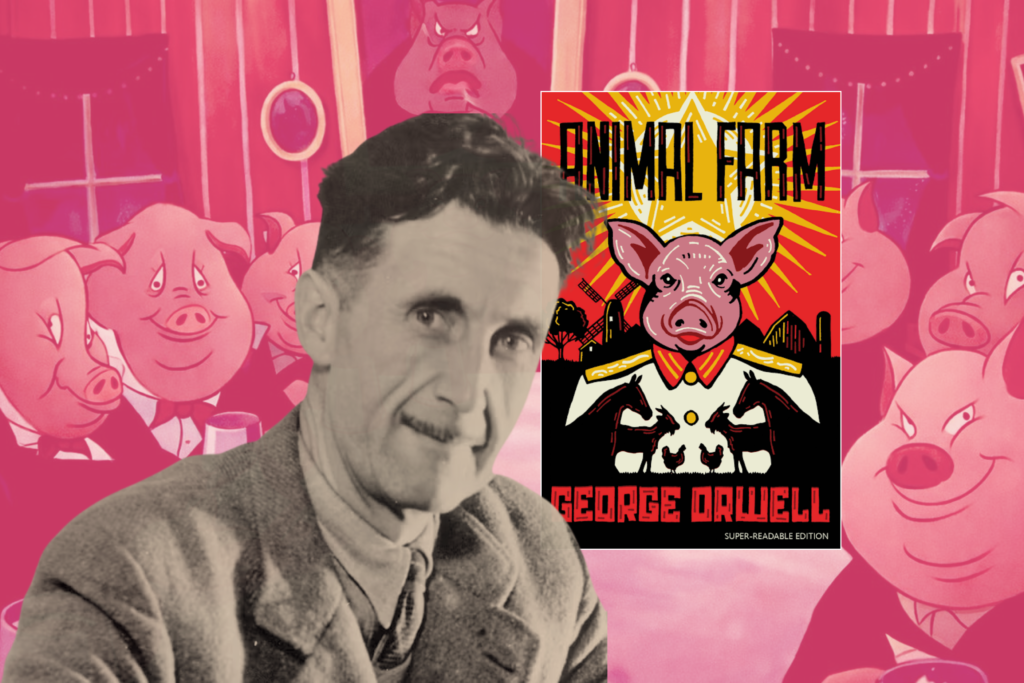
Orwell gave Animal Farm’s revolution to pigs because pigs could read. On T.S. Eliot’s rejection, the publisher who asked for another animal, the milk and apples, and the science of creeping corruption.
He could have chosen lions for power, or wolves for cruelty, or horses, the strongest animals on any farm and the ones who did the work. Instead, George Orwell gave the revolution to the pigs, and the choice is the reason the last page of Animal Farm is one of the most disturbing in English fiction.
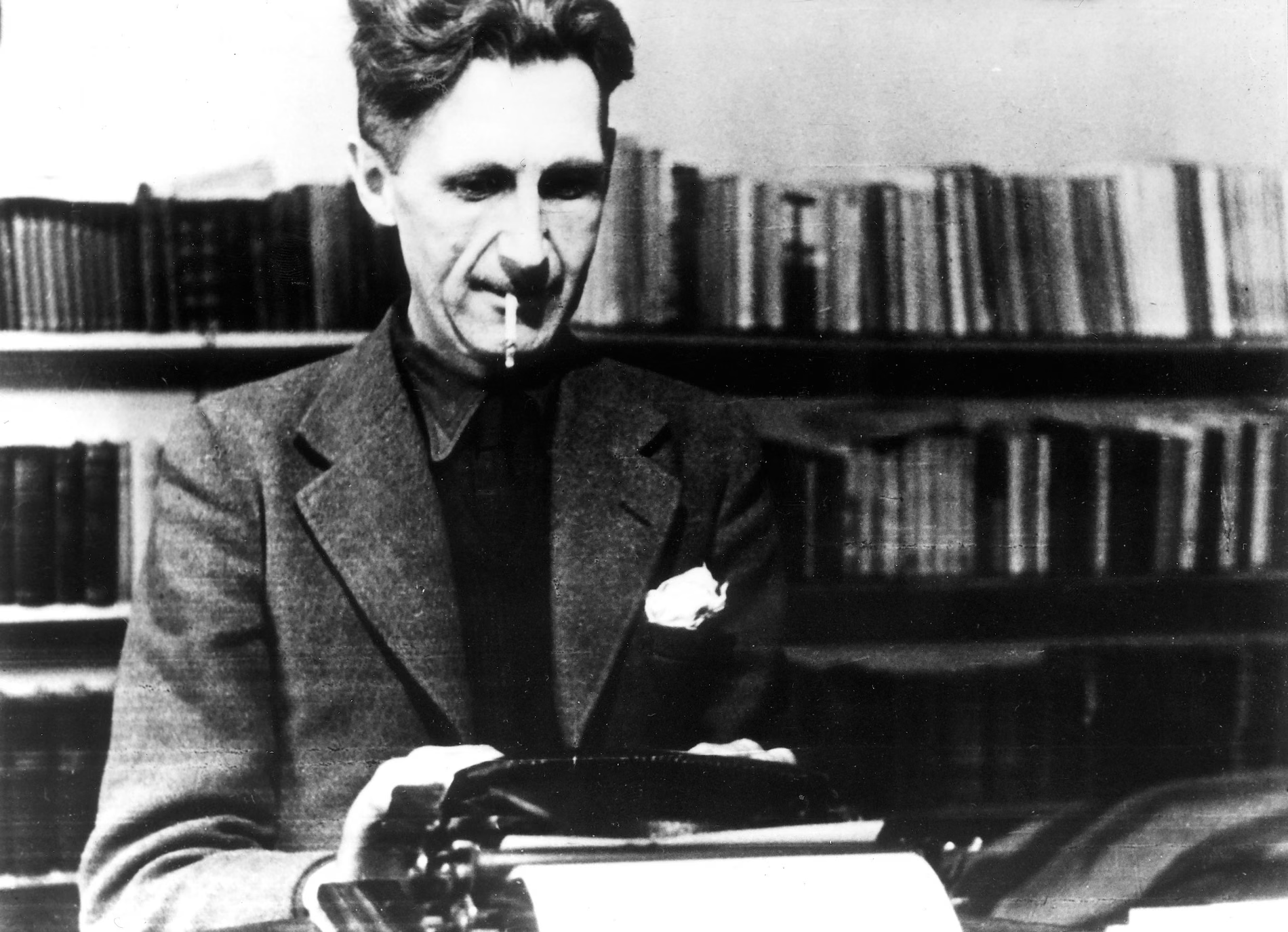
The idea itself came from a horse. In a preface written for a Ukrainian edition in 1947, Orwell recalled watching a small boy drive an enormous cart-horse down a narrow lane, whipping it whenever it tried to turn. It struck him, he wrote, that
“if only such animals became aware of their strength we should have no power over them.” — George Orwell, preface to the Ukrainian edition of Animal Farm (1947)
Men exploit animals, he went on, much as the rich exploit the working class. But the horse that gave him the book did not get to run the farm. That job went to the one animal that could read.
Thirty Thousand Words That Explain a Century
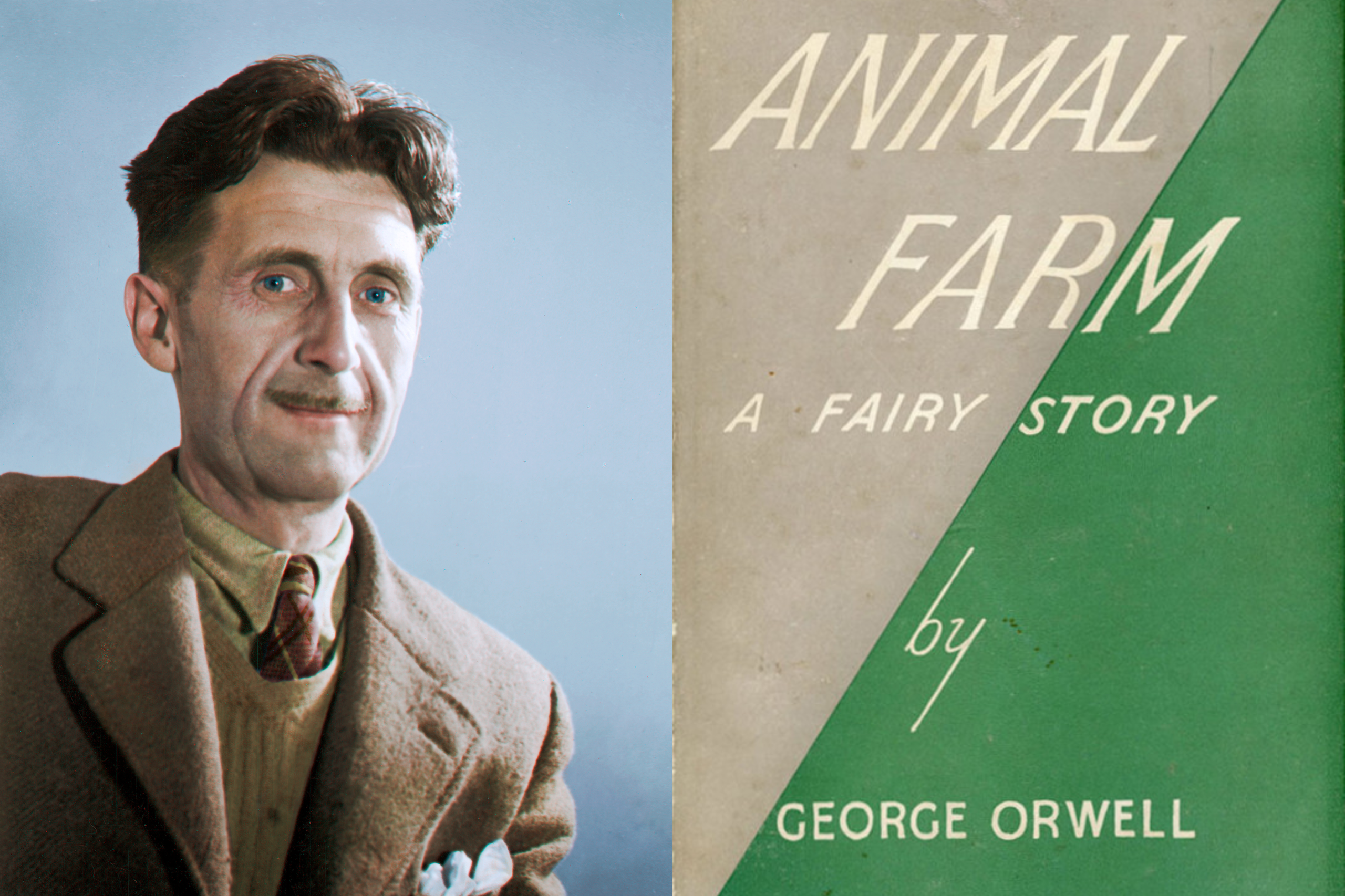
George Orwell was the pen name of Eric Blair, born in 1903, a former colonial policeman who fought fascism in Spain and came home a democratic socialist with a lifelong hatred of tyranny in every colour. He wrote Animal Farm in the winter of 1943. It is barely thirty thousand words long, subtitled A Fairy Story, and can be read in an afternoon.
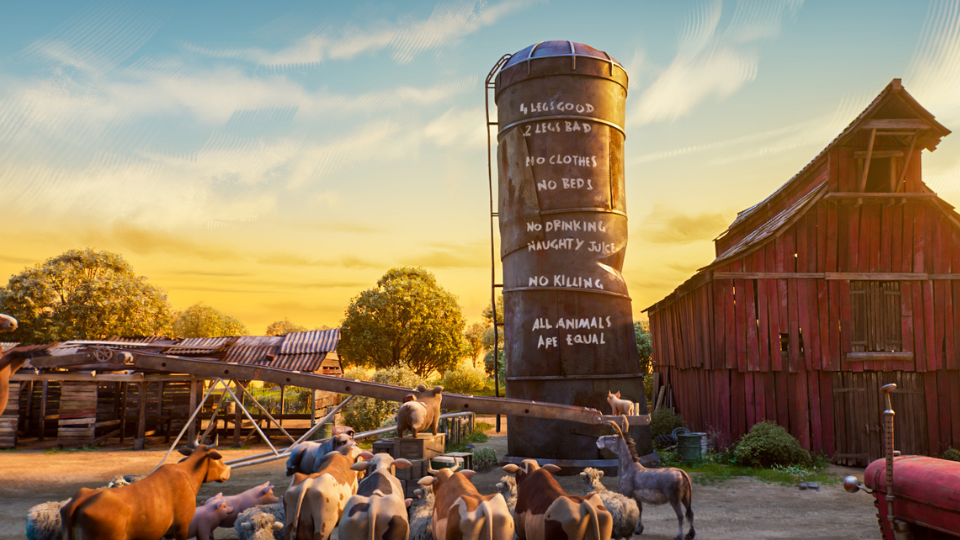
On Manor Farm, a prize boar called Old Major describes a dream to the other animals: a world in which men no longer work, whip, and slaughter them. He dies three days later. The animals rise up, drive out the drunken farmer Mr Jones, rename the place Animal Farm, and paint Seven Commandments on the barn wall, ending with the one that matters most: all animals are equal.
Two pigs emerge as leaders, the brilliant Snowball and the quiet Napoleon, who has taken nine puppies away to raise in private. When the two clash, Napoleon’s now-enormous dogs chase Snowball off the farm, and the meetings end. From then on, the pigs decide everything, and a persuasive pig called Squealer explains each decision to the rest. A carthorse called Boxer, the strongest and most loyal animal on the farm, answers every hardship with the same vow: he will work harder.
There are show trials and executions. The commandments on the wall begin, mysteriously, to change. When Boxer collapses, the pigs sell him to the knacker’s yard and buy whisky with the money. And at the end the pigs are found at dinner with the neighbouring farmers, standing on two legs, and the animals watching through the window can no longer tell pig from man.
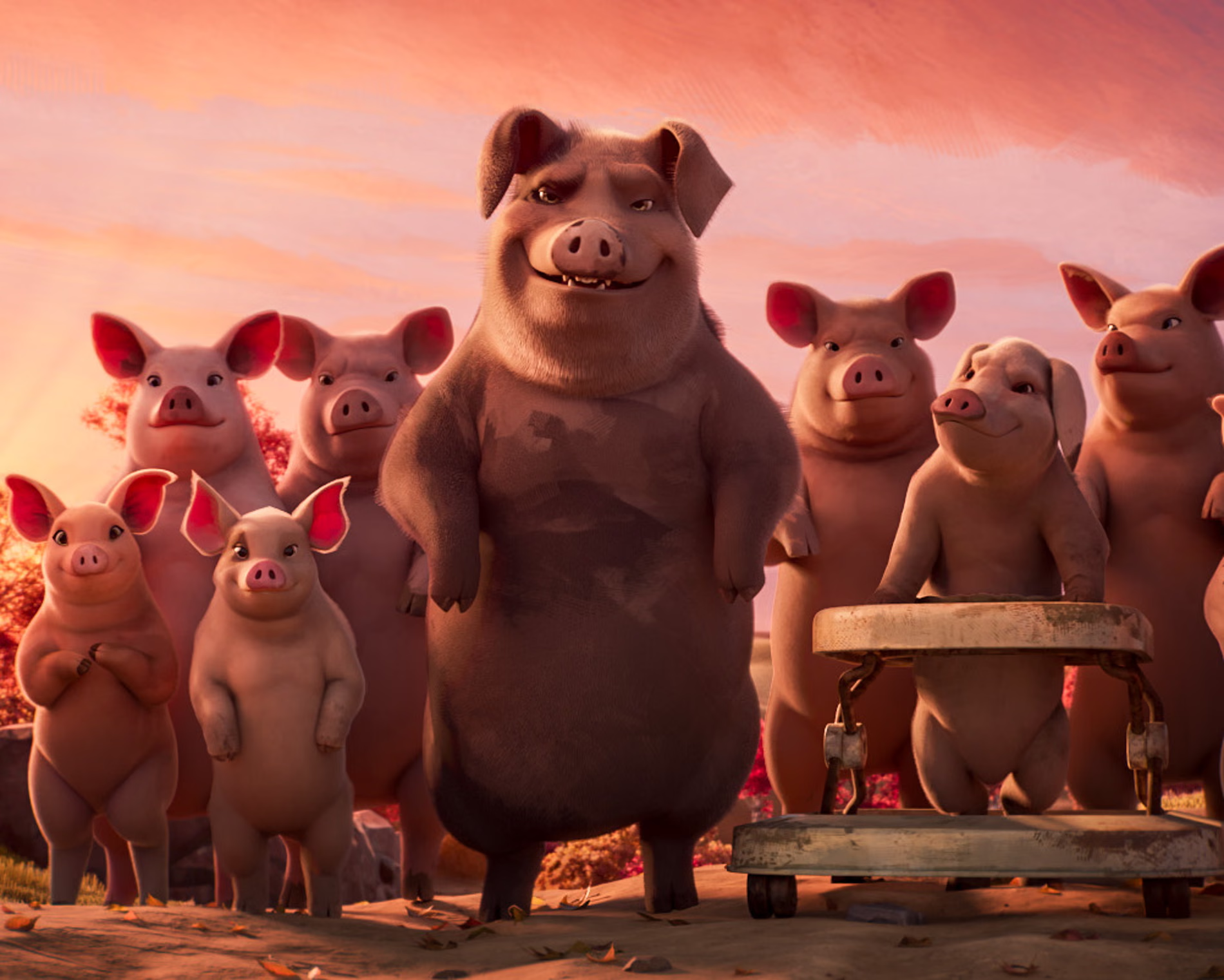
Underneath the fable sits the largest political tragedy of Orwell’s century. Old Major is Marx and Lenin, Napoleon is Stalin, Snowball is Trotsky, the dogs are the secret police, the show trials are the purges, and Boxer is the ordinary worker whose faith the revolution spent and then sold. The pigs are the revolutionary elite that emerged after 1917, a leadership that promised a classless society and became, within a generation, a privileged ruling class.
But the book’s real subject is a pattern that has repeated in enough countries, companies and clubs since 1945 that readers keep recognising their own lives in a farmyard: leaders who speak the language of equality while quietly building a system that places themselves above everyone else. The book is profound for the same reason it is short. It makes the whole machinery of a betrayed revolution visible at the scale of a barn, and every step of that machinery depends on the rulers being pigs.
The Only Animal on the Farm That Could Read
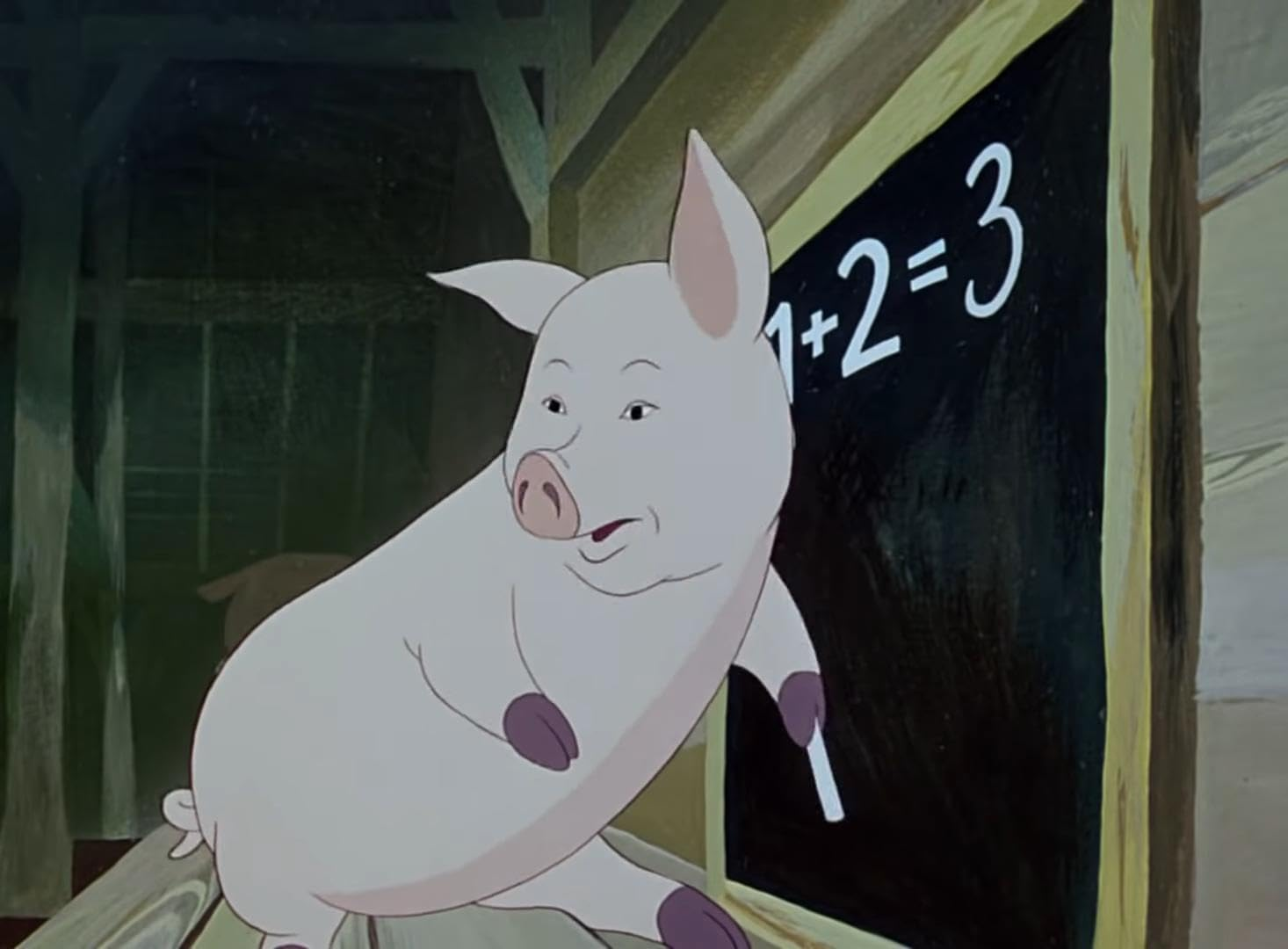
Domestic pigs are among the most intelligent animals we live alongside: a 2015 review put them on a par with dolphins in some tasks, and a Purdue study in 2021 taught four of them to play a joystick video game. Orwell gave his pigs exactly that reputation. They learn to read from an old spelling book. They write the commandments. They organise the meetings, draft the resolutions, and explain Old Major’s dream to animals who cannot follow it.
Before a single vote is taken, the pigs have authority, because they can interpret, and authority arrives in the story well ahead of power. The other animals begin to depend on them to say what the revolution means. The familiar warning concerns brutes seizing thrones. Orwell’s concerns the clever animal who is trusted precisely because he is clever, and who discovers that knowledge is a better instrument of domination than teeth.
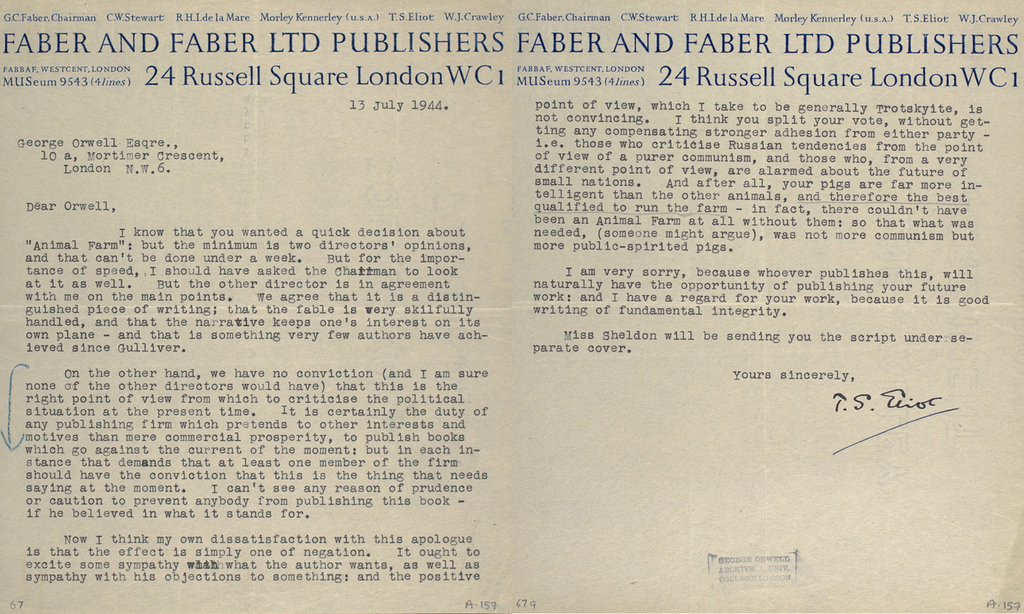
The most famous reader to miss this was T. S. Eliot. In July 1944, as a director of Faber and Faber, he turned the book down, with one of the great unintentional confessions in publishing history. The pigs, he pointed out, were far more intelligent than the other animals and therefore the best qualified to run the farm. What the story needed, he suggested, was
“not more communism but more public-spirited pigs.” — T. S. Eliot, letter to George Orwell, 13 July 1944
That is the pigs’ own argument, made on their behalf by a future Nobel laureate. Orwell had put two thousand years of political philosophy, from Plato’s case that the wisest should rule onward, into a farmyard to show why the argument fails, and the finest poet of the age read it and asked for nicer pigs.
A Nervous Publisher, a Soviet Spy, and a Request to Swap the Pigs
A second rejection came with a request. Jonathan Cape had agreed to publish the book, then consulted an official at the Ministry of Information, Britain’s wartime propaganda department, and withdrew. His letter explained that the fable followed the Soviet story too closely to be safe while Russia was an ally, and added a suggestion:
“the choice of pigs as the ruling caste will no doubt give offence.” — Jonathan Cape, letter to George Orwell (1944)
It would be less offensive, Cape thought, if the rulers were some other animal. Orwell’s footnote to that line, in a preface of his own, notes that the idea seemed to have the official ring about it, and he was right. The official who warned Cape off, Peter Smollett, was later revealed to have been a Soviet agent. The censors understood the book perfectly. They knew the pigs were the insult, and that the insult was the point. Animal Farm appeared in August 1945, from the fifth publisher Orwell tried.
The Moment Orwell Said the Revolution Died
Orwell told a friend exactly where he believed the revolution was lost. In December 1946, the American critic Dwight Macdonald wrote to say that some readers took the book to mean that revolutions always end badly. Orwell replied that they had missed his moral, and that the turning point of the story was meant to be the moment the pigs kept the milk and apples for themselves, a moment he likened to Kronstadt, the 1921 mutiny of sailors who had supported the revolution and were crushed by the government it produced.
The scene is small on purpose. No one is killed. The pigs announce that the milk and apples are to be reserved for them, and Squealer explains, with science and sincerity, that brainworkers need the nourishment in order to manage the farm for everyone’s benefit. Inequality enters the revolution dressed as necessity, and the animals, who cannot check the science, accept it.
Neuroscience has since described what happens next. In 2016, researchers scanned volunteers given repeated chances to lie for personal gain and found that dishonesty escalated with repetition: the amygdala, which protests a first self-serving lie, responded less each time, and the dulling predicted how much larger the next lie would be. Orwell had drawn that slope thirty years earlier, exception by exception. The pigs move into the farmhouse, because they need quiet to think.
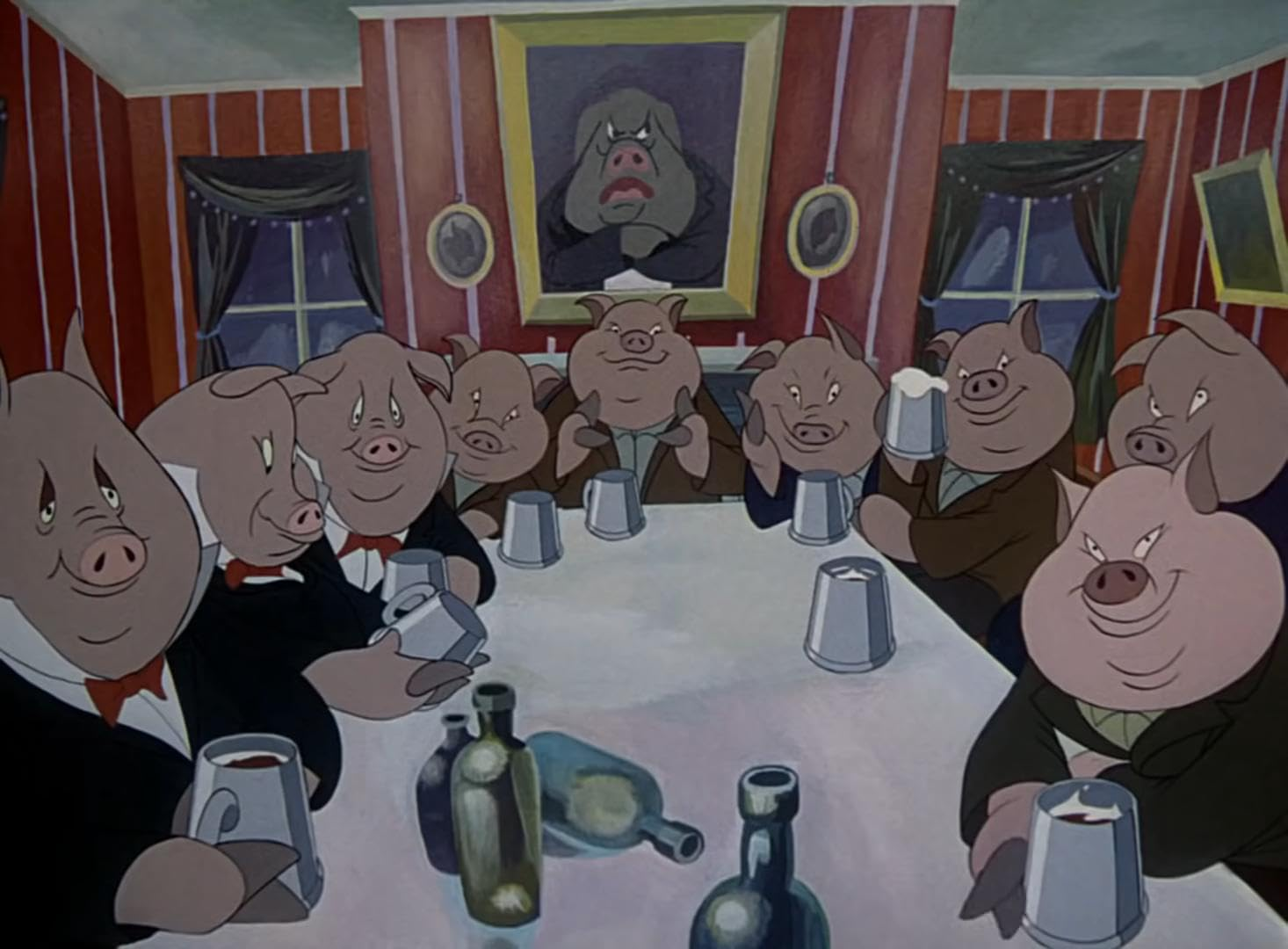
They sleep in beds, and the commandment forbidding it acquires two new words overnight: with sheets. They trade with the neighbouring farms, drink whisky, and put on Mr Jones’s clothes, and each privilege unthinkable in the first chapter looks ordinary by the time it arrives, because the previous one prepared the ground. The Victorian historian Lord Acton wrote in 1887 that power tends to corrupt and absolute power corrupts absolutely. What Orwell added is the tempo. Absolute power is acquired one apple at a time.
Boxer Did the Work. The Pigs Held the Paint.
Napoleon never rules by effort. Boxer does more work than the entire leadership combined, and answers every setback with his two maxims: that he will work harder and that Napoleon is always right. He is the strongest and most loyal creature on the farm, and he ends up in a knacker’s van. Strength, in Orwell’s farm, is one more resource managed by whoever controls the meaning of things.
What the pigs control is knowledge. They control who can read, and most of the animals never learn beyond a few letters. They control memory through Squealer’s patient reinterpretations of what really happened and what Snowball really did. They control language, teaching the sheep to drown every objection under a slogan. And in the end they control the commandments themselves, repainted until seven have become one:
“All animals are equal, but some animals are more equal than others.” — George Orwell, Animal Farm (1945)
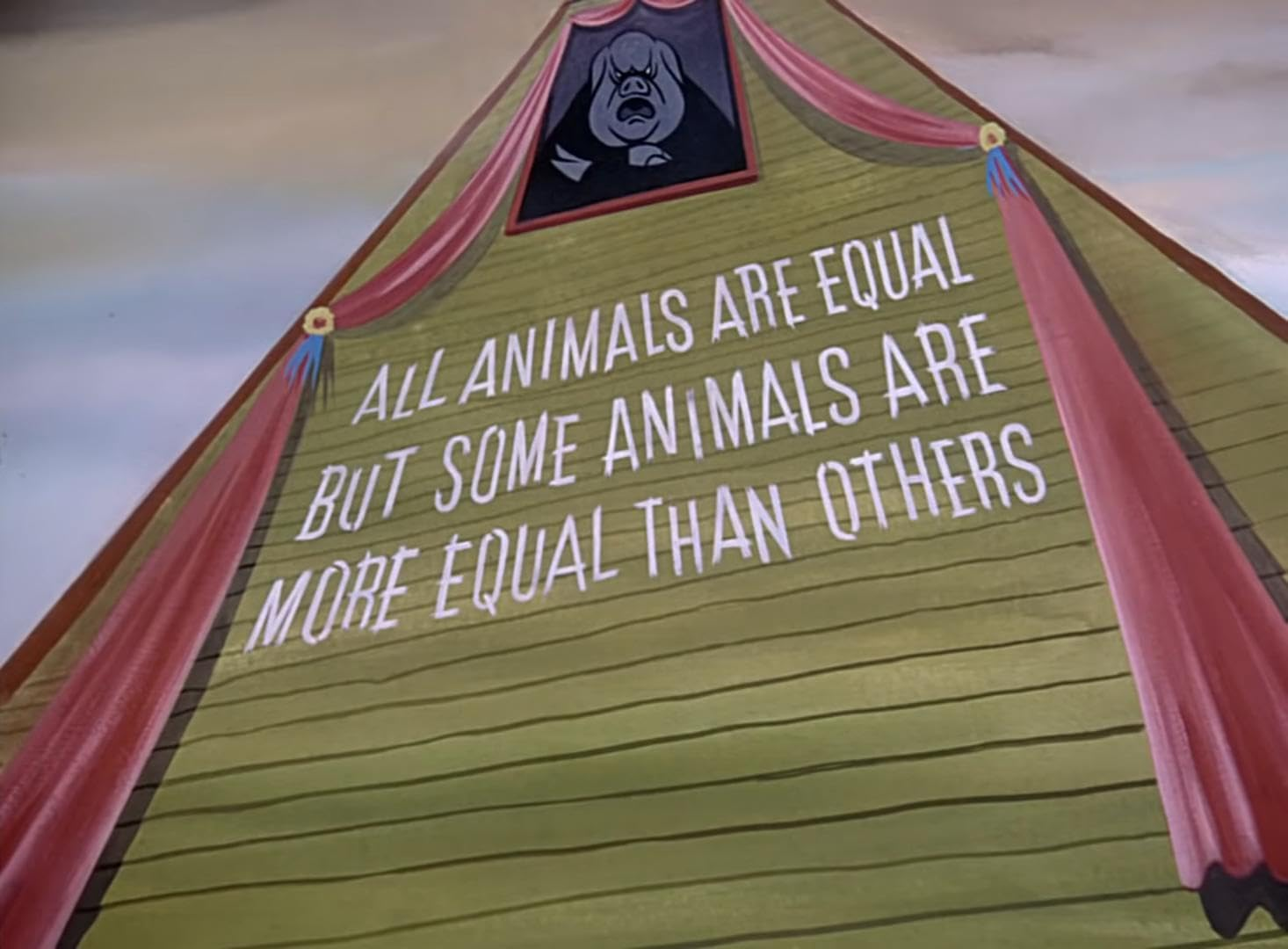
The sentence has the grammar of equality and the content of hierarchy, and it works on the animals because they can no longer remember what the wall used to say. Whoever holds the paint can holds the farm, which is why the ruling caste had to be the one that could read.
Through the Window: Pig to Man, Man to Pig
The final scene takes place through a window. The pigs are hosting the neighbouring farmers at dinner, walking on two legs, wearing clothes, playing cards, and one farmer toasts the lower animals of Animal Farm, who work harder and eat less than any in the county. A quarrel breaks out over the cards, and the animals outside look from pig to man and from man to pig, and find that they can no longer say which is which.
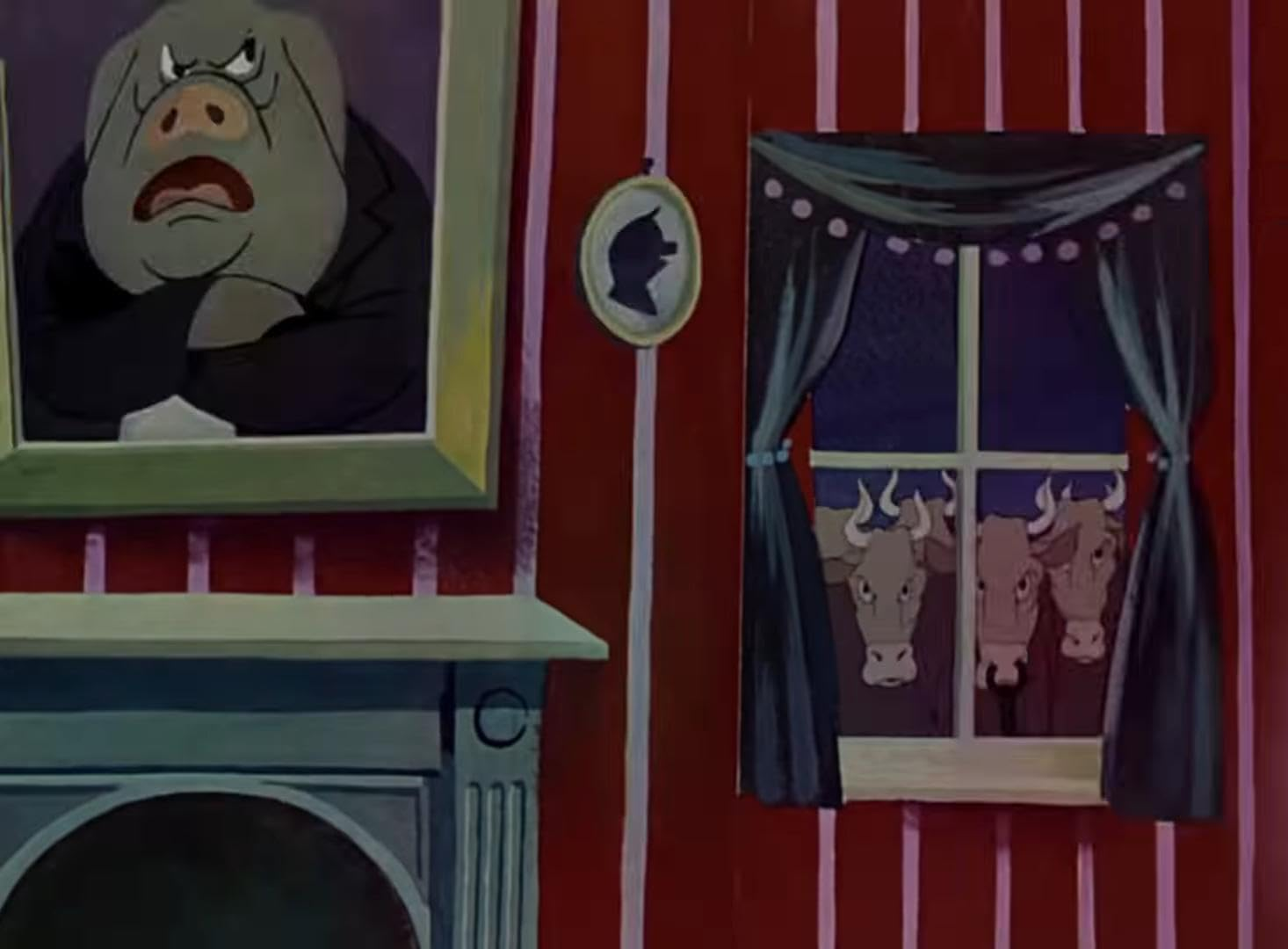
Orwell’s casting is complete in that image. A lion at a table with men would have made a fable about power’s natural home; a wolf, a fable about cruelty. The pig, the clever, unlovely, endlessly adaptable animal we keep closest and think of least, is the only choice that makes the ending a mirror. The revolution left the farm’s structure intact and produced rulers who, given time and apples, grew indistinguishable from the old ones.
The moral he intended is on record, in that letter to Macdonald. Revolutions bring real improvement, he wrote, only when the masses stay alert and
“chuck out their leaders as soon as the latter have done their job.” — George Orwell, letter to Dwight Macdonald, December 1946
Read the fable with that in hand, and its despair turns out to be conditional. The animals lose their revolution at the exact moment they stop reading the wall. A literate farm would have caught the pigs at the first altered word, and Orwell’s darkest question, whether a change of hands is ever a change of system, has an answer that runs through the whole book: it is, for exactly as long as the ruled can still read what the rulers have written.
Orwell chose pigs because pigs could read, and the animals lost because they could not. That is his whole answer to the question he leaves hanging at the window. The fable’s quiet horror lies in how the capacity is lost: surrendered, one interpretation at a time, to whoever seems cleverest. The animals keep the wall to the end. What they lose is the habit of reading it, and by the time they look up, the words have already changed.

Vincent Phan
Vincent is the founder and Editor-in-Chief of 1000 Libraries Magazine. He is a Paris-born ex-corporate turned bookseller and philosopher, on a global mission to spread the joy of physical books in our age of digital technology.